

Note: This article contains affiliate links. If you click on these links and make a purchase, I may earn a small commission at no extra cost to you. This helps support my research and content. Read my full affiliate disclosure here.
If you own a 1995-2004 Toyota Tacoma and are facing electrical quirks, a failing alternator is a common cause that directly affects starting, lighting, and battery life. Choosing the right alternator matters because an incorrect unit can cause undercharging, premature battery failure, or fitment headaches during installation.This guide shortlists the top alternators suitable for the 1995-2004 Tacoma across common engine and trim setups. Each pick was evaluated for output reliability, mechanical fit, and long-term durability so you can pick a unit that restores dependable charging performance. Read on for the criteria we used and practical guidance on installation and testing.
Looking for other parts? See all Toyota Tacoma parts & accessories.
Top Picks at a Glance
| Best Overall The best all-around choice for most situations | KAC 80A Replacement Alternator for Toyota 3.4L (13794N) |  |
| Best Quality Built to a higher standard if you want something more solid | DB Electrical 400-52073 12V 80A Replacement Alternator for Toyota 3.4L |  |
| Best Value The sweet spot between price and what you get | BDELI Replacement Alternator 3.4L (Fits 1999–2004 Toyota 4Runner/Tacoma/Tundra) |  |
| Best Budget The cheapest option that still gets the job done reliably | JAYUAUTO 12V 80A Replacement Alternator for Toyota 3.4L (13794N) |  |
| Highest Rated A top-rated pick with lots of positive feedback | Parts Player 12V 80A Alternator (CW Rotation) for Toyota 3.4L 1999–2004 |  |
| Most Popular A crowd favorite that many people choose with confidence | Farrme 13794 12V 80A Replacement Alternator for Toyota 3.4L V6 |  |
| Best Seller A high-volume bestseller chosen again and again | Youxmoto Alternator for Toyota 3.4L (1999–2002 4Runner, 2000–2004 Tacoma, 2000–2002 Tundra) |  |
KAC 80A Replacement Alternator for Toyota 3.4L (13794N)

| Amperage | 80 Amps |
|---|---|
| Voltage | 12 Volts (AC) |
| Position | Front |
| Regulator & Fan Type | IR/IF |
| Pulley Groove | S4, Rotation CW |
This KAC alternator is a direct-fit replacement built for Toyota vehicles that use part number 13794N and related OEM references. It supplies 12 volts at 80 amps and is intended as a straightforward swap into front-mounted alternator locations without fabrication. The unit emphasizes factory-style construction with copper windings, a built-in regulator, and a groove S4 pulley with clockwise rotation, so it will work with stock belt setups. For typical use it restores charging to the battery, eliminates dash charge warnings, and runs quietly once bearings break in. Installation is simple for a DIYer comfortable with basic hand tools and unbolting the old unit. Reported failures are rare but present, so buyers should be prepared for occasional quality-control variation and verify fitment before install. This alternator is a sensible value option where budget and an easy, mostly OEM-like replacement matter more than buying a premium high-output unit for heavy accessory loads.
Best for: A practical buyer who wants an affordable, factory-compatible replacement to restore charging on a 1995–2004 Toyota Tacoma with the 3.4L engine and values straightforward installation and OEM-like performance.
Less Ideal for: Not the best choice for owners who need higher-than-stock charging capacity for heavy accessory or off-road electrical setups; those users should consider high-output or performance alternators.
- Direct-fit design matched to OEM part numbers for simple installation
- Factory-style features including built-in regulator and copper windings
- 80 amp output suitable for stock electrical systems
- Groove S4 pulley and clockwise rotation match common Toyota belt setups
- Some customers report early failures indicating inconsistent quality control
Verdict: Choose this KAC 80A alternator if you want a budget-friendly, direct-fit factory-style replacement to restore charging on a 3.4L Toyota Tacoma quickly and easily.
DB Electrical 400-52073 12V 80A Replacement Alternator for Toyota 3.4L

| Amperage | 80 Amps |
|---|---|
| Voltage | 12 Volts |
| Regulator Location | Internal |
| Rotation | CW |
| Compatible With | Toyota 4Runner 1999-2002, Tacoma 2000-2004, Tundra 2000-2002 |
This DB Electrical 400-52073 alternator is a direct-fit aftermarket replacement built to match the factory mounting and wiring for Toyota 3.4L engines used in Tacoma, Tundra, and 4Runner models of the era. It supplies 12 volts and an 80-amp rated output with an internal regulator and clockwise rotation, so installation is straightforward for anyone familiar with alternator swaps and most DIY mechanics. Buyers report it bolts in like the original, restores charging, and can brighten lights and support additional accessories compared with failing old units. However real-world output can vary from the spec and a few users reported intermittent charging issues or fitment mismatches on specific model years, so verify connector and mounting alignment before purchase. This unit is new rather than remanufactured and lists common OEM cross numbers for easy matching. Expect a lower price than dealer parts but accept some variability in long-term durability and measured amperage under driving rpm if you need consistent high-output performance for heavy electrical loads.
Best for: Buyers who want an affordable, direct-replacement alternator to restore charging on late 1990s to early 2000s Toyota 3.4L vehicles and prefer a straightforward swap over sourcing dealer parts.
Less Ideal for: Not the best choice for users who need a high-output upgrade for heavy aftermarket electrical systems or who require guaranteed measured amperage at driving rpm.
- Direct-fit aftermarket replacement that matches factory mounting and wiring
- Internal regulator simplifies installation and eliminates external regulator wiring
- New unit (not rebuilt) with OEM cross-reference numbers for easy verification
- Rated output is modest at 80 amps and some users report lower than expected charging under load
- A small number of buyers reported fitment or early failure issues on specific model years
Verdict: A cost-effective, direct-fit replacement alternator for Toyota 3.4L trucks that restores charging with factory-style installation and internal regulation.
BDELI Replacement Alternator 3.4L (Fits 1999–2004 Toyota 4Runner/Tacoma/Tundra)

| Voltage | 12V |
|---|---|
| Amperage | 80A |
| Rotation | CW |
| Pulley class | S4 |
| Regulator/Fan | IR/IF |
This BDELI alternator is a direct replacement unit intended for Toyota 3.4L V6 applications (Tacoma, 4Runner, Tundra) and is built to match the factory electrical outputs and mounting. It delivers 12 volts at an 80 amp rating with clockwise rotation and includes an internal regulator and fan type consistent with factory-style installations. Typical use is straightforward bolt-in replacement when the original alternator fails or undercharges the battery; many buyers report OEM-like fit and immediate restored charging performance. The unit is made by an aftermarket specialist with ISO 9001 and IATF 16949 certified production and comes with a one-year replacement policy. Practical benefits include compatibility with common OEM part numbers, tested components for consistent charging, and a price that favors cost-conscious repairs. Limitations are typical of aftermarket parts: long-term durability can vary by driving conditions and installation quality, and any vehicle-specific electrical quirks should be checked during installation to ensure connector and pulley alignment match your truck.
Best for: Buyers who want a practical, budget-conscious replacement that restores factory charging without extensive modification; ideal for drivers prioritizing fit, tested components, and straightforward installation.
Less Ideal for: Drivers seeking an OEM remanufactured alternator with documented long-term service history or those who need higher amperage for heavy aftermarket electrical loads.
- Direct-fit replacement for Toyota 3.4L V6 applications matching common factory part numbers
- Factory-style 12V/80A output with clockwise rotation and internal regulator for plug-and-play installation
- Manufactured under ISO 9001 and IATF 16949 processes with professional testing
- One-year free replacement commitment from the brand
- Aftermarket longevity can vary compared with a remanufactured factory unit
Verdict: A cost-effective, factory-compatible 12V/80A replacement alternator that restores charging for 3.4L Toyota V6 trucks with straightforward bolt-in fitment.
JAYUAUTO 12V 80A Replacement Alternator for Toyota 3.4L (13794N)

| Voltage | 12V |
|---|---|
| Amperage Output | 80A |
| Regulator Design Type | Internal |
| Number of Grooves | 4-Groove Pulley |
| Rotation | CW (Clockwise) |
This JAYUAUTO alternator is a direct-fit replacement engineered for Toyota 3.4L V6 vehicles from the specified model years, offering 12V output at 80 amps with a clockwise rotation and an internal regulator and fan. It is intended for bolt-on installation with a 4-groove pulley so you can swap a failing unit quickly without modifying the vehicle. The unit is built in a certified facility and reportedly uses CNC-machined aluminum housing, precision-balanced rotors, and high-temperature bearings to improve heat dissipation and durability. Practical benefits include restoring charging performance for lights, ignition, and accessories and providing a factory-style fit and connector compatibility when the correct part number is confirmed. Limitations to note are the 80A output may be marginal if you have high electrical demand from aftermarket audio or lighting, and fitment must be verified against your OEM part number and connector type before ordering. Expect a straightforward replacement for daily drivers looking to restore reliable charging performance on a budget.
Best for: Buyers replacing a failing alternator on a budget who want a new, bolt-on unit that restores stock charging capability with minimal fuss.
Less Ideal for: Drivers who run high-draw aftermarket systems or who need higher output charging for severe-duty use should consider higher-amperage or performance units instead.
- Direct-fit design for Toyota 3.4L V6 applications to simplify installation
- Built and tested in certified facilities with precision-machined components
- Internal regulator and fan provide a compact, straightforward replacement
- 4-groove pulley and clockwise rotation match common factory configurations
- 80 amp output may be insufficient for vehicles with heavy aftermarket electrical loads
Verdict: A cost-conscious, factory-style replacement that restores stock charging performance on Toyota 3.4L V6 models with straightforward bolt-on fitment.
Parts Player 12V 80A Alternator (CW Rotation) for Toyota 3.4L 1999–2004

| Voltage | 12V |
|---|---|
| Amperage | 80A |
| Rotation | CW |
| Regulator/Fan | Internal (IR/IF) |
This Parts Player alternator is a direct-fit replacement designed for Toyota 3.4L applications from 1999 through 2004. It supplies up to 80 amps with clockwise rotation and an internal regulator, making it suitable for restoring charging performance on older Tacomas and 4Runners. Typical use is a one-to-one swap for a failed factory unit; installation is straightforward for anyone comfortable with basic engine-bay work and common hand tools. Notable features include a machined exterior, standard S4 pulley class, and matched plug code so the harness and mounting points align with the original. In practice the unit delivers proper voltage output for everyday driving and accessory use, and several owners report easy installs and immediate return to normal charging. Limits to consider are variable longevity reported in some reviews and the lack of included mounting hardware or core exchange, so expect to reuse existing bolts and possibly swap your core through a local shop. For a reliability-minded buyer, this alternator offers a practical, factory-style replacement at a modest value if you plan to install correctly and verify charging after fitment.
Best for: Buyers who prioritize getting a practical, factory-style charging replacement for a 1999–2004 Toyota 3.4L vehicle and want an alternator that installs like the original with minimal wiring changes.
Less Ideal for: Drivers who need higher-output charging for heavy accessory loads or who prefer units with a documented core exchange program and extended warranty should look at upgraded or remanufactured alternatives.
- Direct-fit design for Toyota 3.4L 1999–2004 applications simplifies installation
- Internal regulator and factory-style plug reduce wiring work during replacement
- 80 amp output restores normal charging for stock electrical loads
- Machined exterior and standard S4 pulley match factory form and function
- Does not include mounting hardware or a core return option
- Some customer reports indicate inconsistent longevity compared with remanufactured units
Verdict: A straightforward, factory-style 12V 80A replacement that restores charging to 1999–2004 Toyota 3.4L trucks with minimal fuss.
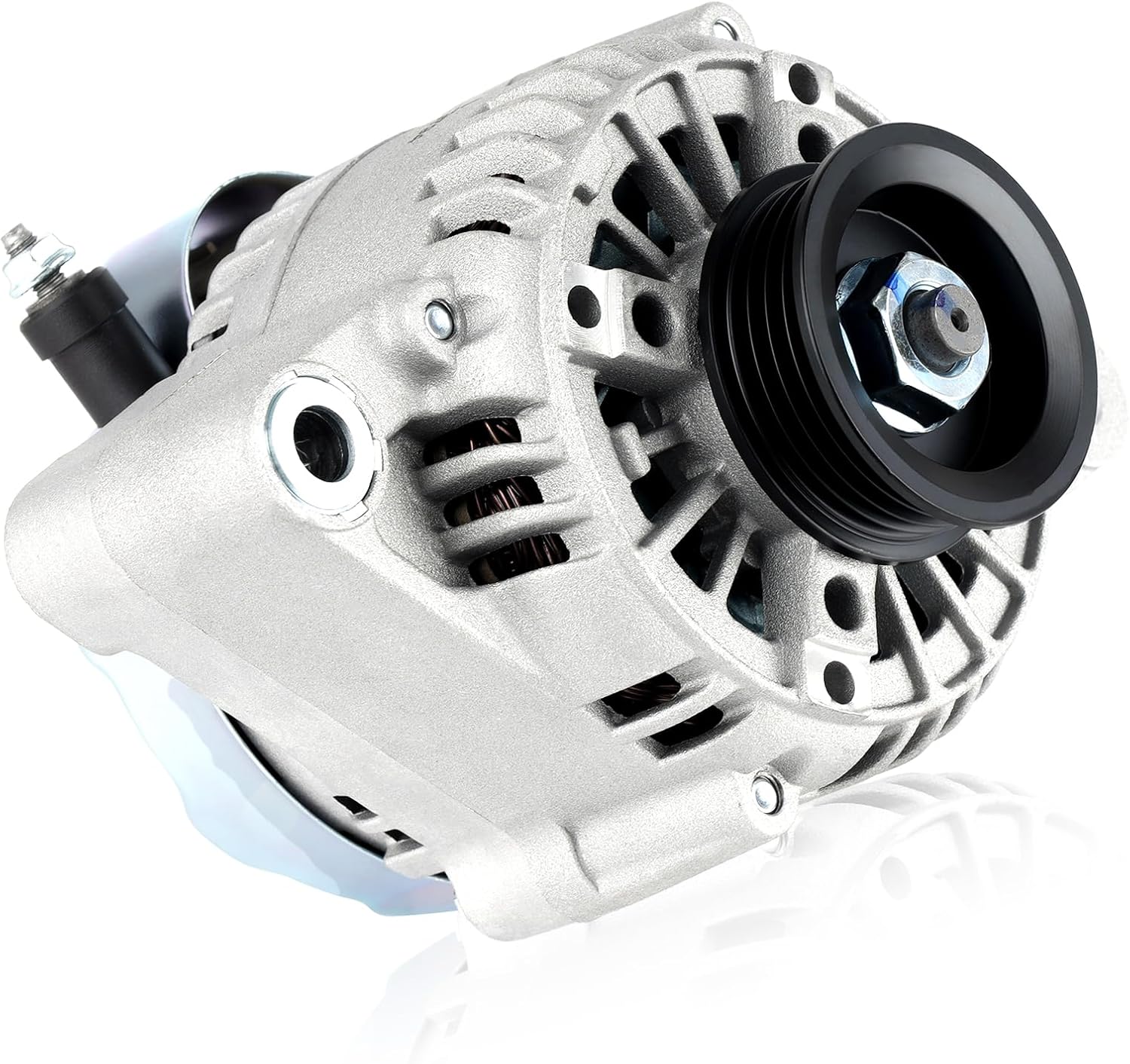
Farrme 13794 12V 80A Replacement Alternator for Toyota 3.4L V6
| Amperage | 80A |
|---|---|
| Voltage | 12V |
| Rotation | CW (Clockwise) |
| Number of Grooves | 4-Groove Pulley |
| Regulator Type | Internal |
The Farrme 13794 is a direct-replacement alternator engineered for Toyota 3.4L V6 engines in Tacoma, Tundra, and 4Runner model years listed by the manufacturer. It supplies 12 volts at an 80 amp output, uses an internal voltage regulator and internal fan, and mounts with a clockwise rotation and 4-groove pulley. In practice this alternator restores charging and electrical stability after an original unit fails, and buyers report straightforward bolt-in fit and OEM-like charging voltage when installed correctly. The unit includes sealed bearings and corrosion-resistant finishes intended to reduce noise and improve durability in engine bay conditions. Important trade-offs are the mid-range 80A output, which is fine for stock electrical loads but may be marginal for trucks with heavy aftermarket audio, lighting, or winches, and mixed user reports about regulator longevity mean you should verify charging after installation. Installation checks of wiring, belt tension, and battery condition are essential since some reported failures stem from related electrical issues rather than the alternator itself.
Best for: Buyers who prioritize a vehicle-specific replacement backed by multiple user reports and want a cost-effective alternator that restores factory charging for daily driving and light-duty use.
Less Ideal for: Drivers planning heavy electrical upgrades, extensive aftermarket lighting, or high-draw accessories should choose a higher-output or upgraded charging solution instead.
- Direct-fit design for Toyota 3.4L V6 applications listed by the manufacturer
- Factory-style features including internal regulator and internal fan for compact mounting
- Sealed bearing and corrosion-resistant finish to reduce noise and improve durability
- Consistent charging reported by multiple users when properly installed
- 80A output may be insufficient for vehicles with high electrical accessory demand
- Some reviewers reported early regulator failures so long-term reliability varies
Verdict: A practical, vehicle-specific 80A replacement that restores factory charging for stock 3.4L Toyota trucks while offering good fit and user-backed performance.
Youxmoto Alternator for Toyota 3.4L (1999–2002 4Runner, 2000–2004 Tacoma, 2000–2002 Tundra)

| Voltage | 12V |
|---|---|
| Amperage | 80A |
| Rotation | CW |
| Regulator | IR |
| Pulley Class | S4 |
This Youxmoto alternator is a budget-minded replacement built to fit Toyota 3.4L applications from the late 1990s and early 2000s. It supplies 12 volts at up to 80 amps with clockwise rotation and an S4 pulley class, so it is intended as a like-for-like swap for factory units. The unit advertises an aluminum housing and copper windings, an internal regulator, and plug-and-play fitment that most DIYers report installing quickly. Practical benefits include adequate output for stock electrical loads and a claimed higher corrosion resistance from the aluminum casing. Several buyers praised easy installation and stable charging above 14 volts, while other reports note occasional bearing noise, slightly off fitment on some vehicles, and lower charging voltages in a few units. If you need a cost-effective replacement to restore charging and do not require high-amperage upgrades, this alternator covers basic needs and can get a vehicle back on the road quickly. Expect variability versus remanufactured factory-grade units, and verify post-install charging voltage and mounting alignment after fitting.
Best for: Buyers who prioritize restoring reliable charging on an older Toyota without paying for a remanufactured factory unit and who prefer a straightforward DIY install.
Less Ideal for: Do not choose this if you need a high-output alternator for heavy aftermarket electrical accessories or if you require guaranteed factory-level longevity and fitment precision.
- Direct-fit design for Toyota 3.4L 4Runner, Tacoma, and Tundra applications listed
- Delivers 12V/80A charging adequate for stock electrical systems
- Plug-and-play installation reported as quick by many DIYers
- Aluminum housing and copper windings for improved corrosion resistance and durability
- Some buyers reported bearing noise and less robust long-term reliability compared with remanufactured factory units
- A few units showed minor fitment issues on the upper mount requiring adjustment
Verdict: A cost-conscious, plug-and-play 12V/80A replacement that restores charging for Toyota 3.4L trucks and SUVs with generally easy DIY installation.
Choosing the Right 1995-2004 Toyota Tacoma Alternator: Key Factors to Consider
Output Rating and Amperage Capacity
Alternator amperage determines how much electrical load the charging system can support. Higher-output alternators are beneficial if you run aftermarket lighting, audio, or winches, but they must match the Tacoma's charging and cooling capabilities. Choosing an output rating that is too low will lead to undercharging, accelerated battery wear, and electrical instability during heavy accessory use.
When matching amperage, consider both continuous output and peak capacity. Alternators often list maximum output at a specific RPM; look for realistic ratings at idle and during highway speeds. Overrating an alternator without confirming pulleys and belt capacity can lead to slippage or premature wear, so balance desired electrical capacity with the vehicle's mechanical constraints.
Mechanical Fit and Mounting
Correct mounting points, flange locations, and pulley orientation are critical for a straightforward installation on a Tacoma. A unit that aligns with the factory bracket minimizes the need for aftermarket adapters and keeps belt alignment true, which preserves bearing life and reduces vibration.
Also check pulley type and diameter. The pulley affects alternator speed relative to engine RPM and may alter output at idle. Confirm that the replacement alternator uses the same style of mounting and pulley arrangement as the factory unit for the specific 1995-2004 engine variant to avoid fitment surprises.
Voltage Regulation and Electrical Compatibility
Modern alternators include internal voltage regulators that control charging voltage. For the Tacoma, regulator behavior influences battery state of charge and accessory performance. Ensure the replacement alternator's regulator is compatible with the vehicle's battery type and electrical system voltage targets.
Connector types and terminal layouts must match the wiring harness to avoid splicing or adapter use. Mismatched connectors can result in poor connections or fault codes. Verify the regulator response to load changes, as a slow or unstable regulator can cause flickering lights or inconsistent charging.
Thermal Durability and Bearing Quality
Alternators operate in a hot engine bay and must resist heat-related failures. Units with better heat dissipation, robust internals, and higher-grade bearings typically last longer in the Tacoma's environment. Bearings and seals that tolerate road exposure and occasional water spray reduce noise and extend service life.
Assess construction details such as cooling vents, material quality, and sealed bearings. Alternators used in trucks that see towing or off-road use experience heavier duty cycles, so prioritize units designed for sustained thermal loads and superior bearing longevity.
Serviceability and Parts Availability
Consider whether the alternator can be serviced or rebuilt and if replacement components are available. Serviceable regulators, brushes, and rectifiers can extend the life of the unit and reduce long-term ownership cost. For a vehicle spanning model years 1995-2004, having access to rebuild kits or replacement internals provides a repair path that avoids full replacement.
Also check whether documentation and common replacement parts are readily available. Easier access to parts and repair guides simplifies maintenance and keeps downtime and labor costs lower when issues arise.
Warranty and Manufacturer Support
A clear warranty protects against premature failures and gives owners recourse if the unit fails early. Warranty length and coverage terms are important for alternators because electrical failures can happen due to component defects or stress.
When evaluating options, look for transparent warranty terms that cover core components like the regulator and bearings. Consider whether the vendor or manufacturer offers technical support or installation guidance, as that can speed diagnosis if a replacement is needed.
Signs Your Tacoma Needs an Alternator Replacement
A failing alternator shows a range of symptoms that often start subtly. Watch for dimming headlights at idle, a battery warning light on the dash, or repeated jump starts. Electrical accessories that behave inconsistently, such as intermittent radio function or slow power windows, can also point to a weak alternator.
Some bad alternator signs include unusual noises from the front of the engine bay, like whining or grinding, which may indicate bearing wear. A simple pre-replacement check is to monitor battery voltage with the engine running; voltages significantly under or over the expected range indicate regulator or alternator problems.
- Dimming headlights or fluctuating interior lights
- Dashboard battery or charging warning lamp illumination
- Frequent dead battery or need for jump starts
- Unusual whining, grinding, or squealing noises near the alternator
Basic Alternator Testing for Owners
Before replacing an alternator, you can perform basic tests with a multimeter. With the engine off, measure battery voltage to get a resting baseline. Then start the engine and measure voltage at idle and with increased RPM. A properly functioning charging system typically reads around 13.5 to 14.5 volts under normal conditions.
Load testing by turning on headlights, fan, and other accessories while monitoring voltage helps reveal regulator or output problems. If voltage drops dramatically under load or stays above safe levels, the alternator or regulator likely needs attention. For owners uncomfortable with testing, a shop can perform a bench or load test.
- Resting battery voltage measurement
- Running voltage at idle and higher RPM
- Load test with accessories on
- Inspect for damaged wires, loose connections, or belt slippage
Installation Considerations and Common Pitfalls
Installation for the 1995-2004 Tacoma alternator is generally straightforward, but plan ahead. Confirm mounting points, belt routing, and correct tensioner positioning before removing the old unit. Label connectors and note pulley orientation to prevent reuse errors.
Common pitfalls include reusing a worn belt with a new alternator, which can cause slippage, and failing to torque mounting hardware to spec, which may lead to vibration. Also check the ground strap and battery terminals during the job, since poor grounding can mimic alternator faults.
- Confirm belt condition and tensioner health
- Label and match electrical connectors
- Torque mounting bolts to factory specs
- Inspect ground connections and battery terminals
When to Consider an Alternator Rebuild Kit
A rebuild kit can be a cost-effective choice if the alternator housing and mounting are in good condition but internal parts like brushes, bearings, or the regulator have failed. For older Tacomas, availability of rebuild parts and the unit's current condition should guide this decision.
Rebuilding preserves the original pulley and bracket alignment, avoiding fitment issues, but requires mechanical skill and tools. If you plan to rebuild, prioritize kits that include sealed bearings, a matched regulator, and clear instructions for reassembly.
- Use when housing and pulley are undamaged
- Look for kits with bearings, brushes, and regulator
- Requires mechanical skill and proper tools
- Preserves original fitment and pulley alignment
Budgeting for Replacement and Installation
When planning a replacement, account for the alternator price as well as labor if you hire a technician. Installation is often a mid-level DIY job for someone with basic mechanical skills, but labor may be worthwhile if you lack tools or workspace.
Also factor in potential ancillary parts such as a new belt, tensioner, or terminal repairs which can increase total cost but prevent early failures. Check warranty coverage to understand how potential future failures are handled.
- Include alternator and possible belt or tensioner replacements
- Decide between DIY installation and professional labor
- Confirm warranty coverage before purchase
- Plan for basic hand tools and safety equipment
Maintaining Charging System Health Over Time
Regular inspections can extend alternator life. Periodically check belt tension and condition, clean battery terminals, and look for oil or coolant leaks that could contaminate the alternator. Early detection of wear prevents sudden failures.
If you frequently tow, run heavy accessories, or drive in harsh conditions, schedule more frequent checks. Proper maintenance preserves battery life and avoids being stranded due to charging system failure.
- Inspect belts and pulleys every oil change
- Keep battery terminals clean and tight
- Check for leaks that could reach the alternator
- Increase inspection frequency for towing or heavy accessory use
Still looking for the perfect fit?
Select your Toyota Tacoma configuration to see the most relevant Alternators recommendations
How We Chose the Best 1995-2004 Toyota Tacoma Alternator
We focused on selection criteria that matter for the 1995-2004 Toyota Tacoma platform and real-world ownership. Key evaluation points included electrical output and amperage stability under load, because accurate charging prevents battery drain and supports accessories. Mechanical fitment and mounting alignment were checked to reduce installation modifications and ensure correct belt alignment. Thermal resilience and bearing longevity were included to reflect the Tacoma's varied climate and duty cycles. Regulatory and connector compatibility were verified to match factory wiring harnesses and voltage-regulator behavior. Finally, warranty terms and serviceability were considered to protect owners from early failures.Excluded items included units that required significant bracket modification or nonstandard pulley swaps unless clearly necessary for a specific engine variant. We also filtered out options with limited technical documentation or unclear output specifications. The resulting shortlist balances electrical performance, ease of installation, and long-term reliability for the Tacoma buyer.
Our full evaluation process is outlined in our review methodology.
FAQ
How can I tell if my Tacoma alternator is failing?
Common signs include dimming lights, a battery warning lamp, slow-cranking starts, and unusual noises from the alternator area. A multimeter check of charging voltage while the engine runs can confirm if output is out of the expected 13.5 to 14.5 volt range.
Is alternator testing something I can do myself?
Yes, basic tests with a multimeter are straightforward: measure resting battery voltage, then measure with the engine running at idle and higher RPM, and under accessory load. For thorough diagnostics, a shop can perform a load test or bench test.
Can I reuse my old alternator pulley and housing?
You can reuse the pulley and housing if they are undamaged and the mounting surfaces are not warped. Reusing good mechanical parts preserves fitment and avoids belt alignment issues, but internal wear or contaminated bearings may still warrant a full replacement.
When is a rebuild kit a better option than replacement?
A rebuild kit makes sense if the alternator housing, bracket, and pulley are in good condition but internal components like brushes, bearings, or the regulator have failed. Ensure replacement parts are available and that you have the tools and skill to rebuild safely.
Will a higher-output alternator cause problems on my Tacoma?
A higher-output unit can provide more electrical capacity, but it must match pulley ratios, belt capacity, and the vehicle's cooling ability. Installing an oversized alternator without addressing mechanical compatibility can lead to belt slippage or premature wear.
Should I replace the belt and tensioner when installing a new alternator?
It is good practice to inspect and often replace the belt and tensioner when changing the alternator. Worn belts can slip on a new alternator pulley, and a weak tensioner can reduce belt life and charging efficiency.
Final Verdict
Prioritize alternators that match the Tacoma's electrical demands and mechanical mounting to ensure reliable charging and minimal installation headaches. Balance amperage needs against pulley and belt constraints, and favor options with solid thermal design, good bearings, and clear warranty coverage.By focusing on output compatibility, mechanical fit, and serviceability, you can select an alternator that restores dependable operation and reduces the chance of repeat interventions for your 1995-2004 Toyota Tacoma.
Explore More:
- Check out all Toyota Tacoma parts & accessories
- Explore Alternators Maintenance & Repair Guides
- Explore Electrical System
- Browse all Auto Parts
