

Note: This article contains affiliate links. If you click on these links and make a purchase, I may earn a small commission at no extra cost to you. This helps support my research and content. Read my full affiliate disclosure here.
Picking the right Toyota Tundra air filter matters for engine longevity, throttle response, and overall drivability. A correctly chosen filter keeps contaminants out while maintaining airflow, which can affect how the engine breathes and performs in everyday driving or towing.This guide shortlists the top options for the Toyota Tundra and explains the evaluation criteria we used, including filtration efficiency, fitment accuracy, and ease of installation. Read on to see the top picks and what to consider when selecting the best air filter for your truck.
Looking for other parts? See all Toyota Tundra parts & accessories.
Top Picks at a Glance
| Best Reviewed A top-rated pick with lots of positive feedback | EPAuto GP683 Engine Air Filter (replacement for Toyota 17801-0P010) |  |
| Most Popular A crowd favorite that many people choose with confidence | EPAuto CP285 Premium Cabin Air Filter (2-Pack) with Activated Carbon |  |
| Best Quality Built to a higher standard if you want something more solid | K&N High-Flow Lifetime Engine Air Filter (33-2443) |  |
| Best Budget The cheapest option that still gets the job done reliably | BESTWELL4U BW285 3-Pack Cabin Air Filter (replacement for Toyota filters) |  |
| Most Sold A high-volume bestseller chosen again and again | Bosch 6055C HEPA Cabin Air Filter |  |
| Best Value for Money The sweet spot between price and what you get | K&N Advantage Plus Engine Air Filter — 18,000-Mile Long Life (KNA-2281) |  |
| Best Overall The best all-around choice for most situations | FRAM Extra Guard CA10755 Replacement Engine Air Filter |  |
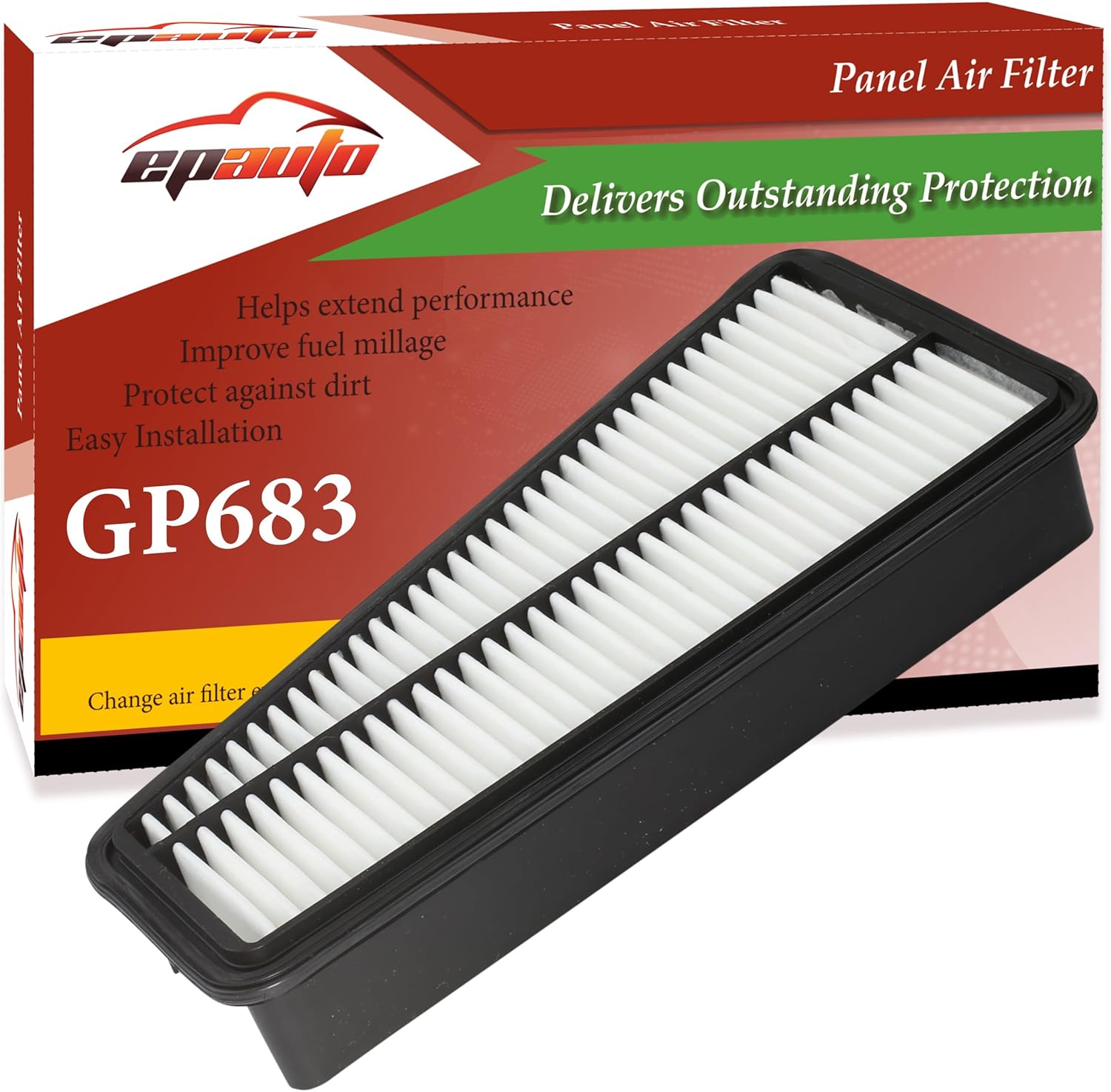
1. EPAuto GP683 Engine Air Filter (replacement for Toyota 17801-0P010)
| Compatible Toyota part numbers | 17801-0P010, 17801-31090 |
|---|---|
| Fitment | Vehicle specific fit for select Toyota V6 models |
| Shape | Trapezoidal |
| Item model number | FP-018-1 |
| Brand | EPAuto |
The EPAuto GP683 is an aftermarket replacement engine air filter built as a direct-fit substitute for Toyota part 17801-0P010 and compatible with several Toyota V6 models. It installs quickly as a drop-in during routine service and is meant for owners who change filters themselves. The filter uses a paper media in a trapezoidal frame to trap dust and debris, helping maintain clean airflow and protect internal engine parts while supporting normal throttle response and fuel economy. Customers report straightforward, tool-free replacement and a close fit to factory pieces. The main limitation is that it is a paper disposable element rather than a reusable or high-performance media, so it requires regular replacement on the vehicle maintenance schedule and may not match the thickness of some factory filters. For owners prioritizing reliable, honest filtration at an affordable price, this performs as expected; those after washable or higher-flow performance filters should look elsewhere.
Best for: Reliability-focused buyers who want an affordable, factory-style replacement filter they can install during scheduled maintenance to keep a Toyota running clean and dependable.
Less Ideal for: Drivers seeking a reusable, high-flow, or performance-oriented air filter for modified or performance-tuned Toyotas should consider washable or performance-brand alternatives.
- Direct-fit replacement for Toyota 17801-0P010 for easy drop-in installation
- Paper filter media captures dust and debris to protect the engine
- Simple DIY install with no special tools required
- Consistent fit reported across compatible Toyota V6 models
- Disposable paper media requires periodic replacement rather than being reusable
- Not a high-flow or performance upgrade compared with washable or performance filters
Verdict A practical, budget-friendly factory-style replacement filter for Toyota V6 vehicles that delivers reliable protection but is not a performance or reusable upgrade.
2. EPAuto CP285 Premium Cabin Air Filter (2-Pack) with Activated Carbon

| Brand | EPAuto |
|---|---|
| Item model number | FC-010-3 |
| OEM Part Number | 72880-AJ000, 87139-02020, 87139-30040, 87139-47010, SEDNF-29110 |
| Recommended replacement | 12 months or 12,000 miles |
| Pack quantity | 2 |
The EPAuto CP285 cabin air filter is a two-pack replacement that uses activated carbon to trap odors and common particulates before they reach the cabin. It installs into the vehicle's passenger compartment filter slot and is intended to be replaced roughly every 12 months or 12,000 miles. For Subaru Outback models listed as compatible, the filter helps keep HVAC airflow cleaner and reduces smells from outside sources. Customers report an easy install and a snug fit on the specified Outback years, and the carbon layer gives noticeably fresher air compared with plain paper filters. On the downside some users say the media is thinner than premium alternatives, so filtration efficiency for the smallest particles may be modest compared with higher-end filters. If you want a straightforward, value-oriented upgrade that balances odor control, fit, and price, this kit delivers; drivers seeking maximum particulate filtration or thicker multi-layer media may prefer a more expensive specialty filter.
Best for: Balanced all-round buyers who want a reliable, value-oriented cabin filter that improves cabin smell and HVAC cleanliness without upgrading to premium specialty media.
Less Ideal for: Drivers who prioritize maximum fine-particle filtration, allergy-grade performance, or thicker multi-layer filters should consider higher-end alternatives.
- Includes two filters so you get a spare for the next service interval
- Activated carbon layer reduces odors and helps freshen cabin air
- Reported easy installation and proper fit for compatible Subaru Outback years
- Recommended replacement interval provided for convenient maintenance planning
- Filter media is thinner than some premium competitors, which may reduce long-term particulate capture
- Not marketed as a high-efficiency particulate (HEPA) replacement
Verdict A practical, value-focused activated-carbon cabin filter that freshens air and fits compatible Subaru Outback years, but it is not a premium heavy-media particulate filter.
3. K&N High-Flow Lifetime Engine Air Filter (33-2443)

| Brand | K&N |
|---|---|
| Model | 33-2443 |
| Automotive Fit Type | Vehicle Specific Fit |
| Made in | USA |
The K&N 33-2443 is a performance-focused replacement engine air filter built to fit directly into the factory air box and improve airflow for stronger throttle response and modest horsepower gains. It uses multilayer cotton gauze media treated to trap contaminants while allowing higher volume air flow than a typical paper element, and K&N markets it as washable and reusable for long-term use. Installation is simple and quick because the filter drops into the stock housing without modification, so it is a straightforward upgrade for drivers who want a durable, maintenanceable filter rather than frequent replacements. Practical benefits include reduced filter waste, lower long-term running costs, and potential small improvements in acceleration and fuel economy under certain conditions. Important limitations are that gains are incremental on a stock intake system and the filter requires periodic cleaning and re-oiling to maintain performance, which adds maintenance tasks and requires careful servicing to avoid over-oiling the MAF on some vehicles.
Best for: Performance-oriented buyers who prioritize durable, reusable parts and want small, reliable airflow and response improvements while retaining the factory intake layout.
Less Ideal for: Buyers who prefer zero-maintenance disposable filters or who expect large power increases without additional intake or tuning upgrades should consider other options.
- Washable, reusable design reduces long-term replacement cost and landfill waste
- Higher-flow multilayer cotton gauze media can improve throttle response and modest power under stock intake conditions
- Engineered to fit the factory air box for quick, tool-free installation
- Long service interval between cleanings compared with disposable filters
- Requires periodic cleaning and re-oiling, which adds maintenance steps and small recurring cost
- Performance gains are modest on a stock intake and not a substitute for a cold-air intake or other performance mods
Verdict A durable, reusable high-flow replacement filter aimed at drivers who want modest performance and long-term value while keeping the factory airbox.
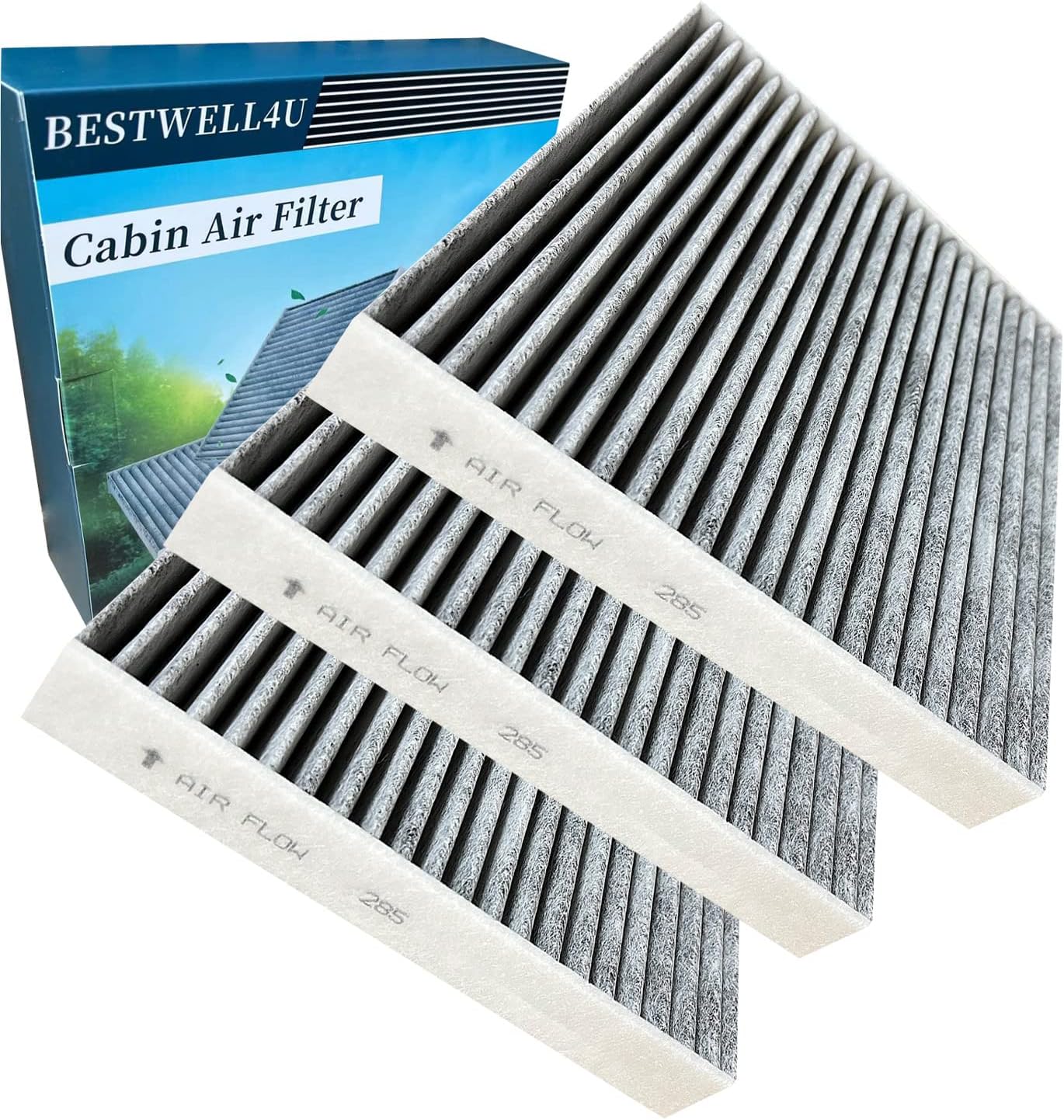
4. BESTWELL4U BW285 3-Pack Cabin Air Filter (replacement for Toyota filters)
| Brand | BESTWELL4U |
|---|---|
| Item model number | BW285 |
| Recommended replacement interval | 12 months or 12,000 miles |
This three-pack of BESTWELL4U BW285 cabin filters is a budget-focused replacement intended to match common Toyota cabin filter part numbers used on older Tundra and other Toyota models. Each filter is pleated and sealed at the ends to trap pollen, dust, and road grime, and the listing notes an exact size match to factory filters and an easy 5 to 8 minute self-install. In real-world use the set is convenient for owners who prefer to keep spare filters on hand and change them at regular intervals to reduce cabin odors and improve HVAC airflow. Practical benefits include multiple filters per purchase, apparently solid pleat depth for particle capture, and no factory glue smell out of the package. Limitations are that fitment can vary across model years because Toyota changed some holders and framed filter systems in newer vehicles, so newer Tundra models with a plastic frame holder may require the factory-style framed filter instead. Follow the airflow arrow when installing to ensure correct orientation.
Best for: Budget-conscious Toyota Tundra owners who prioritize low cost and having spare cabin filters on hand to perform regular maintenance themselves.
Less Ideal for: Owners of newer Tundra models that use a plastic framed cabin filter holder or buyers who need a certified high-efficiency filtration rating for allergy or air-quality concerns.
- Three filters per pack provides spare replacements and better value for routine maintenance
- Pleated, sealed construction that captures pollen and typical cabin contaminants
- Sized to match common Toyota cabin filter part numbers for straightforward installation on compatible models
- Not compatible with Toyota models that use a plastic framed holder requiring a different filter design
- No explicit filtration rating (HEPA/PM2.5) provided to quantify particle capture efficiency
Verdict A cost-effective three-pack that fits many Toyota cabin filter part numbers and is ideal for routine maintenance, but check your Tundra’s filter holder design before buying.
5. Bosch 6055C HEPA Cabin Air Filter

| Brand | Bosch |
|---|---|
| Model | 6055C |
| Filtration efficiency | 99.97% at 0.3 microns |
| Media type | Melt-blown electrostatic with cotton layer |
The Bosch 6055C is a HEPA-style cabin air filter made to replace the factory cabin filter in compatible Toyota models such as the Tundra. It uses a melt-blown electrostatic layer plus an additional static cotton layer to capture very small particles, and Bosch says the media meets HEPA efficiency standards at 0.3 microns. In practical use the filter installs in the glovebox/footwell filter tray like a standard cabin filter and delivers noticeably cleaner cabin air by removing pollen, road dust, and other particulates. Structural ribs help the filter keep its shape and maintain airflow as it loads, so HVAC performance stays stable between changes. Limitations: this product targets particulate removal and does not include an activated carbon layer for gas, odor, or volatile organic compound control, and static media performance declines over time so regular replacement is necessary. Fitment can vary by trim and year so verifying Tundra compatibility before purchase is important.
Best for: A risk-averse mainstream buyer who prioritizes proven, factory-quality filtration for protecting cabin air in their Toyota Tundra and prefers a straightforward, reliable replacement part.
Less Ideal for: Drivers whose primary concern is odor or chemical gas removal should consider filters with an activated carbon layer instead.
- HEPA-rated media claims 99.97% efficiency at 0.3 microns for strong particulate removal
- Multi-layer construction (melt-blown electrostatic plus cotton layer) increases particle holding capacity
- Structural ribs maintain filter shape and stable airflow as the filter loads
- Designed for direct replacement installation in compatible Toyota filter housings
- No activated carbon layer so it will not noticeably reduce vehicle odors or gaseous pollutants
- Static electrostatic filtration efficiency decreases over time and requires periodic replacement
Verdict Choose this Bosch HEPA cabin filter for reliable, high-efficiency particulate removal in a Toyota Tundra, but pick a carbon-equipped option if you need odor or gas control.
6. K&N Advantage Plus Engine Air Filter — 18,000-Mile Long Life (KNA-2281)

| Compatible vehicles | 2002–2015 Toyota mid-size truck and SUV V6 applications |
|---|---|
| Service interval | Up to 18,000 miles |
| Filter media | Premium synthetic or cellulose blend |
| Manufacturer | K&N Engineering, Inc. |
This K&N Advantage Plus air filter is a reusable replacement designed for Toyota mid-size V6 trucks and SUVs and offers a longer service interval than standard disposable filters. It installs in the factory air box and is intended for routine highway driving where the filter can go up to 18,000 miles before replacement. The filter uses a premium synthetic or cellulose-blend media that K&N says delivers up to 99 percent engine protection while maintaining strong airflow. Practical benefits include reduced waste since the element is washable, straightforward installation, and compatibility with common Toyota V6 applications. Users report a snug, factory-quality fit and only minor intake noise changes. Limitations to consider are that washable reusable media requires occasional cleaning and care, and some drivers have noted the media can seem more open than certain other filters which could affect fine particulate capture in very dusty conditions. There is a one-year limited warranty from the manufacturer.
Best for: A practical optimizer who wants a durable, lower-maintenance air filter that reduces recurring costs and fits Toyota mid-size V6 trucks and SUVs without modification.
Less Ideal for: Drivers who regularly operate in extremely dusty or off-road conditions and prefer disposable filters changed frequently for maximum particulate capture should consider other options.
- Long 18,000-mile service interval reduces replacement frequency compared with typical 12,000-mile disposable filters.
- Reusable, washable design cuts waste and lowers long-term maintenance cost.
- Designed to fit factory air box for Toyota mid-size V6 trucks and SUVs for easy, direct installation.
- Premium filter media aimed at maintaining strong airflow while protecting the engine.
- Requires periodic cleaning and correct maintenance to retain performance.
- Washable media may allow slightly more fine particulate through compared with some denser disposable filters.
Verdict A cost-conscious, reusable replacement that extends service intervals and fits Toyota mid-size V6 trucks and SUVs while requiring periodic cleaning.
7. FRAM Extra Guard CA10755 Replacement Engine Air Filter

| Model | FRAM CA10755 |
|---|---|
| Automotive Fit Type | Vehicle Specific Fit |
| Protection Interval | Up to 12,000 miles or 12 months |
| Shape | Rectangular |
The FRAM Extra Guard CA10755 is a drop-in replacement engine air filter that blocks dirt and particles to protect the engine and keep airflow steady. It installs in minutes as a direct fit for compatible Toyota applications and is intended for routine DIY maintenance between service intervals. FRAM advertises filtration media that captures roughly twice as much dirt as standard retail filters and the design includes reinforced screening so the media stays in place under normal use. For owners wanting simple upkeep, the filter can help maintain throttle response and consistent engine performance when replaced on schedule. It is a single-use replacement with a recommended service interval of up to 12,000 miles or 12 months, so you will need yearly swaps under typical driving. Do not expect performance gains beyond what a clean factory-quality filter provides; benefits are mainly protective and maintenance-oriented rather than sporty upgrades.
Best for: Buyers who want a balanced, reliable replacement that makes routine maintenance simple and protects engine longevity without fuss.
Less Ideal for: Drivers seeking reusable, high-flow performance filters or those who prefer extended-service specialty filters for heavy off-road or extreme-duty use.
- Vehicle-specific fit that installs quickly for DIY maintenance.
- Filter media engineered to trap more dirt than basic retail filters for up to 12,000 miles.
- Reinforced screening helps keep filter pleats stable and maintain airflow.
- Widely compatible with many Toyota models used in light-duty and daily driving scenarios.
- Not a reusable or high-performance washable option, requires regular replacement.
- Manufacturer lists the item as discontinued which may affect long-term availability.
Verdict A practical, easy-to-install factory-quality replacement that protects the engine for typical Toyota ownership but is not a reusable performance upgrade.
Choosing the Right Toyota Tundra Air Filter: Key Factors to Consider
Filtration Efficiency
Filtration efficiency determines how well the air filter captures particles that cause engine wear. Higher-efficiency media trap smaller particles, reducing abrasive dust that can erode cylinder walls and valve seats.
However, efficiency must be balanced with airflow. Very dense media may block more contaminants but also restrict intake flow. Look for filters with published particle capture ratings or lab test data, and prioritize media designed to capture common road dust and soot while still allowing adequate air delivery for the engine.
Fitment and Seal
Proper fitment ensures the filter seats correctly in the airbox and seals against unfiltered air bypass. A poor fit can allow contaminants to enter around the edges, negating the filter media's effectiveness.
Check that the replacement matches the Tundra's mounting footprint and flange dimensions. The sealing surface should be robust, and materials should compress or lock into place without deformation. A secure seal is as important as media quality because leaks compromise protection.
Airflow and Engine Performance
Airflow affects throttle response, power delivery, and, in some cases, fuel efficiency. Filters with low restriction allow the engine to draw air more freely, which can improve responsiveness under load or during acceleration.
That said, unrestricted airflow is only beneficial if the media still provides adequate filtration. Consider documented pressure-drop values or manufacturer airflow ratings when available, and prioritize options that maintain a reasonable balance between unrestricted flow and contaminant capture.
Durability and Service Life
Durable construction and longer service intervals reduce maintenance frequency and the chance of premature failure. Factors like pleat count, frame rigidity, and media bonding affect how long a filter maintains its shape and filtration properties.
Some filters are designed for extended service in dusty or demanding environments, while others require more frequent replacement. Assess expected service life based on media type and environmental exposure, and choose a filter whose maintenance interval fits your driving conditions.
Installation and Maintenance
Ease of installation matters for owners who perform their own maintenance. A filter that installs cleanly without special tools reduces the chance of incorrect seating or damage during replacement.
Also consider how straightforward it is to inspect and change the filter. Clear instructions, accessible fasteners, and compatibility with standard replacement schedules make ownership simpler. If the design allows reusable cleaning, ensure the cleaning procedure is well documented and feasible for your routine.
Material and Media Type
The filter media material influences both filtration and airflow characteristics. Paper media is common and offers consistent filtration at a predictable service life. Synthetic and cotton-blend media can provide higher airflow or washability, but they vary in real-world performance.
Consider how the media responds to moisture, contaminants, and cleaning if reusable. The frame and gasket materials also matter for temperature tolerance and long-term sealing. Choose media and materials that match your climate and driving demands.
FAQ
How often should I change the Toyota Tundra air filter?
Replacement intervals often depend on driving conditions. Under normal driving, many owners change the engine air filter every 12,000 to 30,000 miles, but dusty or off-road conditions usually require more frequent changes. Check the filter visually during routine service and replace it when it appears clogged or damaged.
Can I use a reusable filter in my Toyota Tundra?
Reusable filters are available and can reduce waste if maintained correctly. They typically require periodic cleaning and re-oiling or conditioning according to the maker's instructions. Make sure the reusable option has appropriate filtration performance and that you follow the maintenance regimen to avoid reduced protection.
Does a higher-flow air filter harm fuel economy?
Higher-flow filters aim to reduce intake restriction, which can slightly affect throttle response and, in some cases, fuel use. In most everyday driving scenarios, the impact on fuel economy is usually small and depends on overall engine management. Prioritize a filter that balances airflow gains with reliable filtration to protect the engine.
Should I change both the cabin and engine air filters at the same time?
Cabin and engine air filters serve different purposes, so they do not always need simultaneous replacement. The cabin filter affects in-cabin air quality, while the engine filter protects the engine. Inspect both during service; replace whichever is visibly dirty or past its recommended interval. Replacing both together can be convenient but is not required.
How do I confirm the correct air filter size for my Tundra?
Verify fitment by checking the vehicle's owner's manual or the airbox specifications for the Toyota Tundra. Measure the existing filter's dimensions and note the mounting orientation. Match replacement filters to those dimensions and confirm the sealing flange aligns with the airbox to ensure correct installation.
How We Chose the Best Toyota Tundra Air Filter
We focused on filters that match the Toyota Tundra's factory fitment and mounting dimensions, ensuring proper sealing and alignment with the airbox. Filtration performance was a primary criterion, with attention to particle capture efficiency across a range of sizes relevant to engine wear. We also evaluated airflow characteristics to balance protection with minimal restriction, since overly restrictive media can reduce responsiveness. Durability and service life were considered, including construction quality and media type. Ease of installation and availability of replacement elements were factored in so owners can change filters without specialized tools. We excluded products lacking clear fitment information or those designed for generic or multi-vehicle use without specific Tundra compatibility. In short, selections had to demonstrate proper fit, documented filtration performance, acceptable airflow, durable construction, and practical serviceability.
Our full evaluation process is outlined in our review methodology.
Conclusion
Choosing the right Toyota Tundra air filter means balancing filtration efficiency, proper fitment, and airflow. Prioritize a filter that seals correctly in the airbox and offers documented particle capture without excessive restriction. Consider your driving environment and maintenance preferences when weighing service life and media type.Ultimately, a well-chosen filter protects the engine and supports consistent performance. Use the evaluation criteria above to match a filter to your Tundra's needs and to the conditions you typically drive in.
Explore More:
- Check out all Toyota Tundra parts & accessories
- Explore Air Filters Maintenance & Repair Guides
- Explore Engine
- Browse all Auto Parts
