

Note: This article contains affiliate links. If you click on these links and make a purchase, I may earn a small commission at no extra cost to you. This helps support my research and content. Read my full affiliate disclosure here.
If you drive a 2013–2017 Subaru Crosstrek, the right air filter matters for engine longevity and everyday drivability. A clean, properly fitting engine air filter helps keep dirt and debris out of the intake while allowing sufficient airflow for combustion. That balance affects throttle response, fuel economy, and long-term wear.This guide covers the top shortlisted air filters that fit the 2013–2017 Crosstrek and explains the evaluation criteria used to pick them. You will get practical guidance on what matters for fitment, filtration efficiency, and maintenance before the product blocks below.
Looking for other parts? See all Subaru Crosstrek parts & accessories.
Top Picks at a Glance
| Best Overall The best all-around choice for most situations | EPAuto CP930 Cabin Air Filter with Activated Carbon |  |
| Best Quality Built to a higher standard if you want something more solid | K&N Advantage Plus Engine Air Filter (18,000 Mile) |  |
| Best Value The sweet spot between price and what you get | Carory Engine Air Filter AF997 for Subaru (vehicle-specific fit) |  |
| Best Budget The cheapest option that still gets the job done reliably | WISAMIC WM997 Engine Air Filter (vehicle-specific fit) |  |
| Highest Rated A top-rated pick with lots of positive feedback | EPAuto GP997 (FP-012-1) Engine Air Filter — compatible with select Subaru models | 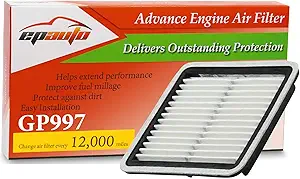 |
| Most Popular A crowd favorite that many people choose with confidence | Spearhead Max Thrust Engine Air Filter (MT-997) |  |
| Best Seller A high-volume bestseller chosen again and again | SCREW RHINO Engine and Cabin Air Filter Combo for Subaru Crosstrek 2013-2017 |  |
1. EPAuto CP930 Cabin Air Filter with Activated Carbon

| Compatible models | Subaru Crosstrek 2016-2017 (also fits select Forester, Impreza, WRX, WRX STI) |
|---|---|
| Replacement interval | Every 12 months or 12,000 miles |
| Manufacturer | EPAuto |
| OEM part number | 72880-FG000, 72880-FJ000 |
The EPAuto CP930 is a direct-fit cabin air filter that replaces the factory unit on compatible Subaru models, including 2016-2017 Crosstrek. It uses multi-layer filtration with activated carbon to help trap dust, pollen, smog and cabin odors, and is intended to be swapped during routine maintenance—drop the glove box, remove the cover, slide the old filter out and insert the new one. The filter’s carbon layer provides noticeable odor reduction compared with basic paper filters and can improve perceived HVAC airflow by keeping the intake path cleaner. It is sized for an easy DIY swap and is marketed as a yearly or 12,000-mile service item. Limitations are typical for aftermarket cabin filters: carbon reduces smells and some gaseous contaminants but will not match a dedicated health-grade or HEPA system for ultra-fine particles or allergens, and long-term performance depends on cabin environment and maintenance interval.
Best for: Drivers who want an affordable, easy-to-install cabin filter that improves cabin air quality and reduces odors while following routine maintenance intervals.
Less Ideal for: People seeking medical-grade filtration for severe allergies or environments with heavy smoke should consider higher-efficiency or specialized filters instead.
- Activated carbon layer helps reduce cabin odors and some gaseous pollutants
- Designed as a direct replacement for specified Subaru models for simple DIY installation
- Helps trap common contaminants like dust, pollen, and smog to protect HVAC vents
- Compact, lightweight design recommended for annual or 12,000-mile replacement
- Not a HEPA-level filter so it may not capture the smallest particulate allergens or smoke as effectively
Verdict: A practical, easy DIY cabin filter upgrade for 2016–2017 Crosstrek owners who want better odor control and routine particulate capture without swapping to premium medical-grade filters.
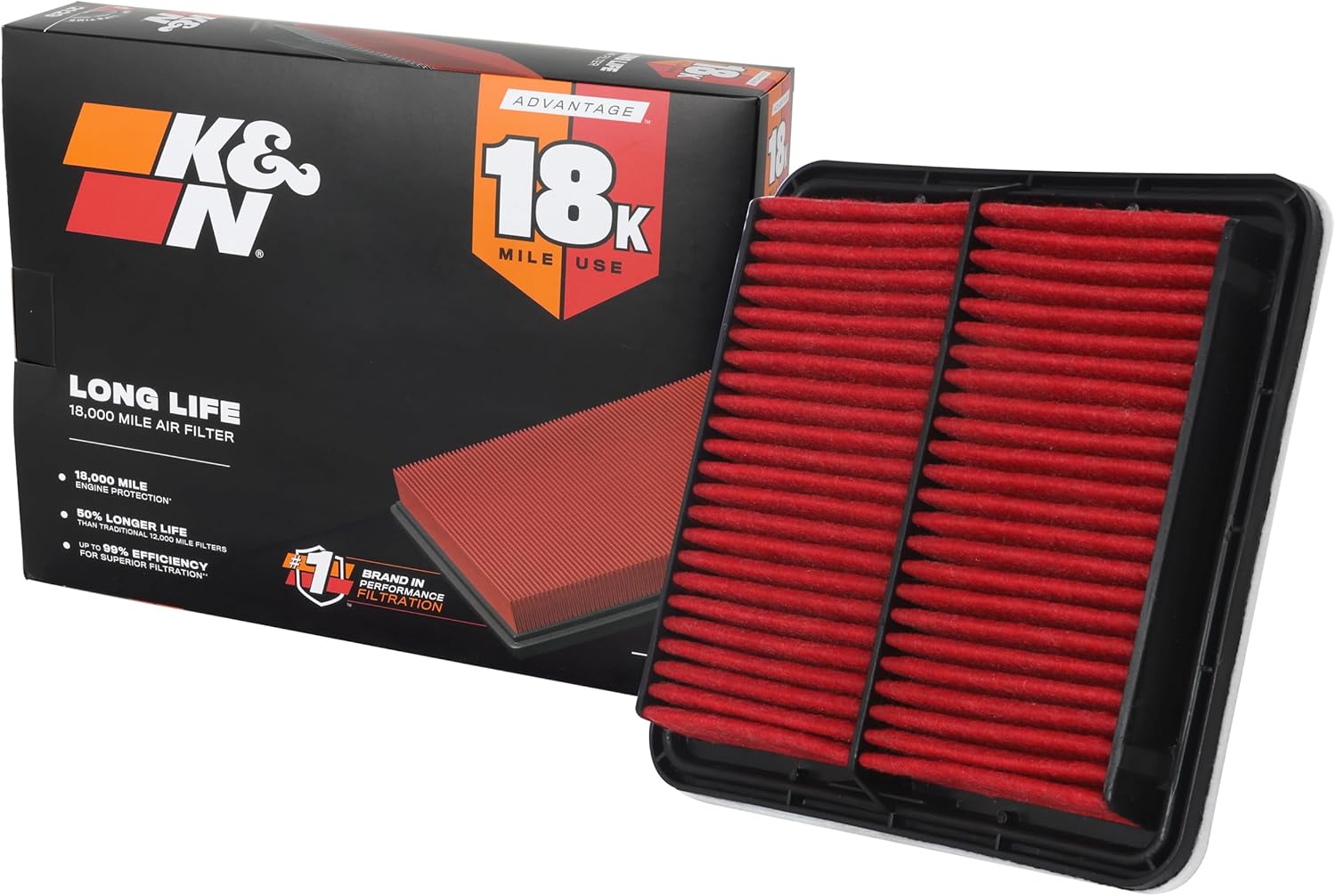
2. K&N Advantage Plus Engine Air Filter (18,000 Mile)
| Model Number | KNA-2304 |
|---|---|
| Included Components | 1 Air Filter |
| Item Type Name | K&N Advantage Air Filter 18K Miles |
| Manufacturer | K&N Engineering, Inc. |
This K&N Advantage Plus air filter is a long-life, vehicle-specific replacement designed to drop into the factory airbox. It uses a premium synthetic or cellulose blend media to deliver up to 99% engine protection while extending service intervals to about 18,000 miles, roughly 50 percent longer than many standard 12,000-mile filters. Installation is straightforward and typically takes only minutes for a Crosstrek when swapping the factory element. The longer service interval reduces maintenance frequency for drivers who value performance with lower upkeep, and the durable construction holds up over repeated use. Expect similar fit and airflow characteristics to factory-quality filters, with the practical benefit of fewer replacements over several years. Limitations are that this is a disposable replacement rather than a washable lifetime element, and the advertised efficiency is application dependent so real-world gains in power or throttle response will be modest on a stock Crosstrek.
Best for: Drivers who want a performance-minded, low-maintenance replacement that fits the vehicle without modification and reduces how often the air filter needs changing.
Less Ideal for: Drivers seeking a washable, lifetime performance filter or those focused on extracting significant power gains from intake modifications should consider other options.
- Vehicle-specific fit for direct installation into the factory airbox
- Extended 18,000-mile service interval reduces replacement frequency
- Premium blend filter media rated for up to 99% engine protection
- Durable construction suitable for regular road use and long-life service
- Not a washable or reusable unit; designed as a long-life disposable replacement
Verdict: Choose this K&N filter if you want a direct-fit, performance-oriented replacement that extends service intervals to about 18,000 miles.
3. Carory Engine Air Filter AF997 for Subaru (vehicle-specific fit)

| Brand Name | Carory |
|---|---|
| Model Number | AF997 |
| Product Grade | Replacement Part |
| Fit Type | Vehicle Specific Fit |
This Carory AF997 engine air filter is a direct replacement designed for a range of Subaru models including the Crosstrek gas years that overlap the 2013 to 2017 range. It installs like a standard factory-style paper panel filter and is intended to restore proper airflow and filtration after the stock unit reaches service life. In everyday use it helps maintain a clean air-to-fuel ratio, which supports steady engine performance and fuel efficiency. The filter lists multiple reference numbers for fitment and is sold as a single unit, making it straightforward to swap during routine maintenance. Because it is a replacement-grade, vehicle-specific part, you get a form-fit element without performance upgrades such as washable media or high-flow performance media. If you want a simple, cost-effective way to refresh filtration and preserve factory drivability, this does the job; if you need higher airflow or reusable construction, consider aftermarket performance filters instead.
Best for: Buyers who want an inexpensive, no-frills replacement that restores factory filtration and engine efficiency during regular maintenance.
Less Ideal for: Drivers seeking performance gains from higher-flow or reusable filters or those who prefer premium washable media should look at performance-focused options.
- Vehicle-specific fit for numerous Subaru models, simplifying installation
- Designed to maintain steady airflow and proper air-to-fuel ratio for reliable engine performance
- Sold as a single replacement unit suitable for routine maintenance
- Matches multiple factory reference numbers for easy cross-referencing with OEM parts
- Replacement-grade paper media rather than reusable or high-flow performance material
Verdict: A practical, budget-friendly factory-style replacement that restores clean airflow and engine efficiency for routine maintenance.
4. WISAMIC WM997 Engine Air Filter (vehicle-specific fit)

| Model Number | WM997 |
|---|---|
| OEM Equivalent Part Number | 16546-AA090, 16546-AA10A, 16546-AA120, 16546-AA12A |
| Product Grade | Replacement Part |
| Fit Type | Vehicle Specific Fit |
This Wisamic WM997 is a direct-fit replacement engine air filter intended for Subaru vehicles that accept the CA9997/16546-AA09x family of filters. It installs in the factory airbox and functions like a standard pleated paper element to trap dust and debris before air reaches the engine. Typical use is routine maintenance at the recommended 12,000 miles or 12 months to maintain airflow and protect engine components. The listing highlights vehicle-specific fit and OEM-equivalent part numbers, so it should drop into place without modification on supported Subaru applications. Practical benefits include restoring airflow and helping preserve acceleration and fuel economy compared with a clogged element, plus compatibility with common aftermarket part references. Limitations are that this is a basic replacement filter rather than a performance or reusable unit, so it must be replaced periodically and will not improve power beyond factory specifications.
Best for: Buyers looking for an affordable, factory-style replacement air filter to keep a Subaru running reliably between scheduled services.
Less Ideal for: Drivers seeking a washable, reusable, or high-flow performance filter who want measurable gains in power or long-term filter reuse.
- Vehicle-specific fit for Subaru models that use the CA9997 family for easy installation
- Lists multiple OEM-equivalent part numbers for straightforward cross-referencing
- Restores factory airflow characteristics to help maintain engine performance
- Simple, no-frills construction suitable for routine maintenance
- Not a washable or reusable performance filter; requires regular replacement
Verdict: A low-cost, vehicle-specific replacement that restores factory airflow for routine maintenance on compatible Subaru Crosstrek models.
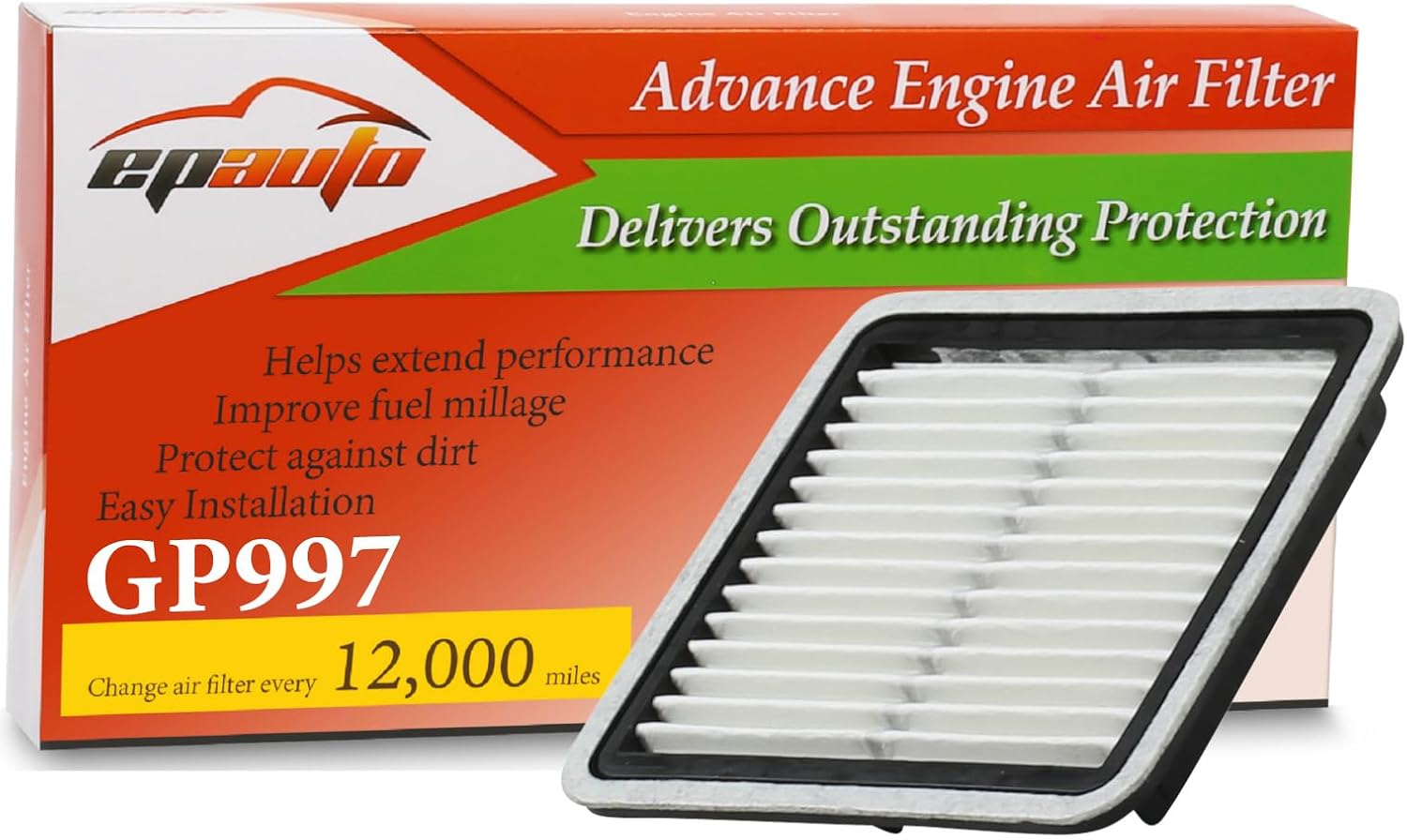
5. EPAuto GP997 (FP-012-1) Engine Air Filter — compatible with select Subaru models
| Compatible Part Numbers | 16546-AA090, 16546-AA10A, 16546-AA120, 16546-AA12A |
|---|---|
| Automotive Fit Type | Vehicle Specific Fit |
| Item model number | FP-012-1 |
| ASIN | B01AXAQ4OC |
The EPAuto GP997 is a direct-fit replacement engine air filter made to match several Subaru factory part numbers for straightforward swap-in service. It installs the same way as the factory element: open the airbox, remove the old filter, wipe the housing, and drop the new rectangular filter in place. The pleated media captures dust and road debris to help preserve intake components and maintain engine breathing between service intervals. Its vehicle-specific fit and OEM cross-reference numbers make it an easy option for DIY maintenance or routine shop service, and the light weight and compact shape keep packaging simple. Expect typical lifespan guidance of around 12,000 miles under normal driving; for dusty conditions change intervals should be shorter. This filter provides reliable, no-frills protection but does not advertise performance gains, advanced multilayer filtration, or washable/reusable construction, so buyers looking for sport or high-flow upgrades should consider other options.
Best for: Buyers who prioritize straightforward, reliable replacement parts and want a filter that fits factory specifications for routine maintenance on their Subaru.
Less Ideal for: Drivers seeking a performance-oriented or reusable high-flow filter for spirited driving or racing should look at specialized upgrade options instead.
- Vehicle-specific fit with cross-referenced Subaru part numbers for easy replacement.
- Pleated filter media traps common road dust and debris to protect the intake system.
- Simple, direct-fit design makes DIY installation quick and tool-light.
- Lightweight, compact form factor stores and installs without clearance issues.
- Not marketed for high-flow performance or horsepower gains.
- No washable or reusable filter option included.
Verdict: A dependable, vehicle-matched replacement filter that makes routine engine protection simple for Subaru owners focused on reliability.
6. Spearhead Max Thrust Engine Air Filter (MT-997)

| Manufacturer | Spearhead |
|---|---|
| Item model number | MT-997 |
| Manufacturer Part Number | MT-997 |
| OEM Part Number | CA9997 |
| Recommended service interval | Up to 15K miles or 1 year |
The Spearhead Max Thrust MT-997 is a direct-fit replacement engine air filter for compatible Subaru models that aims to improve airflow and dirt-holding capacity compared with standard paper filters. It uses a multi-layer Hex-D pleat design that traps more particles while maintaining airflow, which the brand says helps restore throttle response and fuel economy for cars showing reduced performance. Installation is straightforward for a DIYer since it is a drop-in factory-style part, and the product copy recommends service intervals up to 15,000 miles or one year depending on conditions. Practical benefits include better contaminant capture and the potential for crisper acceleration on vehicles that had clogged or worn filters. Limitations are that claimed mileage life depends heavily on driving environment and the filter may trigger airflow-sensor warnings if an incompatible sensor-equipped vehicle is fitted incorrectly. Fitment is limited to specific model years and trims, so verify year and engine before buying.
Best for: Drivers seeking a proven, higher-capacity replacement air filter for routine maintenance who prefer a direct-fit part that is simple to install and supported by many positive user reviews.
Less Ideal for: Owners looking for performance-oriented reusable filters or those who frequently drive in very dusty or off-road conditions where a heavy-duty aftermarket filter would be a better choice.
- Direct-fit replacement for listed Subaru model years for easy DIY install
- Hex-D pleat multi-layer media increases dust holding capacity versus typical filters
- Designed to maintain airflow to help restore throttle response and fuel economy
- Recommended service interval up to 15,000 miles or one year for longer change periods
- Longevity and performance claims depend on driving conditions and may require earlier replacement in dusty environments
- Does not fit hybrid or certain special trims—confirm exact year and trim before purchase
Verdict: A simple, higher-capacity direct-fit replacement for Subaru owners who want an easy DIY upgrade to improve airflow and contaminant capture without switching to a reusable performance filter.
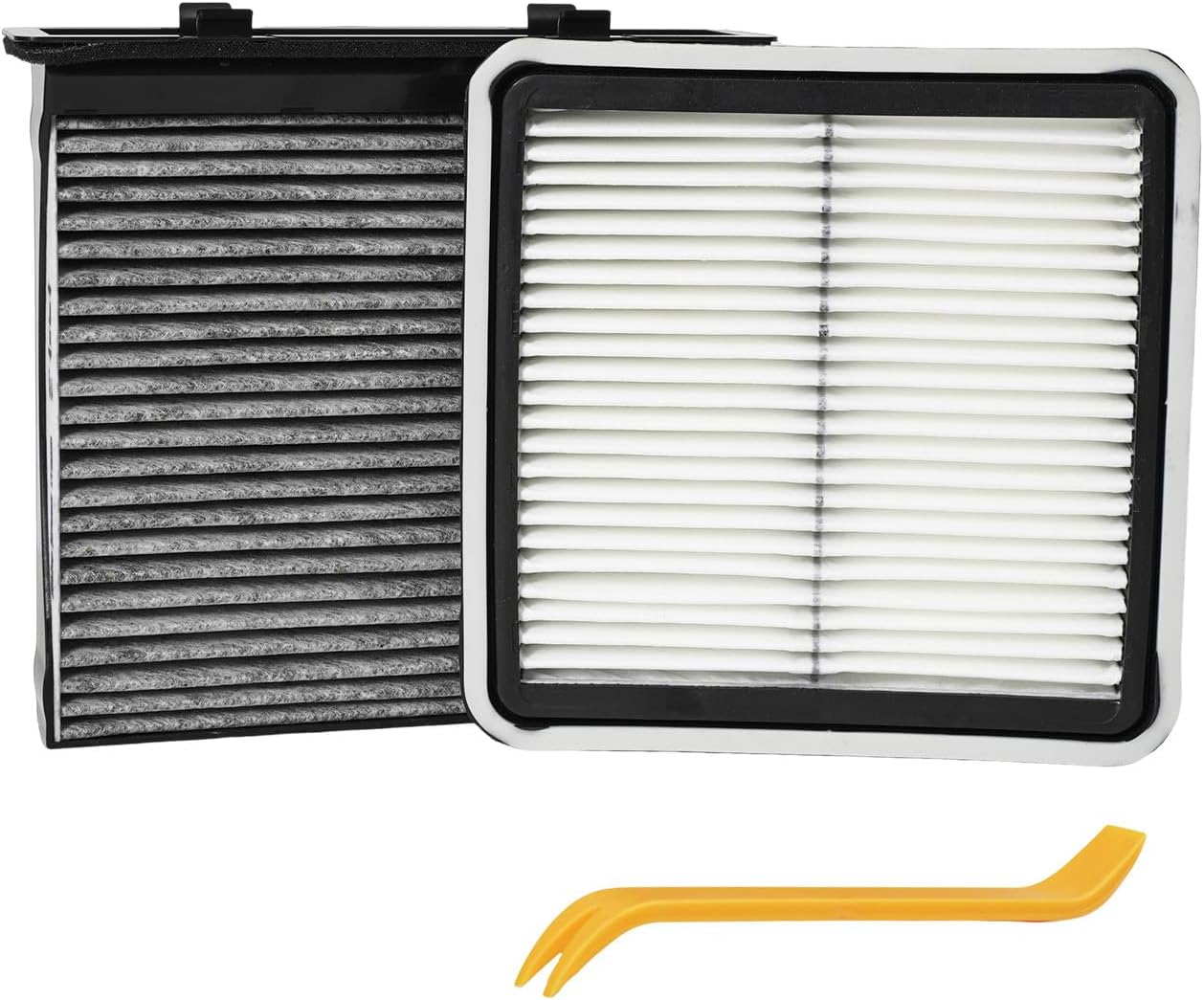
7. SCREW RHINO Engine and Cabin Air Filter Combo for Subaru Crosstrek 2013-2017
| Compatible Models | Subaru Crosstrek 2013-2017 |
|---|---|
| Engine Air Filter Replace Part | CA9997 |
| Cabin Air Filter Replace Part | CF10930 |
| Recommended Service Interval | 12,000–15,000 miles / 12 months |
This SCREW RHINO combo supplies both the engine and cabin filters matched to Subaru Crosstrek 2013–2017 fitment, designed to be a direct vehicle-specific replacement. The cabin filter uses a multi-layer construction with an activated carbon layer to trap fine particles, odors, and gases, while the engine filter replaces factory part CA9997 to protect the intake from dust and larger contaminants. Installation follows normal filter-replacement procedures and is suitable for routine service intervals; the brand recommends replacing both filters yearly or every 12,000–15,000 miles depending on conditions. Notable features include closer pleat design, reinforced center line, and a polyurethane sealing rim to help maintain a good seal and consistent airflow. The practical benefits are improved cabin air freshness and continued engine protection at a fraction of dealer cost. Limitations: compatibility is limited to specified Subaru models so confirm part numbers before buying, and aftermarket fit and long-term durability may vary versus factory-brand parts.
Best for: Someone who wants a reliable, vehicle-matched replacement set to maintain factory-level cabin air quality and engine protection without buying dealer parts, and who prefers straightforward maintenance and predictable service intervals.
Less Ideal for: Buyers seeking premium OEM-brand filters with documented long-term durability testing or those needing filters for multiple different vehicle models.
- Combo includes both engine and cabin filters for one purchase
- Activated carbon layer in cabin filter reduces odors and gaseous contaminants
- Vehicle-specific fit and polyurethane sealing rim help ensure a tight seal
- Multi-layer construction and closer pleat design increase filtration surface area
- Fitment is specific to listed Subaru models so it will not work for other vehicles
Verdict: A convenient, vehicle-specific engine and cabin filter combo that refreshes interior air and protects the intake for Crosstrek owners who want a dependable, low-risk replacement.
Choosing the Right 2013-2017 Subaru Crosstrek Air Filter: Key Factors to Consider
Filtration Efficiency Versus Airflow
A filter's media must capture harmful particles without overly restricting air. Higher filtration efficiency typically uses denser media or more pleats, which is good for engine longevity, but too much restriction can reduce airflow and throttle response.
For the Crosstrek you should look for a balance: media capable of trapping fine dust common on rural roads while maintaining enough free area to preserve normal engine power and fuel economy. Consider the vehicle's typical driving conditions when weighing filtration versus flow.
Fitment and Seal Integrity
Correct physical fit and a reliable sealing surface prevent unfiltered air from bypassing the media. A poorly fitting filter can allow debris into the intake, negating any filtration benefits.
Verify that the filter matches the Crosstrek's factory airbox dimensions and that the gasket or foam seal sits flush all around. A robust frame prevents deformation during installation and service, ensuring the filter maintains a consistent seal over time.
Filter Media Material and Durability
Different media types such as paper, cotton, or synthetic blends perform differently under stress, moisture, and repeated handling. Durable media resists sagging, tearing, and collapse when exposed to humidity or pressure changes.
For Crosstrek owners who drive in varied climates, choose media that retain shape and filtration properties over the recommended service interval. Consider whether the media tolerates repeated inspections and wet-road exposure without disintegrating.
Serviceability and Replacement Interval
Ease of inspection and replacement affects how often the filter actually gets changed. A filter that sits neatly in the factory airbox and is simple to remove will encourage timely engine air filter replacement.
Check the expected service life and how to access the airbox on the 2013–2017 Crosstrek. If you frequently drive on dusty roads, plan for shorter intervals. Filters that are easy to inspect visually during routine maintenance help you avoid neglect.
Impact on Fuel Economy and Performance
Airflow characteristics influence combustion efficiency. A filter that chokes the intake can cause slightly higher fuel consumption and reduced throttle response, while excessively permissive filters can let more contaminants through.
Prioritize filters that preserve factory airflow specifications for the Crosstrek to maintain predictable fuel economy. If you want a modest performance edge, ensure any airflow gains do not come at the cost of significantly reduced particulate capture.
Compatibility With Environmental Conditions
Driving environments—from dusty back roads to wet coastal climates—affect how a filter performs. Some media handle moisture and salt spray better, while others excel at trapping fine particulates from dry, dusty conditions.
Select a filter whose construction is appropriate for the Crosstrek's typical use. For owners in salty or humid regions, choose corrosion-resistant frames and media that do not degrade when wet. For dusty areas, favor higher dust-holding capacity.
When To Replace Your Crosstrek Engine Air Filter
The replacement interval depends on driving conditions. Under normal city and highway driving, many owners inspect the engine air filter during routine service and replace it every 12,000 to 30,000 miles as needed. In dusty or off-road conditions the interval should be shorter and based on visual inspection.
Look for heavy dirt buildup, visible media damage, or significant airflow restriction. Inspect the filter each oil change or during scheduled maintenance so you can replace it before it affects engine performance.
- Inspect at every oil change or service visit.
- Shorten intervals in dusty or off-road use.
- Replace immediately if media is torn or the seal is compromised.
OEM Versus Aftermarket Choices
OEM filters are designed to match factory fit and filtration characteristics. Aftermarket filters offer a range of media types and construction quality. The right choice depends on whether you prioritize exact factory airflow and seal or specific media properties like higher dust-holding capacity.
For the 2013–2017 Crosstrek, ensure any aftermarket option lists explicit fitment for those model years. Check build quality, gasket material, and pleat construction to avoid fitment surprises.
- OEM: predictable fit and original specs.
- Aftermarket: potential tradeoffs between media performance and airflow.
Cabin Filter Versus Engine Air Filter: Know the Difference
The Crosstrek uses separate filters for the engine intake and the cabin ventilation system. The engine air filter protects internal engine components, while the cabin filter improves air quality inside the vehicle.
Do not confuse the two when shopping. Each has different dimensions and performance targets. If you are addressing cabin air quality, choose the proper cabin filter rather than an engine air intake filter.
- Engine air filter: protects engine from particulates.
- Cabin filter: filters pollen, dust, and odors for occupants.
How Filter Choice Affects Fuel Economy
A filter that restricts airflow can force the engine management system to adjust fueling, which may slightly reduce fuel economy. Conversely, a filter that offers freer airflow while maintaining cleanliness helps the engine run efficiently.
Aim for a filter that preserves factory airflow numbers for the Crosstrek. Small changes in efficiency are possible, but dramatic fuel economy shifts are unlikely from a single filter swap.
- Moderate airflow preservation helps maintain EPA fuel economy.
- Significant airflow changes should be evaluated against filtration loss.
Measuring and Confirming Fit: Practical Tips
Before you buy, confirm dimensions and verify the seal profile against the factory airbox. Measure the airbox opening and compare pleat height to ensure the filter seats properly. A snug fit with a continuous gasket is essential.
When installing, check that the filter sits flat and the airbox closes without forcing. After a short drive, recheck the seal area for any gaps or shifts that could indicate a poor fit.
- Measure the airbox opening before purchase.
- Ensure gasket sits flush when the airbox is closed.
- Perform a quick post-install inspection after first drive.
Still looking for the perfect fit?
Select your Subaru Crosstrek configuration to see the most relevant Air Filters recommendations
How We Chose the Best 2013-2017 Subaru Crosstrek Air Filter
We focused on criteria that directly affect the Crosstrek's engine health and on-road performance. Key evaluation points included filtration efficiency versus airflow tradeoffs, confirming accurate fitment to the 2013–2017 Crosstrek intake box, and construction quality such as pleat density and sealing frame integrity. We also considered serviceability and how easy the filter is to inspect or replace during routine engine air filter replacement.Real-world durability was judged by the filter media type and resistance to collapse or moisture, since the Crosstrek sees varied driving conditions. Noise and airflow characteristics were evaluated in terms of how they influence throttle feel rather than subjective sound levels. We prioritized filters that maintain engine performance and fuel economy while offering reliable particulate removal.Excluded items included universal-fit or heavily modified intake systems that require custom adapters, and filters intended only for high-performance intake kits rather than standard factory airboxes. The final list balances honest protection, practical maintenance, and proven fitment for the 2013–2017 Crosstrek.
Our full evaluation process is outlined in our review methodology.
FAQ
How often should I change the engine air filter on a 2013–2017 Crosstrek?
It depends on driving conditions. Under normal driving inspect and usually replace the engine filter every 12,000 to 30,000 miles. For dusty or off-road use, inspect more frequently and replace as needed.
Can I use a high-flow performance filter without harming my Crosstrek engine?
High-flow filters can be safe if they still provide adequate particulate filtration and fit the airbox correctly. Evaluate the tradeoff between increased airflow and reduced filtration efficiency before choosing one.
Are reusable wash-and-reuse filters a good option for the Crosstrek?
Reusable filters can be cost-effective but require correct cleaning and re-oiling procedures. If maintenance is performed properly and the filter seals well, they are a reasonable choice for owners comfortable with the upkeep.
Does the engine air filter affect cabin air quality?
No. The engine air filter protects the engine intake; cabin air quality is controlled by a separate cabin filter. Replace both as needed for best engine protection and comfortable interior air.
How can I tell if a new air filter is installed correctly?
Check that the filter seats flat with its gasket compressed evenly around the airbox opening and that the airbox closes without forcing. After a short drive, inspect the seal area for gaps or displaced material.
Will a thicker or taller air filter improve protection for off-road driving?
A thicker filter can increase dust-holding capacity, but only if it fits the factory airbox and seals correctly. Do not use a filter that deforms the airbox or compromises the seal.
Final Verdict
Prioritize a filter that balances effective particulate capture with minimal airflow restriction for the 2013–2017 Crosstrek. Fitment and a reliable seal are the most important practical considerations because even high-efficiency media fail if unfiltered air bypasses the filter.Choose a media type and service interval suited to your driving conditions, and inspect the filter regularly. By focusing on filtration efficiency, fitment integrity, and proper maintenance you can protect engine components and preserve fuel efficiency without unnecessary tradeoffs.
Explore More:
- Check out all Subaru Crosstrek parts & accessories
- Explore Air Filters Maintenance & Repair Guides
- Explore Engine
- Browse all Auto Parts
