

Note: This article contains affiliate links. If you click on these links and make a purchase, I may earn a small commission at no extra cost to you. This helps support my research and content. Read my full affiliate disclosure here.
If you own a 2005–2015 Toyota Tacoma, choosing the right air filter matters for daily drivability, long-term engine health, and fuel efficiency. The right filter keeps dirt and contaminants out of the intake while allowing enough airflow for smooth throttle response and combustion.This guide covers seven shortlisted air filters that suit the Tacoma's intake design across the 2005–2015 model years. We assess each option against common owner concerns like filtration efficiency, airflow, fitment accuracy, and service life so you can pick the best solution for your driving conditions. Read on for the evaluation criteria and practical guidance before the product list.
Looking for other parts? See all Toyota Tacoma parts & accessories.
Top Picks at a Glance
| Best Overall The best all-around choice for most situations | KAX Premium Engine Air Filter CA9683 (Replacement for Toyota V6 4.0L) |  |
| Best Quality Built to a higher standard if you want something more solid | K&N High-Flow Lifetime Panel Engine Air Filter (33-2281) |  |
| Best Value The sweet spot between price and what you get | FRAM Extra Guard Engine Air Filter CA9683 |  |
| Best Budget The cheapest option that still gets the job done reliably | OEMASSIVE Engine Air Filter 17801-0P010 Compatible with Toyota Tacoma 2004-2015 (Replace 17801-31090) |  |
| Highest Rated A top-rated pick with lots of positive feedback | EPAuto GP683 Engine Air Filter (Replacement for Toyota V6) |  |
| Most Popular A crowd favorite that many people choose with confidence | SPEARHEAD Max Thrust Engine Air Filter (MT-163) — Fits 2005–2023 Tacoma 2.7L L4 |  |
| Best Seller A high-volume bestseller chosen again and again | Carory AF683 Engine Air Filter (replacement) |  |
KAX Premium Engine Air Filter CA9683 (Replacement for Toyota V6 4.0L)

| Compatible Engines | Toyota V6 4.0L |
|---|---|
| Fitment | Vehicle Specific Fit |
| Included Components | 1* CA9683 Engine Air Filter, 1x Product Manual |
| Manufacturer | KAX |
The KAX CA9683 is a direct-fit replacement air filter for Toyota V6 4.0L applications, including Tacoma models in the 2005-2015 range. It installs in the factory airbox with no modifications and uses multi-layer filter media intended to trap fine particles while retaining airflow. KAX advertises high filtration efficiency and increased dust-holding capacity versus standard paper filters, which should help maintain engine responsiveness and fuel combustion over longer service intervals. The filter is described as providing up to twice the lifetime of a standard filter and is not washable or reusable, so replacements are still required on a schedule. Practical benefits include simple, tool-free installation, a frame sized for a tight seal, and materials aimed at reducing horsepower loss from clogged filters. Limitations are that this is a single-use replacement rather than a washable performance element and claimed service-life figures depend on driving conditions, so dusty use will shorten intervals.
Best for: Buyers who want a straightforward, better-than-stock replacement that balances filtration performance and easy installation for everyday driving and occasional off-road use.
Less Ideal for: Drivers seeking a washable reusable performance element or professional motorsport filtration upgrades should consider dedicated performance filters instead.
- Vehicle-specific fit that installs directly in the factory airbox with no modifications
- Multi-layer filter media with high claimed filtration efficiency to protect the engine from fine particles
- Higher dust-holding capacity and longer service life compared with standard paper filters
- Frame sized for a good seal to reduce unfiltered intake air and maintain performance
- Not washable or reusable, so it must be replaced when service life is reached
Verdict: A simple, direct-fit upgrade over standard paper filters that offers higher filtration efficiency and longer service life for Toyota V6 4.0L owners looking for balanced daily-drive performance.
K&N High-Flow Lifetime Panel Engine Air Filter (33-2281)

| Brand | K&N |
|---|---|
| Model Number | 33-2281 |
| Fit Type | Vehicle Specific Fit |
| Included Components | Air Filter, Warranty Card |
This K&N high-flow panel filter replaces the factory paper element with multilayer cotton gauze media that is pre-oiled and ready to install in the factory air box. It is meant for routine street use where drivers want a modest increase in throttle response and potential fuel economy gains while avoiding disposable filters. Installation is straightforward and takes only minutes; the filter is washable and reusable so you clean and re-oil it on a long interval rather than buying replacements. K&N advertises up to 50% increased airflow from the media and recommends cleaning around long intervals under normal driving, which reduces long-term waste and cost. The main practical trade-off is maintenance discipline you must follow: performance and filtration depend on correct cleaning and re-oiling, and some users see only modest mpg improvements rather than dramatic power gains. Fitment is vehicle-specific so it installs into the stock air box without modification on compatible Toyota trucks and SUVs within the listed fitment years.
Best for: Buyers who prioritize modest performance and throttle response gains plus lower lifetime filter cost and are willing to perform scheduled cleaning and maintenance.
Less Ideal for: Drivers who prefer maintenance-free disposable filters or who do not want to follow a cleaning and re-oiling schedule should consider alternatives.
- Washable, reusable media reduces landfill waste and long-term replacement cost
- Pre-oiled, drop-in design installs in minutes into the factory air box
- Multilayer cotton gauze media improves airflow and can sharpen throttle response
- Designed and manufactured with durable materials for long service life
- Requires periodic cleaning and correct re-oiling to maintain filtration and performance
Verdict: Choose this K&N if you want a reusable, drop-in filter that can improve airflow and throttle response for 2005–2015 Toyota Tacomas while reducing long-term replacement waste.
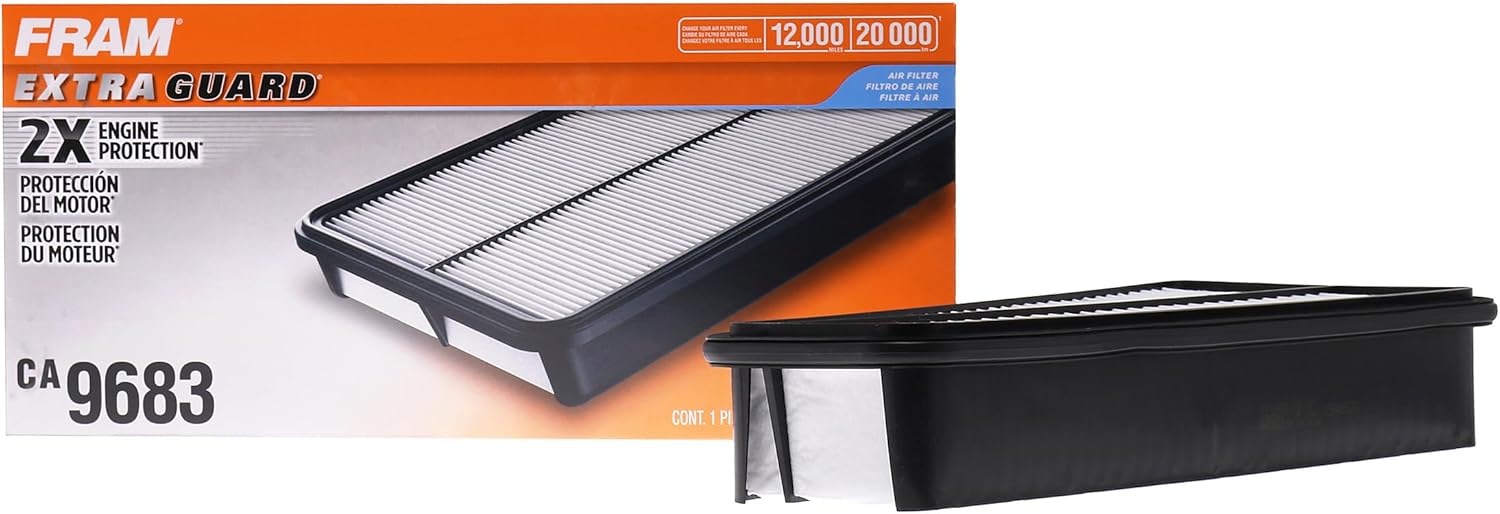
FRAM Extra Guard Engine Air Filter CA9683
| OEM Part Number | CA9683 |
|---|---|
| Automotive Fit Type | Vehicle Specific Fit |
| Shape | Trapezoidal |
| Position | Front |
The FRAM Extra Guard CA9683 is a direct-fit replacement air filter for 4.0L Toyota V6 applications that aims to balance filtration and airflow for everyday driving. It installs in minutes as a straightforward DIY swap and seals around the perimeter like a factory-style unit. FRAM describes an advanced filter media that it tested to provide roughly twice the engine protection versus standard retail-brand filters and recommends up to 12,000-mile change intervals when following your vehicle manual. In real use this means you get reliable particle capture without noticeably restricting intake flow, which helps preserve acceleration and fuel delivery on daily driven Tacomas. The filter is vehicle-specific so fit and fitment consistency are strengths, and user reports indicate clean packaging and an OEM-like fit. Limitations are that this is a paper/media replacement filter intended for routine maintenance rather than high-performance or heavy off-road filtration needs, and the 12,000-mile interval depends on driving conditions so dusty use will require earlier changes.
Best for: Buyers who want a straightforward, cost-effective factory-style replacement that fits Toyota 4.0L V6 Tacomas and minimizes maintenance time while protecting the engine during normal driving.
Less Ideal for: Drivers who regularly operate in very dusty, off-road, or severe environments and need heavy-duty or high-flow performance filters should consider specialized aftermarket options.
- Vehicle-specific fit for 4.0L Toyota V6 models ensures easy installation and reliable sealing
- Advanced filter media tested to capture more particles than standard retail-brand filters
- Supports long recommended change intervals up to 12,000 miles under normal conditions
- Maintains airflow while trapping debris to help preserve acceleration and engine performance
- Not intended for heavy off-road or extreme dust conditions where specialized filters perform better
Verdict: Choose the FRAM Extra Guard CA9683 if you want an inexpensive, factory-fit replacement that balances particle capture and airflow for routine Tacoma driving.
OEMASSIVE Engine Air Filter 17801-0P010 Compatible with Toyota Tacoma 2004-2015 (Replace 17801-31090)

| Fit Type | Vehicle Specific Fit |
|---|---|
| OEM Equivalent Part Number | 178010P010, 1780131090, 17801-31090, 17801-0P010 |
| Included Components | Engine Air filter |
This OEMASSIVE replacement engine air filter is a direct-fit option for Toyota Tacoma 4.0L models (2004–2015) and other Toyota vehicles that use the 17801-0P010 family of filters. It uses a multi-layer pleated filter paper intended to capture dust and particulates before they enter the intake, which helps protect the engine and maintain performance. Installation is simple and tool-free: remove the old element, seat the new filter, and secure the housing. The filter claims improved filtration efficiency compared with a single-layer design and should support normal commuting, light hauling, and off-road use in moderate dust. As a budget-focused aftermarket option, materials and long-term durability may not match higher-end branded filters, so expect standard replacement intervals of roughly six months or about 10,000 kilometers depending on driving conditions. If you want a low-cost, ready-fit replacement that restores factory airflow and basic protection without added features, this fits that role well.
Best for: Buyers looking for an inexpensive, direct-fit replacement to restore factory airflow and basic engine protection on 2004–2015 Toyota Tacoma 4.0L vehicles without paying for premium brands.
Less Ideal for: Drivers who frequently tackle very dusty trails or who want a high-performance or long-life filter should consider higher-end or reusable options instead.
- Vehicle-specific fit for Toyota 4.0L Tacomas and compatible Toyota models
- Multi-layer pleated media for improved dust capture over basic paper elements
- Simple, tool-free installation that matches factory filter housing
- Replaces common OEM part numbers (17801-0P010, 17801-31090, CA9683) for easy cross-reference
- Construction and materials may be lower grade than premium aftermarket or branded filters
Verdict: A wallet-friendly, direct-fit replacement that restores proper filtration and airflow for 2004–2015 Tacoma 4.0L trucks without extra features.
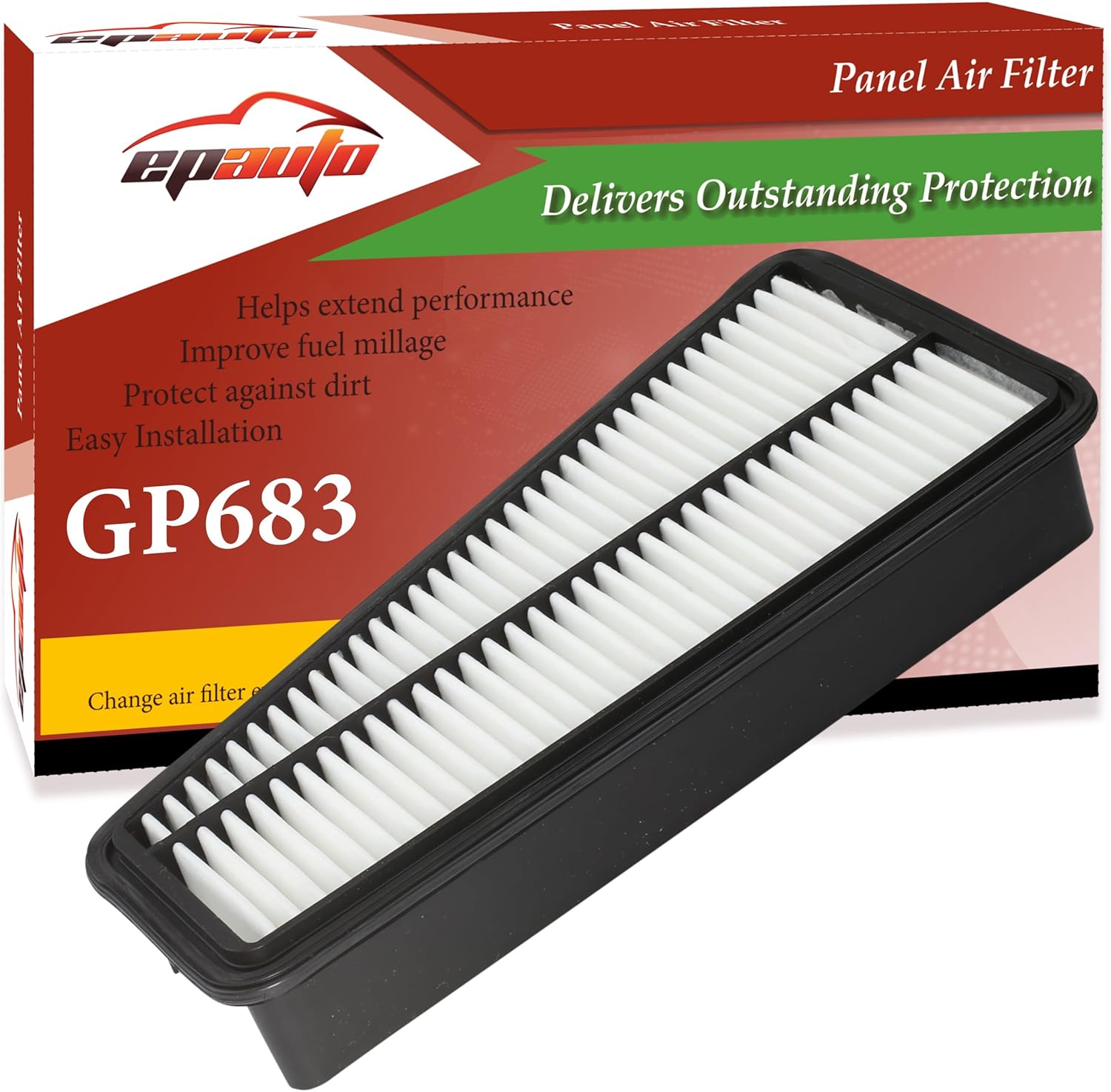
EPAuto GP683 Engine Air Filter (Replacement for Toyota V6)
| Compatible models | Tacoma V6 (2005–2015) |
|---|---|
| Replacement part numbers | 17801-0P010, 17801-31090 |
| Shape | Trapezoidal |
| Item model number | FP-018-1 |
The EPAuto GP683 is a paper engine air filter built as a direct replacement for Toyota V6 applications like the 2005–2015 Tacoma V6. It installs quickly as a drop-in swap and captures dirt, dust, and debris to reduce engine wear and preserve clean airflow. Typical use is routine maintenance during scheduled service intervals or a quick DIY swap between professional changes. Notable features include vehicle-specific fit that replaces Toyota part numbers 17801-0P010 and 17801-31090 and a trapezoidal shape that matches the factory housing so no modification or tools are usually required. In practice the filter restores proper airflow and throttle response and is a low-cost way to keep intake passages clean. The main limitations are that it is a standard disposable paper element rather than a washable or high-flow performance unit and some buyers note it is slightly thinner than factory filters, which could affect service life in very dusty conditions. For reliability-minded owners it is a practical, affordable factory-style replacement that keeps the engine protected when changed at recommended intervals.
Best for: Tacoma owners prioritizing dependable, factory-style protection who want an inexpensive, easy-to-install replacement filter they can change themselves on a maintenance schedule.
Less Ideal for: Drivers seeking a reusable washable filter or a performance-focused intake upgrade should consider oiled or high-flow options instead.
- Vehicle-specific fit that replaces Toyota part numbers for a straightforward drop-in install
- Built to match factory housing shape so no modifications or extra tools needed
- Effectively captures dirt and debris to protect the engine and maintain airflow
- Affordable option for regular maintenance and easy DIY replacement
- Standard disposable paper element rather than a washable or high-flow performance filter
- Slightly thinner construction than some factory filters, which may shorten service interval in very dusty environments
Verdict: A straightforward, factory-fit replacement that reliably protects Tacoma V6 engines and is ideal for owners who value dependable, low-cost maintenance.
SPEARHEAD Max Thrust Engine Air Filter (MT-163) — Fits 2005–2023 Tacoma 2.7L L4

| Fitment | 2005-2023 Tacoma 2.7L L4 only |
|---|---|
| Model Number | MT-163 |
| OEM Equivalent Part Number | CA10163 |
| Product Grade | Replacement Part |
| Fit Type | Vehicle Specific Fit |
The SPEARHEAD Max Thrust MT-163 is a direct-fit replacement air filter for Tacoma 2.7L four-cylinder engines that focuses on improved dust capture while maintaining airflow. It installs the same way as a factory filter and is intended for routine DIY swaps at service intervals up to about 15,000 miles. The product uses a Hex-D pleat multi-layer media that the maker says traps more dirt than standard paper filters without choking airflow, which should help preserve throttle response and fuel economy in higher-mileage trucks. Buyers report consistent OEM-style fit and straightforward installation. The main limitation is that performance gains versus a genuine factory filter are modest and largely subjective; any measurable MPG or power improvements will depend on vehicle condition and prior filter state. Also note this SKU fits 2.7L L4 Tacomas only and will not fit V6 models.
Best for: Buyers who prioritize a reliable, low-risk replacement that closely matches factory fit and who value broad positive user feedback when choosing an affordable air filter.
Less Ideal for: Drivers seeking a performance upgrade proven to deliver measurable horsepower gains should consider purpose-built performance intakes or high-flow filters instead.
- Vehicle-specific OEM-style fit for Toyota Tacoma 2.7L L4 makes installation quick and reliable
- Hex-D pleat multi-layer media increases dust holding capacity compared with basic single-layer filters
- Designed to maintain airflow so engine breathing and throttle response are not significantly restricted
- Simple DIY replacement that avoids dealer visits and is cost-effective over time
- Claims of increased power and noticeable MPG gains are largely anecdotal and dependent on vehicle condition
Verdict: If you want a dependable, factory-fit replacement for the Tacoma 2.7L that improves dust-holding without risking airflow, this SPEARHEAD filter is a sensible, well-reviewed choice.
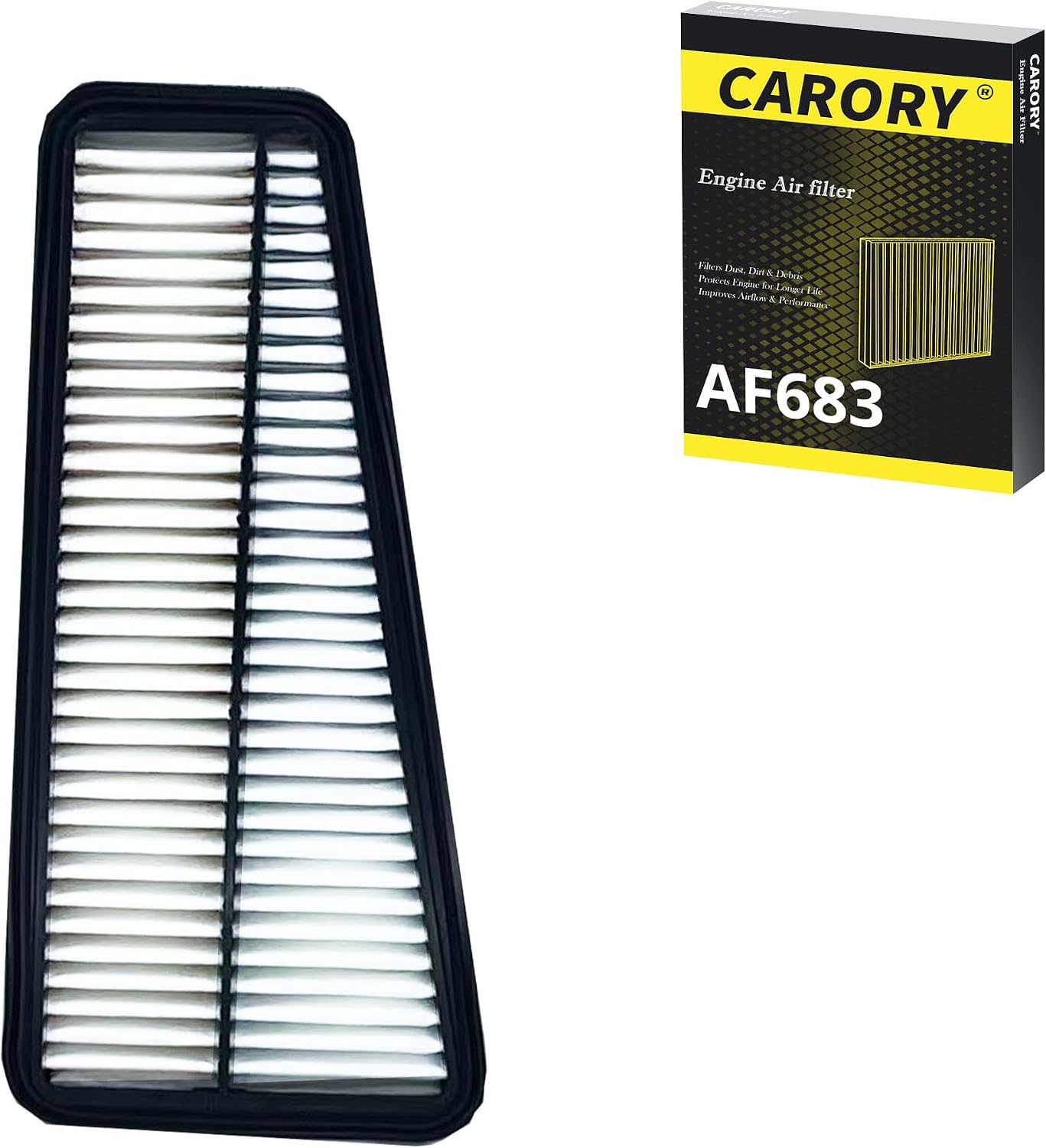
Carory AF683 Engine Air Filter (replacement)
| Fit Type | Vehicle Specific Fit |
|---|---|
| Product Grade | Replacement Part |
| Model Number | AF683 |
The Carory AF683 is a straightforward replacement engine air filter made to match factory fitment on many Toyota V6 applications. It installs the same way as a factory paper filter and is intended for routine maintenance to keep intake air clean and airflow steady for good fuel combustion. Buyers will notice familiar rectangular paper pleats and a sealed rubber edge that help the filter seat correctly in the housing. The product is vehicle-specific, so fitment for the listed Tacoma years is direct and installation is fast and tool-free in most cases. Practical benefits include OEM-style sealing, consistent airflow for smooth idle and throttle response, and a low price that makes on-schedule changes easy to maintain. Limitations are typical of disposable paper filters: it is not a reusable or high-performance filter and offers no claimed extended-life or media upgrades over factory replacements.
Best for: A buyer who wants a low-risk, direct-fit replacement that mirrors factory performance and keeps maintenance simple and inexpensive.
Less Ideal for: Drivers seeking reusable, high-flow, or performance-oriented aftermarket filters should consider specialized options instead.
- Vehicle-specific fit for listed Toyota V6 models ensures correct sealing and easy installation
- OEM-style paper pleat media provides reliable particulate filtration for routine maintenance
- Sealed rubber edge helps prevent bypass and keeps airflow directed through the filter
- Affordable price makes regular replacements inexpensive and convenient
- Disposable paper media is not washable or reusable and does not offer extended-life performance
Verdict: Choose the Carory AF683 when you want an affordable, factory-style replacement that fits Toyota V6 Tacomas and restores proper intake sealing and airflow.
Choosing the Right 2005-2015 Toyota Tacoma Air Filter: Key Factors to Consider
Filtration Efficiency
Filtration efficiency determines how well a filter traps particles before they enter the engine. For a Tacoma, tiny dust and sand particles can accelerate wear on cylinders and turbo components where applicable. Higher microscopic capture rates reduce the chance of abrasive contaminants reaching internal parts, which preserves compression and reduces long-term maintenance costs.
Different media types—paper, cotton, synthetic—have varying particle retention at the same airflow. Efficient filters may restrict airflow more, so you should weigh capture rates against potential flow loss. For routine driving in dusty or unpaved environments, favor filters with stronger particle retention even if they require slightly more frequent changes.
Airflow and Engine Performance
Airflow affects throttle response, idle stability, and fuel metering. The Tacoma's factory airflow balance is tuned for a certain intake resistance; swapping to a tighter or freer-flowing filter can change how the engine breathes. A modest increase in airflow can improve throttle feel but extreme low-restriction media can upset sensor readings and fuel trims if not matched to the vehicle's needs.
When selecting a filter, consider how you use the truck. Daily commuting and light towing benefit from a balanced filter that maintains stock-like airflow. For owners seeking slightly improved responsiveness, choose a filter that advertises increased flow while retaining good filtration to avoid inviting premature engine wear.
Fitment and Seal Integrity
A correct fit is critical to prevent unfiltered air from bypassing the filter media. On the 2005–2015 Tacoma a poor seal at the airbox lid or a mis-sized element can allow dirt to enter around the edges rather than through the filter. Look for filters with a molded rubber flange or precisely stamped edges that match factory mating surfaces.
Installation tolerance matters in routine maintenance and when using aftermarket airboxes. A filter that compresses evenly and holds its shape during the lid clamp cycle reduces the risk of gaps developing over time. Confirming exact dimensions and checking for firm sealing surfaces will prevent bypass and maintain engine protection.
Service Life and Maintenance
Service life affects long-term ownership costs and convenience. Disposable paper filters are easy to replace but may need more frequent changes in dusty conditions. Reusable cotton or synthetic media can be cleaned and re-oiled or washed, extending intervals between purchases. Consider your willingness to perform periodic service when choosing between disposable and washable options.
Also factor in maintenance accessibility for the Tacoma's airbox. Filters that allow quick removal and repeatable reinstallation reduce the risk of improper seating after service. Check recommended change intervals under your typical driving conditions and plan for replacement or cleaning schedules that match your usage.
Materials and Environmental Resistance
Materials determine how a filter responds to heat, moisture, and contaminants. Truck owners often encounter hot engine bays, highway salt, and occasional wet conditions. Media and frame materials that resist collapse, warping, or degradation will provide reliable service across seasons. Rubber flanges should remain pliable in cold weather and not harden with age.
Consider media coatings and adhesives used in the element. Poorly bonded pleats can separate after exposure to moisture or repeated service cycles. Filters built with corrosion-resistant frames and robust media extend service life and reduce the chance of failure.
Compatibility With Driving Conditions
How you use the Tacoma—city commuting, highway driving, or frequent dirt-road use—dictates the ideal filter choice. Severe dust and off-road conditions favor coarser pre-filters or high-capture media that prevent rapid clogging. Urban drivers focused on fuel economy may prefer media that slightly improves airflow while still maintaining sufficient filtration.
Think about typical routes, seasonal conditions, and whether the truck tows or carries heavy loads. Filters that balance dirt-holding capacity with flow characteristics offer better longevity for owners who alternate between paved and unpaved roads.
Understanding the 2005–2015 Tacoma Intake Layout
The Tacoma produced between 2005 and 2015 shares a similar factory airbox layout that accepts a rectangular element. Knowing this layout makes it easier to choose a direct-fit replacement that seals properly and installs without modification. Owners who are tuned to the specific intake path will appreciate components that match factory dimensions.
When evaluating options, confirm the element shape and sealing flange dimensions against your truck's airbox. Correct orientation and a snug fit keep contaminants out and ensure consistent airflow to the throttle body or mass airflow sensor.
- Most model years in the range use the same element footprint, but check for minor trim or factory option differences.
- Direct-fit elements eliminate the need for trimming or adapter kits.
- Ensure the filter's sealing flange seats flat under the airbox clamp or lid.
Paper Vs Reusable Media: Pros and Cons
Disposable paper elements are inexpensive and require no special cleaning tools. They are effective when changed at recommended intervals and are a low-maintenance choice for owners who prefer straightforward replacement during scheduled service.
Reusable media, such as cotton or synthetic elements, can reduce long-term purchase frequency because they are cleaned and reinstalled. They can offer improved airflow and acceptable filtration when maintained correctly, but they require proper cleaning and, if applicable, re-oiling procedures to avoid damage to sensors or reduced capture performance.
- Paper: lower upfront cost, predictable service intervals, simple disposal.
- Reusable: longer usable life, potential airflow benefits, requires maintenance.
Maintenance Tips for Longevity
Inspect the air filter at regular intervals, especially after driving on dusty roads. A visual check for heavy darkening or clogged pleats indicates it is time for replacement or cleaning. For reusable filters, follow the manufacturer-recommended cleaning method and allow the element to dry completely before reinstalling.
When reinstalling a new or cleaned filter, ensure the sealing surface is clean and free of debris. Tighten any clamps or fasteners evenly to avoid warping the element and check the airbox for trapped leaves or small stones that can cause premature clogging.
- Check the element at every oil change or more often in dusty conditions.
- Avoid high-pressure washing that can deform pleats on reusable media.
- Keep the airbox cavity clean to reduce contaminant load on the filter.
Fuel Economy and Emissions Considerations
A clogged or overly restrictive air filter can reduce fuel economy by limiting the engine's ability to draw air efficiently. Conversely, a filter that allows excessive unmetered air can upset fuel trims and emissions control systems. Selecting a filter that maintains balanced airflow helps preserve factory fuel consumption and emissions performance.
For owners prioritizing fuel economy, choose an element that emphasizes steady airflow and reliable filtration. Routine inspection and timely replacement or cleaning will prevent gradual declines in efficiency caused by clogged media.
- Balanced airflow supports consistent fuel metering.
- Regular filter care prevents gradual fuel economy loss.
- Avoid extremely low-restriction filters unless matched to tuning changes.
Installation Checklist for Tacoma Owners
Before starting, park on level ground and allow the engine bay to cool. Gather basic hand tools to release the airbox clips or bolts and a flashlight to inspect seating surfaces. Lay out the new filter and compare dimensions to the old element to confirm correct orientation.
After installing the filter, run the engine and listen for unusual intake noises that might indicate a poor seal. Recheck the filter seating and fasteners after the first short drive to ensure nothing shifted during installation.
- Verify filter dimensions and flange fit before final assembly.
- Check airbox seals and clean the cavity before installing the new element.
- Confirm fasteners are snug and retest after a short drive.
Still looking for the perfect fit?
Select your Toyota Tacoma configuration to see the most relevant Air Filters recommendations
How We Chose the Best 2005-2015 Toyota Tacoma Air Filter
We prioritized criteria that matter specifically to Tacoma owners across the 2005–2015 model years. First, fitment accuracy was nonnegotiable: filters had to match the factory airbox dimensions or common direct-fit aftermarket kits used on these Tacomas. Filtration performance was measured by lab-rated particulate capture and reported micron ratings to ensure engine protection from dust and road debris.Airflow characteristics were evaluated because the Tacoma's intake requires a balance between restriction and protection to maintain throttle response and fuel economy. Service life and maintenance frequency were considered, focusing on pleat design, filter media durability, and whether the filter type permits easy replacement or cleaning.Durability under heat, humidity, and repeated service cycles mattered for trucks that see varied climates and light off-road use. We also considered installation simplicity and the availability of replacement elements. Exclusions: we excluded specialty performance intake systems and multi-vehicle universal filters that do not provide direct-fit compatibility for 2005–2015 Tacoma airboxes. The final list reflects options that scored well across fitment, filtration efficiency, airflow balance, longevity, and ease of service.
Our full evaluation process is outlined in our review methodology.
FAQ
How often should I replace the engine air filter in my 2005–2015 Tacoma?
It depends on driving conditions. Under normal highway and city use, inspect the element at every oil change and expect replacement roughly every 12,000 to 24,000 miles. In dusty or off-road conditions change it more frequently, sometimes as often as every 6,000 to 10,000 miles.
Can I use a reusable air filter in my Tacoma and get better fuel economy?
A reusable filter can offer slightly different airflow characteristics that may affect throttle response. However, fuel economy gains are usually modest and depend on how well the reusable filter is maintained. Proper cleaning and service are essential to avoid airflow changes that could negatively impact efficiency.
Are there size differences I need to watch for when buying a replacement filter?
Yes. Even though many 2005–2015 Tacomas share the same rectangular footprint, verify the element's length, width, and flange dimensions against your current filter. A slight size mismatch can prevent proper sealing and allow unfiltered air to bypass the media.
Does a higher filtration rating always mean worse airflow?
Not necessarily. Some modern media achieve good particle capture while maintaining reasonable flow by using more pleats or advanced synthetic fibers. There is often a tradeoff, so look for filters that publish both filtration metrics and flow characteristics rather than relying on a single claim.
Should I change the air filter more often if I tow or carry heavy loads?
Towing and heavy loads can increase engine work and exposure to road dust, especially on rural routes. Inspect the filter more frequently if you tow often and consider a media with higher dirt-holding capacity to extend service intervals between changes.
Is cabin air filter replacement related to the engine air filter schedule?
They are separate systems with different schedules. Cabin filters typically address HVAC air and may require replacement independently. Check your vehicle's maintenance recommendations for cabin filter intervals because cabin and engine filters serve different purposes.
Final Verdict
When selecting an air filter for a 2005–2015 Toyota Tacoma, prioritize a correct fit and a balance between filtration efficiency and airflow. Match the filter type to how you drive: heavier dust exposure calls for higher capture and dirt-holding capacity, while mostly highway driving favors a filter that preserves steady airflow for fuel economy. Regular inspection and timely service are as important as the initial choice, since even the best media loses effectiveness when clogged.Choose a direct-fit element with reliable sealing surfaces and predictable maintenance intervals. That approach will protect the engine, maintain performance, and help you avoid avoidable repairs down the road.
Explore More:
- Check out all Toyota Tacoma parts & accessories
- Explore Air Filters Maintenance & Repair Guides
- Explore Engine
- Browse all Auto Parts
