

Note: This article contains affiliate links. If you click on these links and make a purchase, I may earn a small commission at no extra cost to you. This helps support my research and content. Read my full affiliate disclosure here.
If your Toyota Sequoia is losing cooling power or showing signs of a weak air conditioning system, choosing the right AC condenser matters. The condenser sits at the front of the system and plays a central role in shedding heat and maintaining proper refrigerant pressure. Picking a condenser with correct fitment and good leak resistance reduces installation headaches and helps the A/C deliver consistent performance.This guide covers the top shortlisted Toyota Sequoia AC condenser options and explains the criteria we used to evaluate them, including physical fit, durability, and leak prevention. Read on to see which features matter most when replacing the condenser and what to watch for during installation.
Looking for other parts? See all Toyota Sequoia parts & accessories.
Top Picks at a Glance
| Best Overall The best all-around choice for most situations | KarParts360 A/C Condenser for Toyota Sequoia (Front, 88460-0C100) |  |
| Best quality Built to a higher standard if you want something more solid | Garage-Pro A/C Condenser for 2008–2019 Toyota Sequoia and 2007–2019 Toyota Tundra |  |
| Best Value The sweet spot between price and what you get | ALEGE A/C Condenser for Toyota Sequoia (2008–2019) and Tundra (2007–2019) |  |
| Highest Rated A top-rated pick with lots of positive feedback | TRQ A/C Condenser and Receiver Drier Assembly (ACA84963) for Toyota Sequoia/Tundra |  |
| Best Seller A high-volume bestseller chosen again and again | Denso A/C Condenser (Part 477-0618) |  |
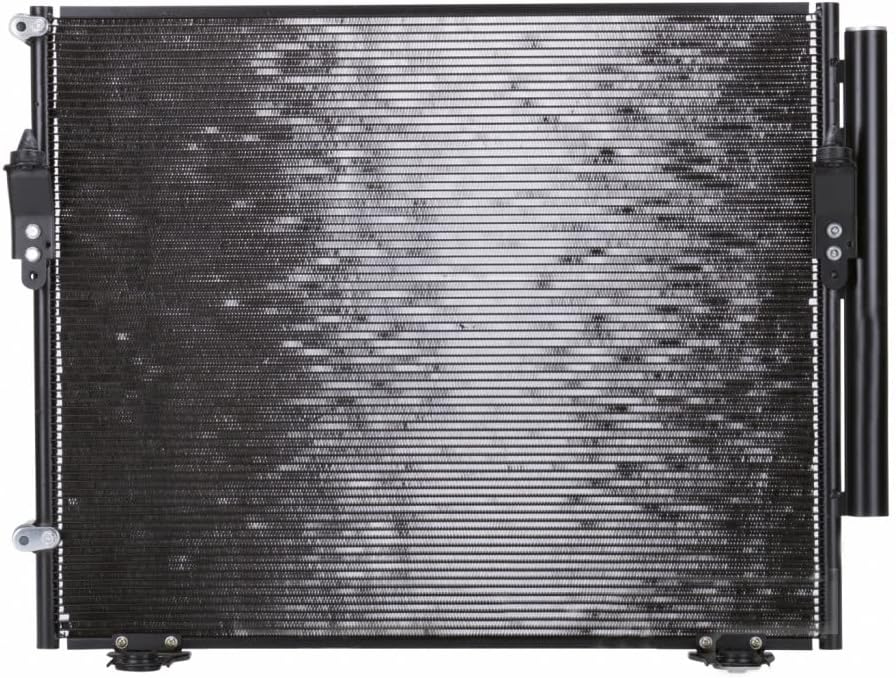
1. KarParts360 A/C Condenser for Toyota Sequoia (Front, 88460-0C100)
| Manufacturer | KarParts360 |
|---|---|
| Position | Front |
| OEM Part Number | 88460-0C100 |
| Configuration | Parallel Flow |
| Safety Rating | DOT Certified |
This KarParts360 A/C condenser replaces the factory front condenser on Toyota Sequoia vehicles and restores the vehicle's air conditioning cooling capacity. It uses a parallel-flow core and block-style inlet/outlet fittings to match the original component layout so installation follows factory routing and hose connections. Typical use is a like-for-like replacement during A/C system repairs or when the original condenser is damaged or leaking. Notable features include precision-engineered fitment for the listed OEM part number, DOT safety certification, and materials described as durable for long-term use. Practical benefits are straightforward installation with factory-style connections and the ability to recover proper system pressure and cooling without modifying lines. Limitations are that it is an aftermarket unit rather than factory-manufactured, so surface finish is unfinished and slight variation in non-critical cosmetic details may occur; professional A/C evacuation and recharge is still required to complete service.
Best for: Balanced buyers who want a reliable, vehicle-specific condenser that restores factory-level A/C performance without chasing premium OEM branding.
Less Ideal for: Buyers seeking original manufacturer branded parts for full cosmetics or warranty parity should consider factory-sourced condensers instead.
- Direct replacement designed to match OEM part number and inlet/outlet layout
- Parallel flow core for consistent cooling performance
- DOT certified for safety and vehicle compliance
- Durable construction aimed at long-lasting service life
- Aftermarket unit with unfinished exterior finish rather than factory-branded appearance
- Requires professional A/C evacuation and recharge after installation
Verdict: A vehicle-specific aftermarket condenser built to restore Sequoia A/C performance with reliable, factory-style fit and DOT-compliant construction.
2. Garage-Pro A/C Condenser for 2008–2019 Toyota Sequoia and 2007–2019 Toyota Tundra

| Compatible Models | 2007–2019 Toyota Tundra; 2008–2019 Toyota Sequoia |
|---|---|
| Core Type | Aluminum core |
| Interchange Numbers | 73598, 10513, 884600C101, TO3030210 |
This Garage-Pro condenser is a direct-fit aftermarket replacement built with an aluminum core to restore cooling efficiency in Toyota Sequoia and Tundra A/C systems. It installs in place of the factory condenser and is typically used when the original unit has leaked or become clogged. The part lists multiple interchange numbers for straightforward fit confirmation and the aluminum core provides good heat transfer for consistent vent temperatures. Practical benefits include a direct fit that can save install time and compatibility across the listed Sequoia and Tundra model years without towing package variations. Limitations are that it is an aftermarket component rather than a factory-branded assembly and the listing references a one-year warranty only through a specific seller channel, so long-term durability will depend on manufacturing and installation quality. Expect similar performance to a factory replacement when properly installed and charged by a qualified technician.
Best for: Performance-oriented buyers who prioritize restoring strong A/C cooling and prefer a direct-fit replacement that minimizes installation uncertainty.
Less Ideal for: Shoppers seeking a factory-branded OEM condenser or extended manufacturer-backed warranty should consider alternative sources.
- Direct-fit replacement for compatible Toyota Sequoia and Tundra years which simplifies installation
- Aluminum core construction for efficient heat transfer and consistent cooling
- Lists multiple OEM interchange numbers to help verify correct fitment
- Aftermarket part rather than a vehicle manufacturer branded condenser
- Warranty coverage is limited to one year through a specific seller channel
Verdict: A cost-effective, direct-fit aluminum-core condenser aimed at restoring factory-level cooling for performance-focused Sequoia owners who accept an aftermarket component.
3. ALEGE A/C Condenser for Toyota Sequoia (2008–2019) and Tundra (2007–2019)

| Brand | ALEGE |
|---|---|
| Model | Condensers |
| Fitment | Sequoia 2008-2019, Tundra 2007-2019 |
| Manufacturer Part Number | 125458-5427-1636248263 |
This ALEGE A/C condenser is a direct-fit replacement intended for Toyota Sequoia (2008–2019) and Toyota Tundra (2007–2019). It is built with a multi-channel parallel flow design to distribute refrigerant evenly and a high-pressure resistant structure to resist deformation under system pressure. Typical use is as a one-for-one swap when the original condenser leaks or is damaged; its precision welding and claimed air tightness aim to minimize refrigerant loss after installation. The condenser comes ready to bolt in and pairs with existing hoses and fittings on the specified Toyotas, making it suitable for DIY mechanics or independent shops. Practical benefits include cost-effective replacement, purported leak resistance, and consistent refrigerant flow for steady cooling performance. Limitations are that this is an aftermarket unit so fit and finish may vary compared with factory parts and installation may require careful verification of mounting points and hose connections before purchase.
Best for: Practical optimizers seeking a budget-friendly condenser that restores A/C function without major upgrades; ideal for owners who prioritize value and straightforward repairs over brand-new OEM parts.
Less Ideal for: Owners who want guaranteed factory-grade fit and finish or who prefer to rely only on dealer-sourced parts should consider OEM replacements instead.
- Direct-fit design for Toyota Sequoia 2008–2019 and Tundra 2007–2019 simplifies replacement
- Parallel flow/multi-channel design promotes even refrigerant distribution and consistent cooling
- High-pressure resistant construction reduces risk of deformation under normal system pressures
- Precision welding claimed to improve air tightness and limit refrigerant leaks
- Aftermarket product so fitment or finish may differ from factory replacement parts
- No listed manufacturer warranty or detailed installation instructions in the product details
Verdict: A cost-conscious, direct-fit aftermarket condenser that gets Toyota Sequoia and Tundra A/C back to working order with even refrigerant flow and reinforced pressure resistance.
4. TRQ A/C Condenser and Receiver Drier Assembly (ACA84963) for Toyota Sequoia/Tundra

| Core Material | Aluminum |
|---|---|
| Core Thickness | 0.63 in |
| Mounting Hardware Included | Yes |
| Item Model Number | ACA84963 |
This TRQ condenser and receiver drier assembly replaces the factory unit as a ready-to-install direct-fit for specified Toyota Sequoia and Tundra models. It arrives preassembled with mounting hardware and a machined exterior so you can swap the old condenser without modifying the vehicle. Made with an aluminum core and a 0.63 inch core thickness, the assembly is intended to restore cooling performance and reduce dash noise caused by moisture in the system. Typical use is a like-for-like replacement during an A/C repair when the original condenser is leaking or clogged. Practical benefits include time saved on installation, included hardware, and a reliability-focused design backed by many owner reports of good fit and cold air performance. Limitations are that fitment is vehicle- and configuration-specific so you must confirm compatibility for model years listed and some sellers report occasional misfits or quality inconsistencies across batches.
Best for: A reliability-focused buyer who prioritizes restoring factory-level A/C performance with a direct-fit replacement and values a product that reduces downtime and installation complexity.
Less Ideal for: Buyers who need a universal or multi-vehicle condenser solution or those who want an upgraded performance condenser beyond factory-spec components.
- Preassembled condenser with receiver drier and included mounting hardware for faster installation
- Aluminum core construction with specified core thickness for effective heat dissipation
- Designed as a direct-fit replacement for the listed Toyota Sequoia and Tundra model years
- High owner satisfaction reported for restored cold-air performance and reduced dash noise
- Fitment must be confirmed carefully since variations between model years and batches have been reported
- Some global reviews note inconsistent quality across different production runs
Verdict: A preassembled, direct-fit condenser and receiver drier built to restore reliable, factory-quality A/C cooling for compatible Toyota Sequoia and Tundra models.
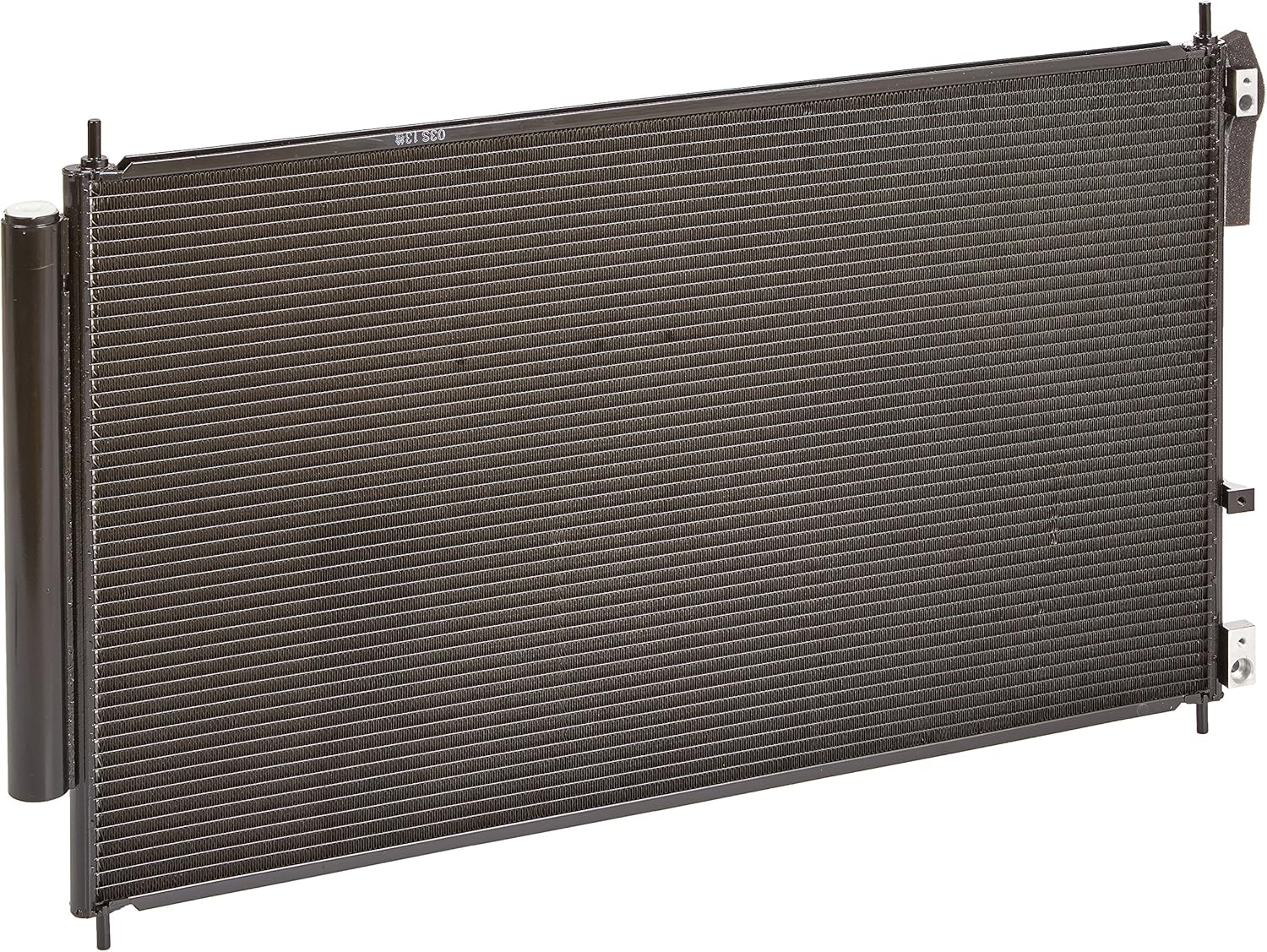
5. Denso A/C Condenser (Part 477-0618)
| Material Type | Aluminum |
|---|---|
| Mounting Type | Direct Mount |
| Item Type Name | Condenser |
| Unit Count | 1.0 Count |
This Denso condenser is a direct-mount, aluminum replacement condenser intended to restore air conditioning performance after a failed or damaged unit. It installs in place of the original condenser and is used when an AC system has lost cooling due to leaks or physical damage. Notable features include a factory-quality construction and a rectangular form factor that matches factory mounting points, which simplifies installation and reduces fitment guesswork. Real-world benefits are reliable cooling restoration and compatibility with standard service routines such as evacuation and recharge. Several buyers report it fits as expected and performs to factory standards. Important limitations are that fitment must be verified for the specific vehicle and some customers have received units with shipping damage, so careful inspection on arrival is recommended. The part does not include consumables such as O-rings or refrigerant so those items will usually need to be sourced separately during installation.
Best for: Risk-averse mainstream buyers who prioritize a factory-quality, drop-in replacement to restore reliable AC performance without experimenting with cheaper, unknown brands.
Less Ideal for: Buyers who need a condenser specifically validated for vehicles other than the Toyota Sequoia in this article or who want an all-inclusive kit with fittings and refrigerant included.
- Factory-quality aluminum construction for corrosion resistance and heat transfer
- Direct-mount design matches factory mounting points for easier installation
- Single-count unit intended to replace a damaged or leaky condenser
- Built by a major OEM supplier with consistent manufacturing standards
- Packaging offers limited protection and some units have arrived dented or damaged in transit
- Does not include installation consumables like O-rings or refrigerant charge
Verdict: A factory-quality, direct-mount aluminum condenser built to replace a failed unit and restore factory-level AC performance.
Choosing the Right Toyota Sequoia AC Condenser: Key Factors to Consider
Fitment And Mounting Alignment
Correct physical fit is critical because the condenser must line up with factory mounting points and refrigerant lines. A condenser that requires excessive modification can add installation time, increase the risk of damaged fittings, and lead to poor sealing at hose connections.
Check inlet and outlet orientation, bracket locations, and whether the condenser clears surrounding components. Small misalignments can transmit stress to hoses and fittings, contributing to premature leaks or mounting failures.
Material And Corrosion Resistance
Condenser construction affects longevity in wet and salty environments. Aluminum cores with corrosion-resistant coatings or thicker fin stock resist pitting and degradation from road salt and debris exposure.
Better corrosion resistance helps preserve thermal performance and reduces the chance of thin spots that can develop into leaks. Consider coatings and fin designs that balance heat transfer with durability for long service life.
Seam And Connection Quality
The strength of joints, brazed seams, and hose connections determines how well the condenser resists leaks under pressure and thermal cycling. Manufacturing methods that create tight, consistent seams reduce the likelihood of slow leaks developing over time.
Inspect design details like reinforcement around mounting points and the type of fittings used. Robust connections are particularly important if the condenser will undergo regular vibration or temperature swings.
Thermal Performance And Fin Density
A condenser's ability to reject heat depends on its core design, fin density, and overall surface area. Higher fin density can improve cooling performance in many conditions, but excessive density may clog more easily in dirty environments.
Balance thermal efficiency with maintainability. For vehicles that frequently encounter dust or debris, a slightly more open fin design may be easier to keep clean while still providing adequate heat rejection.
Serviceability And Compatibility With A/C System
Consider how the condenser integrates with the rest of the air conditioning system, including whether it accepts standard line fittings and is compatible with original receiver-drier or accumulator locations. Ease of replacing associated components reduces labor and the chance of installation errors.
Also evaluate access for cleaning, potential for flushing, and whether the part allows reuse of OEM brackets or requires additional adapters. Service-friendly designs simplify routine maintenance and future repairs.
How We Chose the Best Toyota Sequoia AC Condenser
We focused on selections that specifically suit the Toyota Sequoia and filtered for correct physical fit and reliable sealing. Key evaluation criteria included material construction and corrosion resistance, the accuracy of inlet and outlet locations, mounting point alignment, and manufacturing tolerances that affect fitment during install. We also assessed expected durability against road debris and vibration, plus evidence of effective leak prevention such as brazed or consistent seam construction. Serviceability factors like the availability of OEM-style fittings and compatibility with standard line connections were considered as well.We excluded units that lacked clear fitment specifications for the Sequoia, condensers intended for unrelated vehicle families, or listings with insufficient construction details. Cost alone was not a deciding factor; instead we prioritized components that minimize installation time, reduce the risk of leaks, and support long-term A/C performance for the vehicle.
Our full evaluation process is outlined in our review methodology.
FAQ
What common symptoms indicate a failing condenser in a Toyota Sequoia?
Common signs include reduced cooling output, warm air from the vents at idle, visible refrigerant oil around the condenser area, and unusual system pressure readings. A physical inspection may reveal bent fins or leaks. If you notice gradual loss of cooling or oil stains near the condenser, it often points to a condenser issue.
Can I replace the condenser myself, or should a professional handle it?
Replacement can be done by someone with automotive repair experience, but the job requires proper refrigerant handling and pressure testing. Recovering and recharging refrigerant is regulated and needs specific equipment, and improper handling can damage the system. Many people opt for professional service for safe evacuation, pressure testing, and leak verification.
How do I check for a condenser leak on my vehicle?
Leak detection often starts with a visual inspection for oily residue and damaged fins. Dye-based UV inspection or electronic refrigerant leak detectors are commonly used to pinpoint leaks. Pressure testing the system with dry nitrogen can help confirm a leak before committing to replacement.
Is it necessary to flush the A/C system when replacing the condenser?
Flushing the system is often recommended if the condenser failure released debris or oil contamination into the lines. A flush reduces the risk of contaminant circulation that could damage the new condenser or other components. The decision depends on the failure mode and whether the rest of the system shows signs of contamination.
What should I consider about part fitment when buying a replacement condenser?
Verify that inlet and outlet locations, mounting tabs, and core dimensions match the Toyota Sequoia specifications. A correct-fit part minimizes modifications and reduces the chance of stress on hose connections. Look for parts that clearly state compatibility with your vehicle year and trim to avoid fitment issues.
Conclusion
When replacing a Toyota Sequoia AC condenser, prioritize correct fitment and robust leak resistance to minimize installation problems and future repairs. Material quality, seam construction, and serviceability are the key tradeoffs to weigh against thermal performance.Focus on condensers that match factory mounting points and provide clear details about connections and durability. Balancing ease of installation with long-term resistance to corrosion and leaks will deliver the best outcome for consistent cabin cooling.
Explore More:
- Check out all Toyota Sequoia parts & accessories
- Explore AC Condensers Maintenance & Repair Guides
- Explore HVAC
- Browse all Auto Parts
