

Note: This article contains affiliate links. If you click on these links and make a purchase, I may earn a small commission at no extra cost to you. This helps support my research and content. Read my full affiliate disclosure here.
If your Kia Optima is blowing warm air or the air conditioning cycles unusually, the condenser could be the cause. Choosing the right Kia Optima AC condenser affects how well the system cools, how reliably it seals, and whether installation goes smoothly. This guide presents our shortlisted top picks for Kia Optima AC condensers and explains the criteria we used to evaluate fitment, cooling performance, and durability. Read on to find an option that matches your priorities and tools for installation.
Looking for other parts? See all Kia Optima parts & accessories.
Top Picks at a Glance
| Best Reviewed A top-rated pick with lots of positive feedback | Kool-Vue A/C Condenser for 2011–2015 Kia Optima |  |
| Best Quality Built to a higher standard if you want something more solid | Automotive Cooling Inc A/C Condenser for Hyundai Sonata / Kia Optima |  |
| Most Sold A high-volume bestseller chosen again and again | CM Compressor A/C Condenser for Kia Optima |  |
| Best Overall The best all-around choice for most situations | Spectra Premium A/C Condenser 7-3985 for 2011–2015 Kia Optima L4 2.0L |  |
1. Kool-Vue A/C Condenser for 2011–2015 Kia Optima

| Material Type | Aluminum |
|---|---|
| Mounting Type | Snap-In Mount |
| Item Type Name | A/C Condenser |
This Kool-Vue A/C condenser is a factory-replacement style unit intended to bring a Kia Optima's air conditioning back to proper operating temperature. It installs in place of the failed condenser and connects to the existing lines and mounting points, so typical use is as a straightforward replacement during A/C system repairs. The unit uses an aluminum core and is leak and fit tested according to the brand, which should help with long-term corrosion resistance and cooling efficiency. Practical benefits include a direct-fit design that reduces installation surprises and broad interchange coverage for common Optima part numbers. Limitations to note are that it is an aftermarket part rather than a factory-produced assembly, and installation can require evacuation and recharge of the refrigerant by a technician. Buyers should also confirm any additional O-rings or fittings are supplied or sourced separately to complete the repair.
Best for: Reliability-focused owners who prioritize a tested, direct-fit replacement to restore consistent A/C performance on a Kia Optima and prefer parts that minimize installation surprises.
Less Ideal for: Buyers seeking factory-produced dealer parts or a plug-and-play kit that includes refrigerant service and installation hardware should consider other options.
- Direct-fit design made for 2011–2015 Kia Optima to minimize installation adjustments
- Aluminum core with manufacturer leak and fit testing for corrosion resistance
- Covers common interchange part numbers for easy identification during repair
- Sold individually so you replace only the failed condenser
- Aftermarket unit rather than factory-manufactured assembly
- May require separate small parts or fittings not included for a complete installation
Verdict A tested, direct-fit aftermarket condenser that restores A/C cooling on 2011–2015 Kia Optima models with minimal fitment issues but is an aftermarket rather than dealer-sourced part.
2. Automotive Cooling Inc A/C Condenser for Hyundai Sonata / Kia Optima

| Manufacturer | Automotive Cooling Inc |
|---|---|
| Manufacturer Part Number | ACC3257 |
| OEM Part Number | 10433, 203257U, 640336, 6524, 7-3257, 9760638003, KLI3257, P40340 |
| ABPA Partslink Number | HY3030132 |
This Automotive Cooling Inc condenser is a factory-replacement style unit made to fit Hyundai Sonata and Kia Optima applications. It replaces a worn or leaking condenser to restore cooling capacity and system pressure, typically used during A/C repairs or compressor replacements. The product is described as built to high-grade materials with 100 percent inspection and testing, and it lists multiple OEM cross-reference numbers for fit identification. Practical benefits include straightforward bolt-in fitment when match to the vehicle, a full replacement of the heat-exchange core and connections, and a claimed lifetime guarantee that simplifies long-term ownership. Limitations are that the listing does not provide detailed core construction or coil tube thickness and buyers should verify exact model year fitment before ordering. Installation still requires proper evacuation and recharge of the A/C system by a qualified technician to ensure correct performance.
Best for: Performance-oriented buyers who prioritize restoring or maintaining strong A/C cooling on a Kia Optima and expect a factory-style replacement that focuses on reliability and durability.
Less Ideal for: Budget shoppers looking for the cheapest stopgap repair or DIYers who need detailed build-specs and step-by-step installation guidance should consider other options.
- Factory-replacement design intended for direct fit to Sonata/Optima chassis identified by multiple OEM cross-reference numbers
- Manufacturer states 100% inspection and testing for quality control
- Covers full condenser replacement so it restores full system cooling when installed properly
- Listing lacks specific technical details about core construction and materials
- Requires professional evacuation and refrigerant recharge for safe, correct installation
Verdict A solid factory-replacement condenser aimed at restoring strong A/C performance on Sonata and Optima with manufacturer testing and broad OEM cross-references.
3. CM Compressor A/C Condenser for Kia Optima
| Manufacturer | CM Compressor |
|---|---|
| Product Type | Auto A/C Condenser |
| OEM Part Number | 1040466, 477-0623, 976063L180, PC3381F, PC3381P |
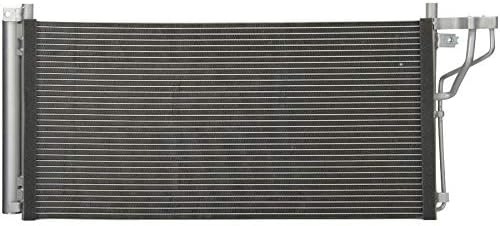
This CM Compressor A/C condenser is a factory-replacement style unit intended to restore cooling performance on a Kia Optima. It functions as the heat exchanger that converts compressed refrigerant gas back into liquid so the system can deliver cold air to the cabin. The condenser is made from aluminum for corrosion resistance and lightness, and the listing notes testing for leakage, vibration, and durability to reduce noise and improve longevity. Installation is the same as a standard condenser and is typically done when the original unit is damaged or leaking. The practical benefits are straightforward: it returns A/C function without requiring system upgrades, and its corrosion resistance suits humid climates. Limitations are that this is a part-for-part replacement only, so any additional A/C system faults such as a failing compressor, drier, or clogged orifice tube must be diagnosed separately, and installation may require professional evacuation and recharge of refrigerant.
Best for: Risk-averse mainstream buyers who prioritize restoring reliable, factory-quality air conditioning on a Kia Optima and prefer a straightforward, like-for-like replacement.
Less Ideal for: Buyers looking to upgrade system performance, add aftermarket cooling enhancements, or those wanting a bundled kit that includes other A/C components should consider alternative solutions.
- Aluminum construction offers improved corrosion resistance for longer service life
- Tested for leakage and vibration to reduce noise and promote durability
- Direct replacement design restores factory-style A/C function without system modifications
- Manufactured to match common OEM part numbers for fitment with Kia Optima
- Part is a condenser only and will not address unrelated A/C system failures like compressor or receiver-drier issues
Verdict A straightforward, factory-style condenser option to return reliable A/C cooling to a Kia Optima when the original condenser has failed.
4. Spectra Premium A/C Condenser 7-3985 for 2011–2015 Kia Optima L4 2.0L

| Model | 7-3985 |
|---|---|
| Manufacturer Part Number | 7-3985 |
| OEM Part Number | 976063Q000 |
This Spectra Premium condenser is a direct replacement intended to restore A/C cooling on the 2011–2015 Kia Optima with the 2.0L four-cylinder engine. It installs in place of the factory unit and uses high-density fins to improve heat exchange so the system can reach lower cabin temperatures more quickly. The unit is nitrogen leak-tested at the factory and includes heavy-gauge mounting brackets to limit vibration after installation. In real-world use you can expect a straightforward swap for a functional condenser that performs like the original and repairs an Optima air conditioning system without expensive dealer work. A few buyers reported minor fitment tweaks and surface scuffs from shipping, so some bending of mounting tabs or trimming of inlet/outlet clearance may be required during installation. If you want a reliable, budget-friendly factory-quality replacement that brings your Optima's A/C back to life, this condenser covers the basics effectively.
Best for: Balanced buyers who want a cost-effective factory-quality replacement to reliably restore A/C performance on a 2011–2015 Kia Optima 2.0L without paying for dealer parts.
Less Ideal for: Drivers seeking a performance-upgrade condenser or custom cooling solution beyond factory-spec performance should look for specialty aftermarket units.
- Direct-fit design intended to match factory form and function for 2011–2015 Kia Optima 2.0L
- High-density fins for improved heat exchange and faster cooling
- Nitrogen leak-tested to reduce chance of installation leaks
- Heavy-gauge mounting brackets to reduce movement and vibration after install
- Some units may need minor bending or adjustment of mounting tabs for a perfect fit
- Packaging has allowed cosmetic scuffs on arrival in a few cases
Verdict A practical, factory-style condenser that reliably restores A/C cooling on 2011–2015 Kia Optima 2.0L models with few compromises.
Choosing the Right Kia Optima AC Condenser: Key Factors to Consider
Fitment and Mounting
Correct fitment ensures the condenser mounts cleanly to the frame and aligns with factory brackets and cooling fans. A condenser that matches original mounting points reduces the need for modifications and minimizes stress on hoses and fittings. Poor mounting can cause vibration, chafing, and premature failure of seals and lines. Confirming exact bolt locations, port orientation, and clearance around adjacent components will help avoid installation delays and extra labor.
Cooling Capacity
The condenser’s ability to reject heat directly affects cabin temperature and compressor workload. Higher heat rejection capacity keeps refrigerant cooler entering the expansion valve, which helps maintain effective evaporator performance and stable cabin cooling. Consider how the condenser performs under load such as hot ambient temperatures or slow-moving traffic. A unit with adequate tube and fin density and efficient airflow characteristics will sustain better cooling during demanding conditions.
Material Quality and Corrosion Resistance
Materials and coatings influence long-term durability against road debris, salt, and moisture. Aluminum tubes and fins are common, but the thickness of the metal, brazing quality, and protective coatings determine how well the condenser resists corrosion and physical damage. A durable finish and robust brazing reduce the likelihood of pinhole leaks and structural failure. For vehicles used in corrosive environments, prioritize units with enhanced protective treatments.
Port and Seal Design
Port type, size, and seal quality determine how well the condenser interfaces with existing refrigerant lines. Reliable port fittings and quality O-rings or gaskets limit refrigerant leakage and simplify the connection process during replacement. Poorly designed ports or low-quality seals increase the risk of leaks that degrade system performance and require rework. Opt for condensers with standard, well-finished ports and clear guidance on required sealing components.
Serviceability and Installation Ease
Ease of access to mounting points and ports affects labor time and the likelihood of installation errors. A condenser that aligns with existing service procedures reduces time spent removing ancillary components and decreases the chance of accidental damage. Consider whether the unit requires additional steps such as fin straightening, adapter fittings, or specialized tools. Clear instructions and compatibility with common shop practices are important for reliable installation outcomes.
FAQ
What are common AC condenser symptoms in a Kia Optima?
Common symptoms include reduced cooling output, the AC blowing warm or less-cold air, visible oil or refrigerant residue near the condenser, and unusual cycling of the compressor. These signs often indicate reduced heat rejection or a leak in the condenser.
Can I replace a Kia Optima condenser myself?
Many owners with mechanical experience can perform a condenser replacement, but it requires evacuating and recharging the refrigerant with proper equipment and following safety procedures. If you lack the tools or refrigerant-handling certification, professional service is usually recommended.
How do I check for a vehicle condenser leak detection?
Basic leak checks include visual inspection for oily residue and using a UV dye and UV light to spot leaks. More conclusive detection typically involves using an electronic leak detector or pressure and vacuum tests performed by a technician to identify slow or hard-to-see leaks.
Do I need to flush the AC system when I replace the condenser?
Flushing the system is often recommended if the old condenser failed due to contamination or internal debris. Flushing helps remove particles that could damage the compressor or clog expansion components, but the decision depends on the failure mode and technician assessment.
How important is correct AC condenser part fitment?
Correct part fitment is critical because improper alignment can lead to stressed hoses, hard-to-seal connections, and premature failures. Using a condenser designed for your vehicle’s exact model minimizes the risk of installation complications and leak points.
How We Chose the Best Kia Optima AC Condenser
We focused on components that are specifically designed to fit Kia Optima models and meet common OEM connection and mounting points. Key evaluation criteria included physical fitment and mounting accuracy, heat rejection and cooling capacity, corrosion resistance and durability of materials, seal and port quality to limit refrigerant leaks, and overall build consistency that supports long service life. We also considered ease of installation for technicians and experienced DIYers, including accessibility of ports and compatibility with common refrigerant lines and fittings. Units that required major modifications or nonstandard adapters were excluded. We did not include universal or generic radiators or unrelated cooling parts. Our process favored condensers that balance reliable cooling performance with secure, leak-resistant connections and straightforward installation.
Our full evaluation process is outlined in our review methodology.
Conclusion
When choosing a Kia Optima AC condenser, prioritize precise fitment, reliable sealing, and sufficient cooling capacity for your driving conditions. Material quality and corrosion protection are important for long-term reliability, especially in harsh climates. Balance ease of installation and serviceability with performance needs. Address any system contamination or leaks before installing a new condenser to protect the rest of the air conditioning system and ensure a durable repair.
Explore More:
- Check out all Kia Optima parts & accessories
- Explore AC Condensers Maintenance & Repair Guides
- Explore HVAC
- Browse all Auto Parts
