

Note: This article contains affiliate links. If you click on these links and make a purchase, I may earn a small commission at no extra cost to you. This helps support my research and content. Read my full affiliate disclosure here.
If your 1998-2004 Nissan Frontier is struggling to cool the cabin or the air conditioning shows low pressure, the condenser is a likely culprit. Choosing the right AC condenser matters because fitment, leak resistance, and core durability determine whether a repair restores performance and avoids repeat service. This guide shortlists the top condenser options matched to the Frontier's A/C system and highlights the evaluation criteria we used.Below you will find the top picks for the Frontier, plus practical guidance on symptoms, fitment, and installation considerations to help you pick a long-lasting replacement. The following sections explain why each condenser earned a spot and what to check before you buy or install.
Looking for other parts? See all Nissan Frontier parts & accessories.
Top Picks at a Glance
| Best Overall The best all-around choice for most situations | UIU Model 3100 Parallel Flow A/C Condenser (fits 2003–2004 Nissan Frontier/Xterra) |  |
| Best Quality Built to a higher standard if you want something more solid | Sunbelt Air Conditioning Condenser for 2003–2004 Nissan Frontier / Xterra |  |
| Best Value The sweet spot between price and what you get | Garage-Pro A/C Condenser for Nissan Frontier 2003–2004 |  |
| Best Budget The cheapest option that still gets the job done reliably | Auto Dynasty A/C Condenser Compatible with 1998–2002 Nissan Frontier and 2000–2002 Xterra |  |
| Highest Rated A top-rated pick with lots of positive feedback | Kool Vue A/C Condenser for Nissan Frontier 1998–2002 |  |
| Most Popular A crowd favorite that many people choose with confidence | TRQ ACA84410 A/C Condenser for 1998-2002 Nissan Frontier, 2000-2002 Xterra |  |
| Best Seller A high-volume bestseller chosen again and again | TRQ A/C Condenser and Receiver Drier Assembly for 2003–2004 Nissan Frontier/Xterra |  |
1. UIU Model 3100 Parallel Flow A/C Condenser (fits 2003–2004 Nissan Frontier/Xterra)

| Fitment | Nissan Frontier/Xterra 2003-2004 2.4L L4 3.3L V6 |
|---|---|
| Configuration | Parallel Flow Condenser (PFC) |
| Includes | Receiver/Drier |
| Inlet/Outlet | Block Fitting |
| Manufacturer Part Number | HUCON3100 |
The UIU Model 3100 condenser is a direct-fit replacement for 2003–2004 Nissan Frontier and Xterra air conditioning systems that uses a parallel flow core and includes a receiver/drier. It installs like a factory-style condenser and is intended to restore cooling performance after the original unit fails or leaks. The parallel flow design helps efficient refrigerant flow and heat exchange, and the included receiver/drier simplifies reassembly and reduces the need to source separate components. Buyers report straightforward fitment when matching the listed reference numbers, and the machined exterior and block fittings for inlet and outlet make hose connections familiar to technicians. Expect typical shop-level installation with evacuation and recharge of the system. Limitations are that you must confirm vehicle fitment against the provided reference numbers before purchase and that installation requires A/C service tools and refrigerant handling; this is not a plug-and-play item for someone avoiding refrigerant work.
Best for: Car owners seeking a practical, factory-style replacement to restore A/C cooling on a 2003–2004 Frontier or Xterra who value fitment accuracy and having necessary A/C components included.
Less Ideal for: People who want a drop-in, refrigerant-free DIY repair or those who need universal or multi-vehicle condensers rather than vehicle-specific replacements.
- Made as a direct-fit replacement for 2003–2004 Frontier and Xterra models listed, simplifying installation
- Parallel flow core for efficient refrigerant flow and heat transfer
- Includes receiver/drier so you do not need to buy that separately
- Block fitting inlet and outlet match common factory connection types
- Requires professional A/C evacuation and recharge; not a simple DIY swap for owners without tools or refrigerant handling experience
Verdict: A straightforward factory-style condenser replacement for 2003–2004 Frontier and Xterra owners who want efficient cooling restored with included receiver/drier.
2. Sunbelt Air Conditioning Condenser for 2003–2004 Nissan Frontier / Xterra
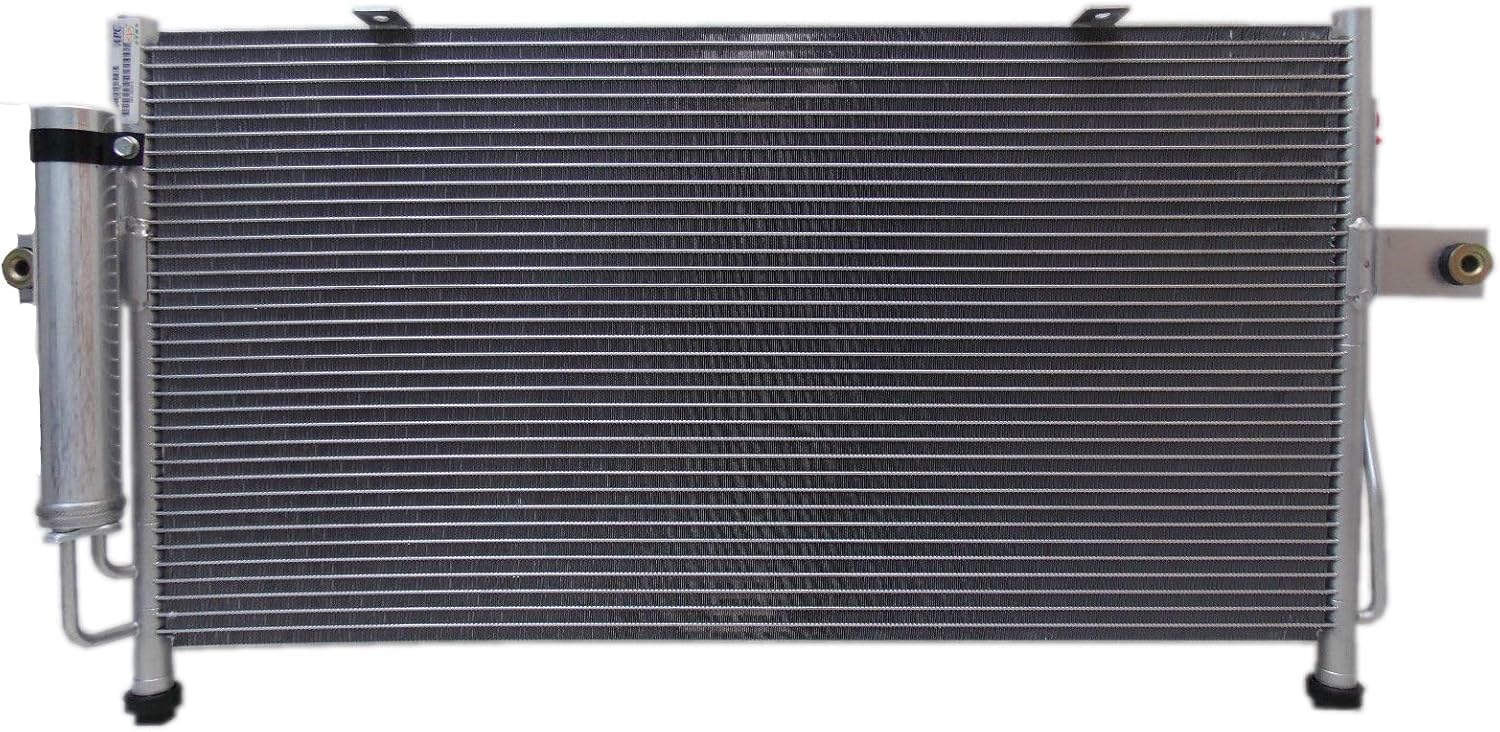
| Position | Front |
|---|---|
| Manufacturer | Sunbelt Radiators |
| Model | Automotive Condenser |
| Manufacturer Part Number | SBC3100 |
This Sunbelt condenser replaces the factory unit on 2003–2004 Nissan Frontier and Xterra models to restore air conditioning performance. It is a front-position condenser built from aluminum with reinforced components and is intended as a direct, no-modification replacement that matches factory mounting points and connector locations. In normal driving, heavy traffic, or towing situations it is designed to dissipate refrigerant heat quickly to keep cabin temperatures down. Sunbelt reports factory-style testing including leak and pressure checks to reduce installation surprises. Practical benefits include simpler installation for DIYers or technicians and the expectation of corrosion resistance compared with lower-grade cores. Limitations are that this is a like-for-like replacement rather than a performance-upgrade condenser with enlarged capacity or upgraded cooling fins, so buyers seeking extra cooling for serious towing, racing, or extreme climates should consider purpose-built performance condensers instead.
Best for: Buyers who want a reliable, factory-equivalent replacement to restore A/C cooling quickly on 2003–2004 Frontier or Xterra vehicles and prefer a straightforward install over aftermarket upgrades.
Less Ideal for: Drivers seeking a high-capacity or racing-grade condenser for extreme towing or track use should look at dedicated performance condensers instead.
- Direct-fit design matched to factory mounting points for straightforward installation
- Aluminum construction with reinforced components for corrosion and vibration resistance
- Pressure and leak-tested before shipping to reduce failure risk on installation
- Designed to restore factory-level cooling performance in typical driving and towing conditions
- Not a performance-enhanced condenser; no increased capacity or specialized cooling features for extreme heat
Verdict: Choose this Sunbelt condenser when you need a dependable, direct-fit replacement to quickly restore factory-style A/C cooling on 2003–2004 Nissan Frontier and Xterra vehicles.
3. Garage-Pro A/C Condenser for Nissan Frontier 2003–2004

| Fitment years | 2003-2004 |
|---|---|
| Vehicle compatibility | Nissan Frontier |
| Core material | Aluminum |
| Includes | Receiver drier |
| Engine coverage | 2.4L 4-cylinder and 3.3L V6 |
This Garage-Pro condenser is a direct-fit replacement made with an aluminum core and arrives with a receiver drier installed, so it is ready to slot into a 2003–2004 Nissan Frontier A/C system. Installation is typical for condenser swaps: recover refrigerant, remove the bumper or trim as needed, disconnect lines and the old condenser, then bolt this unit in place and recharge the system. The aluminum core provides efficient heat transfer and the included receiver drier helps protect the compressor from moisture and debris after installation. Because it lists factory part numbers and partslink references, fitment should be straightforward for the two engine options covered. Buyers should expect to handle refrigerant recovery and recharge professionally or through a shop since the part does not include installation services or refrigerant. This is a practical replacement option for restoring air conditioning performance without upgrading other components.
Best for: A buyer looking to restore factory-level air conditioning on a 2003–2004 Nissan Frontier who prioritizes correct fitment and reliable, no-frills replacement parts.
Less Ideal for: Drivers wanting an upgraded high-performance or aftermarket cooling solution beyond factory-equivalent parts should consider alternative condensers with enhanced cores or larger capacity.
- Direct-fit design matching factory part numbers for straightforward replacement
- Aluminum core for effective heat transfer and improved cooling efficiency
- Includes receiver drier to help protect the system after installation
- Covers both 4-cylinder and V6 engine variants listed for the 2003–2004 Frontier
- Does not include refrigerant or professional installation, so A/C service is required to complete the repair
Verdict: Choose this condenser if you want a direct-fit, factory-replacement aluminum unit to reliably restore A/C cooling on a 2003–2004 Nissan Frontier.
4. Auto Dynasty A/C Condenser Compatible with 1998–2002 Nissan Frontier and 2000–2002 Xterra

| Vehicle compatibility | Nissan Frontier 1998–2002; Xterra 2000–2002 |
|---|---|
| Material | T-6061 Aluminum |
| Position | Front |
| Manufacturer Part Number | ADOEMCDS3001 |
| OEM Part Number | 921103S501 |
This Auto Dynasty condenser replaces a failed or leaking factory unit and is intended as a budget-friendly, direct-fit swap for 1998–2002 Nissan Frontier and 2000–2002 Xterra models. Built from T-6061 aluminum, the condenser provides corrosion-resistant cooling surfaces and is sold as a single front-position core designed to bolt into the existing mounting points without drilling or modification. In practice it is used when the original condenser is damaged or when retrofitting a worn system; installers will appreciate the plug-and-play fitment and the inclusion of common OEM part numbers for cross-reference. The aluminum construction keeps weight and cost down while offering good thermal transfer, but buyers should expect a value-level unit rather than a premium OEM reproduction. If you need a straightforward, economical condenser to get A/C cooling back to normal with minimal hassle, this offers a practical solution, though long-term durability may not match higher-end branded cores.
Best for: Buyers looking to restore A/C function on an older Frontier or Xterra on a tight budget who prioritize easy, direct-fit installation and immediate cooling performance.
Less Ideal for: Those seeking a long-term, high-end factory-quality replacement or professional shops specifying premium OE-equivalent parts should consider higher-grade condensers.
- Direct bolt-on fit for Nissan Frontier (1998–2002) and Xterra (2000–2002) for straightforward installation
- Constructed from T-6061 aluminum for good thermal transfer and corrosion resistance
- Sold as a complete condenser unit so you replace the core without sourcing additional parts
- Value-oriented construction may not match longevity of higher-end or factory-quality condensers
Verdict: A cost-conscious, bolt-on aluminum condenser that restores A/C cooling on 1998–2002 Frontier and 2000–2002 Xterra without modification.
5. Kool Vue A/C Condenser for Nissan Frontier 1998–2002
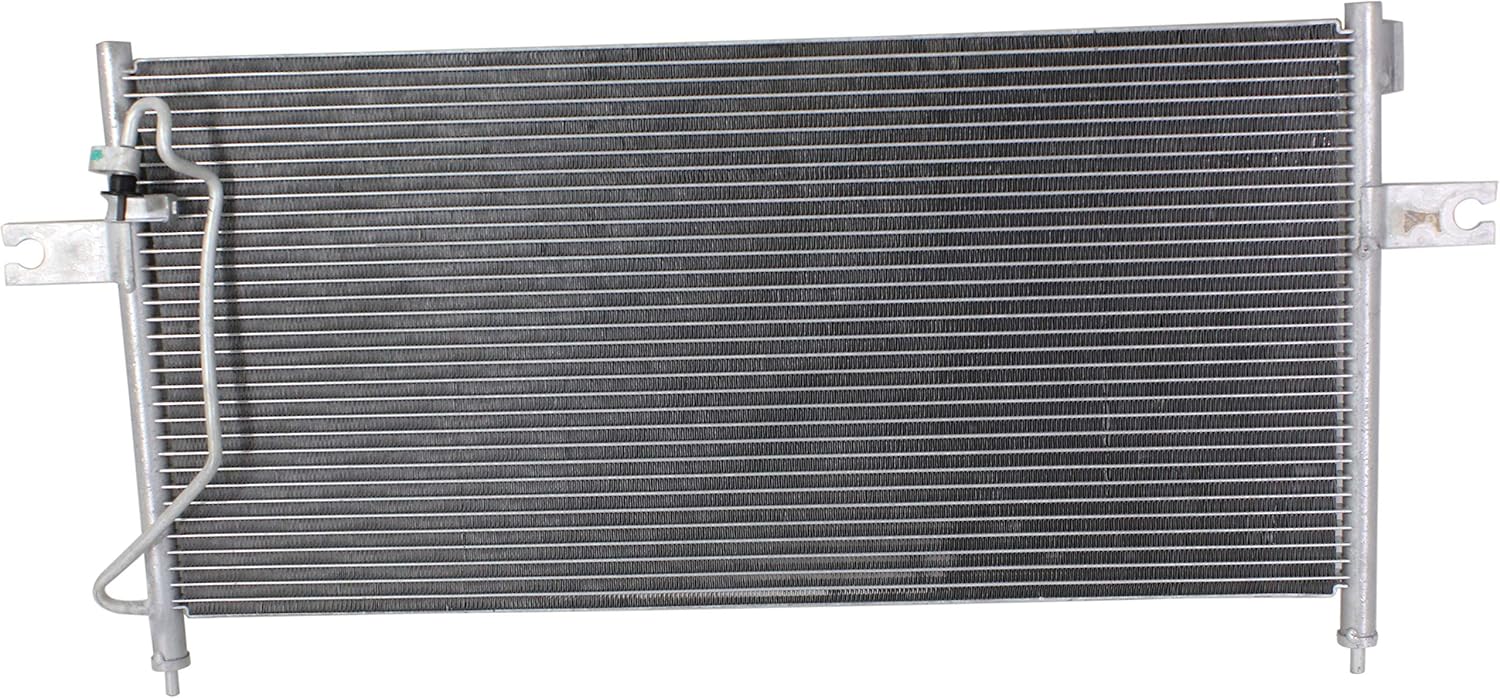
| Manufacturer | Kool Vue |
|---|---|
| Item model number | KVAC4978 |
| OEM Part Number | 5048350 |
| Special Features | Direct fit, leak tested, aluminum core |
This Kool Vue condenser is a direct-fit replacement intended to restore air conditioning performance on Nissan Frontier (1998–2002) and compatible Xterra models. It is built with an aluminum core that the maker says is leak and fit tested, which in practice means installation is straightforward with factory mounting points and no major modification. The painted finish helps resist corrosion and the unit is designed to mate with standard A/C clutch and compressor kits. For routine replacement, it delivers the practical benefits you need: restored cooling capacity, proper refrigerant flow, and compatibility with existing hoses and fittings. The included one-year limited coverage provides basic protection if an early defect appears. Expect a used-life comparable to other aftermarket condensers, but if you prioritize long-term dealer-level support or extended warranty you may prefer a dealer-sourced factory-quality part instead.
Best for: A buyer who wants a reliable, ready-to-install condenser to restore factory cooling on a late 1990s to early 2000s Nissan Frontier without customization, prioritizing a tested replacement over cosmetic concerns.
Less Ideal for: Someone who needs a long-term dealer-backed replacement with extended warranty or who prefers OEM-sourced parts for guaranteed factory-origin documentation.
- Direct-fit design matches factory mounting for straightforward installation
- Aluminum core engineered for cooling efficiency and corrosion resistance
- Leak and fit tested to reduce the chance of immediate failures
- Painted exterior finish adds extra corrosion protection
- Only a one-year limited coverage which is shorter than some extended aftermarket warranties
Verdict: Choose this condenser if you want a tested, direct-fit aluminum replacement that restores reliable A/C performance on a 1998–2002 Nissan Frontier.
6. TRQ ACA84410 A/C Condenser for 1998-2002 Nissan Frontier, 2000-2002 Xterra

| Core Thickness | 0.63 in |
|---|---|
| Core Width | 13.03 in |
| Core Length | 27.83 in |
| Inlet Fitting Thread Size | M8 |
| Condenser Core Type | Parallel Flow |
This TRQ condenser is a direct-fit replacement built from an aluminum parallel-flow core to match the original cooling function for 1998-2002 Nissan Frontier and 2000-2002 Xterra applications. It is intended for DIY or shop installation and arrives with mounting hardware and preassembled connections that simplify fitment and reduce installation time. Notable features include a 0.63-inch core thickness, block-style inlet and outlet fittings, and M8 inlet threading; those details make it compatible with the factory refrigerant plumbing without modification. Because the unit does not include an internal dryer or oil cooler, plan to service or replace those components as part of an A/C system refresh. The condenser is specific-fit rather than universal, which lowers the risk of misfit but means it only suits the listed Nissan model years. For buyers who prioritize straightforward swap-in replacements and clear fitment, this provides a practical, factory-replacement style option, though expect to address related system components during installation.
Best for: Buyers who want a reliable, factory-style replacement condenser with clear fitment for a late 1990s to early 2000s Nissan Frontier or early Xterra and who value easy installation and social-proof from other owners.
Less Ideal for: People looking for a complete A/C system refresh in a single purchase or those who need a multi-vehicle universal condenser.
- Direct-fit design with included mounting hardware for straightforward replacement
- Aluminum parallel-flow core for efficient heat transfer
- Preassembled block inlet and outlet fittings that match factory refrigerant lines
- Specific fit for 1998-2002 Nissan Frontier and 2000-2002 Xterra reduces compatibility guesswork
- Does not include a receiver/drier or oil cooler, so additional components may be required during service
Verdict: A practical, specific-fit aluminum condenser that makes swapping in a factory-style replacement on 1998–2002 Nissan Frontier and 2000–2002 Xterra models quick and predictable.
7. TRQ A/C Condenser and Receiver Drier Assembly for 2003–2004 Nissan Frontier/Xterra

| Fitment years | 2003-2004 (Frontier, Xterra) |
|---|---|
| Core material | Aluminum |
| Mounting hardware | Included |
| Core thickness | 0.63 in |
| Core width/length | 14.25 in / 27.13 in |
This TRQ condenser and receiver drier assembly replaces the factory unit on 2003–2004 Nissan Frontier and Xterra vehicles and comes preassembled to simplify installation. It is a direct-fit aluminum core unit with mounting hardware included, so a technician or experienced DIYer can swap it in without modifying lines or brackets. The built-in receiver drier saves a step by consolidating two service parts into one assembly, and the machined exterior and core dimensions indicate a robust replacement similar to factory-quality components. Practical benefits include fewer installation steps, reduced leak risk from fewer connections, and compatibility with the vehicle production dates listed. Limitations are typical for aftermarket assemblies: you must confirm exact production-date fitment before ordering and follow proper system evacuation and recharge procedures since the assembly does not include refrigerant or installation labor. For buyers wanting a straightforward, vehicle-specific condenser replacement, this simplifies the repair while matching OEM mounting points.
Best for: Buyers who prioritize a low-risk, vehicle-specific replacement and want a mostly plug-and-play condenser that mirrors factory fitment and simplifies installation.
Less Ideal for: Those seeking a universal or multi-vehicle condenser option or buyers who want a kit that includes refrigerant and professional service components.
- Direct-fit design tailored to 2003–2004 Nissan Frontier and Xterra for straightforward installation
- Preassembled condenser with integrated receiver drier reduces installation steps and connection points
- Includes mounting hardware to help ensure proper alignment and faster swap-in
- Aluminum core construction provides efficient heat transfer and corrosion resistance
- Does not include refrigerant or professional evacuation/recharge service, which are required during replacement
Verdict: Choose this preassembled TRQ condenser and receiver drier when you want a low-risk, direct-fit replacement that streamlines A/C repairs on 2003–2004 Nissan Frontier and Xterra vehicles.
Choosing the Right 1998-2004 Nissan Frontier AC Condenser: Key Factors to Consider
Fitment and Mounting Orientation
Correct fitment is fundamental for an effective AC condenser replacement on a 1998-2004 Nissan Frontier. Mounting point locations, bracket spacing, and overall condenser thickness must match the vehicle's AC assembly so the unit fits without forcing the fan shroud, radiator, or bumper components. Improper fitment can lead to contact with adjacent components, reduced airflow, or stress on the refrigerant lines, which increases the chance of leaks.
Before purchase, verify inlet and outlet port locations and their thread types so hoses and fittings mate cleanly with the existing AC lines. Pay attention to condenser orientation relative to the radiator and fan; a condenser that sits too far forward or backward can affect cooling efficiency and may require additional bracket work or spacer installation. Ensuring a direct bolt-on fit minimizes installation time and reduces the risk of future service issues related to misalignment.
Core Construction and Corrosion Resistance
The core material and its protective finish determine how long a condenser will resist leaks and structural degradation. For Frontier owners, an all-aluminum core with high-quality brazed joints provides a good balance of heat transfer and durability. Look for condensers with corrosion-resistant coatings or anodized finishes, especially if the vehicle operates in salted-road or coastal environments where corrosion accelerates failure.
Core design choices like tube thickness, fin density, and brazing method affect both strength and thermal conductivity. Denser fins increase heat rejection but are more susceptible to clogging from debris. A robust construction reduces the risk of pinhole leaks caused by vibration and road debris, which is especially important for pickups that may see off-road use or heavy hauling.
Leak Testing and Port Quality
Leak resistance is a top priority when replacing the condenser on a Frontier because even a small leak negates a costly recharge and repair. Reliable condensers are pressure-tested at the factory and provide documentation or markings that indicate an approved leak test. Port seals and the quality of the inlet and outlet fittings also influence long-term sealing performance.
Examine whether replacement condensers include properly sized service ports, capped fittings to protect threads during shipping, and compatibility with OEM O-rings or seal types. Well-designed ports make it easier to detect and repair leaks and simplify vacuum and recharge procedures during installation. Poorly finished ports or mismatched fittings increase the chance of refrigerant loss or oil contamination.
Thermal Performance and Airflow Compatibility
An effective condenser must reject heat from the refrigerant quickly enough to allow comfortable cabin temperatures under typical Frontier operating conditions. Thermal performance ties to surface area, fin geometry, and the condenser's position relative to the radiator and engine cooling fan. For a 1998-2004 Frontier, choose condensers that match the factory thickness and fin pattern so the vehicle's cooling airflow and fan can maintain proper condenser temperatures.
If a condenser is too restrictive or has inadequate surface area, the system pressure may rise and reduce cooling capacity. Conversely, overspecified fin density can trap debris and reduce airflow. Balanced thermal design ensures stable operating pressures across city and highway driving and helps the compressor operate within safe temperature ranges.
Serviceability and Installation Considerations
Serviceability influences long-term ownership costs and repair time. Look for condensers that allow straightforward access to service ports, use standard O-ring sizes, and fit without requiring major disassembly of the radiator or fan. Units designed with accessible mounting points and clearly labeled inlet/outlet ports reduce the risk of installation errors.
Consider whether the condenser requires additional parts for a complete repair, such as new receiver-drier, O-rings, or line-sealants. A condenser that is compatible with OEM replacement components simplifies the job and reduces the chance of contaminating the system during a flush and install. Proper installation practice includes flushing the AC lines, replacing desiccant components, and following torque specs for fittings to maintain a durable seal.
Warranty and Manufacturer Testing
A meaningful warranty and documented factory testing indicate confidence in a condenser's durability and build quality. Warranty coverage often reveals how a manufacturer addresses premature leaks or defects. For Frontier owners who may keep the vehicle long term, a longer warranty reduces risk and provides clear recourse if a part fails.
Factory testing that includes pressure cycles, leak checks, and vibration tests helps ensure the condenser will survive real-world driving conditions. Verify the scope of coverage and any limitations related to installation or environmental exposure. While warranty terms vary, parts backed by comprehensive testing and clear warranty language give added reassurance for a repair that may otherwise be disruptive and costly.
Common AC Condenser Symptoms On The 1998-2004 Frontier
Recognizing condenser-related symptoms helps you decide whether a condenser replacement is necessary. Typical signs include weak cabin cooling even when the compressor engages, visible oil stains or refrigerant residue on the condenser surface, and fluctuating system pressures during operation. Owners may also notice that the AC blows cool intermittently or only when driving at higher speeds.
Another telltale sign is physical damage from road debris or bent cooling fins near the front of the vehicle. If the condenser has taken an impact, leaks can occur at brazed joints or tubes. Pay attention to unusual smells inside the cabin, which can indicate refrigerant or oil leakage, and watch for condensation patterns that differ from normal AC drainage.
- Warm air at low speeds but cooler at highway speeds suggests reduced heat rejection.
- Visible oily residue or corrosion on the condenser indicates likely leaks.
- Hissing sounds or a drop in refrigerant charge during service point to a leak.
- Bent fins or punctures from debris are common physical failure modes.
Preparing For A Condenser Replacement
Preparation reduces installation time and the risk of contaminating the AC system. Before removing the old condenser, recover refrigerant per local regulations and disconnect the battery. Inspect the surrounding area for radiator or fan damage and clear debris from the front of the vehicle to improve access. Gather necessary replacement seals, a new receiver-drier or accumulator, and the correct O-ring sizes for the Frontier's AC lines.
Plan to flush the AC lines and replace desiccant components as part of a proper condenser replacement. Confirm that replacement hardware is included or obtain the correct bolts and brackets. If you intend to have a shop perform the work, ask for a pre-installation inspection to identify any hidden issues that might require additional parts or labor.
- Recover refrigerant following local environmental rules before starting work.
- Have new O-rings, receiver-drier, and appropriate refrigerant oil ready.
- Inspect fan shroud and radiator to ensure no interference with the new condenser.
- Prepare tools for vacuuming and charging the AC system after installation.
Fitment Tips Specific To The 1998-2004 Frontier
On the 1998-2004 Frontier, pay special attention to condenser thickness and hose entry angles. The vehicle's AC assembly sits close to the radiator, so a condenser that is slightly thicker can crowd the fan area or require modification. Confirm the condenser's advertised dimensions against the factory part to avoid clearance issues.
Also verify that mounting boss locations and bracket hole spacing match the Frontier frame attachments. Small differences in bracket design can make an otherwise compatible condenser difficult to install without modifying brackets or using shims. Ensuring exact fitment minimizes installation time and helps maintain proper airflow paths between the condenser and radiator.
- Compare condenser thickness and overall dimensions to the factory unit.
- Check inlet/outlet angles to prevent hose stress after installation.
- Verify bracket hole spacing to avoid drilling or modifying mounts.
AC Condenser Maintenance After Replacement
After installing a new condenser on the Frontier, regular inspections help preserve its service life. Keep the front grille area clear of debris and periodically rinse accumulated road grime that can hold moisture against fins and promote corrosion. Inspect for leaks after the first few drive cycles and again after seasonal temperature changes.
If the vehicle is used off-road or in snowy environments with road salt, consider more frequent visual checks. Address bent fins with a fin comb and ensure the condenser remains free of insect nests or trapped leaves that restrict airflow. Proper maintenance will help the condenser maintain consistent thermal performance over time.
- Rinse the condenser fins to remove dirt and salt buildup.
- Check for oil residue indicating small leaks after initial use.
- Use a fin comb to straighten bent fins and restore airflow.
When To Involve A Professional Technician
Some condenser replacements are straightforward, but certain tasks benefit from professional attention. If the condenser has extensive corrosion, multiple punctures, or if the AC system shows compressor-related pressure abnormalities, a technician can perform diagnostic pressure tests and identify related component failures. Professionals also have the recovery, vacuum, and recharge equipment needed to service refrigerant safely.
A shop can verify system contamination levels and perform a proper flush and oil balance for the compressor after condenser replacement. Enlisting a professional is also wise when access is obstructed by aftermarket accessories or when the job requires partial disassembly of the radiator or front-end structure.
- Seek professional help for advanced leak detection or compressor issues.
- Technicians can ensure correct refrigerant charge and oil balance.
- Complex front-end disassembly or rusted fasteners often require shop tools.
Still looking for the perfect fit?
Select your Nissan Frontier configuration to see the most relevant AC Condensers recommendations
How We Chose the Best 1998-2004 Nissan Frontier AC Condenser
We prioritized parts that address the most common failure modes for 1998-2004 Nissan Frontier condensers while also matching factory fitment and HVAC system needs. Evaluation began with assessing core construction and finish, since robust aluminum cores and corrosion-resistant coatings reduce the risk of leaks and extend service life in vehicles exposed to road salt or coastal humidity. Next, we considered tube-and-fin density, brazing quality at joints, and the presence of pressure-tested ports to evaluate durability under refrigerant pressure cycles.Fitment accuracy was another key filter. We verified that mounting points, inlet and outlet orientations, and condenser thickness align with the Frontier's available condenser locations and condenser mounting brackets. Leak resistance and ease of seal replacement were judged by port designs and compatibility with OEM O-rings. Thermal performance and airflow compatibility were assessed by examining fin spacing and overall condenser surface area to ensure adequate heat rejection with the Frontier's factory fan and radiator proximity.We excluded any parts lacking manufacturer leak test documentation, ambiguous fitment information, or aftermarket condensers with unverified core materials. Final selection balanced proven durability, correct part fitment, and clear serviceability for technicians and DIYers working on the Frontier.
Our full evaluation process is outlined in our review methodology.
FAQ
What are common AC condenser symptoms on a 1998-2004 Nissan Frontier?
Common symptoms include weak cooling at low speeds, visible oil or refrigerant residue on the condenser, and fluctuating system pressures. Physical damage or bent fins after debris impact can also reduce performance.
Can I replace the condenser myself on the 1998-2004 Frontier?
You can replace the condenser yourself if you have mechanical experience and the right tools, but refrigerant recovery, vacuuming, and charging require specialized equipment. If you lack that equipment or encounter corrosion and seized fittings, a professional technician is recommended.
Do I need to replace other components when replacing the condenser?
It is recommended to replace the receiver-drier or accumulator and O-rings during a condenser replacement to prevent moisture and contamination. Many technicians also recommend flushing lines to remove debris before installing the new condenser.
How can I detect a small leak in the condenser?
Small leaks are often detected with dye and UV inspection, electronic leak detectors, or pressure testing the system. Visual signs like oily residue or bubbles in soapy water over fittings can also indicate a leak.
Will a thicker aftermarket condenser cause issues on the Frontier?
A thicker condenser can create clearance problems with the radiator and fan shroud on the Frontier. Confirm dimensions and mounting clearance before installation to avoid airflow restriction or the need for bracket modification.
How long should a replacement condenser last on this vehicle?
Lifespan depends on construction, environmental exposure, and maintenance. A well-made condenser with corrosion protection can last many years, while units exposed to heavy road salt or frequent debris impacts may fail sooner. Regular inspection helps catch issues early.
Final Verdict
When replacing an AC condenser on a 1998-2004 Nissan Frontier, prioritize exact fitment, leak-tested core construction, and corrosion resistance to restore reliable cooling. Balance thermal performance with airflow compatibility to ensure the condenser works well with the vehicle's existing radiator and fan. Finally, plan for proper system serviceability by replacing desiccant components and seals during installation so the repair is complete and durable. Focusing on these tradeoffs will help you choose a condenser that minimizes repeat service and keeps the Frontier's AC operating effectively.
Explore More:
- Check out all Nissan Frontier parts & accessories
- Explore AC Condensers Maintenance & Repair Guides
- Explore HVAC
- Browse all Auto Parts
