

Note: This article contains affiliate links. If you click on these links and make a purchase, I may earn a small commission at no extra cost to you. This helps support my research and content. Read my full affiliate disclosure here.
If your Toyota Avalon is showing ABS warnings or erratic braking behavior, choosing the right ABS wheel speed sensor matters for safe, predictable stops. You want a part that fits correctly, provides consistent wheel-speed data, and interfaces cleanly with your vehicle's ABS system so faults do not recur. This guide highlights seven shortlisted ABS wheel speed sensors for the Toyota Avalon. We focus on sensors that meet fitment expectations and deliver stable signal output, and we explain the evaluation criteria used to select these top picks. Read on to understand what to check before replacing a sensor.
Looking for other parts? See all Toyota Avalon parts & accessories.
Top Picks at a Glance
| Best Reviewed A top-rated pick with lots of positive feedback | A-Premium ABS Wheel Speed Sensor — Front Right Passenger Side (fits Lexus/Toyota) |  |
| Most Popular A crowd favorite that many people choose with confidence | uxcell ABS Rear Wheel Speed Sensor, pair (Left & Right) |  |
| Best Quality Built to a higher standard if you want something more solid | A-Premium ABS Wheel Speed Sensor Kit (Front and Rear) for Toyota Avalon 2013-2015 |  |
| Best Budget The cheapest option that still gets the job done reliably | LoloWheat ABS Front Left Wheel Speed Sensor for Toyota Avalon/Camry (Driver Side) |  |
| Most Sold A high-volume bestseller chosen again and again | Holstein Parts ABS Wheel Speed Sensor (Front Left) |  |
| Best Value for Money The sweet spot between price and what you get | Auto Parts Port Front ABS Wheel Speed Sensor Set (Left + Right) for Toyota Camry/Avalon |  |
| Best Overall The best all-around choice for most situations | TRQ Front Left ABS Wheel Speed Sensor (Driver Side) |  |
1. A-Premium ABS Wheel Speed Sensor — Front Right Passenger Side (fits Lexus/Toyota)

| Compatible models | Lexus ES300h/ES350 2013-2018, Toyota Avalon 2013-2015, Camry 2012-2017 |
|---|---|
| Location | Front right passenger side |
| Connector pins | 2 Pins |
| Material | Acrylonitrile Butadiene Styrene |
| Manufacturer part number | APABS0734 |
This A-Premium wheel speed sensor replaces the factory front right passenger-side unit on compatible Lexus and Toyota sedans and restores the wheel speed signal to the ABS control module. It is a direct-fit replacement that snaps into the original bracket and uses the same two-pin connector, so installation is typically straightforward for a DIYer or technician. The sensor is molded from ABS plastic and the listing emphasizes 100 percent performance testing and factory-spec output for stable, fast response signals that help maintain ABS and stability functions. Buyers will appreciate the included rubber holders and matching bracket fit that eliminate bracket modification. The sensor carries multiple OEM reference numbers for cross-reference. Limitations are that this is an aftermarket component rather than a factory brand part and longevity can vary with driving conditions; if you need factory-brand assurance you may prefer a dealer part. No installation hardware beyond the sensor is guaranteed in the box so check existing clips during replacement.
Best for: Reliability-focused owners who prioritize restoring ABS and stability functions with a tested, direct-fit replacement for Toyota Avalon and compatible Lexus models.
Less Ideal for: Buyers seeking a factory-branded sensor from a dealer or those who prefer an extended manufacturer warranty should consider dealer-sourced options instead.
- Direct-fit design for front right passenger side on listed Lexus and Toyota models
- Two-pin connector and matching bracket/rubber holders for plug-and-play installation
- Claimed 100% performance testing and factory-spec output for stable wheel speed signals
- Made from ABS plastic with a stated high temperature rating for durability
- Aftermarket part rather than a factory-branded sensor which may matter to some buyers
- Seller-provided guarantee is limited to the seller rather than manufacturer-backed coverage
Verdict A practical, tested direct-fit replacement that restores ABS function on listed Avalon and Lexus models without dealer sourcing.
2. uxcell ABS Rear Wheel Speed Sensor, pair (Left & Right)

| Placement on Vehicle | Rear Left and Right |
|---|---|
| Package Included | 2 x ABS Wheel Speed Sensor |
| Interchange Part Numbers | 89546-33020, 89545-33020, ALS265, ALS266 |
These uxcell sensors are sold as a two-piece replacement set for the rear left and right wheel speed sensors on compatible Toyota Avalon and Lexus ES300 models. They are used to restore wheel speed input to ABS and traction control systems after the factory sensors fail, and installers will typically remove the rear wheels and access the sensor bosses from inside the wheel well or rear seat area. The listing includes common interchange numbers and notes the sensors meet a professional specification for stable performance. The practical benefit is a budget-friendly way to clear ABS or TRAC fault lights and regain ABS/traction function without buying an expensive factory part. Fit has been reported as good by multiple owners, but a few purchasers noted fitment or durability issues that required replacing with a factory-quality sensor. Expect basic aftermarket build quality and verify the vehicle fit chart carefully before installation to avoid incorrect fit or extra labor during install.
Best for: Convenience-driven buyers who want a low-effort, cost-conscious replacement to get ABS and traction systems back to normal quickly without sourcing dealer parts.
Less Ideal for: Drivers seeking an exact factory-quality sensor for maximum long-term reliability or those who prefer dealer-verified parts should consider OEM replacements instead.
- Sold as a left and right pair so both rear sensors are replaced at once
- Lists multiple interchange numbers to help confirm vehicle fit
- Affordable alternative to factory replacements for clearing ABS/TRAC codes
- Aftermarket build quality can be inconsistent so some units may not resolve the issue long term
- Fitment is vehicle-specific and a few buyers reported parts that did not seat correctly
Verdict A budget-friendly two-pack that can quickly clear ABS/TRAC faults on compatible Avalons and Lexus ES300s but verify fit and accept some aftermarket variability.
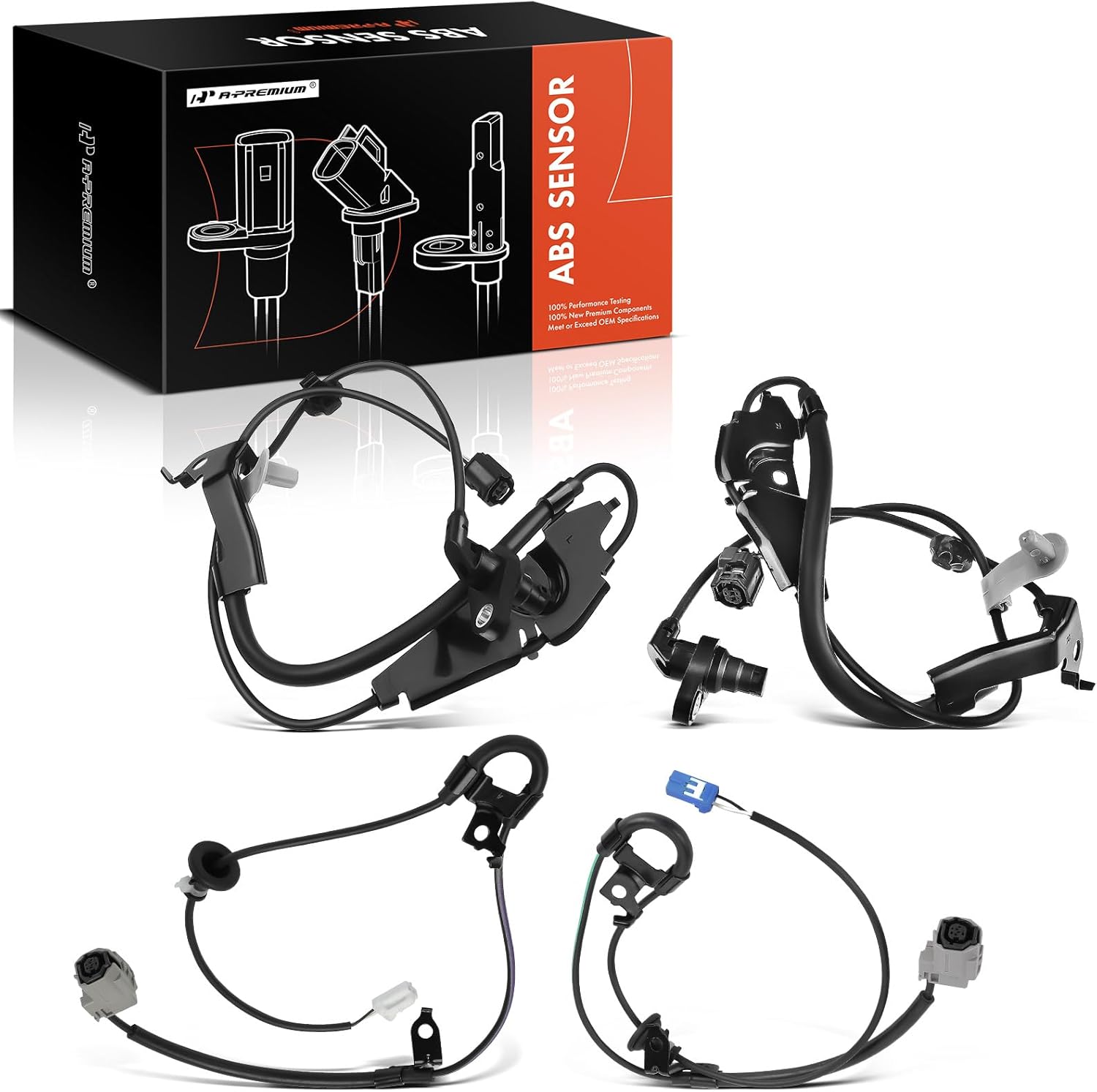
3. A-Premium ABS Wheel Speed Sensor Kit (Front and Rear) for Toyota Avalon 2013-2015
| Vehicle fitment | Toyota Avalon 2013-2015 |
|---|---|
| Placement | Front and rear, driver and passenger side |
This four-piece A-Premium kit replaces both driver and passenger side front and rear wheel speed sensors on a Toyota Avalon 2013–2015. The sensors are marketed as factory-quality replacements and are intended to restore ABS, traction control, and stability functions when original sensors fail. Installation is the same as standard wheel-sensor swaps: mount the sensor at the hub, secure the connector, and route the harness to prevent chafing. The listing highlights multiple vehicle-specific reference numbers for correct fitment and says the parts undergo performance testing for longevity. Practical benefits include a full-vehicle sensor set so you can address multiple fault codes at once and avoid piecemeal trips to the parts store. Limitations are that these are aftermarket components rather than factory-brand parts, so professional installers may want to confirm connector and ring compatibility before fitting, and buyers should verify the exact reference numbers against their Avalon VIN to ensure direct fit without additional adaptors.
Best for: Performance-oriented Avalon owners who prioritize restoring precise ABS and traction control function quickly and prefer replacing all sensors in one service visit to ensure consistent wheel-speed readings.
Less Ideal for: Drivers who insist on purchasing only factory-branded Lexus or Toyota parts or those who need sensors for vehicles outside the Toyota Avalon 2013–2015 fitment range.
- Complete four-piece kit covers front and rear driver and passenger sides so all failed sensors can be replaced at once.
- Sold as vehicle-specific fitment for Toyota Avalon 2013–2015 to simplify matching and reduce returns.
- Manufacturer states parts are built to factory-quality standards and were tested for performance and lifespan.
- Includes multiple reference/OEM numbers to help confirm compatibility with the vehicle.
- Aftermarket unit rather than Lexus/Toyota factory-branded sensor which may differ in connector or tone-ring fit on some vehicles.
Verdict A convenient four-piece aftermarket kit aimed at restoring ABS and traction control on Toyota Avalon 2013–2015, best for owners who want a complete, performance-focused sensor replacement.
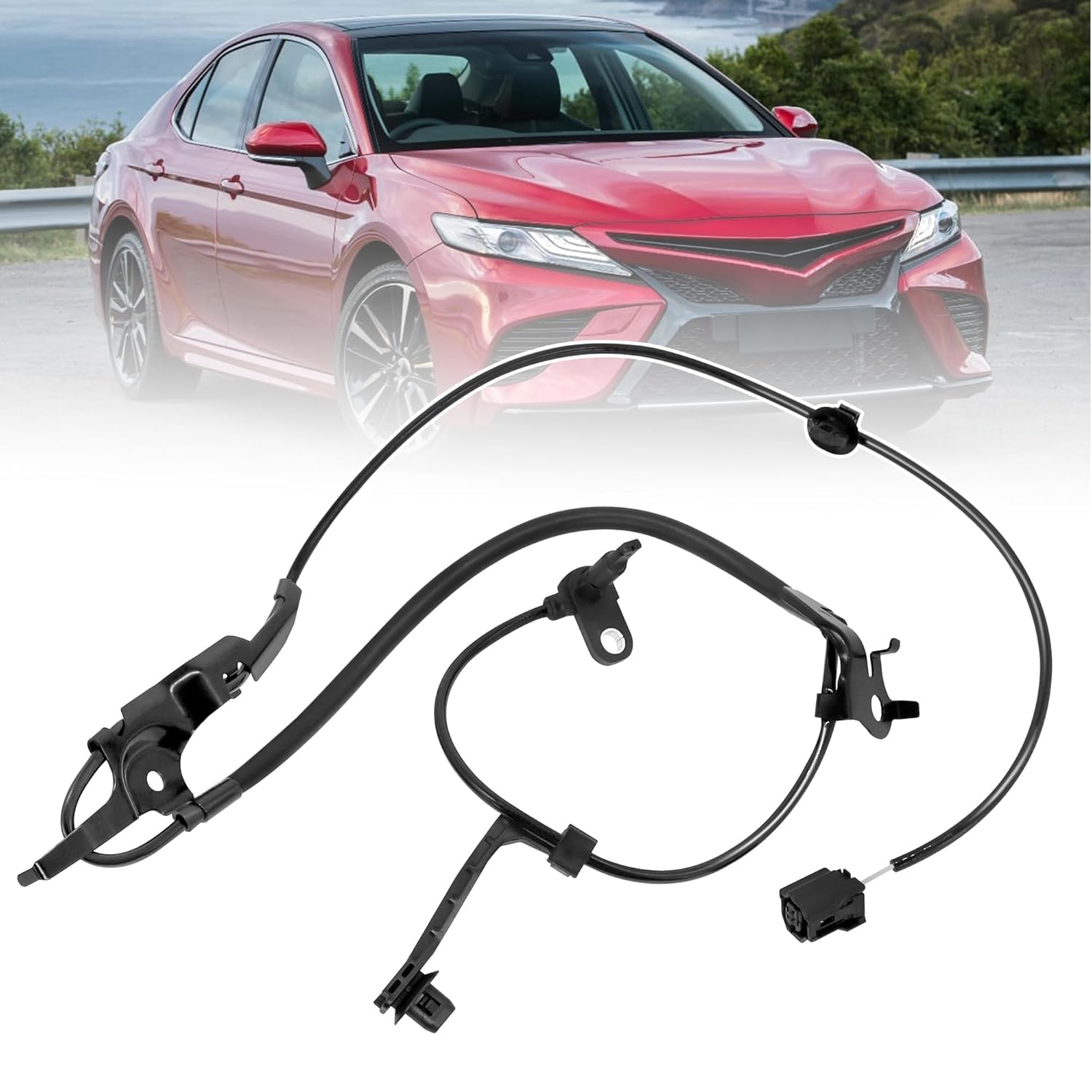
4. LoloWheat ABS Front Left Wheel Speed Sensor for Toyota Avalon/Camry (Driver Side)
| Brand | LoloWheat |
|---|---|
| Material | High Density Polyethylene, Nylon, Stainless Steel |
| Placement | Front driver side |
| Output Type | Push-Pull |
| Compatible Models | Toyota Avalon 2018–2022, Toyota Camry 2019–2022 |
This LoloWheat front left wheel speed sensor is a direct-fit replacement intended for Toyota Avalon and Camry model years listed by the manufacturer. It mounts in the wheel hub and plugs into the vehicle harness to supply wheel-speed data to the ABS and traction control systems. The sensor includes a molded connector and protective wiring, and the seller highlights durable materials intended to withstand road exposure. In use it eliminates ABS warning lights and restores correct speed reporting when the original sensor fails, which improves braking stability and traction functions. Installation is typical for a hub-mounted sensor and can be done by a competent DIYer or a technician. Expect a budget-friendly alternative to factory parts with positive owner reports of fit and function, but the part lacks explicit manufacturer testing specifications and long-term durability data, so occasional verification after installation is prudent.
Best for: Budget-conscious owners looking to replace a failed front left wheel speed sensor with a low-cost, ready-to-install unit to get ABS and traction systems working again.
Less Ideal for: Buyers seeking guaranteed OEM-equivalent longevity or documented lab-tested performance should consider higher-tier or manufacturer-branded replacements.
- Direct-fit design for front left/driver side replacement on specified Toyota Avalon and Camry years
- Includes molded connector and harness for plug-and-play installation
- Constructed from automotive-grade plastics and metals intended for road exposure
- Positive user reports of restoring ABS function and eliminating warning lights
- No detailed testing standards or long-term durability data provided by the manufacturer
- Not accompanied by explicit vehicle-specific compatibility notes beyond the listed model years
Verdict A cost-effective, plug-and-play front left speed sensor for Toyota Avalon/Camry that restores ABS function quickly but lacks detailed durability data.
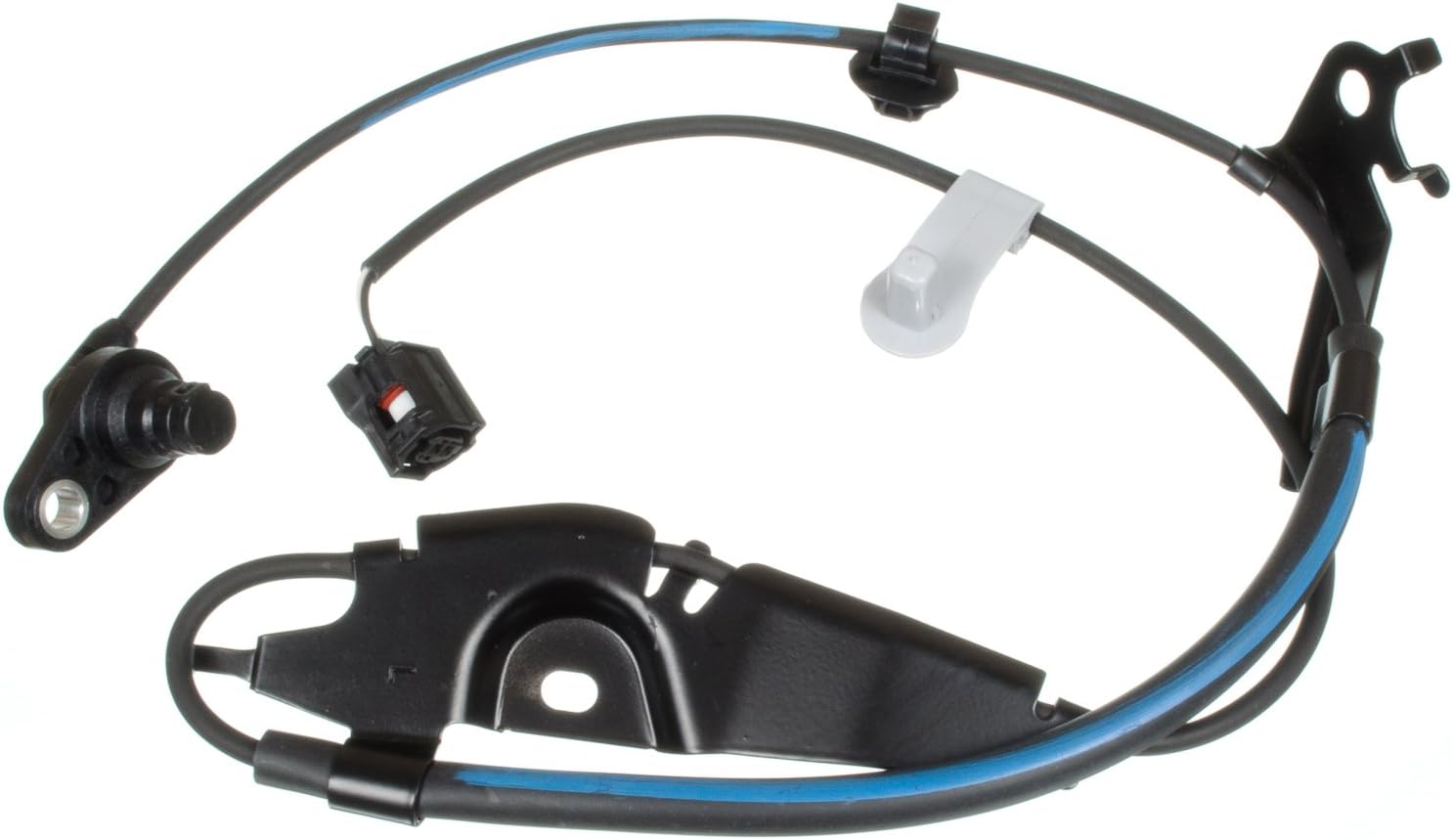
5. Holstein Parts ABS Wheel Speed Sensor (Front Left)
| Mounting Type | Chassis Mount |
|---|---|
| Output Type | electrical signal |
| Specific Uses For Product | Speed |
| Manufacturer Part Number | 2ABS0902 |
This Holstein front-left ABS wheel speed sensor replaces a failed factory unit to restore wheel speed input for the ABS and traction systems. It is sold individually and arrives with OE-style connectors, grommets, and clips to make installation straightforward for a competent DIYer or a technician. The reinforced plastic housing and sealed electrical terminals are intended to resist road grime and moisture, while the supplied wiring harness sleeve helps protect the lead from abrasion where applicable. Buyers report the part fits Toyota Avalon, Camry and Lexus ES350 applications and typically resolves speed-sensor related fault codes when installed and calibrated. Not every installation is plug-and-play; some vehicles require a calibration/reset step with dealer-level or aftermarket scan tools. A few users also reported inconsistent quality, so while this offers the convenience and value of an aftermarket replacement, there is some variability versus a factory-sourced unit.
Best for: Risk-averse mainstream buyers looking for a straightforward, factory-quality replacement to restore ABS and traction-system function on supported Toyota Avalon models without paying dealer markups.
Less Ideal for: Drivers wanting guaranteed dealer-sourced parts or those who prefer a certified dealership install and calibration should consider factory-parts alternatives.
- Direct factory-quality replacement fit for compatible Toyota and Lexus models
- Sealed electrical connectors and included grommets/clips simplify installation and routing
- Reinforced plastic housing and wire sleeve improve resistance to moisture and abrasion
- Sold individually which makes it easy to replace only the failed side
- Some buyers reported occasional quality inconsistencies compared with dealer parts
- May require a calibration or scan-tool reset after installation to clear fault codes
Verdict A practical, factory-style front-left speed sensor for Toyota Avalon owners who want a cost-effective replacement that restores ABS function, though a scan-tool reset and occasional quality variance are possible.
6. Auto Parts Port Front ABS Wheel Speed Sensor Set (Left + Right) for Toyota Camry/Avalon

| Compatible OEM numbers | 89543-07030, 89542-07030 |
|---|---|
| Mounting Type | Wheel Mount |
| Output Type | electrical signal |
| Manufacturer | Auto Parts Port |
This set supplies two front wheel speed sensors that restore ABS wheel speed input for Toyota Camry and Avalon models that use OEM part numbers 89543-07030 and 89542-07030. Installation is straightforward for a mechanic or experienced DIYer since the sensors mount at the wheel and plug into the factory harness, returning the electrical signal the ABS module expects. Practical features include direct-fit compatibility with the listed OEM numbers and a one-year replacement warranty for part failures. Real-world benefits are re-enabled ABS and traction control functionality and avoidance of diagnostic faults that occur with a failed sensor. Limitations are that this is a parts-only replacement with no additional hardware or extended warranty coverage, and fitment must be verified against your vehicle by part number before purchase. Expect a simple swap-in solution when the sensor matches your car's original specification, but budget-oriented aftermarket parts may vary in long-term durability compared with higher-end factory-quality options.
Best for: Practical optimizers who want an affordable, direct-fit repair that gets ABS and traction systems working again without overpaying for dealer parts.
Less Ideal for: Drivers seeking long-term factory-quality longevity or extended warranty protection should consider higher-end or dealer-sourced sensors instead.
- Sold as a matched left and right pair for a complete front-axle repair
- Direct compatibility with listed Toyota OEM part numbers for simpler fit checks
- Plugs into the factory wiring harness for a straightforward replacement
- Includes a one-year replacement warranty covering defective parts
- Warranty covers replacement parts only and excludes labor or incidental costs
Verdict A cost-conscious direct-fit pair that restores ABS function on matching Toyota Camry and Avalon models without the dealer price.
7. TRQ Front Left ABS Wheel Speed Sensor (Driver Side)

| Brand | TRQ |
|---|---|
| Material | Acrylonitrile Butadiene Styrene |
| Mounting Type | Flange Mount |
| Output Type | Push-Pull |
| Manufacturer Part Number | BSA12653 |
This TRQ front-left ABS wheel speed sensor replaces the factory unit on compatible Toyota Avalon models and other Toyota/Lexus front-driver applications listed by the manufacturer. It is a pre-assembled, flange-mount sensor with the same push-pull output style and factory-style connectors to simplify installation and minimize wiring work. Typical use is a DIY swap when an ABS or traction control error points to a failed speed sensor; installers remove the wheel, unclip the old harness, and bolt this sensor into the existing mount. The practical benefits are straightforward: direct-fit design reduces modification, included connector clips and routing match factory locations, and TRQ provides DIY videos to guide the job. Limitations to keep in mind are occasional fitment variation on older or nonstandard chassis that may require minor wiring slack adjustments, and quality control reports from a small number of users who needed to return parts for fit or durability issues. For owners who want a lower-cost factory-style replacement that works for Toyota Avalon front-left applications, this sensor is a viable option.
Best for: A balanced all-round buyer who wants a practical, lower-cost factory-style replacement for a Toyota Avalon front-left speed sensor and values ease of installation and clear DIY guidance.
Less Ideal for: Drivers seeking an OEM part backed by dealer support or those unwilling to troubleshoot minor fitment or wiring routing issues should consider dealer-sourced options instead.
- Direct-fit flange mount designed to match factory mounting points for Toyota Avalon front-left applications
- Pre-assembled harness and factory-style connector clips to simplify DIY installation
- Push-pull output and machined exterior that mimic factory component behavior
- TRQ provides DIY video resources to guide removal and installation
- Some users reported fitment or routing slack issues on nonstandard chassis variants
- Quality control appears inconsistent for a small number of units
Verdict A budget-friendly, direct-fit front-left ABS sensor for Toyota Avalon owners who want a practical DIY replacement with factory-style connectors.
Choosing the Right Toyota Avalon ABS Wheel Speed Sensor: Key Factors to Consider
Fitment and Connector Type
Correct physical fit and the right connector are essential because an improper connector can lead to intermittent contact, which creates false ABS warnings or limp behavior. Confirm the sensor uses the same mounting style, bolt pattern, and connector pinout as the factory unit so installation is straightforward and the sensor sits at the proper distance from the tone ring.
Mismatched fitment can stress harnesses or force awkward mounting angles that shorten service life. When you check compatibility, prioritize sensors with clear vehicle fitment listings and connector photos so you can verify they match the Toyota Avalon application before buying.
Signal Output and Electrical Specs
The sensor must produce a consistent and noise-free electrical signal for the ABS module to calculate wheel speed accurately. Look for sensors that provide resistance, output voltage ranges, or explicit waveform characteristics. These specifications indicate how the device behaves at different wheel speeds and under varying temperatures.
Understanding electrical specs matters because a sensor that drifts outside expected parameters can trigger codes or erratic ABS behavior even if it physically fits. If you plan to diagnose or bench-test the part, having documented electrical values simplifies troubleshooting and validation.
Durability and Environmental Protection
Wheel speed sensors operate near harsh road environments and must resist moisture, road salt, dirt, and heat cycles. Durable seals, corrosion-resistant terminals, and rugged cable jackets reduce the chance of ingress or wire failures that lead to intermittent faults.
Consider the expected operating environment of your Toyota Avalon. Sensors designed with enhanced sealing and strain relief will generally last longer in wet climates or where road salt is common. Durable construction also reduces maintenance frequency and unexpected ABS alerts.
Wiring Integrity and Repairability
A common failure point is the wiring between the sensor and the vehicle harness. Inspect whether the sensor includes protected pigtails, reinforced sheathing, and factory-style terminals. These features reduce stress on solder joints and crimp connections during suspension movement.
If the sensor wiring is damaged, a design that allows for straightforward repair or replacement of a pigtail can save labor time. Choose sensors that document wiring layouts and offer clear instructions for splicing or connector replacement when necessary.
Diagnostics and Code Compatibility
A sensor that is easy to diagnose helps you confirm whether the ABS warning originates at the sensor or elsewhere. Sensors specifying expected resistance ranges, open-circuit thresholds, and typical waveform behavior make it simpler to interpret scan tool readings and oscilloscope traces.
Also consider how the sensor interacts with common ABS codes. Clear documentation about what fault conditions may arise from open circuits, short circuits, or weak signals will help you determine whether replacing the sensor will resolve codes such as general speed-sensor faults.
Installation Accessibility and Serviceability
Ease of installation affects repair time and the risk of installation-related damage. Sensors that match the original routing and mounting fasteners reduce the chance of rubbing or connector strain after installation. Prioritize sensors with installation guidance, torque specs, and any included hardware to simplify the swap.
Serviceable designs, such as replaceable pigtails or standard fasteners, also help with future maintenance. If your location has limited lift access, consider how much disassembly is required to reach the sensor and whether the part’s design eases that process.
FAQ
What are common symptoms of a failing ABS wheel speed sensor on a Toyota Avalon?
Typical symptoms include an illuminated ABS warning light, inconsistent or pulsing brake feel under anti-lock conditions, and in some cases a triggered traction control warning. You might also notice speedometer irregularities if the sensor feeds vehicle speed data to other systems. These symptoms often occur intermittently at first and become more persistent as the sensor or wiring degrades.
How can I confirm the ABS sensor is the problem before replacing it?
Start with a visual inspection of the sensor and wiring for corrosion, damage, or loose connectors. Use a multimeter to check resistance against the expected range and perform a wiring continuity test to the ABS module. When available, an OBD-II scan tool or oscilloscope trace of the sensor waveform can reveal weak or noisy signals that indicate a failing sensor.
Where is the ABS wheel speed sensor located on a Toyota Avalon?
On the Toyota Avalon, wheel speed sensors are mounted at each wheel hub or knuckle area near the tone ring or reluctor ring. Front sensors are typically near the steering knuckle and rear sensors are adjacent to the wheel hub assembly. Access often requires removing the wheel and possibly a brake or dust shield to reach the sensor mounting bolt and connector.
Can I replace a wheel speed sensor myself, and what should I watch for?
Many owners can replace a wheel speed sensor with basic tools, but take care to avoid damaging the tone ring or connector. Support the vehicle securely, remove the wheel, and follow safe practices when loosening mounting fasteners. Observe connector orientation, routing of the wiring to prevent rubbing, and use proper torque on mounting bolts. If wiring is corroded, plan for splicing or connector replacement.
Will replacing a single bad sensor clear ABS codes automatically?
Replacing a faulty sensor can often clear sensor-specific codes, but some fault codes persist until the vehicle’s computer is reset or cleared with a scan tool. If the cause was wiring or module-related rather than the sensor itself, codes may return. After replacement, it is good practice to clear codes and test drive to verify the fix.
How does a wiring test help diagnose ABS sensor issues?
A wiring test checks for open circuits, shorts to ground or power, and unexpected resistance that could cause signal loss. Continuity testing from the sensor connector to the ABS module and a resistance check of the sensor coil help determine whether the issue is in the sensor or the harness. Proper wiring tests reduce unnecessary part replacements and pinpoint the true failure location.
How We Chose the Best Toyota Avalon ABS Wheel Speed Sensor
To assemble this list we applied targeted, vehicle-specific filters and technical criteria to identify sensors appropriate for the Toyota Avalon. First, we prioritized exact-fit electrical connectors and mounting dimensions to minimize installation issues and guarantee proper sensor alignment with the tone ring. Second, we evaluated expected signal fidelity and voltage characteristics to ensure the sensor can reliably report wheel speed under different driving conditions. Third, we considered environmental durability including sealing against moisture, corrosion-resistant terminals, and robust strain relief for the wiring harness. Fourth, we assessed compatibility with typical ABS fault codes and the ease of diagnosing sensor-related problems with standard scan tools. We excluded universal or poorly specified sensors that lack clear fitment data or wiring diagrams. We also excluded items without documented resistance or waveform specifications. The final selection reflects sensors that balance correct fitment, dependable signal performance, and long-term durability for the Toyota Avalon.
Our full evaluation process is outlined in our review methodology.
Conclusion
When choosing an ABS wheel speed sensor for a Toyota Avalon, prioritize correct fitment and connector compatibility first, because installation errors create persistent faults. Next, focus on signal specifications and durable construction to ensure the sensor delivers reliable wheel-speed data under real-world conditions. Balancing ease of installation, wiring robustness, and clear diagnostic specifications will minimize repeat trips and help you restore consistent ABS function. Consider these tradeoffs based on how you use the vehicle and the typical operating environment.
Explore More:
- Check out all Toyota Avalon parts & accessories
- Explore Electrical System
- Browse all Auto Parts
