

Note: This article contains affiliate links. If you click on these links and make a purchase, I may earn a small commission at no extra cost to you. This helps support my research and content. Read my full affiliate disclosure here.
When a wheel speed sensor on your Mercedes-Benz E-Class falters, you can experience unstable braking behavior, faulty traction control, or diagnostic codes. Choosing the right ABS wheel speed sensor matters because fit, signal fidelity, and durability directly affect braking system performance and vehicle diagnostics. This guide presents seven shortlisted options that meet core fitment and quality standards for the E-Class. We evaluated each pick for electrical compatibility, build durability, and installation practicality to help you find a reliable replacement. Read on to see which sensors made the list and why they passed our selection filters.
Looking for other parts? See all Mercedes-Benz E-Class parts & accessories.
Top Picks at a Glance
| Best Overall The best all-around choice for most situations | A-Premium Front Left/Right ABS Wheel Speed Sensor (A2129050901) |  |
| Best Quality Built to a higher standard if you want something more solid | A-Premium ABS Wheel Speed Sensor Compatible with Mercedes-Benz E-Class (Front, AWD) – Part 2115402017 |  |
| Best Value The sweet spot between price and what you get | SDYYDS Rear Left & Right ABS Wheel Speed Sensor for Mercedes-Benz E-Class (2115401217) |  |
| Best budget The cheapest option that still gets the job done reliably | A-Premium Rear ABS Wheel Speed Sensor (Replacement for 2115401217) — Rear Left/Right for Mercedes-Benz E/CLS Series |  |
| Highest Rated A top-rated pick with lots of positive feedback | A-Premium Front ABS Wheel Speed Sensor 2‑Piece Set for Mercedes-Benz E‑Class W211 AWD (Front Left & Right) |  |
| Most Popular A crowd favorite that many people choose with confidence | Bosch ABS Wheel Speed Sensor for select Mercedes-Benz E-Class and CLS models |  |
1. A-Premium Front Left/Right ABS Wheel Speed Sensor (A2129050901)
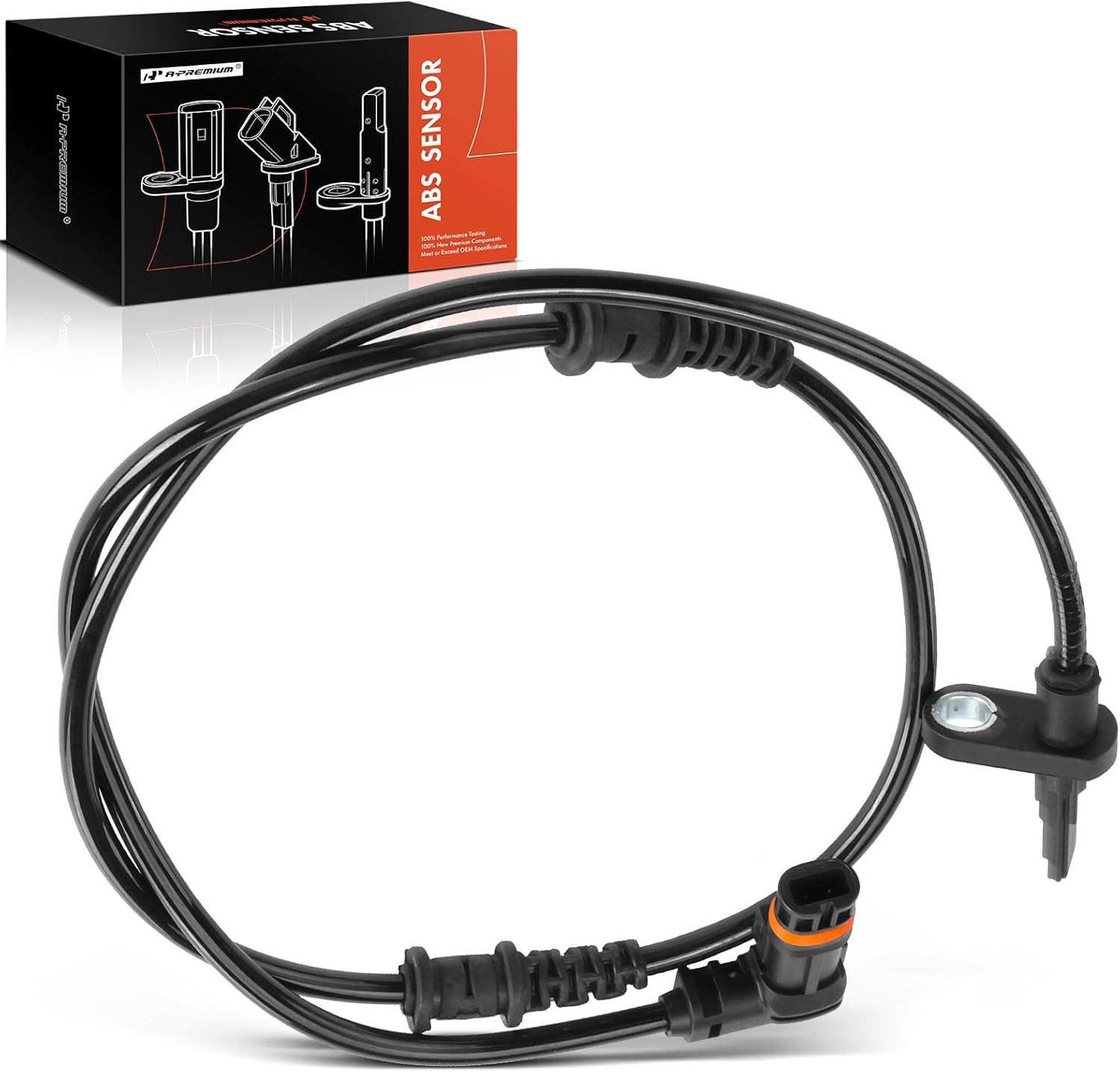
| Compatible Models | Select Mercedes‑Benz E250/E300/E350/E400/E550/E63 AMG and CLS variants (see fitment) |
|---|---|
| OEM Number | A2129050901, 2129050901 |
| Connect Quantity | 2 Pins |
| Location | Rear Left or Right (Driver or Passenger Side) |
This A-Premium ABS wheel speed sensor is a direct-fit replacement for selected Mercedes‑Benz E‑Class and CLS rear left or right positions and includes a wiring harness for plug-in installation. It senses wheel speed and sends an electrical signal to the vehicle ABS/traction control systems; typical use is as a like-for-like repair when a factory sensor fails or throws a fault code. Notable features include flange mounting, a two-pin connector, and construction from ABS plastic aimed at corrosion resistance and longevity. Practical benefits are straightforward installation where the wiring harness matches factory connectors and the included reference numbers make vehicle verification easier. Limitations are that this is an aftermarket component rather than a factory-branded part and long-term durability will depend on driving conditions; installation may still require basic tools and a safe lift or jack stands. The one-year unlimited-mileage guarantee covers part replacement but does not cover labor or related service costs.
Best for: Balanced buyers who want a practical, cost-effective replacement that matches factory fit and connectors for routine ABS sensor repairs on the specified Mercedes‑Benz E‑Class and CLS models.
Less Ideal for: Buyers seeking factory-branded parts or extended dealer-backed warranties should consider purchasing direct from Mercedes‑Benz or licensed suppliers instead.
- Direct-fit design for specified Mercedes‑Benz E‑Class and CLS rear left/right locations
- Includes wiring harness and uses factory-style two-pin connector for plug-in replacement
- Flange mount construction simplifies alignment and installation
- Manufactured from ABS plastic for basic resistance to road corrosion and contaminants
- Aftermarket part rather than factory-branded component which may differ slightly in long-term durability
- Warranty covers only the item cost and excludes labor and related repair expenses
Verdict: A practical, direct-fit replacement ABS wheel speed sensor that restores factory-style connections for affected Mercedes‑Benz E‑Class and CLS rear-wheel applications.
2. A-Premium ABS Wheel Speed Sensor Compatible with Mercedes-Benz E-Class (Front, AWD) – Part 2115402017

| Compatible Models | Mercedes-Benz E-Class W211 (listed years and trims) |
|---|---|
| Location | Front left or right |
| Mounting Type | Flange Mount |
| Output Type | Analog |
| Harness Length | 30.5 inch |
This A-Premium ABS wheel speed sensor is an aftermarket replacement designed for front driver or passenger positions on AWD Mercedes-Benz E-Class W211 models (E280, E320, E350, E500, E550 years listed). It functions as the vehicle speed input for the ABS and traction systems and is installed in place of a failing factory sensor to clear fault codes and restore proper ABS operation. The sensor uses a flange mount and an analog output with a 30.5 inch harness and female connector to match factory wiring on compatible AWD models. Made from ABS plastic, it is a direct-fit style part that simplifies do-it-yourself swaps or quick shop installs. Practical benefits include restoring safety system function and avoiding diagnostic headaches from intermittent signals. Limitations to note are fitment restricted to AWD variants of the W211 platform and the sensor is an aftermarket unit rather than a factory-branded component, so buyers who require exact factory sourcing may prefer an OEM replacement.
Best for: Performance-oriented Mercedes-Benz E-Class owners who prioritize restoring precise ABS and traction control function quickly and prefer a direct-fit aftermarket replacement to get the car back to proper operation.
Less Ideal for: Buyers seeking original factory-branded sensors or those who need parts for rear or RWD E-Class models should consider factory replacements or alternatives targeted to their drivetrain and axle position.
- Direct-fit replacement designed for front left or right installation on specified W211 AWD E-Class models
- Includes 30.5 inch harness and matching female connector for plug-and-play wiring
- Flange mount and analog output match factory-style fitment for straightforward installation
- One-year unlimited-mileage guarantee on the part
- Only compatible with AWD versions of the listed E-Class models and not suitable for RWD vehicles
- Aftermarket construction and ABS plastic material may differ from factory-brand sensors
Verdict: A direct-fit aftermarket front wheel speed sensor that restores ABS and traction input on AWD W211 E-Class models for a fast, practical repair.
3. SDYYDS Rear Left & Right ABS Wheel Speed Sensor for Mercedes-Benz E-Class (2115401217)

| Maximum Supply Voltage | 12 Volts |
|---|---|
| Mounting Type | Flange Mount |
| Output Type | electrical signal |
| Specific Uses For Product | Speed |
These SDYYDS rear ABS wheel speed sensors are sold as a pair and are intended as a direct replacement for the factory rear sensors on compatible Mercedes-Benz E-Class models. They plug into the existing harness and use flange mounting for straightforward installation, so a typical DIYer or technician can swap them without modifying wiring. The sensors report vehicle speed via an electrical signal and include OE-style connectors, protective wiring sleeves, grommets, and clips to help ensure a weather-tight connection and correct routing. Practical benefits are accurate speed readings restored to the ABS/traction systems and a fitment that reviewers say matches factory mounting points. Limitations to note are that this is an aftermarket part from a smaller brand rather than a factory part, and long-term durability depends on installation and local driving conditions. Also the product listing lists a model number and multiple interchange references, so confirming exact fitment for your year and trim of E-Class before ordering is advised.
Best for: A practical optimizer who wants a low-cost, serviceable replacement that restores ABS and traction system function without professional recalibration and prefers a straightforward DIY-friendly swap.
Less Ideal for: Owners seeking an exact factory-manufactured sensor from Mercedes-Benz or those who prioritize long-term OEM-backed warranties should consider alternatives.
- Direct plug-and-play design with flange mount for easy replacement of factory rear sensors
- Includes OE-style connectors, grommets, clips, and protective wire sleeve to match factory routing
- Reports speed as an electrical signal compatible with ABS and traction control systems
- Compatible with a range of Mercedes-Benz E-Class model years listed for straightforward fit confirmation
- Aftermarket brand with limited long-term performance history compared with factory parts
- Listing requires buyers to verify exact vehicle fitment from interchange numbers before purchase
Verdict: A budget-friendly, plug-and-play rear ABS speed sensor pair that restores ABS functionality on compatible Mercedes-Benz E-Class models if you confirm correct fitment.
4. A-Premium Rear ABS Wheel Speed Sensor (Replacement for 2115401217) — Rear Left/Right for Mercedes-Benz E/CLS Series

| Connector Pins | 2 Pins |
|---|---|
| Mounting Type | Flange Mount |
| Output Type | Digital |
| Material Type | Acrylonitrile Butadiene Styrene |
This A-Premium rear ABS wheel speed sensor replaces Mercedes-Benz part number 2115401217 and is sold as a single flange-mount sensor with a two-pin connector. It installs at either rear corner to feed wheel speed data to the ABS and traction control modules, so typical use is swapping a failed sensor to clear ABS/traction faults and recover stability control function. The part is a direct-fit aftermarket replacement that claims a fast response digital output and uses ABS plastic for the housing, which keeps it lightweight and corrosion resistant. Practical benefits include straightforward installation for a DIYer familiar with rear wheel suspension work and a one-year unlimited-mileage parts guarantee for basic coverage. Limitations are that this is an aftermarket unit rather than a factory part so quality can vary between batches, and some users report occasional nonfunctional units, so verify operation before final reassembly. Expect basic, functional performance at a budget price rather than premium OEM-level longevity.
Best for: Budget-conscious Mercedes-Benz E-Class and CLS owners who prioritize restoring ABS/traction control quickly and affordably and are comfortable doing or supervising a basic rear-suspension sensor replacement.
Less Ideal for: Drivers seeking long-term OEM-level durability or those who prefer a factory-brand sensor with extended manufacturer-backed support should consider factory-quality alternatives.
- Direct-fit replacement for Mercedes-Benz 2115401217 enabling straightforward swap at the rear left or right position
- Digital output with two-pin connector matches factory signal type for ABS and traction control
- Flange-mount design and ABS plastic housing resist corrosion and simplify installation
- One-year unlimited-mileage parts guarantee provides basic post-purchase protection
- Aftermarket build quality can vary and some units have been reported nonfunctional
- Sold as a single sensor so buyers needing both sides must purchase two units
Verdict: A cost-effective direct-fit rear ABS speed sensor for Mercedes E/CLS models that restores ABS function affordably but may not match OEM longevity.
5. A-Premium Front ABS Wheel Speed Sensor 2‑Piece Set for Mercedes-Benz E‑Class W211 AWD (Front Left & Right)

| Vehicle fitment | Mercedes‑Benz E280/E320/E350/E500/E550 W211 AWD (front) |
|---|---|
| Connector gender | Female |
| Harness length | 30.5 inch |
| Mounting type | Flange Mount |
These A-Premium sensors replace the front left and right ABS wheel speed sensors on AWD Mercedes‑Benz E‑Class W211 models (E280, E320, E350, E500, E550) and are sold as a two-piece kit. They mount with a flange and output a standard electrical signal to the vehicle ABS controller, so installation is a direct swap for the specified AWD models where the connector, terminal count, and harness length match the factory routing. Notable features include a 30.5 inch harness, female connector, and ABS-grade plastic construction for corrosion resistance. In real-world use the kit restores wheel-speed readings and clears ABS/traction warnings when the original sensors fail, and the parts are convenient for DIY replacement of both front sides at once. Limitations to be aware of are strict fitment to AWD W211 models only and that this is an aftermarket component rather than a factory-branded sensor, so professional verification of connector fit and a proper diagnostic reset after installation are recommended.
Best for: Reliability-focused owners who prioritize restoring correct ABS/traction function on AWD Mercedes‑Benz E‑Class W211 models and prefer a direct, serviceable replacement they can install or have fitted quickly.
Less Ideal for: Owners of RWD E‑Class models or buyers seeking an exact factory-branded sensor should look for a part specified for their drivetrain or an official Mercedes replacement.
- Sold as a front left and right two-piece kit so both sides can be replaced together
- Specifically matched to Mercedes‑Benz W211 AWD front positions for correct fitment on supported models
- Long 30.5 inch harness and correct connector/terminal configuration simplify routing and electrical connection
- Flange mount design mirrors factory mounting style for straightforward installation
- Only compatible with AWD W211 E‑Class models and will not fit rear‑wheel drive versions
- Aftermarket construction rather than factory-branded part may vary from original sensor materials and long‑term durability
Verdict: A practical two-piece front ABS wheel speed sensor kit that restores ABS function on AWD Mercedes‑Benz W211 E‑Class models with a direct-fit harness and flange mount.
6. Bosch ABS Wheel Speed Sensor for select Mercedes-Benz E-Class and CLS models

| Mounting Type | Flange Mount |
|---|---|
| Output Type | Digital |
| Specific Uses For Product | Speed |
| Upper Temperature Rating | 200 Degrees Fahrenheit |
This Bosch wheel speed sensor is a factory-replacement style sensor sold individually and built to feed accurate speed data to ABS, traction control, and stability systems. It mounts using a flange and provides a digital output with an interference-resistant design to reduce magnetic noise that could affect readings. Typical use is as a direct replacement during ABS or traction-control faults or after collision or suspension work; the sensor includes OE-style connectors and harness compatibility to simplify installation and minimize wiring work. Practical benefits include Bosch engineering pedigree, claimed OE-equivalent performance, and an upper temperature rating that suits under-hood conditions. Because it is sold individually you will need to verify and buy the correct side and wheel position for your repair, and the listing notes fitment only for specific Mercedes E-Class and CLS model years so confirm vehicle compatibility before ordering. Installation is straightforward for a technician or experienced DIYer but may require wheel removal and cleaning of the mounting surface.
Best for: Convenience-driven buyers who want a reliable, direct-fit replacement that minimizes installation fuss and reduces the need for wiring modifications.
Less Ideal for: Buyers who need multi-wheel kits, universal sensors, or who are replacing all sensors at once may prefer bundled options or sensors marketed specifically as multi-pack solutions.
- Factory-style fit with OE-style connectors for easier installation
- Interference-resistant design to maintain accurate speed readings
- Digital output and flange mount that match factory sensor function
- Built by Bosch, a brand with established automotive sensor experience
- Sold individually so multiple purchases may be needed for axle repairs
- Compatibility limited to select Mercedes-Benz E-Class and CLS years requiring careful fitment checks
Verdict: A convenience-focused, direct-fit Bosch wheel speed sensor that restores ABS and stability system sensing with factory-style connectors and interference-resistant design.
Choosing the Right Mercedes-Benz E-Class ABS Wheel Speed Sensor: Key Factors to Consider
Electrical Compatibility and Signal Type
Wheel speed sensors produce a specific type of electrical signal and require compatible connector pinouts to communicate with the vehicle's ABS module. Confirming voltage output range, signal waveform expectations, and connector polarity matters because mismatched signals can trigger diagnostic trouble codes or prevent the module from interpreting wheel speed correctly.
Matching the sensor's electrical characteristics ensures stable speed readings for ABS, traction control, and stability systems. It also reduces the risk of intermittent faults caused by poor signal amplitude or excessive electrical noise.
Mechanical Fit and Mounting
Correct mechanical fitment is essential for secure mounting and accurate air gap to the tone ring or reluctor. Dimensions such as mounting flange shape, thread size, and sensor tip length determine whether the sensor sits at the intended distance from the wheel hub reluctor.
Improper fit can lead to rubbing, erratic readings, or sensor damage. Choosing a sensor built to match E-Class hub geometry avoids the need for adapter modifications and simplifies installation.
Connector and Harness Length
Connector type and harness length affect whether the sensor plugs directly into the factory wiring without splicing. A matching connector prevents loose connections and reduces exposure of terminals to corrosion.
Adequate harness length ensures the wire routing follows factory paths and strain-relief points, which helps protect the wiring from road debris, heat, and chafing. Short or incorrect-length leads can complicate installation and compromise long-term reliability.
Environmental Sealing and Material Durability
Sensors on wheel hubs are exposed to moisture, salt, dirt, and temperature swings, so robust sealing and corrosion-resistant materials matter. Look for sensors with molded seals, protective boots, and housings resistant to abrasion and chemical exposure.
Better sealing reduces the risk of water ingress and connector corrosion, which are common causes of premature sensor failure. Durable materials also help the sensor withstand impacts and road-spray over time.
Signal Noise Immunity and Shielding
Electrical interference from other vehicle systems can corrupt the sensor signal if the component lacks proper shielding or cable design. Twisted-pair wiring, braided shielding, or grounded housings help maintain a clean signal under real-world electrical loads.
Choosing a sensor with good noise immunity reduces false ABS events, intermittent faults, and spurious diagnostic codes, leading to more reliable braking and stability system behavior.
Serviceability and Installation Ease
Ease of installation affects the time and risk involved in replacing a wheel speed sensor. Features such as integrated mounting clips, pre-attached connectors, and clear installation orientation save labor and reduce the chance of improper fitting.
Serviceable designs also make future replacements simpler. Consider whether the sensor requires special tools or hub disassembly, and whether replacement can be completed using common shop equipment.
How We Chose the Best Mercedes-Benz E-Class ABS Wheel Speed Sensor
We prioritized sensors with documented electrical specifications that match Mercedes-Benz E-Class signaling requirements, verified mechanical fit characteristics for E-Class wheel hubs, and materials and sealing rated for typical road and weather exposure. Component-level durability, such as robust connector construction and corrosion-resistant materials, was assessed because long-term reliability is critical for brake-system sensors. We also considered installation practicality, including harness length and connector type, to reduce fitment issues during replacement. Signal quality and noise immunity were included as an evaluation dimension, since a clean, stable output prevents intermittent ABS and traction control faults.We excluded products lacking clear electrical or fitment data, items with non-replaceable connector styles incompatible with E-Class harnesses, and sensors without adequate environmental sealing information. The resulting shortlist reflects parts that meet core vehicle-specific compatibility, electrical performance, and durability criteria relevant to the Mercedes-Benz E-Class.
Our full evaluation process is outlined in our review methodology.
FAQ
What are common symptoms of a failing ABS wheel speed sensor on a Mercedes-Benz E-Class?
A failing sensor often causes the ABS or traction control warning lights to illuminate and may produce erratic braking behavior or disabled stability aids. You might notice inconsistent speedometer readouts or diagnostic trouble codes related to wheel speed. Symptoms are usually intermittent at first and can become persistent as the sensor or its wiring degrades.
Where is the ABS wheel speed sensor located on the Mercedes-Benz E-Class?
On the E-Class, wheel speed sensors are mounted close to the wheel hub or steering knuckle, aligned with the tone ring or reluctor on the hub assembly. Exact placement varies by axle and model year, but they are generally accessible once the wheel and, if required, brake components are removed for service.
How can I check whether the ABS sensor or wiring is faulty?
Basic checks include a visual inspection for damaged wiring, corroded connectors, or physical damage to the sensor housing. An electrical test with a multimeter or oscilloscope can confirm continuity, resistance, and signal waveform while rotating the wheel. Many codes and symptoms also respond to cleaning connectors and reseating plugs, but persistent faults usually need sensor replacement or wiring repair.
Will replacing a wheel speed sensor clear ABS-related fault codes?
Replacing a faulty sensor often resolves codes linked to that sensor, but stored codes may require clearing with a diagnostic tool after the repair. If the underlying cause is wiring damage or module issues, replacing the sensor alone might not clear the fault. It is usually helpful to verify signal output before and after replacement to confirm resolution.
Should I choose an OEM part or an aftermarket sensor for the E-Class?
Both OEM and reputable aftermarket sensors can be suitable provided they match the required electrical and mechanical specifications. OEM parts are designed to factory tolerances, while quality aftermarket options may offer comparable fit and durability. Focus on documented compatibility, connector type, and build quality rather than label alone.
Can a bad wheel speed sensor affect speedometer accuracy?
Yes, a malfunctioning wheel speed sensor can produce incorrect wheel speed data, which some vehicle systems use for speedometer input. This can lead to erratic or inaccurate speed readings. Verifying the sensor signal and hub tone ring condition helps determine whether the sensor is the source of speedometer issues.
Conclusion
Prioritize electrical compatibility, correct mechanical fit, and robust environmental sealing when choosing a Mercedes-Benz E-Class ABS wheel speed sensor. These factors most directly affect signal reliability, installation success, and long-term performance.Balance ease of installation and wiring integrity against durability and noise immunity. Addressing sensors and wiring proactively helps maintain ABS and stability system function and reduces the likelihood of intermittent faults.
Explore More:
- Check out all Mercedes-Benz E-Class parts & accessories
- Explore ABS Wheel Speed Sensors Maintenance & Repair Guides
- Explore Electrical System
- Browse all Auto Parts
