

Note: This article contains affiliate links. If you click on these links and make a purchase, I may earn a small commission at no extra cost to you. This helps support my research and content. Read my full affiliate disclosure here.
If your Mustang is showing ABS or traction control warnings, a functioning wheel speed sensor is often the underlying issue. Choosing the right Ford Mustang ABS wheel speed sensor matters because it directly affects wheel-speed readings, braking stability, and diagnostic clarity when codes appear. This guide lists seven shortlisted sensors that met our selection criteria for fitment and signal performance. We evaluated how well each option restores accurate speed reporting and how straightforward each installation and diagnostic process tends to be. Read on for practical guidance to help you decide which sensor suits your needs.
Looking for other parts? See all Ford Mustang parts & accessories.
Top Picks at a Glance
| Best Reviewed A top-rated pick with lots of positive feedback | A-Premium ABS Wheel Speed Sensor for Ford Mustang (Rear, Driver or Passenger) |  |
| Most Popular A crowd favorite that many people choose with confidence | A-Premium ABS Wheel Speed Sensor (Front Pair) for Ford Mustang 2005–2010 |  |
| Best Quality Built to a higher standard if you want something more solid | Dorman 970-250 Front Driver Side ABS Wheel Speed Sensor |  |
| Best Budget The cheapest option that still gets the job done reliably | SPEEDWOW ABS Wheel Speed Sensor (2-pack) for 2005–2010 Mustang |  |
| Most Sold A high-volume bestseller chosen again and again | Evan Fischer ABS Wheel Speed Sensor Rear Pair for Ford Mustang (2005–2010) |  |
| Best Value for Money The sweet spot between price and what you get | PHILTOP Rear ABS Wheel Speed Sensor for 2015–2016, 2018–2020 Ford Mustang |  |
| Best Overall The best all-around choice for most situations | A-Premium ABS Wheel Speed Sensor Set for Ford Mustang (2011–2014) |  |
1. A-Premium ABS Wheel Speed Sensor for Ford Mustang (Rear, Driver or Passenger)

| Vehicle fitment | Ford Mustang 2011-2014 Rear Left or Right |
|---|---|
| Mounting type | Flange Mount |
| Output type | Digital |
| Material | Acrylonitrile Butadiene Styrene |
This A-Premium sensor replaces the rear left or right wheel speed sensor on 2011–2014 Ford Mustang models to restore wheel speed input to the anti-lock brake system. It is designed as a flange-mount, factory-replacement style sensor with digital output and stable, fast response so the ABS and traction control modules receive accurate wheel speed data. Typical use is direct swap-in during brake or ABS repairs or when a faulty sensor triggers stability lights; installation is straightforward for a DIYer or shop since it follows the factory mounting. The sensor is made from ABS plastic and is marketed as matching OEM measurement accuracy, and the listing references multiple OEM part numbers for correct fitment. Limits to consider are that aftermarket sensors can vary in long-term durability compared with factory parts and sensor wiring/connectors may require attention if the original harness is damaged. The product includes a one-year unlimited-mileage guarantee from the maker for added confidence.
Best for: Buyers focused on reliability and getting a correct-fit replacement for a Ford Mustang 2011–2014 who prioritize restoring ABS and traction system function with a straightforward swap.
Less Ideal for: Drivers wanting a heavy-duty or performance-grade aftermarket sensor for track use or those who need a full wiring harness replacement instead of a sensor-only unit.
- Direct-fit replacement for rear left or right on 2011–2014 Ford Mustang for straightforward installation
- Digital output and flange-mount design provide stable, fast wheel-speed signal to ABS/traction systems
- Listed to match OEM measurement accuracy and cross-references multiple OEM part numbers for correct fitment
- One-year unlimited-mileage guarantee offers added assurance after installation
- Constructed from ABS plastic which may not match the long-term durability of some factory metal-bodied sensors
- No explicit information about connector pins or pigtail condition which may require transferring the original harness
Verdict A budget-friendly, direct-fit rear wheel speed sensor for 2011–2014 Ford Mustangs that aims to restore ABS/traction function with OEM-referenced fitment and a one-year guarantee.
2. A-Premium ABS Wheel Speed Sensor (Front Pair) for Ford Mustang 2005–2010

| Vehicle fitment | Ford Mustang 2005-2010 |
|---|---|
| Position | Front left and right |
| Connector | 2 pins |
| Mounting type | Flange Mount |
| Output type | Digital |
These A-Premium sensors are a pair of front wheel speed sensors made to replace the factory units on 2005–2010 Ford Mustang models. They mount in the wheel hub and send a digital wheel speed signal to the ABS control module, restoring traction and stability functions after a failed sensor. The sensors are molded from ABS plastic, use a two-pin connector, and are sold as a driver and passenger side set, which simplifies a same-day repair for a convenience-minded owner. The listing emphasizes 100 percent performance testing and claims to meet or exceed OEM specifications, so they should integrate with the stock harness and provide accurate wheel speed data when installed correctly. Practical benefits include a matched pair for even behavior across both front wheels and a flange-mount design that fits the original mounting points. Limitations are that this is an aftermarket component rather than a factory-branded part and long-term durability will depend on installation and exposure to road conditions; buyers should verify connector and clip compatibility before fitting.
Best for: Convenience-driven buyers who want a ready-to-install front sensor pair to fix ABS or speedometer faults quickly and get their Mustang back on the road without sourcing individual components.
Less Ideal for: Owners seeking a factory-branded sensor or those who prioritize the highest-grade materials for heavy-duty or track use should consider OEM or performance-focused alternatives.
- Sold as a matched front pair so both sides are replaced at once
- Two-pin digital output and flange mount match the factory-style connection and mounting
- Manufactured components are stated to be 100% tested to meet or exceed OEM specifications
- Direct replacement for 2005–2010 Ford Mustang front left and right locations
- Aftermarket part so long-term fitment and durability can vary compared with factory-brand sensors
- Material is ABS plastic which may be less resistant to harsh chemicals and extreme heat than some higher-grade sensor housings
Verdict A convenient, tested aftermarket front sensor pair made to restore ABS function on 2005–2010 Mustangs quickly, with typical aftermarket durability considerations.
3. Dorman 970-250 Front Driver Side ABS Wheel Speed Sensor

| Mounting Type | Flange Mount |
|---|---|
| Output Type | Push-Pull |
| Material | Acrylonitrile Butadiene Styrene |
| Manufacturer Part Number | 970-250 |
| OEM Part Number | 5S6018; ABS295; ALS184; SU7551; F7ZZ2C205AA; F7ZZ2C205AB |
This Dorman 970-250 is a front driver-side ABS wheel speed sensor built as a direct replacement for select Ford Mustang model years. It installs like a factory-style sensor using a flange mount and factory-style electrical connector, so it restores wheel speed input for the anti-lock braking system and traction control. Made from durable ABS plastic with machined exterior details, it is intended for routine repair use when an original sensor fails or gives intermittent signals. The sensor has been try-on and material tested to ensure fit and reliable performance, and customer reports indicate straightforward installation and good compatibility with the listed Mustangs. Limitations are typical of aftermarket replacements: longevity depends on installation environment and wiring condition, and buyers should verify trim-year fitment before ordering. For performance-oriented Mustang drivers who need consistent wheel speed feedback to keep ABS and traction systems working properly, this sensor provides a near-factory fit without needing custom modifications.
Best for: Performance-focused Mustang owners who prioritize precise ABS and traction control behavior and want a high-quality, direct-fit replacement to maintain braking performance.
Less Ideal for: Buyers seeking a universal sensor for multiple vehicle types or those who prefer to replace sensors only with dealer-supplied factory parts.
- Direct replacement design that matches factory fit and function for the listed Mustang years
- Factory-style electrical connector simplifies installation and reduces wiring work
- Durable materials and try-on testing aim to deliver reliable braking and traction input
- Multiple customer reports of straightforward fitment and easy install
- Aftermarket longevity can vary with driving conditions and installation quality
- Compatibility limited to the specific Mustang model years listed so fit verification is required
Verdict A performance-oriented, factory-fit replacement sensor for select Ford Mustangs that restores ABS and traction system reliability without modification.
4. SPEEDWOW ABS Wheel Speed Sensor (2-pack) for 2005–2010 Mustang

| Compatible vehicles | 2005–2010 Mustang |
|---|---|
| Measurement accuracy | ±1.5% |
| Mounting type | Wheel Mount |
| Output type | electrical signal |
This SPEEDWOW two-piece ABS wheel speed sensor kit replaces the factory sensor on 2005–2010 Ford Mustang models and sends wheel-speed electrical signals to the vehicle ABS and traction control systems. Installation is intended as a direct-fit, factory-replacement style part so a DIYer can swap the sensor using common tools without modifications. The listing highlights ±1.5% measurement accuracy and wheel-mount design, which suggests responsive speed readings for stable ABS intervention and improved stopping performance compared with a worn sensor. Practical benefits include a matched fit to the original mounting point, basic plug-and-play wiring and a two-piece set so you get both sides or a spare. Limitations are that this is an aftermarket budget option rather than a branded factory part, so long-term durability and exact match of internal components may vary, and specialized diagnostics may still be needed if a fault code persists after installation.
Best for: Budget-conscious Mustang owners who prioritize low-cost, DIY-replaceable parts to restore ABS and traction control function without paying for dealer parts.
Less Ideal for: Drivers seeking factory-branded components or guaranteed long-term performance for high-mileage or track-driven Mustangs should consider higher-end or OEM options.
- Direct-fit design for 2005–2010 Mustang aimed at straightforward DIY installation
- Sold as a two-piece set so you can replace both sides or keep a spare
- Advertised ±1.5% measurement accuracy for consistent wheel-speed signaling
- Wheel-mount configuration replicates the original mounting location for easier alignment
- Aftermarket budget unit may not match factory sensor longevity or internal component quality
- Limited long-term durability data compared with established OEM suppliers
Verdict A cost-focused, direct-fit ABS speed sensor kit that makes DIY replacement easy for 2005–2010 Mustangs but may sacrifice long-term OEM-level durability.
5. Evan Fischer ABS Wheel Speed Sensor Rear Pair for Ford Mustang (2005–2010)
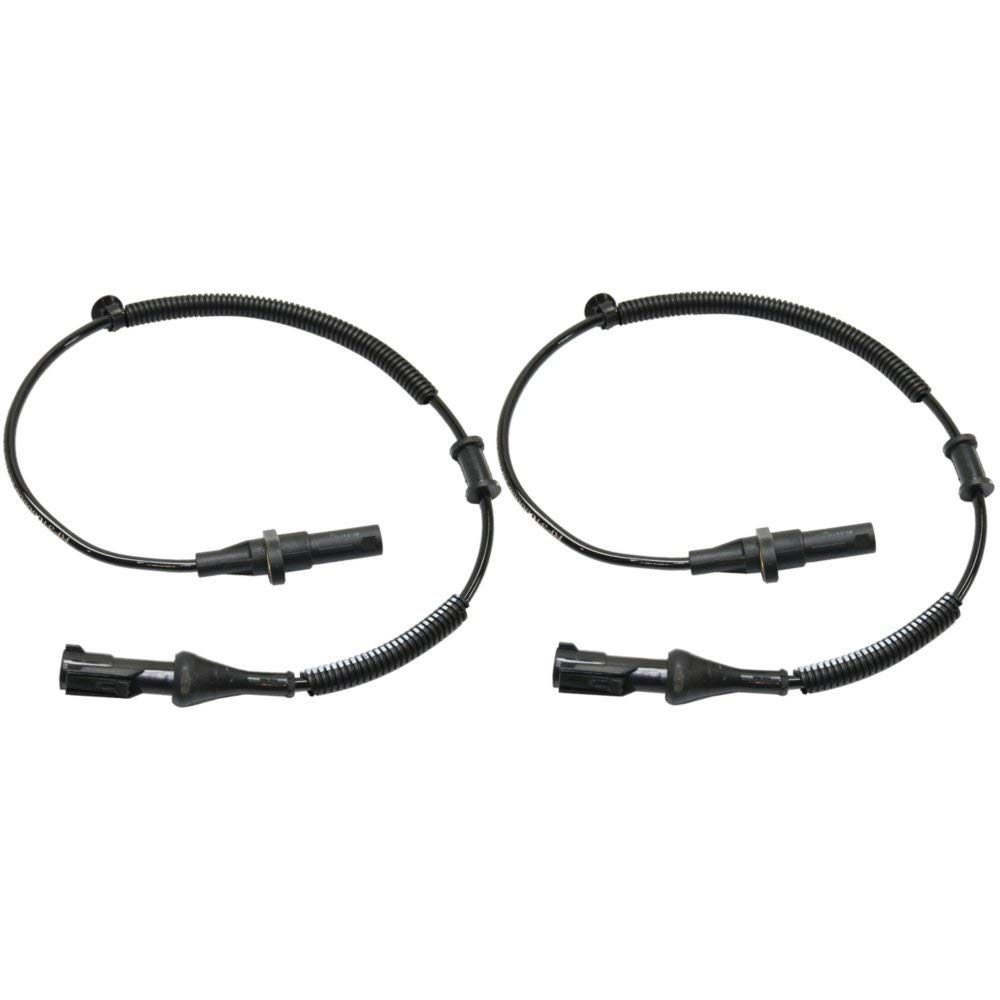
| Fitment | Ford Mustang 2005-2010 rear |
|---|---|
| Mounting Type | Flange Mount |
| Output Type | Push-Pull |
| Material | Acrylonitrile Butadiene Styrene |
These two Evan Fischer ABS wheel speed sensors are a direct-replacement style set intended for the rear driver and passenger sides of 2005–2010 Ford Mustang models. They measure wheel speed and feed that data to the ABS and traction control systems, restoring warning-light-free operation when a faulty factory sensor is removed. The sensors use a flange-mount design and push-pull output for straightforward installation at the hub with standard connectors. For a risk-averse buyer this helps return safety systems to factory-like behavior without major modifications. Construction from ABS plastic keeps weight and cost down, though plastic housings can be less durable than metal-bodied alternatives in very harsh driving or frequent off-road use. Fitment limited to the specified Mustang years means a good fit when matched correctly but requires verifying vehicle side and year before ordering.
Best for: Conservative Mustang owners who prioritize restoring reliable factory-style ABS and traction control operation with a straightforward replacement rather than upgrading to aftermarket performance sensors.
Less Ideal for: Drivers wanting heavy-duty metal-bodied sensors for track or off-road abuse or owners of Mustang model years outside 2005–2010 should look for alternatives.
- Sold as a matched rear pair for driver and passenger sides so both sensors can be replaced together
- Flange-mount design mirrors factory installation for straightforward fit and alignment
- Push-pull electrical output compatible with standard ABS sensor connectors
- Made to match common production standards to simplify repair and avoid complex rewiring
- Housings are plastic which may be less robust than metal in extreme conditions
- Fitment is limited to Ford Mustang 2005–2010 so not suitable outside those model years
Verdict A straightforward, factory-style rear ABS sensor pair for 2005–2010 Mustangs that restores ABS function affordably but uses plastic housings rather than metal for extreme-duty use.
6. PHILTOP Rear ABS Wheel Speed Sensor for 2015–2016, 2018–2020 Ford Mustang

| Compatibility | Ford Mustang 2015, 2016, 2018, 2019, 2020 |
|---|---|
| Position | Rear left or right side |
| Manufacturer | PHILTOP |
| Manufacturer Part Number | 5445AWS0348US |
This PHILTOP rear ABS wheel speed sensor is a single replacement sensor intended for the rear left or right wheel on specified Ford Mustang model years. It measures wheel rotation and sends that signal to the vehicle's ABS control module to maintain traction control and prevent wheel lock. Typical use is a like-for-like swap when an ABS light or traction fault identifies a failed rear sensor. Notable features include claimed factory-quality construction, quick signal response for accurate wheel-speed reporting, and a plug-and-play connector that matches the factory harness. The practical benefits are straightforward: it can clear ABS warnings and restore normal ABS function without a full OEM part cost, and the sensor is compact and straightforward to install for someone comfortable with basic brake work. Limitations are that fitment must be confirmed for the exact Mustang year and hub design before purchase and the package does not include a mounting bolt, so you may need to reuse the original fastener; a few buyers also reported fitment issues on non-Mustang vehicles, underscoring the importance of verifying compatibility.
Best for: Practical optimizers looking to repair an ABS sensor on a Mustang without paying OEM prices and who prioritize straightforward, cost-effective fixes.
Less Ideal for: Buyers seeking a complete hardware kit or those who prefer dealer-sourced parts with guaranteed fitment and warranty support should consider other options.
- Designed to match factory connector for straightforward plug-and-play replacement
- Claims factory-quality construction for durability in road conditions
- Fast signal transmission and sensitivity to restore accurate ABS input
- Compact single-piece sensor suitable for rear left or right installation
- Does not include mounting bolt so you must reuse or source hardware separately
- Fit must be confirmed for the exact vehicle year and hub; some buyers reported incompatibility on other truck models
Verdict A budget-friendly, factory-style rear ABS sensor that restores ABS function on compatible Mustangs but requires confirming fitment and reusing the mounting bolt.
7. A-Premium ABS Wheel Speed Sensor Set for Ford Mustang (2011–2014)

| Vehicle fitment | Ford Mustang 2011-2014 |
|---|---|
| Connector pins | 2 Pins |
| Mounting type | Flange Mount |
| Style | Pack of 2 |
These A-Premium sensors are a direct replacement set for Mustang front left and right wheel speed sensing; they measure wheel speed and feed that signal to the ABS and traction control systems. Installation is the typical bolt-and-plug swap used on most speed sensors and the kit includes two sensors with a two-pin connector design. The listing emphasizes 100% performance testing and factory-quality fitment to match OEM reference numbers so they should restore ABS and traction functions after a failed sensor. Because they are made from ABS plastic and marketed as meeting OEM specifications, they are lightweight and corrosion-resistant but may not match factory metal-bodied sensors in extreme environments. The package also carries a one-year unlimited-mileage guarantee, which is useful if a premature failure occurs. Expect straightforward bench and on-car testing to confirm signal integrity after install; if you drive in severe off-road or salt-heavy winter conditions you might prefer a metal-housed aftermarket option built for harsher exposure.
Best for: Balanced buyers who want a straightforward, factory-quality replacement that restores ABS and traction system function without specialty hardware or modification.
Less Ideal for: Drivers who frequently expose the car to heavy road salt, deep water, or off-road abuse should consider heavy-duty metal-housed aftermarket sensors designed for extreme environments.
- Sold as a matched two-piece set for front left and right replacement
- Designed to meet OEM reference numbers for direct fit on 2011–2014 Ford Mustang
- Undergoes performance testing per the listing to verify signal operation
- Includes a one-year unlimited-mileage guarantee for added confidence
- Constructed from ABS plastic which may be less durable than metal-housed sensors in extreme conditions
- Documentation asks buyers to verify vehicle fitment before ordering which adds a step
Verdict A practical, factory-style two-piece replacement that restores ABS function on 2011–2014 Mustangs but is a budget-conscious plastic-bodied option rather than a heavy-duty upgrade.
Choosing the Right Ford Mustang ABS Wheel Speed Sensor: Key Factors to Consider
Electrical Signal Consistency
A wheel speed sensor must deliver a steady, noise-free electrical signal across the vehicle's normal speed range. Signal consistency affects how accurately the ABS and traction systems interpret wheel rotation, which in turn influences braking modulation and stability control interventions.
Intermittent or weak signals can trigger false ABS faults or erratic braking behavior. When evaluating sensors, prioritize those specified to maintain clean waveform output and that show stable voltage or frequency characteristics at low and high speeds. Good shielding and proper connector fit reduce interference risks.
Mechanical Fitment and Alignment
Correct mechanical fitment ensures the sensor is positioned at the right air gap and orientation relative to the tone ring or reluctor. Misalignment or incorrect mounting depth can distort readings and cause recurring faults even if the sensor itself is functional.
Check that mounting points, bracket interfaces, and overall sensor length match the Mustang hub assembly. A sensor that needs shims or modifications increases installation time and the risk of improper spacing, so fit-for-vehicle designs simplify a reliable repair.
Connector and Wiring Compatibility
Sensors must interface cleanly with the vehicle harness; poor connector fit or incompatible pinouts lead to intermittent connections and diagnostic headaches. Pay attention to OEM-style terminals, wire length, and harness routing that avoids pinch points and heat exposure.
Durable insulation and strain relief help prevent failure from vibration and road movement. If the sensor requires adapter pigtails, ensure they match the vehicle side to prevent corrosion or loose contacts.
Environmental Durability
Wheel speed sensors are exposed to water, salt, dirt, and road chemicals, so ingress protection and corrosion-resistant materials matter. A sensor rated for moisture and salt exposure will last longer and maintain signal integrity under harsh conditions.
Seals, potting quality, and corrosion-resistant connector terminals reduce the chance of failure from environmental stress. Consider sensors designed with robust housings and protected electronics to minimize repeat replacements.
Diagnostic and Troubleshooting Support
A sensor that makes diagnosis straightforward saves time and reduces guesswork when codes or symptoms appear. Look for parts with known waveform characteristics and documentation that aids an ABS sensor wiring test or signal inspection with common scan tools and oscilloscopes.
Clear documentation on expected voltage or frequency ranges, and guidance on typical fault codes related to speed sensor issues, helps you isolate whether the sensor, wiring, or tone ring is at fault. Ease of access to test points and standard connector designs help simplify in-vehicle checks.
Long-Term Reliability and Maintenance
Consider how often sensors in this location typically fail and what maintenance is practical during service intervals. A sensor that resists wear from road debris and maintains calibration reduces repeat labor and diagnostic time.
Evaluate serviceability factors such as accessibility during routine brake work, whether removal risks damaging adjacent components, and whether the sensor requires special tools for correct installation or alignment. Prioritizing durable construction and straightforward serviceability improves ownership experience over time.
FAQ
What symptoms usually indicate a faulty wheel speed sensor?
Common signs include the ABS or traction control warning lights illuminating, inconsistent speedometer behavior, and unexpected stability control interventions. You may also notice ABS activation under normal braking or intermittent warning lights that come and go. These symptoms often prompt a diagnostic check to isolate the sensor, wiring, or tone ring as the source.
How do you find the ABS sensor location on a Ford Mustang?
On this vehicle, wheel speed sensors are typically mounted at each wheel hub near the brake rotor or tone ring. They sit close to the reluctor to read wheel rotation. Location can vary slightly by model year and whether the sensor is front or rear, so consult vehicle-specific diagrams or service literature before removal.
Can I perform an ABS sensor wiring test myself?
You can inspect connectors and perform basic continuity and resistance checks with a multimeter, and verify power or ground where applicable. For signal waveform testing you will need an oscilloscope or a scan tool that reports wheel speed data. If you are unsure about interpreting results, a professional diagnostic can help avoid unnecessary part replacements.
Will a bad wheel speed sensor trigger code P0500?
Code P0500 refers to vehicle speed sensor or vehicle speed input issues, and a faulty wheel speed sensor can contribute to inconsistent vehicle speed reporting that leads to this code. However, the code may also stem from related wiring faults or other speed input sources, so a full diagnostic is recommended to identify the exact cause.
Is it better to replace the sensor or repair wiring if there is a fault?
It depends on the root cause. If the wiring or connector shows corrosion, broken conductors, or shorts, repairing the harness and securing connections often resolves the issue without replacing the sensor. If the sensor itself produces erratic signals or physical damage is evident, replacing the sensor is usually the appropriate course.
How long do wheel speed sensors typically last?
Sensor lifespan varies based on exposure to road salt, debris, and installation quality. Many sensors last several years under normal conditions, but those in harsher environments may fail sooner. Regular inspection during brake service can catch early signs of wear and prevent sudden failures.
How We Chose the Best Ford Mustang ABS Wheel Speed Sensor
We focused on parts that reliably restore accurate wheel-speed reporting and support clean diagnostic outcomes for the Ford Mustang. Key evaluation criteria included electrical signal consistency under varying speeds, mechanical fitment accuracy for specific wheel hubs, connector and harness compatibility, and resistance to contaminants like moisture and road debris. We also considered ease of installation and diagnostic friendliness, such as alignment with common scan-tool readings and common troubleshooting procedures.We excluded technologies and components not designed for the Ford Mustang application, universal-fit sensors without clear fitment data, and items lacking basic corrosion or ingress protection. The resulting list favors sensors that meet precise fit specs, deliver steady signal output, and simplify fault isolation when ABS or vehicle-speed codes are present.
Our full evaluation process is outlined in our review methodology.
Conclusion
When selecting a Ford Mustang ABS wheel speed sensor, prioritize fitment accuracy, stable signal output, and robust environmental protection. These factors most directly affect braking system behavior and diagnostic clarity.Balance ease of installation and wiring compatibility with long-term durability. Address wiring and tone ring condition during the repair to reduce the chance of repeat faults and ensure the sensor you install restores reliable wheel-speed reporting.
Explore More:
- Check out all Ford Mustang parts & accessories
- Explore ABS Wheel Speed Sensors Maintenance & Repair Guides
- Explore Electrical System
- Browse all Auto Parts
