

Note: This article contains affiliate links. If you click on these links and make a purchase, I may earn a small commission at no extra cost to you. This helps support my research and content. Read my full affiliate disclosure here.
If you drive a Ford Explorer, a failing ABS wheel speed sensor can affect brake performance, trigger warning lights, and complicate diagnostic work. Choosing the right sensor matters because correct fit and a clean wheel-speed signal keep the anti-lock system operating as intended and help avoid unnecessary brake work.This guide covers seven shortlisted sensors that meet the most important fitment and signal-quality criteria. We evaluated each option for sensor fit accuracy, connector and harness compatibility, and signal durability under real-world conditions. Read on to see which attributes matter most when selecting a replacement for your Explorer.
Looking for other parts? See all Ford Explorer parts & accessories.
Top Picks at a Glance
| Best Reviewed A top-rated pick with lots of positive feedback | NewYall ABS Wheel Speed Sensor – Rear Driver & Passenger for Ford Explorer/Mountaineer (4.0L/4.6L) |  |
| Most Popular A crowd favorite that many people choose with confidence | TRQ Front ABS Wheel Speed Sensor (Front) |  |
| Best Quality Built to a higher standard if you want something more solid | Holstein Parts ABS Wheel Speed Sensor (Rear, Left or Right) |  |
| Best Budget The cheapest option that still gets the job done reliably | Mteycei Front Left/Right ABS Wheel Speed Sensor (fits Ford Explorer 2013–2018) |  |
| Most Sold A high-volume bestseller chosen again and again | VECHA ABS Wheel Speed Sensor Kit (Pack of 4) for Ford Explorer / Explorer Sport Trac / Mercury Mountaineer |  |
| Best Value for Money The sweet spot between price and what you get | Garage-Pro ABS Wheel Speed Sensor Replacement (Rear Passenger) for Ford Explorer 2006–2010 |  |
| Best Overall The best all-around choice for most situations | A-Premium Rear ABS Wheel Speed Sensor Set for Ford Explorer (2013–2019) |  |
1. NewYall ABS Wheel Speed Sensor – Rear Driver & Passenger for Ford Explorer/Mountaineer (4.0L/4.6L)

| Compatible vehicles | Ford Explorer 2006-2010; Explorer Sport Trac 2007-2009; Mercury Mountaineer 2006-2010 |
|---|---|
| Engine fitment | 4.0L/4.6L engines only |
| Mounting type | Flange Mount |
| Material | Acrylonitrile Butadiene Styrene |
| Upper temperature rating | 125 Degrees Celsius |
These NewYall sensors replace the rear driver and passenger wheel speed sensors on compatible Ford Explorer and Mercury Mountaineer models with 4.0L or 4.6L engines. They work as direct-fit replacements that mount using the factory flange and plug into the vehicle harness to restore wheel speed input for ABS and stability systems. The sensors are made from ABS plastic with a push-pull output style and are rated for typical underbody temperatures up to 125 Celsius, which is adequate for normal road use. Practical benefits include straightforward installation for mechanically competent owners or shops and a low-cost way to clear ABS or traction-control faults when the original sensors fail. Limitations are that these are aftermarket parts so long-term durability compared with factory-quality units may vary and the listing covers only rear sensors for the specified engines and model years, so fitment must be confirmed before purchase.
Best for: Reliability-focused buyers who prioritize getting ABS and traction systems working again with a straightforward, practical replacement rather than an OEM part.
Less Ideal for: Buyers seeking guaranteed factory-quality longevity or those who need sensors for other engines, positions, or model years should consider alternative factory-quality replacements.
- Direct-fit replacement for specified 2006–2010 Ford Explorer and 2006–2010 Mercury Mountaineer rear positions
- Flange-mount design matches factory mounting for simple installation
- Rated for elevated temperatures suitable for normal underbody conditions
- Low-cost option to replace failed wheel speed sensors and restore ABS operation
- Aftermarket construction may not match long-term durability of factory-quality sensors
- Sold specifically for rear driver and passenger positions and limited to 4.0L/4.6L engines so it is not universal
Verdict A budget-friendly, direct-fit rear wheel speed sensor pair that restores ABS function on specified Ford Explorer and Mountaineer 4.0L/4.6L models but may not match OEM long-term durability.
2. TRQ Front ABS Wheel Speed Sensor (Front)

| Compatibility | Ford Explorer 2013–2019 front (driver and passenger) |
|---|
This TRQ front ABS wheel speed sensor is a direct-replacement component designed to restore wheel speed input to the ABS and traction control systems on compatible Ford Explorer models. It installs at the front left or right hub and is routed and clipped to match factory mounting, so it is typically used when a failing sensor triggers ABS or traction warnings or causes intermittent braking/traction events. Notable features include a flange-mount housing, a push-pull electrical output, and factory-style connectors and grommets to simplify reinstallation. For a DIYer the preassembled harness and factory-compatible clips reduce fuss and make the swap quick once the wheel and hub access are available. Limitations to consider are occasional fitment variance reported on some vehicles and the need to drill out corroded mounting hardware on older vehicles, so success depends on correct fit confirmation and basic mechanical tools. This part is a practical, lower-cost option for restoring ABS function on the specified Explorer years when a simple sensor replacement is the fix.
Best for: Convenience-driven buyers who want a straightforward, do-it-yourself replacement that gets ABS and traction systems back to normal with minimal fuss and tools.
Less Ideal for: Drivers who prefer dealer parts with guaranteed exacting factory matching or those who do not want to perform any mechanical work should consider alternatives or professional installation.
- Direct-fit front sensor designed for specified Ford Explorer model years.
- Preassembled harness, factory-style clips, and grommets simplify installation.
- Flange-mount design and push-pull output match typical factory mounting and connector types.
- Affordable replacement compared with dealer parts.
- Some buyers report fitment or routing slack issues on certain vehicles requiring adjustment.
- May require drilling out seized or corroded fasteners during removal of the old sensor.
Verdict A budget-friendly, preassembled front ABS sensor that makes DIY replacement on compatible Ford Explorers easier, provided you confirm fitment before ordering.
3. Holstein Parts ABS Wheel Speed Sensor (Rear, Left or Right)

| Compatible vehicle | Ford Explorer (select years/trim; rear left or right) |
|---|---|
| Material | Reinforced plastic housing |
| Manufacturer part number | 2ABS2568 |
| OEM part number | 8A8Z2C190A |
This Holstein ABS wheel speed sensor is a direct factory-quality replacement designed to restore proper wheel-speed detection and the ABS/traction control behavior on compatible Ford Explorer models. It installs where the original sensor lives and includes OE-style connectors, grommets, and wire clips to simplify routing and mounting for a straightforward swap. The reinforced plastic housing and sealed terminals protect the sensing electronics from moisture and road debris so the sensor holds up in daily driving. Because it arrives packaged to protect electronics and follows OEM fit and function, installation is typically quick for a technician or experienced DIYer and should eliminate fault codes caused by a failed sensor. Limitations to expect are standard for aftermarket replacements: fit depends on correct vehicle year and trim verification, and the sensor is sold individually so you must buy two if replacing both sides. This sensor prioritizes reliable, factory-like performance for drivers who want stable ABS and traction control operation on their Explorer.
Best for: Performance-oriented buyers who prioritize reliable, factory-like braking and stability behavior on their Ford Explorer and want a high-quality replacement that restores system function.
Less Ideal for: Drivers who need a universal sensor for multiple vehicle makes or who prefer complete axle kits that include both sides and mounting hardware in one purchase.
- Factory-quality replacement fit and function for restored ABS and traction control performance
- OE-style connectors and included grommets/wire clips for easier, correct installation
- Reinforced plastic housing and sealed terminals for resistance to moisture and road debris
- Packaged to protect electronic components during shipping
- Sold individually rather than as a paired set
- Fitment depends on selecting the correct year/trim for the Ford Explorer so verification is required
Verdict A dependable, factory-quality rear ABS speed sensor that restores ABS and traction control function on compatible Ford Explorers but must be matched to the correct year and bought per side.
4. Mteycei Front Left/Right ABS Wheel Speed Sensor (fits Ford Explorer 2013–2018)

| Mounting Type | Wheel Mount |
|---|---|
| Output Type | electrical signal |
| Sensing Distance | 700 Millimeters |
| Material | Metal, Polymer, Ceramic |
This Mteycei ABS wheel speed sensor replaces the factory front left or right unit on compatible Ford Explorer and Lincoln models and restores wheel-speed signals to the anti-lock brake system. It mounts in the wheel hub and plugs into the factory harness to transmit an electrical speed signal to the vehicle control module. The listing notes manufacturer part cross-references for straightforward fitment and says the sensor includes necessary installation hardware. For a budget repair this part offers a low-cost alternative to a dealer replacement and users report it fits and clears ABS-related dash warnings. Limitations include minimal brand support details and a small number of public reviews, so long-term durability is less documented than from major aftermarket brands, and professional alignment or diagnostics may still be needed after installation if other ABS components are affected.
Best for: Budget-conscious owners focused on an affordable, do-it-yourself repair to clear ABS warnings and restore basic braking system function on a Ford Explorer.
Less Ideal for: Drivers who prioritize long-term warranty support or need a sensor backed by extensive durability testing should consider higher-end aftermarket or dealer parts.
- Direct-fit front left or right replacement for specified Ford Explorer and Lincoln models
- Includes necessary installation hardware for a complete repair
- Low-cost option compared with dealer or premium aftermarket sensors
- Designed to transmit electrical wheel-speed signals to restore ABS function
- Limited public reviews and long-term reliability data compared with established aftermarket brands
- Manufacturer support and documentation are minimal
Verdict A cost-effective, direct-fit replacement sensor for Ford Explorer front wheel ABS repairs when budget is the primary concern.
5. VECHA ABS Wheel Speed Sensor Kit (Pack of 4) for Ford Explorer / Explorer Sport Trac / Mercury Mountaineer

| Compatible vehicles | 2006–2010 Ford Explorer, 2007–2010 Explorer Sport Trac, 2006–2010 Mercury Mountaineer |
|---|---|
| Output Type | Digital |
| Mounting Type | Flange Mount |
| Material | Acrylonitrile Butadiene Styrene |
This VECHA kit supplies all four wheel speed sensors needed to restore ABS, traction control, and speedometer signals on the specified Ford Explorer family vehicles. Each sensor uses a digital output and factory-style connectors and mounting to match the original routing and attachment points, and the harnesses include protective sleeves, grommets, and clips where applicable. In practice the kit is intended for straightforward bolt-in replacement by a competent DIYer or technician and can clear ABS and stability control warnings, improve shifting behavior, and restore cruise control function when failing sensors are the cause. The reinforced plastic housings and plated connectors aim to resist moisture and corrosion for longer life, but fitment has varied in some reports so it is important to compare the sensor shape and connector to the vehicle before installation. The pack offers a convenient all-in-one swap but buyers should be prepared to verify front versus rear sensor differences and occasional adjustments during installation.
Best for: Risk-averse mainstream buyers seeking a cost-effective, full replacement kit to address ABS or traction warnings on a Ford Explorer family vehicle and who prefer a straightforward, mostly bolt-in repair.
Less Ideal for: Drivers who need guaranteed factory-certified parts or those unwilling to verify physical fitment before installation should consider dealer or OEM options instead.
- Complete 4-sensor kit covers all wheels for a single repair job
- Digital output and factory-style connectors for reliable signal and straightforward wiring
- Protective wire sleeves, grommets, and clips included for proper routing and mounting
- Plated connectors and reinforced housings reduce corrosion risk compared with basic aftermarket pieces
- Some buyers reported incorrect sensor shape or connector differences for certain front or rear positions requiring verification before fitment
- Aftermarket sensors may not match factory tolerances perfectly, occasionally needing minor adjustments during installation
Verdict A convenient four-sensor aftermarket kit that restores ABS and traction functions on Explorer-family SUVs if you confirm sensor shape and connector match before installing.
6. Garage-Pro ABS Wheel Speed Sensor Replacement (Rear Passenger) for Ford Explorer 2006–2010

| Material | Acrylonitrile Butadiene Styrene |
|---|---|
| Mounting Type | Flange Mount |
| Output Type | Push-Pull |
| Specific Uses For Product | Speed Sensor |
| Manufacturer Part Number | JCWRF31080025GP |
This Garage-Pro ABS wheel speed sensor is a direct-fit replacement designed for the rear passenger side of 2006–2010 Ford Explorer models (also used on certain Mountaineer and Sport Trac years). It installs as a flange-mounted wheel speed sensor with a two-prong connector and included wiring harness, so it commonly replaces a worn or failed factory sensor that causes ABS or traction warnings. The sensor is made from ABS plastic and is marketed as meeting factory-quality production standards, offering a straightforward swap for DIYers or technicians familiar with wheel-sensor replacement. Practical benefits include plug-and-play fitment for the listed vehicles, inclusion of the harness to avoid rewiring, and a one-year warranty when purchased through certain channels. Limitations are typical of aftermarket parts: long-term durability may vary compared with higher-end branded sensors and fitment is limited to the specified model years and mounting location, so buyers should confirm the OEM part number before ordering.
Best for: A practical optimizer who wants a reliable, budget-conscious replacement to restore ABS function without buying dealer parts, typically for routine repair or maintenance on a Ford Explorer from 2006–2010.
Less Ideal for: Drivers seeking an OEM-branded sensor with extended longevity guarantees or those needing coverage for multiple vehicle models should consider higher-end or manufacturer-specific options.
- Direct-fit replacement for 2006–2010 Ford Explorer rear passenger side, simplifying installation
- Includes wiring harness and plug-style connector for plug-and-play installation
- Made to factory production standards and marketed as a cost-effective alternative to dealer parts
- Compact flange-mount design matches factory mounting for straightforward swapping
- Aftermarket construction may not match long-term durability of premium branded sensors
- Fitment limited to specified years and rear passenger position only
Verdict A budget-friendly, plug-and-play rear passenger ABS speed sensor that restores ABS functionality on 2006–2010 Ford Explorer models with straightforward installation but may not match premium sensor longevity.
7. A-Premium Rear ABS Wheel Speed Sensor Set for Ford Explorer (2013–2019)
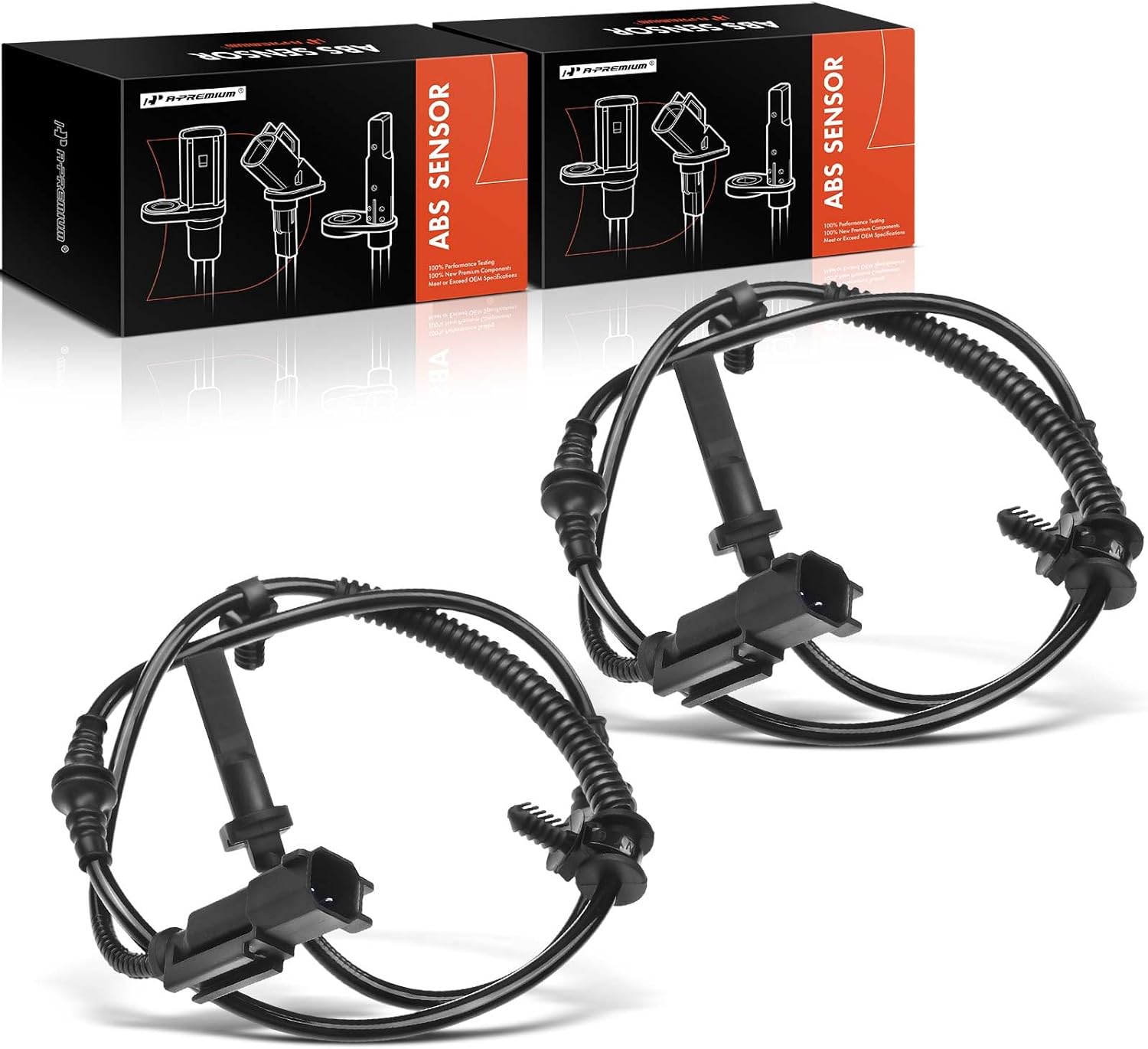
| Compatible Vehicles | Ford Explorer 2013-2019 (without automated parking assist) |
|---|---|
| Connector Pins | 2 Pins |
| Mounting Type | Flange Mount |
| Output Type | Digital |
This A-Premium kit replaces the left and right rear wheel speed sensors on compatible Ford Explorers and restores wheel-speed input to the vehicle’s ABS and traction systems. Installation is intended to be plug-and-play with the factory harness and flange mount, so a typical DIYer or technician can swap the faulty sensors without extensive modifications. The sensors are digital, use a two-pin connector, and the listing states they meet or exceed factory specifications and undergo performance testing. In practice that means they can clear ABS, traction control, and terrain management faults when the original sensors fail, and reviewers report successful resets without extra tools in many cases. Limitations to keep in mind are fitment sensitivity and occasional failures to work on some vehicles, so confirm the OEM reference numbers before buying and be prepared for a stubborn bolt or two during removal. The seller offers a one-year unlimited-mileage guarantee which helps offset early-life issues.
Best for: Buyers seeking a balanced, reliable factory-style replacement to restore ABS and traction functionality on a 2013–2019 Ford Explorer without automated parking assist.
Less Ideal for: If you prioritize a premium aftermarket performance sensor or need parts for Explorers with automated parking assist, this basic replacement is not the best choice.
- Sold as a matched pair for both rear wheels so both sides can be replaced at once.
- Designed for direct flange-mount connection to the factory harness with a two-pin digital connector.
- Stated to meet or exceed factory specifications and ship after performance testing.
- Common OEM reference numbers provided for cross-checking fitment to Ford Explorer models.
- Some buyers reported the part did not work on their specific vehicle despite listed compatibility.
- Removal of the original sensor may require extra time and effort due to rusted fasteners.
- Limited to Explorers without automated parking assist; not compatible with every trim.
Verdict A practical, matched rear sensor pair that restores ABS/traction functions on compatible Ford Explorers, provided you confirm exact fitment before purchase.
Choosing the Right Ford Explorer ABS Wheel Speed Sensor: Key Factors to Consider
Mechanical Fit and Mounting
Correct mechanical fit matters because even small deviations in sensor position or mounting angle can change the magnetic gap and distort the wheel-speed signal. A sensor that matches the Explorer's mounting boss and bolt pattern reduces installation time and the risk of mechanical stress.
Poor fit can cause intermittent contact, premature wear, or constant vibration that shortens sensor life. Verify that the sensor housing and mounting flange align with the hub or knuckle and that any included shims or O-rings are appropriate for the vehicle. Attention to fit reduces the chance of rework and helps maintain reliable ABS readings.
Electrical Connector Compatibility
Connector compatibility affects whether the sensor will plug into the existing harness without splicing or adapter parts. Matching pin layout, latch style, and wire length prevents loose connections and corrosion at the plug interface.
A secure, correctly matched connector helps prevent voltage drops and intermittent signals that can trigger ABS warnings. Consider whether the replacement includes the correct pigtail or requires soldering, and ensure the wiring routing will not be exposed to heat or abrasion.
Signal Quality and Output Type
Sensors produce either passive or active outputs with different behaviors at low speed and varying frequencies as wheel speed changes. Consistent, noise-free signal output is essential for the ABS module to interpret wheel rotation accurately and intervene only when needed.
Assess whether the replacement maintains consistent waveform shape and amplitude across the Explorer's expected speed range. Sensors that are electronically robust reduce false positives, erratic ABS activation, and confusing diagnostic codes.
Sealing and Environmental Resistance
Wheel speed sensors operate in harsh environments exposed to water, salt, dirt, and road debris. Proper sealing and corrosion-resistant materials help prevent moisture ingress, electrical shorts, and housing failure.
Look for sensors with corrosion-resistant pins, robust rubber boots, and housings rated to resist common road contaminants. Improved environmental resistance extends service life and reduces the likelihood of sensor-related faults appearing after exposure to winter salt or off-road conditions.
Durability and Vibration Resistance
Sensors are mounted close to rotating components and experience constant vibration and shock. A durable build and vibration-resistant internals reduce the risk of fracture, wire fatigue, or sensor element degradation.
Consider the quality of the sensor body, strain relief on the cable, and any reinforcement at the mounting points. Durable components translate to fewer repeat failures and more predictable long-term ABS performance.
Diagnostics and Troubleshooting Support
Clear diagnostic behavior simplifies repair and confirms that the replacement resolved the issue. A sensor that produces predictable codes and stable live data makes it easier to verify operation with a scan tool.
Consider whether technical documentation covers expected resistance values, waveform characteristics, and common failure modes. Good documentation and known test points facilitate quicker ABS fault isolation and can reduce unnecessary component swaps.
FAQ
What are common symptoms of a failing ABS wheel speed sensor on a Ford Explorer?
Common signs include an illuminated ABS or traction control warning light, intermittent or reduced ABS function, and sometimes inconsistent speedometer or cruise control behavior. You may notice the ABS engaging unexpectedly under normal braking or lack of ABS intervention in slippery conditions. These symptoms often depend on whether the fault is intermittent or a complete sensor failure.
Where is the ABS wheel speed sensor located on a Ford Explorer?
On the Ford Explorer, the wheel speed sensors are mounted near the wheel hub assembly, typically adjacent to the tone ring on the hub or axle. Exact placement varies slightly between front and rear positions, but you will generally find the sensor secured to the knuckle or axle housing with a small mounting bolt and an electrical connector routed along the suspension.
Can I perform an ABS sensor wiring test myself?
You can perform basic wiring checks with a multimeter to measure resistance and continuity, and visually inspect the connector for corrosion or damage. For signal verification, an oscilloscope or a scan tool that shows live wheel speed data is more informative. If you are not comfortable with electrical diagnostics, professional testing can quickly rule out harness or module issues.
What does an ABS sensor code like P0500 indicate on a Ford Explorer?
Codes in the P05xx range often relate to vehicle speed sensor or speedometer circuit issues. A P0500-style code usually points to inconsistent or missing vehicle speed input rather than a specific brand of sensor. It can result from a faulty wheel speed sensor, damaged harness, poor grounding, or issues with the ABS control module inputs.
How do I decide between OEM and aftermarket wheel speed sensors?
OEM parts typically match factory fit and connector details exactly, which can simplify installation. Aftermarket options can offer comparable performance but vary in build quality and documentation. Evaluate aftermarket sensors for clear fitment data, good sealing, and returnable purchase terms. Choose the option that balances proven fit, electrical reliability, and long-term durability for your needs.
How long should a replacement wheel speed sensor last?
Service life depends on driving conditions and exposure to contaminants. Under normal conditions, a quality sensor often lasts many years, but frequent exposure to moisture, road salt, or heavy vibration can shorten lifespan. Regular visual inspections and addressing damaged wiring or mounting issues promptly can help maximize service life.
How We Chose the Best Ford Explorer ABS Wheel Speed Sensor
We focused on sensors that reliably restore wheel-speed signal integrity and maintain ABS system stability in the Ford Explorer. Key evaluation criteria included mechanical fit and mounting consistency to ensure secure installation, electrical connector compatibility and pin alignment to prevent wiring issues, and signal waveform stability under varying speeds to reduce false ABS interventions. We also considered sealing and environmental protection against moisture and contamination, plus materials and sensor housing robustness to resist corrosion and vibration.Products were excluded if they lacked clear fitment data for the vehicle, used ambiguous connector specifications, or had no documented resistance to environmental exposure. We prioritized parts that simplify installation, produce steady diagnostic readings, and have clear compatibility documentation. The final list reflects those filters and aims to highlight options that balance fit accuracy, electrical reliability, and long-term durability.
Our full evaluation process is outlined in our review methodology.
Conclusion
When replacing a Ford Explorer ABS wheel speed sensor, prioritize correct mechanical fit, secure connector compatibility, and stable signal output. Those attributes reduce installation headaches, minimize diagnostic ambiguity, and restore reliable ABS behavior.Balance environmental protection and durability against the ease of installation and diagnostic clarity. Focusing on these tradeoffs will help you select a sensor that provides consistent ABS performance and fewer repeat repairs.
Explore More:
- Check out all Ford Explorer parts & accessories
- Explore ABS Wheel Speed Sensors Maintenance & Repair Guides
- Explore Electrical System
- Browse all Auto Parts
