

Note: This article contains affiliate links. If you click on these links and make a purchase, I may earn a small commission at no extra cost to you. This helps support my research and content. Read my full affiliate disclosure here.
If your Chrysler 300 is showing ABS or traction-control warnings, a failing wheel speed sensor is a common cause that directly affects braking stability and safety. Choosing the right Chrysler 300 ABS wheel speed sensor matters because an exact fit and accurate signal keep the vehicle's anti-lock and stability systems functioning properly under real driving conditions. This guide covers seven shortlisted sensors selected for their fitment reliability and signal consistency. We evaluated mounting compatibility and electrical output among other criteria to help you pick the most suitable replacement. Read on to see which features to prioritize when replacing a sensor.
Looking for other parts? See all Chrysler 300 parts & accessories.
Top Picks at a Glance


1. A-Premium Rear Right ABS Wheel Speed Sensor (Rear Right Passenger Side)

| Connector Pins | 2 Pins |
|---|---|
| Location | Rear Right Passenger Side |
| Maximum Supply Voltage | 5 Volts (DC) |
| Output Type | Analog |
This A-Premium rear right ABS wheel speed sensor is a direct-fit replacement intended for Chrysler 300 (RWD) and compatible Dodge models from the 2011–2022 range. It mounts in the rear right passenger location and uses a two-pin connector to deliver an analog speed signal to the vehicle's stability and ABS systems. The sensor is molded from ABS plastic and is supplied to match factory fitment numbers referenced by common OEM part numbers, which helps simplify swapping a failed unit. In practice it installs like a factory-style sensor and restores wheel-speed input for ABS, traction control, and speedometer correction. The product promises OEM-standard manufacturing and includes a one-year unlimited-mileage guarantee. Limitations are that it is designed specifically for RWD applications without heavy-duty or performance brakes, and it does not include additional wiring or brackets beyond the sensor itself, so verify vehicle fitment before ordering.
Best for: Reliability-focused owners who prioritize restoring correct ABS and traction control function with a straightforward, factory-style replacement for Chrysler 300 RWD vehicles.
Less Ideal for: Drivers seeking parts for performance brake setups or those who need a universal sensor with extra wiring or mounting hardware should look elsewhere.
- Direct-fit design referencing common OEM part numbers for straightforward replacement
- Two-pin connector and factory-style mounting simplify installation
- Manufactured to match factory specifications and backed by a one-year unlimited-mileage guarantee
- Analog output compatible with vehicle ABS and traction control systems
- Made from ABS plastic which may be less durable than higher-grade sensor housings in extreme environments
- Not compatible with vehicles equipped with heavy-duty or performance brake systems
Verdict A practical, factory-style rear right ABS sensor for Chrysler 300 RWD owners who need a reliable direct replacement but not for heavy-duty brake applications.
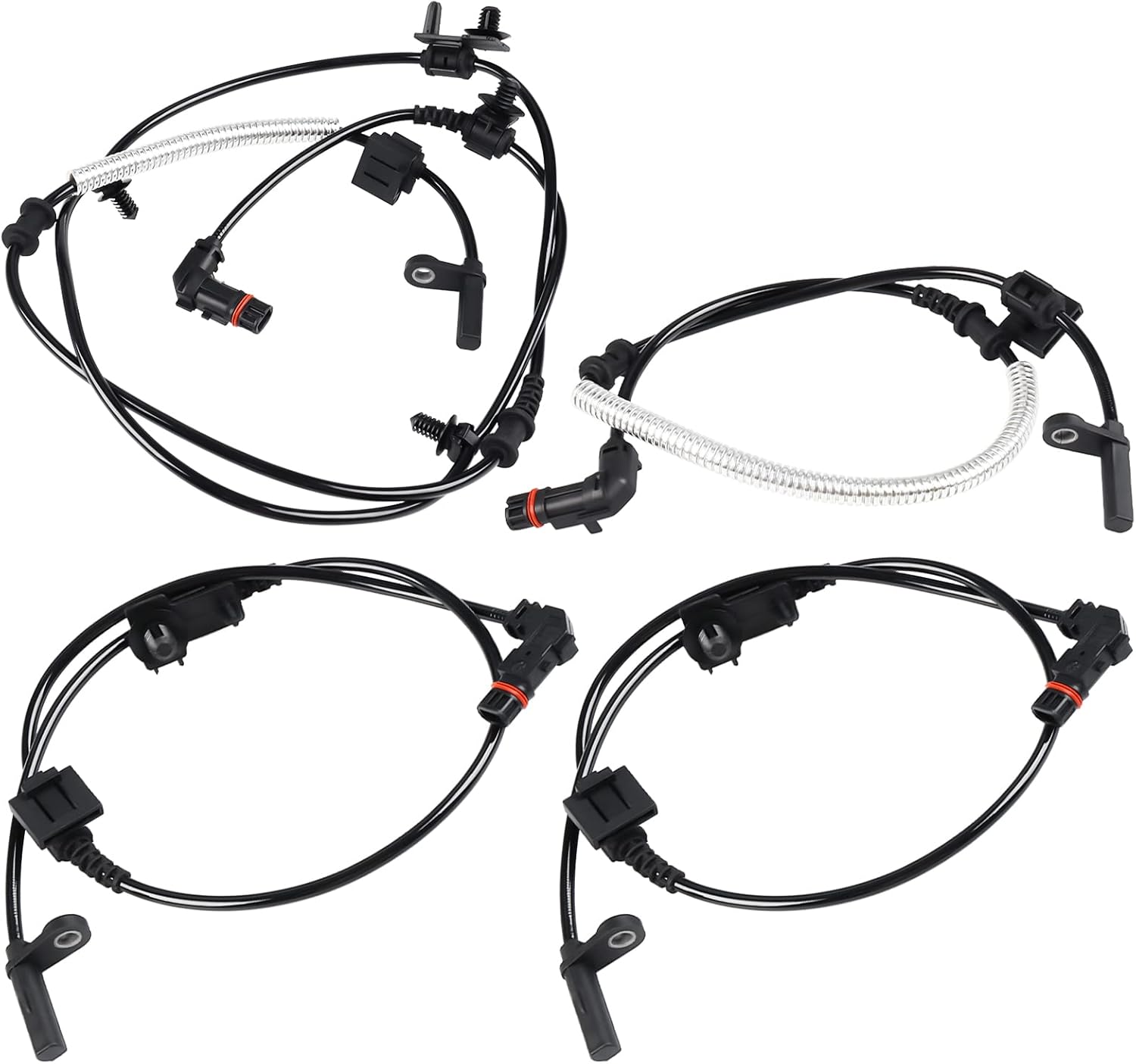
2. WMPHE ABS Wheel Speed Sensor Kit (4-piece) for Chrysler 300 / Dodge Charger / Challenger / Magnum
| Compatible Models | Chrysler 300 2005-2010; Dodge Charger/Challenger/Magnum (listed years) |
|---|---|
| Mounting Type | Flange Mount |
| Output Type | electrical signal |
| Material Type | Alloy, ABS Plastic |
This WMPHE kit supplies four ABS wheel speed sensors intended as direct replacements for the factory sensors on Chrysler 300 (2005–2010) and compatible Dodge models. Each sensor monitors wheel rotation and sends electrical speed signals to the vehicle's ABS/traction control module; installing the kit is the usual repair when an ABS warning light or stability control fault appears. The sensors use a flange mount and a molded connector that matches the factory-style plug so they can be swapped in without hub modification. Materials called out include alloy and ABS plastic with a copper-plated plug for signal transfer, which should deliver reliable readings under normal driving conditions. The pack restores ABS functionality and steering stability during slippery braking, but the manufacturer does not provide installation instructions and a few buyers reported fitment or quality issues, so professional installation and pre-purchase OE-number verification are recommended.
Best for: Buyers who value convenience and want a complete, ready-to-install replacement set that gets ABS and stability systems back to working order with minimal parts sourcing hassle.
Less Ideal for: Do not choose this kit if you prefer parts with verified factory warranty support or if you plan to install without professional guidance and need step-by-step instructions.
- Direct-fit design using factory-style connector for straightforward replacement
- Includes four sensors (front and rear) so all wheel sensors can be renewed at once
- Copper-plated plug and built-in chip aim to provide accurate signal transmission
- Flange-mount and tested gear ring profile for compatible hub seating
- No installation instructions included and professional installation is recommended
- Some customers reported defective units or fitment problems on certain vehicles
Verdict A convenient four-sensor replacement kit for Chrysler 300 owners needing to restore ABS/traction input quickly, but verify fitment and consider professional installation.
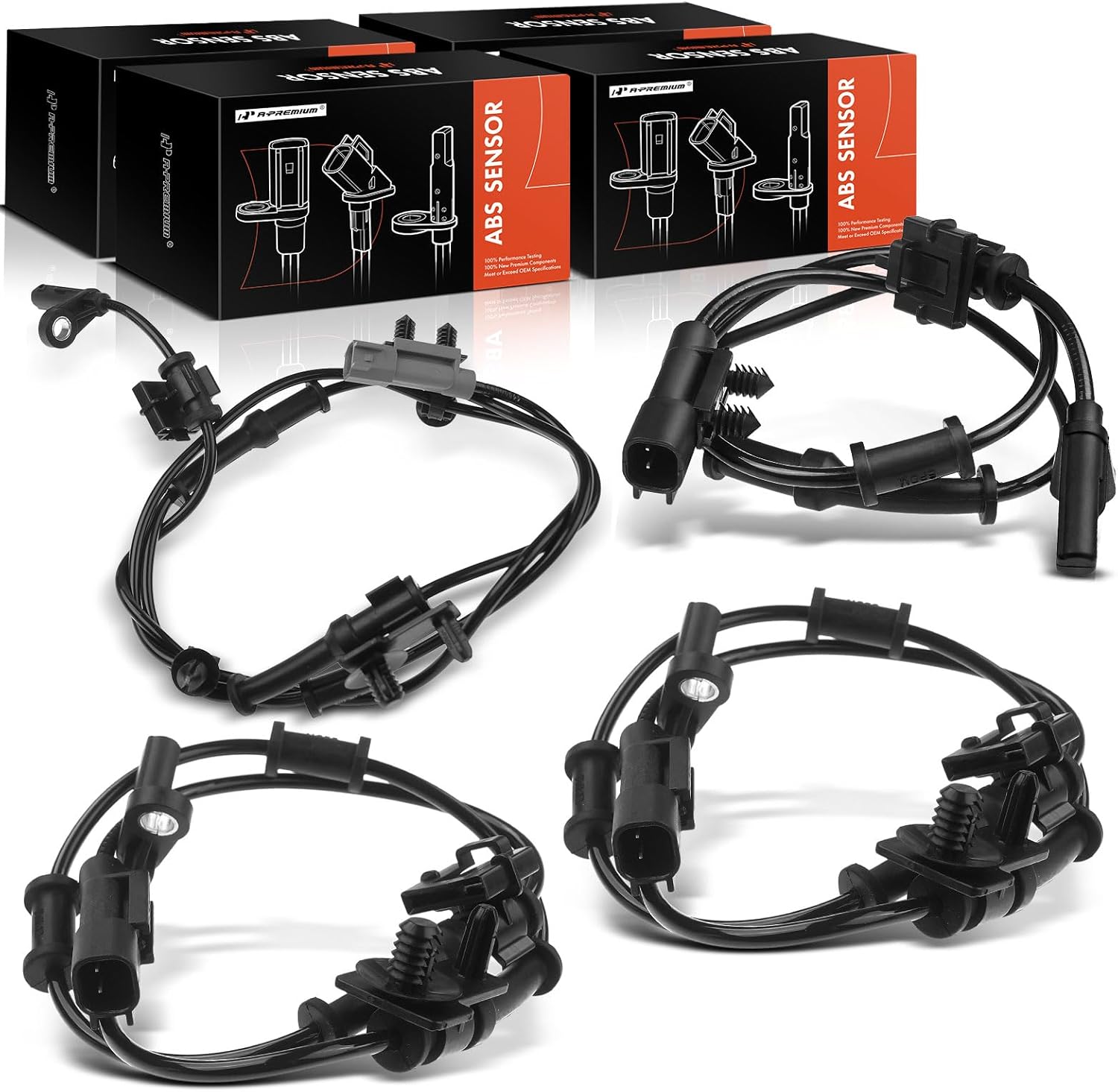
3. A-Premium 4PCS ABS Wheel Speed Sensor Set for Chrysler 300 and Dodge Challenger/Charger (2011–2014) RWD
| Connector Pins | 2 Pins |
|---|---|
| Fitment Years | 2011-2014 |
| Vehicle Layout | RWD |
| Included Pieces | 4PCS (front and rear, driver and passenger) |
This A-Premium kit supplies all four ABS wheel speed sensors needed to restore ABS, traction control, and cruise functions on compatible 2011–2014 Chrysler 300 and related Dodge models with standard brakes. The sensors come as a matched set for front and rear, driver and passenger sides with two-pin connectors, and are intended as direct replacements for the listed OEM reference numbers. In use they perform the basic sensing role reliably according to owner reports, clearing fault lights and restoring closed-loop functionality once codes are reset. Practical benefits include getting a full-vehicle refresh at once and avoiding piecemeal troubleshooting when one sensor fails and others are likely near end of life. Expect a mostly plug-and-play fit, though minor retainer clip adjustments may be required during installation and the kit is targeted at RWD models without performance brake packages. This is an aftermarket alternative to factory parts that offers good value for performance-focused owners who want dependable sensor signals without paying OEM prices.
Best for: Performance-oriented buyers who prioritize restoring reliable wheel-speed signals and vehicle control systems quickly and want a full-set replacement rather than replacing individual sensors.
Less Ideal for: Drivers who have performance brake packages, all-wheel-drive variants, or those who insist on purchasing only factory-brand sensors should consider other options.
- Includes all four sensors (front and rear, driver and passenger) for a complete replacement
- Compatible with specified 2011–2014 Chrysler 300 and related Dodge models without performance/heavy duty brakes
- Two-pin connectors match factory wiring for straightforward electrical hookup
- Customers report restored ABS, traction control, and cruise functions after installation
- Not intended for vehicles with performance or heavy duty brake packages
- May require minor adjustments to retainer clips during fitment
Verdict A full four-sensor aftermarket kit that reliably restores ABS and traction functions on compatible 2011–2014 Chrysler 300 RWD models without performance brakes.
4. OGATOO ABS Wheel Speed Sensor Kit (Front Left & Right) for Chrysler 300 / Dodge Challenger / Charger (2015–2020)

| Mounting Type | Wheel Mount |
|---|---|
| Output Type | electrical signal |
| Specific Uses For Product | automotive, wheel speed measurement in vehicles |
| Material Type | Metal |
| Connector | 2 pins |
This OGATOO kit supplies two front ABS wheel speed sensors intended to replace failed factory sensors on 2015–2020 Chrysler 300 and compatible Dodge Charger/Challenger models. Each sensor mounts at the wheel hub and sends an electrical signal to the vehicle control module so systems like ABS and traction control can read wheel rotation. The package includes left and right sensors with a 2-pin connector and is promoted as manufactured to factory-equivalent standards for stable operation. For routine roadside repairs or a DIY brake-system refresh the sensors plug into the original wiring harness and require basic wheel removal and a few hand tools. Practical benefits are straightforward fitment for specified model years, a pair included for both sides, and a replacement part that targets common ABS warning-light causes. Limitations are typical for economy parts: fit must be verified against VIN before purchase and an ABS light may persist if the tone ring, wiring, or module are the real fault rather than the sensor itself.
Best for: Cost-conscious owners seeking an affordable, do-it-yourself replacement to restore ABS and traction control function on 2015–2020 Chrysler 300 models and similar Dodge vehicles.
Less Ideal for: Buyers who prefer dealer-sourced parts with extended OEM-backed support or those who need guaranteed fitment without VIN-based verification should consider dealer or premium-brand alternatives.
- Includes both left and right front sensors so you can replace both sides at once
- Designed to plug into the factory wiring harness for straightforward installation
- Marketed to match factory fit and function for specified 2015–2020 Chrysler 300 and Dodge models
- Compatibility needs VIN verification since sensor fit varies by engine and option packages
- An ABS warning may not clear if the underlying problem is a damaged tone ring, wiring, or module rather than the sensor
Verdict A budget-friendly pair of front ABS wheel speed sensors that restore wheel-speed signaling for compatible 2015–2020 Chrysler 300 models when VIN compatibility is confirmed.
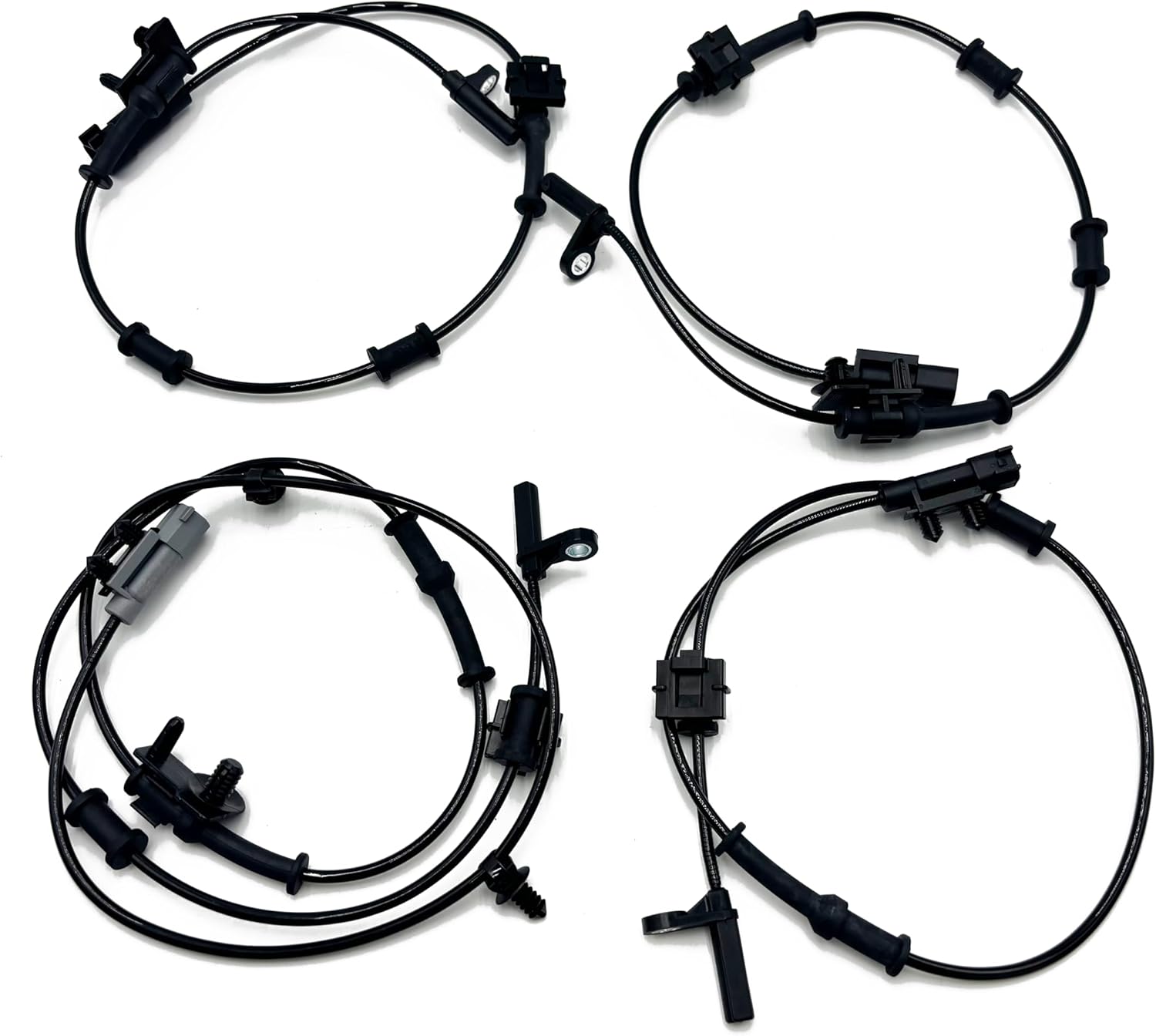
5. Mteycei ABS Wheel Speed Sensor Kit, Front and Rear (4-Pack) Compatible with Chrysler 2011–2014 300
| Compatible vehicles | Chrysler 2011-2014 300 (V6/V8) |
|---|---|
| Included quantity | 4 sensors (front and rear left/right) |
| OEM part references | 4779639AB, 4779642AA, 4779643AD |
This Mteycei kit supplies four wheel speed sensors to replace front and rear left/right units on 2011–2014 Chrysler 300 applications. Installed where the factory sensors read the reluctor ring, these sensors feed wheel speed data to the ABS and stability control systems so those safety features operate correctly. The kit is sold as a complete set which simplifies swapping all sensors at once and the listing notes QA testing and factory-replacement fitment for the covered Chrysler 300 engines. In use it should clear ABS or traction-control warnings caused by failed sensors and restore proper braking and traction behavior. Limitations to expect are typical of aftermarket sensors: fit must be confirmed against your vehicle connector and part numbers before purchase, and long-term durability can vary compared with trusted OEM brands. The kit includes four matching sensors and basic installation hardware, making it practical for a full axle-level repair without sourcing individual parts.
Best for: Risk-averse mainstream buyers seeking a straightforward repair to clear ABS or traction-control faults on a Chrysler 300 and who prefer buying a complete sensor set to minimize installation uncertainty.
Less Ideal for: Shoppers who prefer factory-brand parts with documented long-term warranties or those repairing only a single damaged sensor who do not need a full four-piece kit.
- Four-sensor kit covers front and rear left and right for a complete replacement in one purchase
- Compatible with 2011–2014 Chrysler 300 V6 and V8 engines as stated for straightforward fit check
- Ships with installation hardware to simplify replacement and reduce parts sourcing
- Seller reports QA testing and claims materials designed to meet or exceed factory-quality performance
- Aftermarket longevity and corrosion resistance can differ from factory-brand sensors
- Fitment requires verification against vehicle connectors and OEM part numbers before ordering
Verdict A convenient four-piece replacement kit aimed at restoring ABS and stability function on 2011–2014 Chrysler 300s, best when you verify connector and part-number match before installing.
6. WMPHE Front ABS Wheel Speed Sensor (pair) for Chrysler 300 / Dodge Challenger / Charger, Direct Fit

| Mounting Type | Flange Mount |
|---|---|
| Output Type | Digital |
| Specific Uses For Product | ABS operation, safety system monitoring in vehicle |
| Material Type | Acrylonitrile Butadiene Styrene, Metal |
These WMPHE front ABS wheel speed sensors replace the factory front sensors on compatible Chrysler 300 and Dodge Challenger/Charger models and restore wheel speed input to the ABS and traction control systems. They are flange-mount digital sensors supplied as a two-piece set intended for front-left and front-right installation. In real-world use the sensors provide a direct-fit replacement with factory-style connectors, so they plug into the existing harness and allow the vehicle to clear ABS and traction control warnings after installation. The internal signal chip and copper-plated plug are described to improve signal transmission and resist corrosion. Practical benefits include quicker troubleshooting recovery of ABS-related faults and the option to replace both sides at once to avoid mismatch codes. Limitations are that installation guidance is not provided and professional fitting is recommended, and you should verify compatibility with your exact vehicle and OE part number before buying.
Best for: Practical optimizers looking to repair ABS or traction control faults on a Chrysler 300 by replacing front sensors with a low-cost, straightforward factory-style replacement to get systems functioning again.
Less Ideal for: Drivers seeking a plug-and-play solution for multiple vehicle models or those who want step-by-step DIY instructions should consider alternatives that include detailed installation guidance or professional fitting services.
- Direct-fit design with factory-style connector for straightforward plug-in replacement
- Sold as a front pair so both sides can be refreshed to prevent mismatch codes
- Digital output and tested assembly aim to restore ABS and traction control function
- Copper-plated plug and internal signal chip intended to improve signal reliability
- No installation instructions included, so professional installation or mechanical experience is recommended
- Fitment is limited to specific model years and engines; confirm exact vehicle compatibility before purchase
Verdict A budget-friendly, direct-fit pair of front ABS wheel speed sensors that restore ABS and traction control function on compatible Chrysler 300 and Dodge models while recommending professional installation.
7. VECHA ABS Wheel Speed Sensor Set for Chrysler/Dodge (Set of 4)

| Brand | VECHA |
|---|---|
| Material | Acrylonitrile Butadiene Styrene |
| Maximum Supply Voltage | 12 Volts (DC) |
| Mounting Type | Flange Mount |
| Output Type | Digital |
This VECHA four-sensor kit replaces the front and rear wheel speed sensors on compatible Chrysler 300, Dodge Charger, Challenger and Magnum models and is intended as a direct plug-and-play replacement. The sensors use a digital output and flange-mount design so they connect to factory wiring without modification, restoring ABS, traction control, and stability monitoring when original sensors fail. The listing notes plated connectors and matching wire lengths to reduce corrosion and connector failure, which helps reliability in wet or salty conditions. Installation is typical for wheel speed sensors: remove the old sensor, fit the matching sensor to each corner and secure the mount and connector. Buyers should expect an aftermarket part rather than a factory unit, so appearance and long-term durability may vary versus a factory-quality sensor, and fitment requires confirming exact part numbers for rear sensor variations. For Chrysler 300 owners wanting an affordable, complete replacement that usually clears ABS-related dash faults and restores system function, this kit is a practical, cost-effective option.
Best for: A balanced all-round buyer who wants an affordable, complete repair solution to restore ABS and traction control on a mid-2000s Chrysler 300 without sourcing individual sensors.
Less Ideal for: Buyers seeking an exact factory-manufactured replacement for long-term OEM parity or those unwilling to confirm rear-sensor part numbers first should consider alternatives.
- Complete set of four sensors covers both front and rear wheels for one repair job
- Plug-and-play flange mount and connector design matches factory wiring for straightforward installation
- Plated connectors and matched wire lengths reduce risk of corrosion and connector-related failures
- Digital output designed to maximize signal-to-noise ratio for reliable ECU readings
- Aftermarket construction may not match long-term durability of a factory-quality sensor
- Some vehicles use different rear sensors so buyers must verify correct part numbers before purchase
Verdict A practical, budget-friendly four-sensor kit that restores ABS function on compatible Chrysler 300 models with easy plug-and-play installation, provided you confirm rear-sensor fitment.
Choosing the Right Chrysler 300 ABS Wheel Speed Sensor: Key Factors to Consider
Fitment and Mounting Compatibility
An exact physical fit reduces installation time and the risk of improper alignment. Sensors designed for the Chrysler 300 will match the factory mounting points, bracket geometry, and required clearance from the tone ring.
If the sensor does not seat correctly or the connector is misaligned, it can cause intermittent readings or mechanical stress that shortens component life. Verify mounting hole positions, clip styles, and existing hardware needs to avoid modifications that could compromise the sensor or surrounding components.
Connector Type and Pinout
Electrical compatibility is critical to ensure the sensor communicates correctly with the vehicle ABS module. The connector must match the factory plug, and the pinout should provide the correct signal, ground, and reference connections.
Mismatched connectors may require splicing, which introduces failure points and can lead to poor contact or corrosion. Confirm the sensor’s harness length and plug orientation so the wiring routes similarly to the original and avoids kinking or excessive tension.
Signal Accuracy and Output Consistency
A sensor must produce a clean, stable waveform across a range of wheel speeds for the ABS system to interpret wheel rotation reliably. Variability or noise in the output can trigger warning lights or intermittent ABS operation.
Look for sensors specified with consistent voltage or frequency response at low and high wheel speeds. Materials and internal coil windings influence signal stability, so sensors engineered for low electrical noise yield better real-world performance.
Durability Against Road Conditions
Sensors are exposed to water, salt, debris, and temperature swings. Sealing quality, corrosion-resistant terminals, and robust housings help maintain function over time.
Sensors with protective coatings, reinforced cable jackets, and strain relief at the connector reduce the chance of ingress and mechanical damage. Consider parts rated for harsh environments if you drive in climates with heavy road salt or frequent off-pavement use.
Ease of Installation
Installation complexity affects both cost and the likelihood of a correct repair. Sensors that use the factory mounting hardware, matching connector, and are accessible without extensive disassembly simplify the replacement process.
Check whether the sensor requires removing the wheel hub, brake assembly, or other components. Clear instructions and a sensor that aligns with the original routing minimize installation errors that could lead to poor sensor performance.
Diagnostic Compatibility and Testing
A replacement sensor should allow straightforward diagnostics with common scan tools. It should produce recognizable signals for wiring checks and help isolate faults without ambiguity.
Sensors that allow simple resistance, voltage, or frequency checks make troubleshooting easier. Consider whether the part supports standard diagnostic procedures such as an ABS sensor wiring test or enabling consistent results for codes like ABS sensor code P0500 when used with a scanner.
FAQ
How can I tell if my Chrysler 300 ABS wheel speed sensor is failing?
Common signs include ABS or traction-control warning lights, intermittent ABS activation, or unusual braking behavior under hard stops. You may also notice speedometer or cruise control anomalies in some cases. A diagnostic scan often reveals related fault codes. Visual inspection can show damaged wiring, corrosion at the connector, or a physically damaged sensor.
Where is the ABS wheel speed sensor located on a Chrysler 300?
Each wheel has its own sensor, typically mounted near the wheel hub or wheel bearing assembly to read the tone ring on the axle or hub. Location varies slightly by model year and front or rear placement. Access usually requires removing the wheel and sometimes the brake caliper or rotor to reach the sensor and connector cleanly.
Can I replace a wheel speed sensor myself?
Many owners can replace a sensor with basic hand tools if the mounting is accessible and the connector matches. Typical steps include lifting the vehicle, removing the wheel, disconnecting the sensor, unbolting it, and installing the new unit. Take care to route the harness as the original and torque fasteners to spec. If the sensor is hard to reach or requires hub disassembly, professional help may be advisable.
Will replacing a faulty sensor clear ABS warning lights automatically?
Clearing the light usually requires addressing the underlying fault and then clearing codes with a scan tool or by driving a short distance if the system recalibrates. Replacing a sensor that was causing a valid fault often resolves the trigger. If the light persists, further diagnostics may be needed to check wiring, connectors, the ABS module, or related components.
How do technicians test ABS sensor wiring?
Technicians use a multimeter or oscilloscope to check continuity, resistance, and the signal waveform while the wheel is rotated. A wiring test typically checks for open circuits, shorts to ground, and proper reference voltage. An oscilloscope or scan tool can show the AC voltage or frequency output as the wheel spins, which helps confirm the sensor is producing a clean signal under load.
How We Chose the Best Chrysler 300 ABS Wheel Speed Sensor
We focused on parts that provide reliable fitment and consistent electrical signals specific to the Chrysler 300. Primary evaluation criteria included physical mounting compatibility, connector type and pinout, signal waveform stability under wheel rotation, and materials resistant to road contaminants. Secondary considerations were harness length and routing compatibility, corrosion-resistant terminals, and ease of installation for typical garage or home-service scenarios. We reviewed common failure modes such as physical damage, connector corrosion, and degraded magnet or coil performance to ensure selections target realistic repair needs. We excluded universal or adjustable sensors that require extensive modification, and parts without clear vehicle-specific fitment documentation. Only sensors with documented compatibility for the Chrysler 300 and verifiable electrical characteristics were considered. The goal was to identify straightforward replacements that restore OEM-like ABS behavior without complex adaptation.
Our full evaluation process is outlined in our review methodology.
Conclusion
When selecting a Chrysler 300 ABS wheel speed sensor, prioritize exact fitment, correct connector and pinout, and consistent signal output. Those factors most directly affect ABS performance and reduce the chance of recurring fault codes. Balance durability and ease of installation based on your driving conditions and mechanical skill. If you encounter persistent warnings after replacement, recheck wiring and signal quality before pursuing more complex repairs.
Explore More:
- Check out all Chrysler 300 parts & accessories
- Explore ABS Wheel Speed Sensors Maintenance & Repair Guides
- Explore Electrical System
- Browse all Auto Parts
