

Note: This article contains affiliate links. If you click on these links and make a purchase, I may earn a small commission at no extra cost to you. This helps support my research and content. Read my full affiliate disclosure here.
If you drive a Nissan Titan and want larger 37 inch tires, choosing the right set affects capability, safety, and ride quality. Oversized tires change gearing, steering feel, and suspension loads, so picking tires that suit your typical use matters whether you spend most miles on pavement, dirt trails, or a mix of both.This guide covers the top shortlisted 37 inch tires for Nissan Titan owners, with practical notes on tread design, load rating, and expected longevity. We evaluate options for traction, towing and payload support, road noise, and durability so you can match a tire to your driving priorities. Read on for our picks and the criteria we used to assess them.
Looking for other parts? See all Nissan Titan parts & accessories.
Top Picks at a Glance
| Best Overall The best all-around choice for most situations | Cooper Discoverer STT Pro 37×13.50R20LT All-Season Off‑Road Tire |  |
| Best Quality Built to a higher standard if you want something more solid | BFGoodrich Mud-Terrain T/A KM3 37×12.50R17 124Q Mud-Terrain Tire |  |
| Best Value The sweet spot between price and what you get | Cooper Discoverer Rugged Trek 37×12.50R17LT 124Q All-Season Light Truck Tire |  |
| Best Budget The cheapest option that still gets the job done reliably | KANATI Trail Hog A/T-4 37×12.50R17 LT All-Terrain Tire (10-Ply, Load Range E) |  |
| Highest Rated A top-rated pick with lots of positive feedback | Nitto Trail Grappler M/T LT37/12.50R17 All-Terrain Tire |  |
| Most Popular A crowd favorite that many people choose with confidence | Cooper Discoverer STT Pro 37×12.50R17LT All-Season Off‑Road Tire | |
1. Cooper Discoverer STT Pro 37×13.50R20LT All-Season Off‑Road Tire

| Load Index | 127 |
|---|---|
| Load Capacity | 3860 Pounds |
| Rim Size | 20 Inches |
| Load Range | E |
| Seasons | Year Round |
The Cooper Discoverer STT Pro is an aggressive all‑season off‑road tire built to deliver deep-traction performance on trails while remaining usable on pavement. It uses Cooper’s Armor Tek3 sidewall construction, stone-deflecting tread features, and large shoulder blocks with climber cleats and mud-slinging channels to clear debris and bite into rock, mud, and loose dirt. For a Nissan Titan fitted with 37-inch tires, this design offers confident off-road grip, strong resistance to sidewall damage, and good load capacity for towing or hauling thanks to the E load range and 127 load index. On-road it will be louder and a bit firmer than highway tires and may wear faster if used primarily on pavement, so expect more road noise and reduced ride refinement compared with touring or highway tires. Installation requires a wheel and suspension setup that can accept a 37-inch diameter, and balancing plus periodic stone checks will help maintain tread life and performance.
Best for: Buyers who want a 37-inch tire that prioritizes serious off-road capability and sidewall durability for trail use while still being driveable on-road in a Nissan Titan.
Less Ideal for: Drivers who spend nearly all miles on highway or want the quietest, most comfortable ride should consider a touring or highway all‑terrain alternative.
- Very aggressive off-road tread pattern for traction in rock, mud, and loose surfaces
- Armor Tek3 reinforced sidewall for improved resistance to cuts and impacts
- Deep tread and stone-deflecting features reduce stone retention and help self-cleaning
- High load capacity and E load range suitable for towing and heavier loads on a pickup
- Road noise and firmer ride compared with highway-focused tires
Verdict: If you need a 37-inch tire for a Nissan Titan that maximizes off‑road traction and sidewall durability while still carrying heavy loads, this is a top choice.
2. BFGoodrich Mud-Terrain T/A KM3 37×12.50R17 124Q Mud-Terrain Tire

| Rim Size | 17 inches |
|---|---|
| Load Index | 124 |
| Speed Rating | Q |
| Load Capacity | 3525 pounds |
| Ply | 8-Ply |
The BFGoodrich Mud-Terrain T/A KM3 is built for aggressive off-road driving where mud, rocks, and steep approaches are common. Its Terrain-Attack tread features massive, staggered blocks and Mud-Phobic bars that shed compacted mud to maintain bite, while Krawl-TEK tuning improves rock traction for climbs. The tire uses an 8-ply radial construction and reinforced sidewalls to resist punctures and cuts during hard use. On hardpack and rocky trails the KM3 delivers confident grip and predictable steering, and its heavy-duty construction supports high load ratings for larger trucks. Expect a firmer ride and more road noise on pavement compared with all-terrain tires, and wet-road braking and high-speed comfort are less refined than highway-focused options. This tire is a clear choice where traction and durability off road matter most, but drivers who spend most miles on pavement should weigh the harsher on-road manners against its off-road strengths.
Best for: Drivers who prioritize extreme off-road performance and durability for heavy trucks or lifted builds and will accept rougher on-road manners to gain superior mud and rock traction.
Less Ideal for: Commuters and long-distance highway drivers who want a quiet, comfortable ride and the best wet-road braking should consider a highway or all-terrain tire instead.
- Exceptional mud evacuation and traction from Terrain-Attack tread design
- Improved rock-climbing grip thanks to Krawl-TEK tuning
- Reinforced 8-ply construction and tougher sidewalls reduce puncture risk
- High load index suitable for heavier light trucks and lifted rigs
- Noticeably louder and firmer on paved roads compared with highway tires
- Less refined wet braking and high-speed comfort than street-focused tires
Verdict: Choose the KM3 when maximum mud and rock traction plus tough sidewalls are the priority for a 37-inch performance-oriented off-road build on a Nissan Titan.
3. Cooper Discoverer Rugged Trek 37×12.50R17LT 124Q All-Season Light Truck Tire

| Rim Size | 17 inches |
|---|---|
| Load Index | 124 |
| Speed Rating | Q |
| Load Capacity | 3525 pounds |
| Load Range | D |
The Cooper Discoverer Rugged Trek is a 37×12.50R17 all-season light truck tire aimed at drivers who need a capable do-it-all tire for highway miles and occasional trails. Its deep, rough-terrain tread and stone blockade features give added grip and help protect the tread when you head off-road, while Whisper Grooves technology and a symmetrical tread pattern keep highway noise and road harshness down for everyday driving. Dual sidewall designs let you choose between two shoulder looks for a more aggressive appearance. Rated for a 3525-pound load and a 50 psi maximum, it is built to handle heavier trucks and towing demands encountered on long trips. The tire balances off-road capability with on-road comfort and includes a long treadwear warranty, but it is not a dedicated mud or rock tire so extreme off-road users will want a more aggressive option; also expect slightly lower fuel economy and a firmer ride compared with street-focused tires. For a practical buyer who wants one tire to cover daily driving, hauling, and weekend trails, this is a versatile choice.
Best for: Drivers prioritizing a single 37-inch tire that can handle highway miles, towing, and light to moderate off-road trails while keeping noise and comfort reasonable.
Less Ideal for: Drivers who spend most of their time in extreme off-road, rock-crawling, or deep-mud conditions and need a specialized mud-terrain tire.
- Deep, rough-terrain tread provides improved off-road traction and mud/sand capability.
- Stone Blockade features help prevent rocks from lodging in the tread and reduce damage risk.
- Whisper Grooves and symmetrical tread reduce highway noise for more comfortable daily driving.
- Dual sidewall designs let you pick between two aggressive shoulder looks without changing the tire.
- Not intended as a full mud-terrain or extreme rock-crawling tire for heavy off-road use.
Verdict: Choose the Rugged Trek when you want a single 37-inch tire that balances quiet highway manners with genuine light off-road capability for practical truck use.
4. KANATI Trail Hog A/T-4 37×12.50R17 LT All-Terrain Tire (10-Ply, Load Range E)

| Rim Size | 17 inches |
|---|---|
| Load Index | 124 |
| Speed Rating | Q |
| Maximum Pressure | 80 psi |
| Load Range | E |
The Kanati Trail Hog A/T-4 is an all-terrain 37×12.50R17 light truck tire built for mixed use from daily driving to off-road excursions. Its aggressive tread pattern with heavy siping and beveled shoulder blocks provides confident grip on rocky trails, packed snow and wet roads, while the optimized void ratio and variable pitch tread help keep highway noise down. The tire is mountain snowflake rated and accepts #16 studs for added winter traction. With a 10-ply load range E construction and reinforced sidewall layers, it aims to resist punctures and handle heavier loads common on lifted trucks and overland rigs. Expect a firmer ride than a highway tire and some blockiness on very smooth pavement, but the design balances durability and comfort better than many mud tires. This is a practical choice if you need a budget-friendly, tough 37-inch tire that performs across seasons and rough terrain, though drivers prioritizing the quietest highway manners or maximum fuel efficiency may prefer a dedicated street tire.
Best for: Drivers who need a durable, budget-minded 37-inch tire that handles mixed off-road and winter use while still offering acceptable highway manners.
Less Ideal for: People who prioritize the quietest possible highway ride, maximum fuel economy, or a tire tuned solely for high-speed street handling.
- Aggressive all-terrain tread with heavy siping for traction on snow, rocks, and dirt
- Mountain snowflake rating and #16 stud compatibility for improved winter performance
- 10-ply load range E construction and reinforced sidewalls for durability and puncture resistance
- Variable pitch tread and optimized void ratio reduce road noise compared with typical off-road tires
- Firmer ride and more road presence than highway-focused tires
- Less fuel efficient than lighter, street-oriented designs
Verdict: A rugged, value-oriented 37-inch all-terrain tire that delivers durable off-road and winter traction for budget-conscious light truck owners.
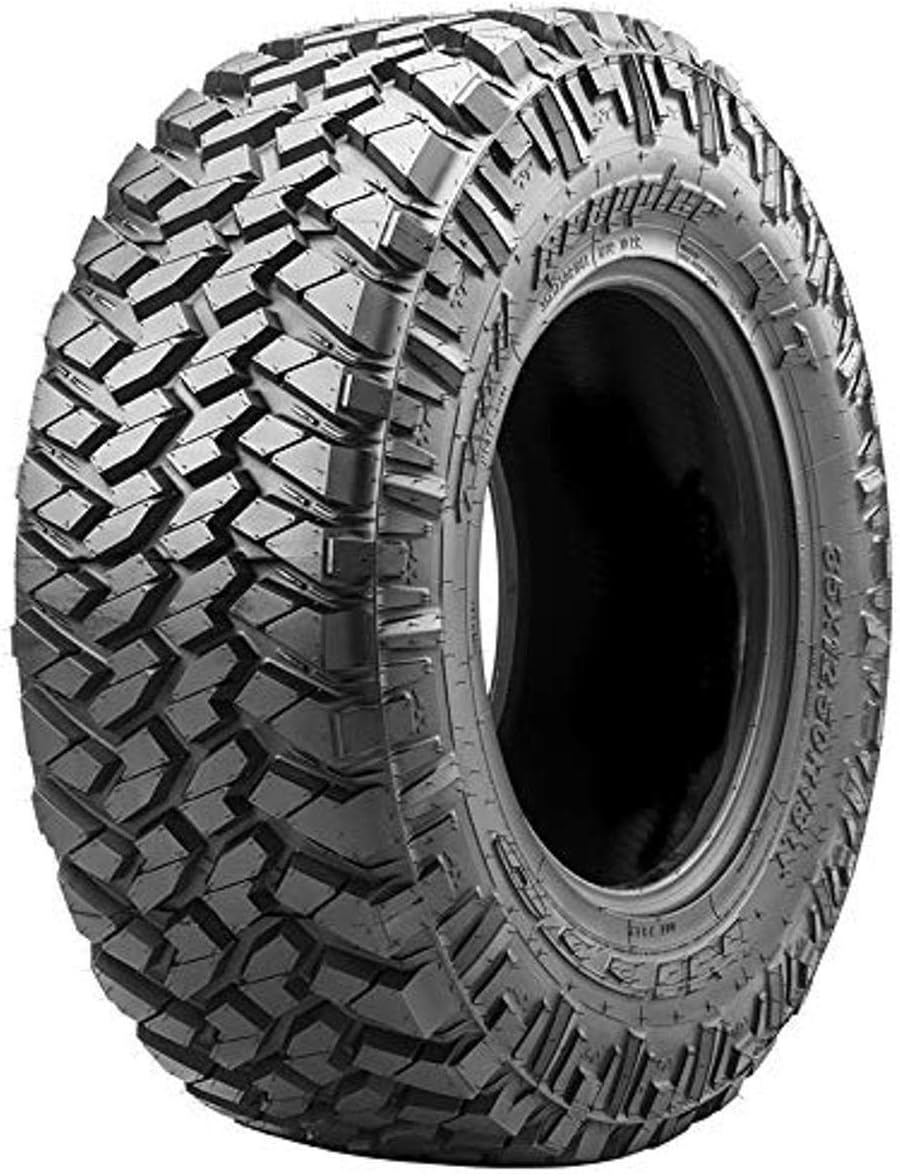
5. Nitto Trail Grappler M/T LT37/12.50R17 All-Terrain Tire
| Rim Size | 17 inches |
|---|---|
| Load Index | 124 |
| Speed Rating | Q |
| Maximum Pressure | 50 psi |
| Ply | 8-Ply |
The Nitto Trail Grappler M/T LT37/12.50R17 is built to handle both daily driving and demanding off-road conditions while prioritizing durability. It pairs a deep, aggressively lugged tread with balanced voids and deep sipes to evacuate mud and water, which helps maintain traction in wet, loose, and rough terrain. Reinforced sidewalls with multi-ply construction add puncture and impact resistance for rock and trail use, and the non-directional tread makes rotation and mounting straightforward. On pavement the tire is relatively quiet for an M/T and provides stable braking and acceleration, though drivers should expect some additional road noise compared with highway tires. Its 124 load index and 50 psi max pressure support heavy loads typical of light trucks. Installation requires a 17-inch rim and appropriate lift or clearance for a 37-inch diameter. If you need a rugged tire that emphasizes long-term toughness and mixed-surface capability for a full-size pickup, this model delivers consistent, reliable performance.
Best for: Buyers who prioritize long-term toughness and predictable performance on mixed on- and off-road trips for a full-size pickup, and who value a tire that resists punctures and handles heavy loads.
Less Ideal for: Drivers who spend almost all miles on highway pavement and prioritize the quietest ride and best fuel economy should consider more road-oriented tires instead.
- Aggressive tread and deep sipes improve traction in mud, dirt, and wet conditions
- Reinforced multi-ply sidewalls increase resistance to punctures and trail damage
- Balanced void ratio helps self-clean and maintain continuous traction off road
- Relatively quiet and stable on pavement for a mud-terrain tire
- 124 load index supports heavy light-truck loads
- Mud-terrain design produces more road noise and slightly reduced fuel economy compared with highway tires
- Large 37-inch diameter requires sufficient vehicle lift or clearance and may need recalibration of speedometer
Verdict: Choose this tire when you need a durable 37-inch mud-terrain that reliably handles heavy loads and mixed on/off-road use for a full-size truck.
6. Cooper Discoverer STT Pro 37×12.50R17LT All-Season Off‑Road Tire
| Rim Size | 17 inches |
|---|---|
| Load Index | 124 |
| Speed Rating | Q |
| Maximum Pressure | 50 psi |
| Load Range | D |
The Cooper Discoverer STT Pro is a purpose‑built 37×12.50R17LT off‑road tire that brings aggressive mud and rock capability to trucks and large SUVs while still functioning acceptably on pavement. It uses Armor Tek3 sidewall reinforcement, stone‑deflecting tread features, and deep blocks with mud‑scooping channels to resist cuts, eject lodged rocks, and dig through sticky terrain. In practice that means confident grip on rocky trails and much better self‑cleaning in mud than a mixed‑use tire, plus a rugged sidewall that tolerates trail abuse. Expect louder road noise and somewhat firmer ride compared with highway tires, and reduced fuel economy due to the tall, heavy tread. The 124 load index and 8‑ply construction signal it can handle heavy truck use and towing. For drivers who prioritize trail durability and aggressive traction the STT Pro delivers real, engineered advantages, but those who spend most miles on highways will feel the compromises in comfort and efficiency.
Best for: Drivers who want a robust, trail‑capable 37‑inch tire that prioritizes puncture resistance and aggressive off‑road traction for frequent off‑roading and hauling.
Less Ideal for: Daily drivers who mostly travel on highways and want the quietest, most fuel‑efficient 37‑inch option should consider a less aggressive all‑terrain tire instead.
- Armor Tek3 reinforced sidewalls for increased resistance to cuts and sidewall damage
- Deep, self‑cleaning tread with mud slingers and climber cleats for strong off‑road traction
- Stone armor and tread channels designed to eject rocks and reduce stone retention
- 124 load index and 8‑ply rating support heavy loads and towing
- Heavier, louder, and less fuel efficient on highway compared with highway/all‑terrain tires
- Firm ride feel relative to softer, highway‑oriented tires
Verdict: Choose the STT Pro when you need a 37‑inch tire built for serious trail durability and aggressive mud and rock traction rather than highway comfort.
Choosing the Right Nissan Titan 37 Inch Tires: Key Factors to Consider
Tread Design and Compound
Tread design and rubber compound determine how a 37 inch tire grips on different surfaces. Aggressive, open-shoulder treads shed mud and bite into loose terrain, which helps off-road traction, but can generate more road noise and wear faster on pavement. Conversely, tighter siping and lower-void patterns usually yield quieter, longer-lasting performance on highways but sacrifice some self-cleaning ability in deep mud.
Also consider the compound formulation: softer compounds improve bite in cool, loose surfaces but tend to wear quicker under heavy loads or high-speed highway driving. For a Nissan Titan, choose a tread that matches your dominant driving environment while keeping compound durability in mind if you tow frequently or carry heavy payloads.
Load Rating and Construction
Load rating is critical for truck owners because it defines how much weight each tire can safely carry. Upgrading to 37 inch tires often means larger sidewalls and different ply constructions, so verify the load index to maintain safe towing and payload capacity for your Titan. Look for tires with reinforced sidewalls or higher ply ratings if you plan to tow regularly or use the truck for heavy-duty tasks.
Construction also influences ride quality and resistance to impact damage. Stiffer sidewalls reduce deflection under load and improve steering response but can transmit more vibration into the cabin. For mixed on- and off-road use, a balanced construction that resists cuts while still offering some compliance is preferable.
Fitment, Wheel Offset, and Clearance
Fitting 37 inch tires to a Nissan Titan requires checking wheel diameter, width, and offset to ensure proper clearance from fenders, control arms, and steering components. A wider tire or incorrect offset can cause rubbing during full lock or suspension compression. Verify the recommended backspacing and consider modest lift or leveling kits if you need extra clearance.
Also review turning radius and driveline angles after fitment changes. Larger tires increase effective axle leverage and may put additional strain on steering and suspension parts. Confirm that the tire profile works with your wheel choice and that aftermarket wheels used with 37 inch tires maintain appropriate offset to avoid scrubbing or interference.
On-Road Comfort and Noise
Even when you prioritize off-road performance, most Nissan Titan owners still spend considerable miles on pavement. The tread pattern and shoulder block design influence road noise and vibration. Larger, more aggressive tread blocks can emit a droning sound at highway speeds, which affects long-distance comfort.
Consider how often you use the truck for commuting or long trips versus trail days. If highway comfort is important, seek tires with optimized tread sequences, circumferential ribs, or noise-damping features. These design elements help keep cabin noise reasonable without entirely sacrificing off-road capability.
Durability and Tread Life
Tire longevity depends on compound hardness, tread depth, and how you use the truck. Deep-lug off-road tires can have long service lives if the compound and pattern are engineered to resist chunking, but they may still wear quicker on high-mileage highway use. For a Nissan Titan that carries weight or tows frequently, choose tires with a proven track record for even wear and reinforced tread shoulders.
Also factor in maintenance habits: regular rotation, proper inflation, and alignment checks extend tread life significantly. Inspect tires for uneven wear that can indicate alignment or balance issues, and prioritize constructions that offer thicker shoulder rubber and damage-resistant sidewalls for mixed-use durability.
Weather Performance and Seasonal Needs
Consider local climate when selecting 37 inch tires. If you encounter snow and ice, tread siping and rubber formulations that stay pliable in cold temperatures make a substantial safety difference. Tires geared toward winter traction often carry specialized siping patterns and softer compounds, while all-season designs aim to offer year-round versatility at some cost to extreme-condition performance.
If you live in an area with heavy winters, prioritize designs rated for winter use or plan to switch to a dedicated winter set. For milder climates, an all-terrain tire with balanced siping can provide a compromise between year-round traction and acceptable tread life.
How 37 Inch Tires Affect Vehicle Dynamics
Installing 37 inch tires on a Nissan Titan alters the truck's effective gearing, steering response, and braking characteristics. Larger-diameter tires increase overall circumference, which can lower effective engine RPM at a given speed but reduce acceleration and hill-climbing responsiveness unless gearing or tire pressure adjustments are made.
Steering feel typically becomes heavier and may introduce a different on-center sensation. Braking distances can increase because of the greater rotating mass and contact area changes, so ensure your braking system and ABS calibration are compatible with the larger tire diameter.
Plan for these dynamics by checking driveability after fitment and addressing any necessary adjustments to gearing, tuning, or brake maintenance.
- Increased rotating mass affects acceleration and braking
- Steering effort and on-center feel may change
- Potential need to recalibrate speedometer or driveline components
Matching Tires to Typical Use: Trail Vs Highway
Deciding between more aggressive off-road tires and quieter highway-oriented designs depends on how you use the Titan. If most miles are off the beaten path, prioritize aggressive tread and reinforced sidewalls for puncture resistance. If highway commuting dominates, choose 37 inch tires with tighter tread patterns and noise-reducing features.
Many owners land on a compromise: an all-terrain profile that balances grip and comfort. Consider how often you carry heavy loads or tow, because that influences the importance of load rating over pure off-road traction.
- Trail-focused tires: better bite and cut resistance, more road noise
- Highway-focused tires: lower noise, longer tread life on pavement
- All-terrain: middle ground for mixed-use drivers
Maintenance Tips After Upsizing
After fitting 37 inch tires, adjust your maintenance routine to protect investment and ensure safety. Check tire pressure more frequently since larger tires can mask underinflation. Follow a rotation schedule every 5,000 to 8,000 miles depending on wear patterns to promote even tread life.
Keep a closer eye on wheel alignment and balance. Larger tires magnify alignment issues and can cause uneven feathering or shoulder wear. If you tow or haul often, inspect sidewalls and tread for signs of overload or abnormal stress and make inflation changes based on load recommendations.
- Inspect pressure weekly for the first few months after fitment
- Rotate tires regularly to equalize wear
- Check alignment and balance after 1,000 miles and then periodically
Tire Sizing and Speedometer Calibration
Fitting 37 inch tires changes overall rolling circumference, which affects speedometer and odometer accuracy. Many owners accept a small discrepancy, but if precise speed readings are important, recalibration or a correction module may be necessary.
Also confirm that the chosen tire width and aspect ratio work with your wheel choice and fender clearance. Changes in tire diameter can alter final drive behavior, so consult with a tire professional to verify fitment specifics for your Nissan Titan.
- Expect a speedometer under-read with larger diameter tires
- Consult wheel offset and backspacing guidelines to avoid rubbing
- Consider recalibration for electronic speed displays if needed
Legal and Warranty Considerations
Upsizing tires may have implications for local vehicle regulations and any remaining manufacturer warranty on drivetrain components. While the act of changing tires itself is common, some warranty terms can be affected if a modification is tied to a failure claim. Check local laws for tire size restrictions and ensure any changes meet safety standards.
Keep documentation of the new tire's load rating and fitment details. If you make additional modifications such as lifts or gear changes along with 37 inch tires, be aware these might factor into warranty or inspection outcomes.
- Review local regulations on tire sizes and vehicle modifications
- Document load ratings and fitment choices
- Consider potential warranty impacts if you alter driveline or suspension
Still looking for the perfect fit?
Select your Nissan Titan configuration to see the most relevant Tires recommendations
How We Chose the Best Nissan Titan 37 Inch Tires
We focused on objective, truck-specific criteria that matter when fitting 37 inch tires to a Nissan Titan. Primary evaluation points included real-world traction across surfaces, measured by tread pattern and compound characteristics; load capacity and ply construction to ensure safe towing and payload handling for truck use; and on-road manners such as noise, ride comfort, and rolling resistance that affect highway driving and fuel economy.Durability factors were also weighted, including treadwear estimates and construction features that resist punctures and sidewall damage during off-road use. Fitment practicality and common aftermarket wheel choices were considered to ensure the sizes and offsets commonly used on Titan applications are supported. Finally, we reviewed manufacturer specifications and available independent field reports to assess warranty coverage and expected service life.We excluded specialty passenger tires and models intended exclusively for high-performance cars or light sedans, plus any tires with load ratings below what is typical for a properly equipped Titan. The end result is a set of options balanced for capability, safety, and daily drivability for Nissan Titan owners seeking 37 inch tires.
Our full evaluation process is outlined in our review methodology.
FAQ
Will 37 inch tires fit a Nissan Titan without modifications?
It depends on wheel choice, offset, and existing suspension clearance. Many setups require a modest lift, re-trimmed fender liners, or specific wheel offsets to avoid rubbing during full lock or suspension compression.
How does a 37 inch tire affect fuel economy on a Titan?
Larger tires typically increase rolling resistance and rotating mass, which can reduce fuel economy slightly. The exact impact varies with tire design and driving conditions, but expect a modest decrease in highway efficiency compared with stock sizes.
How often should I inspect 37 inch tires for wear or damage?
Inspect tires visually at least once a month and before long trips. Look for uneven wear, cuts, or sidewall damage. Rotate and check balance every 5,000 to 8,000 miles, or sooner if you notice irregular wear patterns.
Are there specific load ratings I should target for towing?
Choose tires with a load index that meets or exceeds the weight requirements of your Titan when loaded and hitched. For towing, opt for reinforced constructions or higher ply ratings to maintain safety margins under sustained loads.
Do I need to recalibrate the speedometer after installing 37 inch tires?
Recalibration is not strictly required but recommended if you need accurate speed and odometer readings. Larger tires will cause the speedometer to under-report true speed, so many owners choose to recalibrate for precision.
Can I use mud-terrain 37 inch tires year-round?
You can, but aggressive mud-terrain tires often wear faster on pavement and produce more road noise. If you encounter winter conditions, ensure the selected pattern also provides sufficient snow traction, or consider a seasonal tire change.
Final Verdict
Prioritize a balance of load capacity, tread design, and on-road manners when selecting 37 inch tires for your Nissan Titan. Decide whether off-road bite, quiet highway performance, or reinforced construction for towing is most important, and use that as your primary sorting criterion.Recognize the tradeoffs: aggressive treads improve trail capability but may shorten tread life and raise noise, while highway-focused patterns preserve comfort at some cost to extreme off-road traction. Make fitment and maintenance adjustments up front, and you will gain confidence that your new tires meet the demands of your Titan and driving style.
Explore More:
- Check out all Nissan Titan parts & accessories
- Explore Tires Maintenance & Repair Guides
- Explore Wheels & Tires
- Browse all Auto Parts
