

Note: This article contains affiliate links. If you click on these links and make a purchase, I may earn a small commission at no extra cost to you. This helps support my research and content. Read my full affiliate disclosure here.
If you own a 2008–2012 Honda Accord and are facing intake-related drivability issues, choosing the right intake manifold matters for reliability and engine performance. A failing manifold can cause vacuum leaks, rough idle, and reduced throttle response, while a well-chosen replacement restores proper airflow and sealing.This guide presents the five top intake manifolds shortlisted for the 2008–2012 Accord scope. Each pick was evaluated on fitment, sealing reliability, material quality, and ease of installation. Read on for what to expect during replacement and which installation and maintenance factors to prioritize before you buy.
Looking for other parts? See all Honda Accord parts & accessories.
Top Picks at a Glance
| Best Quality Built to a higher standard if you want something more solid | Autotecnica Intake Manifold (17100-R40-A00) |  |
| Best Value The sweet spot between price and what you get | MAXWIN MS97093 Intake Manifold Set for 2.4L Honda/Acura K24 Engines |  |
| Best Budget The cheapest option that still gets the job done reliably | Garage-Pro Intake Manifold for Honda Accord 2.4L (2008–2009) |  |
| Highest Rated A top-rated pick with lots of positive feedback | A-Premium Intake Manifold Assembly with Gasket for 2.4L L4 DOHC | 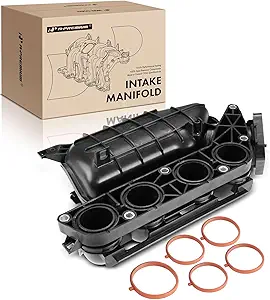 |
| Most Popular A crowd favorite that many people choose with confidence | TRQ Intake Manifold Assembly for 2.4L Honda/Acura 2008–2015 |  |
1. Autotecnica Intake Manifold (17100-R40-A00)

| Fitment | For 2.4L engines in 2008–2012 Accord and related models |
|---|---|
| Exterior | Machined |
| Manufacturer | Autotecnica |
| Manufacturer Part Number | HA1419311 |
This Autotecnica intake manifold is a factory-dimension replacement designed for 2.4L Honda engines used in 2008–2012 Accords and related models. It installs like a stock unit thanks to precise machining to the original manifold dimensions, making it suitable for routine repairs or restoring throttle response after manifold failure. The construction uses corrosion-resistant materials intended to handle oil vapor and high under-hood temperatures, which should improve longevity compared with lower-quality castings. For a performance-minded buyer the part provides a dependable platform for bolt-on upgrades without unexpected fitment issues, although it does not advertise performance porting, flow-matched runners, or intake-plenum modifications that would increase horsepower on their own. Expect an OEM-style replacement experience: straightforward install, factory fit, and durable materials, but no built-in performance gains beyond restoring proper airflow and sensor operation for tuned engines.
Best for: Buyers who need a reliable, direct-fit replacement for a 2.4L Honda intake that preserves factory fit and function while supporting later performance tuning.
Less Ideal for: Drivers seeking a manifold that provides instant power gains or built-in flow improvements should look for performance-specific manifolds designed and ported for increased airflow.
- Made to the original manifold dimensions for direct, bolt-in installation
- Corrosion-resistant, machined exterior suited for engine heat and oil vapor exposure
- Designed as a durable factory-style replacement to restore proper airflow and sensor operation
- Not advertised or finished for increased airflow or performance porting beyond stock geometry
Verdict: A dependable, factory-dimension replacement that restores stock airflow and fit for 2.4L 2008–2012 Honda Accords and is a solid base for later tuning.
2. MAXWIN MS97093 Intake Manifold Set for 2.4L Honda/Acura K24 Engines

| Brand | MAXWIN |
|---|---|
| Part Number | MS97093 / N-IM2675 |
| Application | 2.4L K24 engines for listed Honda/Acura model years |
| Includes | Intake manifold set and intake gasket(s) |
This MAXWIN intake manifold set is built as a direct replacement for K24 2.4L engines and includes the intake manifold and associated gasket(s) needed for installation. It is intended for model years covered in the fitment list, so a mechanic can swap it in during routine intake or gasket service or when the original manifold is cracked or leaking. The listing emphasizes factory-quality manufacturing and says components meet or exceed factory performance requirements, which suggests a focus on fit and sealing. Buyers will appreciate the straightforward fitment for common Accord 2.4L and related Acura models and the included gasket to simplify the job. Expect typical benefits of a replacement manifold: restored vacuum integrity, eliminated intake leaks, and improved drivability compared with a failing original. Important limitations are that this is a replacement part rather than a performance upgrade and compatibility is limited to the specific K24 engine codes and years listed, so verify engine code and year before purchasing.
Best for: Buyers who want a practical, factory-quality replacement to restore proper intake sealing and drivability on K24 2.4L Honda/Acura engines without seeking performance upgrades.
Less Ideal for: If you are looking for increased airflow or a performance intake upgrade, this factory-style replacement is not the right choice.
- Direct-fit replacement for K24 2.4L intake applications listed, simplifying installation
- Includes intake gasket(s) so you receive the key sealing components with the manifold
- Manufacturer states parts meet or exceed factory performance standards for reliable sealing and operation
- Clear vehicle fitment list covering Honda Accord, Crosstour and Acura ILX/TSX models using the K24 engine
- Not a performance or aftermarket flow-improvement manifold, intended only as a factory-style replacement
Verdict: Choose this MAXWIN intake manifold set when you need a straightforward factory-quality replacement to fix intake leaks and restore normal operation on a K24 2.4L Accord or compatible Acura.
3. Garage-Pro Intake Manifold for Honda Accord 2.4L (2008–2009)

| Manufacturer | Garage-Pro |
|---|---|
| Model | Intake Manifold |
| Manufacturer Part Number | GPRH31190004 |
| OEM Part Number | 17100R40A00 |
This Garage-Pro intake manifold is a direct-fit replacement designed for 2008–2009 Honda Accord 2.4L engines. It installs in place of the factory unit and is marketed as manufactured to factory specifications, so it is used the same way as the original part when repairing vacuum, air delivery, or gasket-related issues. Notable features include compatibility with the OEM part number 17100R40A00 and a straightforward bolt-on design that simplifies swapping the failed manifold without modification. The practical benefits are lower cost compared with dealer parts and a one-year unlimited-mileage warranty for basic coverage. Limitations to consider are typical of budget aftermarket parts: long-term durability may vary versus higher-end replacements and the listing does not include fitment beyond the stated 2008–2009 Accord 2.4L models, so confirm engine code and vehicle configuration before ordering. If you need a straightforward, wallet-friendly replacement to get your Accord back on the road, this unit covers the core function with minimal fuss.
Best for: Buyers seeking an economical, no-frills replacement to restore engine air delivery on a 2008–2009 Accord 2.4L who prioritize lower cost and simple installation.
Less Ideal for: Users looking for a top-tier performance upgrade or those who prefer sourcing parts directly from the dealer should consider other options.
- Direct-fit design that replaces OEM part number 17100R40A00 for straightforward installation
- Manufactured to factory specification claims to ease compatibility and reduce adjustment needs
- Affordable aftermarket alternative to dealer intake manifolds
- Includes a one-year unlimited-mileage warranty for basic coverage
- Durability may vary compared with higher-end or factory-sourced manifolds
Verdict: A budget-friendly, direct-fit replacement that gets a 2008–2009 Accord 2.4L back to factory-style operation without the dealer price.
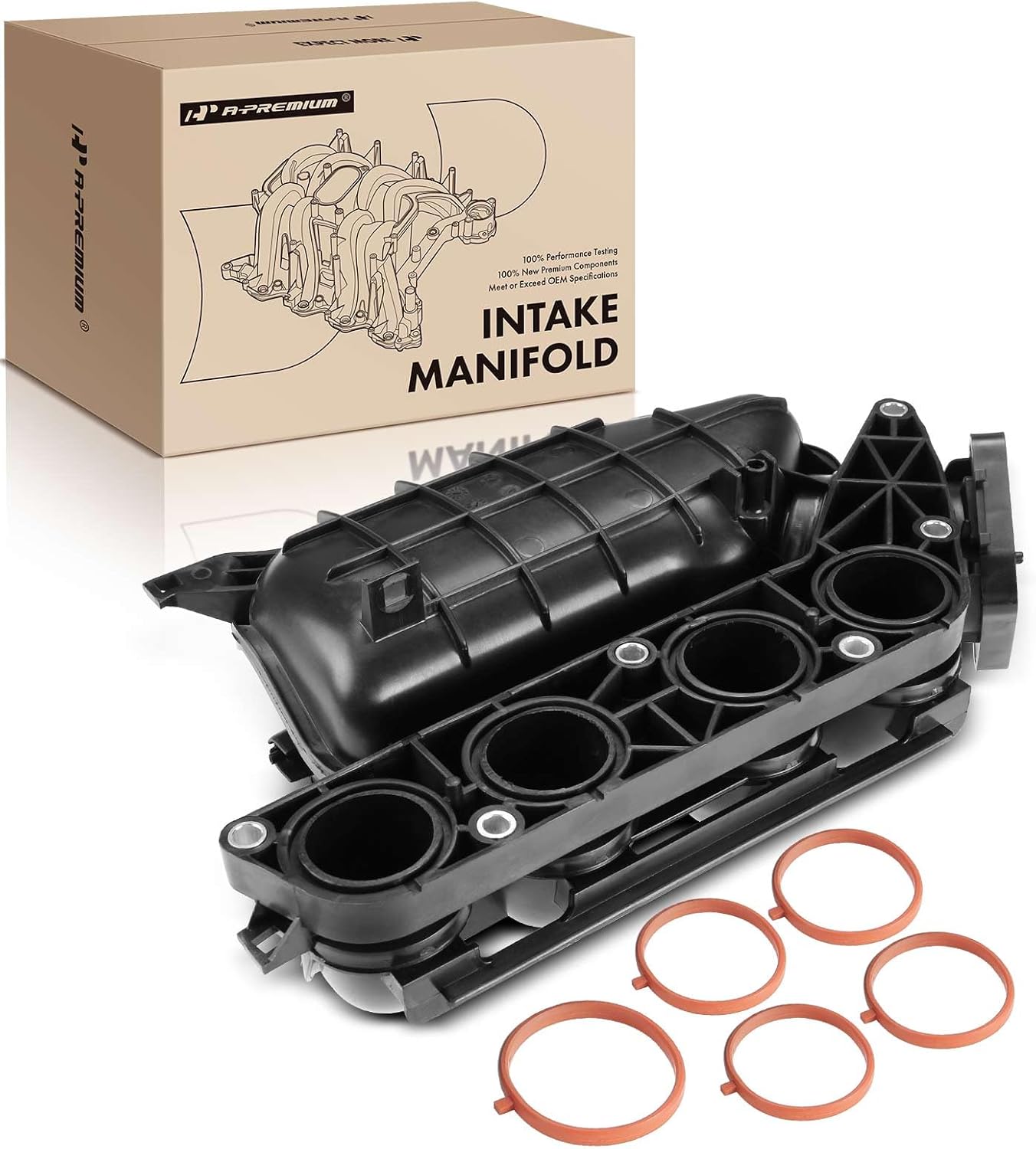
4. A-Premium Intake Manifold Assembly with Gasket for 2.4L L4 DOHC
| Fitment Type | Direct Replacement |
|---|---|
| Engine | L4 2.4L DOHC |
| Material | Plastic |
| Single Or Dual Plane Type | Single Plane |
| Package Quantity | 1 |
This intake manifold is a direct replacement built for 2.4L DOHC four-cylinder Honda and Acura engines. It is typically used when the factory manifold is cracked, leaking, or causing rough idle and poor acceleration. The unit ships with gaskets and is molded plastic with a single-plane design intended to restore proper air flow and engine performance. Installers report accurate bolt hole alignment and a close fit to factory parts, which simplifies swapping the old manifold for a like-for-like repair. The smooth inner passages aim to improve intake flow compared with a damaged manifold, helping the engine run smoothly under load and reducing stalling. Because it is a budget aftermarket part, buyers should expect plastic construction rather than metal and rely on correct installation and torqueing of hardware to avoid leaks. The manufacturer offers a one-year unlimited-mileage guarantee, but long-term durability will depend on driving conditions and heat exposure in older engines.
Best for: Buyers prioritizing a reliable, cost-effective repair to restore proper engine breathing on 2008–2012 2.4L Accord engines and similar Honda/Acura applications who prefer a ready-to-install replacement with included gaskets.
Less Ideal for: Drivers seeking upgraded performance parts or a heavy-duty metal manifold for extreme heat or high-mileage endurance should consider specialty or OEM-metal alternatives.
- Direct replacement fit for specified 2.4L DOHC Honda and Acura models simplifies installation
- Includes intake and throttle body gaskets so you can replace the manifold without sourcing extra parts
- Smooth internal passages designed to restore airflow and reduce rough idling
- Accurate bolt alignment reported by installers reduces trial-and-error during install
- Made from plastic which may not match long-term durability of factory metal units in high-heat or high-mileage engines
Verdict: A practical, ready-to-install replacement that restores intake function on 2.4L Honda Accord engines without the extra steps of sourcing gaskets.
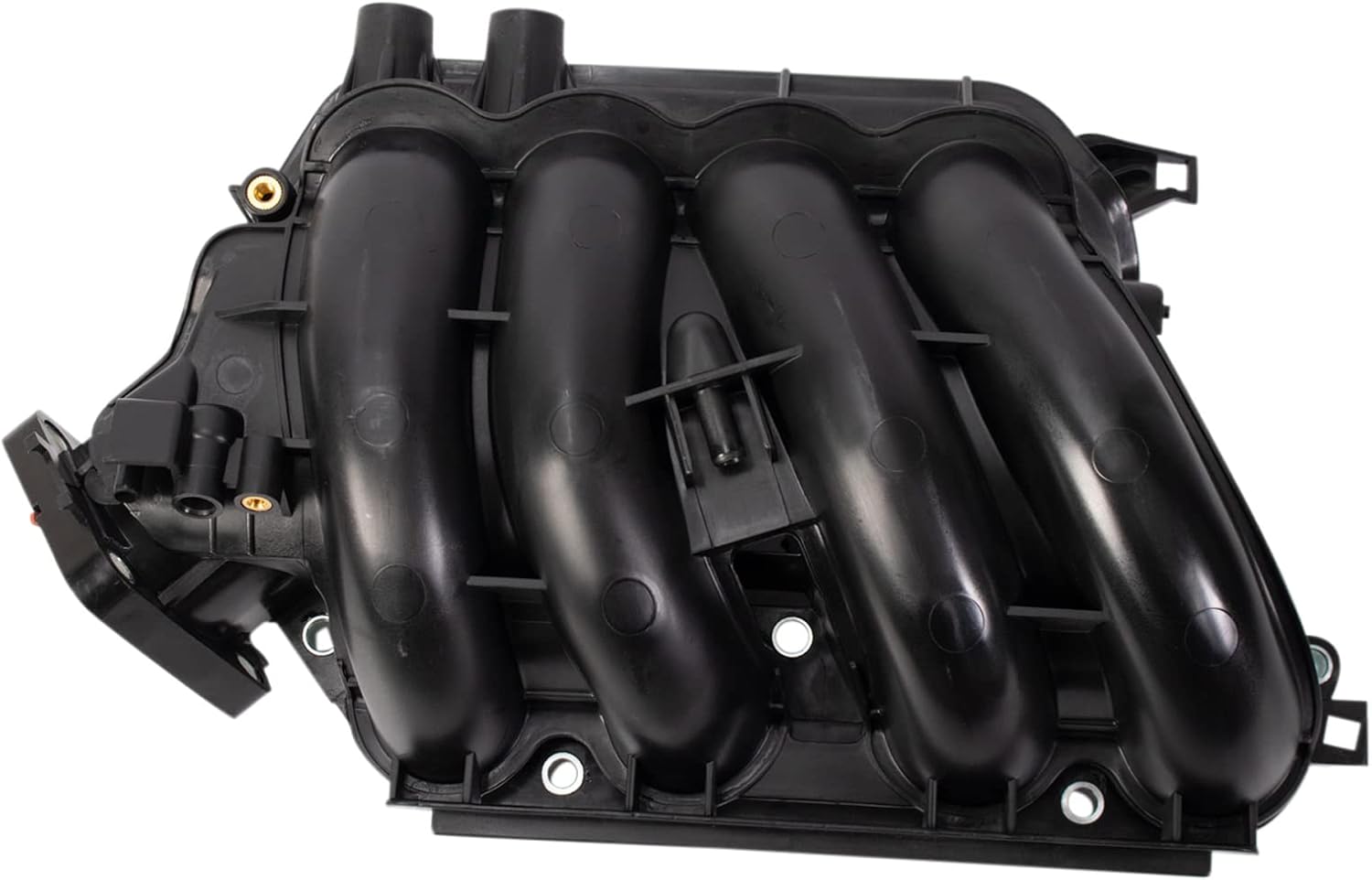
5. TRQ Intake Manifold Assembly for 2.4L Honda/Acura 2008–2015
| Material | Plastic |
|---|---|
| Includes | Gaskets |
| Manufacturer Part Number | IMA08041 |
| OEM Reference | 17100-R40-A00 |
This TRQ intake manifold is a direct-fit replacement designed for 2.4L Honda and Acura engines and arrives with the included gaskets for a one-stop swap. Typical use is to replace a failing or leaking factory manifold during routine repair or engine tune-up; TRQ emphasizes preassembled components and DIY installation guidance. The plastic construction and machined exterior give it a factory-replacement look while keeping weight down, and the part includes the manufacturer reference number so you can confirm fitment for Accord, Civic, CR-V, ILX, TSX and Crosstour models listed. Buyers report generally easy installation and good fit, and TRQ provides video resources to walk through the process. Some users note occasional internal baffle issues on non-matching vehicle applications, so inspection after initial miles is prudent. This unit replaces the original gasket arrangement with TRQ’s supplied gaskets and is intended as a budget-friendly, ready-to-install alternative to a dealer part rather than a performance upgrade.
Best for: Buyers who want a tested, budget-conscious replacement that installs like a factory part and prefer to verify fit with user feedback and compatibility resources before committing.
Less Ideal for: People seeking a performance intake or a long-term heavy‑duty upgrade should consider reinforced aftermarket or dealer parts instead.
- Direct-fit design for listed 2.4L Honda and Acura applications simplifies replacement
- Ships with gaskets and preassembled components to reduce install time
- Plastic, machined exterior balances factory-style fit with reduced weight
- Manufacturer provides DIY videos and compatibility guidance
- Plastic construction has reported instances of internal baffle failure on some installs
Verdict: A practical, install-ready factory-style replacement for 2.4L Honda and Acura engines that balances convenience and cost for routine repairs.
Choosing the Right 2008-2012 Honda Accord Intake Manifold: Key Factors to Consider
Fitment and Port Layout
Correct fitment is the single most important factor for a 2008–2012 Honda Accord intake manifold. The manifold must align precisely with the cylinder head bolt pattern, intake ports, throttle body flange, and vacuum connections. Misaligned ports can complicate installation, require additional adapters, or create stress points that lead to premature gasket failure.
Pay attention to the number and placement of vacuum ports, sensor bosses, and EVAP or PCV ports. If the manifold does not match the stock port layout, you may need to reroute hoses or modify fittings, which raises labor time and leak risk. A manifold that mirrors the factory layout minimizes installation steps and reduces the chance of vacuum leak symptoms after installation.
Sealing and Gasket Interface
Sealing design determines how well the manifold prevents intake manifold leak and vacuum loss on this engine family. Look for manifolds that offer defined gasket rails, integrated sealing surfaces, or compatibility with OEM-style intake manifold gasket shapes. Flat or uneven sealing surfaces increase the likelihood of manifold gasket failure under thermal cycling.
Consider whether the replacement requires a dedicated gasket set or includes integrated seals. Proper gasket compression and correct intake manifold torque specs during installation are essential to maintain a durable seal. Inadequate torque or uneven tightening often leads to vacuum leak diagnosis visits and recurring symptoms such as rough idle or poor fuel economy.
Material and Thermal Durability
Material choice affects longevity and performance on a daily-driven Accord. Common options include engineered plastics and lightweight alloys. Plastics reduce weight and resist corrosion, but inferior formulations can become brittle after repeated heat cycles, leading to cracks and leaks. Aluminum alloys tolerate heat well but can be more expensive and require careful machining to ensure flatness at the gasket face.
Assess the expected thermal environment under the hood and choose a manifold material proven to withstand repeated heating and cooling without warping. Durable materials reduce the chance of future intake manifold replacement and minimize the chance of developing intake manifold symptoms that force unscheduled repairs.
Ease of Installation and Serviceability
Installation complexity drives both cost and the chance of post-installation problems. Check how many fasteners must be accessed, whether any ancillary components must be removed, and if the throttle body or sensors require realignment. Manifolds designed with accessible mounting points and clear port labels make it easier to follow intake manifold torque specs correctly.
Serviceability also matters for tasks like intake manifold cleaning and vacuum leak diagnosis. Manifolds with removable runners or accessible internal areas simplify carbon or deposit removal. If routine maintenance is anticipated, favor options that let you clean or inspect sealing surfaces without extensive disassembly.
Compatibility With Sensors and Accessories
Your replacement must match the Accord's sensor and accessory footprint. That includes MAP or MAF sensor mounting provisions, IAC or idle control interfaces if applicable to the engine, and EVAP/PCV plumbing. Incorrect sensor bosses or accessory locations can cause check engine lights, sensor misreads, or require custom brackets and hose rerouting.
Confirm that sensor mounting holes, threaded bosses, and vacuum nipples correspond to the Accord's configurations so that factory sensors and hoses attach without modification. Compatibility reduces diagnostic time when performing intake manifold vacuum leak diagnosis and prevents unintended electrical or vacuum issues after installation.
Flow Characteristics and Intended Use
While direct-fit replacements aim to restore stock performance, some manifolds emphasize improved airflow as a performance upgrade. For a primarily street-driven 2008–2012 Accord, consider whether small gains in peak flow are worth potential compromises in low-end tractability or idle quality.
If you plan modifications elsewhere in the intake or engine, select a manifold whose runner length and cross-section suit your power and torque goals. Keep in mind that more aggressive flow profiles may require supporting changes to fueling or engine management to avoid drivability issues.
Common Intake Manifold Symptoms on 2008–2012 Accords
Owners typically encounter several recognizable signs when the intake manifold or its gasket begins to fail on these model years. A sudden rough idle, fluctuating RPM at idle, or an illuminated check-engine light tied to lean or misfire codes often indicate an intake manifold leak or vacuum issue. You may notice a hissing sound from the intake area when the engine is running, which can point to a visible vacuum leak at a hose connection or gasket interface.
In some cases the engine runs fine until under load, when hesitation or reduced throttle response becomes noticeable. Symptoms tied to the intake manifold can also overlap with other systems, so a measured vacuum test or smoke test is useful for accurate intake manifold vacuum leak diagnosis.
- Hissing sounds at idle indicating vacuum leaks
- Rough or fluctuating idle and intermittent misfires
- Poor throttle response or hesitation under load
- Check-engine light with lean or manifold-related codes
Basic Intake Manifold Vacuum Leak Diagnosis
Start diagnosis with a visual inspection of all vacuum hoses, PCV lines, and gasket surfaces for obvious cracks or loose clamps. If visual checks do not reveal the source, perform a smoke test or use a hand-held vacuum tester to detect where intake pressure is escaping. These methods localize leaks without removing the manifold in many cases.
When tracing leaks, pay special attention to the manifold-to-head gasket seating area and the throttle-body flange. Also inspect sensor grommets and vacuum nipples, as deterioration there commonly causes intermittent leaks. Record observed symptoms and test pressures to guide whether a repair, gasket replacement, or full manifold replacement is required.
- Visual inspection of hoses and grommets
- Smoke or vacuum testing to locate leaks
- Check throttle-body and gasket sealing surfaces
- Inspect PCV and EVAP connections for cracks
Preparing for an Intake Manifold Replacement
Before starting work, gather the correct gasket set, proper intake manifold torque specs, and any replacement fasteners or seals that are recommended for the 2008–2012 Accord. Lay out tools for torquing bolts in the proper sequence and ensure you have access to service manual torque values for the intake manifold and throttle-body bolts.
Label and photograph hose routing and electrical connectors before removal to simplify reassembly. Drain or reposition coolant if the manifold interfaces with coolant passages. Working methodically and following the torque pattern prevents uneven gasket compression and helps avoid post-installation vacuum leaks.
- Obtain correct gasket set and torque specs
- Label hoses and connectors for reassembly
- Prepare coolant handling if needed
- Use the specified torque sequence for bolt tightening
Routine Intake Manifold Maintenance and Cleaning
Periodic intake manifold cleaning helps maintain airflow and can prevent carbon buildup that affects idle and throttle response. If the manifold is removed for other repairs, take the opportunity to clean internal passages and mating surfaces using approved cleaners and non-abrasive tools.
Always inspect gasket surfaces for flatness and replace gaskets rather than reuse old seals. When reinstalling, follow manufacturer-recommended torque specs and tightening sequence to ensure reliable sealing and reduce the chance of future leaks.
- Clean internal passages and mating surfaces during service
- Replace gaskets rather than reusing old ones
- Use non-abrasive cleaning tools and approved solvents
- Verify flatness of sealing surfaces before reinstallation
When to Seek Professional Help
Some intake manifold issues are straightforward for a competent DIYer, but others require professional attention. If smoke testing reveals a leak in the manifold body itself, or if mounting bosses are damaged, professional repair or replacement is advised. Complex cases involving coolant passages through the manifold or internal cracks typically need shop-level tools and experience.
Also consider professional help if you encounter persistent check-engine codes after replacement, or if the engine runs poorly despite correct torque and gasket installation. A shop can perform advanced diagnostics, flow testing, and pressure checks to pinpoint hidden issues.
- Seek pros for cracked manifolds or damaged bosses
- Get shop assistance for coolant-passage related failures
- Professional diagnostics for persistent post-repair codes
Still looking for the perfect fit?
Select your Honda Accord configuration to see the most relevant Intake Manifolds recommendations
How We Chose the Best 2008-2012 Honda Accord Intake Manifold
To assemble this list we applied targeted editorial filters that reflect real-world needs for 2008–2012 Honda Accord owners. We prioritized fitment accuracy to the 2008–2012 Accord intake manifold mounting pattern and vacuum port layout, giving precedence to parts that match OEM bolt patterns and port orientations to avoid clearance or linkage issues. Material and construction were evaluated next, favoring manifolds with robust polymer or aluminum housings and quality internal runners that resist warping and cracking under heat cycles.Sealing performance was a primary criterion: we looked for designs that use correct gasket surfaces, integrated sealing rails, or improved gasket interfaces to reduce the chance of intake manifold leaks. Ease of installation was assessed by the number and accessibility of fasteners, whether the unit required manifold gasket and throttle-body alignment, and how often torque specs are practical during a home install. We also considered serviceability for common maintenance tasks like intake manifold cleaning and vacuum leak diagnosis.Exclusions: units that required extensive machining, nonstandard adapters, or significant intake-tract modification were excluded. Also excluded were components that did not match Accord-specific vacuum port or sensor locations. The resulting list focuses on reliable, installable options that meet fitment, sealing, durability, and serviceability expectations for the 2008–2012 Honda Accord.
Our full evaluation process is outlined in our review methodology.
FAQ
How long does an intake manifold last on a 2008–2012 Accord?
It often depends on material and driving conditions. Intake manifolds can last the vehicle life if not exposed to extreme heat cycles or chemical damage, but plastic units may develop cracks after many years and repeated thermal cycling.
Can I replace the intake manifold gasket without removing the manifold?
Sometimes you can access and replace certain gasket areas, but for a thorough repair and to ensure correct sealing it is usually best to remove the manifold so mating surfaces can be cleaned and inspected.
What torque specs should I use for intake manifold bolts?
Torque specs vary by bolt size and sequence on the 2008–2012 Accord. Follow the factory sequence and specified torque values in the service manual to avoid uneven compression. Using a calibrated torque wrench is recommended.
Will a small vacuum leak affect fuel economy?
Yes. Even a small intake manifold leak can introduce unmetered air, which often causes the engine to run lean and can reduce fuel efficiency until the issue is fixed.
Is intake manifold cleaning necessary during replacement?
Yes. Cleaning mating surfaces and internal passages during replacement helps restore airflow and ensures a reliable seal, reducing the chance of repeat intake manifold leak symptoms.
How can I tell if the manifold body itself is cracked?
Look for visible hairline cracks, coolant or oil residue near the manifold, or persistent vacuum leaks that persist after gasket replacement. Pressure testing or a smoke test can confirm a cracked body.
Final Verdict
For a 2008–2012 Honda Accord, prioritize exact fitment, robust sealing, and correct torque procedures when selecting an intake manifold. Matching the manifold to the vehicle's vacuum and sensor layout reduces installation headaches and the risk of vacuum leaks. Balance material durability against serviceability needs if you plan to keep the car long term.Ultimately choose the option that best matches your goals: straightforward OEM-style replacement for reliable daily driving, or a manifold with improved flow if you are pursuing supporting performance upgrades. Correct installation and following intake manifold torque specs will have the biggest impact on long-term sealing and drivability.
Explore More:
- Check out all Honda Accord parts & accessories
- Explore Intake Manifolds Maintenance & Repair Guides
- Explore Engine
- Browse all Auto Parts
