

Note: This article contains affiliate links. If you click on these links and make a purchase, I may earn a small commission at no extra cost to you. This helps support my research and content. Read my full affiliate disclosure here.
If you drive a 1999-2006 GMC Sierra 1500 you rely on the front CV axles to transfer power cleanly to the wheels while allowing for suspension travel and steering movement. Worn or damaged CV axles cause vibration, clicking when turning, and can leave you stranded if a boot tears and the joint loses grease. This guide focuses on the top CV axle options matched to the 1999-2006 Sierra 1500 chassis, highlighting products that offer correct fitment, reliable joint construction, and durable boot materials.Below we shortlist seven top picks based on build quality and vehicle-specific fitment. Read on for the evaluation criteria and practical advice to help you pick the right axle for your driving and maintenance needs.
Looking for other parts? See all GMC Sierra 1500 parts & accessories.
Top Picks at a Glance
| Best Overall The best all-around choice for most situations | PHILTOP Front CV Axle Pair for Silverado/Sierra 1500 (661009) |  |
| Best Quality Built to a higher standard if you want something more solid | Cardone CV Drive Axle Drive Shaft (66-1009) |  |
| Best Value The sweet spot between price and what you get | A-Premium CV Axle Shaft Assembly for 1999–2006 Silverado/Sierra/Tahoe (Front, Left or Right) |  |
| Best Budget The cheapest option that still gets the job done reliably | Anytek Front CV Axle Shaft Assembly (Fits 1999–2006 GMC Sierra 1500) |  |
| Highest Rated A top-rated pick with lots of positive feedback | TRQ Front CV Axle Assembly CSA82126 |  |
| Most Popular A crowd favorite that many people choose with confidence | Detroit Axle 4WD Front CV Axle Shaft (6-Lug) |  |
| Best Seller A high-volume bestseller chosen again and again | Detroit Axle Front CV Axle Shaft Pair for 4WD 6-Lug Trucks (21" Overall Length) |  |
1. PHILTOP Front CV Axle Pair for Silverado/Sierra 1500 (661009)

| Manufacturer | PHILTOP |
|---|---|
| Item model number | 661009 |
| Manufacturer Part Number | 3565SHA760SUS |
| OEM Part Number | 26020730, 26069244, 26062613, 26069252, 26037365, 26060239, 26058932, 26011961, 661009 |
| Fitment years | 1999-2006 Silverado/Sierra 1500 and related GM 1500 models |
These PHILTOP front CV axles replace the factory half-shafts on compatible full-size GM 1500 trucks and SUVs and are sold as a two-piece set. They are machined and normalized to control ball path and mating dimensions, and come pre-assembled with boots so you can swap them in during a roadside repair or a garage job. Typical use is direct replacement when a worn joint or torn boot causes vibration, clicking on turns, or grease loss. Buyers will appreciate the emphasis on surface finish and inspection, which should reduce premature wear compared with poorly made rebuilds. Installation is straightforward for anyone with basic mechanical skills and a few specialty tools. Limitations include that fitment is specific to the listed 1999-2006 Sierra/Silverado 1500 and related GM models, so verify reference numbers before buying, and this is an aftermarket part so exact factory match in appearance or minor mounting details can differ. Overall these axles offer a practical, factory-replacement style solution for restoring steering smoothness and driveline reliability on the specified trucks.
Best for: Buyers who want a reliable, ready-to-install replacement to restore smooth steering and eliminate CV-joint noise on mid-2000s GM 1500 trucks and SUVs, prioritizing value and straightforward installation.
Less Ideal for: If you need an exact factory-branded original or are repairing a different make or model outside the listed GM 1500 family, look for a part specifically matched to that vehicle.
- Sold as a pair for full-side replacement
- Manufactured with ground surfaces and normalized shafts for consistent fit and durability
- Pre-assembled CV joints and boots simplify installation
- Meets factory-style mating dimensions with 100% inspection of key points
- Aftermarket unit may differ slightly in appearance or minor fit details from factory parts
Verdict: A cost-conscious, factory-style front CV axle pair that restores drivability on 1999–2006 GM 1500 trucks without complex installation.
2. Cardone CV Drive Axle Drive Shaft (66-1009)

| Model | 66-1009 |
|---|---|
| Manufacturer Part Number | 66-1009 |
| OEM Part Numbers | 26011961, 26020730, 26037365, 26058932, 26060239, 26062613, 26069244, 26069252 |
| Exterior | Machined |
Cardone's 66-1009 CV drive axle is a direct-replacement half-shaft designed to restore smooth, vibration-free drive to compatible GM trucks and SUVs. It ships with a new axle retaining nut and machined splines to simplify installation and ensure correct engagement with the hub and transmission. Cardone emphasizes quality control: each shaft is checked for straightness to reduce vibration and filled with high-temperature grease for durability under load. The neoprene boots use extra bellows where needed to resist cracking and extend service life. In practice this axle is a practical fix for clicking or grease-leak symptoms from a failing joint and is simple for a competent DIYer or a shop to swap in. Some users report excellent factory-like fit and longevity while a minority have reported premature failures, so expect generally good value but keep receipts and inspect the part at installation. Note that compatibility is limited to the specified GMC/Chevrolet/Cadillac model years listed by the manufacturer.
Best for: Drivers who prioritize restoring solid, factory-quality drive feel and want a cost-effective replacement that installs cleanly on compatible GM 1999–2006 full-size pickups and SUVs.
Less Ideal for: If you need a performance-upgraded or heavy-duty axle for towing or modified suspension setups, look for purpose-built aftermarket performance axles rather than a direct factory-style replacement.
- Factory-style fit and machined splines for straightforward installation
- Neoprene boots with additional bellows to resist cracking and extend service life
- Individually checked shaft straightness to minimize vibration
- Supplied axle retaining nut removes the guesswork during replacement
- Some customers reported premature failures on a small number of units, indicating variable long-term durability
Verdict: Choose this Cardone axle when you want a factory-fit replacement that restores smooth, vibration-free drive on the listed 1999–2006 GMC Sierra 1500 applications.
3. A-Premium CV Axle Shaft Assembly for 1999–2006 Silverado/Sierra/Tahoe (Front, Left or Right)

| Location | Front Left or Right |
|---|---|
| Axle nut | Included |
| Spindle nut thread size | M24 x 2.0 |
| Output shaft spline count | 33 |
| Input shaft bolt count | 6 |
This A-Premium CV axle is a direct-fit front half-shaft sold as a single assembly for driver or passenger side service on compatible GM trucks and SUVs. It installs in place of a worn axle to stop clicking, vibration, and grease loss; the listing shows it includes the spindle/axle nut but not an ABS tone ring. Typical use is a like-for-like replacement during routine drivetrain repair or when a CV joint fails. Buyers report easy installation in many Silverado and Sierra cases and generally factory-quality fit and feel for a lower-cost part. The assembly comes with a compressed length and spline count that match factory patterns, so it slides into place without extensive modification. Expect the benefit of an unlimited-mileage one-year guarantee from the brand, but there are mixed long-term durability reports from some users, so this is best for owners replacing failed axles on a budget or while waiting on a premium part. If you need guaranteed long-term heavy-duty performance, consider higher-end or upgraded axles rather than a basic aftermarket unit.
Best for: Owners looking for an affordable, direct-replacement front CV axle to repair a clicking or leaking CV joint and get their 1999–2006 Sierra or similar GM truck back on the road quickly.
Less Ideal for: Drivers who need a heavy-duty or performance-grade axle for towing, off-road abuse, or long-term high-mileage service should consider premium or reinforced alternatives.
- Direct-fit design for many 1999–2006 GM full-size trucks and SUVs, minimizing installation time
- Includes axle nut and matches factory spline count for straightforward replacement
- Generally positive user reports of easy install and smooth post-repair driving
- Backed by a one-year unlimited-mileage guarantee from the manufacturer
- Does not include an ABS ring, so ABS-equipped hubs may need separate components
- Mixed long-term durability reports from some customers
Verdict: A cost-conscious, direct-fit front CV axle that gets compatible 1999–2006 GM trucks back to factory-style operation with minimal fuss.
4. Anytek Front CV Axle Shaft Assembly (Fits 1999–2006 GMC Sierra 1500)

| Installation position | Front left or right |
|---|---|
| Output connection | Splined |
| Input connection | Bolt-on |
| Manufacturer part number | 30150010-ANK |
This Anytek front CV axle is a ready-to-install replacement intended for front left or right positions on specified Sierra 1500 and related GM trucks from the 1999–2006 era. It ships as a complete half-shaft assembly with splined output and bolt-on input connections so you can swap it into the vehicle without rebuilding joints. The axle uses chloroprene rubber boots and claims factory-standard manufacturing, which should help resist cracking in hot or cold climates and keep grease in the joint. For budget-conscious repairs this unit gives a practical way to stop clicking and vibration from a failing axle without paying dealer prices. Expect typical aftermarket variation in fit and finish so double-check fitment and be prepared to reuse any vehicle-specific adapters or fasteners during installation. It does not appear to include vehicle-specific hardware beyond the shaft itself, so professional installation or basic mechanical experience is advised if you want correct torque and alignment.
Best for: Buyers who need an affordable, straightforward replacement to restore driveline smoothness on a 1999–2006 GMC Sierra 1500 and prioritize replacing the whole shaft rather than repairing individual joints.
Less Ideal for: People seeking a premium performance or heavy-duty upgrade for towing and extreme off-road use should consider reinforced or heavy-duty aftermarket shafts instead.
- Direct-fit half-shaft assembly ready for front left or right installation
- Chloroprene rubber boots rated for wide temperature extremes to protect CV joints
- Splined output and bolt-on input make installation straightforward for compatible vehicles
- Manufactured to original-standard dimensions for functional interchange with factory components
- May require reuse of vehicle-specific adapters or fasteners not included with the axle
Verdict: A cost-conscious, ready-to-install front CV axle that restores proper driveline function on 1999–2006 GMC Sierra 1500 models without the dealer markup.
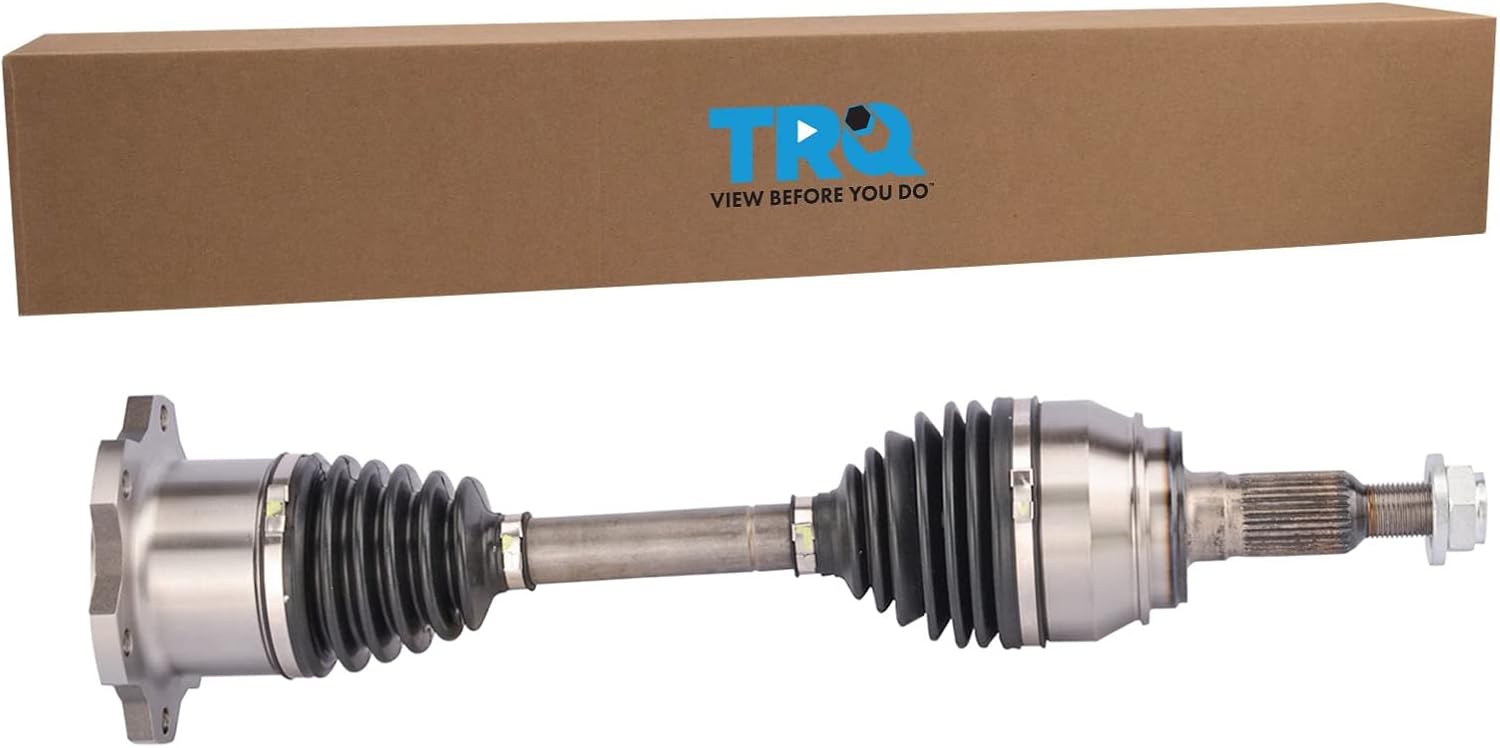
5. TRQ Front CV Axle Assembly CSA82126
| Brand | TRQ |
|---|---|
| Model | TRQ CSA82126 CV Axle Assembly |
| Exterior | Machined |
| Boot material | Neoprene |
| Pre-greased | Moly greased |
This TRQ front CV axle assembly is a pre-assembled replacement intended to restore front drivetrain function on compatible 1999–2006 full-size trucks and SUVs. It arrives ready to install with machined exterior surfaces, neoprene boots, and moly grease applied at the joints to reduce premature wear. Typical use is a front axle swap during a DIY or shop repair to eliminate clicking, vibration, or grease leakage from a failed axle. The application-specific design aims to match factory fitment without modification, which can save time during installation. Notable practical benefits are the durable neoprene boots and pre-greased joints that help longevity over cheaper rebuilds, plus TRQ provides installation videos that can help less-experienced installers. Limitations include occasional fitment variance reported by buyers and sensitivity to shipping damage on threaded areas, so inspect threads and confirm exact vehicle fitment before installation. Some users also reported differing axle nut sizes compared with factory hardware, which may require an alternative socket or hardware swap during the job.
Best for: Buyers who prioritize a reliable, ready-to-install replacement axle for restoring a truck's front drivetrain and prefer parts built to match factory fit and function over rebuilt cores.
Less Ideal for: If you need a guaranteed exact-match OEM nut or are unwilling to verify fitment and inspect hardware on arrival, consider having a shop source a confirmed factory-match unit instead.
- Pre-assembled direct-fit design reduces installation time
- Neoprene boots and moly grease for improved durability over stock-style components
- Machined exterior and factory-style construction for consistent drivetrain engagement
- Company provides DIY installation videos to guide repairs
- Some reported variability in fitment and occasional shipping damage to threaded areas
- Axle nut size may differ from factory and require alternative tools or a replacement nut
Verdict: A robust, pre-assembled direct-fit replacement axle that emphasizes durability and ease of installation for restoring front drivetrain reliability on 1999–2006 full-size trucks.
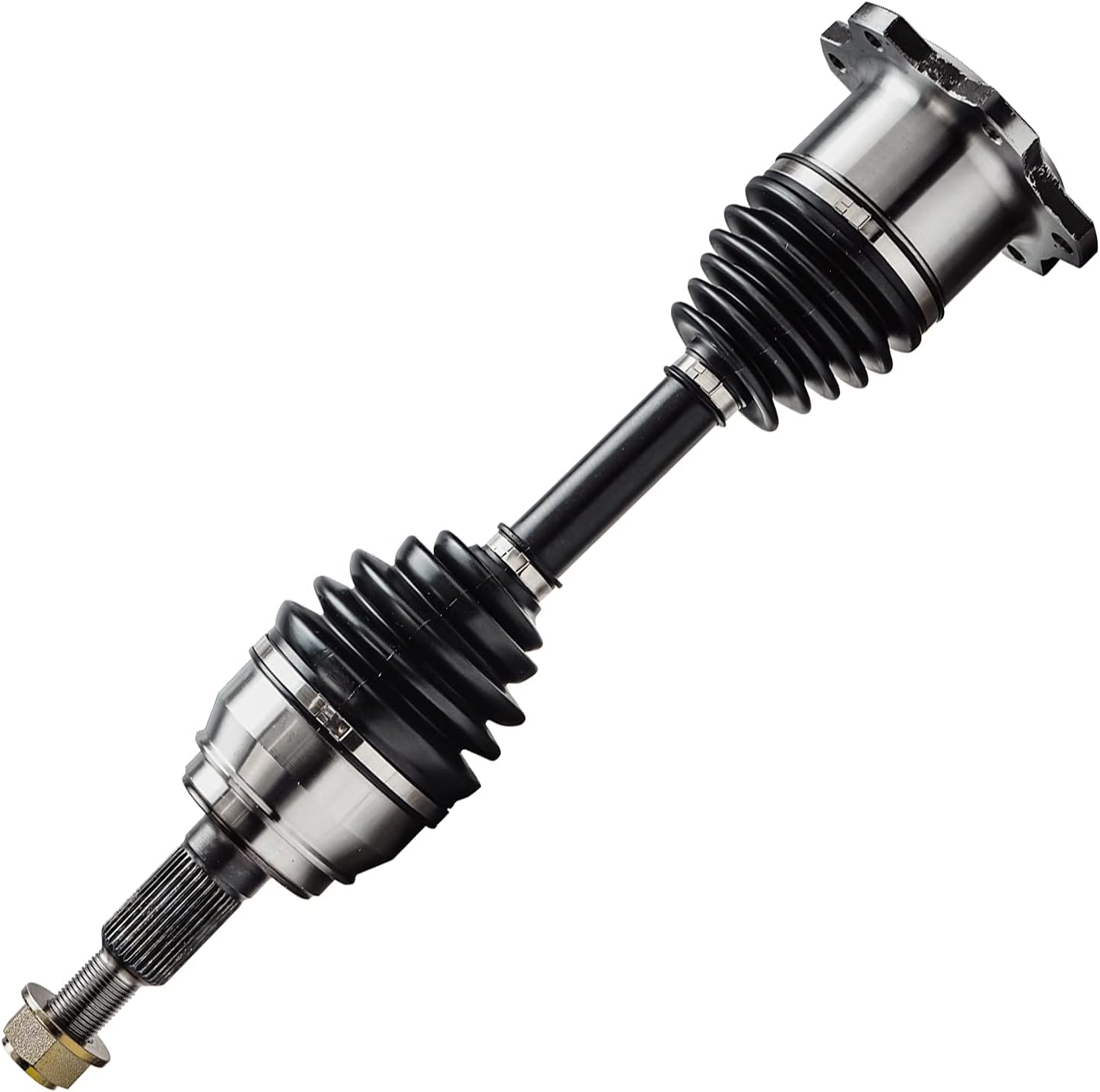
6. Detroit Axle 4WD Front CV Axle Shaft (6-Lug)
| Overall Length | 21" |
|---|---|
| Inner Spline | Bolt-on 6 Hole |
| Outer Spline | 33 |
| ABS on Axle | No |
This Detroit Axle front CV axle is a direct-style replacement for 4WD 6-lug models in the 1999–2006 Sierra/ Silverado family and similar GM trucks. It installs in place of the factory half-shaft and is intended to restore smooth, vibration-free driving when a worn or noisy axle is the issue. Notable features include a 21-inch overall length, 33 outer splines, and a bolt-on 6-hole inner spline design; the listing specifies no ABS on the axle. Buyers report straightforward fitment and quieter operation when the part matches the vehicle, and the unit includes the stub shaft and seal configuration useful for avoiding repeated transmission seal leaks. Quality feedback is mixed: many users praise fit and performance, while a minority received damaged or incorrect-length units, so careful verification of fit and inspection on arrival are important. The axle is sold as a single driver or passenger side unit and is best used as a cost-effective replacement by DIY mechanics or shops comfortable confirming spline count and length before installation.
Best for: Buyers who prioritize proven fitment and user feedback and want an affordable, factory-style replacement axle for a specific 1999–2006 GMC Sierra 1500 configuration; ideal for DIY installers or independent shops that will verify splines and length prior to install.
Less Ideal for: People seeking a plug-and-play guarantee without inspecting parts on arrival or buyers who prefer fully remanufactured/covered units with comprehensive factory-level quality assurances.
- Made to match factory-style spline counts and bolt pattern for direct replacement
- Designed to eliminate common CV axle noises and vibrations when properly matched
- Includes stub shaft/seal arrangement that can reduce transmission seal leaks
- Available as single-side unit for targeted repairs without replacing both axles
- Fitment and length must be double-checked before installation because some buyers received wrong-length or damaged units
Verdict: A budget-friendly, factory-style front CV axle that restores quiet, smooth drive for the 1999–2006 GMC Sierra 1500 when you confirm the correct spline count and length before installation.
7. Detroit Axle Front CV Axle Shaft Pair for 4WD 6-Lug Trucks (21" Overall Length)

| Overall Length | 21" |
|---|---|
| Inner Spline | Bolt-on 6 Hole |
| Outer Spline | 33 |
| Kit Includes | 2x Front CV Axle Shafts |
These Detroit Axle front CV axle shafts are a direct-replacement style assembly sold as a pair for 4WD 6-lug trucks. They are built to the factory-style fit described in the listing, with a 21" overall length, 33 outer splines, and a bolt-on 6-hole inner flange so installation follows the stock mounting pattern. Typical use is like-for-like replacement when an axle is clicking, leaking grease, or has a torn boot; the assemblies arrive ready to install so you do not need to rebuild CV joints or source boots and clamps. Buyers report straightforward fitment on correctly specified vehicles and improved articulation compared with some local parts-store units. Limitations to note are mixed long-term durability feedback in a few reviews and one report of incorrect length for a different application, so confirm the 6-lug 4WD Sierra 1500 fitment and measurements before installing. These axles are a budget-friendly factory-style option for routine front-drive axle repairs on the specified trucks.
Best for: Buyers who want a straightforward, factory-style replacement axle set for a 4WD Sierra 1500 with 6-lug wheels and prioritize a hassle-free install and parts that match stock mounting patterns.
Less Ideal for: Shoppers seeking a heavy-duty or high-mileage performance upgrade, or those unwilling to verify fitment measurements before installation, should consider alternatives or a professional parts match service.
- Sold as a ready-to-install pair matching factory 6-bolt flange pattern
- Specific axle specs listed (21" overall length, 33 outer splines) for easy verification
- Many buyers report good fit and improved articulation versus some aftermarket alternatives
- Some customer reports of premature boot failure or grease leakage on unrelated Detroit Axle parts
- At least one review cited incorrect length for a non-matching vehicle, so strict fit verification is required
Verdict: A practical, ready-to-install factory-style axle pair that fits 4WD 6-lug Sierra 1500s and simplifies front-axle repairs.
Choosing the Right 1999-2006 GMC Sierra 1500 CV Axle: Key Factors to Consider
Exact Fitment and Spline Count
Correct fitment matters because the Sierra 1500 uses specific flange patterns and spline counts that control how the axle mates to the transaxle and hub. An incorrect spline count or shaft length can lead to improper engagement, excessive endplay, or interference with suspension components. Verifying spline count and spline diameter prevents premature wear of the mating components and avoids driveability problems.
Fitment also affects installation ease. A properly dimensioned axle will seat without forcing the joint, reducing the chance of damaging the boot or joint during installation. For DIYers, precise fitment cuts installation time and the risk of alignment issues that show up as steering pull or uneven tire wear.
CV Joint Construction
The internal engineering of the inner and outer CV joints determines how well the axle handles torque and articulation. Heat-treated races, hardened balls or rollers, and a secure cage design reduce the chances of premature pitting and spalling under heavy loads or frequent steering movement. Robust joint construction also resists fatigue when the truck is used for towing or off-pavement work.
Joints that use tighter machining tolerances and quality materials reduce slop that can translate into axle vibration at highway speed. Choosing axles with proven joint designs helps maintain smooth power delivery and steady steering feel over time.
Boot Material and Clamp Quality
The boot is the first line of defense against contamination. Heavy-duty nitrile or thermoplastic boots resist cracking from heat, oil, and road chemicals better than thinner rubber options. A torn or brittle boot will let dirt and water into the joint and cause rapid wear, which is often the root cause behind symptoms of bad CV axle such as clicking or grinding when turning.
Clamps and sealing methods are equally important. Axles with stamped steel clamps or high-quality ear clamps maintain consistent compression on the boot lip, preventing grease loss and contamination ingress. For vehicles exposed to salt and debris, strong clamps and a well-sealed boot extend service intervals significantly.
Shaft Strength and Corrosion Protection
The half shaft must resist bending and torsional fatigue. Look for axles made from properly cold- or heat-treated steel with protective coatings that reduce rust and pitting. Corrosion can change shaft diameter where it seats in the hub or transaxle, leading to poor mating and possible vibration. On a Sierra 1500 that sees winter roads, coating quality has a direct effect on service life.
A strong shaft also matters for vehicles that tow or carry heavy loads. Excessive flex or early fatigue can cause driveline harmonics that show up as axle vibration at highway speed and accelerate joint wear.
Grease Type and Fill Procedure
The correct grease and adequate fill volume inside the CV joint are essential for lubrication and cooling. High-performance moly-infused or extreme-pressure greases reduce metal-to-metal contact under high torque and steering angles. Insufficient grease or low-quality filler can accelerate wear and cause symptoms such as clicking on turns or burning smell under heavy use.
During installation, proper packing ensures the joint cavity is filled without trapping air pockets. A well-packed joint also helps prevent overheating and uneven wear across the bearing surfaces, which contributes to a longer-lasting axle on the Sierra 1500.
Warranty and Manufacturing Quality Control
Warranty terms and visible evidence of manufacturing controls provide a signal about long-term reliability. A product backed by a clear workmanship warranty indicates the maker stands behind tolerances and assembly practices. Quality control processes such as final balancing and run-out testing reduce the chance of vibration complaints after installation.
While warranty alone does not guarantee performance, combined with other factors such as materials and seal design it helps you evaluate whether a given axle will remain dependable through normal service life on a Sierra 1500.
Common Symptoms of a Failing CV Axle
Recognizing early symptoms helps you address axle issues before they lead to more extensive damage. Typical signs on the 1999-2006 Sierra 1500 include clicking or popping noises when turning, which usually point to outer joint wear. You may also notice a shudder or vibration during acceleration or at highway speeds caused by joint wear or shaft imbalance.
A torn boot will let grease escape and contaminants enter the joint, accelerating failure. Loss of grease often precedes mechanical noise, so inspecting boots for tears or grease splatter around the wheel well is a quick preventive check. In advanced cases, you might feel play in the steering or observe uneven tire wear due to driveline vibration.
- Clicking/popping when turning
- Vibration or shudder during acceleration or at highway speed
- Grease on inside of wheel or torn CV boot
- Visible play or looseness in the axle shaft
How Replacement Axles Are Built
Replacement CV axles for the Sierra 1500 combine the shaft, inner and outer joints, booting, and clamps into a single assembly or come as a serviceable joint plus shaft. Quality assemblies begin with precisely machined shaft ends and spline profiles to match factory interfaces. The joints themselves are typically assembled with tight tolerances and then packed with the specified grease and sealed under controlled conditions.
Manufacturers may use different boot materials and clamp systems, but the fundamentals remain the same: a durable boot, secure clamps, and joints built to withstand the truck's torque and steering loads. Understanding the basic construction helps you evaluate claims like heavy-duty boots or improved joint metallurgy when assessing replacement options.
- Shaft: treated and coated steel
- Joints: heat-treated races and hardened components
- Boots: nitrile or thermoplastic with strong clamps
- Grease: high-pressure formulations and correct fill
DIY Replacement: What to Expect
Replacing a CV axle on the 1999-2006 Sierra 1500 is a straightforward job for a mechanically inclined owner with basic tools. Typical steps include lifting and safely supporting the vehicle, removing the wheel and hub nut, disconnecting lower suspension links if needed, and sliding the shaft out of the hub and transaxle. Expect to use a torque wrench to secure fasteners to factory specifications during reassembly.
Pay attention to the condition of nearby components such as wheel bearings, hub bearings, and seals while the axle is out. Reusing a damaged hub or hub nut can lead to premature wear or uneven runout. If you choose to service the joint rather than replace the full axle, be meticulous about grease packing and boot sealing to avoid early failure.
- Plan for a few hours with common hand tools
- Inspect adjacent components while axle is removed
- Use proper torque values on hub and suspension fasteners
- Replace torn boots immediately to protect new joints
Maintenance Tips to Extend CV Axle Life
Regular visual inspections are the simplest preventive measure. Look for cracked or split boots, grease leakage, and rust on the shaft. Addressing a small boot tear early can save the entire axle by allowing you to replace just the boot or re-pack the joint instead of swapping the full shaft.
Avoid aggressive turns under heavy load and keep up with suspension maintenance. Worn control arm bushings or ball joints change alignment and increase stress on CV joints. Keeping these components in good condition reduces angular strain on the axle and slows wear.
- Inspect boots during oil changes or tire rotations
- Address suspension wear to minimize joint stress
- Clean road grime and salt from undercarriage after winter driving
- Repack or replace boots at first sign of damage
When to Replace the Entire Axle Vs Repairing the Boot
If the joint is already producing noise or the boot has been torn long enough for contaminants to enter, replacement of the complete axle assembly is usually the most reliable fix. Joints contaminated by dirt or water typically show internal corrosion or bearing damage that cannot be fully remedied by re-greasing alone.
If the boot is newly torn but the joint still feels tight and free of noise, replacing the boot and repacking the joint can be a cost-effective interim solution. However, inspect for signs of boot slippage, grease contamination, or shaft damage before deciding to repair rather than replace.
- Replace axle if joints make noise or show play
- Boot-only repair is acceptable for recent damage without joint symptoms
- Always check for contamination before choosing repair
- Consider replacement if other drive components show wear
Still looking for the perfect fit?
Select your GMC Sierra 1500 configuration to see the most relevant CV Axles recommendations
How We Chose the Best 1999-2006 GMC Sierra 1500 CV Axle
We prioritized fitment and joint durability specific to the 1999-2006 GMC Sierra 1500 platform. Every candidate had to match factory spline count, flange pattern, and shaft length to avoid driveline geometry issues and premature wear. We assessed CV joint construction, requiring heat-treated inner and outer races, hardened cages, and quality bearings where applicable to resist fatigue under heavy loads.Boot quality and sealing were critical. We favored axles with multi-layered nitrile or thermoplastic boots and robust clamps to prevent grease loss after suspension articulation and steering cycles. Grease type and fill volume were considered because proper lubrication reduces friction and extends service life.Corrosion resistance of the shaft and protective coatings were also used as filters, since the Sierra spends a lot of service life exposed to road salt and debris. Units that showed weak environmental protection or nonstandard fitment were excluded. Final selection balanced factory-correct dimensions, durable joint engineering, strong sealing, and manufacturing tolerances that minimize vibration and ensure dependable highway behavior.
Our full evaluation process is outlined in our review methodology.
FAQ
How long should a CV axle last on a Sierra 1500?
CV axles often last many years under normal use, but life depends on driving conditions and maintenance. Exposure to road salt, debris, or heavy towing can shorten service life. Regular boot inspections help catch problems early.
Can I drive with a torn CV joint boot?
You can drive short distances with a torn boot but it is risky. A torn boot lets grease out and contaminants in, which accelerates joint wear and can lead to clicking noises or sudden failure. Replace or repair the boot as soon as possible.
What causes axle vibration at highway speed?
Vibration at highway speed can stem from worn CV joints, an imbalanced or bent shaft, or improper installation causing runout. It often develops gradually and may be accompanied by noise during acceleration or turning.
Are replacement CV axles difficult to install?
Installation is moderately straightforward for someone with mechanical experience. The job involves lifting the truck, removing the wheel and hub nut, and separating suspension components as needed. Follow torque specs and inspect neighboring parts while you're working.
What should I check before buying a replacement axle?
Confirm spline count, shaft length, and flange pattern for the 1999-2006 Sierra 1500. Also review boot material, clamp type, and whether the unit is fully assembled and pre-greased. These details determine fitment and longevity.
How does a torn CV joint boot show up on the vehicle?
A torn boot often leaves grease splattered inside the wheel well or on the inner rim. Over time the joint may begin to click when turning or produce vibration during acceleration as contaminants degrade the bearing surfaces.
Final Verdict
For the 1999-2006 GMC Sierra 1500, prioritize axles that match factory fitment exactly and use robust joint construction with durable boots and reliable clamps. Tradeoffs often come down to whether you want a full assembled shaft for straightforward replacement or a serviceable approach that can be cheaper short term but riskier if contamination has already occurred.Focus on units with solid corrosion protection and proper grease fill to minimize vibration and extend service life. Address torn boots immediately and inspect suspension components while replacing an axle to ensure the new unit performs reliably on the road.
Explore More:
- Check out all GMC Sierra 1500 parts & accessories
- Explore Transmission & Drivetrain
- Browse all Auto Parts
