

Note: This article contains affiliate links. If you click on these links and make a purchase, I may earn a small commission at no extra cost to you. This helps support my research and content. Read my full affiliate disclosure here.
If you own a 1997-2003 Ford F-150 and are planning to add height for larger tires or improved ground clearance, choosing the right lift kit matters. The right kit affects ride quality, suspension geometry, brake and driveline angles, and everyday handling. This guide focuses on lift kits specifically for the 1997-2003 F-150 chassis, covering the most practical options owners typically shortlist.We narrowed candidates by fitment, structural design, and how each kit impacts steering, tire clearance, and load capacity. Below you will find the top picks for common use cases and a clear explanation of the tradeoffs so you can match a kit to how you drive and use your truck.
Looking for other parts? See all Ford F-150 parts & accessories.
Top Picks at a Glance
| Best Overall Lift Kit The best all-around lift kit balancing performance, quality, and value | Rough Country 3" Suspension Lift Kit with N3 Shocks for 1997–2003 Ford F-150 |  |
| Best Budget Lift Kit A low-cost lift kit that delivers reasonable results for the price | TORCH 3" Front Leveling Lift Kit with Torsion Keys for 1997–2003 Ford F-150 4×4 |  |
| Best Premium Lift Kit Higher-end components and engineering for refined ride and longevity | WULF 1–3" Front / 3" Rear Lift Kit with Shocks for 1997–2003 Ford F150 4×4 |  |
| Best Complete Lift Kit A full kit that includes everything needed for a proper installation | WULF 3" Front and Rear Lift Kit with Coil Spacers for 1997–2003 Ford F-150 2WD |  |
| Best 2-Inch Lift Kit A moderate-height kit focused on drivability and minimal modification | QSA 2" Forged Adjustable Torsion Leveling Lift Keys |  |
| Best Heavy-Duty Lift Kit Reinforced parts and stronger components for heavier loads and rough use | Rough Country 3" Lift Spindles for 1997-2003 F-150 2WD |  |
Rough Country 3" Suspension Lift Kit with N3 Shocks for 1997–2003 Ford F-150
Best Overall Lift Kit

| Maximum Lifting Height | 3 Inches |
|---|---|
| Included Components | N3 shocks, lift blocks, lifted spindles, u-bolts, hardware |
| Automotive Fit Type | Vehicle Specific Fit |
| Material Type | Alloy Steel, Aluminum, Rubber, Zinc |
This Rough Country kit raises a 10th-generation F-150 three inches using lifted spindles, 2-inch rear blocks, and N3 shocks to deliver extra ground clearance and a more level stance. It is sold as a complete, bolt-on package with spindles, shocks, u-bolts, hardware, and instructions so it is suitable for experienced DIYers and professional installers. The included N3 shocks aim to preserve on-road comfort while improving control off-road, and the kit allows clearance for up to 32-inch tires for a more aggressive look and better traction. Installation is straightforward compared with more involved suspension systems since no cutting or drilling is required, but buyers should follow the maker’s post-install inspection guidance and expect alignment, possible ball joint or hub service, and minor trimming in some fits. Some owners report excellent value and fitment while a few note quality and road-feedback issues, so careful installation and a thorough post-install check are important for lasting performance.
Best for: Buyers who want a balanced, everyday lift for a 1997–2003 F-150 that improves ground clearance and stance without complex fabrication and who are comfortable handling a DIY install or using a shop for alignment and checks.
Less Ideal for: Drivers seeking a heavy-duty off-road build, maximum lift beyond 3 inches, or a maintenance-free factory-quality upgrade should consider other specialty systems or higher-end components.
- Vehicle-specific kit with lifted spindles and rear lift blocks for a true 3" lift and front-to-rear leveling
- Includes four N3 shock absorbers tuned to retain street comfort while improving trail control
- Comprehensive bolt-on hardware package minimizes need to source extra parts
- Clears up to 32-inch tires for more aggressive styling and improved off-road traction
- Designed for bolt-on installation without cutting or drilling
- Not compatible with models equipped with the Heavy Duty Payload Package (seven lug hubs)
- Some users report occasional fitment or hardware quality issues that require troubleshooting
- May expose worn steering or suspension components that need replacement during installation
Verdict: The best all-around lift kit for most buyers, balancing ride quality, installation complexity, parts completeness, and long-term durability for everyday use.
TORCH 3" Front Leveling Lift Kit with Torsion Keys for 1997–2003 Ford F-150 4×4
Best Budget Lift Kit

| Fits | 1997-2003 Ford F150 4×4 |
|---|---|
| Maximum Lifting Height | 3 Inches |
| Included Components | Torsion Keys |
| Automotive Fit Type | Vehicle Specific Fit |
This TORCH torsion key kit is a simple, budget-friendly way to add roughly 3 inches of front lift to 1997–2003 Ford F-150 4×4 trucks that use torsion bar suspension. The kit contains front torsion keys and stickers and installs by swapping the factory keys for the taller replacements; the listing includes step-by-step instructions so a competent DIYer with basic tools can complete the job in a driveway. The main benefits are low cost, a bolt-on installation path, and a lifetime warranty for peace of mind. Expect a noticeable change in ride height and stance without replacing springs or shocks, but understand this is a basic solution: it does not include upgraded control arms, extended brake lines, or shocks tuned for lifted geometry. Some buyers report tight fitment and a tough install that requires heat, penetrating lubricant, and effort to remove the factory keys. For owners who want an inexpensive front-leveling lift and are comfortable with hands-on installation and minor alignment adjustments, this is a practical, no-frills option; those seeking a complete lift kit with suspension upgrades should look elsewhere.
Best for: Cost-conscious DIYers with basic mechanical skills who want a straightforward front-leveling lift for a 1997–2003 Ford F-150 4×4 and prefer a low-cost, bolt-on solution they can install themselves.
Less Ideal for: Drivers wanting a full suspension lift, improved off-road articulation, or a plug-and-play kit that includes shock and alignment corrections should consider a complete lift system instead.
- Adds about 3 inches of front lift with simple torsion key replacements
- Bolt-on swap that includes step-by-step instructions for DIY installation
- Low-cost approach compared with full suspension lift kits
- Lifetime warranty and dedicated customer service
- Does not include shocks, control arms, or brake line extensions so further upgrades may be needed for safe handling
- Some users report difficult removal of factory keys and inconsistent fitment
Verdict: The best budget lift kit for cost-conscious DIYers who need a straightforward height increase with acceptable fitment and basic components without premium features.
WULF 1–3" Front / 3" Rear Lift Kit with Shocks for 1997–2003 Ford F150 4×4
Best Premium Lift Kit

| Included Components | Torsion Keys, Blocks, U-bolts, Shocks |
|---|---|
| Compatible Models | 1997–2003 Ford F150 4×4 (torsion bar models) |
| Material Type | Alloy Steel |
| Maximum Lifting Height | 3 Inches |
This WULF lift kit replaces front torsion keys and adds rear lift blocks plus matching gas shocks to raise a 1997–2003 Ford F150 4×4. Installation uses adjustable front torsion keys and fabricated rear blocks with U-bolts so you can achieve a 1 to 3 inch front lift and a fixed 3 inch rear lift; the kit ships with two front and two rear Stealth Nitro gas shocks plus hardware and dust boots. For daily drivers who want a moderate lift, the included shocks and alloy steel components provide a firmer, lifted stance and restore damping for the changed geometry. Expect some shop time for torsion bar adjustment and an alignment after installation. The kit is specifically for torsion bar 4×4 models and does not fit non-torsion suspensions, and it may not match the longevity or ride refinement of higher-end multi-component lift systems, but it is a bundled option that covers the main parts most owners need to lift and maintain drivability after the lift.
Best for: Buyers who prioritize a straightforward, parts-complete lift for a 1997–2003 F150 4×4 and want a firmer, higher stance without sourcing separate shocks or hardware.
Less Ideal for: Those seeking the smoothest, long-term ride quality or the highest-end multi-link suspension upgrades should consider premium multi-component kits or professional performance systems instead.
- Complete kit with front torsion keys, rear lift blocks, U-bolts, and hardware so fewer additional parts are required
- Includes four Stealth Nitro gas shock absorbers and dust boots to address damping after lift
- Adjustable front torsion keys let you fine tune front ride height between 1 and 3 inches
- Fabricated alloy steel components and powder coated blocks offer solid corrosion resistance for off-road use
- Designed only for torsion bar 4×4 F150s so it is not compatible with other suspension types
Verdict: The best premium lift kit for buyers willing to pay more for superior materials, improved suspension geometry, better ride quality, and longer-lasting components.
WULF 3" Front and Rear Lift Kit with Coil Spacers for 1997–2003 Ford F-150 2WD
Best Complete Lift Kit

| Included Components | Coil spacers, U bolts, Blocks |
|---|---|
| Automotive Fit Type | Vehicle Specific Fit |
| Material Type | Alloy Steel |
| Maximum Lifting Height | 3 Inches |
This WULF lift kit raises a 1997–2003 Ford F-150 2WD about 3 inches using powder-coated steel coil spacers up front and angled lift blocks in the rear, plus the hardware needed to install them. It is intended as a vehicle-specific package for DIY installers who want a single kit to change ride height without sourcing separate components. The kit includes front coil spacers, shock extenders for front and rear, fabricated rear blocks, zinc-plated U-bolts, and installation hardware. Alloy steel construction and powder coating improve corrosion resistance for road use. Because it uses spacers and block-and-plate geometry rather than new springs or shocks, installation is mechanically straightforward and keeps factory components in place, but it will not restore factory ride tuning or suspension travel the way a full spring-and-shock replacement would. Expect a firmer ride and limited improvement in long-travel off-road performance compared with a complete suspension overhaul. This kit is a practical, budget-friendly way to gain clearance and fit larger tires while keeping installation simple for someone comfortable with basic suspension work.
Best for: DIY installers who want one kit that supplies all the common lift hardware and allows a straightforward 3-inch lift on a 1997–2003 Ford F-150 2WD without sourcing extra parts.
Less Ideal for: Drivers seeking a full suspension upgrade for improved ride control or extensive off-road use or those with 4WD F-150 configurations should consider complete spring-and-shock kits or vehicle-specific alternatives.
- Vehicle-specific fit for 1997–2003 Ford F-150 2WD simplifies selection and fitment
- Includes coil spacers, rear blocks, U-bolts, shock extenders, and hardware for a single-purchase install
- Powder-coated alloy steel and zinc-plated U-bolts resist corrosion
- Relatively straightforward installation that keeps factory springs and most components in place
- Does not include replacement shocks or upgraded springs so ride quality and suspension travel remain limited
- Designed for 2WD only and not suitable for 4WD configurations
Verdict: The best complete lift kit for DIY installers who want a single purchase that includes shocks, springs, brackets, and hardware to avoid sourcing additional parts.
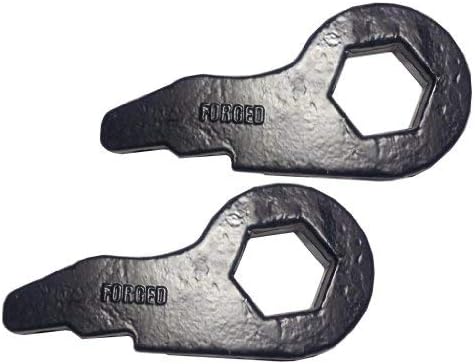
QSA 2" Forged Adjustable Torsion Leveling Lift Keys
Best 2-Inch Lift Kit
| Auto Part Position | Front |
|---|---|
| Material Type | Alloy Steel |
| Maximum Lifting Height | 2 Inches |
| Included Components | Installation hardware |
These forged adjustable torsion keys let you lift and level the front of compatible Ford trucks by about 1 to 2 inches using the existing torsion bar system. Installation is straightforward for a mechanically minded DIYer or a shop: the kit includes installation hardware and bolts to dial in the lift. The alloy steel construction and black powder coat improve durability against road corrosion while the adjustable design keeps the factory suspension geometry largely intact, preserving handling and alignment compared with larger lift kits. Practical benefits include a modest increase in ground clearance, improved front-end stance with stock tires, and no need to replace coils or struts. Limitations are the modest maximum lift and the manufacturer recommendation not to exceed about 2.5 inches, so this is not for drivers who want large off-road articulation or heavy load lifting; excessive adjustment can make the ride harsh. For a simple, street-friendly level and better appearance on a 1997–2003 F-150, these keys do the job without major suspension changes.
Best for: Buyers who want a modest, street-oriented front lift to level the truck and maintain factory handling and alignment while keeping stock suspension components.
Less Ideal for: Drivers seeking large off-road lifts, significant payload or towing clearance, or major suspension upgrades should choose a different kit designed for higher lifts and component replacement.
- Forged alloy steel construction for strength and durability
- Adjustable design lets you fine tune front ride height between roughly 1 and 3 inches
- Includes installation hardware for a complete replacement of torsion keys
- Powder coat finish resists corrosion and road wear
- Maximum practical lift is limited to about 2 to 2.5 inches, not suitable for large lifts
Verdict: The best 2-inch lift kit for buyers seeking a modest, street-friendly height gain that preserves handling, alignment, and stock component compatibility.
Rough Country 3" Lift Spindles for 1997-2003 F-150 2WD
Best Heavy-Duty Lift Kit

| Maximum Lifting Height | 3 Inches |
|---|---|
| Material Type | Alloy Steel |
| Included Components | (2) Lifted Spindles |
| Automotive Fit Type | Vehicle Specific Fit |
These Rough Country 3-inch lifted spindles replace the front spindles on 1997–2003 2WD F-150s to raise the truck three inches for improved ground clearance and a more aggressive stance. They are a 100% bolt-on design intended to keep factory steering geometry and ride quality, so installation is straightforward for a competent mechanic and does not require cutting or welding. Constructed from alloy steel and sold as a pair, the spindles let owners run larger tires and navigate rougher terrain without immediately changing other suspension parts. Practical benefits include improved approach clearance and a factory-like driving feel after installation. Limitations to consider are compatibility—they do not fit seven-lug heavy payload models—and the raised front can push tire edges beyond the fender, often necessitating rear spacers or different wheel offsets for a balanced look and fitment. Some users report noise or alignment-related issues if supporting components are worn, so check ball joints and steering parts when installing.
Best for: Truck owners who regularly need extra front clearance and want a factory-like ride while running larger tires, prioritizing rugged, bolt-on hardware over a full suspension overhaul.
Less Ideal for: Drivers who need a full heavy-duty suspension upgrade with reinforced brackets and components matched for consistent towing loads should consider a complete heavy-duty lift kit rather than front spindles alone.
- Raises front of 1997–2003 2WD F-150 by 3 inches for better ground clearance
- 100% bolt-on design allows installation without cutting or welding
- Alloy steel construction designed for strength and durability
- Maintains factory steering geometry to preserve ride quality
- Does not fit heavy duty seven-lug payload models
- Can push tires past fenders, often requiring wheel spacers or offset changes
Verdict: The best heavy-duty lift kit for users who carry heavier loads or tow regularly and need beefed-up brackets, stronger hardware, and rugged suspension components.
Choosing the Right 1997-2003 Ford F-150 Lift Kit: Key Factors to Consider
Lift Height and Intended Use
How much lift you choose directly changes what tires you can run and where you can take the truck. A 2 to 3 inch kit is commonly chosen for daily-driven F-150s that need a modest clearance increase and the ability to fit slightly larger tires without major driveline changes. Taller lifts, typically 4 inches or more, open up room for much larger tires and more extreme off-road articulation but often require additional work such as extended brake lines, dropped pitman arms, or adjustable track bars.
Think about the balance between street manners and off-road capability. If you plan to use the truck primarily on pavement with occasional dirt roads, favor a lower lift that preserves steering feel. For frequent off-road use, a taller kit that includes upgraded components to protect suspension geometry is more appropriate.
Suspension Design and Component Quality
Lift kits vary from simple spacers and blocks to full suspension packages with new control arms, coil springs, shocks, and track bars. Spacer-style lifts are often less expensive and faster to install but can transmit more road harshness and may alter alignment beyond factory limits. Full suspension lift kits that replace springs and control arms can restore proper geometry and deliver a more controlled ride.
Component quality matters for longevity and safety. Look for welded brackets with gussets, CNC-formed parts, and high-grade fasteners. Pay attention to whether the kit uses sealed or rebuildable joints in critical locations and whether the manufacturer specifies torque values and hardware grades for mounting points.
Alignment and Geometry Effects
Raising the truck changes caster, camber, toe, and track width. Without corrective parts or adjustable components, these changes can lead to accelerated tire wear, poor steering return, and wandering at highway speeds. Some kits include adjustable control arms, drop brackets, or camber/caster correction cams to bring geometry back into an acceptable range.
Plan for a post-install alignment and verify whether the kit requires additional alignment hardware to achieve correct caster and toe. Proper alignment is a small upfront investment that prevents uneven tire wear and maintains predictable steering behavior for the 1997-2003 F-150.
Driveline and Brake Considerations
Lifting the front or rear alters driveline angles and can increase stress on u-joints and CV joints. Higher lifts may necessitate driveshaft modifications, longer brake lines, or a transfer case drop if applicable. Brake line stretch is a safety concern; a kit should either include longer lines or require a kit to prevent line tension under full droop.
Consider whether your chosen lift impacts ABS sensors, steering linkages, or the parking brake routing. Some installations will reduce effective braking leverage or introduce pedal feel changes if weight distribution and brake geometry are significantly altered. Addressing these items at the selection stage avoids surprises during installation.
Tire Clearance and Fender Trim
Tire diameter and offset choices determine whether a lifted F-150 will require fender trimming, rolling, or aftermarket flare work. Confirm the maximum tire size listed for each lift height and evaluate whether wheel backspacing or offset changes are also needed. Wider tires may rub on inner suspension components or control arm boots unless the kit provides adequate clearance.
When planning tire upgrades, consider the combined effect of lift and wheel offset. Even with sufficient vertical clearance, lateral clearance can cause rubbing during full lock or articulation. Budget time for test fitting or for minor bodywork if the selected tire/wheel combination approaches the truck's body limits.
Installation Complexity and Maintenance
Some lift kits are designed for a weekend DIY install while others require a professional shop, press work, or frame modifications. Kits that retain factory mounting points and bolt-on parts tend to be easier, whereas those needing cutting, welding, or relocation of factory components increase installation time and cost. Consider whether you have access to a lift, alignment equipment, and the tools required for coil spring compression or shock installation.
Also think about long-term maintenance. Kits that introduce greaseable joints, replaceable bushings, or rebuildable shocks offer better longevity and easier servicing. Understand torque specs and recheck hardware after the first few hundred miles to maintain safety and prevent fastener loosening.
Common Lift Options for the 1997-2003 F-150
Owners of 1997-2003 F-150s typically choose between spacer-style lifts, coil spring replacement kits, and complete suspension packages. Spacer lifts raise the body or front crossmember using blocks or strut extenders and are quick to fit. Coil spring replacement or add-a-leaf designs change the spring rate and height while maintaining a more integrated suspension feel.
Full suspension packages replace multiple components and often include longer shocks and track bar brackets to preserve alignment and articulation. The right approach depends on whether you prioritize cost, ride comfort, or off-road performance.
- Spacer lifts: quicker install, lower cost, may affect ride quality.
- Coil spring lifts: better geometry control, usually better ride.
- Full kits: comprehensive solution for higher lifts and heavy off-road use.
Matching Tires and Wheels to Your Lift
Selecting the correct tire diameter and wheel offset is as important as the lift height itself. For modest lifts, many owners pair 31-inch or 32-inch tires without changing wheel offset. Larger lifts can accommodate 33-inch or 35-inch tires but may require narrower offsets or trimming.
When choosing wheels, confirm bolt pattern and backspacing to avoid interference with control arms or inner fender components. Test-fitting or mock-up measurements help prevent unwanted rubbing at full steering lock or during articulation.
- Verify maximum tire diameter listed for the specific lift height.
- Adjust wheel offset to maintain clearance from suspension components.
- Check turning radius and full droop articulation with the chosen setup.
Installation Tips and Common Pitfalls
Plan for an alignment after installation and gather any extra parts specified by the kit maker, such as extended brake lines or pitman arms. Follow torque sequences and re-torque suspension fasteners after initial break-in miles. If the kit involves coil springs, use proper spring compressors and safety procedures.
Common pitfalls include neglecting brake line length, skipping adjustable geometry components, and underestimating the need for updated track bar or sway bar links. Address these items during planning to avoid additional shop time.
- Re-torque fasteners after 100 to 200 miles of use.
- Use a professional alignment that can set caster and toe within spec.
- Confirm whether the kit requires supplemental parts before starting work.
How Lift Affects Towing and Payload
Raising the ride height changes the truck's center of gravity and can affect towing stability and tongue weight. Even modest lifts can alter hitch geometry and require re-evaluation of sway control and trailer tongue settings. If you regularly tow, choose a kit that maintains or improves load control and does not excessively soften the rear spring rate unless you plan to add helper springs or airbags.
Payload capacity may be affected if the kit changes spring rates or if aftermarket components are not rated for the same loads as factory parts. Verify the kit's specifications regarding payload and whether they recommend additional reinforcement for heavy-duty use.
- Check the kit's effect on hitch height and trailer geometry.
- Consider helper springs or airbags if you carry heavy loads frequently.
- Confirm rated capacities for replacement springs and components.
Legal and Safety Considerations
Local laws may restrict maximum vehicle lift height, bumper or headlight alignment, and tire coverage. Before committing to a tall lift, review state or local regulations that apply to ride height and lighting. Also consider the effect of a taller center of gravity on rollover risk and high-speed stability.
Safety also includes ensuring all new mounting hardware is torqued to specification and that steering and brake components have enough range of motion. If the kit changes critical sensor locations or wiring routings, verify ABS and traction control functionality after installation.
- Check local lift height and lighting regulations.
- Inspect steering and brake range of motion after installation.
- Retest ABS and traction systems if sensors were relocated.
Still looking for the perfect fit?
Select your Ford F-150 configuration to see the most relevant Lift Kits recommendations
How We Chose the Best 1997-2003 Ford F-150 Lift Kit
We prioritized lift kits that offer reliable fitment for the 1997-2003 Ford F-150 and that address the most common buyer priorities for this platform. Selection criteria included structural compatibility with the factory frame and suspension mounting points, documented fitment for tire sizes commonly used on this chassis, and design features that reduce negative impacts on steering geometry and driveline angles.Ride and handling were evaluated by assessing whether the kit preserves correct roll center and caster or provides adjustable components to reset geometry. Durability considerations included materials, fastener quality, and whether the kit retains or improves load capacity. Installation complexity and parts completeness were measured to estimate real-world installation time and whether supplementary components are required.We excluded kits that did not provide explicit fit notes for the 1997-2003 F-150 or that relied on extensive cutting or custom fabrication without clear instructions. Also excluded were one-off components lacking full suspension system thinking. The final list emphasizes mechanically sound designs, clear fitment guidance, and a balance between on-road civility and off-road capability.
Our full evaluation process is outlined in our review methodology.
FAQ
Will lifting my 1997-2003 F-150 affect alignment and tire wear?
Yes. Raising the truck changes caster, camber, and toe, which can accelerate tire wear if not corrected. Most lift installations require a post-install alignment and sometimes adjustable components to bring geometry back into acceptable ranges.
Can I install a lift kit on my F-150 at home?
It depends on the kit and your tools. Spacer and block-style lifts are often within reach for an experienced DIYer with a floor jack and spring compressor, while full suspension kits that require press work or alignment equipment may be better handled by a shop.
How does a lift kit change towing and payload performance?
Lifting alters the center of gravity and hitch height, which can change towing stability and trailer handling. Some kits also change spring rates, affecting payload capacity. If you tow frequently, choose a kit that maintains proper load control or plan to add helper springs.
Do I need longer brake lines or driveshaft modifications?
Possibly. Taller lifts increase suspension droop and driveline angles, which can require longer brake lines and, in some cases, driveshaft or transfer case adjustments. Check the kit's fit notes to determine what supplemental parts are needed.
What tire size can I run with a 3-inch lift on my F-150?
A 3-inch lift commonly accommodates modestly larger tires such as 31-33 inches, depending on wheel offset and trim. Exact fitment varies by wheel backspacing and tire width, so verify the vendor's recommended maximum tire size for the specific lift.
Are spacer-style lifts safe long term on a 1997-2003 F-150?
Spacer lifts can be safe when installed correctly and used within their intended limits, especially for lower heights. However, they may transmit more road harshness and can negatively affect geometry compared with full spring replacements, so consider intended use and long-term goals when choosing a kit.
Final Verdict
For the 1997-2003 Ford F-150, prioritize a lift that matches how you use the truck. Modest lifts preserve street manners and require fewer supplementary mods, while taller systems demand attention to geometry, driveline angles, and braking components. Always plan for a professional alignment and verify tire and wheel compatibility before finalizing a setup.Choose a solution that balances clearance needs with ride quality and safety. Focus on kits that document fitment for this chassis, include corrective components where necessary, and provide clear installation guidance to avoid surprises.
Explore More:
- Check out all Ford F-150 parts & accessories
- Explore Suspension & Steering
- Browse all Accessories
