

Note: This article contains affiliate links. If you click on these links and make a purchase, I may earn a small commission at no extra cost to you. This helps support my research and content. Read my full affiliate disclosure here.
Driving a 1997-2001 Toyota Camry with weak or warm air from the vents makes hot days uncomfortable and can signal a failing condenser. The right AC condenser restores the system's ability to reject heat, reduces the likelihood of leaks, and ensures proper refrigerant flow for consistent cooling. This guide covers the top shortlisted condensers selected for fitment, durability, and cooling performance specifically for 1997-2001 Camry models.You will find products chosen to match OE mounting and hose connections, plus guidance on what matters during installation and maintenance. Read on for the factors we prioritized and practical tips to get the most reliable cabin cooling from your replacement condenser.
Looking for other parts? See all Toyota Camry parts & accessories.
Top Picks at a Glance
| Best Quality Built to a higher standard if you want something more solid | AISIN A/C Condenser CONT-00833 for Toyota Camry 1997-1998 and Lexus ES300 1997-2001 |  |
| Best Value The sweet spot between price and what you get | Alpaspare A/C Condenser for Lexus ES300 1997–2001 / Toyota Camry 1997–2001 / Solara 1999–2003 |  |
| Best Budget The cheapest option that still gets the job done reliably | Automotive Cooling Inc A/C Condenser for 1997–2001 Toyota Camry / Lexus ES300 |  |
| Highest Rated A top-rated pick with lots of positive feedback | Denso A/C Condenser 477-0513 |  |
| Most Popular A crowd favorite that many people choose with confidence | TRQ A/C Condenser – Direct Fit for 1997–2001 Toyota Camry / 1999–2003 Solara |  |
AISIN A/C Condenser CONT-00833 for Toyota Camry 1997-1998 and Lexus ES300 1997-2001

| Manufacturer | AISIN |
|---|---|
| Manufacturer Part Number | CONT-00833 |
| Special Features | Parallel Flow Type |
| Type | Parallel Flow |
This Aisin condenser replaces the factory unit for 1997-1998 Toyota Camry and 1997-2001 Lexus ES300 applications and is built as a parallel-flow aluminum heat exchanger for efficient cooling. It is intended as a direct-fit, plug-and-play replacement with included mounting bracket and O-ring inlet and outlet fittings, which simplifies installation and minimizes time in the shop. The parallel-flow design and aluminum construction help the A/C system shed heat quickly, improving cabin cooling performance, especially after compressor or evaporator service. Practical benefits include a near-factory fit, straightforward swap-in process, and components sized to the original mounting points so refrigerant lines align without modification. Limitations are typical for aftermarket condensers: performance gains over a proper factory-quality unit are modest, and long-term durability depends on installation quality and corrosion exposure. Buyers wanting the cleanest, longest-lasting result should pair this with fresh receiver-drier and properly evacuated and charged refrigerant.
Best for: Drivers focused on restoring or improving A/C cooling performance after a failed condenser who want a straightforward, performance-conscious replacement that installs quickly.
Less Ideal for: People seeking a major performance upgrade beyond factory cooling capacity or those who prefer extensive corrosion warranties and aftermarket durability testing.
- Designed as a direct replacement for specific Camry/ES300 model years for straightforward installation
- Parallel-flow aluminum core for efficient heat transfer and quicker cabin cooling
- Includes mounting bracket and O-ring fittings to match factory connections
- Aftermarket condenser may not significantly outperform a well-maintained factory-quality unit over the long term
Verdict: Aisin's direct-fit parallel-flow condenser is a practical, performance-minded replacement to restore reliable A/C cooling in 1997-1998 Camry and 1997-2001 ES300 models.
Alpaspare A/C Condenser for Lexus ES300 1997–2001 / Toyota Camry 1997–2001 / Solara 1999–2003

| Manufacturer | Alpaspare |
|---|---|
| Model | 4931 Air Conditioning Condensers Compatible with Lexus ES300 1997-2001; Toyota Camry 1997-2001; Solara 1999-2003 |
| Manufacturer Part Number | ALPA 4931 CONDENSER |
| OEM Part Number | 884600606;4931;94514 |
This Alpaspare condenser is a like-for-like replacement intended to restore the car air conditioning cooling loop on specified late 1990s Camry and ES300 models. It uses a welded aluminum core with multi-layer fins and factory-style connections to re‑liquefy refrigerant and maintain pressure in the system. Typical use is as a direct swap during an A/C system service or condenser failure repair; the unit ships as a single condenser and does not include a receiver-drier so add-ons may be necessary during installation. The manufacturer reports 100% leak testing and corrosion-resistant construction, which should provide reliable cooling and reasonable durability when installed correctly. Expect improved A/C performance compared with a damaged original condenser, though professional installation and system evacuation/recharge are recommended. Buyers should verify the OEM part number fitment before ordering and plan for the usual labor and refrigerant handling required for A/C work.
Best for: Buyers who want a practical, cost-conscious replacement to restore factory cooling on an older Camry or ES300 and prefer a straightforward part-for-part swap.
Less Ideal for: Anyone seeking a complete A/C service kit or integrated components should look for a condenser package that includes a receiver-drier and installation hardware; this product is just the condenser.
- Direct-fit replacement listed specifically for 1997–2001 Toyota Camry and related models
- Welded aluminum core with multi-layer fins for efficient heat transfer
- 100% leak-tested unit aimed at preventing refrigerant loss
- Corrosion-resistant construction intended for longer service life
- Does not include a built-in receiver-drier or additional installation hardware
Verdict: A straightforward, manufacturer-tested condenser option for restoring reliable A/C cooling on 1997–2001 Camry and compatible models.
Automotive Cooling Inc A/C Condenser for 1997–2001 Toyota Camry / Lexus ES300

| Manufacturer | Automotive Cooling Inc |
|---|---|
| Manufacturer Part Number | ACC4931 |
| OEM Part Number | 8846006050, 8846006061, KLI4931, TO3030142 |
| Fitment | 1997–2001 Toyota Camry, Lexus ES300 |
This Automotive Cooling Inc condenser is an aftermarket direct-fit replacement intended for 1997–2001 Toyota Camry and Lexus ES300 applications. It installs in place of the factory condenser to restore air conditioning performance after a leak or collision damage. The unit is built to factory-style shape and mounting locations, and the listing notes that each part is inspected and pressure tested before shipping. In practice this condenser provides a cost-effective way to get the A/C operational again without paying for a dealer part. Buyers should expect a basic, functional replacement rather than premium extras; some reviews mention minimal packaging and missing small hardware like mounting nuts or O-rings, so plan to reuse or source those items separately. For routine repairs this condenser is a practical budget option that gets the system back to cooling while matching the original fit and hose connections for straightforward installation by a DIYer or technician.
Best for: Buyers looking to repair a nonfunctional A/C on a 1997–2001 Camry or ES300 who prioritize low cost and practical, serviceable parts over dealer-brand replacements.
Less Ideal for: Drivers seeking a fully OEM-branded part package with included installation hardware or those wanting upgraded performance or premium finishes.
- Direct-fit design matching factory mounting points for straightforward installation
- Pressure-tested and quality inspected before shipping to reduce risk of immediate leaks
- Lower-cost alternative to dealer replacement for budget-focused repairs
- Small hardware such as mounting nuts or O-rings may not be included with the condenser
Verdict: A no-frills, budget-friendly condenser that restores A/C function with factory-style fit for 1997–2001 Camry and ES300 vehicles.
Denso A/C Condenser 477-0513

| Item Shape | Rectangular |
|---|---|
| Mounting Type | Wall Mount |
| Material Type | Alloy Steel, Metal, Plastic |
| Item Type Name | Condenser A/C |
This Denso condenser is a direct replacement-style unit intended to restore an air conditioning system to factory-level cooling. It installs in place of the original condenser and is typically used when the old condenser has failed, leaked, or been damaged. The unit is built from alloy steel, metal, and plastic and is shaped for bolt-in mounting to the vehicle’s condenser location. As a Denso product, it is manufactured to the same fit-and-function standards used for OEM replacement parts, which helps simplify installation and reduces the chance of fitment issues. Practical benefits include reliable heat exchange and long-term durability compared with low-cost aftermarket alternatives. Limitations are that this listing provides the condenser only and does not include additional hardware or refrigerant, so professional installation and system evacuation and recharge are required to complete the repair. Also confirm exact vehicle-year fitment before purchasing to ensure compatibility with the 1997–2001 Camry cooling system.
Best for: Buyers who prioritize long-term reliability and prefer replacement parts built to factory-quality standards for repairing a 1997–2001 Camry air conditioning system.
Less Ideal for: If you need a full kit with fittings, seals, or refrigerant included or plan to do a DIY recharge without professional service, consider a bundled kit or professional service instead.
- Manufactured to factory-quality standards for reliable fit and performance
- Constructed from alloy steel and metal for corrosion resistance and strength
- Direct replacement design simplifies installation and reduces modification needs
- Well-regarded brand reputation for consistent durability
- Does not include installation hardware, refrigerant, or fittings needed to complete a system service
Verdict: Choose this Denso condenser when you want a factory-quality replacement that restores reliable A/C cooling for a 1997–2001 Camry.
TRQ A/C Condenser – Direct Fit for 1997–2001 Toyota Camry / 1999–2003 Solara
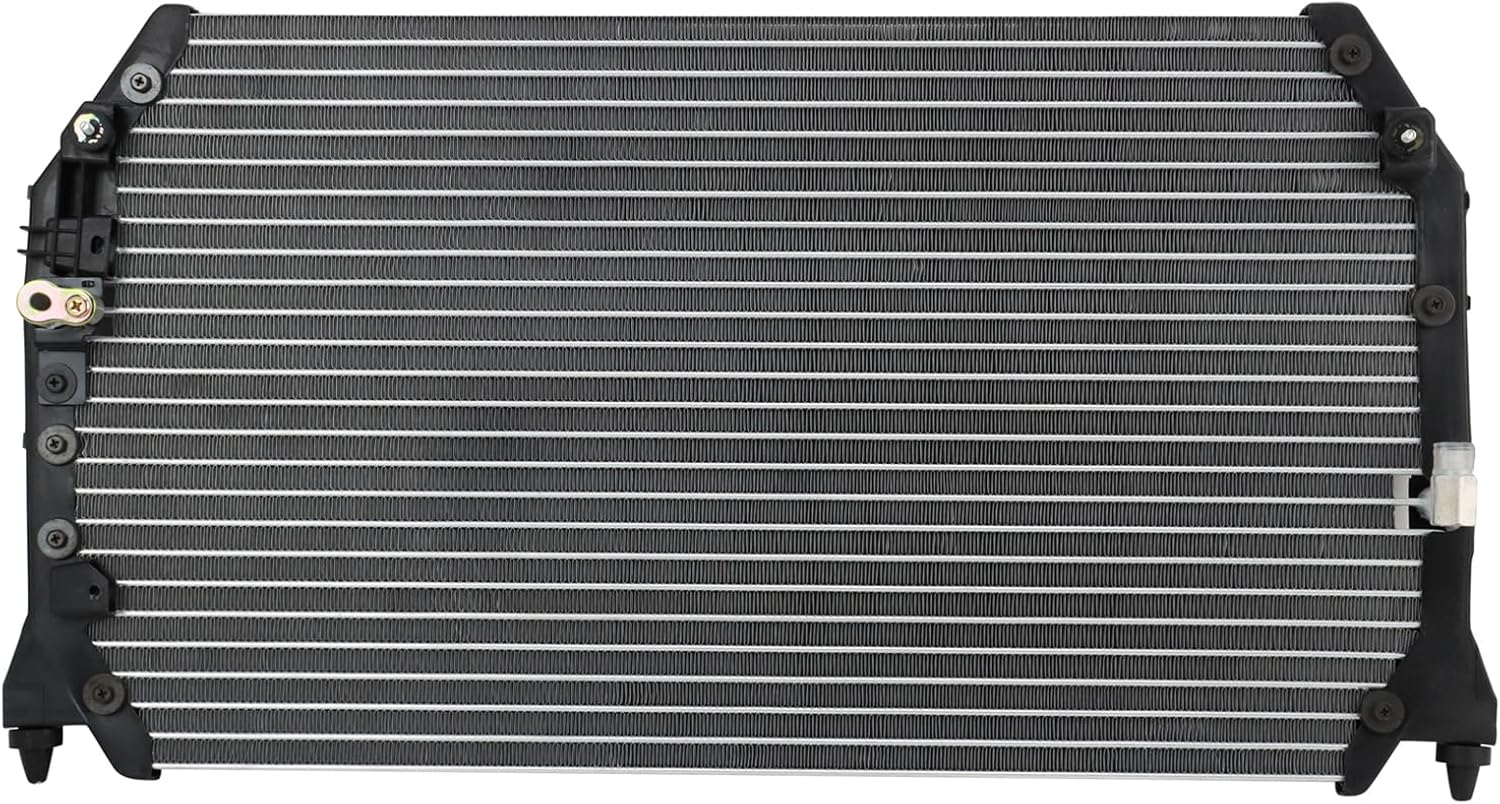
| Core Material | Aluminum |
|---|---|
| Core Thickness | 0.88 in |
| Inlet Fitting Type | Block Connection |
| Outlet Fitting Type | M22x1.5 Male O Ring |
| Condenser Core Type | Parallel Flow |
This TRQ A/C condenser is a direct replacement intended for 1997–2001 Toyota Camry and 1999–2003 Solara applications and installs like a factory-style unit. It uses an aluminum parallel-flow core with a block inlet and an M22x1.5 male O-ring outlet, which translates to good cooling surface area and straightforward hose and line connections during installation. Typical use is as a like-for-like repair when the original condenser is leaking or clogged after compressor failure. Buyers will appreciate the preassembled, machined exterior and advertised direct-fit design that reduces modification or fabrication on most compatible Camry builds. Practical benefits include denser tubing for improved cooling and compatibility notes provided for easy verification. Limitations are packaging sensitivity and occasional defects reported by some buyers, so inspect on arrival and be prepared for return or replacement if damaged. Also plan for professional charging and leak testing after installation to ensure system reliability.
Best for: Buyers who prioritize proven fit and real-world user feedback and want a direct replacement that simplifies repair without custom work.
Less Ideal for: People who need parts with explicitly stated warranty coverage or who prefer sourcing fragile core components locally to avoid replacement hassle.
- Direct-fit replacement designed for specified Camry and Solara year ranges, minimizing modifications
- Aluminum parallel-flow core offers increased cooling surface area compared with simpler designs
- Preassembled machined exterior and factory-style fittings for straightforward line connections
- Clear fitment and DIY resources from the brand to help with installation
- Some customers reported arrival damage or early leaks, indicating variable quality control
- No warranty details included in the product listing
Verdict: A near-direct factory-style condenser that delivers improved cooling surface area and straightforward installation for compatible Camry and Solara models.
Choosing the Right 1997-2001 Toyota Camry AC Condenser: Key Factors to Consider
Fitment and Mounting Geometry
Accurate fitment is the single most important factor for a 1997-2001 Toyota Camry AC condenser. If mounting tabs, bracket locations, or port orientations do not match the vehicle, installation will require modification that can compromise alignment and performance. Proper mounting ensures the condenser sits at the correct angle relative to the radiator and fan shroud, which affects air path and heat rejection.
Inspecting OE-equivalent mounting geometry reduces installation time and prevents rubbing or stress on refrigerant lines. For used or replacement parts, check that the inlet and outlet positions align with the Camry's existing hoses so you avoid bending lines or adding adapters that can introduce leak points.
Cooling Capacity and Fin Density
Cooling capacity determines how effectively the condenser rejects heat from the refrigerant to outside air. For the 1997-2001 Camry, the condenser must handle typical urban and highway heat loads while maintaining efficient refrigerant condensation. Higher fin density can improve heat transfer but may be more prone to clogging from road debris.
Choose a condenser with balanced fin density and tube design that suits the Camry's typical cooling airflow. A core design that promotes even airflow across the face helps maintain consistent cabin temperature. Overly dense cores can restrict airflow if your vehicle regularly encounters dusty or debris-prone conditions.
Materials and Corrosion Protection
Condenser longevity depends heavily on the materials used and any corrosion protection applied. Aluminum is the standard due to its thermal conductivity and weight, but the quality of the brazing and any protective coatings will determine resistance to road salt, moisture, and grit that cause leaks over time.
Look for condensers with quality brazed seams and a protective finish or coating on the fins and header plates. In regions with heavy road salt or coastal exposure, enhanced corrosion resistance can significantly extend service life and reduce the likelihood of small leaks that require repair.
Leak Testing and Manufacturing Quality
A pressure-tested condenser reduces the chance of premature failure. Leak testing during manufacturing identifies weak joints or pinhole flaws before installation. For the 1997-2001 Camry, a condenser that arrives with documented pressure testing or visible evidence of quality control offers added confidence.
Manufacturing quality also affects brazing quality, seam strength, and the flatness of mounting surfaces. Poorly manufactured units may not seal correctly to the receiver-drier or expansion device, leading to performance loss or refrigerant leakage. Confirm the unit meets standard pressure and performance checks.
Compatibility With Receiver-Drier And System Components
The condenser is part of the larger AC loop, and compatibility with the receiver-drier, expansion device, and hoses is essential. For Camry 1997-2001 systems, ensure the condenser allows connection to the existing receiver-drier or that a compatible replacement receiver is included or recommended. Mismatched connections can trap moisture or cause improper flow.
Consider whether the condenser requires evacuation and replacement of the receiver-drier or if the existing one can remain. A condenser that pairs cleanly with the vehicle's service ports and retains proper internal routing will reduce the risk of contamination and help ensure long-term system reliability.
Serviceability and Installation Ease
Serviceability influences how quickly you can restore cooling and the likelihood of installation errors. For the 1997-2001 Camry, look for condensers designed to fit without cutting or welding, with clear port access for hose clamps or quick-disconnect fittings. Units that allow reuse of factory brackets and hardware simplify alignment and reduce labor time.
Ease of installation also includes whether the condenser requires additional steps like reaming ports, adding adapters, or special tools. A design that minimizes these needs lowers the chance of improper sealing and helps maintain refrigerant circuit integrity after replacement.
Signs You Need a Replacement Condenser
Recognizing condenser issues early prevents more expensive repairs. Common symptoms on a 1997-2001 Toyota Camry include reduced cooling at idle, noticeable drops in performance under load, and warm air from the vents even with a full charge of refrigerant. Physical signs such as bent fins, visible oil residue, or corrosion on the condenser face often indicate a leak.
Intermittent cooling can also point to partial blockage within the condenser core, which restricts refrigerant flow and reduces heat rejection. Catching these warning signs early allows you to act before the compressor or other components are damaged.
- Warm or insufficient cooling at idle or low speed
- Visible oil residue or wet areas on condenser body
- Unusual fan behavior or higher cabin temperatures
- Physical damage to fins or core from debris
Pre-Installation Checklist for Camry 1997-2001
Before removing the old condenser, gather the necessary tools and parts. Confirm you have the correct replacement that matches Camry mounting points and port orientations. Prepare to evacuate the refrigerant following legal and safety procedures and have a qualified shop or certified technician perform recovery if you cannot do it yourself.
Plan for replacing the receiver-drier or accumulator when changing the condenser, as moisture and contaminants often migrate during a failure. Inspect the A/C lines and hoses for wear so you can replace any corroded fittings or cracked hoses during the job.
- Verify condensers match mounting holes and port locations
- Ensure recovery and evacuation equipment is available
- Have a replacement receiver-drier or accumulator on hand
- Inspect and plan to replace worn hose fittings
Common Causes Of Condenser Failure
Condenser failure in the Camry platform commonly results from physical impact, corrosion, or internal clogging. Road debris can bend fins and puncture the core, while long-term exposure to moisture or salt accelerates corrosion at brazed joints. Internal contaminants from a failing compressor or system breakdown can clog tubes, reducing flow and causing pressure imbalances.
Inadequate maintenance, such as skipping flushes after a compressor failure, increases the risk of debris lodging in the condenser. Regular inspection and prompt attention to cooling performance changes help prevent total failure and the need for system-wide component replacements.
- Impact from road debris or minor accidents
- Corrosion from moisture and road salt
- Internal contamination from compressor failure
- Clogging due to lack of system flushing
Basic Steps For Leak Detection And Troubleshooting
Start with a visual inspection for wet spots, oil residue, or damaged fins. For more confident diagnosis, pressure testing the system with dry nitrogen helps locate leaks without introducing refrigerant. A dye or electronic leak detector can confirm small pinhole leaks on the condenser surface.
If a leak is found, evaluate whether repair is viable or if full replacement is safer. Small punctures can sometimes be temporarily patched, but given the age of many 1997-2001 Camry condensers, full replacement often provides the most reliable long-term outcome.
- Visual inspection for oil stains and damaged fins
- Pressure test with dry nitrogen to locate leaks
- Use UV dye or electronic detector for small leaks
- Decide between temporary repair and full replacement
Maintaining Your New Condenser After Installation
After installing a replacement condenser, maintain it by keeping the front end free of large debris and washing off road salt when possible. Periodic visual checks can catch early corrosion or impact damage before a leak develops. Ensure the cooling fan and shrouds are correctly reinstalled to maintain designed airflow across the condenser core.
If the vehicle operates in dusty or salty environments, consider more frequent inspections and gentle fin cleaning to preserve airflow and heat transfer. Proper maintenance helps maximize the service life of the new condenser and the entire A/C system.
- Rinse road salt and debris from the condenser face
- Inspect fins and core periodically for damage
- Confirm fan shroud and airflow path are intact
- Schedule system checks after any compressor event
Still looking for the perfect fit?
Select your Toyota Camry configuration to see the most relevant AC Condensers recommendations
How We Chose the Best 1997-2001 Toyota Camry AC Condenser
We shortlisted condensers based on a set of concrete, Camry-specific criteria to ensure reliable operation and straightforward installation for 1997-2001 models. Primary filters included OE-equivalent fitment, which means matching mounting points, inlet and outlet port locations, and correct refrigerant line fittings for this vehicle range. Cooling capacity and fin density were evaluated to ensure the condenser can reject heat effectively under typical Camry operating conditions and highway airflow.Durability and corrosion resistance were assessed by examining materials and protective coatings that extend life in varied climates. Leak resistance and manufacturing quality were considered through inspection of brazed joints, receiver/drier compatibility, and pressure-testing standards. Ease of installation was factored in, including whether the condenser allows reuse of factory brackets and simple hose connections to reduce install time.We excluded units that required major bracket modification, nonstandard refrigerant fittings, or extensive fabrication. Also excluded were parts lacking pressure testing documentation or those with known fitment discrepancies on Camry 1997-2001 chassis. Our final list prioritizes condensers that balance reliable cooling performance, correct fitment, and durable construction for straightforward replacement.
Our full evaluation process is outlined in our review methodology.
FAQ
How long should a replacement condenser last on a 1997-2001 Camry?
Lifespan varies by climate and driving conditions, but a well-made condenser with proper corrosion protection can last many years. Regular inspections and avoiding exposure to heavy road salt extend service life.
Can I repair a small condenser leak instead of replacing it?
Small punctures can sometimes be temporarily repaired, but repairs may not be durable. For older vehicles like a 1997-2001 Camry, full replacement often offers better long-term reliability, especially if corrosion is present.
Do I need to replace the receiver-drier when changing the condenser?
It is usually recommended to replace or service the receiver-drier when replacing the condenser. Moisture and contaminants collect in the drier, and pairing a new condenser with an old drier can compromise system longevity.
What maintenance should I do after installing a new condenser?
Keep the condenser face free of debris, rinse off road salt, and periodically inspect fins and connections. Also verify that the cooling fan and shroud are correctly installed to maintain airflow.
How can I detect a slow leak in the condenser?
Start with a visual check for oily residue or wet areas. For more reliable detection, pressure-test the system with dry nitrogen and use UV dye or an electronic detector to locate small leaks.
Final Verdict
When replacing the AC condenser on a 1997-2001 Toyota Camry, prioritize correct fitment, robust construction, and verified leak resistance. Matching mounting geometry and port locations reduces installation complications and lowers the risk of future leaks. Balance core design for effective heat rejection with durability suited to your driving environment.Choose a replacement that aligns with the tradeoffs you can accept: ease of installation and OE-style fitment versus higher fin density for marginal gains in cooling. Following the factors outlined here will help you select a condenser that restores reliable cabin comfort and minimizes return visits for repairs.
Explore More:
- Check out all Toyota Camry parts & accessories
- Explore AC Condensers Maintenance & Repair Guides
- Explore HVAC
- Browse all Auto Parts
