

Note: This article contains affiliate links. If you click on these links and make a purchase, I may earn a small commission at no extra cost to you. This helps support my research and content. Read my full affiliate disclosure here.
If you own a 1994-2001 Ram 1500 and are seeing rough idle, reduced fuel economy, or a persistent check engine light, the oxygen sensor is a likely culprit. Selecting the right replacement matters because the sensor directly affects fuel trims, emissions output, and how smoothly the engine runs. This guide shortlists seven top oxygen sensors chosen specifically for the 1994–2001 Ram 1500 platform and explains the decision factors we used.Ahead of the product list, we outline the most important traits—fitment, response time, and durability—so you can match a sensor to your driving needs and diagnostic situation.
Looking for other parts? See all Ram 1500 parts & accessories.
Top Picks at a Glance
| Best Overall The best all-around choice for most situations | MAXFAVOR Oxygen Sensor Replacement Kit (234-4077 / 234-4079) — Upstream & Downstream Pair |  |
| Best Quality Built to a higher standard if you want something more solid | Walker 250-24942 Heated 4-Wire Oxygen Sensor |  |
| Best Value The sweet spot between price and what you get | MAXFAVOR Upstream/Downstream Oxygen Sensor MF-B2OS075 |  |
| Best Budget The cheapest option that still gets the job done reliably | Carock 234-4077 Heated O2 Oxygen Sensor (Upstream/Downstream) |  |
| Highest Rated A top-rated pick with lots of positive feedback | TAMKKEN Downstream Oxygen O2 Sensor 234-4079 (2344079) |  |
| Most Popular A crowd favorite that many people choose with confidence | Bosch 15733 Universal 4-Wire Oxygen Sensor with Installation Kit |  |
| Best Seller A high-volume bestseller chosen again and again | higherbro 2-Pack Oxygen Sensors (Upstream & Downstream) for 1996–2000 Dodge Ram 1500/2500/3500 |  |
MAXFAVOR Oxygen Sensor Replacement Kit (234-4077 / 234-4079) — Upstream & Downstream Pair

| Model | 234-4077 / 234-4079 |
|---|---|
| Part Number | MF-B2OS254 |
| Maximum Supply Voltage | 12 Volts |
| Upper Temperature Rating | 800 Degrees Celsius |
| Material Type | Stainless Steel |
This Maxfavor kit supplies one upstream and one downstream oxygen sensor intended as direct replacements for specified late 1990s Dodge and Ram applications. The sensors use a stainless steel housing, PTFE filter and protective layers intended to improve durability and resist contamination, and are built to the supplier's interpretation of factory fit. Installation is a straightforward swap of the old sensors using a socket and wiring plug; the package includes upstream and downstream part numbers matched to the listed vehicles. In practice the sensors will restore closed-loop fuel control and can clear codes caused by failed units, improving idle stability and fuel economy when they match your vehicle harness and length requirements. Buyers should note harness lead length varies by application and several reviewers reported the upstream harness being too short for some Ram 1500 installations, so confirm connector type and cable length before install. As an aftermarket alternative these units offer a budget-conscious option but may require minor wiring or an extended lead in certain setups.
Best for: Buyers looking for an affordable, ready-to-install pair to restore proper oxygen sensing and clear emission-related codes on late 1990s Dodge and Ram vehicles prioritize value and straightforward replacement.
Less Ideal for: People who need exact factory-spec sensor harness lengths or guaranteed long-term OEM-level durability should consider higher-end branded replacements or sourcing the specific factory part.
- Includes both upstream and downstream sensors for a complete replacement job
- Stainless steel housing with PTFE filter and protective layers for corrosion and contamination resistance
- Built to match factory-style fitment and connector types listed for late 1990s Dodge/Ram models
- Claims ±1% measurement accuracy and high temperature rating up to 800°C
- Upstream sensor lead length may be shorter than factory harness on some Ram 1500 applications
- Aftermarket calibration and long-term durability can vary compared with factory-quality sensors
Verdict: A budget-friendly upstream and downstream sensor pair that restores emissions control for late 1990s Dodge and Ram vehicles when connector type and lead length match the application.
Walker 250-24942 Heated 4-Wire Oxygen Sensor

| Measurement Accuracy | ±1.5% |
|---|---|
| Mounting Type | Flange Mount |
| Output Type | Electrical Signal |
| Material Type | Ceramic, Stainless Steel |
The Walker 250-24942 is a heated 4-wire, direct-fit oxygen sensor designed to replace a factory unit and restore accurate air-fuel feedback to the engine control system. It installs where the original sensor sits in the exhaust and uses a ceramic sensing element with platinum coating and shields to resist contamination. Typical use is as a Bosch-style upstream or downstream replacement on older trucks; the heater speeds warm-up so the sensor reaches operating temperature faster, which helps the ECU correct fuel trim sooner after start. Walker emphasizes OEM-quality fit, laser-welded construction, rolled threads, and corrosion resistance, which makes the part straightforward for DIY swaps or shop installs. In practice this sensor can return idle smoothness, better fuel management, and can clear MIL faults when the original unit is failing. Limitations include needing the correct Ram-specific part number for exact fit and thread position and occasional reports of a unit that did not work on one vehicle, so confirm connector, thread size, and harness compatibility before installation.
Best for: Ram 1500 owners focused on restoring engine performance and steady fuel control who want a factory-style replacement that brings oxygen readings back to specification.
Less Ideal for: Buyers looking for a universal sensor or a custom wideband tuning sensor should consider specialty wideband units instead.
- Heated 4-wire design for faster warm-up and reliable ECU feedback
- Engineered for direct-fit installation with factory-style connectors and rolled threads
- Platinum-coated ceramic element and protective shields for contamination resistance
- Laser-welded stainless steel construction for corrosion resistance and durability
- Must match the exact Ram fitment and connector—not universal across models
Verdict: Choose this Walker heated 4-wire direct-fit sensor when you need a factory-style replacement that restores correct air-fuel feedback and helps recover performance on a 1994–2001 Ram 1500.
MAXFAVOR Upstream/Downstream Oxygen Sensor MF-B2OS075

| Maximum Supply Voltage | 14 Volts |
|---|---|
| Measurement Accuracy | ±1% |
| Mounting Type | Flange Mount |
| Upper Temperature Rating | 1400 Degrees Fahrenheit |
| Material Type | Stainless Steel |
This MAXFAVOR oxygen sensor is a factory-style replacement intended for upstream and downstream positions on select 1996–2002 Viper and 1997–1998 Dodge Ram and 2000 Jeep Grand Cherokee California models. It uses a stainless steel housing, multilayer protection and a PTFE filter to resist contamination and high temperatures up to 1400°F. Installation follows the standard threaded-sensor procedure and the part interchange numbers (234-4076/234-4079) make it straightforward to confirm fitment. In use it restores O2 voltage response and can clear diagnostic codes caused by a failing sensor, improving fuel trim and catalytic converter longevity. Be aware that several customer reports show connector shape and fitment vary between model years, so double-check the wiring plug and physical appearance against your existing sensor before ordering. The sensor offers a balance of durable construction and budget pricing but requires careful fitment verification to avoid returns or wiring adapter needs.
Best for: Buyers looking to replace a failing oxygen sensor on the specified Dodge Ram, Viper, or Jeep models who prioritize restoring drivability and clearing OBD-II codes with a budget-conscious factory-style part.
Less Ideal for: If you want a guaranteed direct plug-and-play sensor across multiple model years without comparing connectors, look for brand-specific OEM replacements or sensors sold with vehicle-specific fit verification.
- Factory-style construction with stainless steel housing for corrosion resistance
- High upper temperature rating and protective layers for durability in exhaust environments
- Includes part interchange numbers for easier fitment checks
- Push-pull output and flange mount match common sensor installations
- Fitment and connector shape vary across years so it may not plug in without an adapter or modification
Verdict: A cost-conscious, factory-style replacement that restores O2 sensing and engine operation for qualifying 1994–2001 Ram 1500 era vehicles when you confirm the connector matches before ordering.
Carock 234-4077 Heated O2 Oxygen Sensor (Upstream/Downstream)
| Mounting Type | Flange Mount |
|---|---|
| Output Type | electrical signal |
| Upper Temperature Rating | 1000 Degrees Celsius |
| Material Type | Ceramic, Metal |
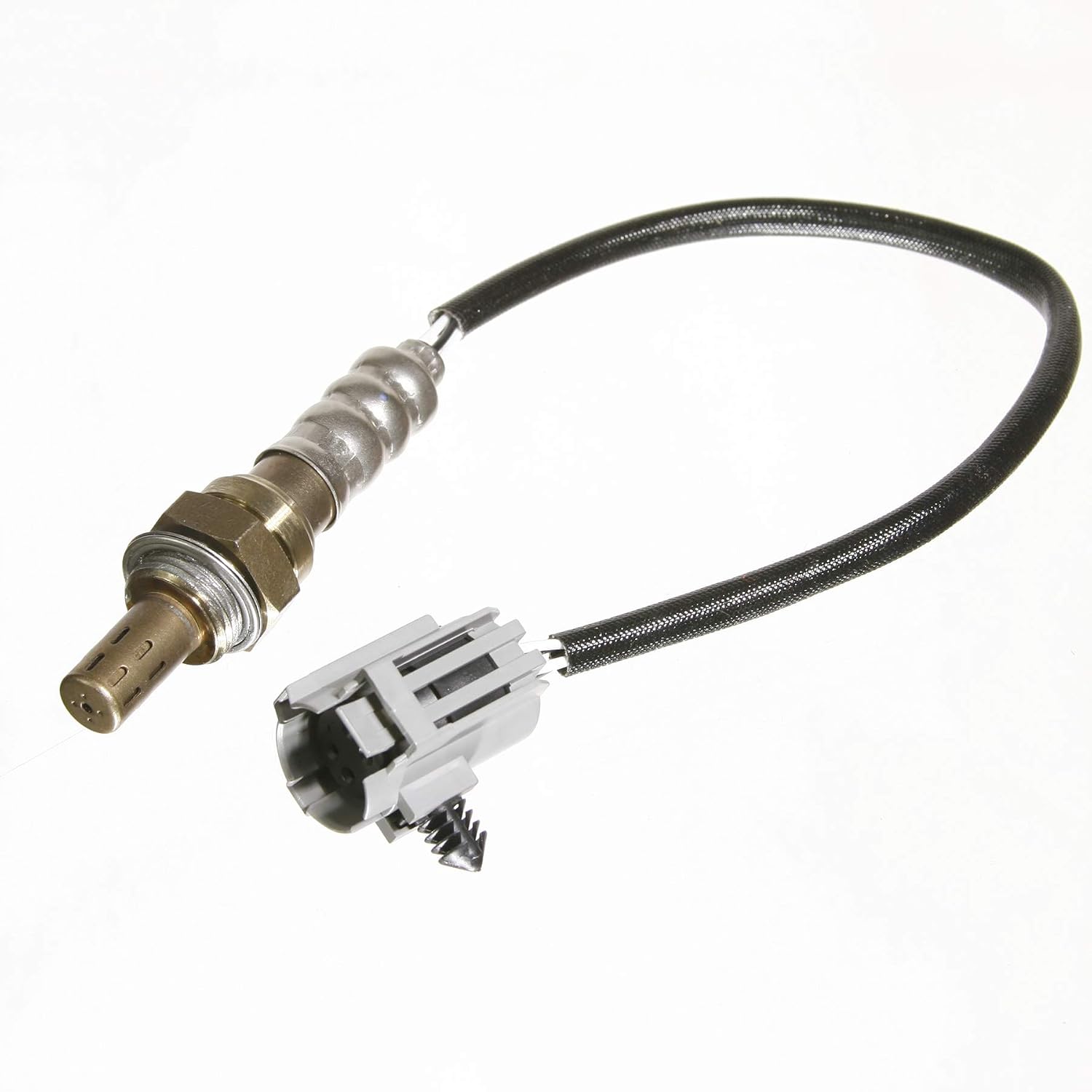
This Carock 234-4077 is a heated oxygen sensor designed as a direct replacement for several Chrysler and Dodge models from the mid 1990s to early 2000s. It supplies the vehicle ECU with the exhaust oxygen signal via a four-wire heated design and comes with an original-style connector to simplify installation without cutting or splicing. Typical use is swapping a failing upstream or downstream sensor to restore proper fuel trim and emissions performance; the heated element helps the sensor reach operating temperature quickly for reliable idle-to-driving transitions. Notable features include a flange-mount design, ceramic sensing element, and a 12.99-inch pigtail with a female connector that matches factory plugs. Practical benefits include straightforward fitment on listed vehicles, potential improvement in fuel economy and drivability compared with a degraded sensor, and a one-year assurance. Limitations are that fitment is vehicle-specific so buyers must confirm connector and OE number before purchase, and long-term durability and exact calibration compared with factory parts can vary with aftermarket sensors.
Best for: Buyers looking for an inexpensive, direct-replacement oxygen sensor to restore proper fuel trim and emissions on older Chrysler and Dodge vehicles from the 1990s who prioritize easy plug-and-play installation over OEM-brand fidelity.
Less Ideal for: Drivers seeking a factory-branded part or guaranteed long-term lifetime performance for high-mileage or heavily modified engines should consider OEM or higher-end aftermarket options.
- Heated four-wire design for faster warm-up and stable readings at idle
- Original-style female connector and direct-replacement fit to avoid splicing
- Flange-mount ceramic sensor construction matching common factory layouts
- Includes one upstream/downstream sensor so either position can be replaced
- Aftermarket calibration and long-term durability may differ from factory sensor
Verdict: A budget-friendly, heated direct-fit oxygen sensor that gets vehicles back to proper fuel control with simple plug-in installation.
TAMKKEN Downstream Oxygen O2 Sensor 234-4079 (2344079)

| Brand | TAMKKEN |
|---|---|
| Style | Oxygen Sensor |
| Mounting Type | Thread Mount |
| Response Time | 5.6 seconds |
| Measurement Accuracy | +/-0.5% |
This TAMKKEN downstream O2 sensor is a direct-fit replacement for the 234-4079 post‑catalytic sensor used on many late 1990s Ram, Dakota and Jeep models. It is a 4‑wire heated design, so it reaches operating temperature quickly for stable downstream readings and helps clear common codes like P0420 and P0141. The unit is built with stainless steel and a zirconia sensing element and is factory‑tested for heat and vibration, which is useful for truck duty cycles and high‑mileage engines. Installation is plug‑and‑play when the original connector matches, making it an easy DIY repair to restore emissions monitoring and improve fuel‑trim control. A few buyers report fitment misses, so double‑check connector type and part number before ordering. While the sensor aims to match factory calibration and speed up code resolution, long‑term longevity will depend on exhaust conditions and proper installation torque and anti‑seize practices.
Best for: Buyers who prioritize a reliable, factory‑style downstream O2 sensor to resolve emissions codes and restore proper fuel‑trim behavior on late 1990s Ram, Dodge and Jeep platforms and who prefer a tested, replaceable component they can install themselves.
Less Ideal for: Not the best choice for vehicles outside the listed applications or for users who cannot confirm connector compatibility and prefer a dealer‑verified OEM part.
- Heated 4-wire design brings the sensor to operating temperature faster for reliable downstream readings
- Marketed as a direct replacement for 234-4079 with factory calibration to clear common emissions codes
- Constructed with corrosion‑resistant stainless steel and zirconia sensing element for durability in high‑heat exhaust
- Factory testing for heat and vibration reduces early failures in truck and high‑mileage use
- Some customers reported incorrect fitment, so connector and part match must be confirmed before purchase
Verdict: A tested 4‑wire downstream replacement that restores emissions monitoring and clears common catalyst codes for late 1990s Ram and Jeep applications when the connector matches.
Bosch 15733 Universal 4-Wire Oxygen Sensor with Installation Kit

| Mounting Type | Flange Mount |
|---|---|
| Measurement Accuracy | |
| Specific Uses For Product | Oxygen Sensor |
| Output Type | physical |
The Bosch 15733 is a universal 4-wire oxygen sensor intended for situations where the factory harness or connector is damaged and cannot be reused. It includes a two-foot lead and an OE-style smart link connector so you can splice into the vehicle wiring or replace a damaged section without hunting down a direct-fit part. The stainless steel body and built-in heater mean the sensor reaches operating temperature quickly and is built to resist exhaust corrosion. In practice this is used to clear O2-related check engine codes, restore closed-loop fuel control, and avoid premature catalytic converter damage. Installation typically requires basic wiring skills and common tools; the included splice kit and pre-coated threads simplify the job but you may need to remove the old sensor or access tight spaces on some Ram 1500s. Because it is universal rather than vehicle-specific, expect extra time for wire mapping and secure sealing at the splice points, and confirm correct upstream versus downstream location before ordering.
Best for: Buyers who prioritize proven brand reliability and want a practical repair option when a Ram 1500's original oxygen sensor connector or harness is damaged, and who are comfortable doing or supervising a splice-style installation.
Less Ideal for: People looking for a direct-fit, no-wiring replacement or those who prefer to avoid any electrical splicing should choose a vehicle-specific sensor instead.
- Includes two feet of sensor wire and an OE-style smart link connector for splicing when the factory harness is damaged
- Stainless steel, submersible body resists exhaust corrosion for longer service life
- Fast-acting heater helps the sensor reach operating temperature quickly for reliable closed-loop control
- Factory-tested to Bosch quality standards for consistent performance
- Universal design requires wiring/splicing and basic electrical skill rather than direct plug-and-play fitment
- May be difficult to access or splice in cramped locations on some Ram 1500 installations
Verdict: If your Ram 1500 has a damaged connector or harness and you want a reliable, brand-tested sensor you can splice in, this Bosch universal kit is a practical, durable fix.
higherbro 2-Pack Oxygen Sensors (Upstream & Downstream) for 1996–2000 Dodge Ram 1500/2500/3500

| Mounting Type | Flange Mount |
|---|---|
| Output Type | Push-Pull |
| Material Type | Copper, Stainless Steel |
| Unit Count | 2.0 Count |
This two-piece oxygen sensor kit supplies one upstream and one downstream sensor intended for late 1990s Dodge Ram 1500, 2500, and 3500 trucks with the listed engines. Each sensor is flange-mounted with push-pull output and built from copper and stainless steel, so installation is the same as a factory-style replacement and the pair covers both pre- and post-catalytic monitoring. Typical use is direct replacement during routine maintenance or when a check engine code indicates a failing O2 sensor; the package includes both sensors so you can replace both at once to keep readings consistent. Buyers report generally good fit and packaging, though some users have found wiring length or part numbering issues that required splicing or verification before install. The product comes with a one-year quality guarantee from the seller, but expect to verify fitment against your truck year, engine, and connector type before ordering to avoid wiring or compatibility work.
Best for: Buyers who prefer a conservative maintenance approach and want a matched sensor pair to restore both pre- and post-catalyst oxygen monitoring on a late 1990s Dodge Ram without sourcing separate parts.
Less Ideal for: People who expect a direct, guaranteed plug-and-play swap without checking connector type or wire length, or those who prefer OEM-branded replacements from a dealership.
- Includes both upstream and downstream sensors so both monitoring points are replaced at once
- Flange-mount design and push-pull output match common factory-style installations
- Constructed with stainless steel and copper for corrosion resistance during exhaust exposure
- Sold as a matched pair for coordinated sensor readings after catalytic service
- Some buyers received two identical sensor part numbers instead of distinct upstream/downstream units
- Rear sensor wiring length may be short and could require splicing or extension
- Fitment requires careful verification against engine and connector type before installation
Verdict: A matched upstream and downstream replacement pair that aims to restore oxygen sensing on late 1990s Ram trucks while keeping installation close to factory-style procedures.
Choosing the Right 1994-2001 Ram 1500 Oxygen Sensor: Key Factors to Consider
Correct Fitment and Connector Type
Getting the exact fitment is essential for the 1994–2001 Ram 1500 because thread pitch, hex size, and connector style must match the factory harness to avoid splicing or adapters. An incorrect sensor can cause poor contact, electrical resistance, or even physical interference with nearby exhaust components.
Make sure the sensor you choose is specified for the Ram 1500 years in your scope so it matches the original bank and sensor location. Many Ram 1500 engines from this era use specific upstream and downstream positions that are not interchangeable, so confirm fitment as your first step.
Upstream Versus Downstream Function
Upstream (pre-catalytic converter) sensors monitor the oxygen content in the exhaust for closed-loop fuel control and typically need faster response times. Downstream sensors monitor catalyst efficiency and can be less demanding in response speed but still require accuracy and durability.
Choosing a sensor rated for the intended bank and position affects engine management and emissions diagnostics. Installing an upstream-style sensor downstream or vice versa can lead to incorrect fuel trim behavior or misleading diagnostic data.
Heated Element and Warm-Up Performance
Heated oxygen sensors reach operating temperature faster, allowing the engine to enter closed-loop control sooner after a cold start. For older Ram 1500 trucks with longer warm-up times, a reliable heater circuit reduces the time the engine runs open loop, improving emissions and fuel economy.
Check whether the sensor has a heater and that the wiring and resistance match factory specifications. A failed heater often triggers a diagnostic code and causes prolonged rich or lean running conditions.
Response Time and Sensor Accuracy
Sensor response time determines how quickly the engine computer can correct air-fuel ratio. Faster sensors help maintain tighter fuel trims during throttle changes and transient driving. For trucks used in mixed city and highway driving, quicker response mitigates hesitation and roughness during acceleration.
Accuracy across a range of exhaust oxygen levels matters too. Sensors that drift or show sluggish voltage swings can cause long-term fuel trim errors and reduced catalyst effectiveness.
Durability and Resistance to Contaminants
Older trucks like a 1994–2001 Ram 1500 can expose sensors to road salt, oil blow-by, and coolant contamination. Choose sensors with robust protective housings and internal coatings that resist fouling from oil, silicone, and lead contamination.
Durability reduces the need for repeated replacement and keeps long-term fuel trims stable, which is important for maintaining both driveability and emissions compliance.
Ease of Installation and Serviceability
Installation should be straightforward given the limited space in some exhaust runs on the Ram 1500. Look for sensors that use the stock connector, have accessible hex sizes, and include guidance on anti-seize usage. Anti-seize is useful for preventing thread seizure but must be applied correctly to avoid insulating the sensor ground.
Also consider wiring length and whether a pigtail is needed. Sensors that require minimal modification reduce labor time and the risk of wiring errors during replacement.
Common Symptoms of a Failing Oxygen Sensor
A failing oxygen sensor on a 1994–2001 Ram 1500 can present several recognizable symptoms. Typical signs include a persistent check engine light, rough or fluctuating idle, hesitation on acceleration, and a noticeable drop in fuel economy. These symptoms often appear gradually as the sensor ages.
Other indicators include dark or strong-smelling exhaust, which can point to an overly rich mixture caused by incorrect oxygen feedback. Downstream sensor issues may not upset drivability as much but can trigger emissions-related trouble codes and reduce catalytic converter monitoring effectiveness.
- Erratic idle or stumbling during throttle transitions
- Reduced miles per gallon under normal driving
- Check engine light with oxygen sensor–related codes
- Stronger-than-normal exhaust odor or dark exhaust
Diagnosing Bank 1 Sensor 1 And Locating Sensors
For the 1994–2001 Ram 1500, bank and sensor numbering follows the engine layout; bank 1 sensor 1 is the upstream sensor on the side of the engine containing cylinder one. Confirming which sensor is affected helps you target the correct upstream or downstream unit for replacement.
A consistent diagnostic approach uses live data to observe voltage swings and heater control status. Look for slow voltage transitions or a sensor stuck at a fixed voltage, which suggests a failed element or heater problem. Record freeze-frame data when a check engine light is set to correlate driving conditions with failure.
- Bank 1 Sensor 1 is the upstream sensor monitoring pre-catalyst oxygen
- Use live-data voltage readings to confirm sensor switching behavior
- Check heater circuit voltage and resistance to diagnose heater failure
How To Test An Oxygen Sensor On This Ram 1500
Testing an oxygen sensor on a 1994–2001 Ram 1500 involves both electrical and dynamic checks. For the heated sensor, measure heater circuit resistance with the harness disconnected and compare to expected values. A very high or infinite resistance indicates a failed heater.
For dynamic testing, observe the sensor voltage with the engine at operating temperature. Upstream sensors should switch regularly between low and high voltage as the engine cycles rich and lean. A sluggish or non-switching sensor usually requires replacement. For ignition- or fuel-related concerns, confirm the rest of the fuel and ignition systems are in good condition before condemning the sensor.
- Measure heater resistance with a multimeter at the sensor connector
- Observe voltage swings at operating temperature for upstream sensors
- Compare live data against expected switching frequencies for a healthy sensor
Installation Tips And Common Pitfalls
When you install a replacement oxygen sensor, follow torque specifications and use anti-seize on the threads if the manufacturer recommends it. Avoid contaminating the sensing element with grease, oil, or thread lubricant applied to the sensing tip. Use a proper oxygen sensor socket to avoid damaging the sensor body or wiring.
Take care with the sensor ground. Some failures arise from poor grounding or damaged harnesses rather than the sensor itself. If wiring is brittle or corroded, address the harness first. Also ensure the new sensor matches the required heated or non-heated configuration for the position you are replacing.
- Use a proper sensor socket and correct torque to avoid damage
- Apply anti-seize only to the threads, not the sensing element or ground
- Inspect and, if needed, repair harness connectors before installation
Wideband Versus Narrowband Sensors: Relevance For Stock Trucks
Most 1994–2001 Ram 1500 trucks use narrowband oxygen sensors for factory engine management. Narrowband sensors provide a quick rich/lean switching signal ideal for closed-loop fuel control but are not designed for precise air-fuel ratio readings across a wide range.
Wideband sensors measure a broader range of air-fuel ratios and are typically used in aftermarket tuning or performance applications. For a stock or lightly modified Ram 1500 where the engine management expects narrowband signals, replacement narrowband sensors that match the vehicle specifications are the appropriate choice.
- Narrowband is standard for factory fuel control on these Ram 1500 years
- Wideband is useful only if the engine management or tuning requires it
- Stick with the sensor type the vehicle was designed for unless you change the ECU strategy
Common Trouble Codes And What They Usually Mean
Certain codes are commonly associated with oxygen sensor issues on these trucks. Codes indicating heater circuit faults, slow response, or circuit range/performance often point to sensor or wiring problems. For example, a code tied to an oxygen sensor heater circuit usually warrants checking both the sensor heater and related fuses and relays.
Intermittent or conditional codes can come from harness corrosion or exhaust leaks that let extra air in before the sensor, skewing readings. Always inspect the physical exhaust path and wiring before replacing multiple components.
- Heater circuit codes suggest inspecting sensor resistance and power feed
- Slow response or performance codes often indicate aged sensors
- Intermittent switching can be caused by exhaust leaks or wiring corrosion
Still looking for the perfect fit?
Select your Ram 1500 configuration to see the most relevant Oxygen Sensors recommendations
How We Chose the Best 1994-2001 Ram 1500 Oxygen Sensor
We prioritized parts that meet the specific electrical and mounting requirements for 1994–2001 Ram 1500 engines. Evaluation focused on compatibility with factory harness connectors and threads, correct sensor type for upstream or downstream locations, and resistance to exhaust heat and contamination. We also looked at published response times and heater circuit designs because slow or failed heaters are a common failure mode in this age of truck.Our selection filters included: confirmed fitment for the 1994–2001 Ram 1500 engine variants, OEM-style connector and thread size, verified heater element presence for heated sensors where applicable, and expected lifespan under normal driving and typical road salt exposure. We excluded units lacking explicit fitment data, sensors intended only for modified engines without matching tuning, and any items with inconsistent wiring or missing grounding recommendations.In short, the list favors sensors that balance accurate air-fuel feedback with robust construction and straightforward installability for a truck of this vintage.
Our full evaluation process is outlined in our review methodology.
FAQ
How do I know if the upstream oxygen sensor is bad on my Ram 1500?
Often you will see a check engine light with corresponding codes and live-data that shows a sensor stuck at a fixed voltage or not switching. Driveability symptoms include rough idle, hesitation, and poor fuel economy. Confirm with a heater resistance test and voltage monitoring at operating temperature.
Can I replace a downstream sensor with an upstream unit on this truck?
Usually you should not swap upstream and downstream sensors because they serve different roles and have distinct response requirements. Using the wrong type can affect emission monitoring and lead to diagnostic confusion.
What does code P0135 generally indicate on the Ram 1500?
P0135 typically points to a heater circuit malfunction for an oxygen sensor. It often means the heater is not reaching the required temperature or the circuit supplying the heater has a fault. Check sensor resistance, fuses, relays, and wiring before replacing the sensor.
Is it worth testing the sensor before buying a replacement?
Yes. Testing heater resistance and observing live voltage behavior can distinguish a failing sensor from unrelated fuel or ignition issues. Testing reduces unnecessary parts replacement and focuses repairs on the actual failure.
Will a faulty oxygen sensor damage the catalytic converter on my Ram 1500?
A severely malfunctioning sensor that forces the engine to run persistently rich can contribute to catalyst overheating and premature wear. Address persistent sensor-related fuel trim issues promptly to reduce risk to the catalytic converter.
What should I check if the sensor heater keeps failing after replacement?
Inspect the wiring harness and connectors for corrosion or breaks, verify proper voltage at the heater feed with the key on, and check related fuses or relays. Repeated heater failures often indicate an electrical issue rather than consecutive sensor defects.
Final Verdict
When replacing oxygen sensors on a 1994–2001 Ram 1500, prioritize exact fitment, the correct upstream or downstream function, and a reliable heater circuit. Balance response time and durability based on how you use the truck; tighter response matters more for street-driven trucks with frequent throttle changes, while corrosion resistance is critical in regions that use road salt.Address wiring and exhaust leaks before installing a new sensor to avoid repeat failures. By focusing on those priorities you can restore fuel economy, reduce emissions faults, and regain steady driveability with confidence.
Explore More:
- Check out all Ram 1500 parts & accessories
- Explore Oxygen Sensors Maintenance & Repair Guides
- Explore Engine
- Browse all Auto Parts
