

Note: This article contains affiliate links. If you click on these links and make a purchase, I may earn a small commission at no extra cost to you. This helps support my research and content. Read my full affiliate disclosure here.
If you drive a Ford Escape, the cooling fan is a key part of keeping engine temperature under control during daily use and demanding conditions. Picking the right cooling fan affects how quickly your engine sheds heat, how quietly the system runs, and how reliably it operates over time.This guide covers seven shortlisted cooling fans chosen for their fitment and performance in Ford Escape applications. We evaluated airflow capacity, motor robustness, and ease of installation to help you find a durable, effective replacement. Read on to see which features matter most and which options made the list.
Looking for other parts? See all Ford Escape parts & accessories.
Top Picks at a Glance
| Best Reviewed A top-rated pick with lots of positive feedback | A-Premium Engine Radiator Cooling Fan Assembly for Ford Escape / Mercury Mariner |  |
| Most Popular A crowd favorite that many people choose with confidence | AutoShack Radiator Cooling Fan Assembly for Ford Escape / Mercury Mariner |  |
| Best Quality Built to a higher standard if you want something more solid | TRQ Dual Radiator and Condenser Fan Assembly (fits Ford Escape 2008–2012 V6 3.0L) |  |
| Best Budget The cheapest option that still gets the job done reliably | AUPCS Cooling Fan Assembly for Ford Escape / Mercury Mariner |  |
| Most Sold A high-volume bestseller chosen again and again | TYC 622180 Cooling Fan Assembly for 2005–2007 Ford Escape |  |
| Best Value for Money The sweet spot between price and what you get | Garage-Pro Cooling Fan Assembly for Ford Escape/Mercury Mariner (2008–2012) |  |
| Best Overall The best all-around choice for most situations | TYG Radiator Cooling Fan Assembly for 2005–2007 Ford Escape 3.0L |  |
1. A-Premium Engine Radiator Cooling Fan Assembly for Ford Escape / Mercury Mariner

| Power Connector Type | 2+2-Pin |
|---|---|
| Voltage | 12 Volts |
| Cooling Method | Air |
| Fan Type | Dual Fan |
This A-Premium cooling fan assembly replaces the factory radiator fan on compatible Ford Escape and Mercury Mariner models and combines two fans in a single shroud to move cooling air when the engine needs it. It is typically used as a direct replacement when the original fan fails or produces excessive noise, and the manufacturer states the assembly includes connectors and a shroud for easier installation. The dual-fan setup helps maintain consistent airflow for the radiator and A/C condenser under load, and the plastic construction aims to balance durability with quieter operation. Buyers will appreciate the OE-comparable fit approach and included connectors that reduce the need for modifications during installation. Limitations are that this is a vehicle-specific replacement so fitment must be verified by year and engine, and the plastic fan assembly will not match the longevity or heat resistance of heavier commercial-grade OEM metal components. The product also relies on the vehicle's existing electrical and mounting hardware, so worn brackets or wiring may still require additional repair.
Best for: Reliability-focused owners who prioritize a dependable, factory-style replacement to restore cooling performance on a Ford Escape and prefer a straightforward swap over custom solutions.
Less Ideal for: Drivers seeking a heavy-duty or performance upgrade for extreme towing or high-temperature applications should consider purpose-built aftermarket fan systems instead.
- Dual-fan design in a single shroud improves coolant and A/C condenser airflow under load
- Includes connector arrangement and shroud for a closer factory-quality fit
- Plastic construction reduces noise and resists corrosion compared with metal assemblies
- Made to match referenced factory part numbers for straightforward vehicle-specific replacement
- Plastic materials may wear faster than heavier-duty metal alternatives in extreme heat
- Fitment is limited to specific Escape/Mariner years and engine options so compatibility must be confirmed
Verdict A practical, vehicle-specific dual-fan replacement that restores factory-style cooling for reliability-minded Ford Escape owners but is not a heavy-duty performance upgrade.
2. AutoShack Radiator Cooling Fan Assembly for Ford Escape / Mercury Mariner

| Power Connector Type | 3-Pin |
|---|---|
| Voltage | 12 Volts (DC) |
| Compatible Devices | Radiator |
| Material | Metal |
This AutoShack cooling fan assembly replaces the radiator fan on 2008–2012 Ford Escape and 2008–2011 Mercury Mariner 3.0L V6 models and is intended to restore proper airflow and temperature control. It arrives as a single metal fan with a 3-pin power connector and 12V operation, so installation plugs into the vehicle electrical harness and mounts where the factory unit sat. The unit is marketed as corrosion resistant and built to ISO/IATF 16949 standards, which suggests consistent manufacturing quality and a reliable fit when the Confirm Fit tool is used. In practical terms you can expect quieter operation compared with a worn bearing fan and improved heat dissipation compared with a failing assembly. Limitations are that mounting hardware is not included and the part carries only a six-month warranty, so professional installation or sourcing fasteners separately may be needed for a complete swap. Buyers should confirm electrical connector and fit before purchase to avoid returns.
Best for: Convenience-driven buyers who want a ready-made replacement to quickly restore cooling on a 2008–2012 Ford Escape or 2008–2011 Mercury Mariner and prefer a factory-quality fit without sourcing core components.
Less Ideal for: Owners planning a long-term performance or extended-warranty build who prefer parts with longer manufacturer coverage or complete hardware kits should look at higher-end or OEM options.
- Direct-fit replacement for specified Ford Escape and Mercury Mariner 3.0L V6 applications
- Manufactured to ISO/IATF 16949 standards indicating consistent build quality
- Corrosion-resistant metal construction aimed at longer service life
- Uses standard 3-pin 12V connector for straightforward electrical hookup
- Hardware for mounting is not included so separate fasteners may be required
- Short six-month warranty period compared with some aftermarket alternatives
Verdict A practical, factory-style replacement fan that restores cooling quickly for convenience-minded Ford Escape and Mercury Mariner owners, but you may need to supply mounting hardware and accept a six-month warranty.
3. TRQ Dual Radiator and Condenser Fan Assembly (fits Ford Escape 2008–2012 V6 3.0L)

| Power Connector Type | 3-Pin |
|---|---|
| Voltage | 12 Volts |
| Cooling Method | forced air |
| Maximum Rotational Speed | 1500 RPM |
This TRQ dual fan assembly replaces the factory radiator and condenser fans on 2008–2012 Ford Escape models with the V6 3.0L engine. It arrives preassembled to speed installation and uses a 3-pin power connector on a 12-volt, forced-air setup with a maximum rotational speed of 1500 RPM. In practical use it restores cooling capacity and condenser airflow after a failed OEM assembly, and the prebuilt shroud reduces installation time compared with piecing together separate motors and blades. Buyers report solid fit and immediate resolution of overheating when installed correctly. The assembly is designed to match factory mounting points but a few users noted plastic support pieces can break under stress, so careful handling during installation is advised. TRQ also provides DIY videos to guide the replacement process. If you want a ready-to-install, performance-minded replacement that brings your Escape back to reliable cooling without fabrication, this unit delivers; just be mindful of plastic component durability on long-term heavy-duty use.
Best for: Performance-oriented buyers who prioritize restoring or improving the Escape's cooling performance with a ready-to-install, direct-replacement fan assembly for the V6 3.0L application.
Less Ideal for: Owners seeking a heavy-duty, long-life upgrade for extreme-duty or track use should consider sturdier aftermarket solutions or reinforced assemblies instead.
- Preassembled dual-fan and shroud reduces installation time compared with separate parts.
- Direct-fit design intended for Ford Escape V6 3.0L models to align with factory mounting points.
- 12V, 3-pin electrical hookup matches common vehicle connections for straightforward wiring.
- Maximum 1500 RPM motor speed provides adequate airflow for radiator and condenser cooling.
- Manufacturer provides DIY videos to guide installation and reduce guesswork.
- Some customers reported plastic support brackets breaking after months of use, which can leave the motor assembly loose.
- Not intended for models or engines outside the specified Ford Escape V6 3.0L fitment, so compatibility is limited.
Verdict A convenient, performance-focused direct-replacement dual fan for Ford Escape V6 3.0L drivers who want quick restoration of cooling function, with the caveat of plastic bracket durability on heavy use.
4. AUPCS Cooling Fan Assembly for Ford Escape / Mercury Mariner
| Compatible vehicles | 2008–2012 Ford Escape and 2008–2011 Mercury Mariner (listed engines) |
|---|
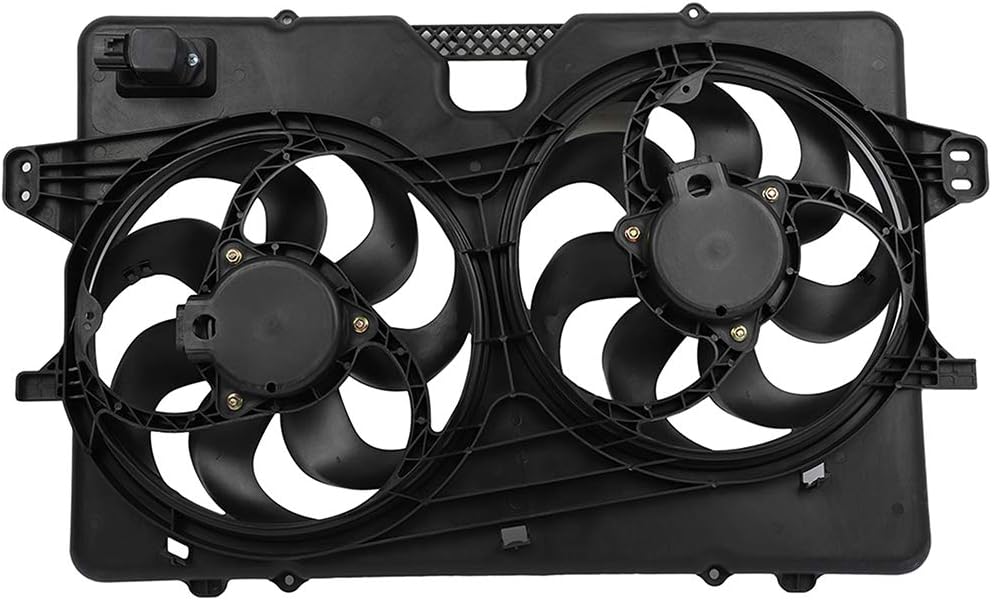
This AUPCS cooling fan assembly replaces the factory fan on select 2008–2012 Ford Escape and 2008–2011 Mercury Mariner models and is sold as a single driver/passenger side unit. It installs in the radiator shroud area to draw air through the radiator and speed up engine cooling, helping reduce overheating during idling or heavy traffic. The listing emphasizes a thin profile for clearance, high airflow and relatively low noise, and the supplier claims the part meets original equipment fit and requires minimal modification for installation. For a budget-focused buyer the main benefits are straightforward: one-piece replacement, reportedly good heat dissipation, and an easy swap that can restore cooling performance without an expensive dealer part. Limitations to expect are limited documentation on motor specs and longevity, and the single listing does not include detailed testing data or a multi-year warranty, so longevity is less certain than an OEM unit. Fitment must be checked against the exact Escape/Mariner year and engine before purchase.
Best for: Budget-conscious owners looking to restore cooling performance on the specified Ford Escape or Mercury Mariner years without paying dealer prices and who prioritize a practical, cost-effective repair.
Less Ideal for: Drivers who need guaranteed long-term reliability backed by a multi-year warranty or who require fully documented electrical specifications should consider higher-tier or OEM-sourced replacements.
- Made as a direct replacement for the listed Ford Escape and Mercury Mariner model years for easier installation
- Thin profile intended to improve clearance in tight radiator areas
- Designed for high airflow with lower reported noise for a more comfortable cabin
- Sold as a complete driver and passenger side fan assembly to simplify sourcing both fans
- No manufacturer warranty or detailed longevity data provided in the listing
- Technical motor performance specs such as amperage or RPM are not listed
Verdict A cost-focused, one-piece replacement that restores cooling function for the specified Escape/Mariner years but lacks detailed performance specs and a manufacturer warranty.
5. TYC 622180 Cooling Fan Assembly for 2005–2007 Ford Escape
| Power Connector Type | 2-Pin |
|---|---|
| Voltage | 12 Volts |
| Wattage | 80 watts |
| Maximum Rotational Speed | 3500 RPM |
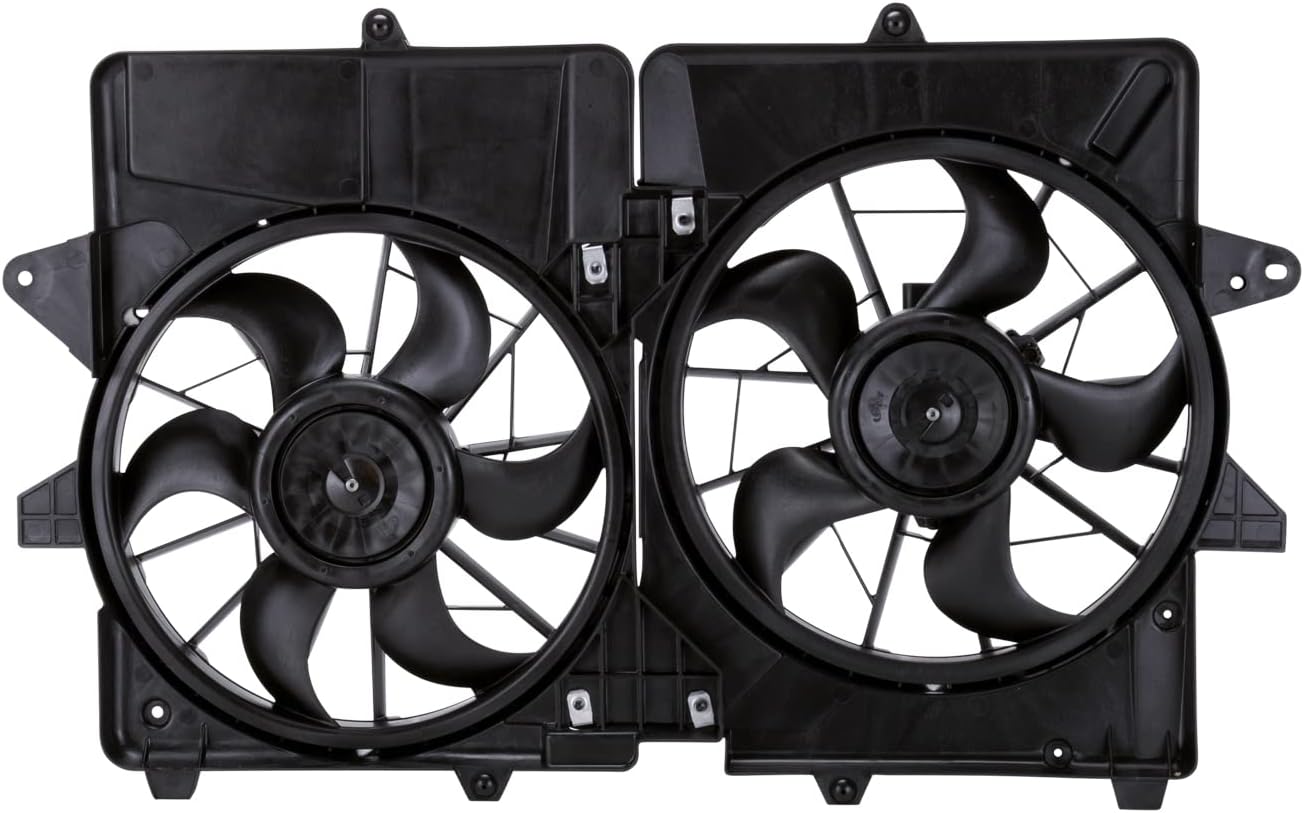
This TYC cooling fan assembly is a complete drop-in unit that replaces the fan motor, blade, and shroud for 2005–2007 Ford Escape models. It is intended for direct replacement use when the original cooling fan fails or shows reduced airflow. The assembly uses a factory-comparable motor and licensed shroud and blade designs to reproduce cooling performance while simplifying installation since you replace the whole unit rather than individual parts. Built PA material and validation tests for corrosion, vibration, moisture, and endurance suggest reasonable durability and quieter operation at typical speeds. Practical benefits include a straightforward swap-in installation and a tested motor to restore radiator airflow and cooling function. Limitations to note are compatibility nuances with hybrid variants that may need integrated fan resistor features and the unit is offered as a single assembly so reuse of a hybrid-specific housing may be necessary in some cases.
Best for: Risk-averse buyers who prioritize a reliable, factory-style swap for a 2005–2007 Ford Escape and want a tested, full assembly to minimize installation guesswork.
Less Ideal for: People restoring or modifying cooling systems who need modular component choices or owners of hybrid Escape variants requiring an integrated resistor in the housing.
- Complete assembly includes motor, fan, and shroud for an easier, faster replacement
- Designed and tested to match factory-style airflow and performance
- Durability testing for corrosion, vibration, moisture, and endurance
- Built from heat-resistant PA material to reduce vibration and noise
- May not include hybrid-specific resistor or housing features required on some Escape Hybrid models
- Sold as a single assembly which can limit options for reusing existing components
Verdict A practical, factory-style replacement fan assembly that restores cooling performance for most 2005–2007 Ford Escape owners but may need housing modifications for hybrid variants.
6. Garage-Pro Cooling Fan Assembly for Ford Escape/Mercury Mariner (2008–2012)

| Power Connector Type | 3-pin or 4-pin |
|---|---|
| Voltage | 12 Volts (DC) |
| Cooling Method | forced air |
| Maximum Rotational Speed | 2500 RPM |
This Garage-Pro cooling fan assembly replaces the factory radiator fan and shroud with a dual-fan unit intended for 2008–2012 Ford Escape and 2008–2011 Mercury Mariner four-cylinder models. It installs in place of the original assembly and uses the vehicle's 3- or 4-pin connector and 12 V electrical system, so installation is straightforward for technicians or experienced DIYers. The assembly includes both fan blades and motors mounted in a molded plastic shroud and is rated to spin up to 2500 RPM, which provides the forced-air cooling required to manage engine temperatures under normal driving and light towing. Buyers get practical benefits like direct-fit design, common interchange numbers for easy lookup, and generally positive owner feedback on fit and quiet operation. Limitations are typical for aftermarket units: the plastic construction may not match the longevity of higher-end factory-quality parts and warranty coverage varies by seller, so long-term durability under heavy-duty use is uncertain.
Best for: Practical optimizers who want a cost-effective, ready-to-install cooling assembly that restores proper engine cooling without upgrading to premium components.
Less Ideal for: Drivers seeking a heavy-duty or performance cooling upgrade for frequent towing, racing, or high-load use should consider higher-spec aftermarket or factory-quality alternatives.
- Direct-fit replacement designed for specified Ford Escape and Mercury Mariner model years, simplifying installation
- Includes dual fan blades, motors, and molded shroud so you replace the whole assembly at once
- Uses standard 3-pin or 4-pin automotive connector and 12 V electrical system for compatibility with factory wiring
- Rated maximum speed of 2500 RPM to provide effective forced-air cooling during normal driving
- Plastic construction may wear faster than premium factory-quality assemblies under heavy or prolonged high-heat use
- No detailed long-term durability data provided beyond basic seller claims
Verdict A budget-friendly, direct-fit dual fan assembly that restores proper cooling for specified Ford Escape and Mercury Mariner models while offering sensible value for routine use.
7. TYG Radiator Cooling Fan Assembly for 2005–2007 Ford Escape 3.0L

| Power Connector Type | 3-Pin |
|---|---|
| Voltage | 12 Volts |
| Wattage | 60 watts |
| Maximum Rotational Speed | 2620 RPM |
| Noise Level | 49 Decibels |
This assembled radiator cooling fan is a vehicle-specific replacement for the 2005–2007 Ford Escape 3.0L and is designed to restore cooling performance when the original fan fails. It installs in place of the factory unit and uses a 3-pin connector, a tested motor and balanced blades to provide steady airflow for radiator and A/C condenser duties. In everyday use it reduces engine temperature in traffic and hot weather and is marketed as quieter than some aftermarket alternatives with a reported noise level around 49 dB. The unit is manufactured to match factory materials and was cycle-tested for durability, which helps with fit and long-term operation when correct OE reference numbers are confirmed before ordering. Expect straightforward bolt-in replacement when the connector and mounting match, but buyers should confirm the factory part number and pin count because this is not universal and incorrect fitment has occurred for some customers.
Best for: Balanced all-round buyers who want a straightforward, factory-style replacement to restore reliable cooling on a 2005–2007 Ford Escape 3.0L without chasing performance upgrades.
Less Ideal for: Buyers seeking a universal fan, performance upgrade, or a plug-and-play option for other vehicle models should look elsewhere.
- Vehicle-specific design for 2005–2007 Ford Escape 3.0L intended as a direct factory-quality replacement
- Balanced blades and tested motor for quieter operation around 49 dB
- 3-pin connector matches factory electrical hookup on compatible models
- Manufactured and cycle-tested for durability to restore radiator airflow under normal driving
- Strict fitment requirements mean it will not work if connector, year, or engine variant do not match
- Some buyers reported quality-control issues such as loose hardware or fitment discrepancies
Verdict A factory-style, vehicle-specific cooling fan that restores reliable radiator airflow for 2005–2007 Ford Escape 3.0L when the fitment matches.
Choosing the Right Ford Escape Cooling Fan: Key Factors to Consider
Airflow Capacity (CFM)
Airflow capacity, usually measured in cubic feet per minute, determines how much air the fan moves through the radiator and across the condenser. Higher CFM helps lower engine temperatures faster during idling or slow traffic, which is when fans do most of their work.
When choosing a fan, match the airflow needs to your driving conditions. If you frequently encounter stop-and-go traffic, higher airflow can prevent overheating. For highway-only use, consistent but moderate airflow may be sufficient. Also consider whether a single high-flow fan or a dual-fan setup better matches the vehicle's cooling circuit and condenser placement.
Motor Power and Durability
The motor is the component that converts electrical energy into rotational force, so its power rating and construction directly affect fan performance. Look for motors with robust bearings and heat-resistant windings, since they operate in a hot environment and under frequent on/off cycles.
Durable motors resist wear that leads to noise, wobble, or failure. Motors with higher torque ratings can move larger blades at lower RPMs, which often yields quieter operation while maintaining airflow. Verify that the motor's electrical draw is compatible with the vehicle's cooling circuits to avoid overloading relays or fuses.
Fitment and Mounting Compatibility
Accurate fitment matters for straight-forward installation and reliable operation. A correctly sized fan or cooling fan assembly should align with the radiator, condenser, and mounting points so it does not contact other components or stress clips and mounts.
Check that mounting holes, bolt patterns, and connector types match the vehicle's original equipment configuration. Assemblies that include a fan shroud assembly often simplify installation and ensure optimal airflow direction. Poor fitment can reduce cooling efficiency or cause rattling and premature wear.
Electrical Connections and Control
Fans are controlled by temperature sensors, relays, or the vehicle's engine control unit, so compatible electrical connections and control behavior are essential. Confirm that the fan's connector type and pinout match the existing harness to avoid splicing or adapter use.
Consider whether the fan is designed for PWM control or simple on/off operation. PWM-capable fans offer finer speed control and can run quieter at partial load. Incorrect electrical match or excessive current draw can cause fuse trips or relay wear, so electrical compatibility should be verified before purchase.
Noise Levels
Noise is a practical concern for daily driving comfort, especially when fans run frequently in traffic or during hot weather. Fan blade design, motor speed, and mounting isolation influence how loud the system will be.
Look for blades shaped to minimize turbulence and motors with smooth bearings. Assemblies that incorporate vibration-damping mounts or well-fitted shrouds typically reduce perceived noise. Balance the desire for quiet operation with the need for sufficient airflow; very quiet fans may sacrifice cooling capacity if undersized.
Assembly Completeness and Serviceability
Some options come as a complete cooling fan assembly, including the fan, motor, and sometimes the fan shroud assembly or mounting hardware. Complete assemblies reduce the number of additional parts you need and can simplify repairs.
Consider how easy it will be to service or replace the fan motor if it fails. Units that allow motor replacement without disturbing the radiator or that use standard fasteners make future repairs cheaper and faster. Also check whether the assembly design permits access to connectors and relays for diagnosis without extensive disassembly.
FAQ
What are common cooling fan symptoms I should watch for in a Ford Escape?
Common signs include the engine running hotter than normal at idle or in traffic, the fan not spinning when the engine reaches operating temperature, unusual grinding or rattling noises from the fan area, and intermittent operation. Electrical issues like blown fuses or faulty relays can also cause fan symptoms. Diagnosing early helps prevent overheating-related damage.
Can I replace only the fan motor or should I buy a full assembly?
Replacing only the motor can be cost-effective if the fan blades and shroud are in good condition and the motor is a user-replaceable unit. However, a full cooling fan assembly simplifies installation and ensures all mounting points and connectors match. The best choice depends on the existing part condition and your comfort with disassembly.
How do I confirm the replacement fan will fit my Ford Escape?
Confirm fitment by checking the vehicle-specific mounting pattern, connector type, and the assembly dimensions against the original part. Look for clear fitment data that references your vehicle's model year and engine variant. Verify that the fan will not interfere with nearby components and that the electrical connector matches the factory harness.
Is an electric cooling fan better than a mechanical one for this vehicle?
Most modern vehicles use electric cooling fans because they provide variable speed control and reduce parasitic drive on the engine. Electric fans often offer more precise temperature control and can be quieter when running at low speeds. Whether electric or mechanical is preferable depends on the vehicle's original design and your desired performance characteristics.
What should I check if the cooling fan is not running at all?
Start by checking relevant fuses and relays, then verify that the fan receives power when the engine reaches operating temperature. Inspect the connector and wiring for corrosion or damage. If electrical supply is present but the fan does not spin, the motor may be faulty. Temperature sensors or control modules can also prevent fan activation, so include them in diagnosis.
How difficult is it to replace a radiator fan assembly myself?
Difficulty varies with exact assembly design and vehicle access. Many assemblies are reachable from the engine bay and can be removed with basic hand tools, while others may require removing other components for access. Expect work to take a couple of hours for someone with moderate mechanical skills. Follow safety precautions and consult a repair manual for torque values and procedures.
How We Chose the Best Ford Escape Cooling Fan
We prioritized parts that are specifically suited to Ford Escape applications and that meet the mechanical and thermal needs owners typically face. Key evaluation criteria included airflow performance at relevant RPMs, motor power and build quality, electrical connector and mounting compatibility, and overall durability under thermal cycling. We also considered noise output during operation and the completeness of assemblies, such as whether a fan shroud assembly or radiator fan assembly is included.We excluded items that lacked clear vehicle-specific fitment data, had uncertain electrical connector compatibility, or did not provide sufficient material or motor specifications. We did not consider items without documented thermal performance or those that required major modifications to install. The result is a focused list of seven cooling fans that balance cooling capacity, motor longevity, and straightforward installation for Ford Escape owners.
Our full evaluation process is outlined in our review methodology.
Conclusion
When choosing a Ford Escape cooling fan, prioritize fitment accuracy, adequate airflow, and a durable motor. Those factors most directly affect cooling performance, noise, and long-term reliability.Balance the benefits of a complete assembly against the cost and serviceability of a motor-only replacement. Verify electrical compatibility and mounting details before committing to ensure a smooth installation and dependable operation.
Explore More:
- Check out all Ford Escape parts & accessories
- Explore Cooling Fans Maintenance & Repair Guides
- Explore Cooling System
- Browse all Auto Parts
