

Note: This article contains affiliate links. If you click on these links and make a purchase, I may earn a small commission at no extra cost to you. This helps support my research and content. Read my full affiliate disclaimer here.
If you drive a Ford Explorer, worn ball joints can affect steering feel, cause uneven tire wear, and reduce overall safety. Choosing the right Ford Explorer ball joint matters because fitment, load capacity, and durability determine how well the vehicle handles daily driving and rough roads. This guide highlights seven shortlisted ball joints that meet common needs for longevity and proper fitment. We evaluated each option on fit compatibility and build quality, with attention to installation needs and expected lifespan. Read on to find the right type and considerations before you replace a ball joint on your Explorer.
Looking for other parts? See all Ford Explorer parts & accessories.
Top Picks at a Glance


1. KEYOOG Front Upper Control Arm and Ball Joint Assembly (Pair)
| Fit Type | Universal Fit |
|---|---|
| Auto Part Position | Front Upper |
| Model | Suspension Control Arm and Ball Joint Assembly |
| Manufacturer Part Number | KG-80722-23 |
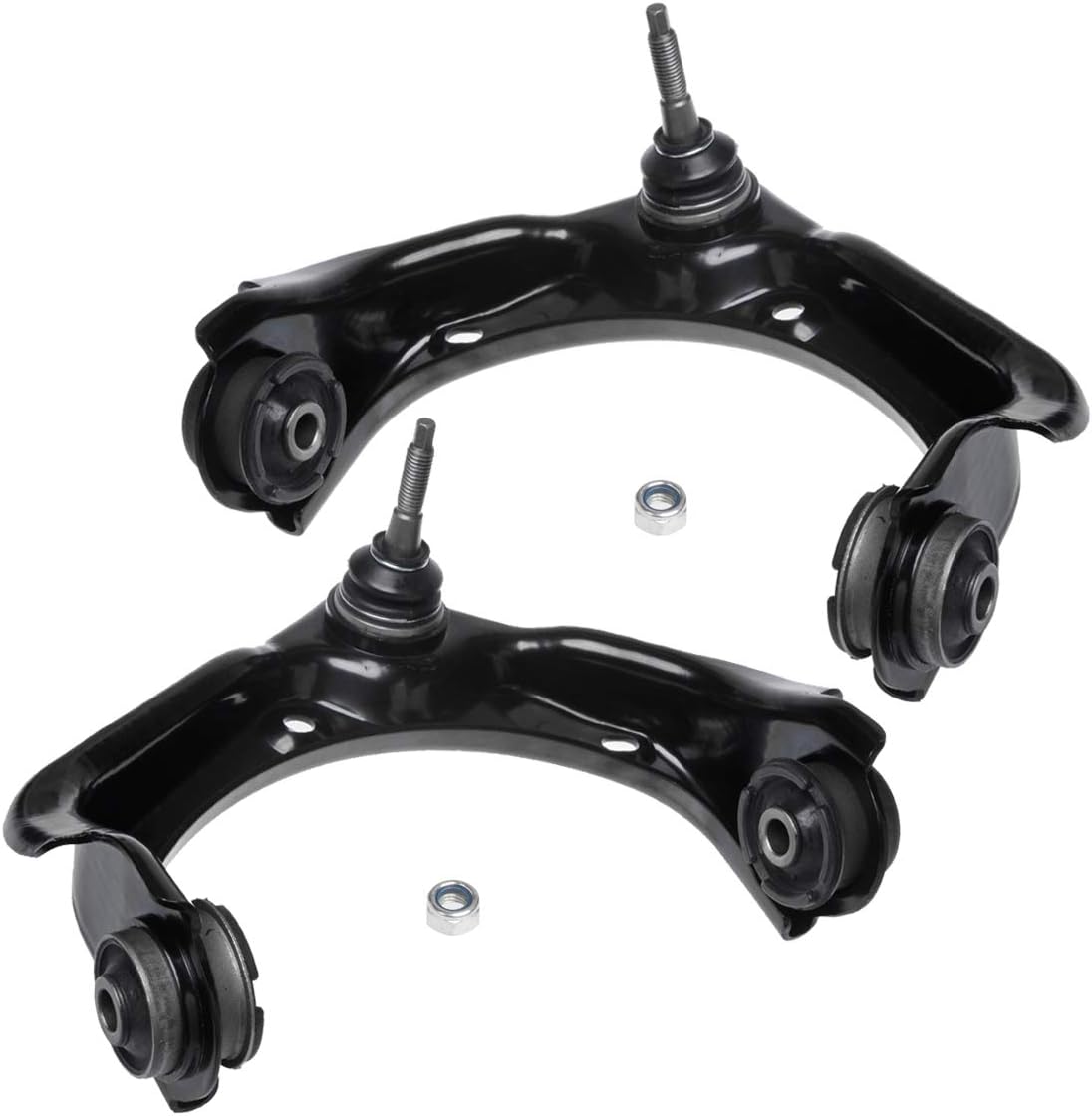
This KEYOOG kit supplies a matched left and right front upper control arm with integrated ball joints intended as direct replacements for 2006–2010 Ford Explorer, 2007–2010 Explorer Sport Trac, and 2006–2010 Mercury Mountaineer models. Each arm drops into the factory location and is used to restore correct wheel location, steering feel, and suspension geometry after worn originals are removed. The product emphasizes factory-fit geometry and anti-rust surface treatment, and the integrated ball joints simplify installation compared with buying separate components. Practical benefits include quieter operation and tighter steering when bushings and joints are renewed, plus the convenience of a matched pair in one package. Limitations to consider are the aftermarket material choice and reported bushing noise in a few cases, so long-term durability may vary with driving conditions; professional alignment after installation is also required to ensure proper handling. The kit is backed by a one-year warranty.
Best for: Reliability-focused buyers who prioritize restoring factory steering feel and suspension geometry with a straightforward, factory-fit replacement for older Explorers and Mountaineers.
Less Ideal for: Drivers seeking heavy-duty performance upgrades or long-term off-road use should consider reinforced aftermarket arms or premium OEM-quality options instead.
- Sold as a matched left and right pair so both sides are renewed at once
- Designed to fit factory mounting locations for a straightforward replacement
- Integrated ball joints reduce parts and simplify installation
- Surface treatment advertised to resist rust and corrosion
- Manufactured from non-metallic/plastic components which may not match factory longevity in heavy-duty use
- Some buyers reported bushing noise after installation indicating variable bushing quality
Verdict A practical, factory-fit replacement pair that restores steering and suspension function affordably, though long-term durability may vary depending on use.
2. Orion Motor Tech 23-Piece Master Ball Joint Press and U-Joint Removal Kit

| Pieces included | 23pc kit |
|---|---|
| Press type | 9 inch C-frame press with long jackscrew |
| Material | AISI 1045 carbon steel |
| Vehicle fitment note | Adapters for most 2WD and FWD vehicles, usable on standard SUV applications |
This Orion Motor Tech 23-piece kit is designed to press out and install ball joints, U-joints, and similar press-fit suspension parts using a heavy-duty 9 inch C-frame press and a long jackscrew for controlled force. Typical use is at-home suspension service on SUVs like the Ford Explorer where you need to remove or install upper or lower ball joints without a hydraulic shop press. The kit includes multiple receiving tubes, 4-point sockets sized for Chrysler patterns, and universal adapters that let you tackle a range of joint sizes; the pieces are forged from AISI 1045 carbon steel and blackened for corrosion resistance. Practical benefits include a robust clamp that holds alignment during pressing and a fitted case that keeps adapters organized. Limitations: some reviewers report the plastic case and certain sockets can crack under extreme loads and the set is not built for heavy duty truck work, so expect to avoid oversized commercial jobs; documentation on which cup to use for specific operations could be clearer. For routine Explorer suspension jobs this kit gives home mechanics a versatile, durable toolset without specialty shop equipment.
Best for: Convenience-driven DIYers who prioritize having a single, ready-to-use kit to handle routine Ford Explorer suspension jobs at home without going to a shop.
Less Ideal for: Professional shops or technicians who need tools rated for frequent heavy commercial use or for very large truck components should choose industrial-grade hydraulic presses instead.
- Includes a 9 inch C-frame press and long jackscrew for even, controlled pressing
- Wide selection of receiving tubes and adapters to fit common joint sizes
- Forged AISI 1045 carbon steel construction for strength and corrosion resistance
- Fitted storage case keeps components organized for convenient garage use
- Not suitable for heavy duty truck applications where parts and loads exceed kit limits
- Some sockets and the plastic case have been reported to crack under excessive force
- Instruction detail is limited, so matching cups to certain vehicles can require trial and error
Verdict A versatile, convenience-focused ball joint press kit that lets Ford Explorer owners do common suspension work at home, but avoid it for heavy commercial jobs.
3. Detroit Axle Front End 12‑Piece Suspension Kit (includes control arms, ball joints, tie rods, sway bars)
| Position | Front Upper |
|---|---|
| Item model number | 80679-12A |
| Manufacturer | Detroit Axle |
| 10-Year Warranty | Yes |
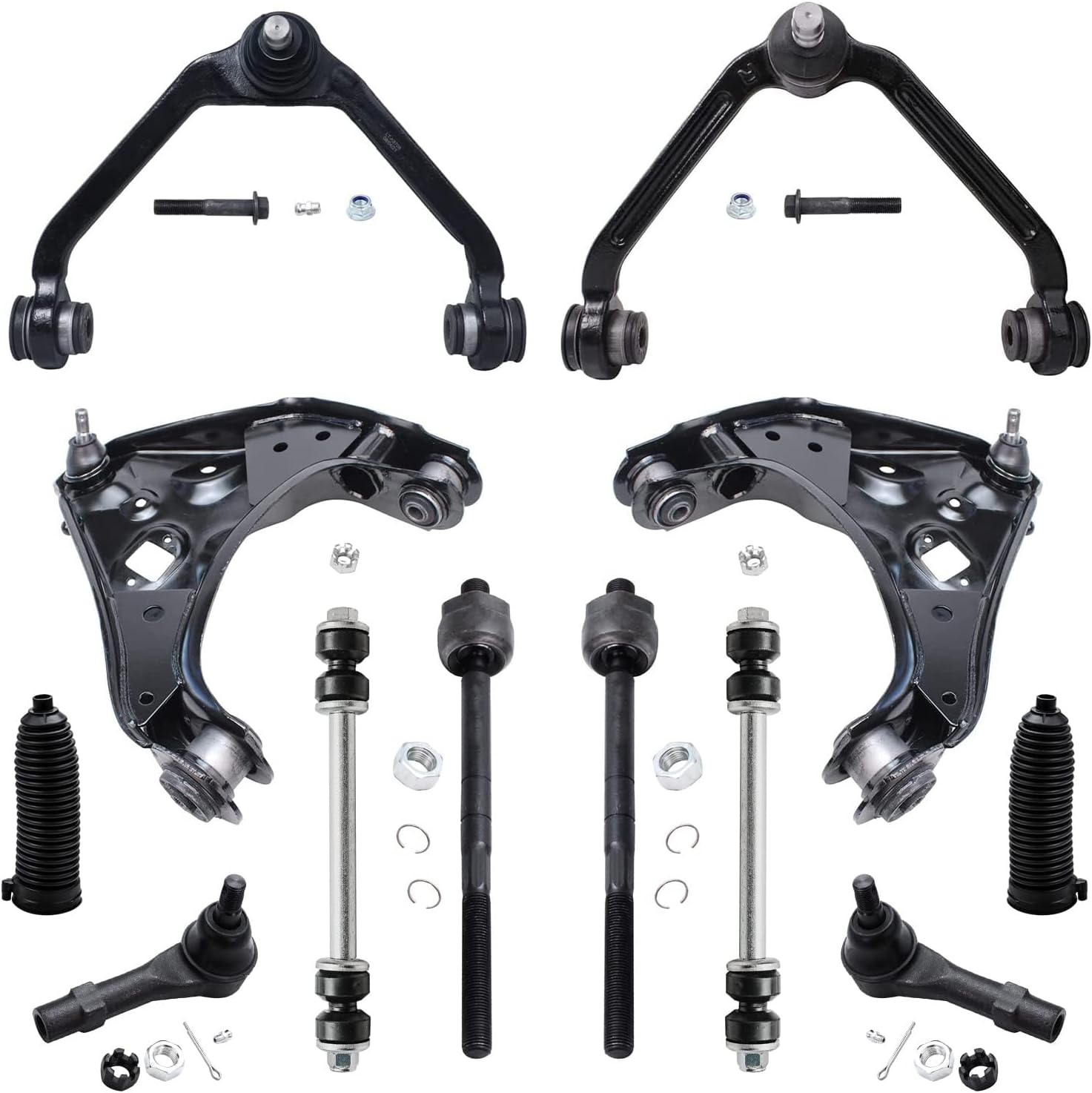
This Detroit Axle 12‑piece front suspension kit supplies the major front-end components needed when rebuilding the steering and suspension on supported Ford Explorer years. It includes upper and lower control arms with ball joints, inner and outer tie rod ends, sway bar links, and tie rod boots so you can refresh the vehicle's steering geometry and eliminate play in one job. For a performance-oriented buyer the direct benefit is restored steering precision and firmer handling compared with worn stock parts. The kit is sold as a ready set of replacement components that are impact and fatigue tested to match factory-quality fit and function, and multiple user reports note good fit and a noticeably tighter, smoother ride after installation. Important limitations: the kit may require greasing at install, some fasteners or clamps are not supplied, and a few buyers reported variable quality on smaller parts like sway links which can wear sooner than the rest of the kit. A professional alignment after installation is strongly recommended to realize the handling improvements and avoid uneven tire wear.
Best for: Performance-oriented drivers who prioritize restoring sharp steering and chassis control on an older Ford Explorer and want a single kit to replace most front-end wear items in one job.
Less Ideal for: Buyers who need a guaranteed parts-by-parts OEM match or an exact hardware kit for a custom restore should consider sourcing individual factory-quality components instead.
- Complete front-end kit replaces control arms, ball joints, tie rod ends and sway components in one purchase
- Designed and tested for fit and fatigue to provide factory-quality replacement for specified Ford Explorer fitments
- Multiple greasable joints allow serviceability and longer life when greased at installation
- Users report improved steering response and smoother cornering after installation
- Some small hardware such as boot clamps or specific fasteners may not be included with the kit
- Quality of individual small parts like sway bar links can vary between batches
- Ball joints and boots may require additional grease at install as they are not heavily prefilled
Verdict If you want a single high‑quality kit to restore steering precision on supported Ford Explorer years, this Detroit Axle set delivers most front-end replacements at once, but expect to supply some clamps and grease during installation.
4. BOXI Front Upper and Lower Ball Joint Kit (Set of 4) for Ford Explorer 2002–2005

| Fitment | Ford Explorer 2002-2005; Mercury Mountaineer 2002-2005; Lincoln Aviator 2003-2005 |
|---|---|
| Position | Front |
| OEM Part Number | K80008 K8695 |
| Item model number | BXM00071-4 |
| Manufacturer | ShangHai BOXI Auto Parts Co., Ltd. |
This BOXI kit supplies four front ball joints intended as a direct-fit replacement for Ford Explorer 2002–2005 (also listed for Mercury Mountaineer and Lincoln Aviator of similar years). Installers typically use it to replace worn upper and lower ball joints when steering feels loose or suspension exhibits play. The kit is marketed as matching factory performance and arrives with parts labeled to replace OEM K80008 and K8695. Practical benefits include a complete front-side set so you can replace both left and right joints in one job and reduce repeat labor, and the parts appear to be manufactured to standard aftermarket tolerances suitable for street use. Limitations are that this is a budget aftermarket option rather than a factory-branded part, so finish and long-term durability may vary compared with premium replacements, and professional inspection of fit and torque specs is advisable during installation. For routine repairs on a high-mileage Explorer this kit offers a cost-effective way to restore steering feel and suspension stability.
Best for: Practical, budget-conscious owners who prioritize affordable repairs and want a single kit to restore steering and suspension function on a Ford Explorer 2002–2005 without paying for premium parts.
Less Ideal for: Drivers seeking the longest-lasting, top-tier factory-quality replacements or those planning heavy-duty or performance use should consider higher-end options.
- Complete four-piece kit covers both left and right front upper and lower ball joints for a single repair job
- Sold as direct replacements that list OEM part numbers K80008 and K8695 for straightforward fitment checks
- Cost-conscious aftermarket option that reduces parts expense and avoids multiple separate purchases
- Aftermarket build quality can vary and may not match premium factory-quality replacements
- Long-term durability is less certain compared with higher-end brands
Verdict A budget-friendly, complete front ball joint kit for Ford Explorer 2002–2005 that restores steering feel at a lower cost but may not match premium longevity.
5. Orion Motor Tech 5-in-1 Ball Joint Separator and Tie Rod Puller Kit

| Brand | Orion Motor Tech |
|---|---|
| Item model number | 8542039067 |
| Item Weight | 10.54 pounds |
| Product Dimensions | 15.35 x 3.15 x 12.2 inches |
| ASIN | B01A0AWELW |
This Orion Motor Tech kit combines five adjustable tools for common front-end jobs—ball joint separation, tie rod end removal, and pitman arm pulling—packed in a molded ABS case for transport and storage. It is typically used by DIYers and home mechanics working on steering and suspension repairs; the adjustable puller and multiple attachments mean you can tackle a range of joint sizes without buying individual tools. Hardened alloy construction gives the parts good initial strength and reviewers report it frees rusted components on many trucks and SUVs. Practical benefits include the compact case, interchangeable fittings, and the ability to avoid a shop for basic front-end work on a Ford Explorer. Limitations are the usual ones for budget kits: some users have bent or broken heavier-duty pieces when working on large or heavily corroded components, and certain jaw sizes may require grinding or alternates to clear tight pitman-arm gaps. For a risk-averse buyer, it is a sensible starter kit but not a substitute for heavy professional gear when working on severely seized parts.
Best for: A risk-averse mainstream buyer who prefers to do routine suspension and steering repairs at home on a Ford Explorer and wants a single, compact kit to cover most common jobs.
Less Ideal for: Professional shops or owners who frequently service very large trucks or repeatedly tackle heavily seized, rusted components should consider stronger, dedicated tools instead.
- Includes five adjustable tools to handle ball joints, tie rod ends, and pitman arms in one compact kit
- Hardened alloy construction provides solid strength for typical DIY suspension work
- Custom-molded ABS case keeps components organized and portable
- Interchangeable attachments reduce the need to buy multiple single-purpose pullers
- Some heavy-duty users report bent jaws or sheared bolts when used on very large or severely corroded parts
- Certain puller jaw geometries may not fit every pitman arm without modification
- Not intended to replace professional-grade press equipment for high-volume shop use
Verdict A convenient, budget-friendly all-in-one front-end puller kit that suits most Ford Explorer DIY repairs but can struggle on very large or severely seized parts.
6. KDSA Front Lower Control Arm with Ball Joint Set for Ford Explorer (2011–2018)

| Fitment | Ford Explorer 2011-2018; Police Interceptor Utility 2013-2018 |
|---|---|
| Material | Alloy Steel |
| Unit Count | 2 |
| Position | Front Lower |
This KDSA kit supplies both left and right front lower control arms with integrated ball joints designed to replace the factory parts on a 2011–2018 Ford Explorer or 2013–2018 Police Interceptor Utility. The parts are stamped alloy steel with a polished exterior and come as a matched pair so you can restore front suspension geometry and steering feel in one job. Buyers report straightforward bolt-on fitment and the supplier says the parts are made to factory quality standards in a Taiwan facility, which helps with alignment accuracy out of the box. In practice this set is used when worn control arms cause looseness, uneven tire wear, or steering wander; installing both sides reduces the need for extra adjustments. Limitations are the typical ones for aftermarket arms: longevity will depend on road conditions and installation quality, and you may prefer a branded heavy-duty or performance arm if you need reinforced strength for frequent heavy-duty use. The kit includes both sides and is a practical, cost-conscious replacement for routine suspension refreshes.
Best for: Practical optimizers who want a cost-effective, matched pair to restore suspension geometry and steering feel on a Ford Explorer without upgrading to reinforced performance arms.
Less Ideal for: Drivers who regularly tow heavy loads or require upgraded, heavy-duty suspension components should consider reinforced aftermarket control arms designed for higher stress.
- Sold as a matched pair including left and right lower control arms with ball joints for one-job replacement
- Manufactured from alloy steel and built to factory-equivalent standards for alignment accuracy
- Polished finish resists corrosion and presents a factory-style appearance
- Multiple customer reports of correct fit and straightforward installation
- Not marketed as a heavy-duty or performance upgrade for severe-duty use
- Durability may vary with driving conditions and depends on proper installation
Verdict A matched, budget-minded front lower control arm and ball joint set that delivers a practical factory-style replacement for Ford Explorer owners looking to restore steering and suspension feel.
7. Detroit Axle 2 Front Lower Control Arms with Ball Joints for 2011–2019 Ford Explorer / 2013–2019 Police Interceptor Utility

| Fit Type | Vehicle Specific Fit |
|---|---|
| Auto Part Position | Front Lower |
| Material | Alloy Steel |
| Unit Count | 2.0 Count |
These Detroit Axle lower control arms replace the front lower suspension links on compatible Ford Explorer and Police Interceptor Utility models and come as a two-piece kit with ball joints preinstalled. They are intended for direct replacement during front suspension repairs and are typically used when worn bushings or noisy ball joints cause clunks or alignment problems. Constructed from alloy steel and finished unfinished, the arms arrive ready to bolt in and most buyers report straightforward fitment and noticeable improvement in ride and steering feel. Notable features include vehicle-specific fitment, preinstalled ball joints, and an advertised 10-year warranty. Practical benefits are reduced workshop time compared with rebuilding old arms and restoring proper suspension geometry without resorting to used parts. Limitations include non-greasable ball joints on these units and some reports of inconsistent warranty service, so long-term durability will depend on driving conditions and installation care. Expect to perform a professional alignment after installation to ensure correct tire wear and handling.
Best for: A balanced all-round buyer who wants a direct, ready-to-install replacement that restores steering feel and eliminates suspension noise without extensive modification or parts sourcing.
Less Ideal for: Drivers seeking long-term, serviceable ball joints or a premium corrosion-resistant finish should consider alternative options or professional remanufactured arms.
- Vehicle-specific fit for 2011–2019 Ford Explorer and 2013–2019 Police Interceptor Utility reduces fitment issues
- Comes as a matched pair with ball joints preinstalled for faster swap and fewer installation steps
- Alloy steel construction offers a sturdy, factory-replacement feel
- Many buyers report solid fitment and immediate elimination of suspension clunks
- Ball joints are sealed and non-greasable, which can limit long-term serviceability
- Finished state is unfinished, so corrosion protection may be inferior to coated OEM parts
- Some customers report difficulties with warranty support in rare cases
Verdict A practical, vehicle-specific pair of front lower control arms that restore function and fit for Ford Explorer owners but use sealed ball joints that limit long-term serviceability.
Choosing the Right Ford Explorer Ball Joint: Key Factors to Consider
Vehicle-Specific Fitment
Correct fitment is critical because ball joints that do not match the Ford Explorer's control arm geometry can alter alignment and handling. Ensure the part matches the model year and front or rear location as applicable, and confirm mounting type and stud orientation. Improperly fitting units can complicate installation and may require additional modifications that compromise safety.
Fitment also affects alignment settings. A unit that replicates factory dimensions helps maintain camber and toe specifications, reducing uneven tire wear and steering pull. Always verify compatibility with your vehicle's VIN or factory part numbers where possible.
Build Material and Corrosion Resistance
The internal bearings, ball stud, and housing material determine how well a ball joint resists wear under load. Hardened steel studs and heat-treated components typically last longer under repeated stress. Corrosion-resistant coatings or plated housings are important in areas with road salt or moisture because rust can seize moving parts and lead to premature failure.
Durable dust boots and seals protect internal lubrication. A compromised boot allows dirt and water ingress, accelerating wear. Look for units with robust sealing and proven material treatments to improve service life on vehicles that see a lot of miles or harsh environments.
Load Capacity and Design
Ball joints must support steering and suspension loads without excess deflection. Design features such as larger bearing surfaces, staked or threaded studs, and reinforced housings can influence how the joint handles dynamic forces. Higher load capacity generally translates to less movement under stress and better steering precision.
Consider how the vehicle is used: towing, carrying heavy loads, or off-road driving increases demands on the ball joints. Choose a design rated for those conditions to avoid accelerated wear and potential steering issues.
Serviceability and Installation Method
Installation method affects both cost and feasibility of replacement. Press-fit ball joints require a ball joint press tool and may need a professional shop, while bolt-on or maintenance-style units can be easier to replace at home. Accessibility of replacement hardware and whether the unit comes with studs, nuts, or split pins influences the total effort and time required.
Consider whether you have the necessary tools and experience. If you plan to replace the ball joint yourself, pick a design compatible with common home mechanic tools or a kit that simplifies the process. Also evaluate whether the replacement will require alignment services afterward.
Sealing, Lubrication, and Maintenance
A well-sealed ball joint retains lubrication and keeps contaminants out. Units with grease fittings allow periodic maintenance, which can extend life if you routinely service suspension components. Sealed-for-life joints reduce maintenance but may fail sooner if the seal is compromised.
Assess your maintenance habits and local conditions. If you drive in dirty or wet environments and can perform periodic greasing, a serviceable unit may provide longer service. Otherwise, a robust sealed joint with high-quality seals is preferable to avoid premature contamination.
Warranty and Expected Lifespan
Warranty offers insight into manufacturer confidence and expected durability. Longer or more comprehensive warranties often indicate better-quality materials or manufacturing controls. Review what the warranty covers, such as premature wear or failure under normal driving conditions.
Keep in mind that warranty terms may vary by usage conditions. Heavier use or severe environments can shorten actual lifespan despite warranty coverage, so match the warranty expectations with your typical driving profile.
FAQ
What are common ball joint symptoms on a Ford Explorer?
Common signs often include uneven tire wear, a looseness or clunking noise from the front suspension, and intermittent steering wander. You might also notice vibration through the steering wheel at low speeds. These symptoms usually develop gradually, so prompt inspection helps avoid further suspension damage.
How do I know whether to replace the upper or lower ball joint?
Inspection typically reveals which joint is worn. Excessive vertical play at the wheel hub or visible boot damage can indicate a failing joint. The decision depends on which joint shows movement beyond manufacturer tolerances or visible wear. If you are unsure, a mechanic can assess each joint with the vehicle lifted and determine which component needs replacement.
Can I replace a ball joint myself or do I need a professional?
It depends on the installation type and your toolset. Bolt-on or serviceable units are often manageable for experienced DIYers. Press-fit joints generally require a ball joint press tool and may be more suitable for a professional shop. Also consider whether an alignment will be necessary after replacement, which usually requires specialized equipment.
How long do replacement ball joints usually last on a Ford Explorer?
Lifespan varies with driving habits and environment. Under normal driving conditions, well-made ball joints commonly last tens of thousands of miles, though heavy use or harsh conditions can shorten that. Regular inspections and maintenance where applicable can help maximize service life.
Will a worn ball joint cause wheel vibration?
A worn ball joint can contribute to wheel vibration by allowing excessive movement in the suspension, which affects wheel alignment and balance. However, vibration can also stem from other issues such as tire imbalance or worn wheel bearings, so a full inspection is important to identify the root cause.
How We Chose the Best Ford Explorer Ball Joint
To assemble this list we focused on factors that directly affect real-world performance and long-term reliability on a Ford Explorer. Key evaluation criteria included precise vehicle-specific fitment to ensure correct steering geometry, material quality and corrosion resistance to withstand road conditions, and load ratings or design features that affect durability under normal driving loads. We also considered ease of installation, including whether the unit matches OE-style mounting points, and the availability of proper replacement hardware such as pressed-in or bolt-on configurations. Warranty coverage and documented longevity reports were used to gauge expected service life. Exclusions: we excluded universal or non-vehicle-specific units that do not guarantee correct alignment or factory-style attachment, and any options with unclear specifications or lacking documented fitment for the Ford Explorer. The result is a curated set of ball joints that prioritize correct fit, robust construction, and practical installability for Explorer owners.
Our full evaluation process is outlined in our review methodology.
Conclusion
When choosing a Ford Explorer ball joint, prioritize correct fitment, robust materials, and a sealing design that matches your maintenance habits and driving conditions. Consider whether a serviceable or sealed unit better suits your ability to perform upkeep, and account for load capacity if you tow or carry heavy cargo. Balancing ease of installation and expected lifespan will help you select a component that restores steering precision and reduces premature wear. Use the factors above to weigh tradeoffs and pick the option that aligns with how you use your Explorer.
Explore More:
- Check out all Ford Explorer parts & accessories
- Explore Suspension & Steering
- Browse all Auto Parts
