

Note: This article contains affiliate links. If you click on these links and make a purchase, I may earn a small commission at no extra cost to you. This helps support my research and content. Read my full affiliate disclaimer here.
Selecting the right Ford Explorer catalytic converter matters because it directly affects emissions compliance, engine performance, and how long your exhaust system lasts. You want a unit that fits correctly, stands up to heat and corrosion, and restores proper catalytic function without causing frequent service alerts. This guide highlights six shortlisted catalytic converters chosen for consistent fitment and proven durability. We evaluated each option against real-world criteria such as construction quality and compatibility to help you pick the best replacement. Read on for the factors we considered and practical guidance to narrow your choice.
Looking for other parts? See all Ford Explorer parts & accessories.
Top Picks at a Glance
| Best Reviewed A top-rated pick with lots of positive feedback | HIGHBRICK Catalytic Converter Compatible with Ford Explorer Sport Trac 2001–2005 4.0L |  |
| Best Quality Built to a higher standard if you want something more solid | Walker Ultra 16434 Direct-Fit Catalytic Converter for Ford Explorer |  |
| Best Budget The cheapest option that still gets the job done reliably | JT Exhaust Catalytic Converter for Ford Explorer 2011–2012 (3.5L V6) |  |
| Most Sold A high-volume bestseller chosen again and again | A-Premium Catalytic Converter Kit for Ford Explorer/Mountaineer 4.0L (2006–2010) |  |
| Best Value for Money The sweet spot between price and what you get | A-Premium Front Left Catalytic Converter with Gasket Kit (Front Left, Radiator Side) |  |
| Best Overall The best all-around choice for most situations | Walker Ultra 50545 Direct-Fit Catalytic Converter for Ford Explorer |  |
1. HIGHBRICK Catalytic Converter Compatible with Ford Explorer Sport Trac 2001–2005 4.0L

| Vehicle fit | Ford Explorer Sport Trac 2001–2005, Explorer Sport 2002–2003, Ranger 2001–2003 4.0L |
|---|---|
| Compliance | Federal EPA compliant only |
| Construction | Stainless steel housing with ceramic catalytic core |
| Installation | Direct bolt-on replacement with mounting hardware and gaskets included |
This HIGHBRICK catalytic converter is a direct bolt-on replacement for Ford Explorer Sport Trac (2001–2005), Explorer Sport (2002–2003) and Ranger (2001–2003) 4.0L engines, intended to restore emissions control without cutting or welding. It is built with stainless steel outer housing and a ceramic catalytic core and is listed as EPA compliant for federal use. The unit includes matched mounting points, gaskets, and hardware so installation is typically a straightforward swap when existing pipes and fasteners are in good condition. Buyers can expect the converter to clear emissions faults and return the exhaust system to factory routing, and several user reports note exact fit and simple installation. Important limitations are regional legality and emissions rules: this converter is not legal for sale or use in certain states with stricter rules, and it is certified to federal EPA standards only. Also, older vehicles with rusted flanges or seized bolts may need extra work or new fasteners during installation.
Best for: Reliability-focused buyers who prioritize restoring correct emissions function with a factory-style, direct-fit replacement to get an Explorer back to dependable operation.
Less Ideal for: Drivers in states with stricter emissions regulations or buyers who require state-specific certified converters should look for parts that explicitly meet those local standards.
- Direct bolt-on design with included mounting hardware and gaskets for straightforward replacement
- Constructed with stainless steel housing and ceramic core to resist thermal shock and extend service life
- EPA compliant for federal emissions regulations to restore emissions control and clear related fault codes
- Designed to match factory routing so existing O2 sensors and exhaust layout typically remain usable
- Not legal for sale or use in states with stricter emissions rules such as California and several others
- Certification is federal EPA only, so it may not meet more stringent state-specific standards
Verdict A practical, reliability-focused direct-fit catalytic converter for 4.0L Ford Explorer models where federal EPA-compliant replacements are acceptable.
2. Walker Ultra 16434 Direct-Fit Catalytic Converter for Ford Explorer
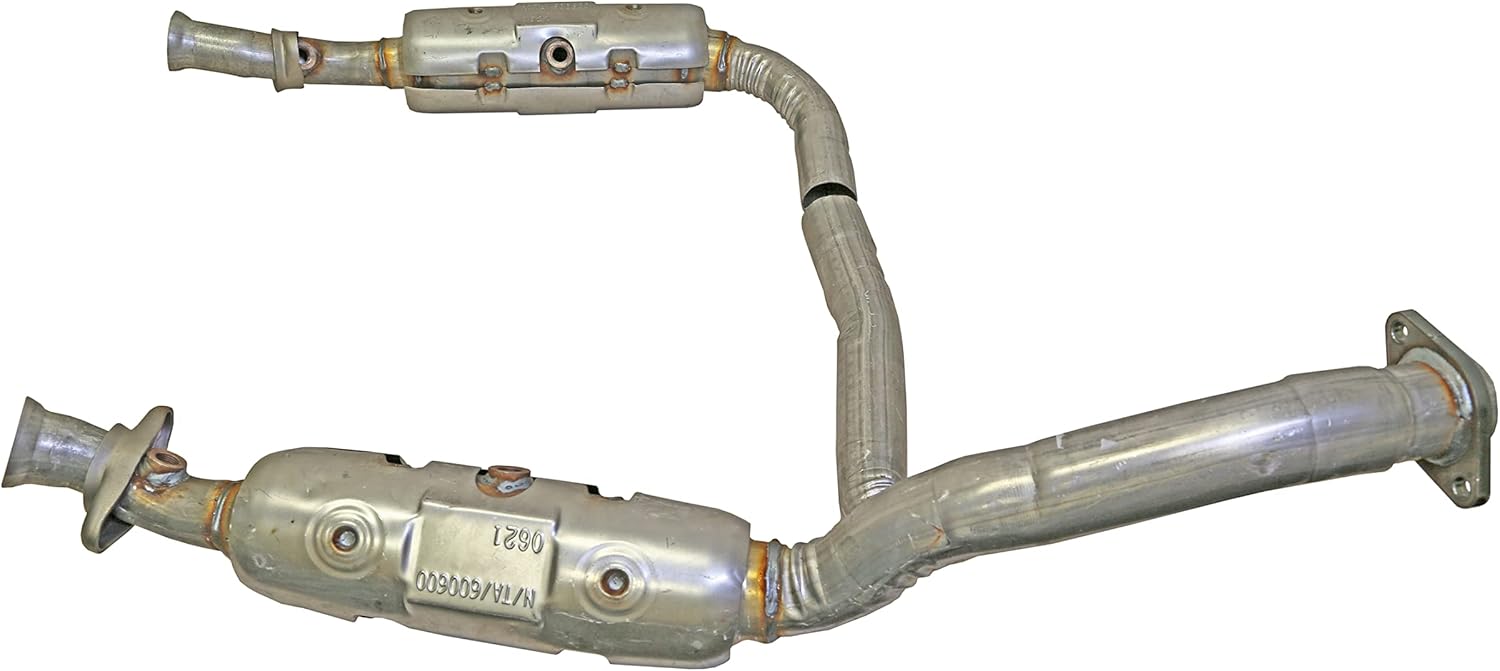
| Brand | Walker |
|---|---|
| Item model number | 16434 |
| EPA compliance | For OBDII vehicles, 1996 and newer |
| Fitment | Direct-fit for 2006-2010 Ford Explorer and related models |
The Walker Ultra 16434 is a direct-fit catalytic converter designed specifically for Ford Explorer and related models, engineered to meet EPA requirements for OBDII vehicles. It replaces the factory unit with OE-style flanges, hangers, brackets and heat shields so installation is typically bolt-on and avoids welding for most experienced installers. The converter uses a high-technology washcoat and a specified precious metal load intended to restore emissions control and stable performance on street-driven vehicles. Stainless-steel construction and thick flanges aim to improve long-term durability under normal driving conditions. Buyers should note reports of delivery or packaging inconsistencies and that some installations required cutting the old pipe or replacing oxygen sensors; a professional or well-equipped DIYer will reduce fitment surprises. For performance-focused owners, this unit balances regulatory compliance and robust construction, but confirm vehicle fit and plan for basic installation tasks like sensor replacement.
Best for: Performance-oriented buyers who prioritize factory-quality emissions performance and long-term durability on a Ford Explorer and expect a professional or hands-on installation approach.
Less Ideal for: Buyers seeking a plug-and-play unit with no chance of fitment work or those uncomfortable with cutting exhaust piping or changing sensors should consider professional installation or alternative solutions.
- Direct-fit design with factory-style flanges, hangers and brackets for bolt-on installation in most cases
- EPA-compliant for OBDII vehicles, supporting emissions requirements
- High-technology washcoat and specified precious metal load for reliable emissions reduction
- Stainless-steel construction and thick flanges for improved durability
- Some customers reported receiving a different configuration or parts that required additional coupling or modification
- May require cutting old piping and replacing oxygen sensors during installation depending on vehicle condition
Verdict A factory-style, EPA-compliant direct-fit converter that delivers durable, performance-focused emissions control for Ford Explorer owners who can handle or pay for a hands-on install.
3. JT Exhaust Catalytic Converter for Ford Explorer 2011–2012 (3.5L V6)
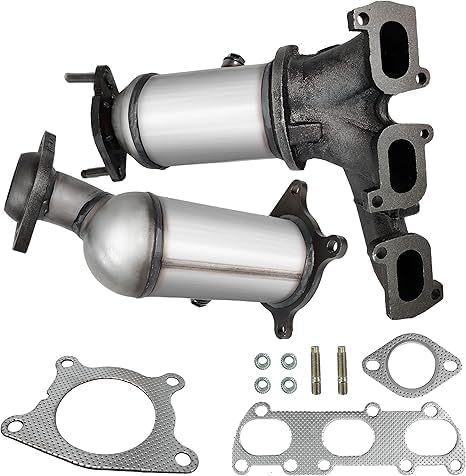
| Fitment | Ford Explorer 2011-2012 3.5L V6 |
|---|---|
| Also fits | Ford Edge 2011-2014, Lincoln MKX 2011-2015 |
| Emission standard | Meets EPA OBDII requirements |
| Substrate | OEM grade honeycomb ceramic |
This JT Exhaust catalytic converter is a direct-fit replacement designed for 3.5L V6 Ford Explorers from 2011–2012 and similar Ford/Lincoln models. It uses a factory-style honeycomb ceramic substrate and extra precious metal catalyst material intended to improve conversion efficiency and help the vehicle meet EPA OBDII standards. Typical use is a like-for-like swap when a worn or failed converter triggers emissions faults or a check engine light. The unit arrives as a polished stainless steel assembly that the manufacturer says is produced with 3D-scan fitment to simplify installation for DIYers or independent shops. In practice you can expect a straightforward install, restored emission controls, and potentially smoother running and better fuel economy compared with a degraded converter. Limitations are that certification claims reference EPA testing but there is no CARB listing here, so it is not appropriate where California emissions compliance is required. Buyers should also verify exact vehicle fitment and exhaust flange compatibility before ordering.
Best for: Budget-conscious buyers who need a practical, direct-fit emission replacement for a 2011–2012 Ford Explorer 3.5L V6 and prioritize lowering repair cost while restoring proper emissions function.
Less Ideal for: Owners who require California emissions certification or those who prefer factory-brand parts with extensive long-term warranty and dealer support should consider alternatives.
- Direct-fit design aimed at bolt-in replacement for 2011–2012 Ford Explorer 3.5L V6
- Extra precious metal catalyst added to improve conversion efficiency and emissions performance
- Stainless steel shell with OEM-grade ceramic substrate for durability and corrosion resistance
- Designed to meet EPA OBDII emission requirements, addressing check engine light and emissions faults
- Not CARB-certified so not suitable for states requiring California emissions compliance
- Limited verified review count and long-term durability data compared with established OEM replacements
Verdict A cost-conscious, direct-fit catalytic converter that restores emissions control for 2011–2012 Ford Explorer V6s but lacks CARB certification for California compliance.
4. A-Premium Catalytic Converter Kit for Ford Explorer/Mountaineer 4.0L (2006–2010)

| Vehicle fitment | Ford Explorer/Explorer Sport Trac/Mercury Mountaineer 2006–2010 4.0L V6 |
|---|---|
| EPA compliant | Yes (not for certain states) |
| Body material | Stainless Steel |
| Inlet type | 2-bolt loose flange with spherical flare |
| Mounting hardware | Included |
This A-Premium catalytic converter kit is a direct-fit replacement intended for 2006–2010 Ford Explorer, Explorer Sport Trac, and Mercury Mountaineer with the 4.0L V6. It installs where the factory converter sits and includes mounting hardware and two inlet flanges plus a single outlet flange to match the original exhaust layout. Constructed from stainless steel and labeled EPA compliant for federal emissions, the unit is suitable for restoring emissions control and resolving check-engine light issues tied to a failed converter outside restricted states. Typical installation is by an exhaust shop or a competent DIYer with hoisting capability; some buyers reported fitment tightness near the firewall that can require minor exhaust alignment or added flex pipe. The kit comes with a one-year unlimited-mileage guarantee from the brand, but it cannot be sold in certain states with stricter rules. This product is practical for replacing a worn converter with a near-factory replacement, though local emissions rules and tight installation clearances should be checked before purchase.
Best for: Risk-averse buyers who want a close-to-factory replacement to restore emissions function and clear fault codes on a 2006–2010 Ford Explorer 4.0L without experimenting with performance parts.
Less Ideal for: Drivers in states with stricter aftermarket emissions rules or shoppers seeking high-performance or custom exhaust upgrades should consider alternatives.
- Direct-fit design matched to the factory exhaust layout for 2006–2010 Ford Explorer/Explorer Sport Trac and Mercury Mountaineer 4.0L.
- Stainless steel construction offers corrosion resistance compared with mild-steel aftermarket units.
- Includes mounting hardware to simplify installation and reduce the need to source extra parts.
- EPA-compliant for federal emissions, suitable for buyers in non-restricted states who need a legal replacement.
- Not legal for sale or installation in California, Colorado, New York, and Maine due to state emissions regulations.
- Some buyers reported exhaust alignment or clearance issues that can require additional shop time or small modifications.
- Fit can sit close to the firewall and may need a flex pipe or adjustment to match original exhaust routing.
Verdict A practical, near-factory stainless steel replacement for 2006–2010 Ford Explorer 4.0L owners who need a compliant repair outside restricted states.
5. A-Premium Front Left Catalytic Converter with Gasket Kit (Front Left, Radiator Side)

| Position | Front Left, Radiator Side |
|---|---|
| Vehicle's Emissions Specifications | Federal Emissions |
| Inlet Type | 8 Bolt Welded Flange |
| Outlet Type | 2 Bolt Welded Flange |
| Mounting Hardware Included | YES |
This A-Premium front left catalytic converter replaces the factory unit on compatible Ford Explorers and similar Ford models using 3.5L or 3.7L engines. It arrives as a direct-fit radiator-side assembly with welded flange inlet and outlet and includes the mounting hardware and gasket kit for a straightforward swap. Constructed from stainless steel and labeled EPA-compliant for federal emissions, it aims to restore exhaust flow and emissions control without major modifications. In practice a mechanic can bolt it in place in a few hours, which makes it a pragmatic repair option when the original converter is damaged or failing. Buyers should note restricted-state limitations and that EPA-compliant units may not be allowed in certain states. Build quality appears reasonable for the price, but mixed user reports mean careful inspection at installation is wise. The one-year unlimited-mileage guarantee offers added reassurance for someone optimizing cost and function on a Ford Explorer, though long-term durability will depend on installation and vehicle conditions.
Best for: Practical optimizers who prioritize getting a reliable, budget-conscious replacement for a Ford Explorer's failing front-left converter without unnecessary modifications.
Less Ideal for: Buyers in states with strict aftermarket emissions rules or those who require a certified state-specific emissions part should look for region-approved alternatives.
- Direct-fit front-left assembly for compatible Ford models simplifies installation
- Includes gasket kit and mounting hardware so no separate parts are required
- Stainless steel construction resists corrosion better than cheaper metals
- EPA-compliant for federal emissions, matching regulatory expectations outside restricted states
- Not permitted for use in certain restricted states under some circumstances
- Mixed user feedback on quality and fit in a minority of cases
Verdict A cost-conscious, direct-fit replacement for Ford Explorer front-left catalytic failures that balances value and convenience but may be restricted in some states.
6. Walker Ultra 50545 Direct-Fit Catalytic Converter for Ford Explorer
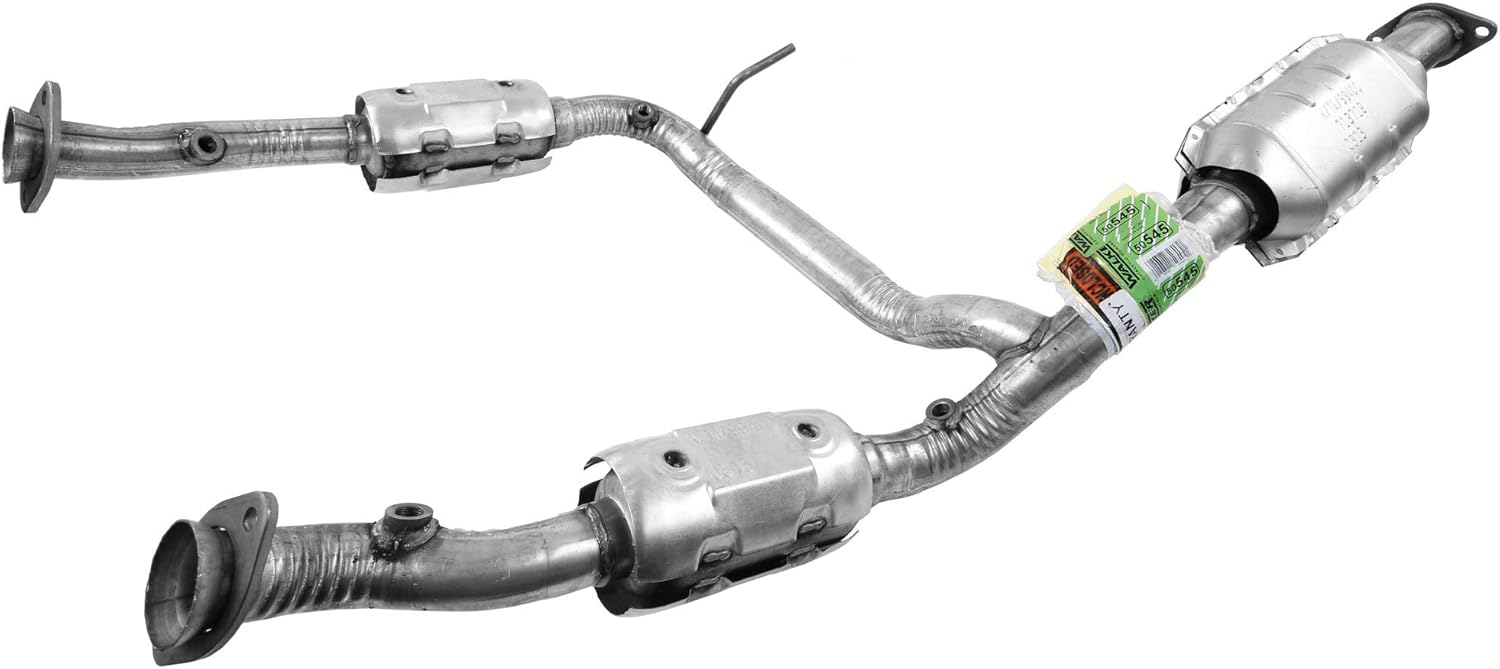
| Compatible vehicles | 2002–2005 Ford Explorer, 2002–2005 Mercury Mountaineer |
|---|---|
| Direct fit | Yes — bolt-on with OE-style hangers and flanges |
| EPA compliance | For OBDII vehicles (1996 and newer) |
| Construction | Stainless steel with aluminized heat shields when originally equipped |
The Walker Ultra 50545 is a direct-fit catalytic converter designed to replace the factory unit on Ford Explorer models covered by the listing. It installs as a bolt-on replacement with OE-style hangers, flanges and heat shields so technicians can avoid welding or heavy fabrication in most cases. The unit features a factory-quality washcoat and a specified precious metal load intended to restore emissions control and maintain exhaust flow for OBDII vehicles. Constructed with strong stainless and thick flanges and brackets, it is built to withstand undercarriage exposure and repeated use. In practice the converter speed-up repairs and helps the vehicle return to compliant tailpipe emissions, though a few owners report minor fitment adjustments may be required during installation. This is a professional-grade replacement aimed at reliable emissions performance rather than performance upgrades or custom exhaust work.
Best for: Balanced buyers who want a reliable, factory-replacement catalytic converter for a Ford Explorer and prioritize emissions compliance and straightforward installation.
Less Ideal for: Drivers looking for performance-oriented exhaust upgrades, custom-fit fabrication projects, or converters for other vehicle models should look elsewhere.
- Direct-fit bolt-on design with OE-style hangers and flanges for simpler installation
- EPA-compliant for OBDII vehicles to restore required emissions control
- Factory-style washcoat and optimized precious metal load to match emissions performance
- Stainless construction with thick flanges and brackets for durability
- Some buyers reported fitment variation that required minor modifications during installation
- Not intended as a performance upgrade; focused on emissions restoration
Verdict A durable, factory-style direct-fit replacement that restores emissions compliance on specified Ford Explorer models, with occasional minor fitment tweaks during installation.
Choosing the Right Ford Explorer Catalytic Converter: Key Factors to Consider
Fitment and Compatibility
Correct fitment is critical because the catalytic converter must align with the Ford Explorer exhaust layout, mounting points, and oxygen sensor locations. A converter that does not match those specifics can cause exhaust leaks, poor sealing, or trigger diagnostic trouble codes.
When fitment is accurate, installation is simpler and often avoids cutting or custom fabrication. Verify flange style, pipe diameter, and sensor boss placement to ensure the unit matches your Explorer’s model year and engine. Considering compatibility reduces the chance of return or rework and helps maintain emissions performance.
Substrate and Catalyst Material
The internal substrate and catalytic coating determine how effectively the converter reduces pollutants. Materials and washcoat formulations influence conversion efficiency for hydrocarbons, carbon monoxide, and nitrogen oxides, and affect heat tolerance.
A robust substrate design and a well-applied catalyst layer can also resist thermal degradation and clogging over time. Look for construction details that indicate ceramic or metallic cores suited to the Explorer’s operating temperatures and driving patterns, since those choices affect longevity and sustained emissions control.
Build Quality and Corrosion Resistance
Catalytic converters operate under high thermal stress and are exposed to moisture and road salt, so exterior construction matters. Durable shell materials, quality welds, and corrosion-resistant coatings extend service life and prevent premature failure from rust or structural cracking.
Good build quality also reduces the likelihood of exhaust leaks at seams and flanges. Prioritize units with thicker housings, consistent weld beads, and protective finishes that withstand road conditions common where you drive the Explorer.
Sensor and Port Retention
Many Ford Explorer engines rely on upstream and downstream oxygen sensors to monitor catalyst performance. A replacement converter should retain the correct sensor ports in the right locations and thread sizes so sensors can be reinstalled without modification.
Proper sensor placement ensures the vehicle’s engine control system receives accurate readings. Units that lack factory-style sensor bosses often require adaptors or relocation, which can cause diagnostic issues or require additional sealing steps during installation.
Installation and Serviceability
Installation considerations affect total repair time and complexity. Some converters are designed for bolt-on replacement while others require welding or cutting of existing pipes. The former can be faster and more reversible, while the latter may provide a more permanent joint but needs welding skills or shop time.
Serviceable features like replaceable flanges, clear install instructions, and included gaskets or hardware reduce headaches. Also consider whether oxygen sensors can be swapped without removing the entire unit, and whether the design allows future repairs without replacing the whole assembly.
Emissions Performance and Certification
Emissions performance is the primary purpose of a catalytic converter, so look for units that meet applicable emissions certification or testing standards for passenger vehicles. Certification indicates the unit has been evaluated for its ability to reduce regulated pollutants under defined test cycles.
Certified or well-documented performance gives greater confidence that the replacement will restore the Explorer’s compliance with emissions requirements. Consider documented conversion efficiencies and whether the unit is intended for use on vehicles that operate in areas with strict emissions inspections.
FAQ
How do I know if my Ford Explorer catalytic converter needs replacing?
Common signs include a persistent check engine light, reduced engine power, or noticeably poor exhaust odor. You may also hear rattling from under the vehicle if the internal substrate is damaged. Diagnostic trouble codes related to catalyst efficiency or oxygen sensor readings often indicate the converter is not performing as expected.
Can I install a replacement catalytic converter myself?
It depends on your skills and the specific unit. Some converters are bolt-on replacements that a competent DIYer can handle with basic tools, while others require cutting and welding the exhaust system. Consider access to proper tools, safety equipment, and whether oxygen sensors can be removed and reinstalled without difficulty.
Will replacing the catalytic converter fix a check engine light right away?
Replacing a faulty converter can clear codes related to catalyst efficiency, but the vehicle’s computer may need several drive cycles to confirm improved performance. If related sensors or wiring were damaged, those must be addressed as well. Running a diagnostic scan after replacement helps verify the issue is resolved.
What affects long-term performance of a new catalytic converter?
Performance depends on correct fitment, engine condition, and exposure to contaminants. An engine running rich, burning oil, or with coolant leaks can foul the catalyst and shorten its life. Proper installation, secure seals, and addressing underlying engine issues help maximize service life.
Do sensor locations matter when choosing a replacement for a Ford Explorer?
Yes. Oxygen sensors monitor upstream and downstream catalyst activity, so replacement units must provide correct sensor bosses in matching positions. Incorrect sensor placement can lead to inaccurate readings and persistent diagnostic codes, even if the converter matures otherwise.
How We Chose the Best Ford Explorer Catalytic Converter
To assemble this list we applied a focused set of editorial filters relevant to Ford Explorer exhaust repairs. Primary criteria included fitment accuracy to specific Ford Explorer model years and engine variants, long-term durability against heat and corrosion, and catalytic substrate design that targets common emission compounds. We also weighed ease of installation, including whether the unit supports bolt-on replacement or requires welding, and whether it retains oxygen sensor ports and flange configurations used on the Explorer. We excluded universal or generic converters that do not match Explorer factory mounting points or sensor locations. We also filtered out units with unclear construction details or lacking documentation on substrate type and thermal ratings. Final selections prioritize converters that balance correct fitment, emission control effectiveness, and serviceability for typical Ford Explorer exhaust systems.
Our full evaluation process is outlined in our review methodology.
Conclusion
When choosing a catalytic converter for a Ford Explorer, prioritize correct fitment, sensor retention, and materials that tolerate high heat and road corrosion. Those factors most directly influence emissions control, installation complexity, and long-term reliability. Balance ease of installation against build quality and documented emissions performance. Address any engine issues that could foul a new converter before installing to protect your investment and ensure the replacement restores proper exhaust function.
Explore More:
- Check out all Ford Explorer parts & accessories
- Explore Exhaust & Emissions
- Browse all Auto Parts
