

Note: This article contains affiliate links. If you click on these links and make a purchase, I may earn a small commission at no extra cost to you. This helps support my research and content. Read my full affiliate disclosure here.
Choosing the right Ford Explorer radiator matters because cooling-system health directly affects engine performance and longevity. If the radiator is undersized, damaged, or poorly matched to your vehicle, you can see overheating, coolant loss, and reduced efficiency. This guide highlights the top shortlisted radiators for the Ford Explorer and explains the practical tradeoffs that matter most.We evaluated candidates across cooling capacity, construction quality, and fitment to the Explorer. Read on for the shortlisted options and the key factors we used to assess them.
Looking for other parts? See all Ford Explorer parts & accessories.
Top Picks at a Glance
| Best Reviewed A top-rated pick with lots of positive feedback | DWVO Radiator Compatible with 1998–2005 Ford Explorer 4.0L (Direct Fit) |  |
| Most Popular A crowd favorite that many people choose with confidence | TRQ Radiator Assembly with Aluminum Core and Plastic Tanks (Direct-Fit) |  |
| Best Quality Built to a higher standard if you want something more solid | YITAMOTOR Radiator for 2007–2010 Ford Explorer Sport Trac / 2007–2010 Mercury Mountaineer |  |
| Best Budget The cheapest option that still gets the job done reliably | AUTOSAVER88 Radiator (compatible with Ford Explorer) |  |
| Most Sold A high-volume bestseller chosen again and again | ASCIUTTA 4-Row All-Aluminum Radiator for 2006–2010 Ford Explorer / Mercury Mountaineer / Sport Trac |  |
| Best Value for Money The sweet spot between price and what you get | DWVO Complete Radiator Compatible with Ford/Mazda 3.0L and 4.0L V6 |  |
| Best Overall The best all-around choice for most situations | DWVO Radiator for 2007–2010 Ford Explorer / Sport Trac and 2007–2010 Mercury Mountaineer |  |
1. DWVO Radiator Compatible with 1998–2005 Ford Explorer 4.0L (Direct Fit)
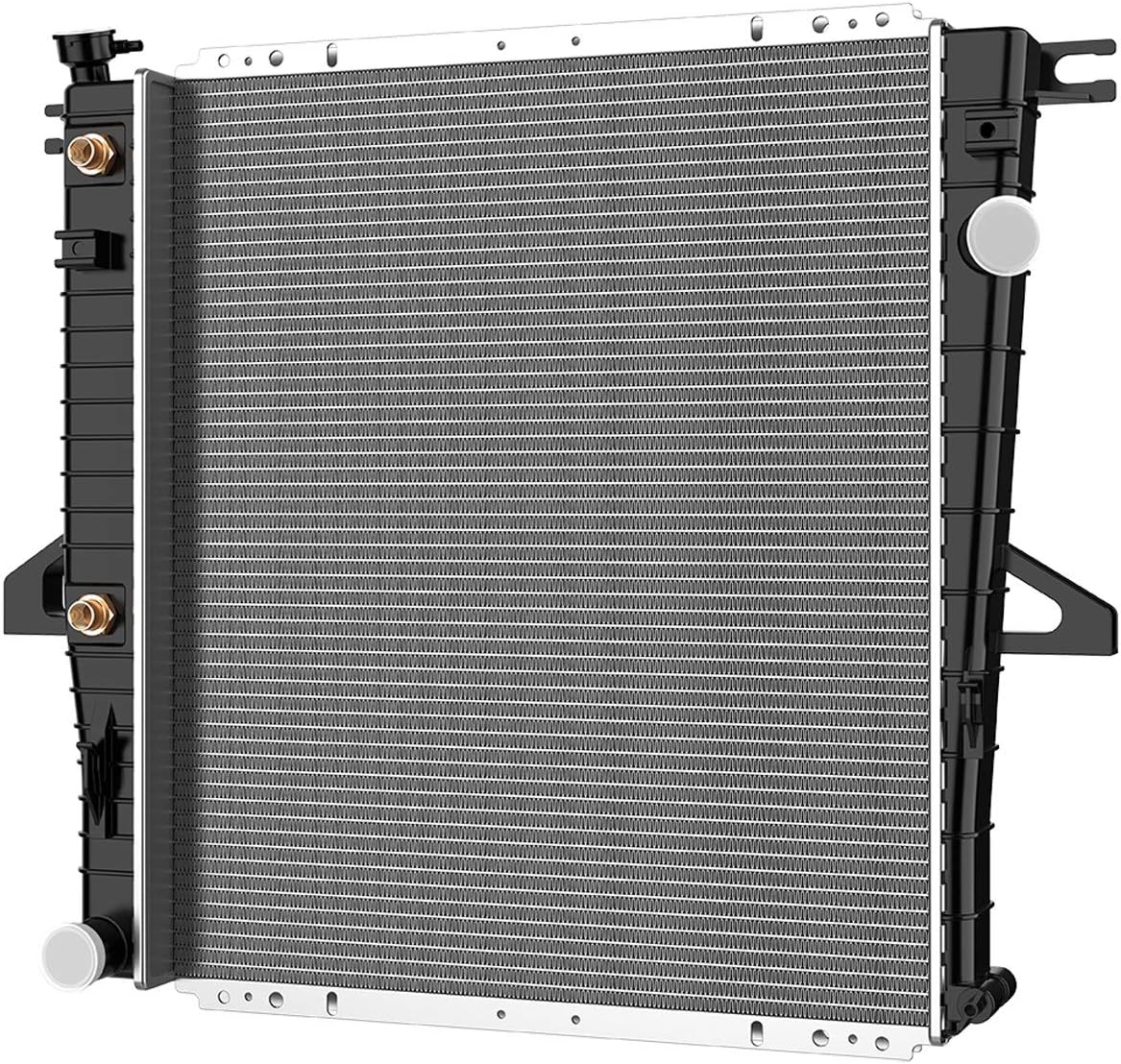
| Compatible engines | 4.0L V6 |
|---|---|
| OEM part numbers | FD37071A, 6L5Z8005DA |
| Core material | Aluminum |
| Transmission cooler | Brass integrated cooler |
This DWVO radiator is a direct replacement engineered to fit 4.0L Ford Explorer models and several Ford Ranger/Mountaineer variants that use the same mounting and OEM part numbers. It installs like a standard factory replacement and is intended for professional or experienced DIY installation; the package includes the radiator and a user manual but not the radiator cap. Key features include a high-density, multi-louvered aluminum core for better heat dissipation, TIG-welded inlet and outlet tanks for strength, and a brass transmission oil cooler built in for automatic transmission models. In practice the unit should restore proper cooling, lower operating temperature under load, and resist leakage when installed correctly. Buyers should plan for a standard replacement process and consider changing the thermostat and hoses while the system is open. The radiator omits a cap and requires careful handling during install; long-term durability will depend on proper installation and coolant maintenance.
Best for: Reliability-focused buyers who prioritize restoring factory-level cooling performance and long-term dependability for a 4.0L Ford Explorer rather than aftermarket styling or performance modifications.
Less Ideal for: Buyers seeking performance-upgrade radiators with larger cores, aftermarket styling, or plug-and-play kits that include all accessories should look elsewhere.
- Direct OEM-compatible fit for specified 4.0L Ford Explorer and related models, reducing modification or adjustment.
- High-density multi-louvered aluminum core for improved cooling efficiency under load.
- TIG-welded tanks and brass transmission oil cooler add durability and integrated cooling for automatics.
- Includes protective foam packaging to reduce shipping damage risk.
- Radiator cap is not included so you must reuse the original or source a replacement separately.
- Intended as a direct replacement so it may require professional installation for best results.
Verdict A practical, reliability-oriented direct-fit replacement radiator that restores factory cooling for 4.0L Ford Explorer owners but requires the original cap and proper installation.
2. TRQ Radiator Assembly with Aluminum Core and Plastic Tanks (Direct-Fit)
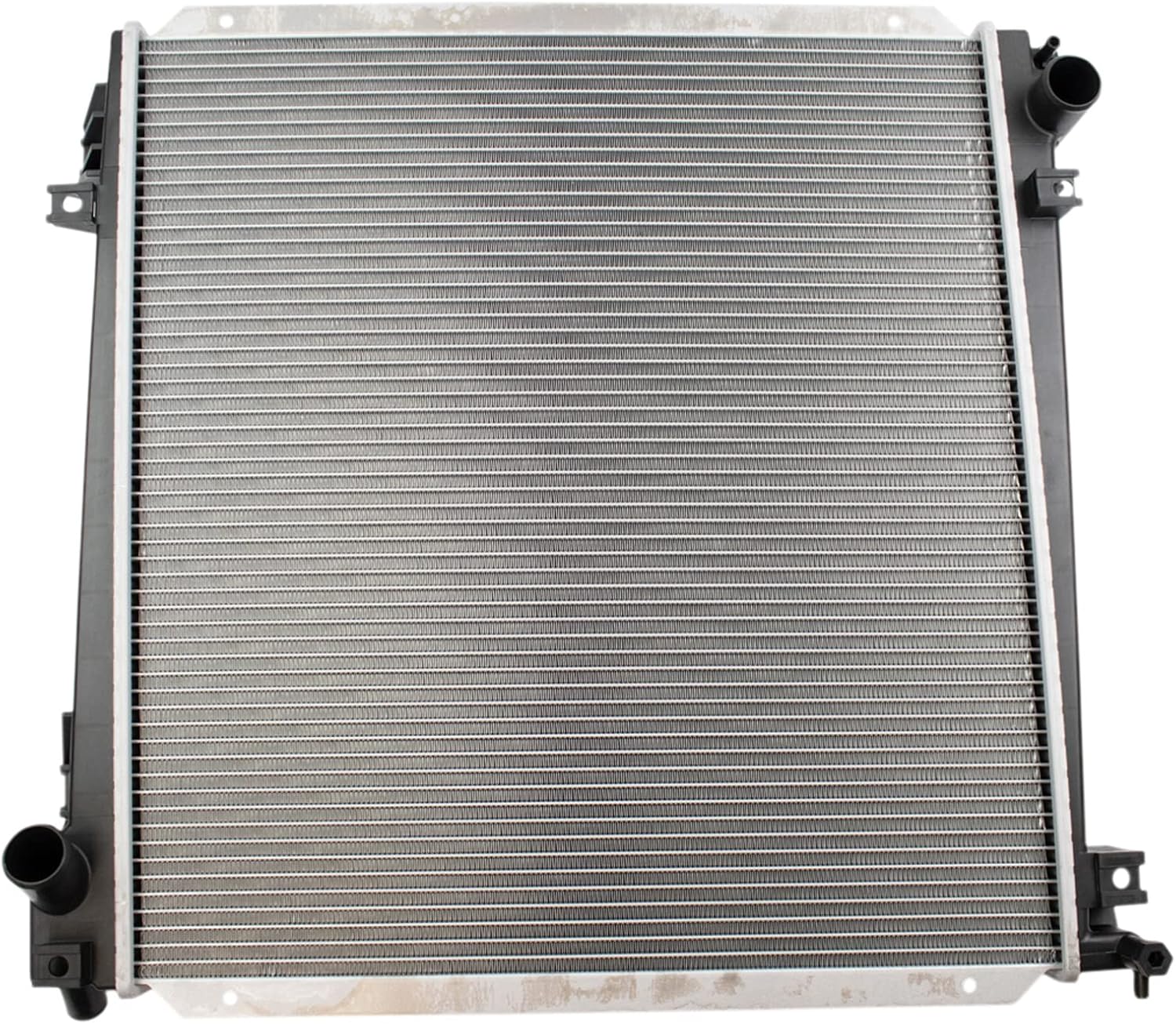
| Fitment | 2002–2005 Ford Explorer V6 4.0L and V8 4.6L; 2002–2005 Mercury Mountaineer V6 4.0L and V8 4.6L |
|---|---|
| Core Material | Aluminum |
| Core Thickness | 1.25 in |
| Inlet/Outlet Diameter | 1.56 in |
| Flow Type | Cross Flow |
This TRQ radiator is a direct-fit replacement built for Ford Explorer and Mercury Mountaineer models from 2002 through 2005 and features an aluminum core with plastic tanks in a cross-flow layout. It installs as a like-for-like swap, matching inlet and outlet locations and mounting points so it is typically used to replace a leaking or damaged factory radiator without modifications. Notable attributes include a single-row 1.25 inch core thickness, 1.56 inch inlet and outlet diameters, and a bottom-left outlet orientation which aligns with the original plumbing on the specified vehicles. The radiator does not include a cap or internal oil/transmission coolers, so expect to reuse existing hardware or source those parts separately. Build quality appears consistent with budget-friendly aftermarket parts: many buyers report good fit and performance, though there are occasional reports of fitment variance or tank failures. For DIYers who value convenience and straightforward installation, this offers a cost-effective alternative to dealer replacement, with the caveat that long-term durability may vary compared with higher-end replacements.
Best for: Convenience-driven buyers who want a low-effort, direct replacement to get their Ford Explorer cooling system back to working order without complex modifications or custom plumbing.
Less Ideal for: Buyers seeking a long-term high-performance or heavy-duty cooling upgrade should consider multi-row or premium metal-core radiators instead.
- Direct-fit design for 2002–2005 Ford Explorer and Mercury Mountaineer to simplify installation
- Aluminum core improves heat transfer compared with all-plastic cores
- Cross-flow orientation and matching inlet/outlet locations for hassle-free plumbing
- Pre-assembled unit eliminates the need for core/tank assembly during replacement
- Radiator cap and any transmission or oil cooler components are not included
- Plastic tanks can be less durable than full-metal assemblies and have occasional reports of leaks
- Single-row core may be less efficient than multi-row performance radiators under heavy load
Verdict A budget-friendly, direct-fit radiator that gets a 2002–2005 Ford Explorer back on the road quickly, though plastic tanks and a single-row core may limit long-term durability and cooling capacity.
3. YITAMOTOR Radiator for 2007–2010 Ford Explorer Sport Trac / 2007–2010 Mercury Mountaineer
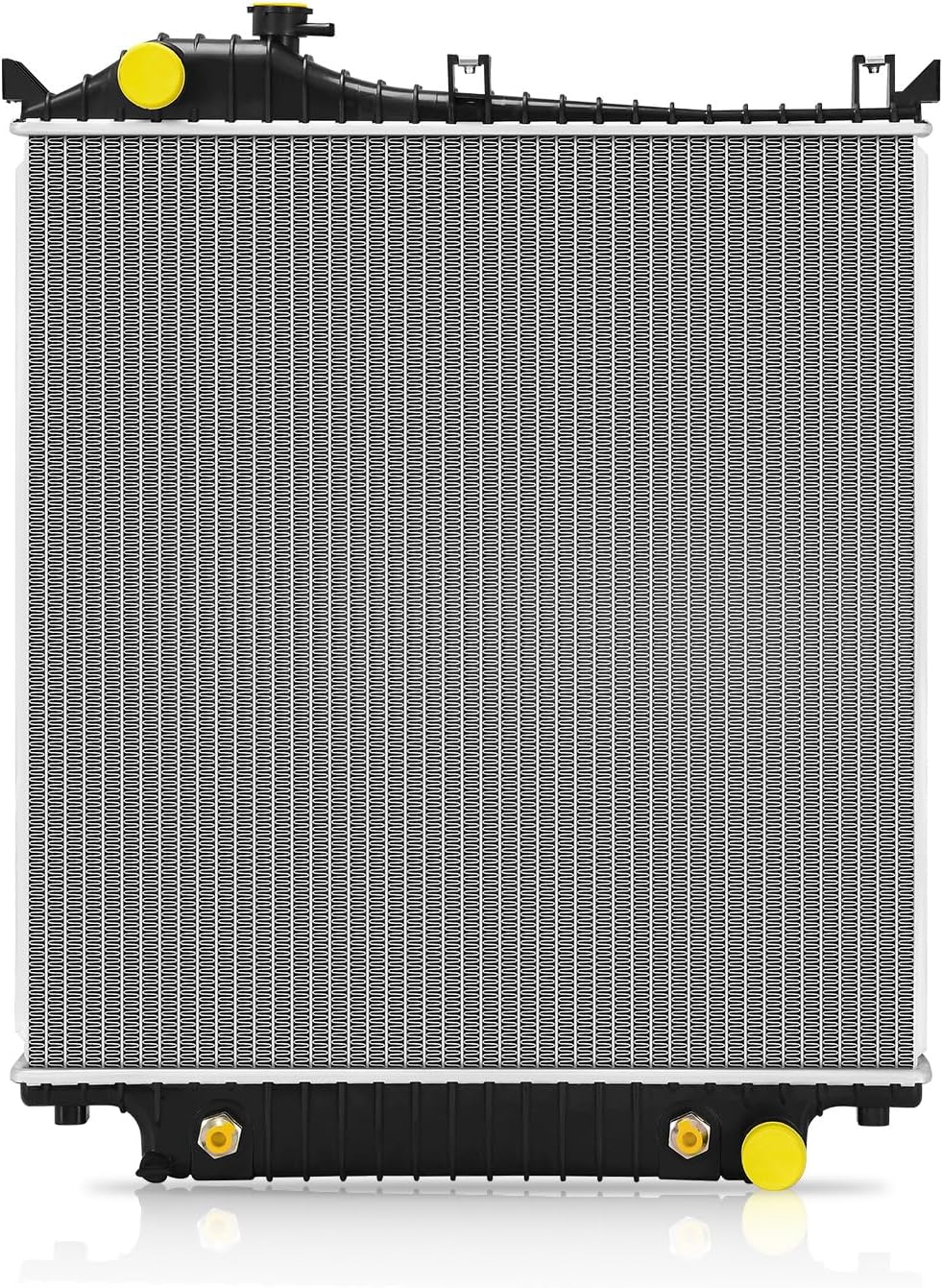
| Compatibility | 2007–2010 Ford Explorer Sport Trac; 2007–2010 Mercury Mountaineer |
|---|---|
| Core Material | Aluminum |
| Outlet/Inlet Tanks | Glass-fiber reinforced nylon PA66 |
| OEM Part Numbers | FO3010281, 6L2Z8005AA, 6L2Z8005AD, 7L2Z8005A, 8L2Z8005A |
This YITAMOTOR radiator is a direct-fit replacement designed for the 2007–2010 Ford Explorer Sport Trac (also listed for compatible Mountaineer applications) and focuses on improved cooling performance and durability. It uses a high-density aluminum core with closely spaced tubes and fins plus an integrated aluminum oil cooler to increase heat rejection compared with standard designs, which helps keep engine temperatures stable under load. The inlet and outlet tanks are glass-fiber reinforced nylon and are seam-welded to reduce the chance of cracks or leaks over time. The unit arrives well packed and is intended to drop into the factory mounting points for straightforward installation when following the instructions. Limitations to note are that the radiator cap is not included and professional installation is recommended for a reliable coolant system refill and pressure check. Fitment must be confirmed for your Explorer configuration before purchase.
Best for: Performance-oriented buyers who want a durable, higher-efficiency replacement to keep a 2007–2010 Ford Explorer Sport Trac running cool under heavy towing or spirited use.
Less Ideal for: Buyers looking for a do-it-yourself budget swap without any additional parts or aftermarket modifications may prefer a simpler, complete-in-box replacement that includes all caps and fittings.
- High-density aluminum core and fins for improved heat dissipation under heavy load
- Integrated aluminum oil cooler to aid overall cooling efficiency
- Seamlessly welded, glass-fiber reinforced nylon tanks to reduce cracking and leaking
- Designed to match factory mounting points for easier installation
- Secure packaging to prevent shipping damage
- Radiator cap is not included so a separate purchase or reuse of the original cap is required
- Professional installation is recommended which adds labor cost and time
Verdict A performance-focused, factory-style aluminum radiator that improves cooling for the 2007–2010 Ford Explorer Sport Trac but requires confirmation of fitment and a separate radiator cap.
4. AUTOSAVER88 Radiator (compatible with Ford Explorer)

| Core Size | 24" x 21" |
|---|---|
| Manufacturer Part Number | ATRD1014 |
| OEM Part Number | 6L5Z8005DA, 1L5Z8005MA, 1L5Z8005NA, XL2Z8005LA |
This AUTOSAVER88 radiator is a direct-fit replacement meant to restore the cooling system on compatible Ford Explorer models. It installs like a factory-style unit and is typically used to replace a leaking or damaged radiator during routine maintenance or repair. Notable features include a machined exterior and listed OEM part numbers to aid fitment, plus a core size noted in the listing that helps determine compatibility. In practice it offers solid fit and function for owners who need an affordable repair option, and many buyers report straightforward installation and correct hose and mount alignment. Limitations include variable core construction and fin density versus factory radiators, which could mean slightly reduced heat exchange longevity under heavy-duty use. Quality control appears inconsistent across units, so inspect the part and packaging on arrival and plan for careful installation. For budget repairs it delivers good value, but those needing extended durability or higher cooling capacity may prefer a more premium aftermarket or performance radiator.
Best for: Budget-conscious owners who need an inexpensive, immediate radiator replacement for routine repairs and prioritize getting their Ford Explorer back on the road affordably.
Less Ideal for: Drivers planning heavy towing, prolonged high-load use, or those who prioritize maximum long-term durability and cooling capacity should consider a higher-end radiator instead.
- Direct-fit design targeting Ford Explorer fitment for straightforward installation
- Machined exterior and compatible OEM part numbers make matching easier
- Core size provided to verify fit before purchase
- Widely available replacement with many buyers reporting good initial fit
- Core row count and fin density are lower than some factory units which may reduce long-term cooling performance
- Some units show inconsistent manufacturing quality, including bent or poorly formed auxiliary lines
Verdict A cost-focused, direct-fit radiator for Ford Explorer owners who need an affordable repair now but may trade some long-term durability and cooling efficiency.
5. ASCIUTTA 4-Row All-Aluminum Radiator for 2006–2010 Ford Explorer / Mercury Mountaineer / Sport Trac

| Vehicle fitment | 2006–2010 Ford Explorer, 2006–2010 Mercury Mountaineer, 2007–2010 Explorer Sport Trac |
|---|---|
| Core rows | 4 Row |
| Core material | All Aluminum |
| Fitment type | Direct Replacement |
| Radiator cap | Included |
This ASCIUTTA radiator is a drop-in style replacement for 2006–2010 Ford Explorer, Mercury Mountaineer and 2007–2010 Explorer Sport Trac with 4.0L or 4.6L engines and automatic transmissions. It uses a 4-row all-aluminum core and aluminum tanks with CNC-machined filler neck and cap, aiming to increase cooling capacity versus single-row or plastic-end radiators. Typical use is as a full radiator swap to restore or upgrade the vehicle cooling system; it includes a radiator cap and OEM-style brass petcock drain to simplify installation and maintenance. Practical benefits include higher coolant capacity and improved heat dissipation helpful for high-load or hotter-climate driving, plus TIG welding and braze-core construction for leak resistance. Important limitations are that a few buyers needed small modifications to mounts or transmission cooler connections during installation, so it may not be a perfect plug-and-play fit on every submodel or accessory configuration. Expect a mostly robust upgrade with occasional fitment work on older vehicles or nonstandard trims.
Best for: Risk-averse mainstream buyers who prioritize a durable, higher-capacity factory-style replacement to avoid future overheating and frequent repairs.
Less Ideal for: Drivers who want a guaranteed no-modification installation across all submodel variants or those unwilling to perform minor vehicle-side adjustments should consider alternatives or professional installation.
- All-aluminum 4-row core for greater cooling capacity compared with single-row or plastic-end radiators
- CNC-machined filler neck and cap for a secure factory-quality sealing interface
- Direct replacement fitment designed for specific 2006–2010 Explorer, Mountaineer and Sport Trac models
- Includes radiator cap and brass petcock drain to simplify installation and service
- TIG welded and brazed core construction offers improved durability and leak resistance
- Some buyers reported minor fitment issues requiring trimming or adapting mounting tabs and transmission cooler lines
- Not guaranteed exact plug-and-play on every submodel or vehicles with aftermarket accessories
Verdict A stout all-aluminum 4-row replacement that boosts cooling for 2006–2010 Explorer-family vehicles but may need minor fitment tweaks on some examples.
6. DWVO Complete Radiator Compatible with Ford/Mazda 3.0L and 4.0L V6

| Compatible engines | 3.0L and 4.0L V6 |
|---|---|
| Fitment | Select Ford and Mazda trucks and SUVs (1997–2011 model range listed) |
| Core material | Aluminum |
| Transmission cooler | Brass integrated oil cooler |
This DWVO complete radiator is a direct replacement for a range of late 1990s–2000s Ford and Mazda 3.0L and 4.0L V6 applications and is intended to be a budget-friendly, drop-in fix for overheating or leaking factory radiators. It installs like a factory unit and includes a high-density multi-louvered aluminum core, TIG-welded inlet and outlet connections and a brass transmission oil cooler to maintain cooling and transmission temperatures. Buyers will appreciate the fixed foam packaging and treated coating that help reduce shipping damage and corrosion risk. In practice the radiator performs well for many owners who report straightforward installs and stable operating temps, but quality control appears mixed across units with some reports of leaks and clamp failures under higher pressure. Professional installation is recommended because the radiator ships without a cap and some users replace stock spring clamps during installation. For a practical optimizer wanting the lowest reasonable cost to restore cooling, it can be a solid pick but expect occasional variability in fit or finish compared with higher-end all-aluminum welded radiators.
Best for: A practical optimizer who wants the most cooling performance they can get for the price while accepting occasional variability and being willing to handle a modest DIY or paid install.
Less Ideal for: Buyers seeking a long-term, high-end all-aluminum welded radiator for heavy-duty use or high-performance applications should consider premium alternatives.
- Direct OEM-style fitment for many Ford and Mazda 3.0L and 4.0L V6 models, simplifying installation
- High-density multi-louvered aluminum core and brass transmission cooler help maintain engine and transmission temperatures
- TIG-welded connections and treated coating improve durability and corrosion resistance
- Packaging includes corner foam to reduce risk of shipping damage
- Does not include a radiator cap, requiring a separate purchase or reuse of the original cap
- Some buyers report inconsistent quality control including leaks or inadequate hose retention under pressure
- Not all units match the durability of premium all-aluminum, fully welded radiators
Verdict A cost-conscious direct-fit radiator that restores cooling effectively for many Ford/Mazda V6 trucks but can show unit-to-unit quality variation, so expect to inspect and possibly upgrade clamps during install.
7. DWVO Radiator for 2007–2010 Ford Explorer / Sport Trac and 2007–2010 Mercury Mountaineer

| Fitment | 2007–2010 Ford Explorer Sport Trac; 2007–2010 Mercury Mountaineer |
|---|---|
| Engine compatibility | 4.0L and 4.6L V6/V8 |
| Construction | Aluminum core with TIG-welded joints and PA66 GF30 tanks |
| Transmission cooler | Integrated brass transmission oil cooler |
This DWVO radiator is a complete direct-fit replacement for 2007–2010 Ford Explorer Sport Trac and 2007–2010 Mercury Mountaineer with 4.0L and 4.6L engines. It swaps in place of the factory unit and is intended for routine cooling system repairs or full radiator replacement during engine service. Notable features include a high-density multi-louvered fin core for better heat dissipation, TIG-welded construction on the aluminum core, PA66 GF30 inlet and outlet tanks, and an integrated brass transmission oil cooler. The package arrives with foam supports to prevent shipping damage and a user manual; the radiator cap is not included. In practice this model offers near-factory fitment and cooling performance, which users report keeps operating temperatures well below the gauge midpoint and installs with basic mechanical skills. Limitations to consider are that professional installation is recommended if you are not comfortable with coolant and transmission lines, and the radiator ships without a cap so you may need to reuse the OEM cap or purchase one separately.
Best for: Buyers seeking a balanced, reliable factory-replacement radiator that restores cooling performance and fitment without choosing an OEM part; ideal for owners who prioritize dependable, long-term replacement over aftermarket styling.
Less Ideal for: Not a good choice for someone who wants a performance-upgrade radiator with larger capacity or aftermarket features, or for owners who need a unit that includes every small accessory in the box.
- Direct factory-quality fit for specified Ford Explorer Sport Trac and Mercury Mountaineer model years
- High-density multi-louvered fins and aluminum core for improved cooling efficiency
- TIG-welded construction and treated coating for corrosion resistance and durability
- Includes built-in brass transmission oil cooler for automatic transmission heat management
- Radiator cap is not included with the unit
- Professional installation recommended for users unfamiliar with coolant and transmission line work
Verdict A practical, near-factory direct-fit radiator that restores cooling reliability for 2007–2010 Explorers and Mountaineers while avoiding premium performance upgrades.
Choosing the Right Ford Explorer Radiator: Key Factors to Consider
Cooling Capacity and Thermal Efficiency
Cooling capacity determines how effectively a radiator moves heat away from the engine. A radiator with higher thermal efficiency will maintain lower engine temperatures during sustained high-load conditions like towing or highway climbing.
Look for radiators with adequate core surface area and optimized fin density because these features improve heat transfer. Consider how your driving habits affect demand; frequent heavy loads require radiators that sustain peak cooling without excessive coolant flow restriction.
Fitment and Mounting Compatibility
Proper fitment is essential to avoid leaks, misaligned hoses, or stress on mounting points. A radiator that matches the Ford Explorer's mounting locations, inlet and outlet orientation, and hose diameters reduces installation time and minimizes the chance of drivability issues.
Pay attention to filler neck height, mounting tab locations, and any required brackets or shims. If a radiator requires adapter hoses or modification, factor the complexity and potential for future leaks into your decision.
Construction Materials and Corrosion Resistance
The materials used for the core and tanks affect a radiator's lifespan and resistance to corrosion. Aluminum cores with welded or crimped tanks are common for their balance of weight and heat transfer, while brass or copper constructions can offer repairability but may be heavier.
Also consider protective coatings and tank sealing methods, since long-term exposure to coolant and road salts can cause degradation. Choosing materials and construction methods suited to your climate and maintenance habits reduces the risk of premature failure.
Flow Dynamics and Pressure Handling
How coolant flows through the core affects both heat rejection and the likelihood of hotspots. Radiators with well-designed internal channels promote even distribution and reduce pressure drops that can hamper thermostat and water pump performance.
Ensure the radiator can handle the system's expected pressure without deforming or leaking. Higher pressure ratings often correlate with more robust seals and tank attachments, which can be important for vehicles that operate under heavy loads or at high engine speeds.
Ease of Installation and Serviceability
Installation considerations include access to mounting bolts, alignment with existing hoses and sensors, and whether additional parts such as brackets or hose adapters are needed. A radiator that installs with minimal modification reduces labor time and the chance of installation errors.
Serviceability matters if you expect to perform coolant flushes or repairs yourself. Radiators that allow straightforward access to drain petcocks, fittings, and sensor ports simplify routine maintenance and potential future repairs.
Durability and Warranty Support
Durability combines construction quality, resistance to corrosion, and robustness of joints and seals. A durable radiator withstands thermal cycling and vibration without cracking or leaking over time.
Warranty coverage and manufacturer support provide an added layer of assurance. When evaluating options, consider reported longevity and the scope of warranty protection to weigh long-term ownership risks.
FAQ
How do I know when my Ford Explorer radiator needs replacement?
Common signs include visible coolant leaks under the vehicle, frequent overheating, discolored or rusty coolant, and a noticeable drop in cabin heat. Also watch for low coolant level warnings and steam from the engine bay. If you observe these symptoms repeatedly, inspecting the radiator for leaks, corrosion, or damaged fins is a good next step.
Can I replace a Ford Explorer radiator myself?
Many owners can perform a radiator replacement with basic mechanical skills and tools, especially if the replacement matches existing mounting points. Tasks include draining coolant, disconnecting hoses and sensors, and bleeding the cooling system after installation. If you are uncomfortable with coolant handling or bleeding procedures, seek professional help.
Should I flush the cooling system when installing a new radiator?
Flushing the cooling system is often advisable to remove sediment, scale, and old coolant that can reduce performance. A clean system helps new radiators work effectively and can prevent premature clogging or corrosion. Use the correct coolant type and follow recommended flushing procedures for the Ford Explorer.
What causes a radiator to start leaking or overheat?
Leaks and overheating often stem from corrosion, physical damage to fins or tanks, degraded seals, or blocked passages due to sediment. Poor coolant maintenance and prolonged exposure to contaminants can accelerate these issues. Addressing underlying causes such as coolant condition and system pressure is important when repairing or replacing a radiator.
Is an OEM part necessary for proper fitment?
OEM radiators are typically designed to match the vehicle's original specifications, which can simplify fitment. However, many aftermarket units are engineered to the same mounting and connection standards. The key is verifying precise fitment details and construction quality rather than assuming one source always fits better than another.
How long does a typical radiator last in a Ford Explorer?
Radiator lifespan varies depending on materials, climate, driving habits, and maintenance. With proper coolant care and occasional inspections, many radiators last several years but may fail sooner if exposed to corrosive conditions or physical damage. Regular checks for leaks and coolant condition help identify issues early.
How We Chose the Best Ford Explorer Radiator
We focused on traits that matter specifically when selecting a radiator for the Ford Explorer. Primary criteria included cooling capacity under load, which reflects how well a radiator disperses engine heat during towing or heavy driving; build materials and construction quality, including core type and tank materials, which influence durability and resistance to corrosion; and fitment accuracy, to ensure correct mounting points, inlet and outlet locations, and hose alignment for the Explorer.Additional factors were ease of installation, measured by how straightforward bolt patterns and hose connections are; serviceability, such as availability of replacement parts or repair options; and thermal efficiency ratings or flow characteristics when available from manufacturers. We excluded units lacking clear fitment information for the Ford Explorer, radiators with unknown construction details, or components intended only for racing applications. The result is a list of top options that balance cooling performance, durability, and compatibility with the Ford Explorer platform.
Our full evaluation process is outlined in our review methodology.
Conclusion
When choosing a Ford Explorer radiator, prioritize fitment accuracy, cooling capacity, and durable construction. Those elements determine how well the radiator manages engine heat, resists corrosion, and integrates with existing hoses and mounts.Balance ease of installation and serviceability against long-term durability and warranty support. By focusing on the factors discussed above, you can select a radiator that meets your driving demands and minimizes the need for future repairs.
Explore More:
- Check out all Ford Explorer parts & accessories
- Explore Radiators Maintenance & Repair Guides
- Explore Cooling System
- Browse all Auto Parts
