

Note: This article contains affiliate links. If you click on these links and make a purchase, I may earn a small commission at no extra cost to you. This helps support my research and content. Read my full affiliate disclosure here.
If you drive a GMC Sierra 3500 HD for towing or heavy-duty work, reliable oil cooler lines matter more than you might think. Worn or leaking lines can lead to reduced oil pressure, hotter engine oil, and the risk of costly engine damage during demanding use. Choosing the right oil cooler lines helps keep oil temperatures in check and prevents fluid loss under load.This guide covers our shortlist of the top oil cooler lines for the Sierra 3500 HD and explains the evaluation criteria we used, including materials, fittings, and installation practicality. Read on to understand how each factor affects real-world durability and serviceability for this truck, then jump to the product list to see the top options that meet those standards.
Top Picks at a Glance
| Best Quality Built to a higher standard if you want something more solid | Dorman Engine Oil Cooler Hose Assembly (PTFE braided stainless) |  |
| Best Value The sweet spot between price and what you get | DOVOSO Oil Cooler Hose Assembly Replacement for Select GM Trucks and SUVs |  |
| Highest Rated A top-rated pick with lots of positive feedback | ACDelco GM Genuine Parts 84828848 Engine Oil Cooler Hose Kit |  |
| Most Popular A crowd favorite that many people choose with confidence | Dorman Engine Oil Cooler Hose Assembly |  |
| Best Seller A high-volume bestseller chosen again and again | GM Genuine Parts Oil Cooler Hose (84791853) |  |
1. Dorman Engine Oil Cooler Hose Assembly (PTFE braided stainless)

| Brand | Dorman |
|---|---|
| Model | 625-168XD |
| Manufacturer Part Number | 625-168XD |
| OEM Part Number | 15203890; 15765439 |
This Dorman oil cooler hose assembly replaces the brittle factory rubber lines with PTFE tubing wrapped in braided stainless steel and crimped fittings for the rigid sections, providing a more durable repair for GMC Sierra 3500 HD applications. It is designed to match the factory fit and connection points, so installation follows the original routing and mounting locations. The upgraded hoses are claimed to be up to four times stronger than factory-style rubber and remain flexible in extreme cold, which reduces the chance of leaks or burst lines that can cause severe engine damage. Because the hose ends are crimped over carbon steel tubing and use factory-style fittings, the assembly offers a secure connection without custom modification. The main compromises are that this is a direct replacement assembly rather than a performance cooler upgrade and fitment must be confirmed for the exact model and year before purchase. For owners seeking a robust, long-lasting replacement line that improves durability over factory rubber, this is a practical option.
Best for: Buyers who prioritize a durable, long-lasting repair for heavy-duty GMC Sierra 3500 HD use and want to avoid the common failure of factory rubber oil lines.
Less Ideal for: Drivers looking to increase oil cooling capacity or add a performance oil cooler should consider dedicated cooler upgrades rather than a hose assembly replacement.
- Braided stainless steel over PTFE tubing greatly increases abrasion and pressure resistance.
- Hoses remain flexible in extreme low temperatures, reducing cold-weather brittleness.
- Crimped fittings over carbon steel tubing provide secure, factory-style connections.
- Engineered to match factory fit for straightforward installation without modification.
- Not a performance oil cooler or heat-exchange upgrade; it replaces lines only.
Verdict: If you need a stronger, factory-fit replacement hose assembly for a GMC Sierra 3500 HD to prevent leaks and line failures, this Dorman PTFE braided line is a reliable choice.
2. DOVOSO Oil Cooler Hose Assembly Replacement for Select GM Trucks and SUVs

| Brand | DOVOSO |
|---|---|
| Material | Plastic, Rubber |
| Part Number | For 20828695 |
| Included Components | 1*Oil Cooler Hose Assembly |
This oil cooler hose assembly replaces the inlet and outlet lines that carry engine oil to the external cooler on compatible GM V8 trucks and large SUVs. It is supplied as a single preformed assembly made from plastic and rubber materials intended to handle high-temperature oil flow. Typical installation is a straightforward swap of the factory lines: remove the old hoses, transfer any required clips or fittings, and secure the new assembly to the cooler and engine connections. The product lists direct-fit compatibility with many Chevrolet and GMC full-size trucks and SUVs from model years around 2007 through 2014, which helps avoid trimming or modification during installation. Practical benefits include a ready-to-install assembly that restores oil routing and reduces leak risk compared with repairing multiple individual sections. Limitations are that the part is a non-OEM aftermarket unit with plastic and rubber construction, so long-term durability under heavy towing or extreme duty may differ from factory metal-reinforced lines, and fit should be confirmed against your vehicle VIN before purchase.
Best for: Buyers who prioritize a practical, ready-to-install replacement for worn or leaking oil cooler lines on compatible GM full-size trucks and SUVs and want to get the cooling circuit back to service quickly.
Less Ideal for: Drivers planning heavy towing, extreme-duty use, or those seeking factory-metal-reinforced lines for maximum long-term durability should consider a heavy-duty or OEM-style alternative.
- Sold as a complete inlet and outlet assembly for easier one-piece replacement
- Direct-fit compatibility listed for many GM full-size trucks and SUVs of the 2007–2014 era
- Preformed routing reduces installation time compared with fabricating separate hoses
- Made of plastic and rubber rather than metal-braided or OEM-style reinforced line
- Compatibility covers a range of vehicles so buyers should verify vehicle-specific fit before installing
Verdict: A convenient, direct-fit replacement assembly that gets oil flowing to the cooler again quickly for compatible GM full-size trucks and SUVs.
3. ACDelco GM Genuine Parts 84828848 Engine Oil Cooler Hose Kit

| Brand | ACDelco |
|---|---|
| Material | Hose material (e.g., rubber or silicone) |
| Manufacturer Part Number | 84828848 |
| Manufacturer | ACDelco |
This ACDelco GM Genuine Parts oil cooler hose kit replaces the factory oil cooler hose assembly and includes bracket, gasket, and bolt for installation. It is intended for transferring hot engine oil between the engine and the oil cooler and is manufactured to GM specifications for fit and function. In use it provides a like-for-like replacement that restores factory routing and connections, which helps prevent leaks and maintains cooling performance. The kit's durable hose material is designed to withstand high temperatures encountered in heavy-duty towing and long-haul operation. Because it is a direct replacement part from a GM-associated brand, installation is straightforward for technicians and experienced DIYers and it reduces the need for modification or custom fittings. The main limitation is this is a vehicle-specific assembly so fitment must be confirmed for the exact GM application and it does not include unrelated cooling components like the cooler core itself.
Best for: Owners who prioritize reliability and want a factory-style replacement that restores original routing and leak-free service for heavy-duty use and towing.
Less Ideal for: Buyers seeking a universal or performance-upgraded oil cooling solution should look elsewhere since this is a direct factory-spec replacement assembly.
- Manufactured to GM specification for factory-quality fit and function
- Includes bracket, gasket, and bolt for a complete hose assembly replacement
- Durable hose material designed to handle high-temperature oil transfer
- Direct replacement reduces need for custom modifications during installation
- Designed for specific GM applications so it may not fit non‑GM vehicles
Verdict: Choose this ACDelco kit when you want a dependable, factory-spec oil cooler hose replacement that restores original performance and reduces the risk of leaks during heavy-duty use.
4. Dorman Engine Oil Cooler Hose Assembly

| Material Type | Rubber |
|---|---|
| Unit Count | 1.0 Count |
| Item Type Name | Dorman – OIL COOLER LINES |
This Dorman oil cooler hose assembly replaces the original hose routing between the engine and oil cooler to restore proper oil circulation and prevent leaks. It is built from rubber materials and comes as a single preformed assembly to match factory fit and routing for the listed Cadillac, Chevrolet, and GMC models. Installation is straightforward for a mechanically confident DIYer or technician because it requires no special tools and fits into the vehicle's existing clamps and connections. The part is quality tested and backed by Dorman manufacturing standards, which helps reduce the chance of early failure compared with generic hoses. One limitation is that fitment is vehicle-specific, so you must confirm the model year and trim before buying; the assembly also uses rubber rather than upgraded materials like braided stainless, so it prioritizes correct fit and cost over high-performance abrasion or temperature resistance. For routine repairs and restoration on the covered GMC Sierra 3500 HD model years, this part offers a practical, factory-style replacement option.
Best for: Buyers seeking a reliable, factory-style replacement hose for routine repair on a covered GMC Sierra 3500 HD who prioritize correct fit and straightforward installation over performance upgrades.
Less Ideal for: Drivers who want higher-temperature or abrasion resistance for extreme towing, racing, or heavy off-road use should consider upgraded performance hoses instead.
- Direct-fit replacement designed to match factory hose routing and connections
- Made from durable rubber with factory-style construction for reliable oil circulation
- Easy to install without special tools for most technicians and experienced DIYers
- Quality testing and manufacturer support reduce the risk of early defects
- Rubber construction is not as abrasion or heat resistant as braided or aftermarket performance hoses
Verdict: A straightforward factory-style replacement hose assembly that restores proper oil flow on covered GMC Sierra 3500 HD trucks with minimal fuss.
5. GM Genuine Parts Oil Cooler Hose (84791853)
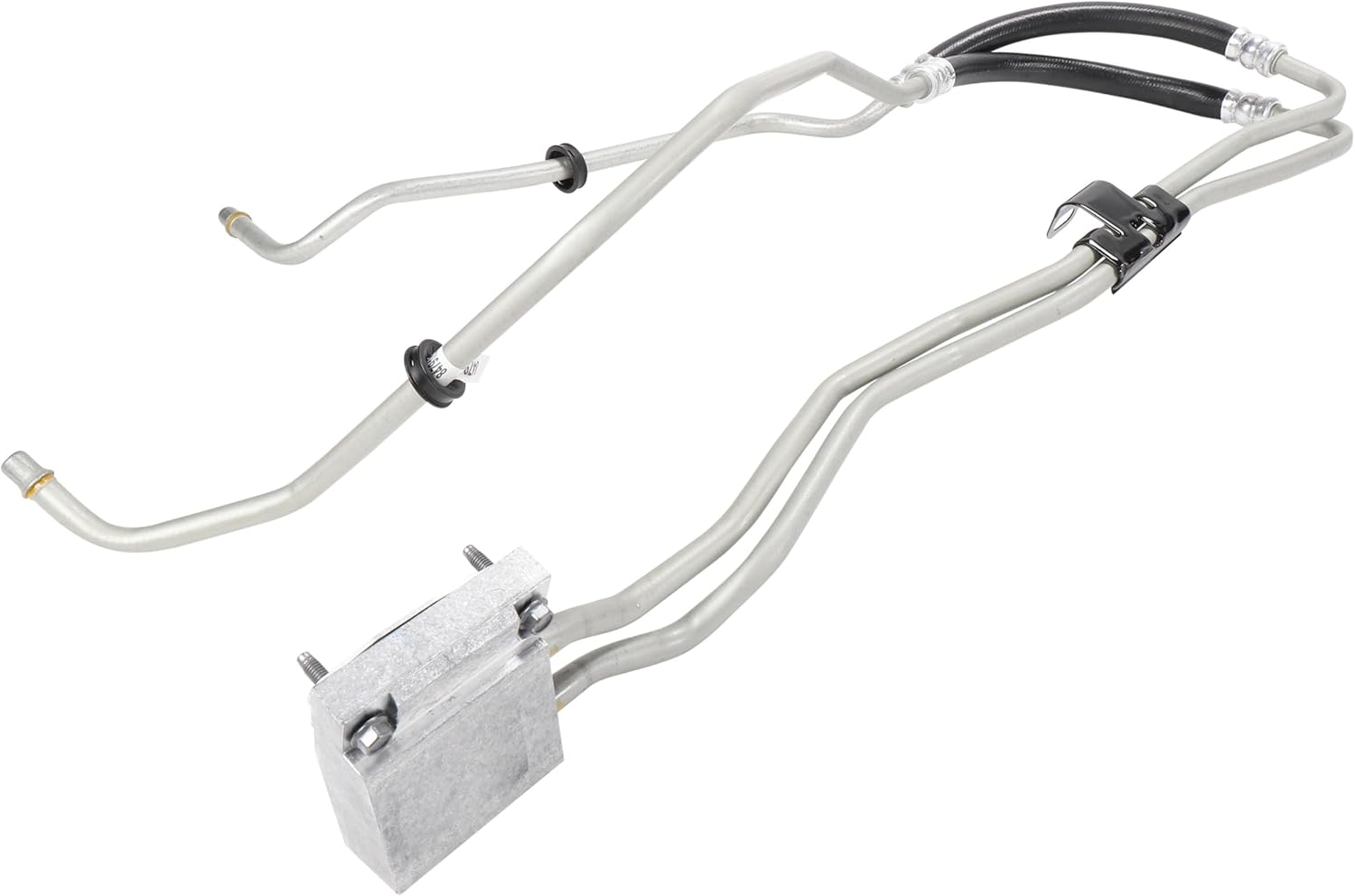
| Material Type | Rubber |
|---|---|
| Item Type Name | Oil Cooler Hose |
| Manufacturer | AC Delco |
| Item Weight | 3.05 Pounds |
This GM Genuine Parts oil cooler hose is a direct-fit replacement designed to restore the engine oil cooling circuit on compatible GM trucks. Made of rubber and built to meet original part specifications, it installs in place of the factory hose for a reliable seal and correct routing. Typical use is straightforward: remove the worn or leaking hose and replace with this unit to stop leaks, prevent oil contamination, and restore proper oil cooler flow. Notable features include factory-brand fitment, materials selected for durability, and exact replacement sizing that simplifies a do-it-yourself swap or a quick shop repair. Practical benefits are peace of mind from using a name-brand part and reduced risk of fitment issues that can arise with aftermarket alternatives. Important limitations are that this is a single replacement hose sold alone and it carries only a short manufacturer warranty period, so buyers should verify fitment for their specific Sierra 3500 HD configuration before purchase.
Best for: A buyer who wants a low-risk, factory-matching replacement for an oil cooler hose on a GMC Sierra 3500 HD and priorities correct fit and straightforward installation.
Less Ideal for: Shoppers looking to replace an entire oil cooler plumbing system or seeking upgraded performance hoses for heavy-duty racing or extreme-duty modification should consider other options.
- Factory-brand design for direct fitment to GM applications
- Rubber construction formulated for durability in oil-carrying service
- Sold as an exact replacement which simplifies DIY or shop installation
- Includes only the single hose so related clamps or fittings may need to be purchased separately
- Manufacturer warranty coverage is limited to a short period
Verdict: Choose this GM Genuine Parts oil cooler hose when you want a factory-quality, direct-fit replacement that minimizes fitment risk for your Sierra 3500 HD.
Choosing the Right GMC Sierra 3500 HD Oil Cooler Lines: Key Factors to Consider
Material and Construction
Material choice determines how well oil cooler lines handle heat, pressure, and abrasion. For a Sierra 3500 HD, look for multi-layer hose constructions or metal lines with protective sleeves that resist oil exposure and high under-hood temperatures. Rubber-only hoses can degrade faster when exposed to heat cycles and road debris, whereas reinforced synthetic hoses or braided stainless steel offer improved lifespan.
Construction quality also affects flexibility and routing. Lines that are too stiff may be hard to bend around brackets or require additional adapters, while overly flexible materials can sag or chafe. Protective outer layers and abrasion-resistant coatings help prevent wear where the line contacts chassis or steering components. Consider whether the construction includes corrosion-resistant fittings to avoid galvanic issues over time.
Fittings and Seals
Fittings control leak potential and ease of installation. OEM-style flare fittings, AN-style fittings, or O-ring sealed connectors are common; each has tradeoffs in sealing reliability and tool requirements. For heavy-duty trucks, fittings with proper torque specs and high-quality sealing surfaces reduce the chance of oil seepage under pressure.
Kits that include new fittings, crush washers, or O-rings remove a common source of post-install leaks and save time. Pay attention to whether the hose kit uses reusable or single-use sealing hardware. Also confirm compatibility with the Sierra 3500 HD factory ports and whether adapters are necessary to match factory threads and seat types.
Fitment and Length Accuracy
Correct fitment means the lines follow factory routing without forcing bends or creating tension. Length accuracy matters because too-short lines can stress fittings and too-long lines may rub against components. For the Sierra 3500 HD, choose lines that mirror the original routing or come with clear trimming instructions for a custom fit.
Some replacement kits include pre-formed bends to match chassis geometry; these reduce installation time and lower the risk of kinks. When kits are universal rather than vehicle-specific, verify the included dimensions and whether the kit provides guidance for trimming and securing the hoses to factory brackets.
Heat and Pressure Ratings
Oil cooler lines experience elevated temperatures and system pressure, particularly under towing or sustained high-load driving. Select lines rated for temperatures and pressures above the truck's normal operating range to provide a safety margin. Higher temperature ratings resist hose swelling and breakdown, and adequate pressure ratings prevent bulging and potential failure.
Consider whether the product lists maximum working pressure and burst pressure and how those figures compare to expected oil system pressures for a heavy-duty diesel or gasoline engine in this truck. Heat shielding or insulation can also reduce heat soak from the engine and exhaust components, extending hose life.
Ease of Installation and Serviceability
Installation complexity affects whether you can do the job at home or need professional help. Kits that include complete hardware, clear instructions, and matching fittings make DIY install more feasible. Pay attention to whether brackets or retaining clips are reused or supplied; missing clips can allow movement and premature wear.
Designs that allow section-by-section replacement instead of full assembly swaps can save time and cost during future repairs. Also consider accessibility of connection points on the Sierra 3500 HD and whether special tools are required to remove factory fittings without damage.
Longevity and Warranty Support
A parts warranty and clear support channels indicate manufacturer confidence and help protect against early failures. For heavy-duty use, prioritize products with multi-year warranties or lifetime coverage on fittings. Warranty terms often reflect expected lifespan, and generous coverage can offset higher upfront cost.
Also evaluate how easily replacement parts such as fittings or clamps are available separately. If a single connector wears, being able to source that component avoids replacing the entire assembly. Check whether the vendor documents maintenance recommendations such as inspection intervals and torque values to extend service life.
Common Symptoms of Failing Oil Cooler Lines
Recognizing symptoms early prevents oil loss and engine damage. Common signs include visible oil drips under the truck near the oil cooler location, a sudden drop in oil level, or component wetness around fittings. These are often the first indicators that a line or fitting is leaking.
Other symptoms include higher-than-normal oil temperature during towing or heavy-load driving, oil pressure fluctuations on the gauge, and a burning oil smell from the engine bay. If you notice any of these signs, inspect both the hose material and the fittings for cracks, swelling, or loose connections.
- Puddles or wet spots beneath the oil cooler area
- Unexplained drop in engine oil level
- Oily residue around fittings or hose junctions
- Rise in oil temperature under load
- Oil pressure gauge instability
When to Replace Versus Repair
Decide between repair and replacement based on the extent of wear, accessibility, and long-term reliability needs. Small, localized leaks at fittings may be repairable by replacing seals or tightening connections. However, hoses with surface cracking, internal swelling, or extensive chafing should be replaced to avoid recurring failures.
For a work truck like the Sierra 3500 HD that sees frequent heavy loads, full replacement of aging or suspect lines is often the more reliable choice. Replacement reduces the chance of repeat service and restores confidence in cooling and oil containment.
- Repair fitting seals for minor leaks if hose body is otherwise sound
- Replace hoses with visible cracking, bulging, or abrasion
- Prefer full replacement when lines are older than recommended service intervals
Routing, Bracketry, and Protecting Lines From Damage
Proper routing and secure bracketry prevent chafing and exposure to heat sources. When installing replacement oil cooler lines, follow factory routing where possible and use existing brackets or supplied clamps to keep hoses away from exhaust components and suspension parts. Protective sleeves or routing clips reduce wear where the hose crosses structural elements.
If your replacement kit lacks specific mounting hardware, plan to reuse factory clips or source compatible retainers. Avoid sharp bends and ensure there is enough slack to account for engine movement.
- Match factory routing and use secure mounting points
- Add protective sleeves at contact points
- Avoid proximity to exhaust or turbocharger heat paths
- Check for clearance during full suspension articulation
Tools and Prep Work for a Successful Install
Preparing the truck and having the right tools minimizes installation time and reduces leak risk. Essential tools include basic hand tools, line wrenches to protect fittings, a torque wrench for proper sealing, and drain pans to capture oil during removal. Cleanliness is critical; keep connection points free of dirt and debris to ensure proper sealing.
Plan for oil changes or top-ups after installation since some oil will be lost during the swap. Inspect factory ports for corrosion or thread damage and be ready to replace crush washers or O-rings as needed to achieve a reliable seal.
- Line wrenches and torque wrench
- Drain pans and shop rags
- Replacement sealing hardware (crush washers, O-rings)
- Protective gloves and eye protection
Maintaining Oil Cooler Lines Over Time
Regular inspections catch wear before it becomes a failure. Include hose condition checks in routine service intervals, looking for soft spots, cracks, or signs of abrasion. Check fittings for seepage and verify clamps remain tight.
After heavy towing, inspect the lines for heat damage and reassess clearances. Replacing small or worn components early can prevent more extensive downtime and keep the Sierra 3500 HD operating reliably under load.
- Inspect hoses every oil change or after heavy towing
- Look for chafing, cracking, or soft areas
- Check fittings and torque values periodically
- Replace protective sleeves if they show wear
How We Chose the Best GMC Sierra 3500 HD Oil Cooler Lines
We focused on attributes that matter for heavy-duty operation and long-term reliability on the GMC Sierra 3500 HD. Primary evaluation criteria included material construction and abrasion resistance, since lines that resist chafing and heat are critical for towing and prolonged engine loads. We also prioritized fitting and sealing quality, examining common connection types and whether kits include new fittings or adapter hardware for secure, leak-free joints.Fitment and compatibility were assessed with attention to factory routing, length, and bends so installers can reuse existing brackets or minimize rerouting. Ease of installation was a factor, covering whether lines come as complete hose kits with clamps and fittings or require additional parts. Heat tolerance and pressure rating were checked to ensure serviceability under typical Sierra 3500 HD operating conditions.We excluded hoses and assemblies intended for passenger cars or light-duty trucks whose pressure and heat ratings do not meet heavy-duty specifications. We also set aside products with unclear material specs or lacking necessary fittings for a direct swap. The resulting picks balance durability, fitment accuracy, and installer-friendly design.
Our full evaluation process is outlined in our review methodology.
FAQ
How can I tell if my oil cooler line is leaking or if oil is coming from another source?
Start by locating the highest concentration of oil and tracing it to the origin. Leaks from cooler lines are often near fittings, the oil cooler area, or along visible hose sections. Clean the area and run the engine briefly to observe fresh seepage. If uncertainty remains, a mechanic can pressure-check the system to isolate the source.
Is it necessary to replace both the feed and return lines at the same time?
It depends on their condition. If both lines show similar age-related wear or one is difficult to access without disturbing the other, replacing both reduces future service and ensures matching durability. For isolated fitting damage, replacing only the affected line may be acceptable.
Can I install replacement oil cooler lines myself with basic tools?
Many owners can complete the swap with common hand tools, line wrenches, and a torque wrench, provided the kit includes compatible fittings and clear instructions. However, if fittings are corroded, ports are damaged, or custom adapters are required, professional installation is advisable.
What should I use to protect lines from heat near the exhaust or turbocharger?
Use heat-resistant sleeves or reflective insulation designed for oil lines. Proper routing away from the hottest components and maintaining adequate clearance are also important. These measures reduce heat soak and extend hose life.
Are aftermarket hose kits compatible with factory fittings on the Sierra 3500 HD?
Compatibility varies by kit. Some replacement kits are designed to match factory thread types and seat styles, while universal kits may require adapters or replacement fittings. Confirm the kit includes compatible fittings or plan to source the correct adapters before starting the job.
What maintenance intervals should I follow for inspecting oil cooler lines on a heavy-use truck?
Inspect oil cooler lines at every major service interval or with every oil change if the truck is used for towing or heavy workloads. After particularly demanding trips, perform an extra visual check for signs of heat damage or abrasion.
Final Verdict
Prioritize oil cooler lines that combine robust materials, correct fitment, and reliable sealing for the GMC Sierra 3500 HD. Durable construction and properly matched fittings reduce leak risk and provide the heat and pressure tolerance needed for heavy-duty use. Balance ease of installation against long-term serviceability when choosing between repair and full replacement.Ultimately, choose a solution that meets the truck's routing and mounting needs, offers clear installation guidance or included hardware, and provides adequate warranty support. That approach minimizes downtime and keeps the engine protected during demanding driving conditions.
