

Note: This article contains affiliate links. If you click on these links and make a purchase, I may earn a small commission at no extra cost to you. This helps support my research and content. Read my full affiliate disclosure here.
If you want better wheel clearance or a wider stance for your 2005-2009 Dodge Dakota, choosing the right wheel spacers matters for both handling and safety. The wrong spacer can cause vibration, improper hub engagement, or premature wear on suspension and wheel bearings. This guide shortlists the top options that fit the Dakota's 2005-2009 fitment window and explains practical tradeoffs like thickness, mounting style, and material strength.Below you will find the top picks for this vehicle, plus clear guidance on fitment checks, installation basics, and maintenance considerations to help you choose the most appropriate spacer for your use case.
Looking for other parts? See all Dodge Dakota parts & accessories.
Top Picks at a Glance
| Best Overall The best all-around choice for most situations | ECCPP 1.5" 5×5.5 Hub-Centric Wheel Spacers (4-Pack) |  |
| Best Quality Built to a higher standard if you want something more solid | YHTAUTO 5×5.5 Hub-Centric 2" Wheel Spacers with 9/16" Studs, 77.8mm Bore (4 pcs) |  |
| Best Value The sweet spot between price and what you get | Titan Wheel Accessories 1.5" Wheel Spacer Set for Dodge Ram 1500 / Dakota / Durango, 5×5.5 Bolt Pattern |  |
| Best Budget The cheapest option that still gets the job done reliably | ECCPP 2" 5×5.5 (5×139.7) Hub-Centric Wheel Spacers with 77.8mm Bore |  |
| Highest Rated A top-rated pick with lots of positive feedback | Nilight 1.5" 5×5.5 Wheel Spacers with 77.8mm Hub Bore (4-Pack) |  |
| Most Popular A crowd favorite that many people choose with confidence | Richeer 1.5" 5×5.5 Forged Wheel Spacers (4-pack) with 9/16-18 Studs and 77.8mm Bore |  |
| Best Seller A high-volume bestseller chosen again and again | DCVAMOUS 1.5" 5×5.5 Wheel Spacer Kit with 9/16" Studs (set of 4) |  |
1. ECCPP 1.5" 5×5.5 Hub-Centric Wheel Spacers (4-Pack)

| Bolt pattern | 5×5.5 (5×139.7) |
|---|---|
| Thickness | 1.5 inch |
| Center bore | 77.8mm |
| Stud thread size | 9/16 |
These ECCPP 1.5-inch wheel spacers are a hub-centric aluminum adapter set designed to widen the track on compatible Dodge Dakotas. They install between the factory hub and wheel to move the wheel outward by 1.5 inches and include hardened, heat-treated grade 10.9 studs and open-end lug nuts to secure the spacers. In practice they are used when you want a wider stance, extra clearance for larger brakes or suspension components, or a slightly improved handling feel. The billet T-6 aluminum construction keeps them lightweight while the machined center bore and hub-centric design help reduce vibration when hubs and mating surfaces are cleaned before install. Important limits to note are the requirement to verify thread pitch and possibly shorten or replace factory studs if they extend past the spacer face, plus the recommendation to use thread-lock during installation. These spacers are a practical, performance-minded upgrade for drivers seeking a modest track increase without major modifications, but they do require careful fitment checks and basic mechanical work to install correctly.
Best for: Drivers who want a balanced, all-around improvement to stance and brake or suspension clearance on a 2005–2009 Dodge Dakota and are comfortable performing or supervising a straightforward mechanical install.
Less Ideal for: Users who want a bolt-on, maintenance-free modification with zero hub or stud adjustments or those unwilling to verify thread pitch and hub fitment before installation.
- Hub-centric design and machined center bore reduce vibration when properly installed
- Made from T-6 billet aluminum for strength while keeping weight down
- Grade 10.9 heat-treated studs increase fastening strength and durability
- Includes open-end lug nuts for securing spacers to factory hubs
- May require shortening or replacing factory studs if they extend past the spacer face
Verdict: A solid, hub-centric 1.5-inch spacer set that gives Dakota owners a modest track increase and reliable stud strength while remaining lightweight and practical for balanced, everyday use.
2. YHTAUTO 5×5.5 Hub-Centric 2" Wheel Spacers with 9/16" Studs, 77.8mm Bore (4 pcs)

| Bolt pattern | 5×5.5 (139.7 mm) |
|---|---|
| Thickness | 2 inches |
| Hub bore | 77.8 mm |
| Stud size | 9/16 inches |
These YHTAUTO wheel spacers are a bolt-on way to move wheels out two inches for improved track width and a more aggressive stance. They are hub-centric with a machined lip that centers the spacer on the hub so load is returned to the hub rather than the studs, and they include 12.9-grade studs and lug nuts rated for high clamping strength. Typical installation replaces factory lug nuts with the supplied studs and torques the assembly to the recommended 135 to 145 ft-lbs; the kit also includes thread locker and basic instructions. For a 2005-2009 Dodge Dakota, the 5×5.5 bolt pattern and 77.8mm bore match common factory dimensions, so these spacers will deliver the intended clearance for wider tires or a wider track that improves cornering grip and visual stance. Expect a straightforward fit when matching bolt pattern and hub bore, but plan to recheck torque periodically and use the recommended thread locker. These are performance-minded spacers intended to alter handling and clearance rather than a permanent suspension upgrade, so combine them with appropriate alignment and wheel/tire selection for best results.
Best for: Drivers looking to widen track and run wider tires for better cornering and a more aggressive stance on a 2005–2009 Dodge Dakota, and who plan to pair the spacers with alignment and appropriate tires.
Less Ideal for: Owners seeking a permanent suspension solution or those unwilling to perform routine torque checks and maintenance should consider other suspension modifications or different wheel-offset solutions.
- Hub-centric lip centers spacer on the hub to transfer load to the hub rather than the studs
- Includes high-strength 12.9-grade studs and lug nuts for secure clamping
- 2-inch offset provides noticeable increase in track width and wheel clearance
- Supplied thread locker and installation instructions to help secure fasteners
- Requires periodic torque checks and thread-locking to guard against loosening
- Adds stress to wheel bearings and suspension components when used frequently
Verdict: If you want a bolt-on, hub-centric 2" spacer to widen track and fit larger tires on a 2005–2009 Dodge Dakota, this kit delivers the necessary hardware and centering design for a secure installation.
3. Titan Wheel Accessories 1.5" Wheel Spacer Set for Dodge Ram 1500 / Dakota / Durango, 5×5.5 Bolt Pattern
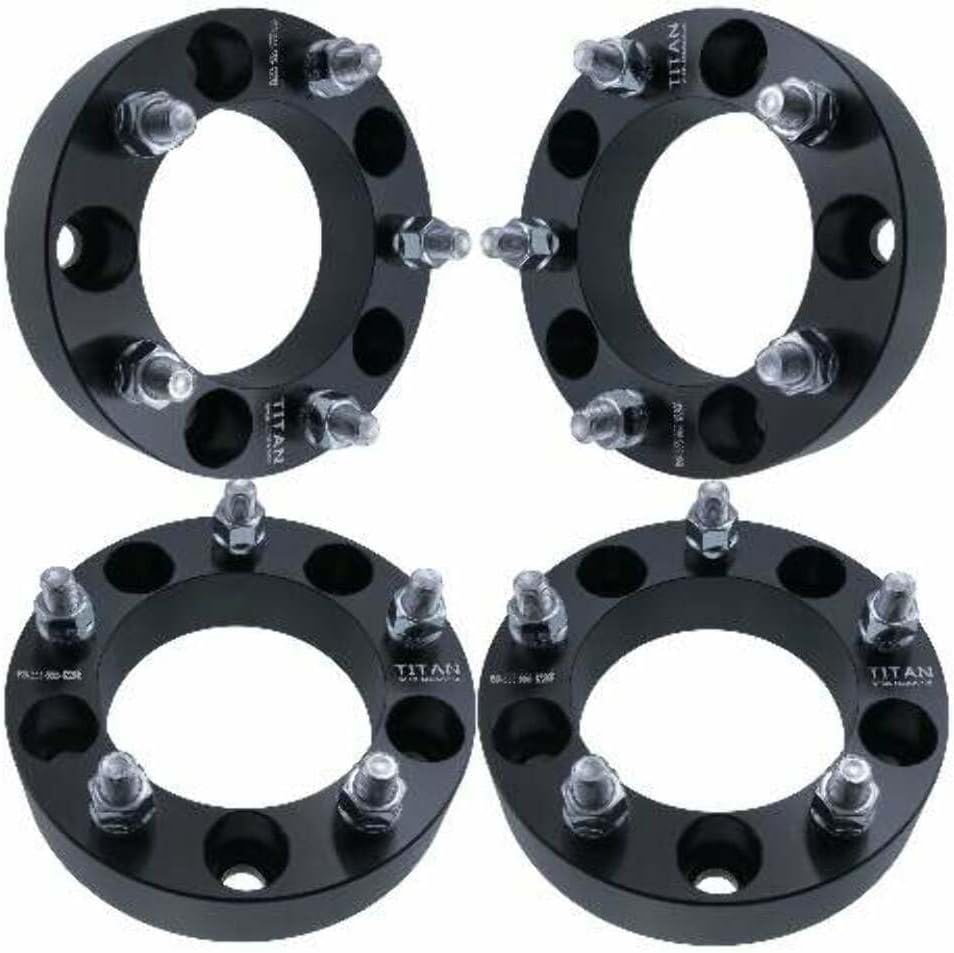
| Bolt pattern | 5×5.5 (5×139.7) |
|---|---|
| Hub bore | 108mm |
| Stud size | 9/16" |
| Thickness | 38mm (1.5 inch) |
| Material | 6061-T6 billet aluminum |
These Titan 38mm wheel spacers are machined billet aluminum spacers that bolt onto the hub and provide 1.5 inches of extra clearance per corner. They are hub-centric for the listed 5×5.5 bolt pattern and include pressed-in 9/16 studs for straightforward bolt-on installation by a professional. In use they let you run wider tires or different aftermarket wheels without changing wheel offsets or doing suspension modifications, and the black anodized finish helps resist corrosion and keeps the underside looking tidy. Practical installation steps include torquing to factory spec and re-torquing after the first 25 miles. The main compromises are that installation requires proper tools and knowledge or a shop visit, and they add unsprung rotational mass which can slightly affect fuel economy and handling nuance. For someone looking to widen stance or clear larger tires on the specified Dodge pickups and SUVs, these spacers deliver a durable, factory-style solution.
Best for: Drivers who want a reliable, factory-quality method to widen stance or fit larger tires on compatible Dodge pickups and SUVs and who prioritize a durable, precision-machined spacer over DIY shortcuts.
Less Ideal for: People seeking a no-install, maintenance-free modification or those unwilling to visit a shop for correct installation and periodic re-torquing.
- 6061-T6 billet aluminum construction for strength with a lightweight profile
- Hub-centric CNC machining and 108mm bore for accurate fitment to the listed bolt pattern
- Pressed-in 9/16 studs included for a clean bolt-on installation
- Black anodized finish offers corrosion resistance and a tidy appearance under wheels
- Requires professional installation and proper torqueing to ensure safety
- Adds rotational mass which can slightly alter fuel economy and handling
Verdict: A sturdy, precision-machined 1.5" spacer that reliably widens stance and allows larger tires on the specified Dodge trucks and SUVs when installed correctly.
4. ECCPP 2" 5×5.5 (5×139.7) Hub-Centric Wheel Spacers with 77.8mm Bore
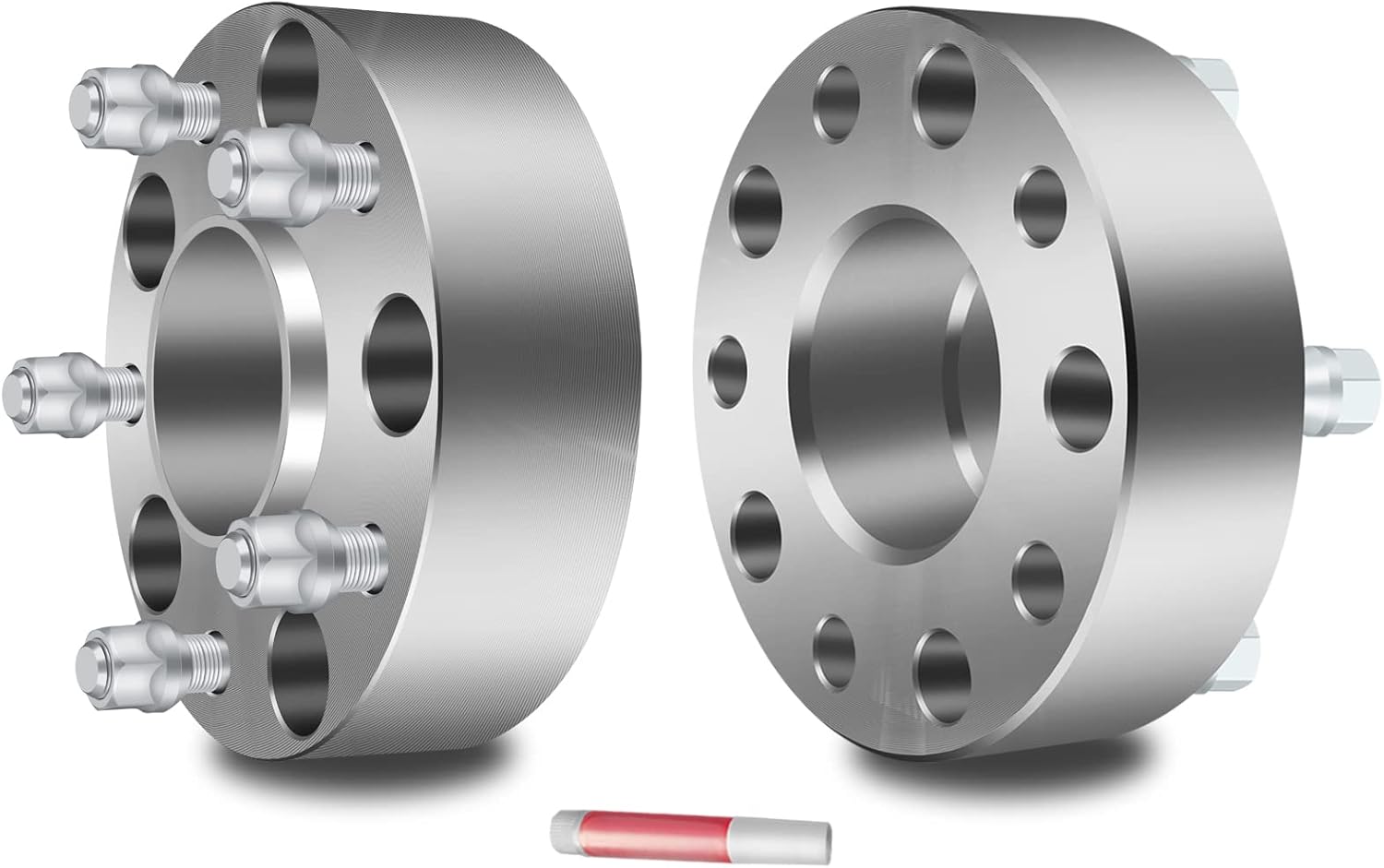
| Bolt pattern | 5×5.5 (5×139.7) |
|---|---|
| Thickness | 2" |
| Center bore | 77.8mm |
| Stud size | 9/16" UNF |
These ECCPP 2-inch wheel spacers convert and center 5×5.5 (5×139.7) wheels while pushing them outward for a wider track and a more aggressive stance. They are hub-centric with a 77.8mm centering collar and use CNC machining to deliver consistent fit and repeatable wheel alignment when installed correctly. Typical use is on trucks like the Dodge Dakota to gain clearance, improve cornering stability, and achieve a flush wheel fit; the listing includes guidance about stud length, center bore, and recommended torque to avoid vibration. The spacers come with UNF 9/16" studs and are promoted as a straightforward bolt-on for compatible setups, but buyers must verify stud thread size and available fender clearance before installing and may need to trim long studs. For budget-focused buyers this offers a cost-effective way to alter track width, though it requires careful fit checks and proper torque during installation to ensure safe operation.
Best for: Buyers looking for an affordable way to widen the track or correct wheel fitment on compatible trucks who are comfortable checking fitment details and doing a measured bolt-on installation.
Less Ideal for: People who want a no-check, guaranteed fit without measuring or adjusting studs or those with very tight fender clearance who cannot accommodate a 2-inch spacer.
- Hub-centric 77.8mm centering collar helps reduce vibration and improves wheel alignment
- CNC machining for consistent fit and dimensional accuracy
- Includes 9/16" UNF studs compatible with listed vehicle stud sizes
- 2-inch thickness increases track width for improved stance and cornering stability
- Requires verification of stud length and thread size and may need stud trimming on some vehicles
- Not a direct fit if there is less than 2 inches of clearance between wheel and fender
Verdict: A cost-conscious, hub-centric 2-inch spacer that widens track and improves wheel fit for compatible Dodge Dakota setups when buyers verify stud size and clearance.
5. Nilight 1.5" 5×5.5 Wheel Spacers with 77.8mm Hub Bore (4-Pack)

| Wheel Bolt Pattern | 5×5.5 (5×139.7mm) |
|---|---|
| Thickness | 1.5 inch (38.1mm) |
| Center Bore | 77.8mm |
| Thread Size | 9/16-18 |
| Material | Forged 6061-T6 aluminum |
These Nilight wheel spacers are a set of four 1.5-inch adapters machined from forged 6061-T6 aluminum with a 77.8mm center bore and 9/16-18 studs for 5×5.5 bolt patterns. They are intended to push the wheel outward to resolve caliper and suspension clearance issues, widen track width for improved cornering stability, and give a more aggressive stance. CNC machining and anodized finish add corrosion resistance and a precise fit, while the 9/16-18 thread size matches common lug hardware for straightforward installation. In practice they work well for routine driving and mild performance use where increased clearance and a slightly wider track are desired. Limitations to note are that spacers change wheel offset and load on wheel bearings so they are best for drivers focused on durability who plan routine inspections and proper torqueing. Also these spacers are vehicle-specific so confirming fit for your Dakota model year is essential before buying.
Best for: Buyers who prioritize a reliable, factory-quality upgrade to solve wheel clearance and improve stance on a 2005–2009 Dakota and who will perform proper installation and periodic checks.
Less Ideal for: Drivers seeking a purely cosmetic change without regard for mechanical impact or those unwilling to verify vehicle-specific fitment and torqueing procedures.
- Forged 6061-T6 aluminum construction for strength with reduced weight
- CNC machining and anodized finish improve dimensional accuracy and corrosion resistance
- 1.5-inch thickness solves caliper and suspension clearance issues
- 77.8mm hub bore centers the spacer for a precise fit on hub-centric wheels
- Adds additional load to wheel bearings and studs which requires periodic inspection
- Fitment is specific to certain model years and must be verified before purchase
Verdict: A durable, vehicle-specific 1.5-inch spacer set that reliably fixes clearance issues and tightens handling for Dakota owners who want a factory-quality, long-lasting solution.
6. Richeer 1.5" 5×5.5 Forged Wheel Spacers (4-pack) with 9/16-18 Studs and 77.8mm Bore

| Bolt pattern | 5×139.7 mm |
|---|---|
| Thickness | 1.5 inches |
| Material | Forged 6061-T6 aluminum |
| Stud grade | 12.9 |
| Center bore | 77.8 mm |
These Richeer wheel spacers are a 4-piece, hub-centric solution that shifts 5×139.7mm wheels outward by 1.5 inches to widen the track and create a more aggressive stance. Built from forged 6061-T6 billet aluminum and CNC-machined, they are anodized for corrosion resistance and fitted with Grade 12.9 studs for higher tensile strength than common 10.9 studs. Typical use is bolt-on: remove the wheel, fit the spacer to the hub, and secure the wheel onto the supplied studs. The thicker wheel offset can improve lateral stability and give room for larger tires or different wheel offsets. Because they are hub-centric and use high-strength hardware, installation can yield a secure fit when torqued to spec. Limitations include the need to confirm vehicle fitment and possible clearance issues with fenders or steering components on heavily modified suspensions. Buyers should also use proper torque sequences and recheck fasteners after initial miles to ensure long-term safety.
Best for: Buyers who prioritize proven, safety-focused upgrades and want to widen track width while relying on strong hardware and hub-centric fit for stable, repeatable results.
Less Ideal for: Users seeking a trim-free, bolt-on look without any chance of fender or steering interference on heavily modified trucks should consider alternatives or consult a shop before buying.
- Forged 6061-T6 construction and CNC machining for strength and dimensional accuracy
- Anodized finish improves corrosion resistance for long-term durability
- Includes Grade 12.9 studs offering higher tensile strength than common studs
- Hub-centric design and matched center bore for better wheel centering and reduced vibration
- Requires confirming fitment and potential clearance checks on modified or lifted vehicles
Verdict: A robust, hub-centric 1.5-inch spacer kit with forged aluminum construction and Grade 12.9 studs for buyers wanting a reliable, safety-minded way to widen the track on compatible Dodge Dakota models.
7. DCVAMOUS 1.5" 5×5.5 Wheel Spacer Kit with 9/16" Studs (set of 4)

| Thickness | 1.5 inch / 38mm |
|---|---|
| Bolt pattern | 5×5.5 / 5×139.7 |
| Thread size | 9/16"-18 |
| Center bore | 108mm |
These DCVAMOUS spacers are a simple, hardware-level way to push wheels outward for better clearance, a wider stance, or to fit larger tires on compatible Dodge and Ram models. The kit includes four 1.5-inch spacers, replacement studs and lug nuts, and is CNC-machined from 6061-T6 aluminum with a hard oxidation finish, which keeps them light and corrosion-resistant for street use. Installation is straightforward for anyone comfortable removing wheels and torqueing hardware by hand; the listing warns against using electronic impact tools and recommends manual torqueing to avoid over-tightening. The spacers increase track width and help eliminate rubbing on brakes or struts, but because they rely on the vehicle having 9/16" wheel bolts and proper stud engagement, buyers should confirm bolt length and fit before installation. For risk-averse owners this kit offers factory-quality machining and grade 10.9 studs, though professional installation or verification is advisable to ensure safe wheel bearing and hub load for long-term use.
Best for: Owners seeking a conservative, hardware-based way to increase wheel clearance or stance on compatible Dodge and Ram trucks who prioritize machined parts quality and a straightforward install.
Less Ideal for: Drivers looking for a no-check, universal spacer solution or those unwilling to verify bolt size and hub fitment prior to installation.
- Includes full hardware kit with studs and lug nuts for a complete installation
- CNC-machined 6061-T6 aluminum construction with hard oxidation finish for corrosion resistance
- Grade 10.9 studs supplied for strong fastener performance
- 1.5-inch thickness provides noticeable track width increase and improved clearance
- Requires vehicle to have 9/16" bolts and correct stud engagement which may need verification
- Manufacturer recommends manual torqueing rather than power tools which can add installation time
Verdict: A machined 1.5-inch spacer kit with full hardware that provides a dependable way to gain clearance and a wider stance on compatible Dodge and Ram trucks when fitment is confirmed.
Choosing the Right 2005-2009 Dodge Dakota Wheel Spacers: Key Factors to Consider
Bolt Pattern and Hub Bore Fitment
Confirming the correct bolt pattern and hub bore is the first step before buying wheel spacers. The 2005-2009 Dodge Dakota uses a specific lug bolt circle diameter and pilot diameter; spacers must match those dimensions or include a correct pilot ring to ensure the wheel centers properly.
A spacer that does not center on the hub shifts centering responsibility to the lug nuts, which increases the risk of uneven load, vibration, and wheel loosening. Always verify both bolt hole circle and hub bore measurements and account for any wheel aftermarket changes that could alter the required pilot size.
Hub-Centric Vs Lug-Centric Mounting
Hub-centric spacers have a machined pilot that fits snugly onto the vehicle hub and aligns the wheel for you. This design typically reduces the chance of vibration because the hub carries radial loads rather than the lug nuts. For a Dakota, hub-centric spacers are usually the safer option when the hub bore matches the spacer pilot.
Lug-centric spacers rely on the wheel studs to center the wheel and are acceptable for small offsets when hub-centric options are unavailable. However, lug-centric designs require particularly precise stud engagement and must be torqued carefully to minimize runout and imbalance.
Material and Structural Strength
Spacer material affects strength, weight, and longevity. Common choices include forged or billet aluminum alloys that provide a good balance of strength and corrosion resistance when properly treated. Look for spacers specified with tensile strength and hardness ratings, as these indicate resistance to deformation under load.
Thicker spacers can introduce higher bending forces on studs and bearings, so material quality matters more as thickness increases. Avoid low-grade cast materials that do not publish mechanical specifications, especially for on-road or towing use where loads are significant.
Thickness and Wheel Offset Effects
Spacer thickness determines how far the wheel pushes outward from the hub, affecting track width, scrub radius, and suspension geometry. Modest thicknesses can correct minor clearance issues, while larger thicknesses change vehicle handling more noticeably and can increase stress on suspension components.
Think about the intended outcome—clearance, aesthetic stance, or tire fitment—and choose thickness accordingly. Also verify whether wheel studs or extended bolts are long enough for safe engagement when using thicker spacers.
Fastening Method and Hardware Compatibility
Spacers attach either with extended wheel studs, additional lug nuts, or through a bolt-on stud conversion. The chosen fastening method affects installation complexity and the parts you must buy separately, such as longer studs or a spacer installation kit.
Ensure the spacer's included hardware or recommended hardware matches the Dakota's stud diameter and thread pitch. Proper torque specs for the vehicle and spacer type are essential; improper torque can lead to loosening, stud fatigue, or wheel runout.
Corrosion Protection and Maintenance
Road salt and moisture accelerate corrosion, which can bind spacers to the hub or degrade fasteners. Look for anodized or chemically treated aluminum, and consider zinc-coated or stainless hardware to reduce rust. Regular inspection and re-torque after an initial break-in period are part of safe ownership.
Maintenance also includes checking for runout and re-centering where necessary, especially after off-road use or heavy loading. Proper surface contact between spacer and hub is vital to maintain clamping force and prevent fretting corrosion.
Understanding Bolt Pattern and Measuring Your Dakota
Before selecting a spacer, measure the Dakota's bolt circle diameter and pilot bore. Accurate measurements prevent buying a spacer that will not seat properly or that requires an additional adapter ring.
If your wheels have been swapped or modified, confirm the wheel's bolt pattern and bore in addition to the truck's hub dimensions. Some spacers include removable pilot rings to adapt to slightly different hub bores, which can simplify fitment.
- Measure center-to-center between opposite lug holes for bolt circle diameter.
- Use a hub caliper or micrometer to confirm pilot bore diameter.
- Account for any aftermarket wheels that change pilot requirements.
Installation Basics and Recommended Procedure
Installation typically involves cleaning the hub and wheel mating surfaces, test-fitting the spacer, and using the correct-length studs or bolts. Start by hand-threading fasteners to ensure proper engagement before torquing to spec.
After the initial installation, drive a short distance and re-torque fasteners to the recommended specification. Regular inspections and torque checks are important during the first 50 to 100 miles of use and periodically thereafter.
- Always use threadlocker only when specified by the spacer manufacturer.
- Replace any damaged studs or nuts rather than reusing compromised hardware.
- Check for wheel runout after installation to detect misalignment early.
Choosing the Right Spacer Thickness
Pick a thickness based on your goal: small spacers for clearance around brake calipers or swaybar links; moderate thickness for a flush stance; larger spacers for an aggressive look but with attention to increased load on components. Consider whether wheel backspacing and tire size changes interact with spacer thickness.
If a spacer requires extended studs, ensure the new studs provide adequate thread engagement. As a rule of thumb, you want at least the same amount of thread engagement as the original lug nut depth plus the spacer thickness.
- Measure existing wheel backspacing before deciding on spacer thickness.
- Verify stud extension length when using spacers thicker than 12 mm.
- Consider alignment and potential need for a wheel alignment after significant track width changes.
Addressing Vibration and Runout Concerns
Vibration often stems from poor centering, uneven torque, or wheel imbalance. Hub-centric spacers reduce vibration risk by aligning the wheel to the hub, while lug-centric designs require extra care in torque sequence and balance checks.
If you experience vibration after installing spacers, verify hub-to-spacer contact, retorque in the correct star pattern, and check wheel balance. Minor runout can sometimes be corrected with wheel rebalancing, but significant hub mismatch necessitates a different spacer or pilot ring.
- Use a dial indicator to measure lateral runout if vibrations persist.
- Rebalance wheels after any spacer installation to reduce oscillations.
- Confirm spacer pilot engagement and surface flatness to ensure even seating.
When to Use an Installation Kit or New Studs
Thicker spacers often require extended studs or an installation kit that includes longer studs and hardened hardware. An installation kit simplifies the job and ensures safe stud engagement, but be sure the kit matches the Dakota's stud diameter and thread pitch.
If you choose to replace studs, use correct-grade hardware and follow torque specifications. Some kits include anti-seize or thread lubricant recommendations to ease future removal and prevent stud galling.
- Confirm thread pitch before purchasing an installation kit.
- Use only studs rated for automotive use and proper tensile strength.
- Follow a proven torque sequence and re-torque schedule after installation.
Legal and Safety Considerations
Altering track width can affect handling and may have regulatory or insurance implications in some jurisdictions. Check local vehicle modification rules if you plan significant changes to wheel offset or track width on your Dakota.
Always prioritize safety over aesthetics; excessive spacer thickness can compromise steering geometry and increase stress on wheel bearings and suspension components. Use spacers that meet automotive fastener standards and maintain proper thread engagement.
- Verify local laws regarding vehicle modification and track width changes.
- Retain installation records and torque specifications for inspections.
- If in doubt, consult a qualified technician to confirm safe installation.
Still looking for the perfect fit?
Select your Dodge Dakota configuration to see the most relevant Wheel Spacers recommendations
How We Chose the Best 2005-2009 Dodge Dakota Wheel Spacers
We prioritized fitment accuracy, structural integrity, and practical installation factors when selecting the seven wheel spacers for the 2005-2009 Dodge Dakota. Evaluation criteria included bolt pattern and hub bore compatibility, material composition and heat-treated construction, fastening method and whether spacers are hub-centric or lug-centric, and available thickness options to meet common clearance and stance goals. We also considered corrosion protection for vehicles exposed to road salt or off-road conditions, and included products that pair with common spacer installation kits to simplify mounting.Excluded from consideration were spacers that did not match the Dakota's bolt pattern or hub bore ranges, any units with insufficient documentation of tensile strength or improper machining tolerances, and one-piece designs that required wheel modifications beyond typical community practices. Our process emphasized spec-driven choices rather than brand reputation alone, focusing on measurable dimensions, torque requirements, and the presence of pilot rings or centering features that reduce vibration risk. Finally, we favored options that provide clear installation instructions and recommend matching torque specs appropriate for hub-centric or lug-centric applications.
Our full evaluation process is outlined in our review methodology.
FAQ
Will wheel spacers fit my 2005-2009 Dodge Dakota without modification?
Often yes, if you select spacers that match the Dakota's bolt pattern and hub bore. Some setups need a pilot ring or slightly longer studs. Always verify measurements before purchase.
Do spacers cause vibration on the Dakota?
They can if the spacer does not center properly or if fasteners are not torqued evenly. Choosing hub-centric spacers or using properly machined pilot rings reduces the risk of vibration.
How thick of a spacer is safe for everyday driving?
Modest thicknesses, typically up to around 12 mm, are commonly used for clearance and mild stance changes with minimal impact. Thicker spacers increase loads on bearings and studs and should be chosen with care.
Do I need new studs or an installation kit for thicker spacers?
Often yes. Thicker spacers may require extended studs or an installation kit to maintain safe thread engagement. Verify stud length and thread engagement before driving the vehicle.
How should I torque spacer and wheel fasteners?
Follow the vehicle's torque specs and the spacer manufacturer's guidance. Torque in a star pattern and recheck torque after the initial driving period to ensure nothing has loosened.
Can spacers affect wheel alignment or handling?
Yes. Increasing track width changes scrub radius and can alter steering feel. Minor changes are usually manageable, but significant offsets may require alignment and will affect handling characteristics.
How do I prevent corrosion between the spacer and hub?
Use anodized spacers or corrosion-resistant coatings and consider stainless or zinc-coated hardware. Regularly inspect the mating surfaces and clean or treat them if signs of rust appear.
Final Verdict
For the 2005-2009 Dodge Dakota, prioritize correct fitment first: bolt pattern, hub bore, and proper pilot engagement determine whether a spacer will perform safely. Choose hub-centric spacers when possible to minimize vibration, verify adequate stud engagement or use an installation kit for thicker spacers, and prefer high-quality materials that publish strength specifications. Remember that thicker spacers change handling and increase loads on suspension components, so balance aesthetic goals with mechanical limits.Ultimately, pick the spacer that matches your clearance or stance objective while maintaining proper torque procedures and regular inspections. That approach keeps your Dakota safe on the road and preserves component life.
Explore More:
- Check out all Dodge Dakota parts & accessories
- Explore Wheel Spacers Maintenance & Repair Guides
- Explore Wheels & Tires
- Browse all Auto Parts
