

Note: This article contains affiliate links. If you click on these links and make a purchase, I may earn a small commission at no extra cost to you. This helps support my research and content. Read my full affiliate disclosure here.
When your 1998-2002 Subaru Forester needs a timing belt replacement, choosing the right timing belt kit matters for engine health and long-term reliability. The wrong kit or missing components can leave you stranded or lead to premature failures, while a properly specified kit restores correct valve timing and reduces labor rework.This guide covers the top six timing belt kits selected for the 1998-2002 Forester. We focus on fitment accuracy, included parts, and installation practicality so you can pick a kit that reduces shop time and avoids common rework. Below are the shortlisted kits and the criteria used to evaluate them, followed by practical advice for installation and maintenance.
Looking for other parts? See all Subaru Forester parts & accessories.
Top Picks at a Glance
| Best Overall The best all-around choice for most situations | Marketplace Auto Parts Timing Belt Kit with Water Pump for 1999–2005 Subaru Forester EJ25 |  |
| Best Quality Built to a higher standard if you want something more solid | Gates PowerGrip Premium Timing Belt Kit with Water Pump (TCKWP304) |  |
| Best Value The sweet spot between price and what you get | IRONTEK Timing Belt Kit with Water Pump for 1999-2005 Subaru (Non-Turbo) |  |
| Best Budget The cheapest option that still gets the job done reliably | ECCPP Timing Belt Kit with Water Pump Compatible with Subaru 2.2L/2.5L |  |
| Highest Rated A top-rated pick with lots of positive feedback | AISIN Timing Belt Kit with Water Pump (TKF-001) |  |
| Most Popular A crowd favorite that many people choose with confidence | Gates PowerGrip Premium Timing Belt Component Kit (TCK304) |  |
1. Marketplace Auto Parts Timing Belt Kit with Water Pump for 1999–2005 Subaru Forester EJ25

| Included parts | Timing belt, tensioner bearing, 3 idlers, crankshaft seal, 4 camshaft seals, water pump with gasket |
|---|---|
| Timing belt teeth | 223 teeth |
| Compatible engine | EJ25 |
| Compatible years | 1999-2005 |
This timing belt kit bundles the main components needed for a valve-timing refresh on Subaru Forester EJ25 engines: a 223-tooth timing belt, tensioner bearing, three idlers, crankshaft and camshaft seals, plus a replacement water pump with gasket. It is intended for a full timing service where you want to replace both the belt and the cooling-stage water pump at the same time to avoid repeat labor. The inclusion of multiple seals and idlers saves sourcing separate parts and helps ensure the drivetrain is reassembled with fresh wear items. Practical benefits include matching the usual service interval workflow and reducing return trips for related failures. Limitations to note are that fitment is specific to the EJ25 Forester models listed and the kit appears aimed at manual-transmission variants in some years, so confirm exact engine and transmission before ordering. Also, parts quality and longevity depend on installation and local driving conditions.
Best for: Buyers who want a single kit to perform a full timing service and water pump replacement on an EJ25 Forester, prioritizing convenience and avoiding multiple part orders.
Less Ideal for: Those who need parts for non-EJ25 engines, automatic-transmission Forester variants not listed, or who prefer OEM-branded components.
- Includes timing belt, tensioner, multiple idlers, seals, and water pump for a single-service overhaul
- Water pump and gasket included to avoid separate pump labor later
- Comprehensive seal set reduces likelihood of oil leaks after service
- Specifically listed for Subaru Forester EJ25 1999–2005 fitment, simplifying compatibility checks
- Fitment references include multiple model years and some manual-only listings so verification against engine and transmission is required
Verdict: Choose this kit if you want an all-in-one timing belt service package that swaps the belt, related tensioners and seals, and the water pump in one job for EJ25 Foresters.
2. Gates PowerGrip Premium Timing Belt Kit with Water Pump (TCKWP304)

| Brand | Gates |
|---|---|
| Model | PowerGrip Premium Timing Component Kit with Water Pump |
| Manufacturer Part Number | TCKWP304 |
| Automotive Fit Type | Vehicle Specific Fit |
This Gates PowerGrip timing belt kit supplies everything needed to service the timing-belt system and the belt-driven water pump in one package. It is typically used during scheduled timing belt replacement or when doing a comprehensive front-end engine service on the 1998–2002 Subaru Forester. The kit includes the timing belt plus matching pulleys, tensioner components, and a water pump so you replace all wearing parts at once and avoid rework. In practice that means fewer trips back to the shop and reduced risk of early failure caused by an old pump or worn idlers. The components are machined and intended to match factory fit and function, which simplifies installation for a competent DIYer or a technician. The main limitation is that this is a vehicle-specific replacement kit, so correct fitment must be confirmed for your Forester engine and model year before purchase. Also the kit does not include ancillary items like coolant or hardware beyond the listed components, so plan accordingly for a thorough service.
Best for: Buyers who prioritize long-term engine reliability and want a single kit to replace all timing-belt driven components during a scheduled service on a 1998–2002 Subaru Forester.
Less Ideal for: If you only need a single part such as just the belt or pump, this full kit is unnecessary; owners seeking a bare-minimum, low-cost repair may prefer individual parts.
- Complete kit includes timing belt, pulleys, tensioner and water pump for a one-stop repair
- Components machined to match factory-style fit for straightforward installation
- Replaces all critical wear items at once to reduce risk of subsequent failures
- Fitment is vehicle specific so you must verify compatibility with your Forester engine and year
- Does not include coolant or extra installation hardware beyond the listed components
Verdict: Choose this Gates kit to replace the timing belt and water pump together for a complete, factory-quality timing-system service on a 1998–2002 Subaru Forester.
3. IRONTEK Timing Belt Kit with Water Pump for 1999-2005 Subaru (Non-Turbo)

| Manufacturer | IRONTEK |
|---|---|
| Item model number | 95304K1 |
| Manufacturer Part Number | IRKEBW8015 |
| Package contents | Timing belt, 4 tensioners, water pump with gasket |
This IRONTEK timing belt kit bundles the belt, four tensioners, and a water pump with gasket to let you replace the timing system and cooling pump in one service. It is intended for non-turbo Subaru 2.2L and 2.5L engines from the model years listed and is typically used during scheduled timing service or when the water pump shows leakage. The kit claims factory-quality fitment and arrives with multiple tensioners to simplify installation and reduce parts hunting. Including the water pump is a practical benefit because accessing the timing components usually requires major labor, so doing both jobs at once saves time and reduces rework risk. Trade-offs are that fitment is limited to specific non-turbo Subaru engines and buyers should confirm VIN or part-finder compatibility before ordering; installers may also prefer OEM-branded components if they want brand-match assurance. The kit is a solid value option for owners doing a combined timing belt and water pump replacement on the covered Forester model years.
Best for: Cost-conscious Subaru owners planning a scheduled timing belt service on the covered Forester years who want to minimize labor and parts uncertainty by replacing the water pump at the same time.
Less Ideal for: Shoppers seeking exact factory-branded parts or those who need fitment for turbo engines or model years outside the listed range should look elsewhere.
- Complete kit includes timing belt, four tensioners, and a water pump with gasket for a single-service repair
- Designed to match specified Subaru non-turbo 2.2L and 2.5L fitments to reduce fitment issues
- Saves labor by combining timing belt and water pump replacement into one job
- Compatibility limited to non-turbo Subaru engines in the listed year ranges so not universal
- Not an OEM-branded part which may matter to buyers seeking factory-matching components
Verdict: A practical all-in-one timing belt and water pump kit that saves labor and reduces parts hassle for the specified non-turbo Subaru Forester service.
4. ECCPP Timing Belt Kit with Water Pump Compatible with Subaru 2.2L/2.5L
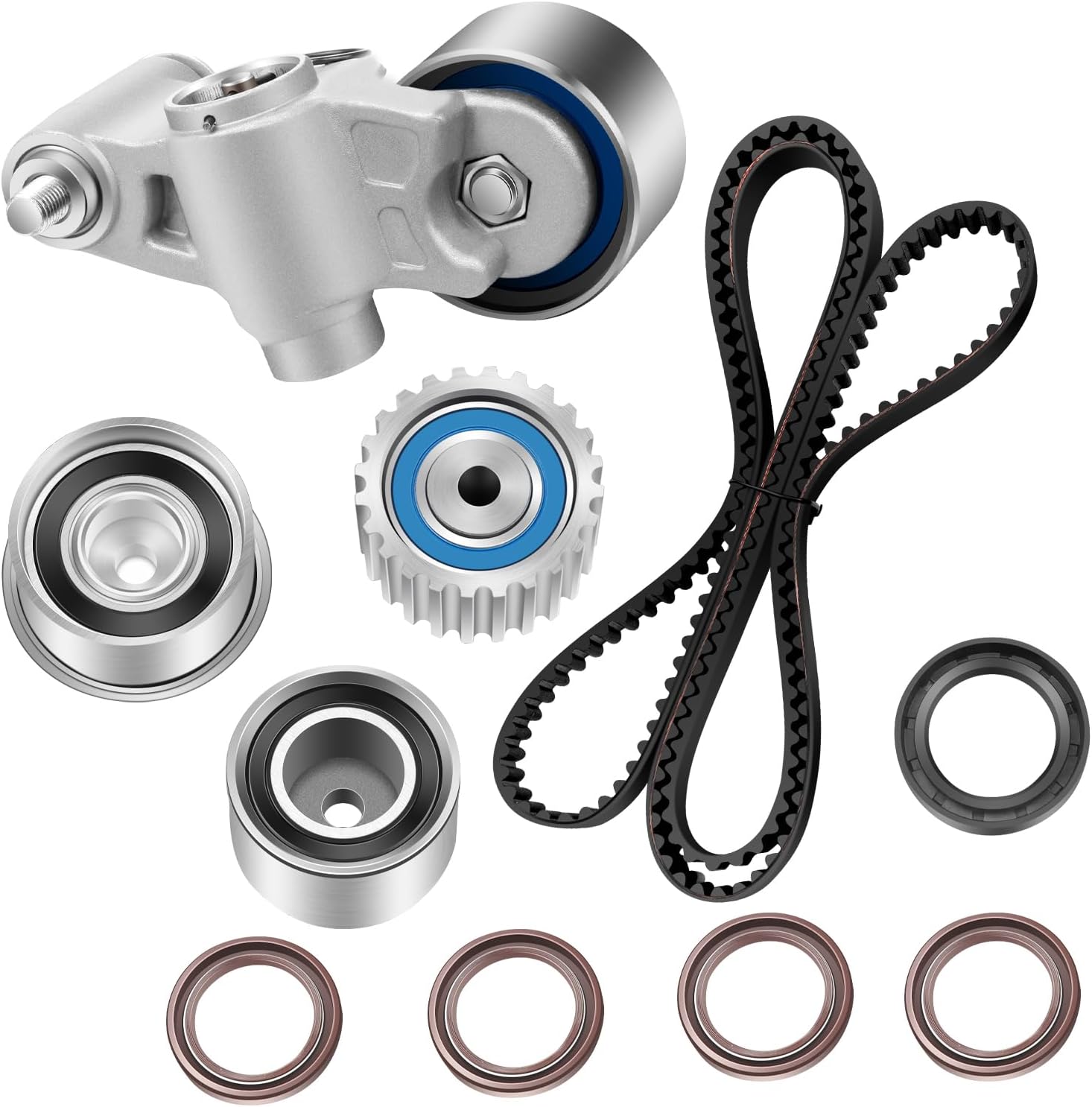
| Included Components | Timing Belt Kits (belt, tensioner, idlers, seals) |
|---|---|
| Belt Teeth | 223 teeth |
| Material Type | HNBR rubber with aramid fibers |
| Automotive Fit Type | Vehicle Specific Fit |
This ECCPP timing belt kit supplies the common wear items needed for a timing service on compatible Subaru 2.2L and 2.5L engines. The kit bundles a 223-tooth HNBR timing belt reinforced with aramid fibers, a tensioner bearing, multiple idlers, crankshaft seal(s) and other seals so you get the parts usually replaced together during a timing job. ECCPP says the materials resist stretching and handle extreme temperatures, which helps preserve valve timing and maintain engine performance when installed correctly. For a DIYer or independent shop doing a scheduled belt replacement, the package provides convenience by including most required components in one box. Downsides are typical of value aftermarket kits: fit and long-term durability can vary compared with higher-end factory-quality parts, and some buyers report mixed experiences, so careful inspection at installation and following recommended replacement intervals is wise.
Best for: Cost-conscious DIY mechanics or independent shops looking to perform a full timing-belt service on compatible Subaru 2.2L/2.5L engines who prioritize getting all required parts in one inexpensive kit.
Less Ideal for: Buyers seeking premium factory-quality or professional shop wholesale-grade components for high-mileage or high-performance engines should consider higher-end OEM-equivalent options.
- Complete kit includes belt, tensioner, multiple idlers and seals to cover a full timing service
- HNBR belt with aramid reinforcement designed to resist stretching and high/low temperature exposure
- Vehicle-specific fit listing for Subaru 2.2L and 2.5L models simplifies selection
- Includes crankshaft seal and additional seals that often need replacement during timing jobs
- Aftermarket quality and long-term durability may be inconsistent compared with higher-end factory-quality parts
- Some buyers report mixed fitment or reliability experiences requiring close inspection during installation
Verdict: A budget-friendly, all-in-one timing belt kit that gives DIYers and small shops the common parts needed to service 1999–2002 Subaru 2.2L/2.5L engines without buying components separately.
5. AISIN Timing Belt Kit with Water Pump (TKF-001)

| Brand | AISIN |
|---|---|
| Model | Timing Belt Kit with Water Pump |
| Item model number | TKF-001 |
| Position | Center |
This AISIN timing belt kit pairs a factory-quality water pump with a matched timing belt and all necessary hardware to complete a timing system service in one box. It is intended for owners doing a timed-belt service on compatible Subaru Forester and Impreza engines and includes a diecast aluminum water pump with carbon ceramic seals plus tensioner and idler pulleys from known suppliers. The main benefit is convenience and part compatibility because the kit groups OEM-matched components so you replace the whole system together rather than sourcing pieces separately. That reduces installation time and the risk of mismatched parts that can shorten service life. The pump construction and branded internal parts aim to improve long-term durability compared with generic replacements. The kit does require correct engine-level fitment checking before purchase and professional installation if you are not experienced with timing systems, since improper timing installation risks engine damage. For DIYers comfortable with timing jobs this kit cuts sourcing hassle; for inexperienced installers plan on labor or shop help.
Best for: Owners who prioritize long-term reliability and want a single, factory-quality kit to replace all timing system components at once to avoid repeat labor.
Less Ideal for: If you only need one isolated component or are unsure of your engine fitment, a single-part purchase or professional parts sourcing may be a better option.
- Complete kit includes water pump, timing belt, tensioner, idler pulleys, gaskets, and instructions for a single purchase solution
- OEM-matched components from reputable suppliers reduce risk of compatibility issues
- Water pump uses diecast aluminum housing and carbon ceramic seals for improved durability
- Fitment varies by engine so you must confirm compatibility for your specific vehicle and engine code
Verdict: Buy this AISIN kit if you want an OEM-matched, all-in-one timing belt and water pump service package for a reliable long-term replacement.
6. Gates PowerGrip Premium Timing Belt Component Kit (TCK304)

| Brand | Gates |
|---|---|
| Model | PowerGrip Premium Timing Belt Component Kit |
| Manufacturer Part Number | TCK304 |
| Position | Center |
The Gates PowerGrip Premium Timing Belt Component Kit is a full-service timing kit intended for complete system replacements. It bundles a timing belt with idler(s), tensioners, tensioner springs, and the supporting hardware plus installation instructions, so a technician can replace the entire timing system in one job. For 1998–2002 Subaru Forester owners, using a comprehensive kit reduces the risk of a secondary failure from an old tensioner or idler after the belt change. The kit is built to factory-equivalent quality and aims to simplify parts sourcing and installation by matching the components needed for most applications. Practical benefits include fewer trips to the parts store, clearer install guidance, and reduced chance of repeat repairs. One limitation is you must confirm the kit TCK304 fits your specific Forester engine and year since timing kits are vehicle- and engine-specific, and some applications may need additional seals or water pump replacement not included in the kit.
Best for: Buyers who value minimizing the chance of follow-up repairs and want a single, trusted kit to replace the entire timing system on their 1998–2002 Forester in one service visit.
Less Ideal for: Do-it-yourselfers who prefer buying individual parts for custom repairs or owners who need additional items like a water pump included should consider alternative items.
- Complete kit includes belt, tensioners, idlers, springs, and hardware for a single-source repair
- Factory-equivalent manufacturing aimed at long service life and reliable performance
- Detailed installation instructions and technical bulletins help reduce installation errors
- Does not state inclusion of water pump or engine seals which may also need replacement during service
Verdict: If you want a single, factory-quality kit to replace the whole timing system and reduce the risk of follow-up failures on a 1998–2002 Subaru Forester, this Gates TCK304 kit is a dependable choice.
Choosing the Right 1998-2002 Subaru Forester Timing Belt Kit: Key Factors to Consider
Fitment Accuracy
Correct fitment is the most critical factor for the 1998-2002 Subaru Forester. A kit must match the Forester's engine configuration and model years exactly so the belt length, pulley bolt patterns, and tensioner geometry align. Incorrect fitment can cause improper tension or routing that leads to noise, accelerated wear, or engine timing issues.
When you compare kits, check the included fitment documentation and whether part numbers are cross-referenced to the 1998-2002 Forester. Kits that specify exact year-range fitment reduce the risk of needing returns or additional parts during installation. Fitment accuracy also affects compatibility with related components such as the water pump and accessory belt routing, so be cautious of generic kits that list vague vehicle coverage.
Included Components
A comprehensive timing belt kit for the Forester should include the belt, tensioner assembly, idler pulleys, and any seals or hardware typically disturbed during the job. Kits that also include the crankshaft or camshaft seal, and in some cases the water pump, minimize the chance you will need a second teardown later if those parts fail.
Assess the completeness of the component list before purchasing. Missing components increase total time and cost because you will have to pause the job to order parts. Kits that provide all commonly replaced items help ensure once-and-done service and lower overall labor hours for a shop or DIY installer.
Component Quality and Materials
Material quality influences how long the timing belt kit will perform on a Forester. Look for belts with reinforced cords and durable tooth profiles that resist stretching, and for tensioners/idlers with sealed bearings and corrosion-resistant finishes. Inferior materials can lead to premature bearing failure, belt glazing, or tooth deterioration.
High-quality components also tend to have tighter manufacturing tolerances, which improves belt tracking and reduces the likelihood of noisy operation. While you cannot test materials before purchase, product literature, specifications, and warranty terms can indicate whether the manufacturer stands behind the components.
Installation Practicality
Installation practicality matters because engine access on the 1998-2002 Forester can be tight, and some kits save time by including alignment tools, clear instructions, and necessary fasteners. Kits that provide service notes about torque specs, rotation direction, and timing marks tailored to the Forester reduce guesswork and lower the risk of installation errors.
Also consider whether the kit requires any special tools not commonly available in a home garage. Kits that minimize extra tooling or provide helpful guidance make DIY replacement more feasible and reduce labor costs at an independent shop.
Warranty and Support
A solid warranty and accessible technical support can matter when working on a vehicle like the Forester. Warranty coverage signals the manufacturer's confidence in materials and assembly, and responsive support helps resolve fitment or installation questions without costly delays.
Check the warranty length and what it covers. Some suppliers offer limited warranties that cover manufacturing defects but exclude wear items. For an older vehicle, a warranty that covers premature component failure for a reasonable period can provide valuable peace of mind.
Long-Term Maintenance and Service Interval Guidance
Timing belt service interval guidance is important when planning preventive maintenance for a 1998-2002 Forester. Knowing the recommended service mileage and the expected lifespan of components helps you decide whether to replace additional items proactively, such as the water pump or seals, during the timing job.
Kits that include or reference recommended service intervals and maintenance tips help ensure you schedule future inspections appropriately. This reduces the chance of belt-related failures between major service events and supports predictable ownership costs.
Why Timing Belt Integrity Matters for the 1998-2002 Forester
The timing belt controls valve timing and is critical to engine operation. On the 1998-2002 Forester, a failed belt can lead to loss of synchronization between the crankshaft and camshafts, which risks engine damage or a no-start condition. Maintaining belt integrity through timely replacement and using a suitable kit reduces that risk.
Beyond catastrophic failure, a worn belt or failing tensioner can cause poor idle quality, unusual noises, or reduced engine efficiency. Addressing these issues when you replace the belt ensures the engine returns to expected performance and avoids follow-up repairs.
- Prevents loss of valve timing and potential engine damage
- Reduces noise and improves idle smoothness
- Keeps engine performance and fuel efficiency consistent
Should You Replace the Water Pump with the Timing Belt?
Replacing the water pump at the same time as the timing belt is a common recommendation because the pump is driven by or closely related to the timing system on many engines. For the Forester, removing the timing belt assembly often provides easier access to the water pump, and the incremental cost of replacing the pump during the same labor event is generally lower than doing it later.
Consider the pump's service history and condition. If the pump shows signs of leakage, bearing play, or age-appropriate wear, replace it during the timing job to avoid a future teardown. If the pump is newer and confirmed in good condition, you may opt to leave it alone, but factor in the risk and potential future labor cost.
- Replacing together saves labor hours if the pump is due for service
- A preventive pump replacement avoids a second teardown
- Inspect pump seals and bearings during the timing job
Common Installation Pitfalls to Avoid
Typical errors when replacing a timing belt on a Forester include misaligned timing marks, improper tensioning, and reusing worn hardware. Misalignment or incorrect tensioning can cause noisy operation or rapid wear, and in the worst case, engine damage. Always double-check alignment marks before finalizing torque on fasteners.
Another frequent issue is not replacing seals or fasteners that are inexpensive but critical. Bolts can stretch or corrode, and old seals can leak after reassembly. Using new OEM-equivalent fasteners and seals where practical reduces the chance of post-installation failures.
- Verify timing marks and rotation direction before starting the engine
- Use torque specifications and new fasteners when required
- Avoid reusing visibly worn seals or tensioner components
Tools and Workshop Tips for DIY Installers
A successful DIY timing belt replacement on the 1998-2002 Forester requires a basic set of tools plus a few specialty items. Essential tools include a torque wrench, breaker bar, and a set of metric sockets. Helpful specialty tools include a camshaft holding tool or equivalent method to prevent camshaft rotation while tensioning.
Work methodically and label fasteners and components as you remove them. Photographing timing marks and belt routing before disassembly helps during reassembly. Allow ample time and avoid rushing; a careful installation is safer and reduces the chance of follow-up failures.
- Essential: torque wrench, metric sockets, breaker bar
- Helpful: camshaft holding tool, alignment guides, quality service manual
- Label parts and take reference photos during disassembly
Interpreting Kit Component Lists and Part Numbers
Kit descriptions can vary in how they present included parts. Look for explicit lists that name the belt, tensioner, idler pulleys, seals, and any hardware. Where manufacturers provide part numbers, cross-reference them with service manuals or OEM part lists to confirm they match Forester requirements for 1998-2002 models.
Beware of vague listings that state generic coverage. A clear parts list and mapped part numbers reduce ambiguity and the chance you will need to order missing items after starting the job.
- Prefer kits with full itemized lists and part numbers
- Cross-reference numbers to service data when possible
- Avoid kits that use non-specific descriptions for critical parts
Planning for Future Service Intervals
Understand the recommended timing belt service interval for the Forester and plan follow-up inspections accordingly. Some owners schedule more frequent visual checks if driving in harsh conditions, while others adhere strictly to the mileage or time interval suggested in maintenance literature. Plan replacements for other wear items during major services to consolidate labor.
Keep a record of the replacement date, mileage, and parts installed. This helps the next owner or the next service technician verify what was done and when the next interval is due.
- Follow manufacturer-recommended intervals and adjust for driving conditions
- Consolidate related maintenance to reduce future labor
- Document service details for future reference
Still looking for the perfect fit?
Select your Subaru Forester configuration to see the most relevant Timing Belt Kits recommendations
How We Chose the Best 1998-2002 Subaru Forester Timing Belt Kit
We evaluated candidate timing belt kits for the 1998-2002 Subaru Forester using a focused, vehicle-specific framework. Key criteria included fitment completeness, component quality, and long-term durability. Fitment completeness meant the kit had all necessary parts for a full timing job on the specified Forester years, including belt, tensioners, idlers, and related seals when applicable.Component quality assessed the materials and build of the belt and metal components, looking for reinforced belts and precision-machined tensioners and idlers. Installation practicality considered whether the kit included clear instructions, necessary fasteners, and any specialty items that reduce repeat removal. Warranty and technical support were used as a proxy for manufacturer confidence, while service interval guidance and compatibility notes helped verify suitability for the Forester's engine designs.We excluded kits that required sourcing additional items routinely needed for a complete timing job, such as separate water pump or camshaft seals, unless those parts were intentionally offered as optional add-ons. We also removed kits lacking clear year-by-year fitment guidance or those with ambiguous component lists. The final picks balance completeness, proven component types, and practicality for owners and independent shops working on 1998-2002 Forester models.
Our full evaluation process is outlined in our review methodology.
FAQ
How often should I replace the timing belt on a 1998-2002 Subaru Forester?
Recommended intervals vary by engine and history, but timing belts typically need replacement at specified mileage or age milestones. Check service records and replace based on the vehicle-specific interval or earlier if the belt shows wear.
Can I install a timing belt kit on my Forester as a DIY project?
Many mechanically inclined owners can perform the replacement with proper tools and a service manual. The job requires careful attention to timing marks, correct tensioning, and sometimes specialty holding tools. If you lack experience, consider professional help to avoid engine damage.
Should I always replace the water pump when changing the timing belt?
It depends on the pump condition and service history. Replacing the water pump during the timing job is prudent because access is easier and it avoids a future teardown. If the pump is relatively new and confirmed leak-free with good bearing condition, you can delay replacement.
What are signs a timing belt kit component is failing after installation?
Listen for unusual squeals, grinding noises from the front of the engine, or rough idling. Visible signs include belt glazing, frayed edges, or oil contamination. Bearing failure in tensioners and idlers may show as grinding or wobble.
Do I need specialty tools to replace the timing belt on these Forester years?
Basic hand tools, a torque wrench, and a breaker bar are essential. A camshaft holding tool or equivalent is helpful to maintain timing alignment during tensioning. The job can be completed without some specialty tools but they reduce risk and make alignment easier.
How do I verify that a timing belt kit includes everything I need?
Review the kit parts list for belt, tensioner, idlers, seals, and hardware. Cross-reference part numbers when provided and confirm documentation explicitly lists compatibility with 1998-2002 Forester engines. If a water pump or seals are not included, plan to obtain them if needed.
Final Verdict
When replacing the timing belt on a 1998-2002 Subaru Forester, prioritize kits that offer precise fitment and include all components you will disturb during the job. Balance higher-quality materials and sealed bearings against the convenience of a complete kit that minimizes follow-up work.Plan the service to address related items such as the water pump and seals if they show age or wear. Choosing a complete, well-documented kit and following careful installation practices will help you maintain engine reliability and avoid repeat repairs.
Explore More:
- Check out all Subaru Forester parts & accessories
- Explore Timing Belt Kits Maintenance & Repair Guides
- Explore Engine
- Browse all Auto Parts
