

Note: This article contains affiliate links. If you click on these links and make a purchase, I may earn a small commission at no extra cost to you. This helps support my research and content. Read my full affiliate disclosure here.
If you plan to tow a small trailer, add a cargo carrier, or mount bike and ski racks on your Subaru Outback Wagon, choosing the right trailer hitch matters for safety and everyday usability. The correct hitch ensures proper weight distribution, preserves access to the rear bumper and cargo area, and reduces wear on suspension and drivetrain components.This guide covers the top shortlisted trailer hitches for the Outback Wagon, focusing on fitment, load ratings, and installation factors relevant to owners. We evaluate each option by build quality, towing capacity, and how easy it is to install and maintain. Read on to compare practical features and decide which hitch style best matches your towing needs and lifestyle.
Looking for other parts? See all Subaru Outback parts & accessories.
Top Picks at a Glance
| Best Overall Trailer Hitch A well-rounded hitch balancing strength, fitment flexibility, and reliability | CURT Class 3 Trailer Hitch, 2" Receiver, Fits 2020–2025 Legacy & Outback |  |
| Best Premium Trailer Hitch Higher-end materials and finishing with long-term durability and features | Draw-Tite Class 3 Trailer Hitch 2-Inch Receiver for 2010–2019 Subaru Outback Wagon |  |
| Best Heavy-Duty Trailer Hitch Built for maximum towing and frequent heavy loads in tough conditions | T-TOP WLS Class III 2-inch Trailer Hitch Receiver for 2010–2019 Subaru Outback |  |
| Best Compact Trailer Hitch Low-profile, space-saving design that stays unobtrusive when not towing | CURT Class 2 Trailer Hitch 1-1/4-Inch Receiver (12270) |  |
| Best Class III Trailer Hitch A common mid-to-high-capacity spec suitable for many towing tasks | CURT Class 3 Trailer Hitch 2-Inch Receiver for Select Outback |  |
1. CURT Class 3 Trailer Hitch, 2" Receiver, Fits 2020–2025 Legacy & Outback
Best Overall Trailer Hitch

| Maximum Towing Capacity | 3500 Pounds |
|---|---|
| Tongue Weight | 350 Pounds |
| Receiver Tube Size | 2-inch |
| Material | Carbon Steel |
| Finish Type | Gloss Black Powder Coat with co-cured A-coat |
This CURT Class 3 trailer hitch is a vehicle-specific receiver designed to fit 2020–2025 Legacy and Outback models and provides a straightforward way to add towing and cargo options. It mounts to the vehicle rear and offers a 2-inch receiver tube that accepts common ball mounts, cargo carriers, and rack systems. Built from carbon steel with a co-cured A-coat plus black powder coat, it resists rust and chips for season-to-season use. The hitch is engineered and welded for a precise fit, which simplifies installation for most DIY mechanics and helps avoid trimming or fitment headaches. With a 3,500 lb gross trailer weight rating and 350 lb tongue weight, it covers common towing needs like small campers, boats, and utility trailers while leaving room for bike racks and cargo carriers. The hitch is a single-purpose, factory-style receiver so buyers should not expect integrated wiring or multi-function accessories included. For those who need higher towing capacity or a multi-vehicle solution, a different class or model may be required.
Best for: Buyers who want a durable, factory-style hitch that balances solid towing capacity and a precise, DIY-friendly fit for a Subaru Outback or Legacy from 2020–2025.
Less Ideal for: People who need towing capacity above 3,500 lb or integrated electrical wiring and plug connectors built into the hitch should consider heavier-class hitches or add-on wiring solutions.
- Vehicle-specific design for a precise fit and smoother DIY installation
- 2-inch receiver compatible with a wide range of ball mounts and hitch accessories
- 3,500 lb gross trailer weight and 350 lb tongue weight cover most small-trailer needs
- Co-cured A-coat plus powder coat finish improves corrosion and chip resistance
- Manufactured and tested to SAE J684 standards for dependable strength
- Does not include wiring harness or hitch-mounted accessories
- Single-class rating may not suit heavy towing needs beyond 3,500 lb
Verdict: The best all-around trailer hitch that balances towing capacity, build quality, ease of installation, and versatility for most DIY mechanics' towing needs.
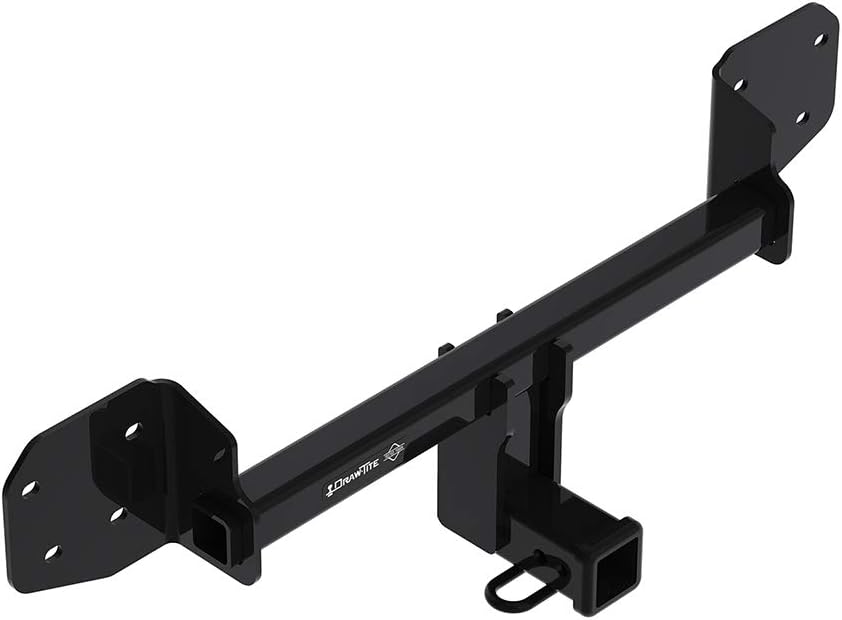
2. Draw-Tite Class 3 Trailer Hitch 2-Inch Receiver for 2010–2019 Subaru Outback Wagon
Best Premium Trailer Hitch
| Class rating | Class 3 |
|---|---|
| Receiver size | 2 inch square |
| Gross trailer weight | 4000 pounds |
| Tongue weight | 600 pounds |
| Material | Alloy Steel |
This Draw-Tite Class 3 trailer hitch is a custom-fit 2-inch receiver made for 2010–2019 Subaru Outback wagons and provides a solid, factory-quality mounting point for towing and accessory carry. It installs using the included hardware and attaches to the vehicle’s frame so you can fit a bike rack, cargo carrier, or tow light trailer within the hitch’s 4,000 lb gross trailer weight and 600 lb tongue weight ratings. The hitch’s all-welded alloy-steel construction and black powder-coat finish help resist corrosion and road wear, and Draw-Tite’s design testing aims to match factory fit and clearances. Practical limits include no compatibility with weight-distribution systems, so heavier trailers that need that feature are out of scope. The unit is straightforward for a professional or experienced DIY installer and offers the refined fit and long-term durability that buyers seeking a premium replacement-style hitch expect.
Best for: Buyers who prioritize a refined, factory-style hitch with strong corrosion protection and precise fitment for their Outback and who plan to tow modest trailers or carry rear-mounted accessories.
Less Ideal for: People who need a hitch that supports weight-distribution systems or who plan frequent heavy towing that approaches higher GTW or tongue weight limits.
- Vehicle-specific design for a clean, secure fit on the 2010–2019 Outback wagon
- Solid all-welded alloy-steel construction for long-term strength
- Black powder-coat finish improves corrosion resistance and appearance
- 2-inch receiver accepts common accessories like bike racks and cargo carriers
- Includes mounting hardware and is backed by a lifetime limited warranty
- Not compatible with weight-distribution systems, limiting heavier towing setups
Verdict: The best premium trailer hitch for users willing to pay more for superior materials, corrosion resistance, refined fitment, and extras like integrated wiring or improved aesthetics.
3. T-TOP WLS Class III 2-inch Trailer Hitch Receiver for 2010–2019 Subaru Outback
Best Heavy-Duty Trailer Hitch

| Compatible Vehicle | 2010–2019 Subaru Outback (Except Sport Model) |
|---|---|
| Maximum Towing Capacity | 4000 pounds |
| Tongue Weight | 600 pounds |
| Material | Carbon Steel |
| Finish | Powder Coated |
This Class III 2-inch trailer hitch is a bolt-on, vehicle-specific receiver engineered for 2010–2019 Subaru Outback models (except Sport). It mounts to existing frame points with the supplied hardware so a competent DIYer can install it without drilling or welding; the listing calls for tightening factory bolts to 42 ft-lbs to reach rated strength. Constructed from carbon steel and finished in black powder coat, the hitch resists corrosion and integrates cleanly with the vehicle underside. With a 4,000 lb gross trailer weight rating and 600 lb tongue weight it handles common heavy-duty tasks such as towing utility trailers, small campers, and hauling overlanding gear or spare-tire carriers. The standard 2-inch receiver accepts a wide range of accessories including ball mounts, bike racks, and cargo carriers. Limitations to note are fitment restricted to non-Sport Outback models for the 2010–2019 range and that installation requires attention to proper torque values to achieve the stated capacity; professional installation may be preferable for unfamiliar DIYers or when towing at the rating limit.
Best for: DIY-minded owners who frequently tow heavy trailers or outfit their Outback for overlanding and need a strong, factory-style hitch they can install and trust for regular heavy use.
Less Ideal for: Drivers who need a hitch for Sport-model Outbacks or those who prefer a multi-vehicle hitch solution should look elsewhere.
- Vehicle-specific bolt-on design that uses factory mounting points for a clean, secure fit
- Class III rating with 4,000 lb GTW and 600 lb tongue weight suitable for heavy-duty towing tasks
- Durable carbon steel construction with powder-coated finish for corrosion resistance
- Includes all mounting hardware for a straightforward DIY installation
- Standard 2-inch receiver supports a wide range of towing and cargo accessories
- Not compatible with Sport model Outbacks of the 2010–2019 range
Verdict: The best heavy-duty trailer hitch for DIYers who regularly tow heavy trailers or equipment and need a hitch with higher gross trailer weight and tongue-weight ratings and reinforced construction.
4. CURT Class 2 Trailer Hitch 1-1/4-Inch Receiver (12270)
Best Compact Trailer Hitch

| Receiver size | 1-1/4-inch |
|---|---|
| Gross trailer weight | 3,500 lbs |
| Tongue weight | 350 lbs |
| Material | Carbon Steel |
This CURT Class 2 hitch is a custom-fit receiver designed for select Subaru Legacy and Outback models to add light-duty towing and cargo-carrying capability without dramatic changes to the rear profile. It installs to factory mounting points and provides a 1-1/4-inch receiver for ball mounts, bike racks, or cargo carriers. Built from carbon steel with robotic welding and a dual-coat finish, the hitch is corrosion-resistant and intended for regular use in road and outdoor conditions. It is rated for 3,500 lbs gross trailer weight and 350 lbs tongue weight, which covers small utility trailers, lightweight campers, and most hitch-mounted cargo solutions. Because it is a compact Class 2 design, it keeps a low visual profile and preserves bumper clearance compared with larger receivers, though it does not support heavier towing or larger 2-inch accessories. Buyers should confirm vehicle-year compatibility before purchase and follow the lowest-rated component in the towing chain when loading the hitch.
Best for: Buyers who prioritize a compact, vehicle-integrated hitch that maintains a clean rear appearance while enabling light towing and hitch-mounted cargo for their Subaru Outback Wagon.
Less Ideal for: Those who need to tow heavy trailers, use large 2-inch hitch accessories, or plan frequent heavy-duty towing should choose a higher-capacity hitch instead.
- Custom-fit design for select Subaru Legacy and Outback models for simpler installation and cleaner fit
- Low-profile Class 2 receiver preserves bumper line and reduces visual bulk
- 3,500 lb GTW and 350 lb TW rating suitable for most light trailers, bike racks, and cargo carriers
- Durable carbon steel construction with dual-coat finish for improved rust and wear resistance
- 1-1/4-inch receiver limits compatibility with heavier towing accessories that require a 2-inch receiver
Verdict: The best compact trailer hitch for buyers who want a low-profile, space-conscious design that keeps the bumper line clean while still providing dependable tow capability.
5. CURT Class 3 Trailer Hitch 2-Inch Receiver for Select Outback
Best Class III Trailer Hitch

| Receiver size | 2 inches |
|---|---|
| Gross trailer weight | 3,500 lbs |
| Tongue weight | 350 lbs |
| Material | Carbon Steel |
This CURT Class 3 trailer hitch is a vehicle-specific 2-inch receiver designed to bolt to certain Subaru Outback years and provide mid-range towing capacity. It is built from high-strength carbon steel with precise welding and a co-cured liquid A-coat plus black powder coat for long-term corrosion resistance. Rated for 3,500 lb gross trailer weight and 350 lb tongue weight and tested to SAE J684, the hitch handles boat trailers, campers, utility trailers and common accessory setups while keeping installation straightforward for a competent DIY mechanic. The custom-fit mounting points reduce drilling and alignment work, and the 2-inch receiver keeps the hitch compatible with the wide ecosystem of Class 3 accessories. On the downside this is a vehicle-specific kit so fitment must be verified for model year and trim, and the 3,500 lb capacity is not suitable for heavier towing needs. Overall it gives a durable, factory-quality replacement path for Outback owners wanting a capable, mid-range towing solution they can install themselves.
Best for: DIY-minded Subaru Outback owners who need a durable, factory-quality mid-range hitch they can install themselves and who plan to tow boats, campers, or utility trailers within the 3,500 lb range.
Less Ideal for: Drivers who frequently tow heavier loads above 3,500 lb, who need a multi-vehicle hitch solution, or those unwilling to verify vehicle-year fitment before purchase.
- Vehicle-specific design simplifies installation and improves fit
- 3,500 lb GTW and 350 lb TW rating covers most mid-range towing needs
- Constructed from high-strength carbon steel with precise welding for durability
- Co-cured liquid A-coat plus powder coat finish resists rust, chipping, and UV
- 2-inch receiver maintains compatibility with common Class 3 accessories
- Fits only select Subaru Outback years and requires checking application compatibility
- Capacity is limited to mid-range towing and not intended for heavy trailers
Verdict: The best Class III trailer hitch for DIY mechanics seeking the common mid-range towing class that supports higher capacities and a wide range of accessories while remaining broadly compatible.
Choosing the Right Subaru Outback Wagon Trailer Hitch: Key Factors to Consider
Towing and Tongue Weight Ratings
Towing capacity and tongue weight ratings determine the maximum trailer mass and the vertical load the hitch can support at the ball mount. For the Outback Wagon, choose a hitch with ratings that meet or exceed your trailer and accessory loads. A higher tongue weight rating helps control sway and keeps the vehicle's rear suspension within safe limits.
Ratings should be clearly stamped or documented. Avoid relying on general class labels alone; verify the numerical capacity for both gross towing weight and maximum tongue weight. If you plan to carry heavy accessories like a loaded cargo carrier or a hitch-mounted bike rack with e-bikes, factor those weights into the tongue weight calculation to avoid overloading the hitch or the vehicle.
Receiver Size and Class
Receiver size governs accessory compatibility. The most common aftermarket choice is a 2 inch hitch receiver that works with most ball mounts, bike racks, and cargo carriers designed for passenger vehicles. Class III hitches typically use a 2 inch receiver and provide a good balance of strength and versatility for light towing and heavy cargo attachments.
Confirm the receiver and class match the equipment you intend to use. Some applications may require a higher-rated assembly, but the Outback Wagon is best served by designs that fit typical SUV towing accessories while preserving ground clearance and rear approach angles.
Mounting Method and Vehicle Fitment
How the hitch attaches to the Outback Wagon affects strength, installation complexity, and permanence. Many hitches mount to existing frame holes or attachment points, which simplifies installation and reduces the need for drilling. Others may require passing bolts through reinforcement plates or using included brackets to distribute loads.
A vehicle-specific fit reduces movement and rattling while driving. Choose a hitch that uses factory access points where possible, and carefully review torque specs and hardware grade. Improper fitment can stress the mounting area, so owners who prefer a reversible install should prioritize hitches that use the vehicle's original holes and require minimal modifications.
Corrosion Resistance and Finish
Exposure to road salt, moisture, and grime accelerates rust on a hitch assembly. Protective finishes matter for longevity, especially if you live in regions with harsh winters or coastal climates. Powder-coated finishes offer strong abrasion resistance, while hot-dipped galvanizing provides excellent long-term corrosion protection for welded steel components.
Inspect the quality of welds and the coverage of coatings around bolt holes and weld joints. Hardware such as nuts and bolts should be plated or stainless to avoid premature seizing. A well-finished hitch reduces maintenance needs and preserves structural integrity over years of service.
Installation Complexity and Tools Required
Some hitches are designed for a straightforward bolt-on installation using basic hand tools, while others require lifting the vehicle, bending hardware into place, or drilling access holes. Consider your comfort with undervehicle work and whether you have access to jack stands or a lift.
If you plan to DIY the install, prioritize hitches that come with clear instructions, labeled hardware, and minimal drilling. Factor in time for routing any wiring harnesses and trimming of plastic bumper liners if necessary. When in doubt, professional installation ensures proper torqueing and wiring but increases overall cost.
Accessory Compatibility and Electrical Considerations
Think about the accessories you will use with the hitch, including ball mounts, ball sizes, bike racks, and cargo carriers. Confirm pin hole dimensions and whether the hitch includes or supports anti-rattle measures. Some hitches offer integrated wiring harness brackets or predefined mounting tabs for trailer connectors, which streamlines adding a tow wiring kit.
Electrical compatibility is important if you need trailer lighting. Check whether the hitch design obstructs access to the vehicle's factory wiring harness or bumper area. Planning for both mechanical and electrical accessory needs prevents surprises and ensures the hitch performs as expected for multiple towing scenarios.
Understanding Class III and 2-Inch Receivers
Class III hitches and 2-inch receivers are the most widely used configuration for SUVs and wagons that tow light trailers or carry hitch-mounted gear. They offer a middle ground between compact passenger hitches and heavy-duty truck assemblies, providing sufficient strength for common towing tasks while keeping weight and bulk reasonable.
On the Outback Wagon, this receiver size supports the largest range of aftermarket accessories such as ball mounts, cargo carriers, and multi-bike racks. Familiarize yourself with pin diameter and shank dimensions to ensure accessories slide in and lock securely without excessive play.
- 2-inch receiver is compatible with most passenger vehicle accessories
- Class III usually provides the best balance of strength and versatility
- Confirm pin hole size and whether anti-rattle hardware is needed
Preparing Your Outback Wagon Before Installation
Before installing a hitch, park on a level surface and engage the parking brake. Gather required tools such as torque wrenches, ratchets, and appropriate sockets. If the installation requires lowering exhaust sections or removing bumper trim, have jack stands and a safe means to support the vehicle.
Inspect the underbody mounting area for rust or damage that could affect attachment. Cleaning the attachment points and removing road grime helps ensure proper seating of flanges and torque of fasteners. When reusing factory holes, lightly lubricate bolts to achieve correct torque without galling.
- Check for corrosion and repair or reinforce if necessary
- Collect all required tools and read the included instructions fully
- Plan time for wiring and trimming of trim panels if applicable
Wiring and Trailer Lighting Basics
A trailer hitch is only part of a towing setup; a proper wiring solution is essential for lights, turn signals, and brake lights. Many Outback Wagon owners use vehicle-specific wiring harnesses that tap into the factory lighting connectors without cutting factory wires. These harnesses usually mount near the hitch and route a connector to the bumper area.
If you tow frequently, consider a 4-pin or 7-pin connector depending on trailer requirements. Verify circuit capacity and whether you need a powered brake controller for trailers with electric brakes. Keep wiring fastened away from heat sources and moving components to avoid premature wear.
- Use vehicle-specific harnesses to avoid cutting factory wiring
- Choose the connector type based on the trailer's electrical needs
- Secure wiring away from the exhaust and suspension components
Common Installation Pitfalls and How to Avoid Them
One common issue is under-torqued fasteners that can loosen over time. Always follow the specified torque values for each bolt and recheck them after an initial period of driving. Another frequent problem is interference with exhaust hangers or sway bars, so mock-fit hardware before final tightening.
Failing to account for accessory clearance can block rear sensors or the trunk entry path. Measure accessory dimensions and ensure the hitch and mounted gear will not obstruct cargo loading or parking sensors. Finally, watch for wiring chafing where it passes through metal edges and protect lines with grommets or split loom.
- Torque all fasteners to spec and recheck after a short break-in period
- Mock-fit accessories and check for sensor or bumper interference
- Protect wiring at edges and bundle it neatly to prevent chafing
Maintenance and Longevity Tips
Regularly inspect the hitch, mounting hardware, and finish for signs of corrosion or fatigue. Clean the hitch area after winter driving to remove salt and road grime. Touch up small paint chips to prevent rust from propagating.
Periodically remove the ball mount and apply anti-seize to the pin and shank to prevent binding. Check torque on bolts during seasonal service intervals and replace any hardware that shows significant wear. Proper maintenance extends service life and keeps towing performance predictable.
- Rinse and inspect after exposure to salt or off-road conditions
- Apply anti-seize to removable components to prevent seizing
- Schedule visual checks during regular vehicle maintenance
Still looking for the perfect fit?
Select your Subaru Outback configuration to see the most relevant Trailer Hitches recommendations
How We Chose the Best Subaru Outback Wagon Trailer Hitch
We shortlisted trailer hitches for the Subaru Outback Wagon using a consistent editorial framework that prioritizes fitment, safety, and owner usability. First, we required confirmed compatibility with the Outback Wagon body style and mounting points, eliminating any designs that rely on aftermarket bumper modifications. Next, we weighed structural criteria: measured towing and tongue weight capacities, the presence and grade of welded plates or flanges, and whether the receiver conforms to common 2-inch class III dimensions.We assessed corrosion protection methods such as powder-coating, galvanization, and plated hardware because road salt and weather exposure affect longevity. Installation practicality was another filter: included hardware, need for vehicle drilling, and compatibility with factory wiring or simple wiring adapters. We also considered accessory compatibility for common tow uses like bike racks or cargo carriers.Excluded items were universal-fit or vehicle-agnostic assemblies without Outback Wagon-specific mounting instructions, and any hitches lacking clear load rating documentation. The final picks reflect a balance of structural integrity, ease of installation, and long-term durability for typical Outback Wagon towing tasks.
Our full evaluation process is outlined in our review methodology.
FAQ
What size hitch receiver do I need for a Subaru Outback Wagon?
Most Outback Wagon owners use a 2 inch receiver that fits common ball mounts and cargo accessories. Match the receiver size to the accessories you plan to use and confirm the hitch's weight ratings.
Can I install a trailer hitch myself on the Outback Wagon?
Many hitches are designed for bolt-on installation using basic tools, but complexity varies. If the install requires exhaust lowering, drilling, or unfamiliar torque specs, professional installation may be safer.
How do I know the hitch will fit without trimming the bumper?
Choose a vehicle-specific hitch listed for the Outback Wagon and review fitment notes. These hitches are engineered to work with bumper contours and factory brackets, minimizing or eliminating trimming in most cases.
Do I need a special wiring harness to tow a trailer?
A vehicle-specific wiring harness usually provides a clean, plug-and-play connection for trailer lights and avoids cutting factory wiring. Depending on trailer requirements, you may need a powered brake controller or a higher-pin connector.
How should I account for hitch weight when loading cargo?
Include the hitch, ball mount, and any carriers in your payload calculations. These components add tongue weight and reduce the remaining capacity for passengers and cargo, so plan loads to stay within vehicle limits.
Will a hitch affect my Outback Wagon's ground clearance?
Some hitch designs sit slightly lower than the bumper and can reduce rear ground clearance. Choose a low-profile option if you frequently drive on steep driveways or off-pavement to preserve approach and departure angles.
Final Verdict
Prioritize a hitch that matches the Outback Wagon's mounting scheme and carries the loads you plan to tow or transport. Focus on rated towing and tongue weight, corrosion protection, and receiver compatibility to ensure safe, predictable performance.Balance installation complexity against your DIY capabilities and consider wiring needs before finalizing a choice. With those tradeoffs in mind, select the hitch that gives you the necessary capacity and accessory compatibility while minimizing modifications to the vehicle.
Explore More:
- Check out all Subaru Outback parts & accessories
- Explore Other Accessories
- Browse all Accessories
