

Note: This article contains affiliate links. If you click on these links and make a purchase, I may earn a small commission at no extra cost to you. This helps support my research and content. Read my full affiliate disclosure here.
If you tow gear, bikes, or a small trailer with a 2005-2009 Subaru Outback, picking the right trailer hitch affects safety, payload, and everyday usability. The wrong hitch can limit towing capacity, create fitment headaches during installation, or accelerate corrosion in wet climates.This guide covers five shortlisted trailer hitches that fit the 2005-2009 Outback and focuses on the decision factors that matter most to owners. We look at fitment, weight ratings, receiver size, mounting style, and installation considerations so you can choose the best option for your towing needs and driving habits. Read on for clear guidance before you move to product details and installation planning.
Looking for other parts? See all Subaru Outback parts & accessories.
Top Picks at a Glance
| Best Overall Trailer Hitch The best all-around hitch balancing strength, fit, and ease of use | CURT Class 2 Trailer Hitch 1-1/4-Inch Receiver (12284) |  |
| Best Budget Trailer Hitch A low-cost hitch that provides safe towing without extras | Gelacie Class 2 Trailer Hitch Receiver 1.25" for 2005–2009 Subaru Outback/Legacy |  |
| Best Premium Trailer Hitch Higher-end materials, finish, and features for long-term use | CURT 12270 Class 2 Trailer Hitch with 1-1/4-Inch Receiver |  |
| Best Compact Trailer Hitch A smaller, low-profile hitch that preserves ground clearance | ALMULOO Class 2 1.25" Trailer Tow Hitch Receiver for 2005–2009 Subaru Outback/Legacy |  |
| Best Corrosion-Resistant Trailer Hitch Hitches with superior coatings and stainless components for longevity | CURT Class 2 Trailer Hitch with 4-Way Wiring Kit for 2005–2009 Outback Wagon |  |
1. CURT Class 2 Trailer Hitch 1-1/4-Inch Receiver (12284)
Best Overall Trailer Hitch

| Receiver size | 1-1/4 inch |
|---|---|
| Gross trailer weight | 3,500 pounds |
| Tongue weight | 300 pounds |
| Material type | Carbon Steel |
| Finish type | Gloss powder-coated |
This CURT Class 2 trailer hitch is a custom-fit receiver designed for select Subaru Legacy and Outback models and is aimed at light-duty towing and accessory use. It installs in place of a factory hitch point for a near-factory fit and accepts standard 1-1/4-inch ball mounts, bike racks, or cargo carriers. Notable features include a 3,500 lb gross trailer weight rating with 300 lb tongue weight, carbon steel construction, robotic welding, and a high-gloss powder-coat finish for corrosion resistance. In real-world use it gives confident towing for small utility trailers, lightweight boat trailers, and campers, while also providing a stable platform for hitch-mounted gear. Installation is straightforward for a competent DIYer familiar with underbody hardware and torque specs, though vehicle-specific mounting means confirming exact year fitment before purchase. The hitch is built and tested to SAE J684 standards, which helps ensure reliable performance under rated loads.
Best for: Buyers who want a reliable, factory-style hitch for everyday light towing and for mounting bike racks or cargo carriers on 2005–2009 Subaru Outback models and prioritize ease of fit and durability.
Less Ideal for: People who need high-capacity towing for large trailers, heavy boats, or commercial use should choose a heavier-duty hitch with a larger receiver and higher weight ratings.
- Vehicle-specific design for a precise fit
- 3,500 lb GTW and 300 lb tongue weight suitable for most light-duty towing
- Durable carbon steel construction with powder-coat finish for corrosion resistance
- 1-1/4-inch receiver accepts common ball mounts and accessories
- Tested to SAE J684 for safety and reliability
- Not rated for heavy towing or large trailers beyond Class 2 limits
Verdict: The best all-around trailer hitch that balances solid towing capacity, durable construction, straightforward installation, and practical features for most DIY mechanics.
2. Gelacie Class 2 Trailer Hitch Receiver 1.25" for 2005–2009 Subaru Outback/Legacy
Best Budget Trailer Hitch
| Compatible Vehicle Type | Car |
|---|---|
| Automotive Fit Type | Vehicle Specific Fit |
| Maximum Towing Capacity | 3500 pounds |
| Pull Force | 3500 pounds |
| Material Type | Alloy Steel |
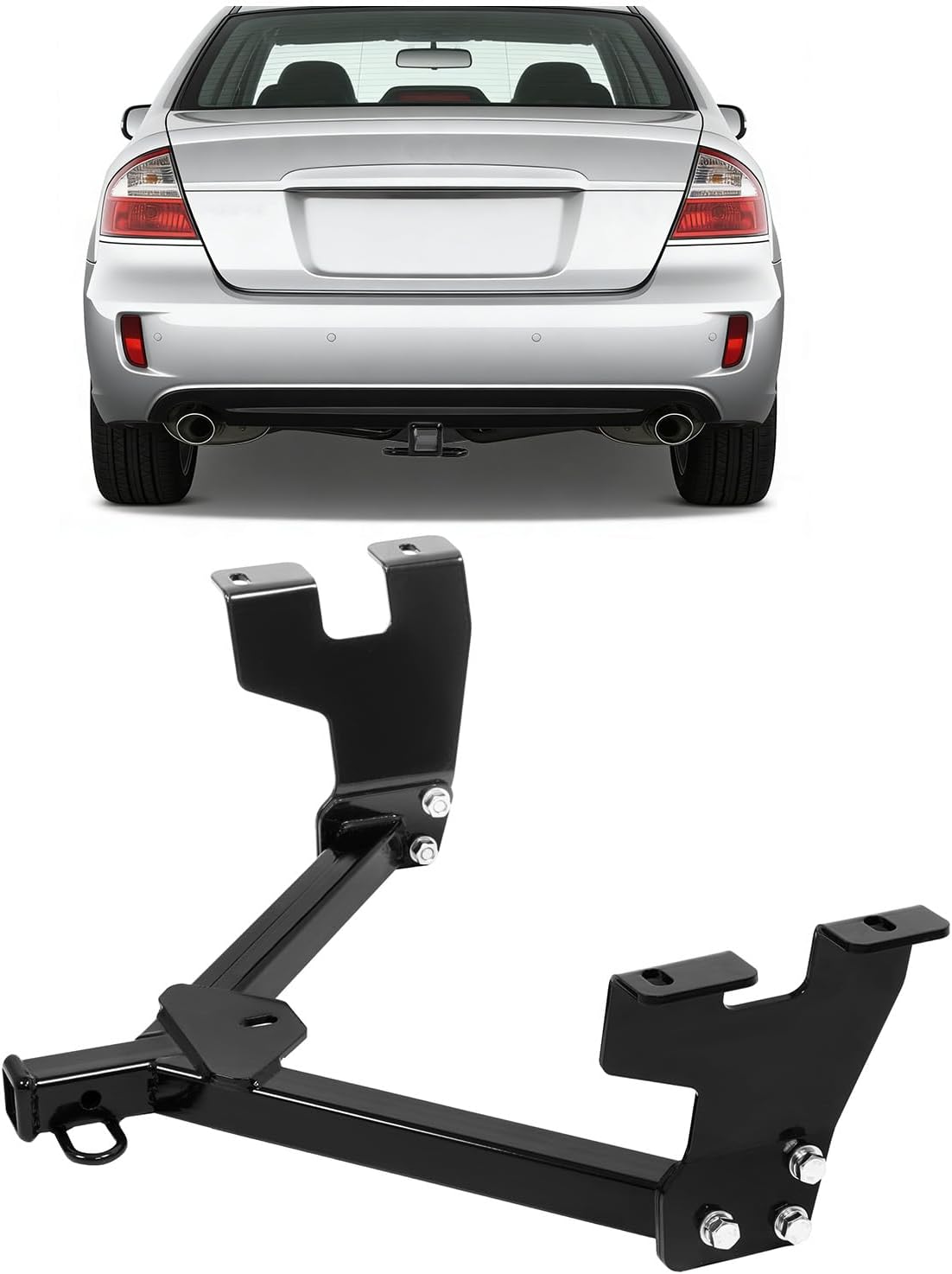
This Gelacie Class 2 trailer hitch is a straightforward, budget-focused receiver for 2005–2009 Subaru Outback and Legacy sedans and wagons. It provides a 1.25-inch receiver opening and a manufacturer-stated 3,500 lb gross towing capacity with a 300 lb tongue weight rating, turning the car into a practical light-towing rig for small trailers, cargo carriers, or bike racks. The hitch is made from alloy steel with a powder-coated finish to resist surface corrosion in everyday use. Installation follows a bolt-on design that uses the vehicle-specific mounting points and does not require drilling, which keeps fitment simple for someone doing the job at home or for a quick shop install. On the downside the unit is a basic, no-frills receiver with limited user feedback on long-term durability and only a 1.25-inch opening, so it is not suitable for heavier towing or larger accessories. For buyers prioritizing the lowest reasonable cost and an easy, factory-style mount for light towing on a 2005–2009 Outback or Legacy, this hitch delivers the essentials.
Best for: Buyers who need the lowest-cost way to add light towing or cargo-carrying capability to a 2005–2009 Subaru Outback or Legacy and who value an easy bolt-on install over extra features.
Less Ideal for: People who plan frequent heavy towing, need a 2-inch receiver, or want a hitch with extensive long-term reliability testing and high-end corrosion protection.
- Vehicle-specific bolt-on design installs without drilling
- Rated for 3,500 lb gross towing weight and 300 lb tongue weight
- Powder-coated alloy steel construction for basic corrosion resistance
- Includes the hitch receiver only for a simple, focused purchase
- Only a 1.25-inch receiver opening limits accessory and trailer options
- Limited customer feedback and lower overall rating raise questions about long-term durability
Verdict: The best budget trailer hitch for buyers who need reliable towing performance and a straightforward installation at the lowest reasonable price point.
3. CURT 12270 Class 2 Trailer Hitch with 1-1/4-Inch Receiver
Best Premium Trailer Hitch

| Receiver size | 1-1/4 inch |
|---|---|
| Gross trailer weight | 3,500 lb |
| Tongue weight | 350 lb |
| Material | Carbon Steel |
The CURT 12270 is a purpose-built Class 2 receiver hitch engineered to bolt to select Subaru Outback and Legacy models and provide light-duty towing and accessory carrying capability. It installs as a vehicle-specific unit and offers a 1-1/4-inch receiver that accepts standard ball mounts, cargo carriers, and most platform or hanging bike racks (note some vertical-hang bike racks are not compatible). Built from carbon steel with robotic welding and a dual-coat finish, the hitch resists rust and road wear for longer service life. Rated for 3,500 lb gross trailer weight and 350 lb tongue weight, it covers most small trailers, utility loads, and common cargo carriers while meeting SAE J684 safety testing. The custom fit reduces trimming or modification and keeps the hitch tucked to the bumper profile. Compared with heavier-duty alternatives, this unit is lighter and intended for everyday recreational use rather than heavy towing, so buyers who need greater capacity should choose a higher class hitch. The CURT finish and construction make this a durable, low-maintenance choice for owners prioritizing long-term corrosion protection and a factory-quality fit for their 2005–2009 Outback projects.
Best for: Buyers who want a durable, factory-quality hitch for a 2005–2009 Subaru Outback and prioritize corrosion resistance and precise fit over maximum towing capacity.
Less Ideal for: Drivers who plan frequent heavy towing, haulers of large trailers, or those needing a 2-inch receiver for larger accessories should look at higher-class hitches.
- Vehicle-specific design for a clean, bolt-on installation
- 3,500 lb GTW and 350 lb tongue weight suitable for most light trailers and cargo carriers
- Dual-coat finish (liquid A-coat plus powder coat) for enhanced rust and chip resistance
- Carbon steel construction with robotic welding for consistent strength and fit
- 1-1/4-inch receiver limits use with larger towing accessories and heavier tow loads
Verdict: The best premium trailer hitch for users willing to pay more for superior materials, better corrosion protection, enhanced fitment, and longer-term reliability.
4. ALMULOO Class 2 1.25" Trailer Tow Hitch Receiver for 2005–2009 Subaru Outback/Legacy
Best Compact Trailer Hitch

| Compatible vehicles | 2005–2009 Subaru Outback and Legacy sedans and wagons |
|---|---|
| Receiver size | 1.25 inches |
| Maximum towing capacity | 3500 pounds |
| Material | Alloy Steel |
| Finish | Powder Coated |
This ALMULOO trailer hitch is a vehicle-specific Class 2 receiver designed to bolt onto 2005–2009 Subaru Outback and Legacy sedans and wagons. It provides a 1.25-inch receiver opening and a 3,500 pound gross trailer weight rating with 300 pound tongue weight, which covers typical light towing tasks like bike racks, small cargo trailers, and compact camping trailers. Constructed from alloy steel with a powder-coated finish, the hitch aims to resist corrosion and blend discreetly under the rear bumper for a low-profile appearance. Installation uses supplied hardware and an instruction manual, though professional installation is recommended to ensure proper torque and alignment. The hitch is practical for owners who want a factory-like look and everyday towing capability without a bulky receiver sticking out; limitations are that it is for light-duty towing only and uses the smaller 1.25-inch size, so larger trailers and heavier towing accessories are not supported.
Best for: Buyers who want a subtle, factory-style hitch that preserves the vehicle’s rear appearance while enabling occasional light towing and accessory use.
Less Ideal for: Drivers who need heavy towing capacity, frequent long-distance towing, or who plan to haul larger trailers should choose a higher-capacity hitch or a 2-inch receiver instead.
- Vehicle-specific fit for 2005–2009 Subaru Outback and Legacy for straightforward fitment
- Low-profile 1.25-inch receiver keeps the rear appearance discreet
- Powder-coated alloy steel construction improves corrosion resistance
- 3,500 lb gross trailer weight rating suitable for common light-duty towing tasks
- 1.25-inch receiver and Class 2 rating limit use to light trailers and smaller towing accessories
Verdict: The best compact trailer hitch for buyers who prioritize a low-profile design and minimal visual impact while still offering adequate towing capacity.
5. CURT Class 2 Trailer Hitch with 4-Way Wiring Kit for 2005–2009 Outback Wagon
Best Corrosion-Resistant Trailer Hitch
| Vehicle fitment | 2005–2009 Outback (Wagon only) |
|---|---|
| Receiver size | 1 1/4" |
| Gross trailer weight | 3,500 lb |
| Tongue weight | 300 lb |
| Material | Carbon Steel |
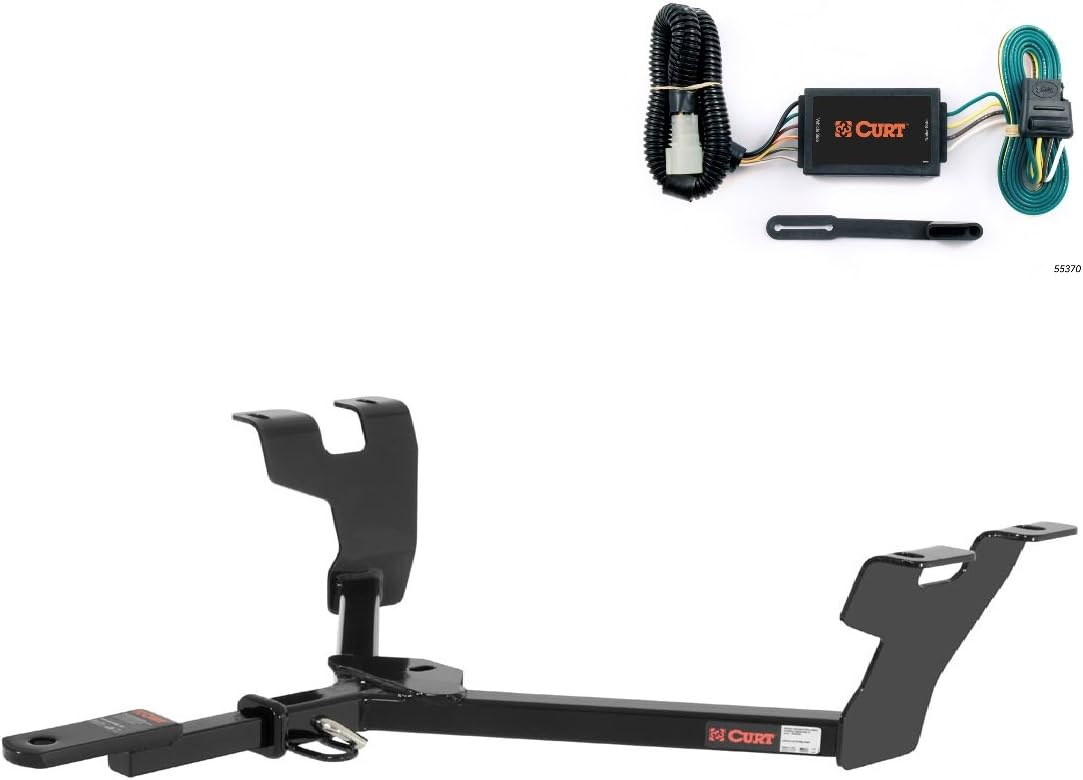
This CURT Class 2 hitch is a vehicle-specific, bolt-on towing solution for 2005–2009 Outback wagons that combines a 1 1/4" receiver and a plug-and-play 4-way flat wiring harness. It installs without drilling for the wiring bracket and uses precision welding and carbon steel construction for a strong, factory-style fit that handles bike racks, cargo carriers, and light trailers. The included custom wiring connector ties into the vehicle electrical system to power trailer lights and comes with a rubber dust cover to keep contacts clean in wet conditions. Practical benefits include a full wiring kit and hardware in the box, straightforward installation for DIYers or mechanics, and a 3,500 lb gross trailer weight rating with 300 lb tongue weight for common recreational loads. The finish resists rust and chipping but buyers should note the product carries a one-year limited finish/parts warranty rather than a multi-year corrosion warranty and heavier towing needs will require a higher class hitch.
Best for: Buyers in wet or corrosive climates who need a direct-fit hitch and wiring kit for a 2005–2009 Outback wagon and want a durable, low-maintenance towing setup.
Less Ideal for: Drivers who plan heavy towing above the hitch class limits or need multi-vehicle compatibility should consider a heavier-duty or different-fitment option.
- Vehicle-specific fit for 2005–2009 Outback wagon reduces modification and simplifies install
- Includes custom plug-and-play 4-way wiring harness and dust cover for protected connections
- Carbon steel construction with precision welding offers strong, factory-style towing capacity
- Supports up to 3,500 lb gross trailer weight and 300 lb tongue weight suitable for light recreational towing
- Finish warranty coverage is limited to one year which may be short for very salty coastal conditions
Verdict: The best corrosion-resistant trailer hitch for buyers in wet or salty environments who want long-lasting finish protection and reduced maintenance over time.
Choosing the Right 2005-2009 Subaru Outback Trailer Hitch: Key Factors to Consider
Fitment and Mounting Style
Correct fitment is the baseline for safe towing on a 2005-2009 Subaru Outback. A hitch designed for this year range aligns with the vehicle's factory mounting points and bumper geometry, avoiding trimming or drilling that can weaken the frame.
Different mounting styles change installation complexity and how the hitch interacts with the body. A bolt-on hitch that uses existing holes will usually be faster to install and easier to remove if needed. Some designs may require access panels to be removed or a minimal bumper cover modification; factor that into installation planning. Ensuring the hitch clears exhaust outlets and does not interfere with spare tire access or cargo area operation prevents everyday annoyances after installation.
Weight Capacity and Tongue Weight
Trailer hitch weight ratings determine what you can safely tow and how much vertical load the hitch can carry. For the Outback, verify both maximum towing capacity and maximum tongue weight to match your trailer or cargo carrier needs.
Choosing a hitch with a higher rated tongue weight than you expect to carry gives a margin of safety, but remember the vehicle's own chassis and drivetrain limits still apply. Balanced loading and proper distribution of cargo will reduce sway and wear on the hitch attachment points. Always check the vehicle owner's manual for maximum allowed tow and tongue weights as a hard limit.
Receiver Size and Accessory Compatibility
Receiver size determines what accessories you can use. The 2 inch hitch receiver is the most common choice for light towing and for mounting bike racks, cargo carriers, and many ball mounts. Confirm the receiver opening and whether adapters or shims are required.
Also consider class designation such as Class III when assessing compatibility. Class ratings indicate general capability ranges but review the exact weight rating stamped on the hitch. If you plan to change accessory types over time, prioritize a receiver size and class that accommodate your most demanding use case.
Corrosion Protection and Finish
Subaru Outback owners often drive in wet or salted conditions, so corrosion resistance matters for long-term durability. Hitches with thicker protective coatings, e-coating underlayers, or high-quality powder-coating resist rust longer and reduce maintenance.
Pay attention to weld quality and whether hardware includes corrosion-resistant nuts and bolts. Grease or rust inhibitors can extend life, but initial finish and material grade are the first line of defense. For coastal or winter-road users, prioritize proven finishes and accessible underbody drainage to limit trapped moisture.
Installation Complexity and Tools Required
How difficult a hitch is to install affects whether you can do it at home or need professional help. Bolt-on units that use factory holes and include clear hardware and instructions can often be installed with common hand tools and a torque wrench in a few hours.
More involved installations that require partial bumper removal, trimming, or lifting the vehicle higher for access increase time and potential need for a lift or extra help. Consider whether wiring for trailer lights or safety-chain routing will add steps and whether instructions include torque specs and sequence. If you plan to DIY, choose a hitch with straightforward instructions and readily available hardware.
Ground Clearance and Rear Approach
A hitch changes rear ground clearance and the vehicle's departure angle, which matters for outdoor and rural driving. Low-mounted hitches or those that extend rearward can snag on steep driveways, rutted roads, or curbs.
Assess how far the hitch protrudes below the bumper and whether receivers block access to the cargo area or rear sensors. For owners who frequently load the rear cargo or navigate uneven terrain, prioritize designs that keep the receiver tucked close to the vehicle frame while still providing the required capacity.
Understanding Towing Limits for the 2005-2009 Outback
The Outback's towing allowance is set by the vehicle manufacturer and depends on engine, drivetrain, and vehicle condition. Match the hitch's published capacity to the vehicle's recommended maximum towing and tongue weights rather than relying on the hitch rating alone.
Regular maintenance items such as brakes, tires, and cooling system condition influence safe towing. If you plan to regularly approach the vehicle's towing limits, confirm that the suspension and cooling system are in good condition and consider load-distributing hardware when appropriate.
- Confirm both vehicle and hitch tongue weight limits before towing
- Check tire pressure and brake condition before heavy loads
- Use proper hitch pins and safety-chain routing consistent with local regulations
Receiver Types and When to Choose a 2-Inch Receiver
A 2 inch receiver is commonly chosen for its balance of compatibility and capacity for light to moderate towing. It supports most bike racks, cargo carriers, and small trailers typically towed behind an Outback.
If you expect to tow heavier loads within the vehicle's limit, verify that the receiver class and the hitch's tongue weight rating align with that usage. Smaller receivers limit accessory options, while larger ones can be overkill for casual users.
- 2-inch receivers are versatile for everyday accessories
- Ensure the receiver class matches intended trailer tongue weight
- Adapters can change receiver size but may reduce capacity or introduce rattle
Wiring and Electrical Considerations
Trailer wiring is essential for running brake lights, turn signals, and, where applicable, trailer brakes. For the 2005-2009 Outback, plan whether you will use a plug-and-play vehicle-specific wiring harness or a universal harness that requires splicing.
Inspect the vehicle's rear connectors and wiring for corrosion or damaged insulation before installation. If you plan to add a brake-controller for larger trailers, verify the available under-dash space and circuit capacity for a properly fused installation.
- Use vehicle-specific harnesses to simplify installation when available
- Confirm circuit capacity if adding a brake controller
- Protect wiring with loom and secure routing to avoid heat and chafe
Maintaining Your Hitch for Long-Term Use
Routine inspection keeps a hitch reliable. Check fasteners for correct torque, look for surface rust at welds or edges, and clean drainage holes to avoid trapped moisture. Tighten hardware after the first few hundred miles of towing to account for settling.
If you live where road salt is used, wash the underside regularly and touch up chips in the finish. Lubricate moving parts like pins and locking collars and replace worn hardware promptly to maintain rated performance.
- Inspect mounting bolts and torque to specification annually
- Wash underside and touch up finish after winter months
- Replace bent or damaged accessories rather than attempting repairs
Accessory Options for the Outback Owner
Common hitch accessories include ball mounts, hitch-mounted cargo carriers, bike racks, and weight-distributing systems. Choose accessories rated for the hitch receiver size and the intended tongue weight to avoid overloading the hitch or vehicle.
Consider storage and removal convenience. If you change accessories seasonally, a quick-release option or a simple pin-and-clip setup reduces installation time and prevents corrosion at connection points.
- Match accessory class and tongue weight to hitch rating
- Look for corrosion-resistant pins and locking mechanisms
- Consider quick-detach options if you remove accessories often
Still looking for the perfect fit?
Select your Subaru Outback configuration to see the most relevant Trailer Hitches recommendations
How We Chose the Best 2005-2009 Subaru Outback Trailer Hitch
We built this list using practical, vehicle-specific criteria for owners of 2005-2009 Subaru Outback models. Selection started with verified fitment for the 2005-2009 Outback chassis and mounting points, and we excluded any hitches that require extensive body modification or custom fabrication.Key evaluation criteria included: confirmed bolt-on fit and compatibility with the Outback's bumper and frame; published trailer hitch weight rating for both maximum towing capacity and maximum tongue weight; receiver size and class suitability for common accessories; corrosion resistance and finish for longevity in wet or salted-road environments; and ease of installation considering typical home tools and available hardware. We also considered whether the hitch maintained access to rear sensors, exhaust, and cargo area clearance.Excluded items included generic, universal-fit units that lack Outback-specific mounting instructions and any hitches that exceed the Outback's factory towing limits without accompanying vehicle upgrades. The resulting shortlist emphasizes reliably documented fit, clear installation requirements, and specifications that let owners match hitch capability to their towing plan.
Our full evaluation process is outlined in our review methodology.
FAQ
Can I install a trailer hitch on my 2005-2009 Subaru Outback myself?
Often yes. Many hitches designed for the 2005-2009 Outback are bolt-on and can be installed with common tools and a torque wrench. More complex installs that require bumper removal or additional wiring may need an extra set of hands or professional help.
What receiver size should I choose for everyday use?
A 2 inch receiver is typically the most versatile choice for everyday accessories like bike racks and cargo carriers while supporting light trailer towing. Choose a receiver and class that meet your maximum expected tongue weight.
How do I confirm a hitch will not interfere with my Outback's rear sensors or exhaust?
Check manufacturer fitment notes and installation instructions for clearances around sensors and the exhaust. Look for hitches that specify no trim or no sensor relocation for the 2005-2009 Outback to minimize post-installation adjustments.
Do I need to upgrade my Outback before using a higher-rated hitch?
A higher-rated hitch does not change the vehicle's factory towing limits. Upgrading suspension components or brakes may be advisable if you intend to consistently tow near the vehicle's maximum, but confirm all changes align with manufacturer guidance.
How often should I inspect the hitch after installation?
Inspect the hitch mounting hardware and finish after the first few hundred miles of towing, then at least annually. Also check after exposure to heavy road salt or off-road use and re-torque bolts if needed.
Final Verdict
Prioritize correct fitment, weight capacity, and a receiver size that suits the accessories you plan to use when choosing a hitch for a 2005-2009 Subaru Outback. Consider installation complexity and corrosion protection in line with your local climate and maintenance habits.Balance the hitch rating with the vehicle's factory towing limits and plan wiring and accessory choices accordingly. With these priorities in mind, you can confidently select a durable hitch that meets your towing needs without unnecessary compromise.
Explore More:
- Check out all Subaru Outback parts & accessories
- Explore Other Accessories
- Browse all Accessories
