

Note: This article contains affiliate links. If you click on these links and make a purchase, I may earn a small commission at no extra cost to you. This helps support my research and content. Read my full affiliate disclosure here.
If you own a 2010-2014 Subaru Outback, a failing catalytic converter can mean poor emissions performance, reduced fuel economy, and persistent check-engine lights. Choosing the right replacement matters because fitment, durability, and emissions compliance all affect driveability and legal inspection outcomes. This guide narrows the field to the top shortlisted catalytic converters that suit the Outback's exhaust layout and common service needs.We evaluated options that prioritize correct fitment, robust construction, and effective emissions control. Below are our top picks followed by the decision factors we used, practical installation notes, and answers to common owner questions to help you choose with confidence.
Looking for other parts? See all Subaru Outback parts & accessories.
Top Picks at a Glance
| Best Overall The best all-around choice for most situations | PHILTOP High-Flow Catalytic Converter for Subaru Front Position (EPA Compliant) |  |
| Best Quality Built to a higher standard if you want something more solid | MagnaFlow OEM-Grade Direct-Fit Catalytic Converter (Rear) |  |
| Best Value The sweet spot between price and what you get | PHILTOP High Flow Catalytic Converter (Front) — Compatible with Subaru 2011–2016 Forester & 2013–2014 Outback | |
| Best Budget The cheapest option that still gets the job done reliably | PHILTOP Rear Direct-Fit Catalytic Converter for Subaru Outback/Legacy 2.5L (55644) |  |
| Highest Rated A top-rated pick with lots of positive feedback | SPEEDFusion High-Flow Catalytic Converter (EPA Compliant) |  |
| Most Popular A crowd favorite that many people choose with confidence | ECHO AUTOMILES Catalytic Converter for Subaru Forester/Impreza/Outback/Legacy 2.5L (EPA Compliant) |  |
| Best Seller A high-volume bestseller chosen again and again | SPEEDFusion 2" Universal High-Flow Catalytic Converter with O2 Port (Bottom) |  |
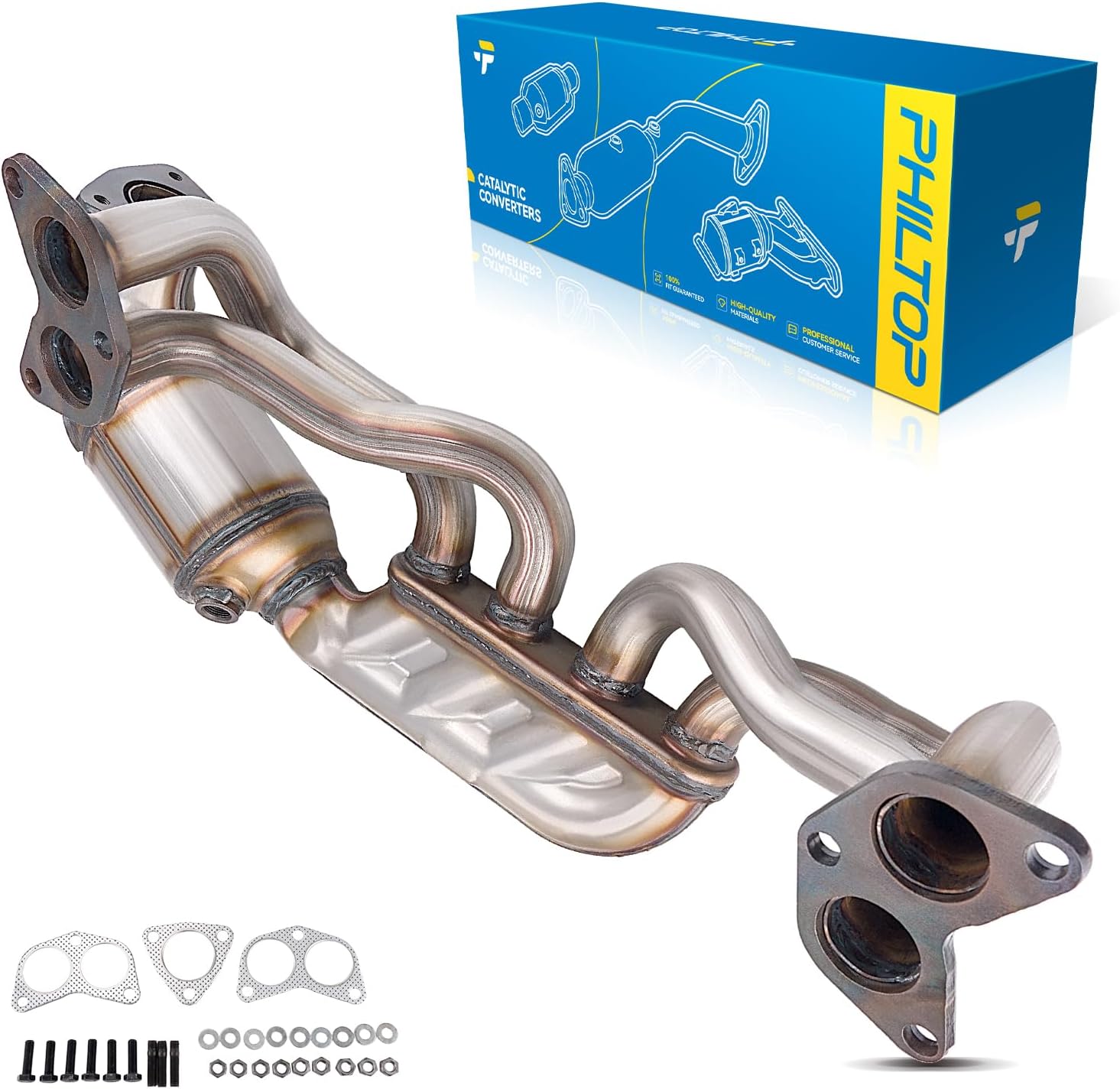
1. PHILTOP High-Flow Catalytic Converter for Subaru Front Position (EPA Compliant)
| Position | Front |
|---|---|
| Manufacturer | PHILTOP |
| OEM Part Number | 16689, 44620AC780, 44620AC580, 44620AC620, 44620AD170, 44620AC621, 44620AD16A, 44620AD17A, 44620AC770, 44620AD160, 44620AC581, 52587, 641559, 44620AD83C, 44620AD83B, 44620AD83A, 44620AD16B, 44620AD17B, 41209 |
| EPA Compliance | EPA Compliant |
This PHILTOP catalytic converter is a replacement front unit intended for select Subaru 2.0L and 2.5L vehicles from the 2011–2016 era and is presented as a plug-and-play fitment for models listed. It uses a stainless steel aluminized body and a double-layer high-temperature ceramic carrier designed to increase flow area and oxygen storage capacity, which should help maintain emissions control while reducing backpressure compared with a heavily restricted unit. The kit includes gaskets and hardware to simplify installation without cutting or welding in most cases. Being EPA compliant means it meets federal aftermarket emissions criteria for many states, though it is not legal for sale or installation in California or Colorado. Expect competent corrosion resistance and a balance of durability and improved exhaust flow, but verify vehicle fitment and local regulations before purchasing since state rules vary and specialist programming or inspection may still be required.
Best for: Buyers seeking a reliable, direct-replacement catalytic converter that balances improved exhaust flow with emissions compliance for mid‑2010s Subaru vehicles and who prioritize a straightforward install.
Less Ideal for: Drivers in states with stricter aftermarket emissions rules or those who need a California-compliant converter should look for region-specific certified units.
- Direct-fit front replacement for listed Subaru models simplifies installation
- Stainless steel aluminized body for improved corrosion resistance
- Double-layer high-temperature ceramic carrier increases flow and oxygen storage
- Includes gaskets and hardware for plug-and-play installation
- Not legal for sale or installation in California and Colorado due to EPA compliance limits
Verdict: A practical, direct-fit front catalytic converter option for mid‑2010s Subaru owners who want improved flow and federal emissions compliance with minimal installation hassle.
2. MagnaFlow OEM-Grade Direct-Fit Catalytic Converter (Rear)

| Position | Rear |
|---|---|
| Exterior | Stainless Steel |
| Model | OEM Grade |
| Manufacturer | MagnaFlow |
This MagnaFlow direct-fit catalytic converter replaces the rear unit on compatible Subaru models and is engineered to reproduce factory flow characteristics while meeting federal emissions standards. It uses 3D-scanned tooling and a spun-body design with a single laser fusion weld to minimize leaks and maintain thermal efficiency. The unit ships with gaskets and hardware to simplify installation and avoid reusing corroded factory parts. Built from stainless steel with mandrel-bent tubing, it aims to preserve engine performance and fuel economy instead of restricting exhaust flow. Note that it is labeled federal/EPA compliant but not for sale in California, Colorado, or New York, and buyers should verify exact fitment for model years and trim. Installation still requires basic exhaust tools or a shop visit, and it replaces the rear position only, so other exhaust components may need separate attention.
Best for: Buyers focused on restoring or maintaining factory-like exhaust flow and engine response on compatible Subaru Outback models who want a durable, direct-replacement rear catalytic converter that simplifies installation.
Less Ideal for: Drivers required to meet California or other state-specific emissions sale restrictions or those needing a full exhaust system replacement rather than just a rear converter.
- Direct-fit design based on 3D scanning for close factory-style fit and reduced leak risk
- Includes new gaskets and hardware to simplify installation and avoid reusing corroded parts
- Mandrel-bent stainless steel tubing preserves exhaust flow and supports fuel economy and performance
- Not legal for use or sale in California, Colorado, or New York
Verdict: Choose this unit when you want a durable, direct-fit rear catalytic converter that preserves factory flow and simplifies installation on supported Subaru models.
3. PHILTOP High Flow Catalytic Converter (Front) — Compatible with Subaru 2011–2016 Forester & 2013–2014 Outback
| Position | Front |
|---|---|
| Manufacturer | PHILTOP |
| Exterior | Machined |
| OEM Part Number | 16689, 44620AC780, 44620AC580, 44620AC620, 44620AD170, 44620AC621, 44620AD16A, 44620AD17A, 44620AC770 |
This PHILTOP catalytic converter is a direct-fit replacement meant to restore emissions control and reduce exhaust noise caused by a failing unit. It uses a high-flow ceramic honeycomb substrate in a 409L stainless steel housing to lower backpressure and help the engine breathe more freely, which can slightly improve throttle response and fuel efficiency compared with a clogged converter. The listing notes it includes OE-style gaskets and hardware for a bolt-on installation that most home mechanics or a local shop can complete in roughly 3 to 4 hours. It is EPA-approved for federal emissions states but not legal for use in California, Colorado, Maine, or New York. Practical buyers will appreciate the factory-matching mounting points and the emphasis on longevity from stainless construction, while those who need a CARB-compliant part for restricted states will need a different option.
Best for: A practical buyer who wants a factory-compatible, long-lasting replacement that restores emissions function and reduces exhaust noise without custom modification.
Less Ideal for: Drivers who need a CARB-compliant converter for states with stricter emissions rules or those seeking performance/tuned converters for racing applications.
- Direct-fit design with OE-style gaskets and hardware for straightforward installation
- High-flow ceramic honeycomb substrate reduces backpressure and can improve efficiency
- Constructed from 409L stainless steel for corrosion resistance and longer service life
- EPA-approved for federal emissions compliance
- Not legal for sale or installation in California, Colorado, Maine, or New York
Verdict: Choose this PHILTOP front catalytic converter if you want a straightforward, factory-matching high-flow replacement that restores emissions performance for 2010–2014 Outback-range Subarus in federal-emissions states.
4. PHILTOP Rear Direct-Fit Catalytic Converter for Subaru Outback/Legacy 2.5L (55644)

| Compatible models | 2010–2012 Outback/Legacy 2.5L |
|---|---|
| Position | Rear |
| OEM part numbers referenced | 55644, 44620AC10A, 44620AD07A, 44620AC13A |
| Material | Stainless steel shell |
| EPA compliance | Meets federal emissions (not CARB) |
This PHILTOP rear catalytic converter is a bolt-on replacement for 2010–2012 Subaru Outback and Legacy 2.5L models that aims to restore emissions control and exhaust flow without modification. It uses a high-flow ceramic substrate inside a stainless steel shell and comes with OE-style gaskets and mounting hardware so installation typically takes 3 to 4 hours with basic tools. The higher-flow internal design reduces backpressure which can help the engine breathe a bit better and may stop rattling or noisy exhaust if the original unit was failing. Being EPA-compliant makes it legal for use in most states, though it is not for states that require California-level parts. Expect a factory-style fit and simpler DIY replacement compared with universal converters, but keep in mind long-term durability depends on local driving conditions and catalytic element life, and installation may still require lifting the vehicle and some rusted fastener work on older cars.
Best for: Buyers looking to replace a failing rear catalytic converter on a 2010–2012 Outback/Legacy who prioritize a budget-friendly, direct-fit OEM-style swap and want included hardware for easier installation.
Less Ideal for: Do not choose this if you need a California-compliant or state-specific emissions part or if you prefer a lifetime-performance aftermarket catalytic with documented long-term durability tests.
- Direct-fit flange-to-flange design with included gaskets and hardware for straightforward installation
- High-flow ceramic substrate that reduces backpressure and can improve exhaust flow
- Stainless steel outer shell and welded connections for better resistance to heat and corrosion than cheaper stamped units
- Not compliant with California and several other states that require stricter emissions parts
Verdict: A cost-conscious, direct-fit replacement that restores emissions function and simplifies installation for 2010–2012 Subaru Outback/Legacy 2.5L owners seeking a budget-friendly factory-style swap.
5. SPEEDFusion High-Flow Catalytic Converter (EPA Compliant)

| Vehicle fitment | Select 2011–2016 Forester, 2012–2016 Impreza, 2013–2014 Outback/Legacy, 2016 Crosstrek |
|---|---|
| Reference part numbers | 16689, 17367 |
| Material | 409L stainless steel shell |
| Substrate | OEM-grade 400-hole ceramic with Pt/Rh/Pd plating |
| Certification | EPA compliant |
This SPEEDFusion catalytic converter is a direct-fit replacement built for several Subaru 2.0L and 2.5L H4 applications and is intended to restore emissions control while keeping the check-engine light off. It uses a stainless steel shell and an OEM-grade 400-hole ceramic substrate with plated precious metals to boost catalytic conversion and reduce pollutants. The unit is EPA certified for federal emission vehicles and is offered with a structural and limited emissions warranty, which adds reassurance for long-term reliability. Installation is typical of a direct-fit converter and is best handled by a professional to ensure proper sealing and sensor alignment. Limitations include lack of CARB approval, so it is not legal in states with stricter emissions rules, and the product requires correct fitment verification for specific model years and engine trims. For drivers focused on maintaining factory-level emissions performance on federal-compliant Subarus, this unit delivers a robust, serviceable option.
Best for: Buyers who prioritize long-term, factory-level emissions performance and want a durable, direct-fit replacement to keep emissions systems functioning and the malfunction indicator light off.
Less Ideal for: Drivers in states enforcing California emissions standards or those who need a CARB-approved converter should look for a compliant alternative.
- Direct-fit design for specified Subaru 2.0L and 2.5L H4 applications simplifies installation
- Stainless steel construction and anti-detachment welding for improved durability in harsh conditions
- OEM-grade 400-hole ceramic substrate with plated platinum, rhodium and palladium increases catalytic efficiency
- EPA certification for federal emissions compliance and included limited warranties provide added reliability assurance
- Not CARB-compliant so cannot be used in states with California-equivalent emissions rules
Verdict: A durable, EPA-certified direct-fit replacement that restores factory-level emissions control for federal-compliant Subaru H4 models and prioritizes reliable long-term performance.
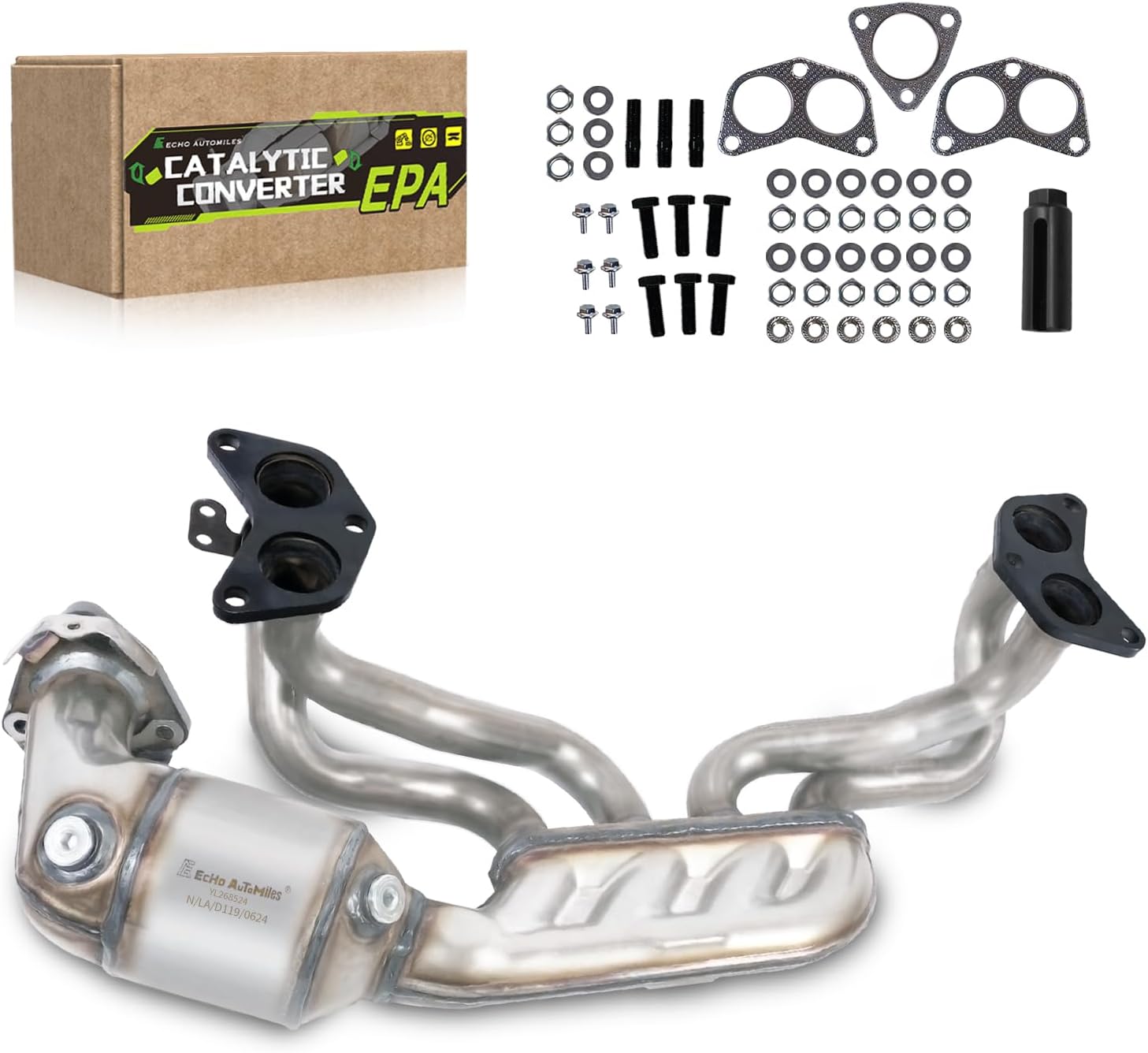
6. ECHO AUTOMILES Catalytic Converter for Subaru Forester/Impreza/Outback/Legacy 2.5L (EPA Compliant)
| Brand | ECHO AUTOMILES |
|---|---|
| Model | For Forester 2011-2016 |
| Substrate | 400-cell honeycomb |
| Compatibility note | 2.5L Subaru models (specified years) |
This replacement catalytic converter is built as a direct-fit emissions component for Subaru 2.5L models including the Outback within the listed years, delivering a 400-cell honeycomb substrate intended to match factory flow while reducing backpressure. It is typically used to replace a failed or seized converter to clear emissions faults and restore proper exhaust performance. The high-flow 400-cell design aims to preserve engine power and fuel economy while providing durable high-temperature resistance. The kit includes the gaskets and hardware needed for a straightforward swap, which simplifies installation for a competent technician. It is EPA compliant for sale outside states with stricter rules and comes with multi-year coverage through the seller. Important limitations are state-specific sale restrictions that make it unusable in California and Colorado and restricted in some other states, and because it is an aftermarket unit buyers should confirm fitment and sensor locations for their exact model year before purchase.
Best for: A buyer who wants a direct-fit, emissions-compliant replacement that restores factory-like exhaust flow and clears emissions faults, and who values seller-backed coverage and peer-reviewed reliability when choosing parts.
Less Ideal for: Do not choose this unit if you need a converter legal for California or Colorado installations or if you require a custom performance or race-oriented catalytic solution.
- Factory-style 400-cell honeycomb substrate balances emissions control with reduced exhaust backpressure
- Includes gaskets and hardware so installers have necessary parts for a typical replacement
- EPA-compliant for use in most states and designed to preserve engine power and fuel economy
- High-temperature resistant construction intended for long-term structural durability
- Not approved for sale or installation in California or Colorado and restricted in several other states
Verdict: A ready-to-install, EPA-compliant direct-fit converter that restores emissions control and factory-like exhaust flow for 2.5L Subaru Outback models outside restricted states.
7. SPEEDFusion 2" Universal High-Flow Catalytic Converter with O2 Port (Bottom)

| Inlet/Outlet Diameter | 2 inches |
|---|---|
| O2 Sensor Port | Bottom positioning |
| Substrate | 400-hole ceramic |
| Compliance | EPA compliant only |
| Manufacturer | SPEEDFusion |
This universal 2-inch high-flow catalytic converter from SPEEDFusion is built as a replacement section for exhaust systems with a 2.00 inch outer diameter pipe and includes a bottom-position oxygen sensor port. It uses a 400-hole ceramic substrate with precious metal coatings and a stainless-steel shell, which the manufacturer says improves catalytic conversion and helps prevent codes such as P0420/P0430 when sized and installed correctly. Typical use is as a direct-fit replacement or in custom exhaust work where a 2-inch pipe is present; installation will usually require cutting and welding or professional installation to ensure proper alignment and sealing. The EPA-compliant design is suitable only for vehicles that meet federal standards and is not CARB-legal, so it cannot be used in states with stricter emissions rules. Practical benefits include a simpler way to restore emissions function and an integrated O2 port for sensor placement, while limitations include the universal sizing requirement and the need to confirm exact fitment for the 2010-2014 Subaru Outback instead of assuming vehicle-specific fit.
Best for: Buyers who prioritize restoring emissions performance with a straightforward high-flow replacement and want a product that keeps the malfunction indicator light off when properly fitted and installed.
Less Ideal for: Do not choose this if you need a California-compliant or vehicle-specific catalytic converter or if you prefer a bolt-on, model-matched direct replacement without any exhaust modification.
- High-flow 400-hole ceramic substrate with platinum, rhodium, and palladium coatings for improved catalytic conversion
- Integrated bottom-position O2 sensor port for correct sensor placement
- Stainless steel shell and anti-core-detachment welding aimed at durability
- EPA-compliant for vehicles meeting federal emission standards
- Direct-fit style design that can simplify installation when pipe size matches
- Not CARB-legal so it cannot be used in California, Colorado, New York, or Maine
- Universal 2-inch sizing may require pipe cutting, welding, or adapter pieces to fit the Outback exhaust routing
Verdict: A durable EPA-compliant high-flow 2-inch converter with an integrated O2 port for restoring emissions performance on federal-standard vehicles when a universal 2" fit is acceptable.
Choosing the Right 2010-2014 Subaru Outback Catalytic Converter: Key Factors to Consider
Fitment and Flange Configuration
Correct fitment is essential because the Outback uses specific pipe diameters, flange types, and oxygen sensor locations that vary across model years and engine options. Choosing a converter with matching flange geometry and bolt pattern reduces the need for cutting, welding, or additional adapters. A poor fit can lead to exhaust leaks, rattles, and accelerated wear on adjacent components.
Inspect the product's stated fitment for the 2010-2014 range and confirm sensor boss positions. If the converter replicates factory mounting points, installation time and labor costs are typically lower. For installers, verify that mating gaskets, bolts, and hangers align with the vehicle to avoid on-vehicle modifications.
Oxygen Sensor Compatibility
The Outback relies on upstream and downstream oxygen sensors for engine management and emissions monitoring. A replacement catalytic converter must have the correct number of sensor ports in the right locations and thread types to prevent check-engine warnings related to sensor readings. Incorrect sensor placement can produce false fault codes or require sensor relocation.
Confirm that sensor bosses accept the OEM sensor threads and that wiring harness lengths are sufficient. Some converters include welded-in sensor bungs while others provide plug-and-play ports. Ensuring sensor compatibility preserves the vehicle's closed-loop fuel control and emissions diagnostics.
Substrate Type and Emissions Performance
Catalytic converters differ by substrate material and cell density, which dictate how effectively they convert hydrocarbons, carbon monoxide, and nitrogen oxides. For the Outback, a converter with an appropriate substrate formulation and cell structure will balance emissions reduction with exhaust flow, maintaining engine performance while meeting inspection standards.
Consider the application: street-driven Outbacks benefit from converters designed for low backpressure and stable light-off characteristics. Look for technical details about cell density or precious metal loading when available, as these influence conversion efficiency and longevity.
Durability and Construction Quality
Road salt, moisture, and heat cycling put heavy strain on exhaust components in many regions. A well-constructed converter uses corrosion-resistant materials, secure welds, and adequate heat shielding to resist premature failure. Durable construction reduces the chance of internal substrate breakage, external shell corrosion, and exhaust leaks that often lead to repeat repairs.
Check for features like stainless steel housings, robust flange thickness, and anti-rattle designs. Components that withstand thermal expansion and road debris will last longer and preserve emissions performance over time.
Installation Complexity and Serviceability
Some converters are direct-fit while others require cutting, welding, or the use of clamps and adapters. For Outback owners who plan a do-it-yourself replacement or who will rely on independent shops, installation complexity affects labor time and cost. A converter that aligns with existing hangers and flange types simplifies the job.
Also consider serviceability: converters with accessible sensor ports and replaceable gaskets make future maintenance easier. If the product requires significant exhaust modification, factor in shop labor and the potential need to replace additional exhaust components.
Warranty and Documentation
Warranty terms and clear fitment documentation indicate manufacturer confidence and help if an early failure occurs. For emissions-related components, a warranty that covers corrosion or substrate failure provides protection against premature defects. Documentation that lists exact year and engine compatibility reduces the risk of ordering the wrong part.
Look for explicit coverage periods and what is excluded. Good documentation should include diagrams or notes about sensor placement and any supplemental parts required for installation.
Understanding Check-Engine Codes Related to the Converter
The most common symptom that leads owners to suspect the catalytic converter is an illuminated check-engine light. For the 2010-2014 Outback, codes associated with downstream and upstream oxygen sensor readings, catalyst efficiency, or misfires often point to converter issues. However, these codes can also stem from sensor faults, exhaust leaks, or engine performance problems.
Before replacing the converter, have codes read and interpret whether the fault is a slow catalyst efficiency decline or a sudden sensor failure. Diagnosing the root cause helps avoid unnecessary replacement and ensures the repair addresses the underlying problem.
- Common diagnostic steps include scanning for specific O2 and catalyst efficiency codes.
- Visually inspect for exhaust leaks, cracked housings, or damaged heat shields.
- Consider sensor testing and fuel system checks to rule out engine-related causes.
Fitment Tips to Avoid Fabrication
Verify part numbers and supplier fitment notes that explicitly reference the 2010-2014 Subaru Outback. When possible, choose converters described as direct-fit to minimize cutting or welding. If a converter is listed for a specific engine variant, double-check that it matches your Outback's engine and exhaust layout.
If modification is unavoidable, plan for proper gaskets, flange alignment tools, and replacement hardware. Ensure hangers and heat shields are reinstalled securely to prevent vibration and wear.
- Measure pipe diameters and flange spacing before purchase.
- Keep original mounting hardware or have OEM-style replacements ready.
- If welding, ensure clean mating surfaces and use high-temperature weld procedures.
Emissions Testing and Legal Considerations
Catalytic converters are regulated components in many jurisdictions. For the Outback, selecting a converter that restores emissions performance can help pass periodic inspections. Confirm that the replacement meets local emissions rules and that any included documentation supports compliance checks.
Some regions require converters to match original equipment specifications or to be certified. When in doubt, consult local inspection guidelines and ensure the chosen converter will satisfy emissions testing procedures.
- Retain installation receipts and fitment documentation for inspection purposes.
- If your area requires certified parts, confirm certification before purchase.
- A proper installation without exhaust leaks is crucial to pass emissions tests.
DIY Replacement Considerations
Replacing a catalytic converter on the Outback can be a weekend project for owners with mechanical experience, but it may involve rusted fasteners, tight clearances, and heavy-handed heat. Prepare the vehicle by elevating it safely and gathering appropriate tools, including oxygen sensor sockets and torque wrenches.
Plan for new gaskets and hardware, and inspect nearby components such as heat shields and hanger brackets for wear. If you are uncomfortable with welding or exhaust alignment, have a professional complete the installation to avoid leaks or sensor issues.
- Use penetrating oil on rusted bolts and allow sufficient soak time.
- Support the exhaust during removal to prevent strain on hangers.
- Re-torque flanges to specification and clear any stored trouble codes post-install.
Symptoms of Converter Wear Versus Other Issues
Symptom overlap means that rattling, decreased fuel economy, or power loss do not always indicate converter failure. Internal substrate breakage can cause rattling noises, while clogged converters often lead to loss of power and higher backpressure. Conversely, engine misfires or air-fuel problems may mimic these symptoms without any catalytic damage.
A methodical diagnosis that includes visual inspection, backpressure measurements, and sensor checks will help distinguish converter failure signs from other engine or exhaust faults.
- Rattling often signals broken internal substrate.
- Progressive power loss and overheating suggest a restricted converter.
- Intermittent check-engine lights often point to sensor or wiring issues.
Still looking for the perfect fit?
Select your Subaru Outback configuration to see the most relevant Catalytic Converters recommendations
How We Chose the Best 2010-2014 Subaru Outback Catalytic Converter
We focused on attributes that matter specifically for 2010-2014 Subaru Outback owners and excluded products that do not match the Outback's exhaust routing or documented flange and sensor configurations. Our process prioritized concrete, vehicle-relevant criteria rather than broad marketing claims.Key evaluation criteria included: material and internal substrate design to assess durability and resistance to contamination; fitment accuracy and flange configuration to minimize modification or adapter requirements; oxygen sensor boss placement and compatibility with the Outback's sensor locations; emissions performance measured by catalyst cell count and substrate type to ensure effective reduction of pollutants; and build quality including welds and heat shielding that affect longevity. We also considered warranty coverage and documented fitment notes from manufacturers to gauge reliability.We excluded universal or heavily modified converters that require substantial welding or exhaust re-routing. Products lacking clear fitment data for the 2010-2014 Outback or missing sensor port information were not shortlisted. The result is a selection that balances factory-like fit, emissions effectiveness, and installation practicality.
Our full evaluation process is outlined in our review methodology.
FAQ
What are the common catalytic converter symptoms on a 2010-2014 Outback?
Common symptoms include an illuminated check-engine light with catalyst-related codes, reduced engine power, rattling noises from the exhaust, and sometimes higher fuel consumption. These signs often indicate efficiency loss or internal damage, but other issues can produce similar symptoms.
Will a failing catalytic converter cause a check-engine light?
Yes. The Outback's oxygen sensors monitor catalyst efficiency, and a drop in performance typically triggers a check-engine light with specific pump or catalyst efficiency codes. However, sensor faults and exhaust leaks can also set the same codes.
Can I replace the catalytic converter myself on the Outback?
Many owners can perform the replacement with the right tools and experience, but expect rusted fasteners and tight spaces. If welding or exhaust realignment is required, a professional shop is recommended to ensure proper fit and seal.
How important is correct sensor placement when installing a new converter?
Very important. Incorrect sensor placement can cause false readings and persistent fault codes. Ensure the replacement has sensor ports in the correct locations and that the sensors are installed to the proper thread and torque specifications.
What should I inspect before deciding to replace the converter?
Visually inspect for external damage, cracked housings, and heat shield deterioration. Check for exhaust leaks at flanges and hangers, scan for diagnostic trouble codes, and test oxygen sensors to rule out sensor or engine-related failures.
How long do catalytic converters typically last on these Outbacks?
Lifespan varies based on driving conditions, exposure to road salt, and engine health. Converters often last many years, but contamination from oil or coolant leaks, severe road conditions, or repeated overheating can shorten service life.
Final Verdict
Prioritize correct fitment, oxygen sensor compatibility, and durable construction when selecting a catalytic converter for a 2010-2014 Subaru Outback. Balancing emissions performance with low backpressure will preserve drivability and improve the chance of passing inspections. Expect to trade off ease of installation against long-term durability when choosing between direct-fit and modified options.Focus first on parts that match the Outback's flange and sensor layout, then consider substrate quality and warranty. That approach will minimize surprises at installation and give you the best outcome for emissions control and vehicle reliability.
Explore More:
- Check out all Subaru Outback parts & accessories
- Explore Catalytic Converters Maintenance & Repair Guides
- Explore Exhaust & Emissions
- Browse all Auto Parts
