

Note: This article contains affiliate links. If you click on these links and make a purchase, I may earn a small commission at no extra cost to you. This helps support my research and content. Read my full affiliate disclosure here.
If you own a 2005-2009 Subaru Outback and are facing emissions trouble or a persistent check engine light, choosing the right catalytic converter matters for drivability and legal compliance. The correct converter can reduce exhaust odors, prevent recurring fault codes, and preserve engine performance when installed with proper fitment.This guide covers seven shortlisted catalytic converters that fit the 2005-2009 Outback. We evaluate each option on real-world fitment, emissions effectiveness, build durability, and ease of installation so you can pick the unit that matches your repair goals. Read on for practical buying considerations and answers to common owner questions.
Looking for other parts? See all Subaru Outback parts & accessories.
Top Picks at a Glance


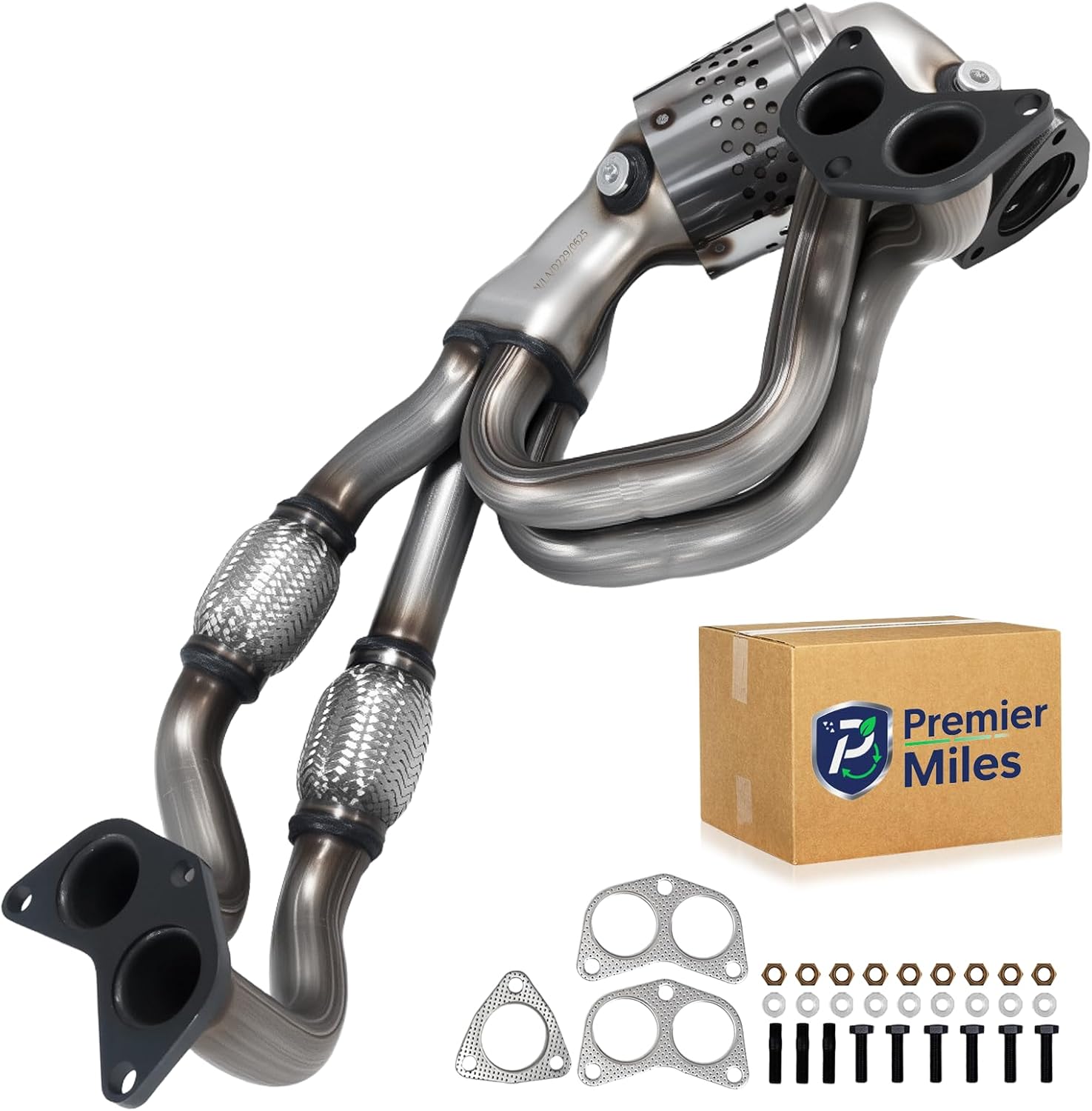
1. PREMIER MILES Catalytic Converter for Subaru 2.5L H4 (2006–2012 Outback/2006–2011 Impreza/2006–2010 Forester)
| Compatible engines | 2.5L H4 |
|---|---|
| EPA compliance | Yes |
| Substrate cell density | 400-cell ceramic |
| Manufacturer warranty | 5-year structural |
| Emissions performance warranty | 2.5-year/25,000-mile |
This PREMIER MILES catalytic converter is a direct-fit replacement designed for Subaru 2.5L H4 applications including Outback mid-2006–2012 years, and it focuses on restoring exhaust flow and emissions compliance. It uses a 400-cell ceramic substrate with precious metal catalysts to improve exhaust throughput and reduce backpressure compared with a clogged or failed unit, which helps recover fuel economy and throttle response. The part is described as EPA compliant and tested to the 25,000-mile long-term standard, and the manufacturer provides a structural five-year warranty plus a 2.5-year emissions performance warranty. Installation is typical of direct-replacement converters and should fit the factory mounting points for the listed model years, though professional exhaust alignment and gasket replacement are advisable. Note this unit is not CARB compliant, so it is not legal for use in California or areas that require CARB certification. Buyers should also confirm exact fitment for their year and submodel before purchase.
Best for: Buyers who want a reliable, factory-style replacement to restore emissions compliance and exhaust flow on mid-2000s Subaru 2.5L H4 Outbacks while valuing tested performance and warranty coverage.
Less Ideal for: Drivers in California or other CARB-regulated regions who require a certified CARB-compliant catalytic converter should look for an alternative that meets those local regulations.
- Direct-fit design for Subaru 2.5L H4 applications listed, easing installation.
- OEM-grade 400-cell ceramic substrate to balance flow and emissions control.
- EPA-compliant and tested to a 25,000-mile long-term standard for emissions performance.
- Precious metal catalyst formulation aimed at improved durability and conversion efficiency.
- Manufacturer-backed structural and emissions performance warranties for coverage.
- Not CARB compliant, so not legal in California or CARB-regulated areas.
Verdict: For balanced buyers seeking a tested, direct-fit replacement to restore exhaust flow and EPA emissions compliance on mid-2000s Subaru 2.5L Outbacks, this converter is a practical, warranty-backed choice.
2. MagnaFlow Catalytic Converter 52305 — Direct-Fit, Stainless Steel

| Manufacturer | MagnaFlow |
|---|---|
| Model | OEM Grade |
| Exterior | Stainless Steel |
| Manufacturer Part Number | 52305 |
This MagnaFlow catalytic converter is a direct-fit replacement built to factory-quality standards for compatible Subaru models. It installs using the supplied gaskets and hardware so a competent DIYer or shop can swap it into the exhaust manifold without extensive modification. The spun-body manifold design, laser fusion welds, and vibration-reducing flex section aim to minimize leaks and improve thermal efficiency compared with lower-quality replacements. Because it is made from stainless steel and follows OE port locations, it should resist corrosion and align with existing oxygen sensor locations for straightforward wiring. The unit is certified to meet federal emissions requirements and comes with a 5 year/50,000-mile limited warranty, which adds confidence for long-term use. Note that it is not legal for sale or use in certain states, so verify local regulations before buying, and it is a direct replacement rather than a performance-upgrade high-flow converter for those chasing maximum power gains.
Best for: Buyers who want a reliable, factory-quality replacement that restores emissions compliance and fitment with minimal fabrication and maintains stock exhaust behavior.
Less Ideal for: Drivers seeking a high-flow performance catalytic converter to increase exhaust flow and horsepower should consider purpose-built performance units instead.
- Direct-fit design with included gaskets and hardware for straightforward installation
- Stainless-steel construction and spun-body design improve corrosion resistance
- Manufactured to match factory sensor locations, reducing fitment issues
- Meets federal EPA emissions standards and includes a 5 year/50,000-mile limited warranty
- Not legal for use or sale in certain states which restrict aftermarket converters
- Designed as a factory-grade replacement rather than a high-flow performance converter
Verdict: Choose this direct-fit MagnaFlow unit if you want a durable, factory-quality replacement that restores emissions compliance and bolt-on fitment for your Subaru.
3. PHILTOP Rear Catalytic Converter for Subaru 2.5L (EPA Compliant)

| Position | Rear |
|---|---|
| Manufacturer | PHILTOP |
| Manufacturer Part Number | 2176EXP284XUS |
| OEM Part Number | 55585, 643094, 41126 |
This PHILTOP rear catalytic converter is a bolt-on replacement for Subaru 2.5L models from the mid-2000s and is designed to restore emissions control and reduce exhaust noise caused by a failing unit. It uses a high-flow ceramic honeycomb substrate to lower backpressure while maintaining catalytic efficiency, which can help the engine breathe better and potentially recover a small amount of lost power or fuel economy. The stainless steel outer shell and welded connections aim to resist heat and corrosion for longer service life, and PHILTOP includes OE-style gaskets and mounting hardware so installation matches the factory mounting points and typically takes a few hours without modification. This unit is EPA-compliant for most U.S. states but is not legal for use where California emissions rules apply. Buyers should expect a direct replacement focused on emissions and function rather than OEM branding, and professional installation may be preferable if rusted bolts or exhaust damage are present.
Best for: Buyers who want a practical, direct-fit replacement that restores emissions function and reduces exhaust noise without modifying the exhaust system, prioritizing ease of installation and durable construction.
Less Ideal for: Shoppers who need California-compliant parts or who prioritize an exact factory-branded replacement should look for an alternative certified for stricter state regulations.
- Direct-fit flange-to-flange design with included gaskets and hardware for bolt-on installation
- High-flow ceramic honeycomb substrate reduces backpressure while maintaining catalytic conversion
- Stainless steel outer shell with welded connections for improved durability and heat resistance
- EPA-compliant for federal emissions standards (not for California and other stricter states)
- Not legal for use in states that require California emissions compliance
- May require professional help if existing exhaust flange bolts are seized or damaged
Verdict: A practical, bolt-on EPA-compliant rear catalytic converter that restores emissions and reduces exhaust noise for mid-2000s Subaru 2.5L models with included installation hardware.
4. Auto Shack Rear Catalytic Converter for Subaru Forester/Impreza/Outback 2.5L

| Fitment | Rear catalytic converter for Subaru 2.5L AWD (2006-2009 Outback, specified years) |
|---|---|
| Exterior | Stainless Steel and Ceramic |
| Included | 1 Rear catalytic converter |
| Manufacturer | Auto Shack |
This Auto Shack rear catalytic converter is a direct-fit replacement designed for Subaru 2.5L AWD models including Outback 2006-2009 and compatible Forester and Impreza years. It replaces the rear section to restore proper exhaust flow, reduce harmful gases, and help the vehicle meet emissions requirements outside states with stricter rules. Constructed with stainless steel and a ceramic core, it is intended for professional installation and connects into the existing exhaust system without fabrication. Buyers can expect smoother idle and reduced emissions-related problems after fitment, but hardware and gaskets are not included so you may need additional parts during installation. Note that it is not legal for sale or use in California, Colorado, New York, and Maine due to state emissions regulations. This unit is a practical budget-focused option to replace a failing converter on covered Subaru 2.5L AWD vehicles when an affordable factory-quality replacement is the priority.
Best for: Buyers looking for an affordable, vehicle-specific replacement to get a 2.5L Subaru back to proper emissions and running condition with minimal modification and emphasis on cost savings.
Less Ideal for: Drivers in states with strict emissions rules or anyone who needs a complete install kit or a high-performance aftermarket converter.
- Direct-fit design for specified Subaru 2.5L AWD rear applications simplifies installation.
- Stainless steel exterior and ceramic core provide corrosion resistance and catalytic function.
- Restores exhaust flow and reduces emissions to address performance and inspection issues.
- Includes the converter unit so no core exchange is required.
- Does not include installation hardware or gaskets so extra parts may be needed.
- Not legal for sale or use in several states with stricter emissions laws.
Verdict: A cost-conscious, direct-fit rear catalytic converter to restore emissions function and exhaust flow on covered 2.5L Subaru Outback models.
5. Nilight Catalytic Converter, direct-fit replacement for 2006–2010 Subaru Forester / 2006–2011 Impreza / 2006–2012 Legacy / 2006–2012 Outback

| Manufacturer | Nilight |
|---|---|
| Model | CON010 |
| Compliant | EPA Standard |
| Item Weight | 17.51 pounds |
This Nilight catalytic converter is a direct-fit, bolt-on replacement designed for select Subaru 2006–2012 models and intended to restore factory-quality emissions control without welding or custom fabrication. It uses stainless and aluminized steel construction with OE-style flanges, hangers, brackets and heat shielding so installation is straightforward for a shop or a competent DIYer. The converter is preloaded with a washcoat and precious metals to meet EPA reduction targets and help prevent P0420/P0430 codes that trigger the check-engine light. Its construction and full honeycomb fill aim to maintain smooth exhaust flow and factory power characteristics. Practical limitations are its regional legal restrictions and that it is not approved for sale or use in California and Colorado; fitment must also be verified for exact year/engine variants. Expect a solid replacement to solve emissions faults, but verify local regulations and confirm the unit matches your vehicle's exact inlet/outlet and O2 port locations before buying.
Best for: Someone prioritizing a reliable, factory-style emissions replacement to clear emissions-related codes and restore proper exhaust function on covered Subaru models, and who wants a direct-fit part to minimize shop time.
Less Ideal for: Drivers in states where this unit is restricted or buyers who need a unit certified for California emissions compliance should look for a CARB-compliant option instead.
- Direct-fit bolt-on design with OE-style hangers and heat shield simplifies installation
- Stainless and aluminized steel construction for corrosion and heat resistance
- Preloaded washcoat and precious metal fill to meet EPA emissions reduction targets
- Full honeycomb substrate for maintained exhaust flow and expected factory-level performance
- Not legal for sale or use in California and Colorado and subject to other state restrictions
Verdict: Choose this Nilight direct-fit EPA-standard converter when you need a dependable, bolt-on replacement to stop emissions codes and restore factory-like exhaust performance on the specified Subaru models.
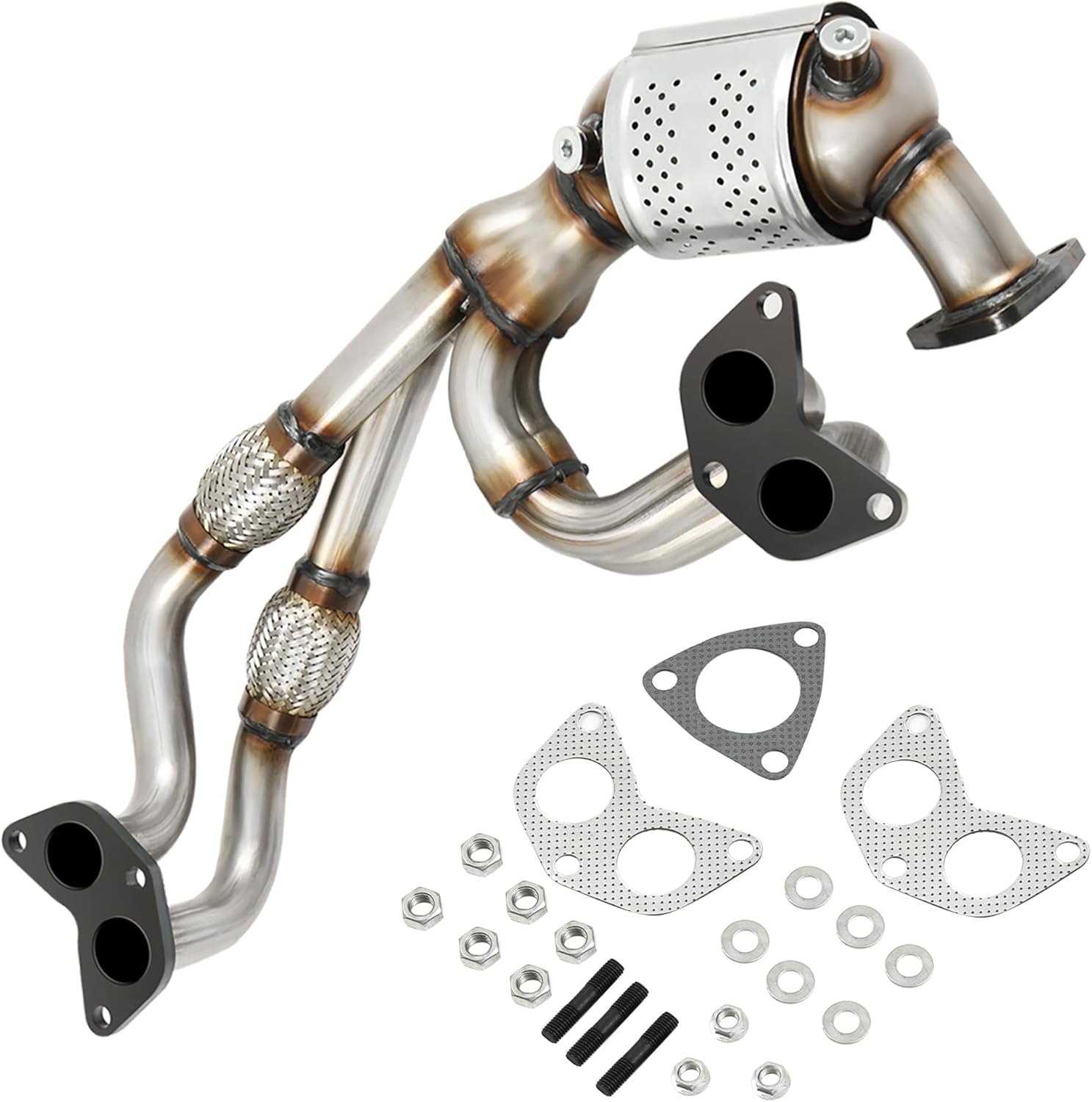
6. AUTOSAVER88 Catalytic Converter Compatible with 2006–2012 Subaru 2.5L (Direct-Fit, EPA Compliant)
| Vehicle fitment | 2006–2012 Subaru 2.5L (selected models) |
|---|---|
| Position | Front |
| Shell material | T409 stainless steel |
| Certification | EPA federal certified |
This AUTOSAVER88 catalytic converter is a direct-fit replacement for Subaru 2.5L models and is intended to restore emissions performance to federal standards. It installs with OE-style flanges, included gaskets and hardware, and is stamped with an EPA federal certification for legal compliance outside restricted states. The unit uses a larger honeycomb ceramic substrate and increased precious metal loading to boost conversion efficiency, while the T409 stainless steel shell helps resist heat and corrosion for longer service life. In practice this means fewer exhaust codes and better chance of passing emissions tests when the original converter has failed. Expect professional installation for correct fitment and to avoid exhaust leaks. Note that this federal-certified part cannot be shipped to certain states with stricter rules, and buyers in those states will need a CARB-compliant option. For most owners of the specified Subaru models this offers a practical, lower-cost alternative to dealer replacement with solid durability and emissions performance.
Best for: Buyers who want a factory-style, EPA-certified replacement to reliably restore emissions function on a Subaru 2.5L and prefer parts backed by clear federal certification and substantial user reviews.
Less Ideal for: Drivers living in states with CARB or stricter local emissions regulations or anyone who needs a California/Colorado/New York-compliant converter should seek a certified alternative.
- Direct-fit flange design with included gaskets and hardware simplifies installation compared with universal converters
- EPA federal certification ensures compliance for federal-emissions vehicles
- Enlarged ceramic substrate and increased catalyst loading improve conversion efficiency for exhaust gases
- T409 stainless steel shell offers strong resistance to heat and corrosion for longer service life
- Not eligible for sale or shipment to some states with stricter emissions rules
Verdict: A cost-effective, EPA-certified direct-fit replacement that restores emissions performance for Subaru 2.5L models without extensive modification.
7. SPEEDFusion 2-inch Universal High-Flow Catalytic Converter with Bottom O2 Port

| Inlet/Outlet Diameter | 2 inches |
|---|---|
| O2 Sensor Port Position | Bottom positioning |
| Material | 409L stainless steel shell |
| Substrate | 400-hole ceramic with Pt/Rh/Pd plating |
| Certifications | EPA compliant |
This SPEEDFusion universal catalytic converter is a compact high-flow replacement intended for vehicles that meet federal emissions standards. It uses a stainless steel shell and an OEM-style 400-hole ceramic substrate plated with platinum, rhodium, and palladium to increase catalytic efficiency, while a bottom-position oxygen sensor port provides easier wiring alignment in some exhaust layouts. Typical use is as a direct-fit replacement in systems with a 2-inch outer-diameter pipe or as a universal repair when a precise OE part is not available. The unit is EPA compliant but not CARB legal, so it is only appropriate where federal-only parts are allowed. Installation is straightforward for a professional shop or an experienced DIYer and the manufacturer backs the converter with a structural and limited emissions warranty. Buyers should confirm pipe diameter and fitment details before purchase since universal converters may need welding or small modifications to match Subaru Outback exhaust routing and mounting points.
Best for: A cautious buyer looking for a cost-effective, federally compliant replacement for a 2005–2009 Subaru Outback who prioritizes a proven construction and warranty coverage over exact OEM part matching.
Less Ideal for: Do not choose this product if you need California or state-compliant (CARB) parts or if you require an exact factory-design direct-fit converter without any modifications.
- High-flow 400-hole ceramic substrate for improved exhaust purification efficiency
- Stainless steel construction resists corrosion in typical road conditions
- Includes bottom-position O2 sensor port for easier sensor placement in some exhaust layouts
- EPA compliant for federal-emission vehicles and backed by a structural warranty
- Not CARB compliant so illegal for sale or use in California, Colorado, New York, and Maine
Verdict: If you need a federally compliant, warranty-backed high-flow universal converter for a 2-inch exhaust on a 2005–2009 Outback, this SPEEDFusion unit delivers durable materials and improved catalytic efficiency.
Choosing the Right 2005-2009 Subaru Outback Catalytic Converter: Key Factors to Consider
Fitment and Compatibility
Correct fitment is the single most important factor for the 2005-2009 Subaru Outback. The converter must match the vehicle's inlet and outlet diameters, flange pattern, and pipe alignment. A unit that is physically incompatible can cause exhaust leaks, stress exhaust hangers, or place strain on upstream sensors and manifolds.
Confirming compatibility also reduces installation time and the need for additional parts such as adapters, clamps, or custom flanges. When buying, verify oxygen sensor boss locations and whether the unit is intended as a direct bolt-on replacement for the specified year range. Proper fitment preserves emissions performance and minimizes the risk of a recurring check engine light tied to oxygen sensor readings.
Emissions Effectiveness
Emissions effectiveness indicates how well the catalytic converter reduces pollutants like carbon monoxide, hydrocarbons, and oxides of nitrogen. For the 2005-2009 Outback, choosing a converter with an appropriate substrate and washcoat composition helps ensure the vehicle meets emissions standards and reduces visible exhaust smoke or odors.
Higher cell density and optimized washcoat loading typically translate to improved conversion efficiency, particularly once the converter reaches operating temperature. Consider whether the unit is rated for street use and compatible with the vehicle's engine management; OBD-II sensor feedback can be affected by a poorly performing substrate, which may trigger emissions-related fault codes.
Durability and Corrosion Resistance
Exhaust components face heat cycles, road debris, and salt exposure, so durability is critical for long-term service on a Subaru Outback. Look for thicker shell materials, high-temperature welds, and protective coatings that resist rust and perforation under winter driving conditions.
A durable converter reduces the frequency of replacements and the chance of internal substrate breakage, which can create rattles or restrict exhaust flow. Consider construction details such as reinforced flanges and mechanical support for the substrate to prevent premature failure from vibration and thermal stress.
Oxygen Sensor Provisioning
The 2005-2009 Outback relies on one or more oxygen sensors positioned relative to the catalytic converter for closed-loop fuel control and emissions monitoring. Choosing a converter with the correct number and placement of sensor bungs prevents maladaptive fueling and prevents false check engine triggers.
If the replacement unit lacks sensor ports in the right locations, the vehicle may require relocation of sensors or use of extensions, which can introduce leaks or sensor performance issues. Verify whether the converter supports upstream and downstream sensor locations and whether threaded bosses are preinstalled.
Installation and Serviceability
Ease of installation matters if you plan a DIY repair or want to minimize shop labor. Direct-fit catalytic converters that match factory flanges and bolt patterns typically require only basic hand tools and limited exhaust disassembly. Some units may need minor trimming or the use of clamps and gaskets.
Serviceability also includes future access for emissions testing or sensor replacement. Consider whether the design allows straightforward removal and reinstallation without cutting or welding. Units that simplify oxygen sensor access or use replaceable sections can lower long-term maintenance effort.
Warranty and Support
A solid warranty provides protection against premature failure and manufacturing defects. For this vehicle, look for coverage that accounts for corrosion and substrate failure over a reasonable period or mileage. Warranty support often correlates with manufacturer confidence in fitment and durability.
Also consider whether the seller documents compatibility for the 2005-2009 Outback and provides clear installation guidance or technical assistance. Warranties that require professional installation or exclude corrosion from road salt are common, so review terms carefully before purchase.
Understanding Check Engine Light Triggers
A persistent check engine light on the 2005-2009 Outback is often tied to oxygen sensor readings or catalytic efficiency thresholds. The engine control unit monitors upstream and downstream sensor signals; a wide gap or slow response from the downstream sensor can indicate reduced conversion efficiency.
Addressing the root cause requires confirming that sensors, wiring, and connectors are functional before replacing the converter. In some cases, a failing sensor or an exhaust leak upstream of the converter will cause the same fault codes that suggest catalytic failure.
- Scan codes first to identify whether faults reference oxygen sensors or catalytic efficiency
- Inspect wiring and connectors for heat damage or corrosion
- Check for exhaust leaks at flanges and joints that can cause false sensor readings
Signs of Catalytic Converter Failure
Owners may notice rough idle, decreased throttle response, or increased exhaust smell when a catalytic converter is failing. Internally broken substrate material can rattle during acceleration and lead to partial exhaust flow restriction.
A visual inspection under the vehicle can reveal rust-through or physical damage. However, early-stage substrate degradation may not be visible, so use a combination of scan tool data, visual checks, and a test drive to evaluate symptoms.
- Rattling noises from the undercarriage at idle or low speed
- Reduced engine performance under load
- Rotten egg or sulfurous exhaust smell indicating catalyst inefficiency
Fitment Tips for a Smooth Installation
Before purchasing, double-check year-range compatibility and the converter's flange style. Prepare basic tools and replacement gaskets, and consider anti-seize on bolts to ease future removal. If the unit is a direct-fit, remove the old converter and compare flange faces and pipe lengths side by side.
When trimming is required, make incremental cuts to avoid over-shortening the pipe. Always torque bolts to manufacturer-recommended values and inspect hangers and clamps for wear while the exhaust is disassembled.
- Compare inlet and outlet diameters and flange geometry before installation
- Have replacement gaskets and high-temp sealant on hand
- Replace damaged hangers to prevent undue stress on the new converter
Emissions Testing and OBD-II Readiness
If you need to clear a failed emissions test, ensure the replacement converter restores downstream sensor readings to expected values. Some converters are marketed as designed to meet or exceed factory emissions output, which helps with OBD-II readiness and state inspections.
After installation, clear stored codes and perform a measured drive cycle so the engine control unit can relearn sensor baselines. It may take several drive cycles for adaptive fuel trims to stabilize and for readiness monitors to report completion.
- Clear codes after installation and complete a full drive cycle before retesting
- Verify downstream oxygen sensor response with a scan tool to confirm conversion
- Ensure the replacement supports required sensor locations for the Outback
DIY Vs Professional Installation Considerations
Many 2005-2009 Subaru Outback owners can perform a catalytic converter replacement with basic mechanical skills, a jack and stands, and common hand tools if the unit is direct-fit. However, heavy rust or frozen fasteners may complicate removal and necessitate professional tools or methods.
Professional installation reduces the risk of leaks and ensures proper torqueing and sensor handling. If welding, fabrication, or extensive exhaust modification is needed, a shop with exhaust experience will yield a more reliable outcome.
- Direct-fit units are generally suitable for experienced DIYers
- Consult a professional when significant fabrication, welding, or rust remediation is required
- Keep a repair manual or factory torque specs handy during installation
Still looking for the perfect fit?
Select your Subaru Outback configuration to see the most relevant Catalytic Converters recommendations
How We Chose the Best 2005-2009 Subaru Outback Catalytic Converter
We applied a strict, vehicle-specific selection process to assemble the shortlist of catalytic converters for the 2005-2009 Subaru Outback. Our evaluation prioritized fitment accuracy first, because incorrect flange type, inlet/outlet diameter, or pipe orientation is the most common cause of installation troubles and exhaust leaks. We also looked at emissions performance, focusing on substrate design and washcoat chemistry as proxies for effectiveness at reducing NOx, CO, and hydrocarbons.Durability was another key filter. We considered shell thickness, corrosion-resistant coatings, welded construction quality, and substrate mounting methods to estimate lifespan under typical driving and salt-exposed climates. Ease of installation and serviceability were included as measurable criteria, including whether the unit supports direct bolt-on replacement or requires minor exhaust trimming.Other criteria included OBD-II readiness, presence of provisions for oxygen sensor locations, and warranty or backing from the manufacturer. We excluded units that required major fabrication, extensive exhaust modification, or did not specify compatibility with the 2005-2009 Outback. The resulting list balances correct fit, emissions control, and long-term reliability for this vehicle.
Our full evaluation process is outlined in our review methodology.
FAQ
What common codes indicate catalytic converter issues on a 2005-2009 Outback?
Codes that reference catalytic efficiency or long-term fuel trim discrepancies often point to converter problems. However, similar codes can be caused by oxygen sensor failure or exhaust leaks, so confirm sensor operation before condemning the converter.
Can I replace just the catalytic converter myself on this vehicle?
Yes, many owners can replace a direct-fit unit with basic tools and safety equipment. Complications arise with seized bolts or rusted hangers, in which case professional tools or shop assistance may be required.
How soon will emissions monitors reset after installing a new converter?
Readiness monitors typically require several drive cycles under varied conditions to reset. Clearing codes and completing a full drive cycle helps the engine control unit relearn sensor baselines, but it may take multiple trips to report full readiness.
Do I need new gaskets and hardware when installing a replacement converter?
Yes, replacing gaskets and any corroded bolts or clamps is recommended to ensure a leak-free installation. Reusing degraded hardware increases the chance of exhaust leaks and premature failure.
Will a failing catalytic converter affect fuel economy on the Outback?
A severely restricted converter can reduce engine efficiency and cause noticeable drops in fuel economy. Mild substrate deterioration may not immediately affect economy but can lead to drivability issues if left unaddressed.
How can I tell if the downstream oxygen sensor is causing catalytic failure symptoms?
Compare sensor voltage response and frequency between upstream and downstream sensors using a scan tool. If the downstream sensor shows sluggish or near-identical readings to the upstream unit, it can indicate an ineffective catalyst or sensor degradation.
Final Verdict
When replacing a catalytic converter on a 2005-2009 Subaru Outback, prioritize correct fitment, oxygen sensor provisioning, and emissions effectiveness. Durable construction and corrosion resistance are critical for long-term service, especially in regions with salted roads.Balance ease of installation with the converter's emissions performance and warranty coverage. Choosing a unit that matches the Outback's flange pattern and sensor locations will minimize installation complications and improve the odds of passing emissions checks, making your repair more reliable and hassle-free.
Explore More:
- Check out all Subaru Outback parts & accessories
- Explore Catalytic Converters Maintenance & Repair Guides
- Explore Exhaust & Emissions
- Browse all Auto Parts
