

Note: This article contains affiliate links. If you click on these links and make a purchase, I may earn a small commission at no extra cost to you. This helps support my research and content. Read my full affiliate disclosure here.
If your Ram Dakota shows signs of poor cooling, swapping the radiator can resolve overheating and loss of cabin heat. The right radiator restores reliable temperature control, reduces stress on the engine, and can prevent costly downstream failures. This guide covers the top radiators chosen for fit, cooling performance, and installation practicality for the Ram Dakota.Below are carefully shortlisted radiators that suit common Dakota engine and trim configurations. Read on to understand the evaluation criteria and practical considerations that will help you pick the right replacement for your vehicle.
Top Picks at a Glance
| Best Overall The best all-around choice for most situations | DWVO Complete Radiator Compatible with 2005–2012 Dodge Dakota (CU2847) |  |
| Best Quality Built to a higher standard if you want something more solid | TRQ Aluminum Core 1-Row Radiator (RDA82710) for Dodge/Ram Dakota and Mitsubishi Raider |  |
| Best Value The sweet spot between price and what you get | Readair Complete Engine Radiator with Transmission Oil Cooler for Dodge/Ram Dakota and Mitsubishi Raider |  |
| Best Budget The cheapest option that still gets the job done reliably | ECCPP CU2883 Replacement Radiator for 2005–2011 Dodge/Ram Dakota |  |
| Highest Rated A top-rated pick with lots of positive feedback | AlpaSpare CU2847 Direct Fit Cooling Radiator for Dodge/Ram Dakota and Mitsubishi Raider |  |
| Most Popular A crowd favorite that many people choose with confidence | AUTOSAVER88 Radiator Compatible with Dodge Dakota/Ram Dakota 3.7L & 4.7L |  |
1. DWVO Complete Radiator Compatible with 2005–2012 Dodge Dakota (CU2847)
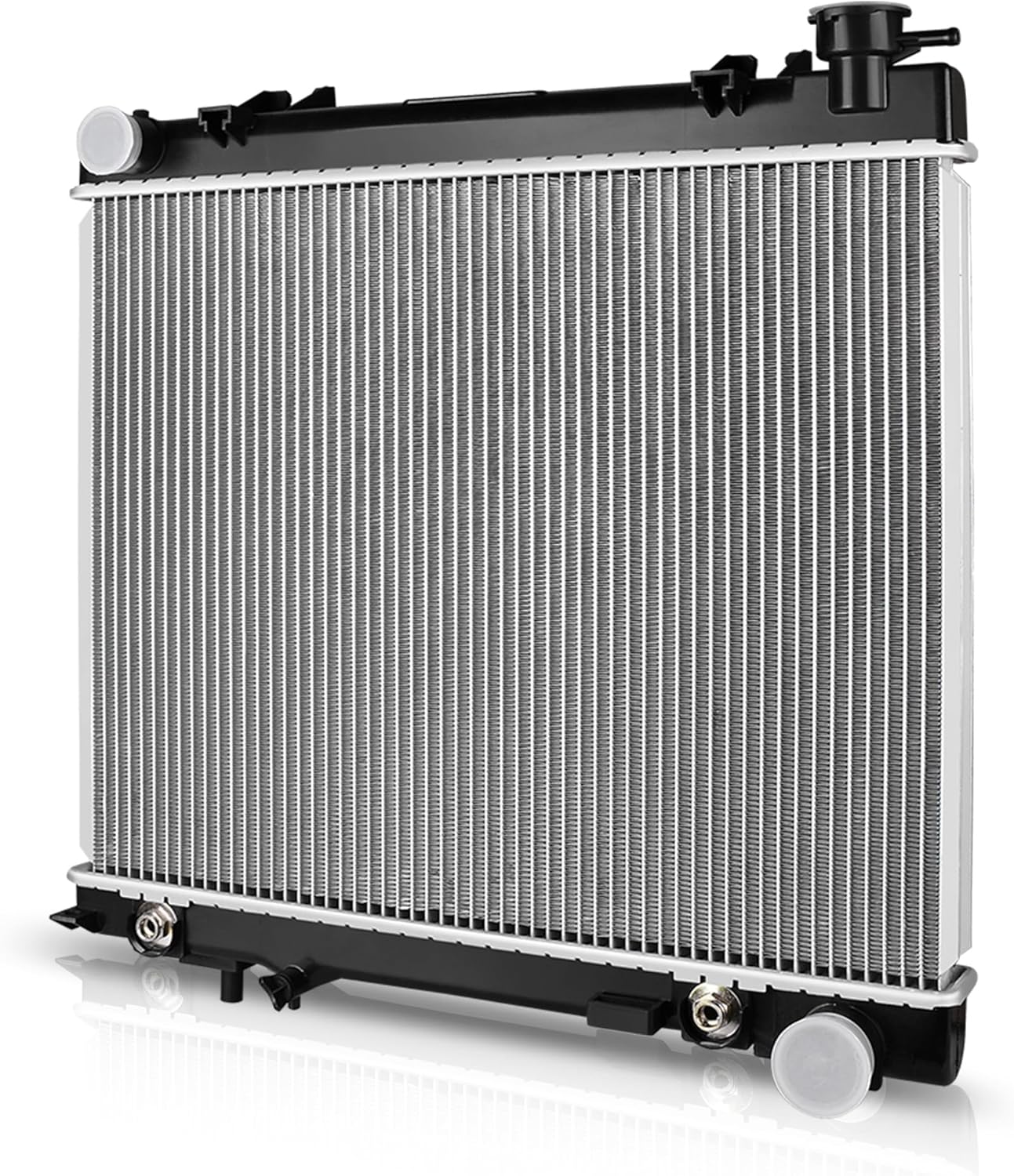
| Core size | 21.9" x 17.7" |
|---|---|
| Compatible engines | 3.7L V6, 4.7L V8 |
| Manufacturer part number | CU2847 |
| OEM part numbers | 52029261AB/AC/AD, 52029262AB |
This DWVO complete radiator is a direct-fit replacement built to work with 3.7L V6 and 4.7L V8 Dakota and Raider engines from the 2005–2012 model years. It swaps in as a full radiator assembly (no cap included) and is intended for routine cooling-system repairs or an upgrade when the original unit is leaking or clogged. The aluminum core uses high-density multi-louvered fins for better heat transfer and TIG-welded joints with reinforced PA66 GF30 inlet and outlet tanks to improve durability. Packaging includes foam protection and two drain petcocks of different lengths to help match vehicle variations during installation. Expect similar cooling performance to factory replacements and a corrosion-resistant coating for longer service life, but professional installation is recommended because the radiator comes without a cap and may require thermostat or hose checks during the swap. Buyers should confirm exact fitment against OEM part numbers listed to avoid return hassles.
Best for: A balanced buyer seeking a factory-quality replacement radiator for routine repair or refresh of a 2005–2012 Dodge/Ram Dakota who values direct fitment and durable construction.
Less Ideal for: Do not choose this if you want a performance aftermarket upgrade with larger cores or integrated caps and fittings; also avoid if you prefer a plug-and-play kit that includes every accessory for installation.
- Direct-fit design matching listed OEM part numbers for straightforward replacement
- Aluminum core with high-density multi-louvered fins for efficient heat dissipation
- TIG-welded construction and reinforced inlet/outlet tanks for improved durability
- Corrosion-resistant coating and included drain petcock options to ease installation variations
- Radiator is sold without a radiator cap which must be sourced separately
Verdict: Choose this DWVO radiator when you need a durable, direct-fit factory-style replacement for a 2005–2012 Dodge/Ram Dakota to restore reliable cooling quickly.
2. TRQ Aluminum Core 1-Row Radiator (RDA82710) for Dodge/Ram Dakota and Mitsubishi Raider
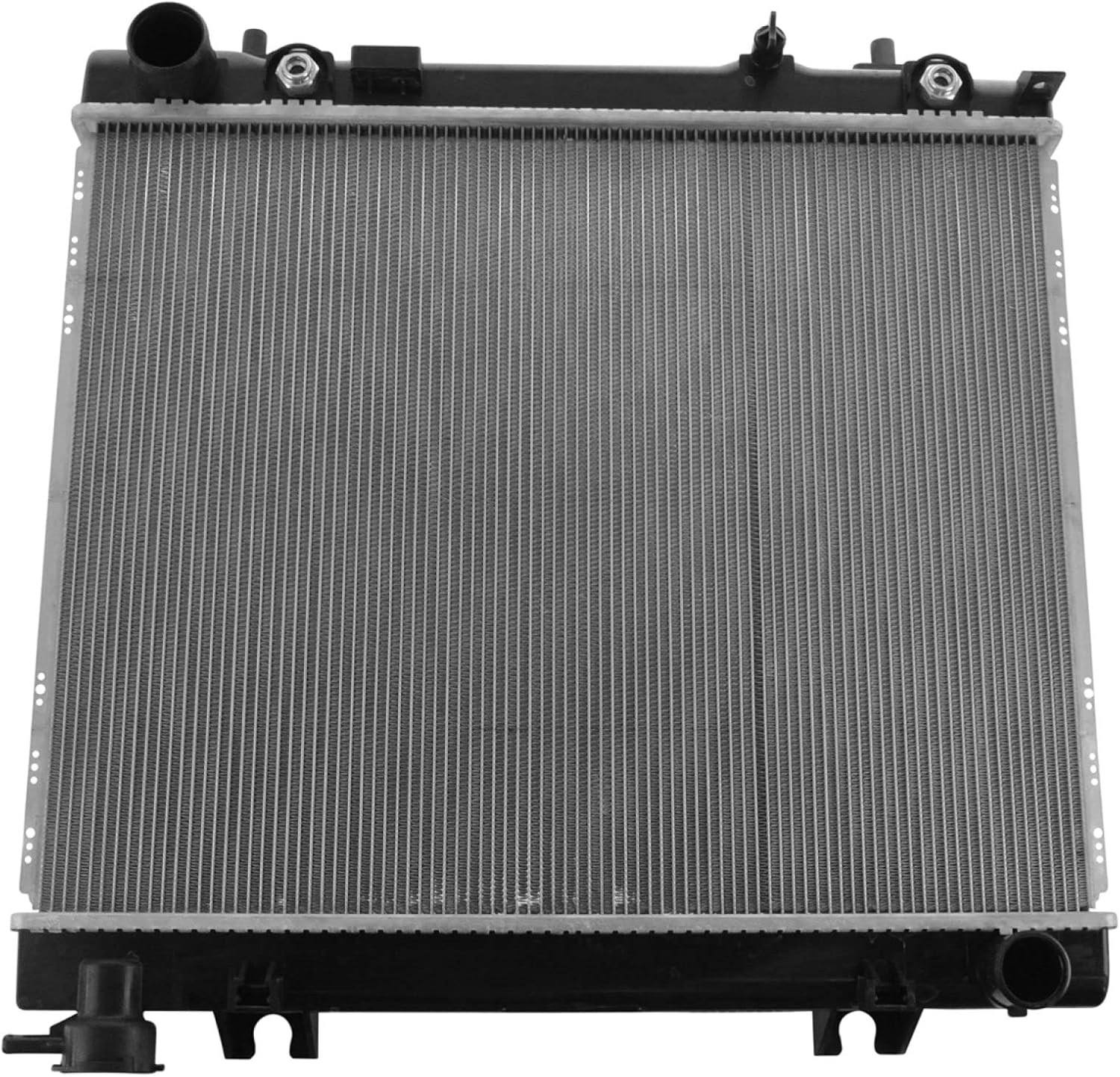
| Core Row Quantity | 1 |
|---|---|
| Core Thickness | 1 in |
| Core Material | Aluminum |
| Transmission Oil Cooler Plate Quantity | 7 |
| Flow Type | Down Flow |
This TRQ radiator replaces the factory unit with a 1-row aluminum core and integrated transmission oil cooler for direct-fit installation on compatible Dakota and Raider trucks. It is typically used as a straightforward replacement when the original radiator fails, overheats, or leaks. Notable features include a machined aluminum core, a one-inch core thickness, seven-plate transmission cooler, and top-left inlet/bottom-right outlet locations that match factory routing. The plastic tanks keep weight down while the down-flow design maintains conventional coolant paths, and TRQ supplies install videos to simplify DIY replacement. In practice this radiator restores cooling performance to OEM-like levels on daily-driven or lightly modified Dakotas and helps protect the transmission thanks to the built-in cooler plates. Limitations are the single-core design, which offers less heat capacity than multi-row high-performance radiators, and plastic tanks that are more vulnerable to impact or long-term heat cycling than full-metal assemblies.
Best for: Buyers looking to restore reliable, factory-quality cooling on a Dakota or Raider with a focus on a straightforward, DIY-friendly installation and practical performance.
Less Ideal for: Drivers who run heavy towing, frequent high-load highway climbs, or significant engine performance upgrades should consider a multi-row or performance-oriented radiator instead.
- Direct-fit design for straightforward swap with factory mounting and hose locations
- Integrated transmission oil cooler with multiple plates protects transmission without separate cooler plumbing
- Aluminum core provides good thermal conductivity compared with older copper/brass cores
- Includes TRQ installation resources and pre-assembled components to ease DIY replacement
- Single-row core limits maximum heat rejection under heavy towing, track use, or significant engine modifications
Verdict: Choose this TRQ radiator if you want a direct-fit, aluminum replacement that restores factory cooling and adds an integrated transmission cooler for Dakota/Ram Dakota trucks.
3. Readair Complete Engine Radiator with Transmission Oil Cooler for Dodge/Ram Dakota and Mitsubishi Raider

| Compatible engines/years | Dakota 3.7L 2005-2012; Dakota 4.7L 2005-2010; Raider 3.7L 2006-2009; Raider 4.7L 2006-2007 |
|---|---|
| Core material | Aluminum core |
| Transmission cooler | Brass integrated cooler |
| Manufacturing features | TIG-welded; leak-tested; treated coating |
This Readair complete radiator replaces the factory unit and includes a built-in transmission oil cooler for models listed in the fitment. It is intended as a direct-fit replacement for routine engine cooling maintenance or repair after a leak or failure. The radiator uses an aluminum core with high-density multi-louvered fins to improve heat dissipation and TIG-welded inlet/outlet areas for stronger joints, while plastic inlet/outlet tanks and a brass transmission cooler are combined to balance cost and durability. In practice this means faster cooldown under normal driving and a straightforward swap-in installation where factory mounting points and hose connections match. The product is leak-tested at the factory and has a treated coating to resist corrosion. Limitations to consider are the use of plastic tank components rather than full-metal construction and the need to confirm exact vehicle year/engine fit before buying, since fitment is specific to certain Dakota and Raider engines and years.
Best for: Buyers who want a practical, ready-to-install replacement radiator that restores cooling performance and includes a transmission cooler for the specified Dakota or Raider models.
Less Ideal for: Drivers seeking a heavy-duty all-metal performance radiator for severe towing, racing, or custom applications should consider purpose-built performance units instead.
- Direct-fit replacement designed for the listed Dodge Dakota and Mitsubishi Raider model years
- Aluminum core with multi-louvered fins for improved cooling efficiency
- Integrated brass transmission oil cooler included for automatic transmission models
- Factory leak testing and corrosion-resistant coating applied
- TIG-welded joints for enhanced structural durability at connection points
- Inlet/outlet tanks are plastic rather than full metal which can be less durable long term
Verdict: A practical, direct-fit replacement radiator that restores factory-style cooling and adds a built-in transmission cooler for the specified Dakota and Raider models.
4. ECCPP CU2883 Replacement Radiator for 2005–2011 Dodge/Ram Dakota

| Compatible engines | 3.7L and 4.7L |
|---|---|
| Vehicle years | 2005–2011 Dodge/Ram Dakota |
| Construction | Aluminum core with plastic tanks |
| Manufacturer | ECCPP |
This ECCPP replacement radiator is a direct-fit aftermarket unit intended for 2005–2011 Dodge and 2011 Ram Dakota trucks with 3.7L or 4.7L engines. It uses a full aluminum core with premium-grade plastic tanks and is built to the supplier's interpretation of factory fit and mounting points for a straightforward drop-in installation. In use it restores cooling capacity and is suitable for routine engine cooling system repairs or when a worn or leaking radiator needs replacing. The listing highlights factory-style design, leak testing, and technical support from the brand, which helps with fitment or installation questions. Expect typical aftermarket variability in finish and minor fitment adjustments compared with a factory part, and note that installation still requires basic shop skills and coolant system bleeding. For owners prioritizing a budget-friendly replacement that brings cooling back to spec, this unit provides the core features needed without premium brand markup.
Best for: A buyer looking to replace a failing radiator on a Dakota without paying premium name-brand prices and who values a straightforward, budget-focused repair.
Less Ideal for: Those seeking a direct factory-brand part or a high-end performance cooling upgrade should consider OEM or performance radiators instead.
- Full aluminum core for improved heat transfer over older designs
- Built to match factory mounting points for drop-in replacement
- Leak-tested at the factory to reduce early failures
- Includes technical support from the seller for installation questions
- Aftermarket finish and minor fitment differences may require small adjustments during installation
Verdict: A cost-conscious direct-fit replacement that restores cooling function for 2005–2011 Dakota trucks without the premium price.
5. AlpaSpare CU2847 Direct Fit Cooling Radiator for Dodge/Ram Dakota and Mitsubishi Raider

| Manufacturer | AlpaSpare |
|---|---|
| Model | CU2847 Cooling Radiator |
| OEM Part Number | 55029262AB; 2847 |
| Material | Aluminum |
| Fitment | Dodge Dakota 2005-2012; Mitsubishi Raider 2006-2009; Ram Dakota 2011 |
This AlpaSpare CU2847 is a direct replacement radiator built from aluminum to restore factory cooling on specified Dakota and Raider models. It installs as a 1:1 drop-in using original mounting points and hose connections, so installation is straightforward for DIYers or shops without modification. The unit is pressure and leak tested and claims OEM-spec thermal performance, which helps keep engine temperatures stable during normal driving, highway runs, and heavier loads like towing. Notable features include machined exterior finish, tested leak resistance, and compatibility with listed OEM part numbers for correct fit. Because it uses an aluminum core and is designed to meet factory cooling targets, it should resist corrosion better than lower-quality alternatives and deliver dependable heat dissipation. Limitations are typical of aftermarket radiators: you should confirm the exact engine and year fitment before purchase and expect that long-term durability depends on installation quality and cooling system maintenance rather than the radiator alone.
Best for: Buyers who prioritize a reliable, factory-quality cooling replacement for the Dakota or Raider and want a straightforward, shop- or DIY-installable part that restores original cooling performance.
Less Ideal for: Someone looking for a universal or multi-vehicle radiator solution or a custom high-performance aftermarket upgrade; this is meant as a direct factory-style replacement.
- Direct 1:1 fit to original mounting points for straightforward replacement
- Aluminum construction for improved corrosion resistance and heat dissipation
- Pressure and leak tested to meet factory-spec thermal performance
- Matches OEM part numbers for correct compatibility and easier verification
- Fitment is limited to the specific Dakota and Raider model years listed, so incorrect selection will require return or replacement
Verdict: Choose this radiator if you want a tested, factory-fit aluminum replacement that restores original cooling reliability for the Dakota or Raider.
6. AUTOSAVER88 Radiator Compatible with Dodge Dakota/Ram Dakota 3.7L & 4.7L

| Compatible engines | 3.7L V6, 4.7L V8 |
|---|---|
| Material | Aluminum core with plastic tanks |
| Included | Complete radiator (radiator cap not included) |
| Replacement OEM part numbers | 52029261AB/AC/AD, 52029262AB |
This AUTOSAVER88 radiator is a full replacement unit intended to restore cooling capacity on 3.7L V6 and 4.7L V8 Dakota/Ram Dakota and compatible Raider models. It uses an aluminum core with high-density multi-louvered fins and plastic tanks to improve heat dissipation while remaining lightweight. The unit is supplied as a complete radiator (cap not included) and is sold as a direct-fit replacement to match factory mounting points, which simplifies installation for technicians or experienced DIYers. The manufacturer reports leak testing and upgraded packaging to reduce transit damage. Practical benefits include improved cooling efficiency in hot conditions and an OEM-style fit that minimizes modification. Limitations are that the radiator does not include a cap and professional installation is recommended to ensure proper system bleeding and to avoid fitment issues; buyers should also confirm compatibility with their exact model year and engine before purchase.
Best for: Buyers who prioritize a proven, close-to-factory replacement to restore cooling performance and who value vendor reviews and tested fitment before committing.
Less Ideal for: If you want a performance-upgrade radiator with larger capacity, custom cooling features, or a complete cooling kit including the cap and hoses, look elsewhere.
- Aluminum core with multi-louvered fins for improved cooling efficiency
- Designed as a direct-fit replacement to match factory mounting points
- Leak-tested units and upgraded packaging reduce risk of arrival damage
- Radiator cap is not included, requiring a separate purchase or reuse of the old cap
Verdict: A straightforward, leak-tested direct-fit replacement that restores factory-style cooling for affected Dakota/Ram Dakota engines with dependable vendor-backed fitment evidence.
Choosing the Right Ram Dakota Radiator: Key Factors to Consider
Fitment And Mounting Accuracy
Fitment matters because a radiator that does not align with factory mounts or hose locations will complicate installation and may require additional brackets or hose adapters. For the Ram Dakota, confirm that the radiator matches the vehicle's mounting points, fan shroud clearance, and transmission cooler requirements when applicable.
A correct fit reduces installation time and avoids stress on hoses and clamps that can lead to leaks. It also ensures proper airflow through the core; even a minor offset can reduce cooling efficiency by allowing air to bypass the fins. When comparing options, check flange placement, inlet and outlet diameters, and any integrated fittings to make sure you will not need custom modifications.
Core Design And Cooling Capacity
Core construction determines how effectively heat moves from coolant to passing air. Look for cores with adequate surface area, appropriate fin density, and a design suited to stop-and-go driving or towing if you use the Dakota for heavier loads.
Thicker cores or multi-row designs often increase heat capacity but can require greater airflow. Balance core thickness with expected operating conditions; a high-density core is beneficial for highway cooling and towing, while a standard core may be preferable if your cooling fan setup struggles to push air through very dense fins.
Materials And Corrosion Resistance
Radiator materials influence longevity and leak resistance. Aluminum cores with plastic tanks are common and offer good thermal transfer and lower weight, while all-aluminum or brass-and-copper designs can provide different durability profiles.
Consider whether the radiator has protective coatings, quality brazing at joints, and tanks rated for pressure and thermal cycling. For vehicles in climates with road salt or frequent short trips, corrosion resistance is especially important to avoid premature leakage or clogged passages.
Transmission Cooler Integration
If your Dakota has an automatic transmission, some radiators include integrated transmission cooler passages. A radiator lacking the correct transmission ports will require a separate external cooler or adapter lines, adding complexity and potential leak points.
Verify whether the radiator option supports the transmission fluid routing your vehicle requires. Proper integration keeps transmission temperatures in check and prevents fluid overheating under load, which protects transmission life and performance.
Serviceability And Installation Practicality
A radiator that is easy to install reduces hours in the garage and the chance of installation errors. Look for models that match factory hose diameters, come with clear mounting points, and do not require heavy modification of the fan assembly or shroud.
Also consider how simple it is to bleed air from the system after installation and whether any special tools are needed. Ease of access to bleed valves, petcock fittings, or fill necks helps ensure a complete coolant fill and prevents trapped air that can cause hot spots.
Warranty And Manufacturer Support
Warranty terms indicate the manufacturer's confidence in their product and offer protection if a component fails prematurely. Check the length and coverage details for defects, leaks, and core failures.
Also factor in the availability of support documentation and replacement parts. Strong post-sale support can simplify returns, claims, and guidance during installation, making a higher-warranty option more attractive for long-term ownership.
Common Radiator Symptoms To Watch For
Understanding early symptoms helps you decide whether a radiator needs repair or full replacement. Typical signs include persistent overheating, coolant puddles beneath the vehicle, a constant low coolant level, or milky oil indicating coolant contamination.
Other indicators include high cabin heater failure, steam from the engine bay, and frequent need to top off coolant. Pay attention to temperature gauge spikes during idling or slow traffic, as these often point to reduced radiator effectiveness rather than a thermostat issue.
If you notice any of these symptoms, perform a visual inspection for visible leaks, corrosion along the seams, or damage to the fins that could block airflow.
- Overheating under load or in traffic
- Coolant spots under the vehicle
- Visible leaks at seams or hose connections
- Reduced cabin heating or milky engine oil
When To Repair Versus Replace The Radiator
Minor leaks at a hose connection or a small pinhole in a fin section can sometimes be temporarily repaired, but repairs do not always provide a durable long-term solution. Evaluate the location and size of the leak, the age of the radiator, and the presence of corrosion before deciding.
If the radiator has large cracks in the tanks, significant corrosion, or multiple leak points, replacement is generally the safer option. Replacing the radiator also removes risk of hidden internal erosion or blockages that could lead to sudden failures.
- Temporary patch for small, accessible leaks
- Replace for tank cracks, heavy corrosion, or multiple leaks
- Consider replacement when radiator is older and service history is poor
Preparing For Installation On A Ram Dakota
Before you begin, collect the correct-size hoses, new hose clamps, a compatible coolant, and any required transmission cooler line fittings. Have a drain pan, a funnel, and the vehicle's service manual or torque specs handy.
Ensure the vehicle is cool and parked on level ground. Drain the coolant and safely support the front end if needed to access lower mounting hardware. Inspect the fan assembly and shroud for damage and clean the area to prevent debris from entering the fresh coolant.
After installing the radiator, follow proper bleeding procedures to remove trapped air pockets. Run the engine and monitor the temperature gauge while checking for leaks and ensuring the heater provides consistent warm air.
- Gather hoses, clamps, coolant, and tools
- Drain coolant only when engine is cool
- Bleed the cooling system after installation
Coolant And Maintenance Tips For Longevity
Using the correct coolant type and maintaining proper concentration helps prevent internal corrosion, scale buildup, and premature blockages. Follow the fluid recommendations for the Dakota and change coolant at the intervals suggested in the service schedule.
Regularly inspect the radiator fins for bent areas and clean them with low-pressure air or water to maintain airflow. Periodic coolant flushes remove deposits that reduce heat transfer and help extend radiator life.
Also inspect hoses, clamps, and the radiator cap; a weak cap can allow coolant boil-over and reduce system pressure, affecting cooling performance.
- Use manufacturer-recommended coolant and concentration
- Perform coolant flushes at recommended intervals
- Keep fins and external surfaces clean for proper airflow
Handling Transmission Cooler Lines
If your Dakota has an automatic transmission, ensure the replacement radiator supports the transmission cooler lines or plan for an external cooler if needed. Improper transmission cooling can lead to high fluid temperatures and accelerated wear.
When disconnecting transmission lines, be prepared to catch fluid and avoid introducing air into the transmission system. Inspect line fittings and seals and replace any worn or corroded line sections to prevent leaks after installation.
- Confirm radiator has correct transmission ports
- Catch and properly dispose of transmission fluid
- Replace corroded fittings to prevent future leaks
How We Chose the Best Ram Dakota Radiator
We evaluated candidate radiators using criteria specific to cooling-system reliability and fitment for the Ram Dakota. Cooling performance was assessed by design features that affect heat transfer, such as core material, tube arrangement, and fin density. Fitment and mounting accuracy were judged by how closely a radiator matches Dakota OEM mounting points, hose locations, and transmission cooler provisions when applicable. Durability factors included tank and seam materials, corrosion resistance, and warranty length or stated service life. Serviceability and installation ease were considered, including whether the radiator supports standard hose sizes, requires special adapters, or provides straightforward access for coolant-bleeding and fan reinstallation. Finally, compatibility with common maintenance tasks such as coolant flushes and use with OEM-style or aftermarket fans and shrouds was factored in.We excluded products that lacked clear fitment data for the Dakota or omitted necessary transmission cooler passages when required by certain configurations. We also filtered out radiators with insufficient construction details or nonstandard hose interfaces that would complicate installation.
Our full evaluation process is outlined in our review methodology.
FAQ
How long should a Ram Dakota radiator last?
Radiator life varies, but many last a decade or more with proper maintenance. Exposure to road salt, frequent short trips, or coolant neglect can shorten lifespan, while regular coolant changes and inspections help extend it.
Can I reuse my old hoses with a new radiator?
You can reuse hoses if they are in good condition with no soft spots, cracks, or swelling. However, replacing old hoses and clamps during a radiator swap is a low-cost prevention step that reduces the risk of leaks soon after installation.
Will a new radiator stop intermittent overheating?
A new, properly fitted radiator will resolve overheating caused by reduced cooling capacity or internal blockages. If overheating persists, check the thermostat, coolant pump, airflow (fans and shroud), and possible air pockets in the cooling system.
Do I need a professional coolant flush when replacing the radiator?
A full coolant drain and system flush is recommended to remove debris and old additives before installing a new radiator. You can perform this yourself with the right tools, but a professional flush ensures thorough cleaning and proper coolant concentration.
Are aftermarket radiators reliable for the Ram Dakota?
Many aftermarket radiators offer acceptable reliability when they match fitment and material quality standards. Reliability depends on construction, materials, and whether the unit reproduces necessary mounting and cooler provisions. Verify specifications and warranty before choosing.
How do I know if my radiator needs a pressure test or replacement?
If you see persistent leaks, visible cracks, or pressure loss that causes coolant boil-over, perform a pressure test. A failing pressure test or repeated quick pressure loss usually indicates the need for replacement rather than repair.
Final Verdict
Prioritize a radiator that matches the Ram Dakota's mounting and hose locations, offers sufficient core capacity for your driving and towing needs, and uses durable materials resistant to corrosion. Balance core thickness and fin density with the vehicle's fan setup to avoid airflow restrictions.When in doubt, favor a properly fitting replacement with clear transmission cooler provisions if required and a strong warranty. That approach minimizes installation headaches and delivers reliable cooling performance for the long term.
