

Note: This article contains affiliate links. If you click on these links and make a purchase, I may earn a small commission at no extra cost to you. This helps support my research and content. Read my full affiliate disclosure here.
Upgrading the track width on a 1994-2002 Ram 3500 with wheel spacers can unlock better tire clearance, a more aggressive look, and room for larger brakes or suspension travel. Because older trucks were built with certain offsets and hub configurations, choosing the right spacers matters for safety, wheel fitment, and vibration-free driving.This guide covers the top shortlisted wheel spacers for the 1994-2002 Ram 3500 and explains the criteria used to evaluate them, such as bolt pattern fitment, material quality, hub centering method, and installation requirements. Read on to understand which spacer thickness, mounting style, and hardware approach will best suit your intended use, whether you need clearance for tires or prefer a flush, stance-oriented setup.
Looking for other parts? See all Ram 3500 parts & accessories.
Top Picks at a Glance
| Best Overall The best all-around choice for most situations | Customadeonly 1.5" 8×6.5 Wheel Spacers (126mm Bore) 4-Pack |  |
| Best Quality Built to a higher standard if you want something more solid | ECCPP 2" 8×6.5 (8×165.1mm) Wheel Spacers with 9/16" Studs, 126.15mm Hub Bore (4 pcs) |  |
| Best Value The sweet spot between price and what you get | Richeer 2" Forged 8×6.5 Wheel Spacers with 9/16-18 Studs (2-Pack) |  |
| Best Budget The cheapest option that still gets the job done reliably | YONGSHENGONE 4-Pack 8-Lug 6mm (1/4") Die-Cast Aluminum Wheel Spacers |  |
| Highest Rated A top-rated pick with lots of positive feedback | SCITOO 2-Pack 2" 8×6.5 Wheel Spacers with 9/16" Studs (126.15mm Hub Bore) |  |
| Most Popular A crowd favorite that many people choose with confidence | Orion Motor Tech 2" 8×6.5 Wheel Spacers with Studs, Set of 4 |  |
| Best Seller A high-volume bestseller chosen again and again | FLYCLE 2" Forged 8×6.5 (8×165.1) Wheel Spacers with 126.15mm Bore |  |
1. Customadeonly 1.5" 8×6.5 Wheel Spacers (126mm Bore) 4-Pack

| Bolt pattern | 8×6.5 (8×165.1) |
|---|---|
| Thickness | 1.5 inch (38mm) |
| Center bore | 126mm |
| Stud size | 9/16 inch |
| Material | CNC 6061-T6 forged aluminum |
These wheel spacers move the wheel out 1.5 inches per side to correct offset, create a wider stance, and free up clearance for larger tires or aftermarket wheels on 8-lug heavy-duty trucks. Made from forged 6061-T6 aluminum and CNC machined, the spacers are balanced for consistent fit and use class 10.9 heat-treated carbon steel studs pressed into the hubs for strength. Installation is straightforward for mechanically competent owners: center the spacer on the hub, run the factory or provided studs through, and torque to the recommended 95 to 100 ft-lbs. Note that some factory studs may protrude past the spacer face and require trimming or wheel cavity reliefs, and these spacers are not intended for dually rear applications. They are best used on lifted or aggressively fitted trucks where added clearance and a wider stance are desired, offering a durable, factory-quality upgrade when fitment is confirmed.
Best for: Truck owners who want a reliable, factory-quality spacer to gain tire clearance and a wider stance on an 8-lug heavy-duty pickup while keeping a balanced mix of strength and precision.
Less Ideal for: Anyone running dually rear axles or buyers unwilling to trim studs or verify wheel cavity clearance should seek a different solution.
- CNC machining from 6061-T6 aluminum provides precise, balanced fitment
- Class 10.9 heat-treated steel studs pressed for secure wheel retention
- 1.5 inch offset effectively increases tire clearance and stance
- Lug-centric design with 126mm bore for centered mounting on compatible hubs
- Not compatible with dually rear axles so cannot be used on dual-wheel setups
- May require trimming of factory studs or wheels with cavity reliefs for proper fitment
Verdict: A precise, forged aluminum 1.5" spacer that reliably widens stance and frees tire clearance for 8-lug heavy-duty trucks when dually axles are not involved.
2. ECCPP 2" 8×6.5 (8×165.1mm) Wheel Spacers with 9/16" Studs, 126.15mm Hub Bore (4 pcs)
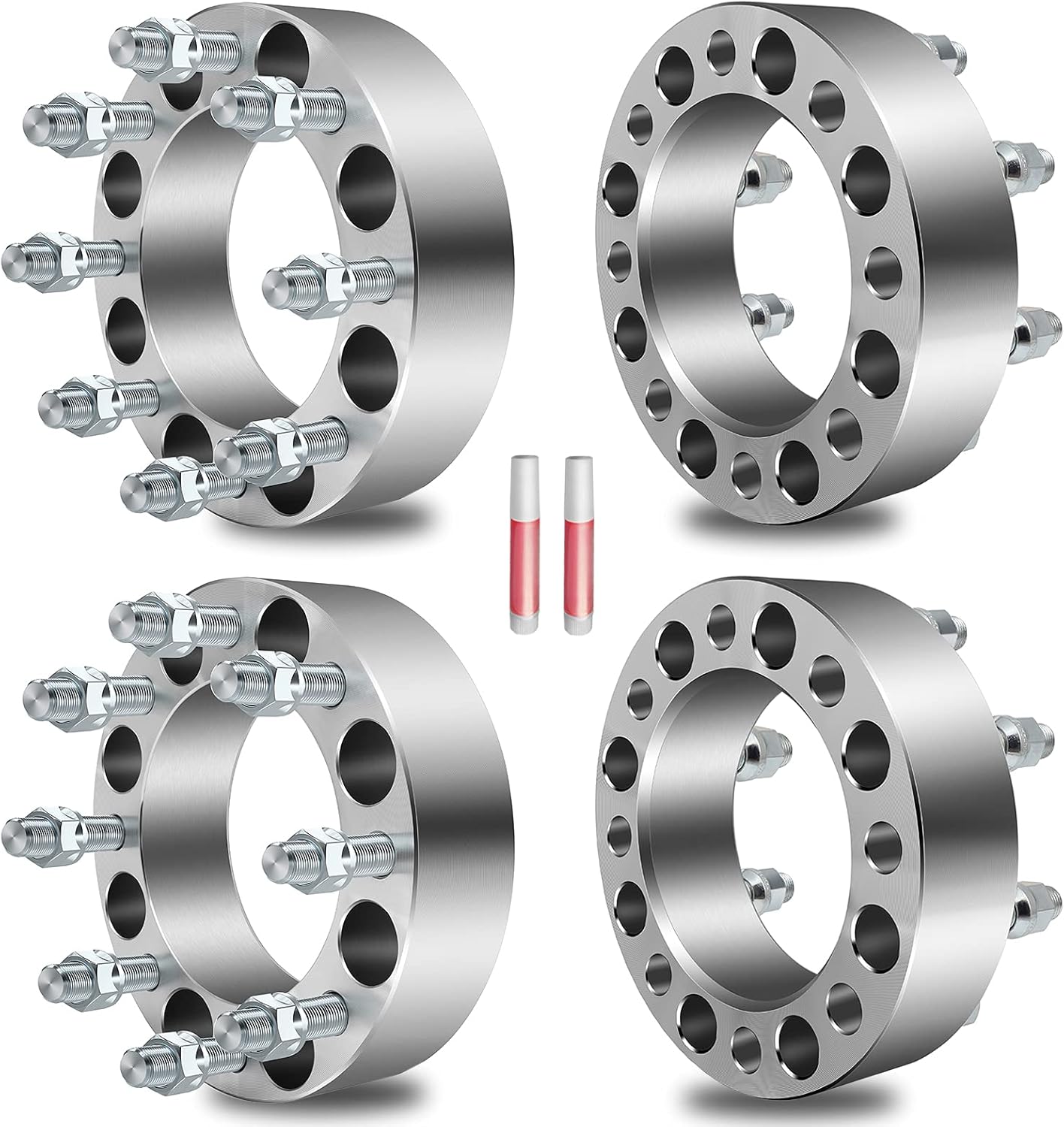
| Bolt pattern | 8×6.5 (8×165.1mm) |
|---|---|
| Thickness | 2 Inch |
| Thread pitch | 9/16 |
| Hub bore | 126.15mm |
| Recommended install torque | 130-140 Ft/Lbs |
These ECCPP 2-inch wheel spacers convert and space wheels using an 8×6.5 (8×165.1mm) bolt pattern and a 126.15mm center bore, supplying four spacers with preinstalled heat-treated 10.9 grade studs and thread locker. Installers typically use them to widen track width, improve stance, and clear larger tires or aftermarket wheels on 1994-2002 Ram 3500 applications. The included 9/16" thread pitch and recommended 130-140 ft-lbs torque provide a clear installation target, and the manufacturer calls out re-torque after 50-100 miles which matches good practice for spacers. Practical benefits include improved lateral stability and a more aggressive wheel offset without replacing hubs or axles, plus the choice of 10.9 studs that favor ductile deformation over brittle failure. Limitations are that correct hub bore, stud clearance, and matching thread pitch are mandatory and some setups may require minor stud or wheel modification to ensure the wheel sits flush; these spacers do not change load ratings or address underlying suspension needs so professional fitment verification is advised for heavy towing or extreme loads.
Best for: Buyers wanting a stronger, performance-oriented way to widen track width or fit wider wheels on a 1994–2002 Ram 3500 while prioritizing handling and stance improvements.
Less Ideal for: Drivers who frequently carry maximum payloads, tow heavy loads, or need guaranteed load-rated hub upgrades should consider heavy-duty hub or axle solutions instead of spacers.
- Preinstalled heat-treated 10.9 grade studs for strength with more ductile failure characteristics than higher hardness studs
- Specifies 126.15mm hub bore and 9/16" thread pitch so fitment can be accurately checked before purchase
- Includes thread locker and clear recommended torque (130-140 ft-lbs) with re-torque guidance for safe installation
- Requires exact match of bolt pattern, hub bore, and stud clearance so some wheels may need modification to sit flush
Verdict: A performance-focused 2-inch spacer set that widens track and improves stance on 1994–2002 Ram 3500s while using ductile 10.9 studs for reliable real-world use.
3. Richeer 2" Forged 8×6.5 Wheel Spacers with 9/16-18 Studs (2-Pack)

| Thickness | 2 inches (50.8 mm) |
|---|---|
| Bolt pattern | 8×6.5 (8×165.1 mm) |
| Center bore | 126.15 mm |
| Stud thread | 9/16-18 |
| Material | Forged 6061-T6 aluminum |
These Richeer 2-inch wheel spacers are a forged 6061-T6 aluminum, hub-centric style solution that bolt between the hub and wheel to push the wheel outward two inches. They are supplied as a two-piece set with 9/16-18 Grade 12.9 studs—claimed to deliver high tensile strength—and a 126.15 mm center bore to center on the hub. Typical installation replaces factory lug studs or uses the provided studs and nuts to mount wheels farther from the hub, which increases track width for a wider stance and better perceived cornering stability. CNC machining and an anodized finish improve fit and corrosion resistance. Practical benefits include improved wheel clearance for larger tires and a more aggressive look without permanent axle modification. Limitations to expect are the added unsprung mass at the wheels and the need for proper torque and periodic inspection; installation should follow vehicle-specific fitment and safety checks for hub load and brake clearance.
Best for: A practical buyer who wants a durable, factory-quality spacer to increase track width and tire clearance on a heavy-duty truck while prioritizing a reliable build and predictable on-road improvements.
Less Ideal for: Drivers seeking a purely cosmetic change with no attention to installation or maintenance, or anyone unwilling to verify hub load and brake clearance with a mechanic.
- Forged 6061-T6 construction with CNC machining for consistent fit and strength.
- Supplied Grade 12.9 9/16-18 studs offering higher tensile strength than common 10.9 studs.
- Hub-centric 126.15 mm center bore for proper centering on compatible hubs.
- Anodized surface finish improves corrosion resistance in road conditions.
- Adds unsprung mass and alters wheel offset which can affect suspension geometry over time.
- Requires correct installation, torqueing, and periodic recheck to maintain safety.
Verdict: Choose these forged 2-inch spacers when you need a strong, hub-centric upgrade to safely widen track and fit larger tires on your 1994–2002 Ram 3500.
4. YONGSHENGONE 4-Pack 8-Lug 6mm (1/4") Die-Cast Aluminum Wheel Spacers

| Bolt pattern | 8×6.5 / 8×165.1 / 8×170 / 8×180 |
|---|---|
| Center bore | 127mm |
| Thickness | 6mm (1/4 inch) |
| Material | Die cast Aluminum |
| Quantity | 4 pieces |
These YONGSHENGONE spacers are a basic, budget-focused option if you need a thin 6mm (1/4") offset for an 8-lug truck. They bolt on between hub and wheel to move the wheel outward, which helps clear larger tires or aftermarket wheels that rub against brake calipers or suspension components. The die-cast aluminum construction keeps weight down and installation is straightforward with common tools, but you must fit longer lug studs or extended lugs to maintain proper thread engagement. The product lists compatibility with multiple 8×6.5/8×165.1, 8×170 and 8×180 patterns and is sold as a four-piece kit, which is convenient for front or light-duty rear use on single-wheel axles. Expect a low-cost solution that improves fitment without major modification, but be aware the thin 6mm thickness provides modest clearance compared with thicker spacers and the die-cast material is less robust than forged options for heavy towing or constant off-road abuse. Verify bolt length and hub centering before driving at higher speeds.
Best for: A budget-minded owner who needs a small, economical spacer to stop light rubbing or to slightly change wheel offset on a single-wheel 1994–2002 Ram 3500 and prioritizes cost and ease of installation.
Less Ideal for: Owners planning heavy towing, frequent off-road use, or those who need larger offsets for aggressive wheel fitment should choose thicker or forged spacers and upgraded hardware instead.
- Covers common 8-lug bolt patterns used on many heavy-duty trucks
- Thin 6mm thickness offers modest clearance without large offset changes
- Lightweight die-cast aluminum reduces added unsprung mass
- Sold as a four-piece kit so you get a complete set for axle ends
- Simple bolt-on installation with standard tools
- Die-cast aluminum construction is less durable than forged spacers for heavy-duty towing or frequent off-road use
Verdict: If you want an inexpensive, easy-to-install 6mm spacer to stop minor rubbing on a 1994–2002 Ram 3500, this four-piece kit delivers a low-cost fix.
5. SCITOO 2-Pack 2" 8×6.5 Wheel Spacers with 9/16" Studs (126.15mm Hub Bore)

| Bolt pattern | 8×6.5 (8×165.1mm) |
|---|---|
| Offset | 2 inch (50mm) |
| Center bore | 126.15mm |
| Studs | 9/16" x18, heat-treated ISO/DIN 10.9 |
These SCITOO 2-inch wheel spacers are a pair of hub-centric-style adapters designed to move factory 8×6.5 wheels outward for a wider track and improved stability on 1994–2002 Ram 3500 trucks. They are forged from aircraft-grade aluminum and come with heat-treated ISO/DIN 10.9 studs and 9/16"x18 hardware, which supports a stronger connection than basic cast spacers. Typical use is to correct tire-to-fender gap, improve cornering feel, and create a beefier stance while retaining the factory bolt pattern and center bore. Installation is straightforward for a competent mechanic, and the knurled edge helps during fit-up. Important limitations: these spacers are an offset solution only and are not intended for wheels with excessive width or nonconforming backspacing, and proper torque plus follow-up checks are required to avoid fastener issues. Also they rely on correct fitment to the hub and the user should confirm compatibility before installation.
Best for: Buyers who prioritize a durable, factory-like upgrade to widen track and improve handling on a 1994–2002 Ram 3500 and who want components built to stronger standards than basic spacers.
Less Ideal for: Do not choose these if you plan to run significantly wider aftermarket wheels or need a spacer solution for multiple vehicle types or wheel patterns.
- Forged aircraft-grade aluminum construction for improved strength-to-weight compared with typical cast spacers
- Includes heat-treated ISO/DIN 10.9 studs and 9/16" hardware for a robust wheel attachment
- Model-specific 2-inch offset that preserves the factory bolt pattern and center bore for easier fitment
- Knurled edges and lug-centric design simplify installation and alignment
- Not suitable for wheels with excessive width or aftermarket wheels with incompatible backspacing
Verdict: A robust, forged 2-inch spacer kit built with hardened studs for a reliability-minded way to widen track and retain factory wheel fitment on 1994–2002 Ram 3500 trucks.
6. Orion Motor Tech 2" 8×6.5 Wheel Spacers with Studs, Set of 4

| Bolt pattern | 8×6.5 (8×165.1) |
|---|---|
| Spacer thickness | 2 inch |
| Material | T6 aircraft-grade aluminum |
| Bolts | 32 zinc-coated 9/16"-18 heat-treated bolts |
| Hub bore | 130 mm |
These Orion Motor Tech wheel spacers push the wheel 2 inches outward using a beefy 8×6.5 bolt pattern adapter and include studs for a straightforward install. Made from T6 aircraft-grade aluminum and fitted with heat-treated, zinc-coated 9/16"-18 bolts, the kit aims to be both lightweight and durable for heavier pickup applications. Install is typical for spacers: after loosening lug nuts you fit the adapter to the hub, torque the supplied studs and bolts to spec, and re-mount the wheel; the spacers include rear slots to aid removal. On a 1994-2002 Ram 3500 this will widen track for improved cornering feel and a more planted stance, and the precision machining with a 60 degree taper helps align wheels during assembly. The package covers the common heavy-duty truck hub bore and comes as a set of four so all corners can be done at once. Buyers should plan for a proper torque sequence and periodic recheck of fasteners since added leverage on studs increases maintenance needs and clearance checks are required for brake and suspension components.
Best for: Buyers who want a proven, heavy-duty spacer to widen track and improve handling or stance on a 1994–2002 Ram 3500 and who prioritize visible customer feedback and tried materials.
Less Ideal for: People who want a no-maintenance cosmetic change or who are unwilling to verify clearance for brakes, suspension, and fender rubbing after installation.
- T6 aircraft-grade aluminum construction keeps parts strong while minimizing added unsprung weight
- Includes heat-treated, zinc-coated 9/16"-18 bolts and studs for improved strength and corrosion resistance
- Precision machining with a 60 degree taper and rear slots aids alignment and removal during installation
- Set of four spacers lets you install on all wheels for balanced handling changes
- Adds leverage to wheel studs which requires regular torque checks and can accelerate wear if not monitored
Verdict: A robust, customer-tested 2 inch aluminum spacer kit that widens track on Ram 3500 trucks while using heat-treated hardware for heavy-duty use.
7. FLYCLE 2" Forged 8×6.5 (8×165.1) Wheel Spacers with 126.15mm Bore

| Thickness | 2 inch (50.8mm) |
|---|---|
| Bolt pattern | 8×6.5 (8×165.1mm) |
| Center bore | 126.15mm |
| Thread pitch | 9/16-18 |
These FLYCLE spacers push wheels out by 2 inches to widen track and allow 8×6.5 bolt-pattern wheels to fit vehicles with a 126.15mm hub bore. Sold as a pair, they are forged from 6061-T6 aluminum, CNC machined, anodized and heat treated for corrosion resistance and fatigue strength, and include high-strength 12.9-class studs and a thread-locking compound. Installation is straightforward for a mechanically confident owner: jack the truck, remove the wheel, fit the hubcentric spacer over the hub, torque to the recommended spec, then remount the wheel. In use they provide a secure hub-centered fit that reduces vibration risk compared with generic spacers, and the 2" offset offers improved stance and additional clearance for suspension or brake components. Limitations are that fitment is vehicle-specific and this kit is for a particular bolt pattern and center bore, and proper torque and periodic checks are required to avoid loosening; professional installation is recommended if you are risk-averse or unfamiliar with suspension fasteners.
Best for: Buyers who prioritize a reliable, factory-quality hubcentric spacer to safely widen stance or clear larger brakes and who prefer durable materials and precise fitment over bargain options.
Less Ideal for: Drivers who need a universal spacer for multiple vehicles or who are unwilling to follow torque and installation procedures should consider alternatives or professional installation.
- Forged 6061-T6 construction with CNC machining for strength and precise fit.
- Hubcentric 126.15mm bore reduces runout and vibration compared with non-hubcentric spacers.
- Includes high-strength 12.9-class studs and thread-locking for secure wheel retention.
- Anodized finish and heat treatment improve corrosion resistance and longevity.
- Compatibility limited to specific 8×6.5 bolt pattern and 126.15mm hub bore so fit must be confirmed before purchase.
- Requires correct torque and periodic rechecks; improper installation can affect safety.
Verdict: A robust, vehicle-specific 2" forged hubcentric spacer that gives a precise, secure fit for owners who want a durable, factory-quality solution to widen stance or clear brakes.
Choosing the Right 1994-2002 Ram 3500 Wheel Spacers: Key Factors to Consider
Bolt Pattern and Pilot Diameter
Correct bolt pattern match is the foundation of safe spacer use on your Ram 3500. A spacer must match the truck's lug pattern so wheel studs or bolts align precisely with the wheel holes. Equally important is the pilot diameter or hub bore interface. Hubcentric spacers that center on the axle hub reduce the risk of runout and vibration by ensuring the wheel is centered before the lug hardware is torqued.
If a spacer does not properly center on the hub, the wheel relies solely on the lug nuts for centering, which can increase stress on studs and create wobble at speed. When choosing spacers for this vehicle, confirm the spacer's pilot diameter and whether centering rings are required to match your wheel's hub bore. Proper centering becomes more critical as spacer thickness increases because small offsets magnify any misalignment.
Material and Manufacturing Quality
Material choice and how the spacer is made directly affect strength and longevity. High-quality spacers are typically machined from forged or billet aluminum alloys with precise CNC tolerances. These manufacturing methods yield consistent thickness, accurate bore sizes, and even load distribution across the mating surfaces.
Lower-quality cast or poorly machined spacers can have microscopic voids, uneven bores, or inconsistent faces that lead to premature wear, corrosion, or failure under load. For a heavy truck like the Ram 3500, prioritize spacers rated for heavy-duty use and finished with corrosion-resistant coatings to withstand road salt and environmental exposure.
Spacer Thickness and Vehicle Dynamics
Spacer thickness determines how far the wheel sits from the hub and affects steering geometry and wheel bearing loads. Small spacers can provide needed clearance without major handling changes, while larger spacers that push the wheel significantly outward can alter scrub radius and increase leverage on wheel bearings and suspension components.
Consider your purpose: minor clearance or aesthetic adjustments often need thinner spacers, while stance or extreme clearance requirements call for thicker pieces. For the 1994-2002 Ram 3500, which may already carry heavy loads, select thicknesses that balance the desired fit with acceptable additional stresses to bearings and studs. Check manufacturer guidance for maximum recommended thickness and ensure long-term use will not exceed bearing or stud load limits.
Mounting Method and Hardware
Wheel spacers attach to the hub in various ways: some use extended studs that the wheel then mounts to, others use full-face hub-mounting systems, and some require separate lug bolts. The mounting method affects installation complexity, replacement of studs, and torque procedures. Extended studs must be the correct grade and engagement length to maintain clamping force safely.
Inspect the included hardware quality and whether replacing factory studs is necessary. Also consider whether the spacer design preserves access for proper torqueing and whether it requires thread-locking compounds or specific torque values. Proper hardware and correct installation practices reduce the risk of loosening or uneven clamping over time.
Hubcentric Vs Lugcentric Design
Hubcentric spacers center on the axle hub and transmit loads through the spacer face, which helps minimize vibration and concentrates clamping forces where intended. Lugcentric spacers rely on the lug nuts for centering, which can be acceptable for thin spacers and low-stress use, but they raise the risk of misalignment and vibration if not installed precisely.
For a heavy-duty truck platform like the Ram 3500, hubcentric designs are generally safer because they reduce the likelihood of wheel runout and uneven lug loading. If a spacer is lugcentric, ensure extremely accurate torque procedures and periodic rechecks to detect any loosening early.
Corrosion Resistance and Maintenance
Spacers sit exposed to the elements and road chemicals. Corrosion can compromise the metal and create binding or poor contact between the spacer and hub or wheel. Coatings such as anodizing or durable powder coats help protect aluminum spacers, while stainless hardware resists rust.
Regular maintenance is important: inspect mating faces for corrosion, check torque on lug hardware after initial installation and periodically thereafter, and clean contact surfaces during brake or wheel service. Choosing corrosion-resistant finishes and maintaining fasteners will extend service life and preserve safe fitment on your Ram 3500.
Understanding Fitment For 1994-2002 Ram 3500
Fitment starts with confirming the truck's lug pattern, stud size, and hub interface so the spacer seats flush against the axle flange. Verify whether the spacer is intended to be hubcentric or requires centering rings to match your wheel's bore for accurate alignment. Physical measurements and manufacturer fitment notes are critical because incorrect assumptions about pilot diameter or stud engagement can lead to vibration or unsafe clamping.
Also consider how the spacer will interact with aftermarket wheels and brake components. Some wheels with small bore diameters or deep offsets may need additional centering hardware. For brake clearance, check caliper and rotor spacing when the spacer is installed; a spacer that solves clearance issues at the tire may still interfere with the brake assembly if not chosen carefully.
- Confirm lug pattern and stud thread size before purchasing.
- Check the spacer's pilot diameter and whether centering rings are included.
- Measure rotor and caliper clearance with intended spacer thickness.
Installation Basics And Best Practices
Follow correct torque sequences and values when installing spacers on a heavy truck. Torque should be applied in a crisscross pattern to ensure even clamping. If spacers use extended studs, ensure the stud engagement into the hub is sufficient and that the wheel still achieves full thread engagement on the studs or bolts.
After installation, drive a short distance and re-torque all lug hardware to detect any settling or loosening. Periodic checks are recommended, especially after the first 50 to 100 miles and then at regular service intervals. Use thread lubricant or thread locker only if recommended by the spacer manufacturer, and replace any hardware that shows corrosion or wear.
- Use a calibrated torque wrench and follow crisscross tightening.
- Re-torque after initial road miles and check periodically.
- Replace worn studs or bolts rather than reusing damaged hardware.
How Spacer Thickness Affects Handling
As you move wheels outward, scrub radius and steering feedback change. Small increases may be imperceptible and simply improve stance or clearance, but larger offsets can amplify steering effort, increase vulnerability to impacts, and add load to wheel bearings. Consider the trade-offs between desired visual or clearance outcomes and potential long-term effects on suspension components.
If you use thicker spacers regularly with heavy loads, monitor wheel bearing temperature and steering feel, and be prepared to upgrade related suspension hardware if signs of accelerated wear appear. For everyday driving, moderate thicknesses that correct clearance without drastically changing geometry are usually the safest choice.
- Thicker spacers increase load on bearings and studs.
- Watch for changes in steering feel after installation.
- Adjust thickness to balance clearance needs and component longevity.
Addressing Vibration Concerns
Vibration after spacer installation is often due to misaligned pilot diameters or uneven mounting faces rather than the spacer itself. Hubcentric spacers reduce this risk by centering the wheel on the axle hub. When hubcentric options are not available, precise machining, proper centering rings, and careful torqueing minimize runout and potential vibration.
If you experience vibration, inspect the spacer and wheel for contact irregularities, verify stud engagement and torque, and check wheel runout with a dial indicator if possible. Eliminating surface contamination, replacing corroded hardware, and ensuring correct centering will resolve most common causes of vibration.
- Prefer hubcentric spacers to reduce wheel runout.
- Inspect faces and hardware for dirt or corrosion before mounting.
- Use a dial indicator to check runout if vibration persists.
Legal And Safety Considerations
Local regulations and vehicle codes can affect allowable modifications. While selecting spacers, ensure they do not create interference with fender, brake, or suspension components that could compromise safety. Also verify the spacer design does not require permanent wheel alterations that might violate roadworthiness rules.
From a safety perspective, follow manufacturer fitment notes and avoid makeshift mounting solutions. If in doubt about structural implications of larger spacers on a heavy-duty truck, consult a qualified mechanic or alignment shop before committing to a final setup.
- Confirm spacers do not interfere with brake or suspension components.
- Avoid grinders or permanent wheel modifications unless professionally done.
- Consult a professional if unsure about structural or legal limits.
Still looking for the perfect fit?
Select your Ram 3500 configuration to see the most relevant Wheel Spacers recommendations
How We Chose the Best 1994-2002 Ram 3500 Wheel Spacers
We shortlisted wheel spacers for the 1994-2002 Ram 3500 using a focused set of technical and practical filters to ensure safe, reliable fitment for this vehicle. Primary evaluation criteria included bolt pattern compatibility and pilot diameter alignment to confirm proper centering and reduce vibration risk. Material quality and manufacturing method were assessed, with emphasis on forged or CNC-machined aluminum and corrosion-resistant coatings for strength and durability. We also prioritized spacer thickness options and stud/bolt specifications that match common modifications owners pursue, along with the availability of hubcentric designs or proper centering rings when required. Installation considerations were included, such as whether the spacer uses extended studs, separate lug bolts, or a hub-mounting face, and whether an installation kit or torque specification guidance is typically needed.We excluded any spacers with unclear fitment data, unknown material specs, or manufacturing processes that do not meet common safety expectations. We also did not consider spacers that require permanent wheel modifications or those lacking industry-standard hardware. The result is a list that balances durability, correct fitment for the 1994-2002 Ram 3500, and the installation practicalities most owners will encounter.
Our full evaluation process is outlined in our review methodology.
FAQ
Will wheel spacers cause vibration on my 1994-2002 Ram 3500?
Vibration is usually caused by poor centering or uneven mounting surfaces rather than spacers themselves. Choosing hubcentric spacers or using properly sized centering rings and following correct torque procedures minimizes the risk. If vibration occurs, inspect contact faces, hardware torque, and wheel runout.
How thick of a spacer can I safely use on this Ram 3500?
Safe thickness depends on load, wheel bearing condition, and stud engagement. Small thicknesses for minor clearance are typically safe, while large offsets increase bearing and stud stress. Check manufacturer recommendations and ensure studs have adequate thread engagement after installation.
Do I need new studs or lug bolts to install spacers?
It depends on spacer design. Some spacers use extended studs that replace factory studs, while others accept the existing studs and use longer wheel bolts. Ensure any replacement studs are correct grade, length, and properly torqued. If unsure, consult a mechanic for proper hardware selection.
Can spacers help if my aftermarket wheels rub the fenders?
Yes. Spacers can move the wheel outward to clear fender lips or suspension components, but measure carefully. Sometimes changing wheel offset or selecting thinner spacers is a better long-term solution. Confirm brake clearance and wheel bearing loads before choosing large spacers.
How often should I re-torque spacer hardware?
Re-torque after the initial driving period, typically 50 to 100 miles, and then check periodically during routine maintenance. Heavy-duty use, off-road driving, or frequent load changes warrant more frequent checks to ensure hardware remains secure.
Are hubcentric spacers worth it for a heavy truck like the Ram 3500?
For a heavy-duty truck, hubcentric spacers are generally preferable because they center the wheel on the hub and reduce the chance of vibration and uneven lug loading. They are particularly valuable when using thicker spacers or running heavier loads.
Final Verdict
When upgrading your 1994-2002 Ram 3500 with wheel spacers, prioritize correct fitment, material quality, and a mounting method that maintains hub centering. Balance the desired clearance or stance change against the added stresses on wheel bearings and studs, and choose spacer thicknesses that solve the immediate problem without creating new mechanical issues.Careful installation, proper torqueing, and periodic inspections will keep a spacer setup safe and reliable. Use the decision factors outlined here to select a spacer that meets your clearance and appearance goals while preserving the long-term integrity of your truck's wheel and suspension components.
Explore More:
- Check out all Ram 3500 parts & accessories
- Explore Wheel Spacers Maintenance & Repair Guides
- Explore Wheels & Tires
- Browse all Auto Parts
