

Note: This article contains affiliate links. If you click on these links and make a purchase, I may earn a small commission at no extra cost to you. This helps support my research and content. Read my full affiliate disclosure here.
If your Honda Fit feels bouncy, wanders in corners, or shows uneven tire wear, choosing the right shock absorber can make a big difference in daily driving. You want components that restore ride comfort, stabilize handling, and last through varied road conditions. This guide shortlists the top options for the Honda Fit based on key durability and performance considerations. Below you will find the top picks and an explanation of the evaluation factors used to narrow the field, so you can decide which solution best matches how you drive.
Looking for other parts? See all Honda Fit parts & accessories.
Top Picks at a Glance


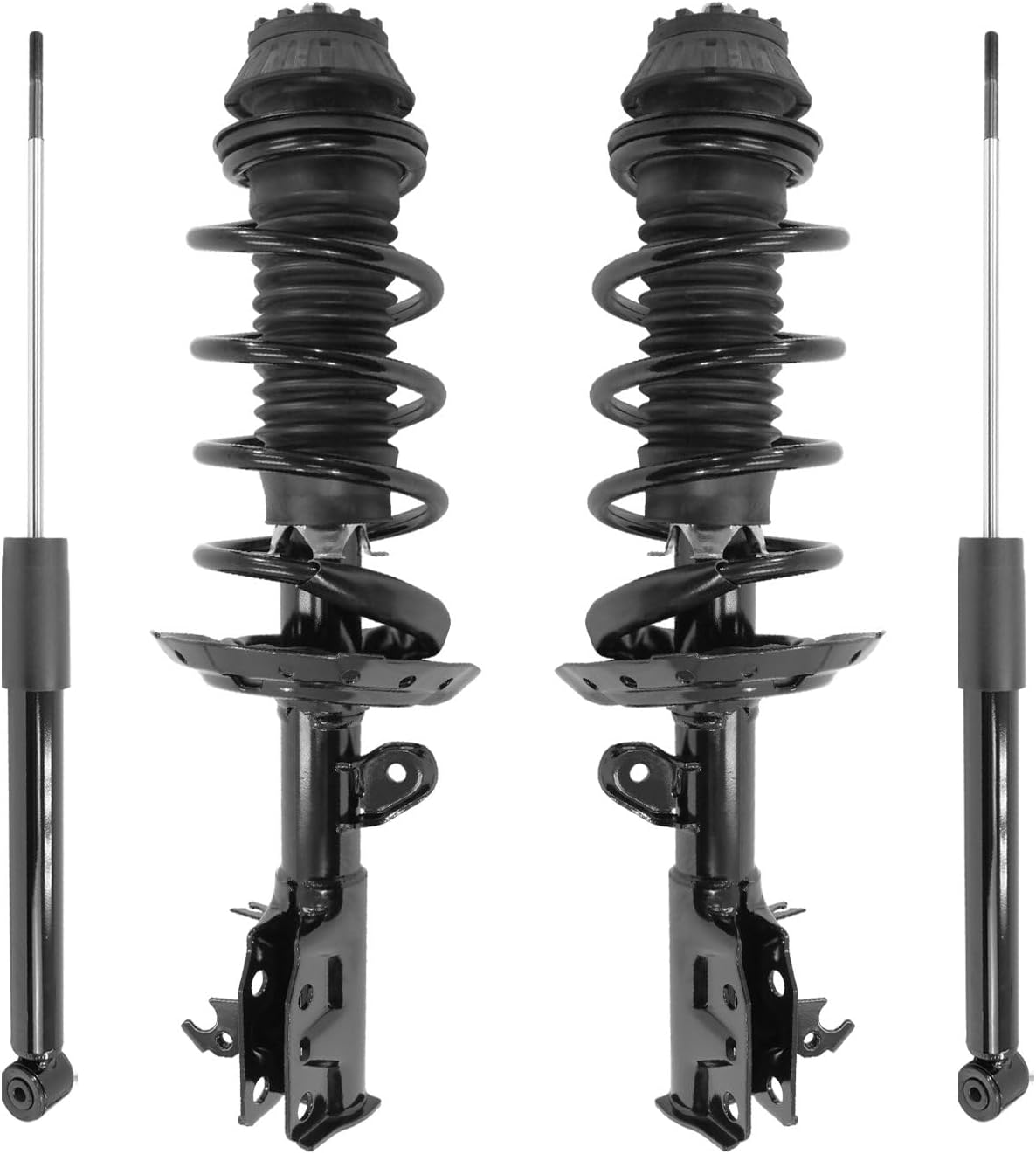
Complete Struts Front Complete Strut Assemblies with Coil Springs and Rear Shock Absorbers for 2015-2020 Honda Fit
| Auto Part Position | Rear |
|---|---|
| Compatible with Vehicle Type | Car |
| Automotive Fit Type | Vehicle Specific Fit |
| Manufacturer | Complete Struts |
This kit includes two complete front strut assemblies with coil springs plus two rear shock absorbers matched as a set for Honda Fit 2015–2020, intended to restore ride quality and handling after worn suspension components. The front units are fully assembled with vehicle-specific top mounts, polyurethane spring isolators and cold-rolled coil springs to reduce noise and help maintain factory ride height, while the twin-tube struts use hydraulic oil and nitrogen gas for consistent damping. Fitment is bolt-on for a straightforward DIY or mechanic installation and the manufacturer recommends a wheel alignment after replacement. Practical benefits include a faster repair than rebuilding old struts, reduced risk of reusing worn mounts or isolators, and matched front and rear components for balanced handling. Limitations to consider are mixed long-term durability reports from some users and a one-year manufacturer warranty only, so professional inspection of related suspension parts and regular checks after installation are advisable.
Best for: A balanced all-round buyer who wants a straightforward, complete suspension refresh for a 2015–2020 Honda Fit and values matched components and easier installation over piecemeal repairs.
Less Ideal for: Drivers seeking a long-term premium or performance-tuned suspension solution or those who prefer individual component upgrades should consider higher-end or specialized options.
- Complete front struts arrive fully assembled for quicker, bolt-on replacement
- Matched front and rear units restore balanced ride and handling
- Vehicle-specific top mounts and polyurethane isolators reduce noise and vibration
- Coil springs engineered to restore factory ride height and longevity
- Limited one-year manufacturer warranty
- Some user reports indicate durability issues over time
Verdict: A ready-to-install matched strut and shock kit that simplifies restoring ride quality and handling on 2015–2020 Honda Fit models.
Monroe OESpectrum 5682 Shock Absorber for Honda Fit (Right)

| Auto Part Position | Right |
|---|---|
| Compatible with Vehicle Type | Car |
| Automotive Fit Type | Vehicle Specific Fit |
| Material Type | Alloy Steel |
The Monroe OESpectrum 5682 is a right-side, vehicle-specific shock designed to return a Honda Fit to factory-like handling while isolating road noise and vibration. It uses Monroe application-tuned valving and a larger bore to provide consistent damping across different road conditions and a nitrogen gas charge to reduce aeration and shock fade. Typical use is as a direct replacement during ride-control refreshes or when worn shocks cause reduced stability, brake dive or excessive body motion. Notable features include PTFE-banded piston sealing for longer service life, all-weather damping fluid for temperature stability, and included dust shield and parts pack for installation. In practice this means better tire contact, firmer control through corners and a quieter ride compared with basic economy shocks. Limitations include occasional reports of early leakage or noise on some installs and that longevity can vary with driving style and conditions, so plan on inspecting mounts and alignment when fitting these shocks.
Best for: Performance-oriented Fit owners who prioritize restored factory-handling and firmer, more controlled road feel during spirited driving and daily use.
Less Ideal for: Drivers who want the softest possible ride or who prioritize lowest upfront cost over handling improvements should consider more comfort-focused or budget aftermarket options.
- Vehicle-specific tuning and displaced valving tuned per application for improved handling
- Nitrogen gas charge and PTFE-banded piston for more consistent damping and reduced shock fade
- All-weather fluid helps maintain performance across temperature extremes
- Includes dust shield and parts pack to simplify installation
- Some users reported early leakage or noisy operation on certain installs
Verdict: Choose the Monroe OESpectrum 5682 if you want a vehicle-tuned shock that tightens handling and reduces NVH for a more controlled Honda Fit driving experience.
Complete Struts Rear Pair Gas Shock Absorbers for 2015-2020 Honda Fit

| Auto Part Position | Rear |
|---|---|
| Compatible with Vehicle Type | Car |
| Automotive Fit Type | Vehicle Specific Fit |
| Included Components | 2 Rear Gas Shock Absorbers |
These Complete Struts rear gas shocks are a budget-focused, vehicle-specific replacement pair for the 2015–2020 Honda Fit that arrive ready to install. They use a twin-tube design with nitrogen charging and chrome-plated pistons, which helps reduce cavitation and improve durability compared with basic hydraulic units. The shocks are valved to match factory damping characteristics, so they restore control and ride comfort without altering handling balance. Practical benefits include direct-fit mounting that simplifies installation and a painted finish to resist corrosion. Trade-offs to expect are that twin-tube gas designs prioritize cost and smoothness over the high-heat performance of monotube race-style shocks, and long-term durability may vary by driving conditions and load. For owners replacing worn rear shocks on a daily-driven Fit, these deliver competent ride control and easy installation at a lower cost than factory replacements.
Best for: Practical optimizers looking to restore factory-like ride and handling on a daily-driven Honda Fit while keeping purchase and installation costs low.
Less Ideal for: Drivers who need heavy-duty, track-capable, or competition-grade suspension upgrades should choose a performance monotube option instead.
- Vehicle-specific fit for 2015–2020 Honda Fit ensures direct-fit installation
- Nitrogen-charged gas design reduces foaming and improves damping consistency
- Chrome-plated piston for improved wear resistance and smoother operation
- Twin-tube construction offers good ride comfort and heat dissipation for everyday use
- Twin-tube design is less suited to continuous high-load or track use compared with monotube performance shocks
- Long-term durability may be lower than higher-end or OEM replacements under severe driving conditions
Verdict: A cost-conscious, ready-to-install rear shock pair that restores smooth, factory-like ride and damping on 2015–2020 Honda Fit models.
Monroe OESpectrum 5605 Shock Absorber for Honda Fit

| Compatibility | Fits 2007-2008 Honda Fit |
|---|---|
| Position | Right |
| Style | Active |
| Material | Iron |
The Monroe OESpectrum 5605 is a vehicle-specific replacement shock absorber intended to restore factory-like handling and reduce noise, vibration and harshness. It uses Monroe twin-valving technology and a nitrogen gas charge to maintain tire-to-road contact and resist aeration, while PTFE-banded pistons and all-weather fluid aim to improve durability and consistent damping in varied temperatures. Install it as a direct ride-control replacement on the right side of the vehicle and follow with a wheel alignment for best results. In practice this unit smooths bump response and helps control body roll compared with worn shocks, and it is tuned for the application rather than being a generic aftermarket part. Limitations to consider are that it is a single-side part and some users report occasional early failures or leaks, so careful inspection at installation is wise. Also, replacing only one shock can leave uneven feel compared with changing pairs or all four. For budget-focused repairs it offers many factory-quality features without the cost of premium performance shocks.
Best for: Budget-conscious owners who want a factory-quality, application-tuned replacement to restore drivability and reduce NVH without upgrading to performance-level shocks.
Less Ideal for: Drivers seeking track-oriented performance or adjustable damping should consider performance shocks or matched axle kits instead.
- Vehicle-specific valving tuned for the Honda Fit to improve handling consistency
- Nitrogen gas charge reduces aeration and helps maintain tire contact under load
- PTFE-banded piston and all-weather fluid designed to improve sealing and durability
- Designed to reduce noise, vibration and harshness compared with worn shocks
- Sold as a single shock for one side rather than a matched pair
- Some historical customer reports of early leakage or defect on individual units
Verdict: A budget-friendly, vehicle-tuned replacement that restores ride control and reduces NVH but is sold as a single-side unit and may show occasional early failures.
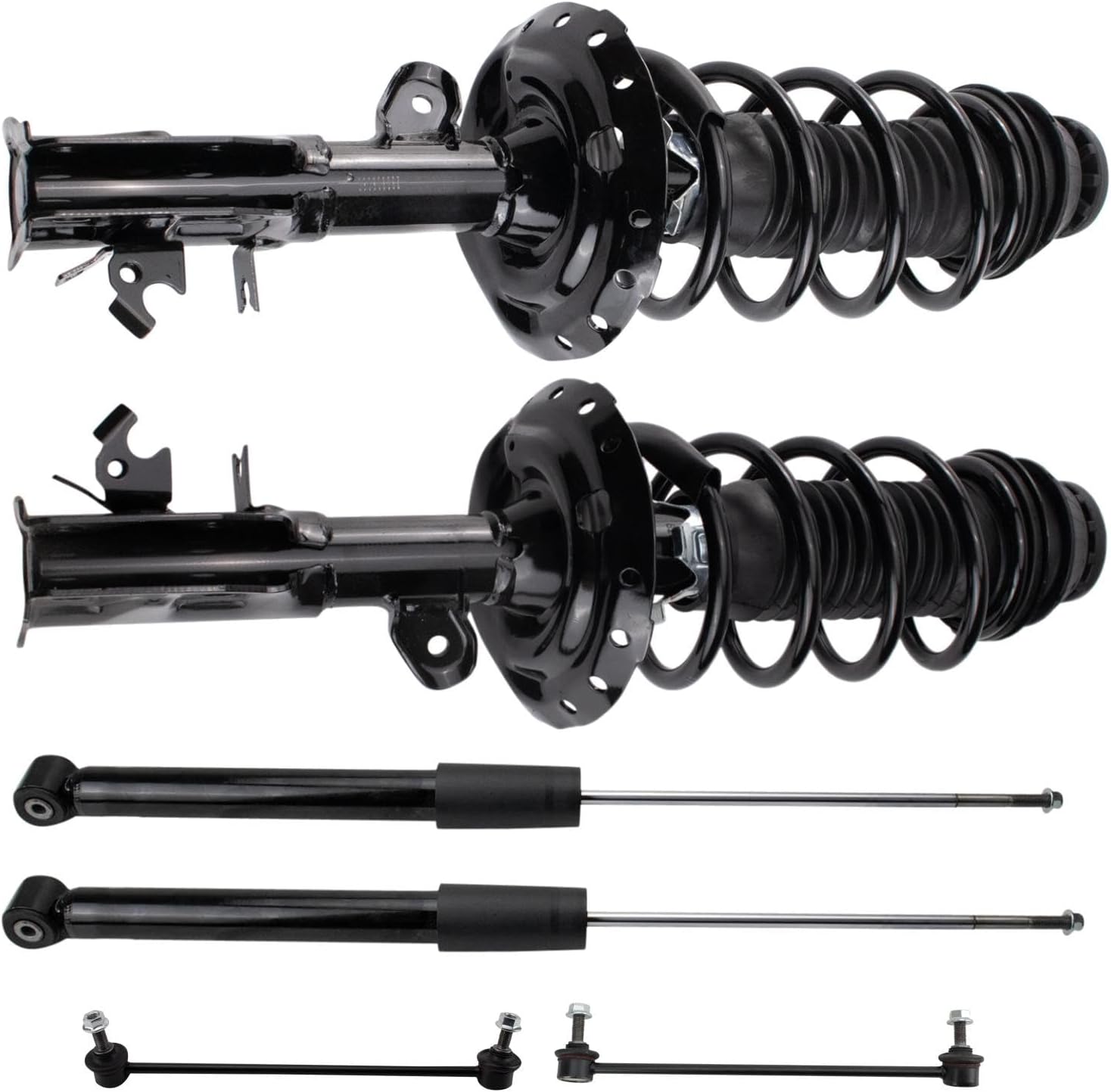
TRQ Complete Suspension Kit — Front Strut & Coil Spring Assemblies, Rear Shocks, and Sway Bar Links for 2015–2020 Honda Fit
| Included Components | 6 Piece Suspension Kit |
|---|---|
| Manufacturer Warranty Description | 2 years |
| Auto Part Position | Front |
| Automotive Fit Type | Vehicle Specific Fit |
This TRQ kit supplies two pre-assembled front strut and coil spring units, two rear shock absorbers, and two front sway bar links to return a Honda Fit to factory-style ride and control. Designed as a direct-fit, pre-greased replacement, the preassembled front units reduce labor and remove the need to compress springs during installation, which speeds up a DIY job or shop replacement. The kit includes anti-corrosion coatings and pre-greased components that should improve longevity and reduce initial maintenance. Practical benefits include improved road feel and handling compared with worn originals and a single kit that covers both front and rear wear items to simplify parts sourcing. Some installers report minor fitment or hardware orientation issues on certain vehicles and occasional need to retorque fasteners after initial miles, so careful test-driving and follow-up checks are recommended. This kit is best for owners who want a straightforward, reliability-focused refresh rather than a performance-tuned upgrade.
Best for: A reliability-focused buyer who wants a factory-style, direct-replacement suspension refresh for a Honda Fit to restore handling and reduce future maintenance needs.
Less Ideal for: Not for owners seeking performance-tuned springs or track-focused damping; also unsuitable for buyers who prefer fully OEM-sourced parts without aftermarket variations.
- Pre-assembled front strut and spring assemblies reduce installation time and eliminate spring compression at installation
- Includes matched front sway bar links and rear shock absorbers so major worn suspension items are replaced together
- Pre-greased components and anti-corrosion coating for reduced initial maintenance and improved surface longevity
- Vehicle-specific fit claimed for 2015–2020 Honda Fit to simplify installation and avoid modifications
- Some users reported fitment and mounting hardware orientation problems that required modification or rework
- May require retightening of fasteners after initial driving for secure fit
Verdict: A complete, vehicle-specific suspension kit that simplifies replacing worn struts, shocks, and sway bar links to restore a Honda Fit's ride and handling.
Detroit Axle 6‑Piece Suspension Kit for 2009–2013 Honda Fit (Front Struts with Coil Springs, Rear Shocks, Sway Bar Links)

| Fitment | 2009–2013 Honda Fit (excludes electric models) |
|---|---|
| Kit contents | 2 front strut assemblies with coil springs, 2 rear shock absorbers, 2 front sway bar end links |
| Manufacturer | Detroit Axle |
This Detroit Axle 6-piece kit replaces both front strut assemblies (with coil springs), the two rear shock absorbers, and front sway bar end links to refresh a 2009–2013 Honda Fit suspension in one purchase. It is intended as a direct factory-quality replacement so owners can swap worn components without sourcing individual parts. The kit arrives complete and ready to install, which makes it convenient for DIYers or for a single-shop job to return ride height, damping, and handling to near-factory behavior. Notable features include preassembled front struts with springs and included sway bar links to reduce installation steps and align the front and rear ride characteristics. Practical benefits are a quicker repair process and fewer compatibility worries since the kit targets the Fit specifically. Some buyers report occasional fitment alignment or looseness issues that require minor adjustment at installation, and there are mixed long-term durability reports, so expect to verify torque and check for leaks after break-in. Overall it is a pragmatic option when you want a complete, ready-to-install suspension refresh for this Honda Fit generation.
Best for: Buyers who prioritize convenience and want a one-stop, ready-to-install suspension refresh for a 2009–2013 Honda Fit to minimize parts sourcing and shop time.
Less Ideal for: Drivers seeking premium or performance-tuned dampers or those who prefer buying individual high-end components to tailor handling and longevity.
- Complete kit includes front strut assemblies with coil springs, rear shocks, and sway bar end links for a single purchase
- Preassembled front struts reduce bench work and simplify DIY or shop installation
- Designed to match factory fit and restore ride height and damping for the specified Honda Fit years
- Components undergo impact and fatigue testing according to the brand, aiming to meet common durability expectations
- Some users report alignment or assembly tightness issues that require adjustment during installation
- There are mixed reports on long-term durability, including instances of premature shock leakage
Verdict: A convenient, all-in-one suspension kit for 2009–2013 Honda Fit owners who want a fast, single-purchase replacement, but expect to inspect fitment and monitor long-term durability.
CompleteStruts Front Complete Strut Assemblies and Rear Shock Absorbers for 2009-2014 Honda Fit — Set of 4

| Compatible models | 2009-2014 Honda Fit (excludes electric) |
|---|---|
| Kit quantity | 4 units (2 front complete struts, 2 rear shocks) |
| Fit type | Vehicle Specific Fit |
| Material type | Metal |
This kit supplies ready-to-install front complete strut assemblies with coil springs plus two rear shock absorbers to replace the worn suspension on a 2009–2014 Honda Fit. The front assemblies arrive preassembled with mounts, springs, isolators and bearings so you skip rebuilding old struts and reduce install time for a DIYer or independent mechanic. Cold-rolled coil springs and polyurethane isolators are intended to restore ride height and reduce spring-to-perch noise while the twin-tube, hydraulic-plus-nitrogen struts aim to provide predictable damping. The set is vehicle-specific for the Fit and includes the parts needed front and rear, but the rear shocks do not include bump stops or some small brackets so you may need additional components depending on your car. Several user reports praise fit and economy while others note premature wear on a minority of units, so expect variable long-term durability compared with factory units. A wheel alignment after installation is recommended to restore proper handling.
Best for: Risk-averse mainstream buyers who want a vehicle-specific, ready-to-install replacement set to quickly restore ride quality and reduce shop time without rebuilding components themselves.
Less Ideal for: Buyers seeking a long-term premium performance upgrade or guaranteed extended durability should consider higher-end or OEM-branded alternatives instead.
- Front struts come fully assembled with mounts, springs, bearings and isolators for immediate installation
- Cold-rolled coil springs engineered to restore factory ride height
- Polyurethane spring isolators reduce noise and metal-to-metal contact
- Twin-tube strut design with hydraulic oil and nitrogen aims to deliver consistent damping
- Rear shocks do not include bump stops or some mounting brackets which may require separate purchases
- Mixed user reports on longevity with some units failing earlier than expected
Verdict: A convenient, vehicle-specific four-piece suspension kit that gets a 2009–2014 Honda Fit back on the road with new preassembled front struts and rear shocks.
Choosing the Right Honda Fit Shock Absorber: Key Factors to Consider
Damping Performance
Damping performance determines how quickly the shock absorbs and dissipates energy from bumps and body motions. Proper damping reduces bounce after a hit and controls body roll during cornering, which directly affects comfort and confidence behind the wheel.
Look for consistent compression and rebound characteristics across varying speeds and loads. If damping is too soft, the car will feel floaty and unstable. If it is too firm, you will feel every road imperfection. Matching damping to typical road conditions and driving style helps preserve tire contact and steering feedback.
Durability and Seal Quality
Durability relies on robust internal components and high-quality seals that keep fluid and gas contained over many cycles. Poor seals lead to leakage, loss of damping, and premature failure, which means more frequent replacements and inconsistent ride quality.
Consider the construction materials, corrosion resistance of the piston rod and body, and whether the unit uses protective boots or dust covers. These features matter most if you drive on salted roads or rough surfaces, where contaminants accelerate wear.
Fitment and Mounting Ease
Correct fitment ensures the shock works with the vehicle's existing mounts, bushings, and suspension geometry. A shock that does not match factory mounting points can alter ride height or cause misalignment, which affects handling and tire wear.
Ease of installation matters for DIYers and mechanics alike. Units that include replacement hardware or share the same mounting interfaces as the original simplify the job and reduce the chance of installation errors that could compromise performance.
Ride Height and Compatibility
Ride height and overall compatibility affect suspension geometry and alignment settings. Some shocks are designed to maintain factory ride height, while others may slightly alter it. Maintaining the correct height keeps steering response and suspension travel within intended ranges.
If a shock changes ride height, it can affect camber, toe, and handling characteristics. For most drivers, choosing a shock specified for the vehicle model preserves expected handling and reduces the need for additional adjustments.
Noise and NVH Characteristics
Noise, vibration, and harshness, collectively called NVH, determine how quiet and refined the cabin feels over various surfaces. Shocks contribute to NVH by how they respond to small inputs and by isolating suspension harshness from the chassis.
Units designed to minimize clunking and respond smoothly to small bumps will make the car feel more premium. Consider shocks that advertise reduced noise or include features to dampen piston rod movement when returning to rest, since persistent noises often indicate degraded internal damping or loose mounts.
Warranty and Support
Warranty length and the availability of customer support indicate manufacturer confidence and can reduce long-term ownership risk. A solid warranty can cover premature failures not caused by installation or external damage, giving you more assurance in the product.
Review warranty terms for coverage specifics and any requirements for installation or proof of maintenance. Good support networks also help if you encounter fitment questions or need replacement parts.
Common Symptoms of Worn Honda Fit Shock Absorbers
Recognizing early signs that your Honda Fit shock absorber is failing helps prevent bigger handling and safety problems. Worn shocks change how the car responds to bumps and corners, and symptoms often show up in everyday driving.
Typical symptoms include excessive bouncing after hitting a bump, nose dive under hard braking, and a loose or floaty feeling in corners. These behaviors are direct consequences of reduced damping and can progress quickly if ignored.
- Repeated bouncing after a single bump or dip
- Longer stopping distances and pronounced nose dive during braking
- Uneven tire wear or cupping patterns on the tread
- Visible fluid leaks or damaged shock bodies
- Vehicle pulls or wanders at highway speeds
How Front and Rear Shocks Differ on the Honda Fit
The front shock absorber on the Fit handles steering inputs, absorbs impacts from the front wheels, and helps control pitch during braking. Rear units control body roll and maintain rear tire contact through bumps and loading changes. Because of these roles, front and rear components often age differently.
When considering repairs, note that front shocks typically experience greater loads from steering and braking and may show wear earlier. Rear shock replacement may be prompted by cargo carrying, frequent passenger loads, or rough road exposure.
- Front: more impact from steering and braking, often shows earlier wear
- Rear: stability and load control, may fail from heavy cargo or poor roads
- Inspect both sides even if only one shows outward symptoms to avoid imbalanced handling
When to Schedule Shock Replacement for a Honda Fit
There is no one-size-fits-all interval, but planning replacement based on symptoms, mileage, and usage yields the best results. If you notice handling changes, visible leaks, or uneven tire wear, schedule a shock absorber replacement promptly to restore predictable control.
Proactive replacement is reasonable for high-mileage Fits or vehicles used on poorly maintained roads. Addressing worn shocks in a timely manner prevents secondary wear to tires, suspension bushings, and braking performance.
- Replace worn shocks if you experience persistent bouncing or instability
- Consider replacement after heavy-duty use or over 75,000 miles depending on road conditions
- Always inspect mounts, boots, and hardware during service to determine full scope of work
DIY Inspection and Basic Troubleshooting for Fit Owners
A quick hands-on check can reveal many common problems without removing components. Start with a visual inspection for leaks and damaged boots. Push down on each corner of the car and watch how it rebounds. One or two bounces is normal. Several bounces indicates reduced damping.
A short road test with a partner helps isolate front versus rear problems. Drive over a series of moderate bumps and listen for clunks, rattles, or squeaks. Note where the sensation is strongest and inspect the corresponding shock and mounting area.
- Visual: check for oil on the shock body, torn dust boots, or bent rods
- Bounce test: more than two oscillations suggests replacement
- Road test: listen for noise and feel for looseness; have someone steer while you observe wheel movement
- If comfortable, compare left and right movement by jacking one wheel and observing rebound
Common Noise Sources and How to Interpret Them
Not all noises come from the shock itself. Clunking or knocking can be worn mounts or loose hardware while squeaks may come from dry bushings. Dedicated shock absorber noise often includes a hollow thud during compression or rebound and a metallic rattle if internal parts are failing.
Systematic elimination helps pinpoint the cause. Tighten and inspect mount bolts, replace damaged rubber isolators, and confirm that the noise persists only when the wheel is unloaded or loaded to identify internal shock failures.
- Thud on compression: possible internal oil loss or worn piston valving
- Rattle at low speed: loose internal components or broken spring insulator
- Squeak over small bumps: dry or hardened rubber mounts
- Noise only under heavy load: worn shock under load leading to internal contact
Installation Tips and Post-replacement Checks for a Smoother Ride
Proper installation ensures the new unit delivers the intended improvement. Use correct torque for top mounts and lower bolts, replace any worn hardware, and swap strut mounts or bearings when they show deterioration. After installation, a short break-in period allows seals and oil to settle for consistent damping.
After fitting new units, perform a wheel alignment and test drive to verify handling and tire wear. Adjust driving habits during the first few hundred miles to confirm there are no unusual noises or leaks. Selecting from the best shock absorbers suitable for the Fit and following proper installation technique gives the most reliable outcome.
- Always replace shocks in axle pairs to maintain balanced handling
- Replace mounting hardware and rubber components as needed
- Torque fasteners to factory specifications and test for leaks
- Perform an alignment and short road test to confirm restored control
How We Chose the Best Honda Fit Shock Absorber
We prioritized products that directly address the common failure modes and performance needs of small hatchbacks. Our selection criteria focused on ride damping consistency under repeated compression and rebound cycles, materials and seal quality that affect lifespan, and compatibility with stock suspension geometry to preserve handling balance. We also weighed ease of installation and availability of mounting hardware, since many owners perform maintenance themselves, and considered warranty coverage as an indicator of manufacturer confidence.We excluded specialty motorsport or heavy-duty units designed for significantly altered suspensions, as well as generic, unbranded parts lacking clear specifications. The final list reflects a balance of ride comfort, long-term durability, and straightforward replacement fitment for the Honda Fit platform.
Our full evaluation process is outlined in our review methodology.
FAQ
How do I know when a Honda Fit shock absorber needs replacement?
Common signs include a bouncy ride, increased body roll, visible fluid leaks, and uneven tire wear. You may also notice longer stopping distances or more pronounced vibration over rough roads. If multiple signs appear together, the shocks are likely worn and deserve inspection.
Can I replace front shock absorber units myself?
Many owners can handle front shock replacement with basic tools and a proper jack and stands, but the task requires care. Follow a service manual for torque specs and safety steps. If the job involves strut assemblies or spring compression, consider professional help to avoid injury.
Will new shocks fix car handling problems like wandering or poor cornering?
Replacing worn shocks often restores much of the original handling by improving damping and wheel contact. However, handling issues can also stem from alignment, tire condition, or suspension bushings. Addressing shocks alongside these related components produces the best results.
What causes shock absorber noise and how can I diagnose it?
Noise can come from worn internal components, leaking fluid, loose mounts, or damaged dust boots. A careful visual inspection for leaks and damaged hardware is a good first step. Road testing at low speed and through gentle turns can help isolate whether the sound comes from the shock or another suspension part.
Are all shocks for the Honda Fit the same, or are there variations to consider?
Shocks vary by valving, gas or fluid design, and intended use such as comfort or heavier-duty duty cycles. Choose a unit specified for the Honda Fit that matches your driving priorities. Avoid parts meant for significant suspension modifications unless you have corresponding upgrades.
Final Verdict
When choosing replacement shocks, prioritize damping behavior that matches your driving style, long-term durability, and correct fitment for the Honda Fit. Balancing ride comfort against handling control will depend on whether you mostly drive on smooth streets or encounter rougher surfaces frequently.Address shocks as part of an overall suspension check, including alignment, tires, and mounts. That approach clarifies any tradeoffs and helps you select a solution that restores predictable handling and comfortable daily driving.
Explore More:
- Check out all Honda Fit parts & accessories
- Explore Shock Absorbers Maintenance & Repair Guides
- Explore Suspension & Steering
- Browse all Auto Parts
