

Note: This article contains affiliate links. If you click on these links and make a purchase, I may earn a small commission at no extra cost to you. This helps support my research and content. Read my full affiliate disclosure here.
If your Honda Fit is showing softer pedal travel or uneven braking, choosing the right brake booster is critical to restore safe, predictable stopping. The right unit affects pedal effort, brake balance, and overall feel, so it is worth selecting an option that matches fitment and performance expectations. This guide presents seven shortlisted Honda Fit brake boosters chosen for their fitment reliability, durability, and installation practicality. Below we explain the evaluation criteria and what to expect when replacing this component, then present the top picks and what makes each one suitable for typical owners.
Looking for other parts? See all Honda Fit parts & accessories.
Top Picks at a Glance
| Best overall The best all-around choice for most situations | Cardone Remanufactured Vacuum Power Brake Booster (53-2510) |  |
| Best Quality Built to a higher standard if you want something more solid | SCITOO Vacuum Power Brake Booster for Honda Fit 2007–2008 L4 1.5L (without Master Cylinder) |  |
| Highest Rated A top-rated pick with lots of positive feedback | AngyMeck Vacuum Power Brake Booster for Honda/Acura (fits Civic 2006–2011, Fit 2009–2013, CR-Z, Insight, CSX) |  |
| Most Popular A crowd favorite that many people choose with confidence | AUPCS Power Brake Booster (53-8063) for Honda Fit 2007-2008 — No Master Cylinder |  |
| Best Seller A high-volume bestseller chosen again and again | A1 Cardone Remanufactured Vacuum Power Brake Booster (53-5433) |  |
1. Cardone Remanufactured Vacuum Power Brake Booster (53-2510)

| Manufacturer | A1 Cardone |
|---|---|
| Model | Cardone 53-2510 |
| Manufacturer Part Number | 53-2510 |
| OEM Part Number | 46400SK7A01, 46400SK7A02, 46400SM4003, 46400SM5A01 |
This Cardone remanufactured vacuum power brake booster replaces a failing booster to restore proper brake assist and pedal feel on compatible Honda Fit applications. It is rebuilt to factory-quality standards with seals and check valves replaced, and units are tested to ensure fit and function before delivery. The booster includes a rust-resistant finish for longer life and, when applicable, pre-adjusted output rods to simplify installation. In everyday use it reduces pedal effort and returns a firm, predictable braking response, making it suitable for street driving and light-duty use. Because it is remanufactured rather than new, buyers get a part that can equal OEM performance while using fewer new materials, but condition depends on the remanufacturing process so some units may show minor cosmetic wear. Installation requires basic brake system knowledge and may be easier when paired with a matching master cylinder. For a balanced buyer seeking a dependable, factory-quality replacement that prioritizes value and reliability, this booster delivers solid real-world results.
Best for: Balanced, all-round buyers who want a reliable, factory-quality brake booster replacement that restores normal pedal feel without overspending and value tested, practical upgrades.
Less Ideal for: Drivers seeking a brand-new, untouched component for show-quality restorations or those who prefer performance aftermarket boosters with increased assist or custom features.
- Remanufactured to match factory performance with replaced seals and check valves
- 100% tested for fit and function to reduce installation issues
- Rust-prohibitive finish improves durability over time
- Pre-adjusted master cylinder output rods when included speed up installation
- Remanufactured units can show minor cosmetic wear compared with new parts
- Condition and longevity depend on the remanufacturing process rather than being brand-new
Verdict: A practical, factory-quality remanufactured booster that restores brake assist for balanced buyers who want dependable performance and value.
2. SCITOO Vacuum Power Brake Booster for Honda Fit 2007–2008 L4 1.5L (without Master Cylinder)
| Compatible vehicles | Honda Fit 2007-2008 L4 1.5L |
|---|---|
| Diaphragm style | Single |
| Master cylinder included | No |
| Master cylinder stud thread size | M8 x 1.25 |
| Manufacturer | SCITOO |
This SCITOO vacuum power brake booster is a direct-replacement unit for the 2007–2008 Honda Fit 1.5L and is intended to restore factory-style brake assist when the original booster fails. It mounts in place of the factory booster and works with the existing master cylinder since the master cylinder is not included. The unit uses a single diaphragm design and factory-standard sealing to reduce pedal effort and maintain predictable brake modulation, which benefits drivers seeking firmer, performance-oriented braking feel after an aging booster. It is finished with a protective coating to resist corrosion and extend service life. Important limitations: you must transfer the original master cylinder and install the booster correctly to avoid leaks or degraded braking, and professional installation is recommended if you are not experienced with brake system work. The part lists OEM-equivalent part numbers to confirm fitment and is intended as a budget-friendly replacement that aims to match factory function rather than upgrade braking performance beyond stock.
Best for: Performance-oriented buyers who want a reliable, factory-replacement booster to restore firm, predictable pedal feel on a Honda Fit and prioritize serviceability and direct fitment over aftermarket performance upgrades.
Less Ideal for: Drivers seeking a performance-oriented booster that increases braking power or pedal responsiveness beyond stock should consider upgraded aftermarket units or a full brake system upgrade instead.
- Direct-replacement fit for Honda Fit 2007–2008 1.5L using listed OEM part numbers
- Single-diaphragm design provides steady brake assist and predictable pedal feel
- Protective coating on the housing to resist corrosion and extend service life
- Arrives without master cylinder so you can reuse the vehicle's existing master cylinder
- Master cylinder is not included so additional transfer or purchase may be required
- Not a performance upgrade over factory boosters; restores stock-level assist only
Verdict: A budget-friendly, factory-equivalent replacement brake booster that restores stock pedal assist and reliability for Honda Fit 2007–2008 owners.
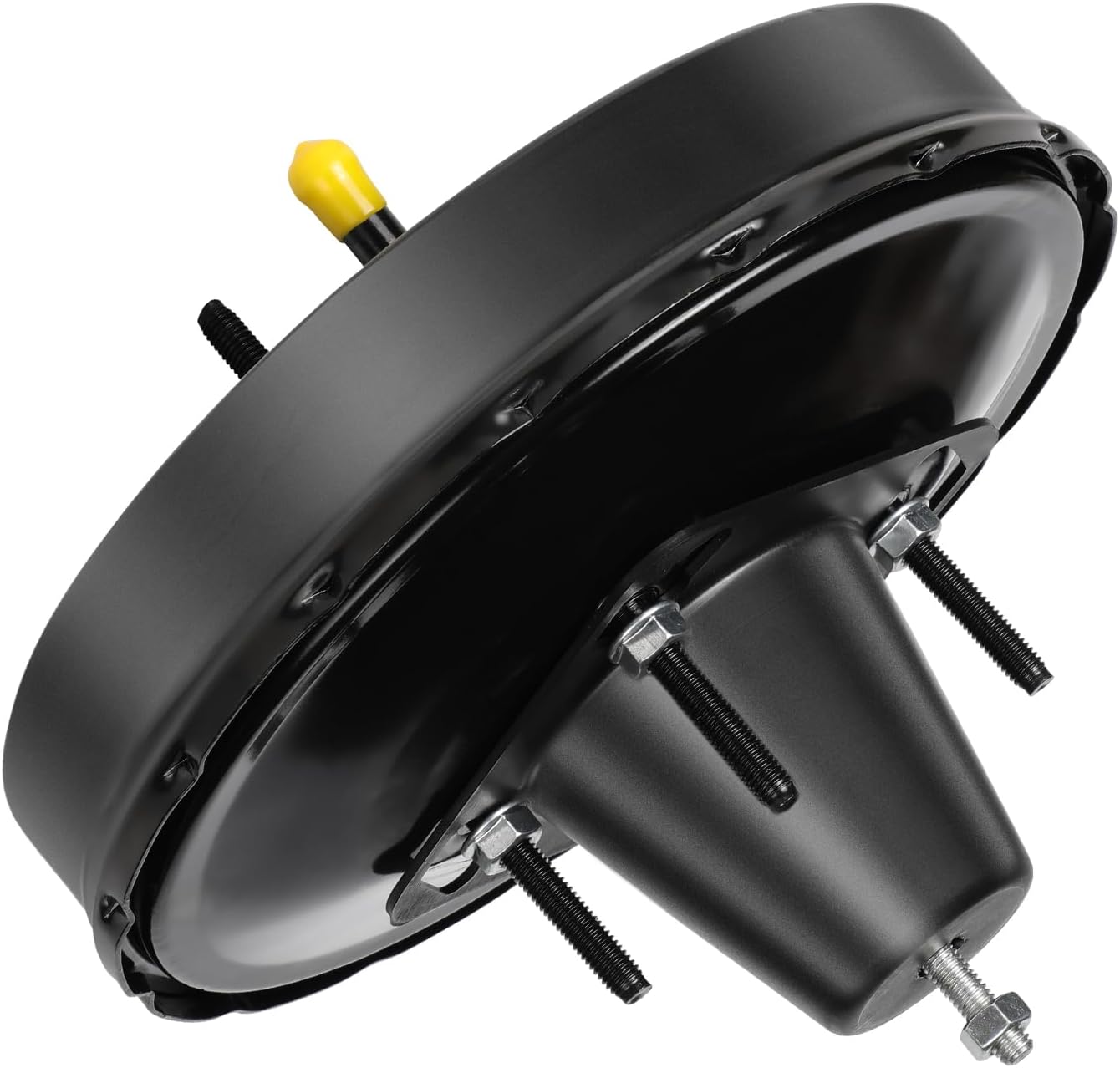
3. AngyMeck Vacuum Power Brake Booster for Honda/Acura (fits Civic 2006–2011, Fit 2009–2013, CR-Z, Insight, CSX)
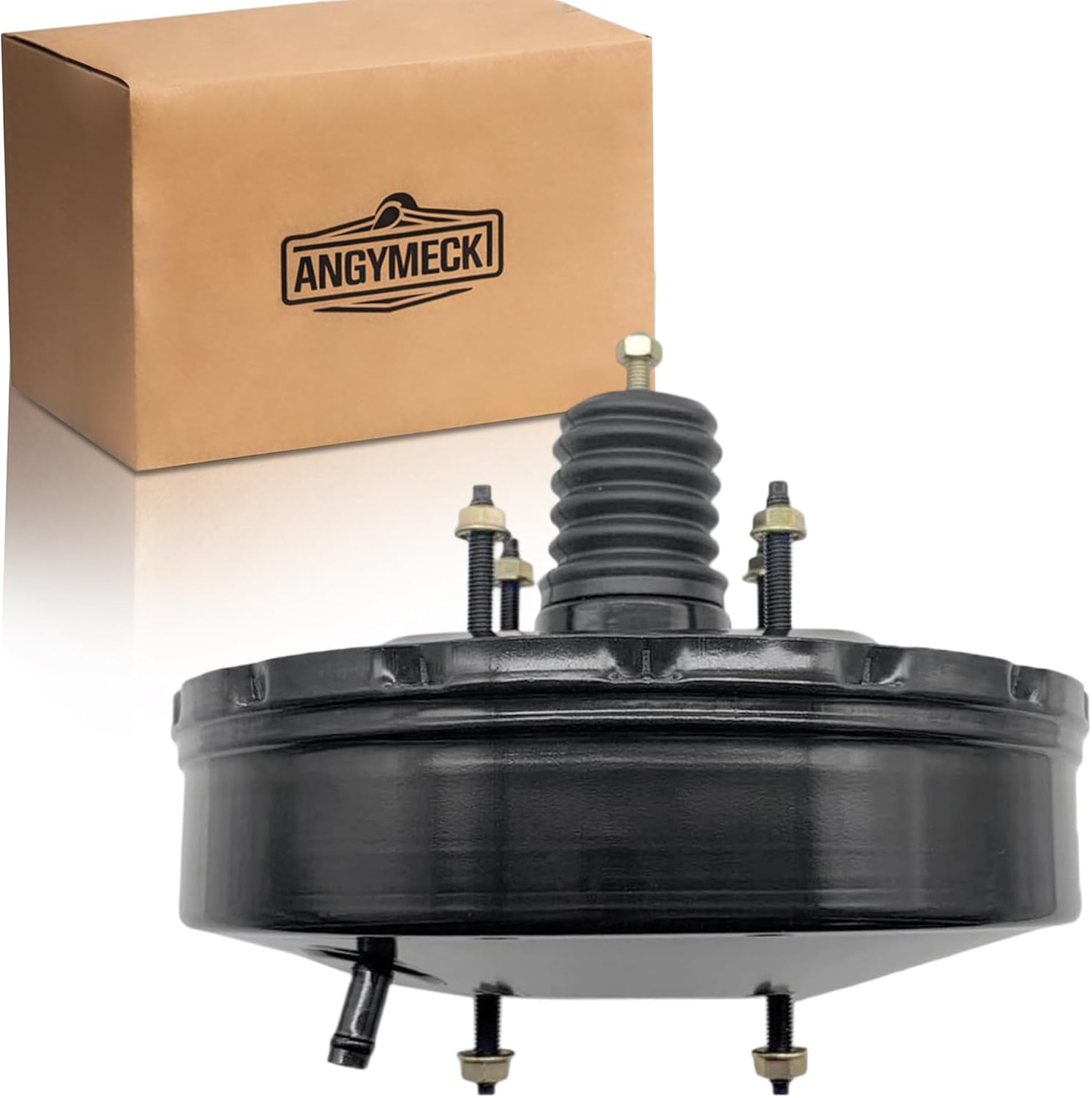
| Vehicle fitment | Honda Civic 2006-2011; Fit 2009-2013; CR-Z 2011-2015; Insight 2010-2013; Acura CSX 2006-2011 |
|---|---|
| Brake booster diaphragm style | Single |
| Material | Steel |
| Master cylinder stud thread size | M8x1.25 |
This AngyMeck vacuum power brake booster replaces a worn or failed factory booster to restore proper brake pedal feel and vacuum assist. It is intended for direct replacement during brake system repairs and mounts where the original booster was installed, working with the vehicle master cylinder to multiply pedal force and reduce stopping distances. Notable features include a single diaphragm design, steel construction, and compatibility with several Honda and Acura L4 applications listed in the fitment notes. In practical use it returns the firm-yet-assisted pedal action owners expect from a functioning booster and helps eliminate hard braking caused by booster failure. Installation requires standard brake-system handling and may require adjustment or replacement of the brake light switch and inspection of the master cylinder if fluid contamination occurred. This unit is backed by a 12-month guarantee but buyers should confirm fitment and check mating studs and vacuum line condition before installation.
Best for: Reliability-focused owners who prioritize restoring dependable, factory-quality braking feel on Honda Fit and related L4 models after a failed booster.
Less Ideal for: Drivers seeking an OEM remanufactured booster or a multi-vehicle universal solution should consider other options tailored to those needs.
- Direct-replacement fit for specified Honda and Acura models to restore factory-style pedal assist
- Steel construction and single diaphragm design for straightforward vacuum boosting
- Includes common OEM part numbers for easy cross-referencing during purchase
- May require brake light switch adjustment or replacement after installation
- Not a vehicle-specific reman or OEM unit so fitment verification is necessary prior to purchase
Verdict: A practical, direct-replacement vacuum brake booster aimed at restoring reliable, factory-style pedal assist on compatible Honda and Acura L4 models.
4. AUPCS Power Brake Booster (53-8063) for Honda Fit 2007-2008 — No Master Cylinder

| Compatible vehicles | Honda Fit L4 1.5L 2007-2008 |
|---|---|
| Diaphragm style | Single |
| Master cylinder included | No |
| Material | Steel |
This AUPCS power brake booster is a direct replacement unit for 2007–2008 Honda Fit 1.5L applications and arrives without the master cylinder, so it is intended for installers who will reuse the original master cylinder or fit a separate unit. It uses a single diaphragm vacuum design with an anti-rust electrophoretic coating and cold-rolled steel housing intended to improve durability and resist corrosion. In practice the booster restores power-assisted braking feel and pedal effort to factory levels when installed correctly, and customers report straightforward fitment and drop-in installation on compatible vehicles. Be aware this is an aftermarket unit so build quality and longevity can vary between batches; a few reviews note early failures while others report reliable performance. If you value convenience and a direct replacement that gets a disabled brake system back on the road quickly, this part is practical, but plan for professional installation and keep the return window or seller warranty in mind.
Best for: Convenience-driven buyers who need a quick direct-replacement booster for a 2007–2008 Honda Fit and prefer a part that simplifies installation and gets the car back on the road.
Less Ideal for: Buyers seeking an exact factory-origin part or long-term peace of mind without any risk of variability should consider OEM or higher-end branded replacements instead.
- Designed to fit Honda Fit L4 1.5L 2007–2008 for direct replacement fitment
- Electrophoretic anti-rust coating to extend service life
- Cold-rolled steel housing for improved structural protection
- Single-diaphragm vacuum design restores factory-like brake assist
- Ships without the master cylinder, so additional parts or reuse of the existing master cylinder are required
- Aftermarket quality varies and some buyers reported early failures
Verdict: AUPCS offers a convenient, corrosion-resistant replacement brake booster that restores power-assisted braking for 2007–2008 Honda Fit models when the master cylinder is provided separately.
5. A1 Cardone Remanufactured Vacuum Power Brake Booster (53-5433)

| Manufacturer | A1 Cardone |
|---|---|
| Item model number | 53-5433 |
| Manufacturer Part Number | 53-5433 |
| OEM Part Number | 46400S04N11, 46400S04N11 |
This remanufactured Cardone vacuum power brake booster replaces the vehicle's original booster to restore power-assisted braking on compatible Honda Fit models. It arrives rebuilt with factory-quality seals and check valves installed and is finished with a rust-prohibitive coating intended to extend service life. Typical use is a direct swap where the booster mounts and vacuum connection mirror the factory unit; master cylinder output rods are pre-adjusted when included to simplify installation. The remanufacturing process and on-car testing aim to deliver like-new stopping feel without sourcing a new unit, and buyers get the environmental benefit of reduced material use. Limitations are inherent to remanufactured parts: condition depends on the remanufacturing quality and some installation adjustments may be required in tight engine bays. This is a practical, lower-cost way to return reliable power assist when a factory-quality replacement is preferred over a brand-new aftermarket unit.
Best for: Risk-averse mainstream buyers who prioritize restoring safe, factory-like braking performance on a Honda Fit without paying for a brand-new part or taking experimental aftermarket options.
Less Ideal for: Owners seeking brand-new components with full unused-life or those who prefer upgraded performance boosters beyond factory specifications should consider other options.
- Remanufactured to match factory performance with seals and check valves replaced
- Rust-prohibitive finish reduces corrosion risk for longer service life
- Units are tested on-car in real-world conditions to verify function
- Pre-adjusted master cylinder output rods (when included) speed up installation
- As a remanufactured unit, longevity and prior wear depend on the remanufacturing process and may vary
- May require minor fitment adjustments in confined engine compartments
Verdict: A remanufactured, factory-fit brake booster that restores reliable power-assisted braking for Honda Fit owners seeking a trusted, lower-cost replacement.
Choosing the Right Honda Fit Brake Booster: Key Factors to Consider
Vehicle Fitment and Alignment
Correct fitment ensures the brake booster mounts flush and the pushrod aligns with the master cylinder and brake pedal. Misalignment can change pedal travel, cause binding, or create premature wear on the pedal assembly. Check flange pattern and mounting stud spacing to match the vehicle bulkhead. Also verify pushrod length and stroke to maintain proper pedal ratio and travel. A unit that fits precisely reduces installation time and the need for adapters. Proper alignment reduces the risk of leaks at the master cylinder interface and helps maintain consistent brake bias under repeated use. Fitment is the foundation for reliable operation.
Diaphragm and Vacuum Seal Quality
The diaphragm is the heart of a vacuum booster, creating the differential that amplifies pedal force. Materials and molding quality affect how the diaphragm responds to repeated loading and vacuum cycles. Inferior diaphragms can develop cracks or deform, causing loss of assist and soft pedal feel. Equally important is the vacuum seal between the shell halves and the vacuum port. A secure, well-molded seal prevents air ingress that reduces assist. When assessing options, prioritize proven diaphragm materials and tight sealing to minimize the chance of vacuum leaks over time.
Pushrod Design and Adjustability
Pushrod design affects pedal engagement, free play, and travel feel. A properly designed pushrod provides enough adjustment to set pedal height and preload without excessive backlash. Poorly designed or nonadjustable pushrods can lead to insufficient pedal travel or constant pressure on the master cylinder, which may cause dragging brakes or premature wear. Look for units that allow incremental adjustment and retain that setting through typical vibration and thermal cycles. Durability of the rod end and the retaining hardware also matters, since failures here can compromise braking entirely.
Corrosion Resistance and Shell Construction
Brake boosters operate in a humid engine bay environment that can expose metal shells to corrosion. Shell construction quality and protective coatings determine long-term durability. Thicker gauge steel and proper anti-corrosion finishes reduce the risk of structural weakening or seam leaks over time. A robust shell also helps maintain vacuum integrity and protects the diaphragm from external damage. Consider the finish quality, seam welding, and whether the shell has sacrificial coatings designed for the local climate where the vehicle is used.
Compatibility With Master Cylinder Interface
The booster must interface correctly with the master cylinder flange and sealing surface. Variations in bore size, mounting bolts, or port orientation can complicate installation and lead to leaks if not matched. Ensuring the booster is built to accept the OEM master cylinder without modification preserves braking geometry and leak-free operation. Compatibility also affects brake line routing and access during service. A correct match preserves original repair procedures and reduces the likelihood of rework during installation.
Installation Practicality and Serviceability
Ease of installation influences total labor time and the chance of installation errors. Features that help include preinstalled grommets, properly oriented vacuum ports, and clear pushrod adjustment access. A unit that arrives ready to mount with standard hardware reduces the potential for missing parts or incorrect assembly. Serviceability also matters for future maintenance. Consider whether common wear items are replaceable, whether vacuum ports are standard sizes for hose replacement, and how accessible mounting nuts are from the engine bay to simplify repairs.
How We Chose the Best Honda Fit Brake Booster
We focused on factors that directly affect safety, drivability, and longevity for Honda Fit brake booster replacements. Primary filters included exact vehicle fitment for Honda Fit model years, consistent sealing against vacuum leaks, and proper pushrod and flange alignment to preserve pedal geometry. We prioritized units showing robust diaphragm design and corrosion-resistant shells to reduce the chance of premature failure. Ease of installation and compatibility with standard master cylinder interfaces were also important, since these influence labor time and leak risk. Finally, we considered manufacturing quality controls such as balanced casting and consistent vacuum port sizing to avoid fitment surprises. We excluded units that required extensive aftermarket modification, adapters, or unverified fitment claims. We also excluded rebuild kits when the buyer benefits more from a direct-fit replacement. The resulting list emphasizes ready-to-install boosters matched to the Honda Fit and evaluated by sealing, mechanical alignment, diaphragm integrity, and installation practicality.
Our full evaluation process is outlined in our review methodology.
FAQ
What common symptoms indicate a failing Honda Fit brake booster?
Common signs often include a noticeably harder pedal requiring more effort to stop, or a pedal that feels spongy and inconsistent. You may also notice a hissing sound from the firewall or a gradual loss of braking assist during repeated stops. Those symptoms usually point to diaphragm damage or a vacuum leak rather than master cylinder issues.
Can I test the brake booster without removing it?
Yes, there are simple on-vehicle checks. With the engine off, press the brake pedal several times to deplete any stored vacuum, then hold the pedal down and start the engine. If the booster is working, the pedal should move slightly downward as the engine creates vacuum. A lack of change suggests loss of assist or a vacuum problem.
Is a brake booster vacuum leak easy to diagnose?
A vacuum leak can often be detected by listening for a hissing noise near the booster or by checking for rough idle that accompanies a large leak. Using a vacuum gauge can quantify the problem, and inspecting hose connections and the check valve is a good first step. Some leaks are subtle and may require removing the booster for a bench test.
Should I replace the booster when replacing the master cylinder?
It depends on condition and service history. If the booster shows signs of internal wear, leaking, or diaphragm failure, replacing it at the same time can prevent future labor duplication. If the booster is in good condition and shows no vacuum or performance issues, it may not be strictly necessary to replace both at once.
Are there specific installation concerns to be aware of?
Ensure the pushrod preload and pedal height are set correctly to avoid constant master cylinder pressure. Verify all vacuum hose connections and the one-way check valve are secure. Also inspect mounting studs and firewall grommets for corrosion or damage before reassembly to ensure a reliable seal.
What are the typical causes of sudden brake booster failure?
Sudden failures are often due to diaphragm rupture from age or contamination, physical damage to the shell, or a failed check valve causing loss of vacuum. Less commonly, contaminants or fluid intrusion from a leaking master cylinder can degrade internal components. Regular inspection and addressing vacuum or fluid leaks early can reduce the risk of abrupt failure.
Conclusion
When choosing a Honda Fit brake booster, prioritize correct fitment, diaphragm integrity, and vacuum sealing to preserve pedal feel and braking reliability. Ease of installation and a compatible master cylinder interface reduce the chance of installation errors and future leaks. Balance long-term durability features such as corrosion resistance and a serviceable pushrod against installation practicality. Focusing on those tradeoffs will help you pick a booster that restores consistent stopping performance without unnecessary rework.
Explore More:
- Check out all Honda Fit parts & accessories
- Explore Brake Boosters Maintenance & Repair Guides
- Explore Brake System
- Browse all Auto Parts
