

Note: This article contains affiliate links. If you click on these links and make a purchase, I may earn a small commission at no extra cost to you. This helps support my research and content. Read my full affiliate disclosure here.
If you drive a 1994-2004 Chevrolet S-10, worn or warped rotors can cause vibration, reduced braking performance, and uneven pad wear. Replacing rotors is one of the most effective ways to restore pedal feel and vehicle control, whether you use the truck for daily driving, towing, or off-road work. This guide collects the top seven rotors that fit the 1994-2004 S-10 and explains the reasons to choose each style.The shortlist focuses on rotors that meet correct fitment dimensions, material and machining quality, and long-term durability. Below you will find the evaluation criteria used, common installation and maintenance considerations, and practical advice for matching rotor type to your driving needs.
Top Picks at a Glance
| Best Overall The best all-around choice for most situations | Detroit Axle Front Drilled & Slotted Brake Rotors, 10.79" (Pair) |  |
| Best Quality Built to a higher standard if you want something more solid | Metrix Premium Chassis Parts 274 mm Front Coated Brake Rotor Kit (2-piece) |  |
| Best Value The sweet spot between price and what you get | Raybestos R-Line 56707R Professional Grade Drum-in-Hat Rear Disc Brake Rotor |  |
| Best Budget The cheapest option that still gets the job done reliably | Auto Shack Rear Brake Rotors and Ceramic Pad Kit for S10 (1998–2004) |  |
| Highest Rated A top-rated pick with lots of positive feedback | Detroit Axle Front Drilled & Slotted Brake Kit with Ceramic Pads |  |
| Most Popular A crowd favorite that many people choose with confidence | Detroit Axle Drilled & Slotted Front and Rear Brake Kit with Ceramic Pads |  |
| Best Seller A high-volume bestseller chosen again and again | Bendix Premium PRT5180 Rear Brake Rotor |  |
1. Detroit Axle Front Drilled & Slotted Brake Rotors, 10.79" (Pair)

| Material Type | Alloy Steel |
|---|---|
| Exterior Finish | Zinc |
| Compatible with Vehicle Type | Trucks |
These Detroit Axle front drilled and slotted rotors are a direct replacement set for vehicles using the 10.79 inch front rotor and are sold as a pair. They are machined with locating holes and vented slots to help dissipate heat and reduce moisture buildup during repeated braking, which helps maintain consistent pedal feel during towing or spirited driving. The rotors come zinc plated to resist corrosion and reduce visible brake dust on wheels. Installation is straightforward when replacing factory rotors thanks to factory-style hole patterns and machining, so they work well for a DIY brake job or a professional swap. Expect improved cooling over plain rotors and generally low noise with properly matched pads. These are steel aftermarket rotors so heavy-duty or high-performance racers may prefer upgraded competition materials, and some drivers may notice longer bed-in time with drilled surfaces. For everyday street, towing, and light off-road use on S-10 era trucks, they strike a practical balance of corrosion resistance, heat management, and value.
Best for: Practical owners who want a reliable, street-capable rotor upgrade for 1990s–2000s S-10/Blazer family trucks that balances cooling, corrosion resistance, and straightforward installation.
Less Ideal for: Enthusiasts who need race-spec rotors or drivers seeking the absolute lightest or most exotic materials for track use should look to specialized performance options.
- Drilled and slotted, which helps evacuate heat and moisture for more consistent braking
- Zinc plating reduces surface corrosion and visible wheel dust
- Machined locating holes and factory-style fit for straightforward installation
- Vented design improves cooling during repeated stops
- Not targeted at high-performance racing; steel construction may not match specialty competition rotors
Verdict: A practical, corrosion-resistant drilled-and-slotted front rotor pair that improves cooling and fits S-10/Blazer-era trucks for dependable everyday and towing use.
2. Metrix Premium Chassis Parts 274 mm Front Coated Brake Rotor Kit (2-piece)

| Compatible with Vehicle Type | Cars |
|---|---|
| Exterior Finish | Machined |
| Material Type | Cast Iron |
| Included Components | Comes with housing |
| Manufacturer Part Number | 92685MT |
These Metrix front brake rotors are a direct replacement rotor kit designed for S-10 family vehicles from the late 1990s and early 2000s. Made from cast iron with a machined finish, the rotors use vane and pillar venting and factory mill balancing to reduce pulsation and manage heat under repeated braking. In practice they provide predictable pedal feel and reduced vibration compared with worn or warped rotors, and the vented design helps resist fade during towing or spirited driving. Certification to ECE R90 and ISO manufacturing standards indicates factory-quality manufacturing and consistent tolerances. Limitations to consider are that they are solid cast iron rotors rather than high-performance composite or slotted/drilled designs, so they do not offer the extra cooling or pad bite some track-oriented rotors provide. Installation follows standard rotor replacement steps and these rotors are best paired with fresh pads and proper hub cleaning to ensure the balanced fit Metrix intends.
Best for: Drivers who prioritize dependable, repeatable braking on a 1994–2004 S-10 and want a durable, factory-quality replacement that handles occasional towing and spirited street driving.
Less Ideal for: Drivers who plan frequent track days or aggressive high-temperature use and want advanced cooling or enhanced pad bite from slotted, drilled, or composite rotors.
- Factory mill-balanced to minimize pulsation and vibrations during braking
- Vented vane/pillar design improves heat dissipation and reduces brake fade
- Machined surface and consistent thickness for reliable pad contact and stopping power
- ECE R90 and ISO certifications indicate production quality and dimensional consistency
- Not a slotted or drilled performance rotor so it lacks added pad cleaning and extreme cooling seen on track-focused rotors
Verdict: A factory-quality, mill-balanced vented rotor pair that gives the S-10 reliable, vibration-free stopping and improved heat control for performance-minded street use.
3. Raybestos R-Line 56707R Professional Grade Drum-in-Hat Rear Disc Brake Rotor

| Included Components | automotive disc brake rotors |
|---|---|
| Item Type Name | Disc Brake Rotor Only-Dih Parking Brake |
| Exterior Finish | Machined |
| Material Type | Iron |
The Raybestos R-Line 56707R is a professional-grade drum-in-hat rear disc rotor intended as a direct, vehicle-specific replacement for compatible Chevrolet S-10 rear brakes. It is built from G3000-qualified iron with a machined, non-directional ground finish so the part installs without further machining and aims to reduce pedal pulsation and brake noise thanks to tight lateral runout and low thickness variation. Typical use is straightforward: swap the old rotor for improved repeatable stopping, consistent pad contact, and longer pad life. Practical benefits include mill-balanced edges for reduced vibration and corrosion resistance that helps longevity in everyday driving. Limitations are that this is a plain machined rotor without slots or drilled features, so it will not provide the extra cooling or bite some performance drivers seek, and it is focused on rear drum-in-hat applications rather than front performance use.
Best for: Buyers who prioritize a dependable, no-fuss replacement that restores factory-quality braking for routine driving and wants minimal installation prep.
Less Ideal for: Drivers seeking aggressive track or heavy-towing upgrades that require slotted or drilled rotors, or those wanting front-rotor performance features.
- Vehicle-specific, ready-to-install machined finish reduces prep time
- Tight lateral runout and minimal thickness variation cut down pedal pulsation and noise
- Mill-balanced edges help reduce vibration and extend pad life
- Made from G3000-qualified iron for consistent durability in daily driving
- Plain turned/machined design lacks slots or drilling for enhanced cooling or aggressive performance
Verdict: Choose this Raybestos rotor when you want a direct-fit, ready-to-install rear replacement that restores reliable, factory-quality braking for everyday S-10 use.
4. Auto Shack Rear Brake Rotors and Ceramic Pad Kit for S10 (1998–2004)

| Included Components | Brake Rotor, Ceramic Brake Pad Set |
|---|---|
| Orientation | Rear |
| Automotive Fit Type | Vehicle Specific Fit |
| OEM Equivalent Part Number | 56707, 56707R, EHT729H |
This kit supplies two rear vented brake rotors and a single set of ceramic brake pads packaged for direct-fit replacement on late 1990s and early 2000s S10 platforms and closely related trucks and SUVs. The rotors are vented to improve heat dissipation under repeated stops while the ceramic pads aim for quieter operation and lower dust than semi-metallic alternatives. Typical use is an axle-level refresh when rotor wear or pad thinning reduces braking performance; installers will find the parts laid out to match factory mounting and stud patterns so standard hand tools and a lift or jack setup are all that is needed. The ceramic pads reduce dust and cabin noise in everyday driving, though they can feel slightly less aggressive than performance-oriented compounds under hard stops. The kit is vehicle-specific so confirm rotor diameter and five-lug pattern before ordering. It is a practical choice for drivers restoring factory-quality braking without stepping up to performance rotors or costly dealer replacements.
Best for: A cost-conscious DIY owner or independent-shop customer who wants a complete rear-brake refresh that restores everyday stopping performance with reduced dust and noise.
Less Ideal for: Drivers who frequently do aggressive towing, racing, or heavy-duty commercial work should choose heavy-duty or performance-grade friction and rotors designed for that use instead.
- Includes both rear rotors and a matched ceramic pad set for a coordinated replacement
- Vented rotor construction improves heat dissipation during repeated braking
- Ceramic pads deliver lower dust and quieter operation compared with many semi-metallic pads
- Vehicle-specific fit simplifies installation when fitment is confirmed
- Ceramic compound is less bitey under aggressive or track-style braking compared with performance pads
Verdict: A budget-friendly, vehicle-specific rear brake kit that restores reliable, quieter everyday braking for S10-era trucks without the cost of dealer parts.
5. Detroit Axle Front Drilled & Slotted Brake Kit with Ceramic Pads
| Includes | 2 rotors + 2 ceramic pads (hardware included) |
|---|---|
| Orientation | Front |
| Compatible Vehicle Type | Truck |
| Manufacturer Warranty Description | 10 Year |
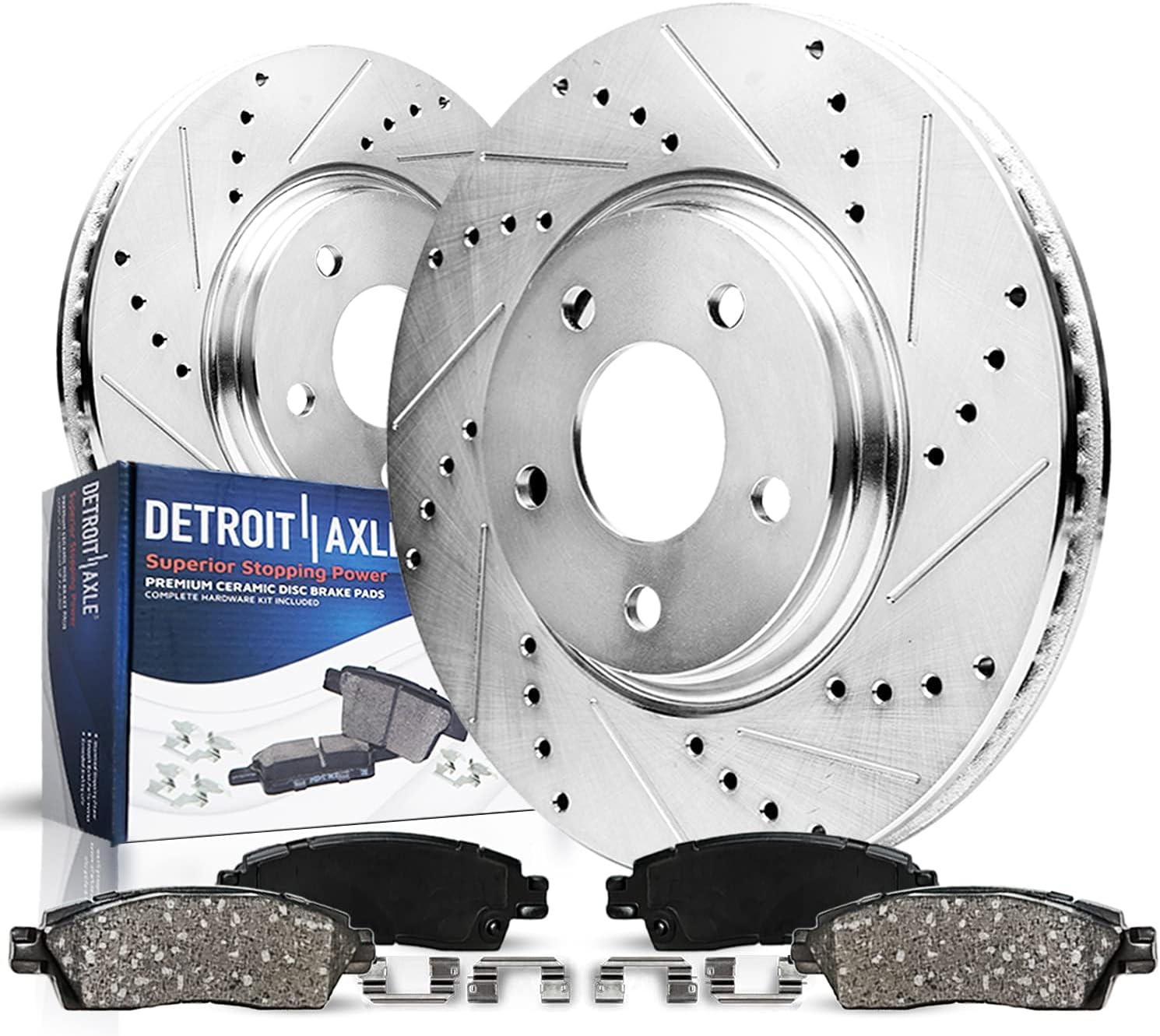
This Detroit Axle front brake kit supplies two drilled and slotted rotors plus a set of ceramic front pads and basic hardware for a direct replacement on compatible S-10 family trucks. The rotors are vented and zinc plated, which helps dissipate heat quickly and resist surface corrosion, while the drilled and slotted pattern aids gas and water evacuation during repeated stops. The ceramic pads are formulated for lower dust and quieter operation compared with semi-metallics and should recover quickly after heavy braking. Installation is straightforward because the locating holes and fitment are machined to match factory mounting points, so no modifications are typically required. The kit is aimed at drivers who want dependable, OEM-style stopping power with improved cooling and cleaner wheels, but buyers expecting track-grade fade resistance or aggressive performance braking may prefer higher-end performance rotors or pads. The included hardware and 10-year warranty add practical value for long-term ownership.
Best for: Drivers who prioritize dependable, factory-style front braking with cleaner wheels and reduced noise for daily driving and towing on older S-10 family trucks.
Less Ideal for: Drivers who frequently push brakes hard on track days or need aggressive performance compounds should choose dedicated performance rotors or racing pads instead.
- Drilled and slotted, vented rotors promote faster heat dissipation for more consistent braking under repeated stops
- Zinc plating reduces surface corrosion and helps keep wheel faces cleaner
- Ceramic pads produce less brake dust and run quieter than many semi-metallic replacements
- Machined locating holes and factory-style fitment make installation direct with no modifications
- Not optimized for high‑abuse track use where extreme fade resistance is required
Verdict: A practical, factory-fit replacement kit that delivers reliable, quieter braking and improved rotor cooling for S-10 family front brakes.
6. Detroit Axle Drilled & Slotted Front and Rear Brake Kit with Ceramic Pads

| Fit Type | Vehicle Specific Fit |
|---|---|
| Includes | Front and rear rotors, front and rear ceramic pads, hardware, brake cleaner, brake fluid |
| Rotor Type | Drilled & Slotted |
| Orientation | Dual |
| Manufacturer Warranty Description | 10 Year |
This Detroit Axle kit replaces both front and rear discs and pads for compatible Chevrolet S-10/Blazer family vehicles and similar models with the specified rotor sizes. The kit includes two drilled and slotted rotors for the front and two for the rear plus front and rear ceramic brake pads, basic hardware, a brake cleaner spray and a bottle of brake fluid. Drilled and slotted rotors help dissipate heat and shed moisture under heavy use, while the zinc plating reduces surface corrosion during storage or in wet climates. Ceramic pads offer quieter operation and low dust compared with semi-metallic compounds, making the set a good match for daily-driven trucks where comfort matters. Installation is intended to be bolt-on for the listed fitments thanks to machined locating holes, but buyers should verify rotor diameter and vehicle brake type before ordering. This is a full kit aimed at a straightforward, budget-conscious replacement; drivers seeking track-focused fade resistance or aggressive initial bite may prefer higher-performance rotors or different pad compounds.
Best for: Buyers who prioritize a reliable, quiet, and low-dust full brake replacement for everyday driving and want the peace of mind of a vehicle-specific kit with all needed parts included.
Less Ideal for: Drivers who regularly race, tow heavily, or demand aggressive initial bite should consider performance rotors and pad compounds designed for track or heavy-duty use instead.
- Complete kit includes front and rear drilled and slotted rotors plus matching ceramic pads and basic hardware
- Zinc plating on rotors helps resist surface rust and keeps wheels cleaner during storage or in wet conditions
- Drilled and slotted design improves heat dissipation and helps remove brake gases and water under heavy braking
- Ceramic pads produce lower dust and reduced brake noise compared with many semi-metallic pads
- Ceramic pads and drilled rotors prioritize comfort and corrosion resistance over ultimate track fade resistance
Verdict: If you want a complete, vehicle-specific replacement that reduces dust and noise while improving heat shedding over plain rotors, this kit is a practical all-in-one choice for S-10/Blazer family trucks.
7. Bendix Premium PRT5180 Rear Brake Rotor
| Manufacturer Part Number | PRT5180 |
|---|---|
| Included Components | (1) Bendix Rotor |
| Material Type | Cast Iron |
| Exterior Finish | Machined |
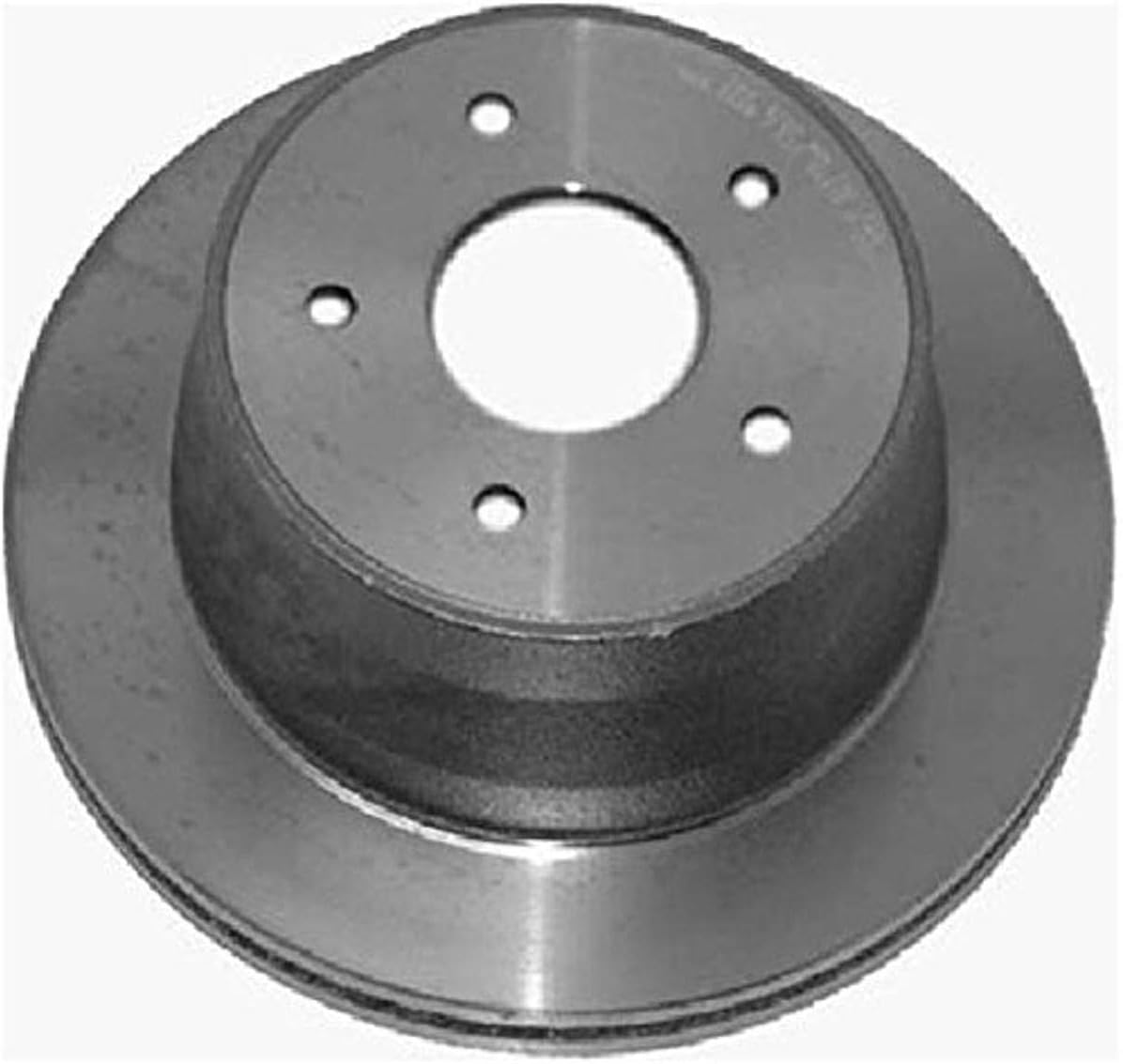
The Bendix Premium PRT5180 is a rear replacement rotor made to the factory fit, form, and function for select Chevrolet S-10 and related models. It is a solid, machined cast-iron rotor intended for routine street use and light-duty towing where predictable braking and long life matter. Key features include a machined exterior finish, dynamic balancing to reduce vibration, and cast-iron construction that tolerates repeated heat cycles for steady performance. In practical terms this rotor gives straightforward stopping power and a quiet, smooth pedal feel when paired with compatible pads, and its vehicle-specific design simplifies installation without heavy modifications. Limitations: it is a plain machined rotor rather than a coated or upgraded performance unit, so it will show surface rust if the vehicle sits unused and offers no extra corrosion protection beyond the finish. Also it is a single rotor sold per unit, so plan to replace the matching side or both wheels together for even braking.
Best for: Buyers who prioritize a reliable, factory-style replacement that restores original braking performance with minimal fuss and prefer parts that match factory fitment.
Less Ideal for: If you want enhanced corrosion protection, high-performance drilled or slotted rotors, or a matched pair package, consider other options tailored to those priorities.
- Vehicle-specific fit for direct replacement on listed models
- High-grade cast-iron construction for heat resistance and longevity
- Machined finish and dynamic balancing to minimize vibration and noise
- No corrosion-resistant coating so surface rust can form when parked long-term
- Sold as a single rotor rather than a pair
Verdict: Choose this Bendix PRT5180 when you want a dependable, factory-fit rear rotor that restores original braking performance with minimal installation risk.
Choosing the Right 1994-2004 Chevrolet S-10 Brake Rotors: Key Factors to Consider
Material and Casting Quality
Rotor material and casting determine heat capacity and structural integrity. High-quality castings with uniform metallurgy resist cracking and glazing during heavy use, which matters for S-10 owners who tow or do repeated hill stops.
Variations in iron grade, microstructure, and post-cast machining affect thermal conductivity and the rotor's ability to shed heat. Poor casting porosity or inclusions can accelerate wear or cause hot spots that lead to warping. For the S-10, choose rotors specified to the correct material standards to ensure predictable braking performance under load.
Thickness, Tolerance, and Runout
Rotor thickness and machining tolerances influence pedal feel and the likelihood of vibration. Consistent thickness and low lateral runout reduce pulsation at the pedal and steering wheel when braking.
Manufacturers publish nominal thickness and minimum service thickness; select rotors that meet OEM thickness specifications for the 1994-2004 S-10, and ensure hub-to-rotor fit keeps runout within acceptable limits. If runout is excessive, you may need to address hub rust or use proper mounting and torque sequence to prevent wobble.
Ventilation and Heat Dissipation
Vent design affects how quickly a rotor sheds heat during successive stops. Vented rotors with efficient internal vanes are better at preventing fade during towing or repeated heavy braking common with S-10 utility use.
For drivers who do short, frequent stops or haul loads, prioritize rotors with proven venting geometry and surface area that maintain cooler operating temperatures. Cooler rotors help preserve pad life and reduce the chance of glazing or thermal cracking.
Surface Finish and Coating
Surface finish and protective coatings influence corrosion resistance and initial bedding with new pads. A controlled surface finish ensures even pad transfer and consistent bite, while coatings protect the rotor at the hat and outer diameter from rust.
For S-10 owners in wet or salted environments, a corrosion-resistant coating on areas away from the friction surface extends service life. The friction surface itself should avoid heavy coatings but may be treated or passivated to resist flash rust during storage and initial use.
Rotor Type and Design Features
Different rotor designs—solid, vented, slotted, or drilled—suit different driving needs. Solid rotors are typical for light-duty front or rear applications, while vented rotors improve cooling on heavier-duty front applications on the S-10.
Slotted or drilled patterns can aid gas and dust evacuation and improve wet-weather bite, but they may change pad wear characteristics and can increase stress concentrations. Select a design that matches your driving habits, balancing noise, wear, and cooling performance appropriate for the S-10.
Serviceability and Resurfacing Limits
Knowing whether a rotor can be resurfaced and how many times is important for lifecycle planning. Many rotors include a minimum thickness spec; once below that you must replace them.
For the S-10, choose rotors that are either easily resurfaced without falling below service limits or are cost-effective enough to replace. Consider the long-term maintenance scenario: frequent resurfacing may introduce runout if not done precisely, so thicker stock rotors offer more margin before reaching discard thickness.
Common Brake Rotor Wear Symptoms And What They Mean
Recognizing wear symptoms early prevents more costly repairs. Typical signs include pedal pulsation during braking, which often indicates lateral runout or uneven rotor thickness. A thumping or vibration through the steering wheel at low speeds commonly points to warped or heavily scored rotors.
Squeal or high-pitched noises during light braking usually result from glazing, uneven pad transfer, or surface contamination. Grinding noises indicate severe scoring or that pads have worn to metal backing and are cutting into the rotor.
- Vibration or pulsation at the pedal: uneven thickness or runout
- Squeal on light braking: surface glazing or contamination
- Grinding sounds: severe scoring or pad metal contacting rotor
- Visible grooves or heat spots: localized overheating or debris damage
How To Measure Rotor Thickness And Judge Serviceability
Measure rotor thickness with a micrometer at several points around the friction surface after removing the wheel and pads. Compare the smallest measured value to the rotor's published minimum thickness to determine serviceability. Also check for lateral runout using a dial indicator against the rotor face while rotating the hub.
If thickness is close to the minimum but the surface has minor scoring, resurfacing may be possible. However, remember resurfacing reduces thickness and may shorten future service life on rotors with limited material margin.
- Use a micrometer to measure at least three points radially
- Check the manufacturer's minimum thickness spec before resurfacing
- Use a dial indicator to check lateral runout against hub mounting face
- Inspect for heat cracks, deep scoring, or rust bleed through
Comparing Slotted, Drilled, And Plain Rotors For The S-10
Slotted rotors channel gases and debris away from the pad contact area and can sustain a more consistent friction surface during heavy duty work. Drilled rotors aid water evacuation and can reduce initial bite variation in wet conditions, but drilling introduces stress risers that can reduce fatigue life under severe repetitive braking.
Plain, smooth rotors offer consistent pad contact and are often the quietest and longest-lasting option for everyday driving. Choose slotted or drilled patterns when you need improved pad clearing or water performance, but be aware of potential tradeoffs in durability.
- Slotted: better pad cleaning and sustained friction under heavy use
- Drilled: faster water evacuation but potential for cracking under thermal stress
- Plain: best long-term wear and quiet operation for daily driving
Installation Tips To Avoid Rotor Runout And Noise
Clean the hub mounting surface thoroughly before installing a new rotor. Rust and debris on the hub face are common causes of lateral runout, which leads to pedal pulsation. Use a wire brush or abrasive pad to remove corrosion and ensure full contact between the rotor hat and hub.
Always tighten wheel studs to the correct torque in a star pattern and torque caliper bracket bolts to specifications. If the rotor is a two-piece design, follow the manufacturer's torque sequence for the hat-to-disc fasteners to maintain flatness. After installation, perform a few gentle bedding stops to transfer a light pad layer and check for abnormal noise.
- Clean hub mating surface to avoid runout
- Torque lug nuts in a star pattern to the correct spec
- Follow torque sequence for two-piece rotor assemblies
- Perform controlled bedding-in stops after installation
Matching Rotor Type To Typical S-10 Use Cases
For light daily driving and commuting, plain vented rotors provide long life and quiet operation. If you frequently tow or carry loads, prioritize rotors with superior ventilation and thicker cross-sections to manage heat and reduce the chance of thermal distortion.
For occasional off-road or wet-weather driving, slotted rotors may help shed debris and maintain pad bite. Heavy-duty repeated braking calls for designs that emphasize thermal capacity and evenly distributed mass to reduce hotspot development.
- Daily driving: plain vented rotors for longevity and quietness
- Towing: vented rotors with good thermal capacity
- Wet or debris-prone driving: slotted patterns for pad cleaning
Still looking for the perfect fit?
Select your Chevrolet S-10 configuration to see the most relevant Brake Rotors recommendations
How We Chose the Best 1994-2004 Chevrolet S-10 Brake Rotors
We evaluated candidates for the 1994-2004 Chevrolet S-10 brake rotors list using vehicle-specific fitment, material and finish quality, thermal performance, and serviceability. Our process prioritized rotors that match the S-10 factory mounting dimensions and hub interface to avoid installation issues or unexpected vibration. We also considered metallurgy and casting or forging quality because those affect heat dissipation and resistance to cracking under repeated braking.Key evaluation criteria included rotor thickness and tolerance consistency, runout after machining, corrosion-resistant coatings, venting design for heat management, and whether the rotor surface and vent geometry suit typical S-10 duty cycles such as towing or stop-and-go use. We also assessed ease of installation, compatibility with common pad types, and long-term maintenance factors such as the potential for resurfacing.We excluded products without clear vehicle fitment data or those with unspecified material specs. Rotors that required additional hub machining or adapters were not considered. The list favors rotors that balance durability, thermal control, and straightforward replacement for S-10 owners.
Our full evaluation process is outlined in our review methodology.
FAQ
How often should I check rotor thickness on my 1994-2004 S-10?
Check rotor thickness at every pad replacement or at least every 12,000 miles if you drive under normal conditions. If you tow frequently or notice vibration, inspect more often because heat and load accelerate wear.
Can I resurface S-10 rotors or should I replace them?
You can resurface rotors if they are above the manufacturer's minimum thickness and have no heat cracks. Resurfacing removes material and reduces future service life, so replacement is preferable when remaining thickness is marginal.
Are slotted or drilled rotors better for towing with an S-10?
For towing, venting and thermal capacity matter more than surface pattern. Slotted rotors can help maintain pad contact under load, while drilled rotors may increase fatigue risk. Prioritize vented, thicker rotors for towing duty.
What causes brake pulsation after installing new rotors?
Pulsation often comes from hub-to-rotor surface irregularities or excessive lateral runout. Ensure the hub flange is clean, rotor faces are machined to tolerance, and lug nuts are torqued properly in sequence to minimize pulsation.
How do I know if a rotor is compatible with my S-10?
Verify the rotor's published fitment table matches the 1994-2004 Chevrolet S-10 and that bore diameter, overall diameter, and mounting style align with your hub. Confirm any vehicle-specific notes, such as ABS tone ring requirements, before purchasing.
Does drilling or slotting rotors affect pad life?
Yes. Slotting and drilling change the contact dynamics and can increase pad wear depending on pad compound. Some pad formulations wear faster on aggressively machined surfaces, so consider pad compatibility when choosing patterned rotors.
Final Verdict
Prioritize rotors that match the S-10's fitment dimensions, offer sufficient thickness for your expected service life, and provide the ventilation needed for your typical driving and towing. Understand the tradeoffs between plain, slotted, and drilled designs so you can balance noise, wear, and thermal performance.Focus on correct installation and measurement to avoid runout problems. By choosing rotors that suit your vehicle's use case and maintaining regular inspections, you will restore reliable braking and extend the life of both rotors and pads.
