

Note: This article contains affiliate links. If you click on these links and make a purchase, I may earn a small commission at no extra cost to you. This helps support my research and content. Read my full affiliate disclosure here.
If you use your Chevrolet Silverado 2500 HD for towing, heavy hauling, or frequent low-speed work, transmission temperature becomes a critical reliability concern. Adding a dedicated transmission cooler can lower fluid temps, reduce wear, and help prevent heat-related failures during sustained loads. This guide gathers the top shortlisted transmission coolers that suit the Silverado 2500 HD and explains the tradeoffs between cooling capacity, ease of installation, and system integration.Below you will find our recommended picks for different use cases, followed by the technical factors we weighed and practical guidance on installation and maintenance.
Top Picks at a Glance
| Best Overall The best all-around choice for most situations | GM Genuine Parts 20880895 Automatic Transmission Auxiliary Fluid Cooler |  |
| Best Value The sweet spot between price and what you get | PartsFlow Transmission Oil Cooler compatible with Chevrolet Silverado/GMC Sierra 2500/3500 (2011–2014) |  |
| Best Budget The cheapest option that still gets the job done reliably | ROADFAR Transmission Oil Cooler for Chevrolet Silverado 2500 HD (2001–2006) |  |
| Most Popular A crowd favorite that many people choose with confidence | Mishimoto MMTC-GMT-99 Transmission Cooler for 1999–2013 Chevrolet Silverado / GMC Sierra |  |
| Best Seller A high-volume bestseller chosen again and again | PPE Performance Transmission Cooler (124060300) |  |
1. GM Genuine Parts 20880895 Automatic Transmission Auxiliary Fluid Cooler

| Included Components | Transmission Auxiliary Fluid Cooler |
|---|---|
| Material | Copper, Stainless Steel |
| Item Form | Oil |
This GM Genuine Parts transmission auxiliary fluid cooler is a factory-grade heat exchanger that helps transfer heat from transmission oil to engine coolant or ambient air to keep operating temperatures within the designed range. It installs in the transmission cooling circuit and is intended as a direct replacement for the original GM component, so fit and function match factory expectations. The cooler is built from copper and stainless steel, which supports corrosion resistance and durability in service. By keeping transmission temperatures down it can improve shift consistency and reduce thermal wear during towing or heavy use. Installation is typical for transmission coolers and may require draining coolant or routing lines depending on the vehicle, so plan for basic workshop time. This part focuses on reliable, OEM-matching performance rather than aftermarket upgrades like larger capacity cores or integrated thermostatic features, so owners wanting maximum cooling for extreme towing may prefer a heavy-duty aftermarket option.
Best for: Buyers who want a reliable, factory-matching replacement that preserves original transmission cooling performance for everyday driving and moderate towing.
Less Ideal for: Drivers who regularly tow at the upper limits or need extra cooling headroom should consider heavy-duty aftermarket coolers with larger cores or additional features.
- Factory-quality design for fit, form, and function on GM vehicles
- Copper and stainless steel construction improves corrosion resistance
- Helps maintain transmission temperature for better longevity and shift consistency
- Backed by GM Genuine Parts pedigree and manufacturer support
- Not a high-capacity or performance-oriented cooler for extreme towing demands
Verdict: Choose this GM Genuine Parts cooler if you want a factory-quality replacement that restores proper transmission temperature control for balanced everyday use and moderate towing.
2. PartsFlow Transmission Oil Cooler compatible with Chevrolet Silverado/GMC Sierra 2500/3500 (2011–2014)

| Vehicle compatibility | Chevrolet Silverado 2500/3500 and GMC Sierra 2500/3500 2011–2014 |
|---|---|
| Reference numbers | 22819356, 918-295, 19041 |
| Manufacturer | PartsFlow |
| Warranty | 12-month guarantee |
This PartsFlow transmission oil cooler is a straightforward factory-replacement cooler engineered for 6.6L trucks from 2011 to 2014. It installs in the vehicle�s cooling circuit to increase heat rejection from transmission fluid, which helps preserve shift quality and reduce wear during towing or heavy hauling. The cooler lists reference numbers matching common factory parts, so it is intended as a like-for-like swap for owners who need a damaged or leaking cooler replaced without changing plumbing or mounting. Practical benefits include compatibility with the specified Silverado and Sierra models and a simple fitment approach that minimizes installation time. Limitations are that it is a direct replacement rather than a high-capacity aftermarket upgrade, so drivers seeking extra cooling headroom for sustained heavy towing may prefer a larger performance cooler. The product comes with a 12-month guarantee, and buyers should verify the reference numbers against their vehicle before ordering to ensure correct fit.
Best for: Practical owners who want a reliable, direct replacement cooler to restore factory transmission cooling performance without modifying the cooling system.
Less Ideal for: Drivers who tow very frequently with heavy loads and need an upgraded high-capacity cooler for extra thermal headroom should consider performance aftermarket options instead.
- Direct-fit compatibility with 2011–2014 Chevrolet Silverado 2500/3500 and GMC Sierra 2500/3500 models
- Matches common reference numbers for straightforward replacement and easier part identification
- Designed to restore factory transmission cooling function with minimal modification required
- Comes with a 12-month guarantee for added buyer confidence
- Not a high-capacity aftermarket cooler so it may not provide extra cooling for heavy-duty, repeated towing runs
Verdict: A practical, direct-fit replacement that restores factory transmission cooling on 2011–2014 Silverado and Sierra 2500/3500 trucks without fuss.
3. ROADFAR Transmission Oil Cooler for Chevrolet Silverado 2500 HD (2001–2006)
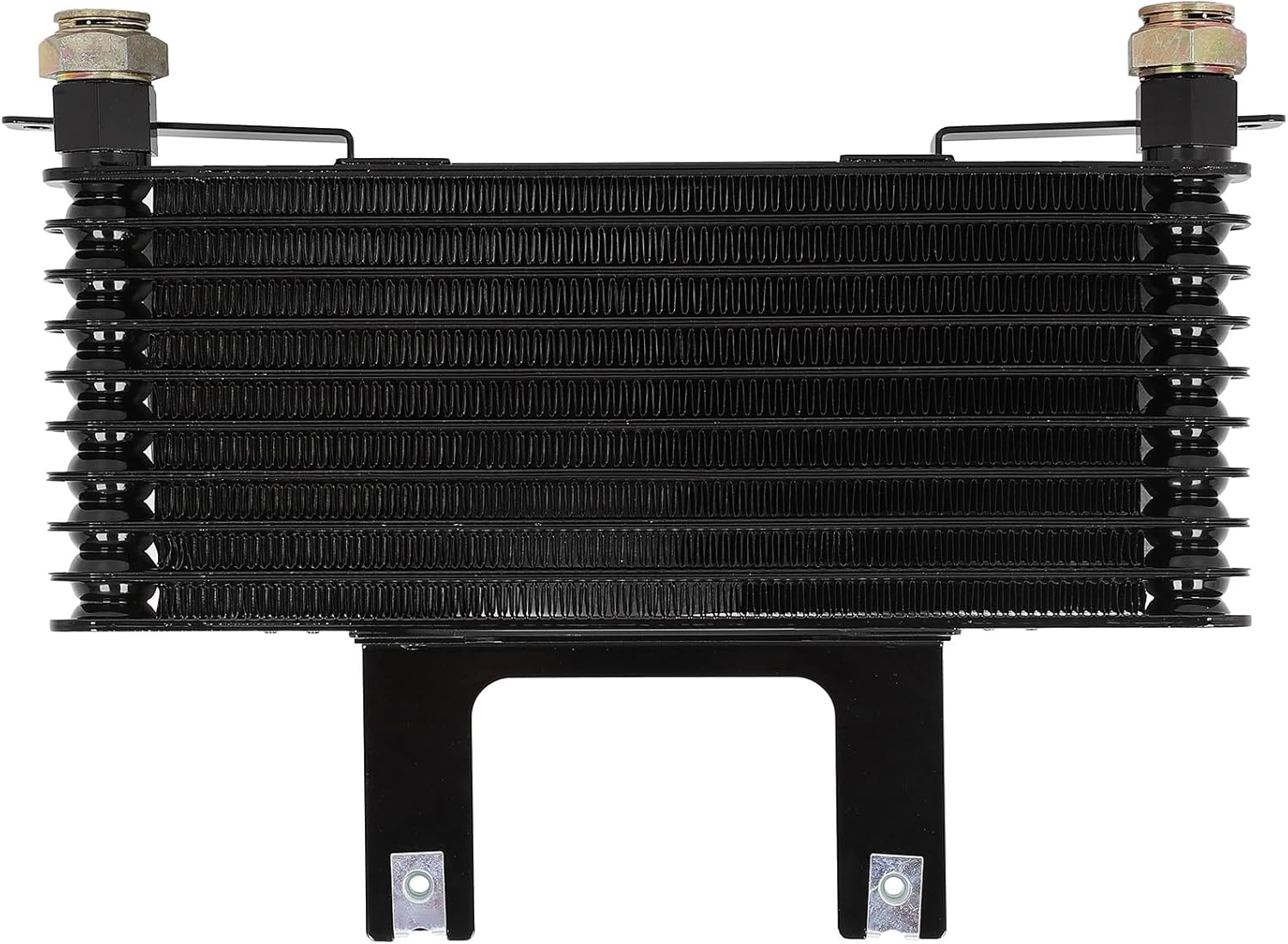
| Compatible vehicles | 2001–2004 Silverado 2500 6.0L; 2001–2006 Silverado 2500 HD 6.0L/6.6L |
|---|---|
| Manufacturer | ROADFAR |
| Part references | 918249, 89040217, GM4050106 |
| Item model number | Adjustable |
This ROADFAR transmission oil cooler is a direct-replacement unit designed to fit 2001–2004 Silverado 2500 (6.0L) and 2001–2006 Silverado 2500 HD (6.0L and 6.6L) applications without modifications. It uses a high-density, multi-louvered fin core and aluminum construction to increase cooling surface area and help lower transmission fluid temperatures under load. Typical use is as a factory-style swap when your original cooler is leaking, clogged, or undersized for towing; installation follows the same mounting points and connections as the factory part. The cooler’s build promises improved durability and reduced vibration compared with older, worn units, and the direct-fit design simplifies DIY replacement or shop installs. Limitations are that this is a like-for-like replacement rather than a heavy-duty aftermarket upgrade for extreme towing; if you routinely tow very heavy loads or want a larger capacity cooler, a larger high-capacity aftermarket unit would be a better choice.
Best for: Buyers who need an affordable, factory-style replacement cooler that installs like the original and restores normal transmission cooling for light to moderate towing and everyday driving.
Less Ideal for: If you regularly tow maximum-rated loads, compete, or run heavy-duty duty cycles, consider a larger-capacity aftermarket cooler designed for extreme heat rejection.
- Direct-fit for specified Silverado 2500/2500 HD model years so no modifications are needed
- High-density multi-louvered fins and aluminum core increase cooling efficiency over aged or damaged stock coolers
- Manufactured to match factory connections and mounting points for straightforward installation
- Not a high-capacity upgrade for extreme or sustained heavy towing demands
Verdict: A cost-conscious, direct-fit replacement that restores factory-style transmission cooling for 2001–2006 Silverado 2500 HD owners without requiring modifications.
4. Mishimoto MMTC-GMT-99 Transmission Cooler for 1999–2013 Chevrolet Silverado / GMC Sierra

| Compatible vehicles | 1999–2013 Chevrolet Silverado & GMC Sierra (GMT800/900) |
|---|---|
| Core increase | 521% larger than stock core volume |
| Frontal area increase | 278% increase in frontal surface area |
| Fittings | -6ORB quick-disconnects (convertible to -6AN) |
This Mishimoto transmission cooler is a direct-fit upgrade for 1999–2013 Chevrolet Silverado and GMC Sierra trucks that adds substantial cooling capacity for towing, hauling, and demanding driving. The stacked-plate core is much larger than stock and uses internal and louvered external fins to move heat out of the fluid efficiently, so transmission temps stay lower during low-speed towing and long pulls. Installation is designed to be straightforward: precision-machined -6ORB quick-disconnects plug into stock lines or can be swapped for -6AN fittings, and the kit includes a relocation bracket for the ambient air temperature sensor plus an adjustable mounting bracket. Practical benefits include reduced transmission wear and more consistent shift performance under load. The cooler is heavier and larger than factory units, so fitting and routing may require a bit more clearance and time during installation, and this focused fitment only covers the specified Silverado/Sierra years and platforms.
Best for: Buyers who value proven cooling performance and want a confidence-inspiring, direct-fit upgrade to keep transmission temperatures down during towing and heavy-duty use.
Less Ideal for: If you need a universal or multi-vehicle cooler or prioritize the smallest possible unit for tight spaces, a different universal or compact cooler would be a better choice.
- Direct-fit design for 1999–2013 GMT800/900 Silverado and Sierra for easier installation
- Stacked-plate core with much larger volume and increased frontal area for stronger cooling performance
- Precision-machined -6ORB quick-disconnects that accept stock lines or convert to -6AN fittings
- Includes sensor relocation and adjustable mounting bracket to preserve functionality and simplify mounting
- All-aluminum construction and louvered fins for durable, effective heat transfer
- Larger, heavier unit may need extra clearance and slightly more installation effort than stock cooler
Verdict: A heavy-duty, direct-fit transmission cooler that delivers far greater cooling capacity than stock for Silverado/Sierra trucks used for towing and hard work.
5. PPE Performance Transmission Cooler (124060300)

| Brand | Pacific Performance Engineering |
|---|---|
| Model | 124060300 |
| Exterior | Machined |
| Country of Origin | United States |
This PPE Performance Transmission Cooler is a bolt-on replacement designed to lower transmission fluid temperatures by about 20 to 30 degrees compared with the factory cooler, which helps protect the transmission during towing or heavy-duty driving. It installs in place of the stock unit and is built with a machined exterior intended for durability. The cooler is aimed at drivers who run higher mainline pressures or put extra strain on the drivetrain and need better heat management. Practical benefits include reduced fluid breakdown, longer transmission life, and improved performance when towing or hauling. The unit is relatively compact and straightforward to fit for someone comfortable with light mechanical work or a standard shop install. One limitation is that this is a single cooler option sized for specific heavy-duty applications rather than a multi-pass or multi-core race setup, so users wanting maximum track-focused cooling may prefer a larger or specialty cooler.
Best for: Buyers looking to protect a heavy-duty truck transmission during regular towing or work use who prefer a factory-style replacement that reduces operating temperature without extensive modification.
Less Ideal for: Drivers building extreme-performance cooling systems or those who need the highest-capacity multi-core coolers for track or severe-duty racing applications.
- Direct bolt-on replacement for straightforward installation
- Claims to reduce fluid temperatures by 20 to 30 degrees over stock
- Machined exterior for a durable finish
- Designed specifically for heavy-duty, towing, and high-pressure transmission use
- Single-pass cooler design may not match cooling capacity of larger multi-core aftermarket units
Verdict: Choose this PPE cooler if you want a durable, direct-fit upgrade that noticeably lowers transmission temperatures for towing and heavy-duty Silverado 2500 HD use.
Choosing the Right Chevrolet Silverado 2500 HD Transmission Cooler: Key Factors to Consider
Cooling Capacity and Core Size
Cooling capacity determines how much heat the unit can shed from the transmission fluid during prolonged towing or heavy payloads. Larger cores with more fin density increase surface area for heat transfer, which reduces fluid temperature more effectively under steady-state loads.
When evaluating capacity, consider both the physical core dimensions and the fin design. Thicker cores or stacked-plate heat exchangers usually have higher thermal mass but may require more mounting space and airflow. For the Silverado 2500 HD, pick a capacity rated to handle repeated towing intervals rather than occasional spikes, as insufficient capacity will allow fluid temperatures to climb and risk accelerated component wear.
Compatibility and Fitment
Fitment is essential on heavy-duty trucks because mounting locations and available clearance vary with bed, bumper, and grille configurations. Confirm that the cooler can be mounted in front of the radiator, behind the grille, or in a frame-mounted location without interfering with factory components or airflow.
Also check the inlet/outlet orientation and hose connection type. Some coolers are designed for direct inline replacement using preformed lines or adaptors, while others require custom hoses. Proper fitment reduces installation time and the chance of kinks or tension that can stress fittings and lead to leaks.
Connection Type and Included Hardware
Transmission coolers connect to the transmission fluid circuit by fittings and hoses. Units sold as a full transmission cooler kit often include hoses, adapters, clamps, and mounting brackets which simplify installation. If a kit does not include fittings for the Silverado 2500 HD, you will need to source proper transmission-grade hose and fittings that match the fluid pressure and temperature range.
Pay attention to the type of fittings used: welded fittings, threaded adaptors, or quick-connects each have different leak and service implications. A complete kit reduces the number of additional purchases and lowers the risk of mismatched components during installation.
Material and Construction Quality
Materials affect durability and thermal performance. Aluminum cores are common for their weight and heat conductivity, but look at the brazing or solder quality at joints and seam areas. Steel or copper-based fittings should be corrosion-resistant or plated to withstand road salt and moisture.
Higher-quality construction also reduces the chance of internal contamination from loose solder or degraded seals. For a Silverado 2500 HD that sees frequent towing, prioritize rugged construction and corrosion resistance to maximize service life and reduce the need for premature replacement.
Installation Complexity and Serviceability
Some coolers are straightforward to install using simple hose clamps and existing line access, while others require removing front-end components or fabricating brackets. Assess the time and tools required and whether professional installation is prudent for your comfort level.
Consider future service needs as well. Easy access to hose clamps, drain points, and the ability to flush the cooler without removing it are practical advantages. If you plan to keep the truck for many years, choose a design that facilitates cleaning and inspection to maintain performance.
System Integration and Fluid Flow Strategy
Decide whether the cooler will be plumbed in series or parallel with the factory cooler and how that affects fluid flow and pressure. Parallel installations can reduce flow restriction but may require attention to equalizing fittings. Series installations increase residence time through the cooler but can increase pressure drop across the system.
Also consider whether the design allows adding a thermostat or bypass valve for cold-weather protection. Proper integration minimizes risk of overcooling in extreme cold and ensures stable fluid flow under all operating conditions for the Silverado 2500 HD.
Where to Mount a Transmission Cooler on the Silverado 2500 HD
Common mounting zones on the Silverado 2500 HD include the area in front of the radiator, behind the grille, or frame-mounted lower on the bumper. Each location balances airflow, protection from debris, and ease of plumbing. Front-of-radiator mounting offers the most direct airflow but may require trimming or repositioning of trim pieces on some bumper styles.
Frame-mounted placements are often easier to protect with a guard but can be more exposed to road debris. When selecting a mount location, ensure there is sufficient clearance for the cooler body and for service access to hose fittings and clamps.
- Front-of-radiator: best airflow, may need trim adjustments
- Behind grille: protected, moderate airflow
- Frame-mounted: durable placement, possible debris exposure
Plumbing Tips and Recommended Hose Routing
Route hoses to avoid sharp bends, pinch points, and heat sources such as the exhaust or turbo manifolds. Use gradual sweeping curves and secure hoses with vibration-resistant clamps or clips to prevent chafing against metal edges. Maintain at least a couple of inches clearance from hot exhaust components.
Keep hoses as short as practical to reduce fluid volume and temperature rise along the line. Use high-temperature, transmission-rated hoses and double-clamp high-pressure connections to prevent leaks under load.
- Avoid tight 90-degree bends in hose runs
- Use transmission-grade hose rated for heat and oil exposure
- Secure hoses every 12 to 18 inches to minimize movement
Cold-Weather Considerations for Transmission Cooling
Excessive cooling in cold climates can prevent the transmission fluid from reaching optimal operating temperature. Some applications benefit from a bypass valve or thermostat that limits flow through the external cooler until the fluid reaches a service temperature threshold. This reduces wear that can occur when fluid is too cold during normal driving.
If you use a cooler with a large core, consider a thermostatic bypass or an adjustable-valve solution to maintain stable fluid temperatures across seasons. Also inspect fittings for contraction-related leaks during temperature swings.
- Consider a bypass valve for consistent operating temperature
- Check hoses and clamps after the first few cold cycles for tightness
Signs Your Silverado Needs an Auxiliary Transmission Cooler
If you frequently tow heavy trailers, perform sustained uphill runs, or operate in high ambient temperatures, the factory cooler may not be sufficient. Symptoms that suggest adding an auxiliary cooler include higher-than-normal shift temperatures during repeated towing, more frequent transmission fluid changes, or noticing shift quality changes under load.
Monitor your transmission temperature gauge if equipped, and note temperature spikes during long climbs or repetitive heavy use. Preventative cooling upgrades can extend service life and reduce the likelihood of heat-related internal damage.
- Higher-than-normal shifting temperatures during repeated towing
- Transmission fluid that darkens quickly under heavy use
- Reduced shift quality when operating under sustained load
Maintaining and Flushing an External Cooler
Periodically inspect the cooler core for bent fins, corrosion, or debris accumulation that can reduce airflow. Use a gentle stream of water to wash out bugs and dirt from the core fins, taking care not to bend the fins. Some designs include a drain plug or service port to facilitate periodic flushing without removal.
When servicing the transmission cooler lines, trap fluid and replace any hose sections that show swelling, cracking, or softening. After any hose replacement, verify there are no leaks and that clamps remain properly torqued following a few heat cycles.
- Wash core fins gently to restore airflow
- Flush cooler via service port when available
- Replace hoses showing signs of heat damage or age
How We Chose the Best Chevrolet Silverado 2500 HD Transmission Cooler
We focused on practical, vehicle-specific criteria that matter for the Chevrolet Silverado 2500 HD and its typical duty cycles. Primary evaluation points included cooling capacity under continuous tow and payload, compatibility with the Silverado 2500 HD cooling and mounting locations, and the integrity of fluid flow paths to avoid pressure or leak issues. We also prioritized build quality factors such as core construction, brazing or solder quality, and corrosion-resistant materials because these affect longevity in mixed-weather environments.Ease of installation was assessed with attention to whether a cooler uses simple in-line hose connections, preformed transmission cooler lines, or requires additional brackets. We checked whether kits include necessary hoses, fittings, and hardware to minimize modifications. Thermal performance was compared using published delta-T claims and core size information rather than manufacturer superlatives. Finally, we considered serviceability, including access for cleaning and replacing cooler lines, and whether the design allows using an auxiliary cooler in parallel with the vehicle's factory system.Excluded from consideration were coolers intended only for light passenger use or that require major vehicle modifications such as cutting factory frames or relocating major components. We also excluded units lacking clear material or construction details that would affect durability under towing conditions.
Our full evaluation process is outlined in our review methodology.
FAQ
How do I know if my Silverado 2500 HD has a transmission temperature gauge?
Many Silverado 2500 HD trucks equipped for heavy-duty towing include a transmission temperature gauge in the instrument cluster or in the infotainment vehicle information screens. If you cannot find a gauge, consult the vehicle's manual or the in-vehicle information menus for available temperature readouts.
Can I install a transmission cooler myself?
Many owners can install an auxiliary cooler if they have basic mechanical skills and tools. Kits that include hoses, fittings, and brackets reduce complexity. If the installation requires cutting, frame drilling, or complex plumbing, consider professional installation to avoid leaks or improper routing.
Will adding an external cooler require changes to the transmission fluid change interval?
Adding a cooler generally reduces transmission operating temperature, which can extend fluid life. However, intervals still depend on usage and towing load. Continue to monitor fluid condition and follow severe-service change intervals for heavy towing.
Should I run the cooler in series or parallel with the factory cooler?
Both configurations are used. Parallel plumbing can reduce flow restriction and maintain pressure, while series plumbing increases residence time through the cooler for additional cooling. The best choice depends on the cooler design and whether the installation affects flow rates or pressure, so plan the plumbing with attention to flow and fittings.
What are common transmission cooler failure symptoms to watch for?
Common symptoms include visible leaks at fittings, sudden drops in transmission fluid level, and transmission overheating under load. Internally, failed coolers can allow contamination into the fluid circuit or create excessive pressure drops, which may show as poor shifting performance.
Is a universal transmission cooler a good option for my Silverado?
Universal coolers can be a cost-effective option if the core size and fittings match your mounting and hose needs. Make sure a universal unit fits the available mounting space and you have the correct hose adapters and brackets to avoid routing or compatibility issues.
Final Verdict
For the Chevrolet Silverado 2500 HD, prioritize cooling capacity, proper fitment, and durable construction when choosing a transmission cooler. Think about how you use the truck for towing and whether you need a kit that includes hoses and mounting hardware to simplify installation. Balance the desire for maximal cooling with considerations for cold-weather operation and plumbing complexity.Ultimately, choose a cooler whose capacity matches repeated towing demands, installs cleanly in an appropriate mounting location, and is built for corrosion resistance and serviceability. That combination delivers the most reliable performance and reduces the risk of heat-related transmission problems over time.
