

Note: This article contains affiliate links. If you click on these links and make a purchase, I may earn a small commission at no extra cost to you. This helps support my research and content. Read my full affiliate disclosure here.
If you tow heavy loads, drive in hot climates, or run aftermarket steering gear on your F-350, keeping steering fluid cool matters. Overheated power steering fluid breaks down faster, reduces system responsiveness, and can accelerate wear in pumps, hoses, and valves. A properly sized power steering cooler helps the system shed heat, maintain consistent performance, and protect components so you keep steering control when the truck is under strain.This guide summarizes the top shortlisted power steering coolers for the Ford F-350, explaining why each type made the list and how we judged cooling capacity, installation practicality, and durability. Read on to understand the tradeoffs and pick the cooler style that fits your towing and usage needs.
Top Picks at a Glance
| Best Overall The best all-around choice for most situations | PartCatalog Power Steering Cooler for Ford F-350 Super Duty (2017–2020) |  |
| Best Quality Built to a higher standard if you want something more solid | Edelmann Elite Power Steering Cooler 58048 |  |
| Best Value The sweet spot between price and what you get | Hayden Automotive 1012 Power Steering Oil Cooler |  |
| Best Budget The cheapest option that still gets the job done reliably | Dorman 918-320 Power Steering Cooler |  |
| Highest Rated A top-rated pick with lots of positive feedback | Hayden 1009 Power Steering Oil Cooler (9" Length) |  |
| Most Popular A crowd favorite that many people choose with confidence | Dorman Power Steering Cooler 918-319 |  |
1. PartCatalog Power Steering Cooler for Ford F-350 Super Duty (2017–2020)

| Fits vehicle | Ford F-350 Super Duty 2017-2020, 6.7L V8 |
|---|---|
| Brand | PartCatalog |
| Model | Power Steering Cooler |
| Exterior | unpainted |
This PartCatalog power steering cooler is a direct-fit replacement designed to restore or upgrade the cooling circuit on 2017–2020 Ford F-350 Super Duty trucks. It replaces a damaged or worn steering cooler with a unit built to factory specifications, so installation is straightforward and uses the same mounting points and hose connections as the original. In service it helps lower fluid temperatures under towing or heavy-duty use, which can reduce foaming and extend the life of steering components. The cooler is unpainted aluminum and ships as a single unit; its simple construction means fewer failure points and easy visual inspection for leaks. Note that the listing emphasizes fitment verification in the image gallery, so confirm your truck configuration before ordering; finish is unpainted so buyers wanting corrosion resistance or a painted appearance will need to prep or coat it themselves.
Best for: Buyers who want a reliable, factory-quality replacement cooler that restores cooling performance for regular towing and heavy-duty driving without complicated modifications.
Less Ideal for: If you want a finished or pre-coated cooler for long-term corrosion resistance or a custom appearance, consider a painted or stainless option instead.
- Direct-fit design built to match factory mounting and connections for straightforward replacement
- Designed to lower power steering fluid temperatures during heavy use, helping reduce foaming and wear
- Simple, single-piece cooler construction makes inspection and leak diagnosis easy
- Unpainted finish may require coating to improve corrosion resistance or match engine-bay appearance
Verdict: Choose this cooler when you need a straightforward, factory-spec replacement to restore power steering cooling and reliability on a 2017–2020 F-350.
2. Edelmann Elite Power Steering Cooler 58048
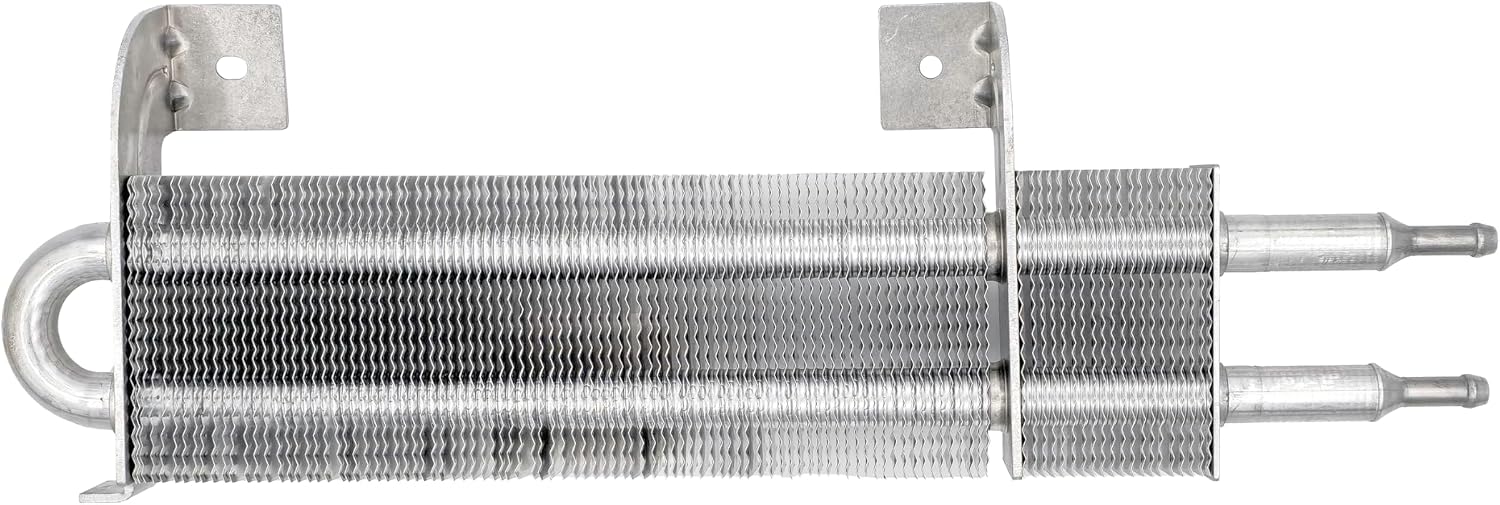
| Brand | Edelmann |
|---|---|
| Model | 58048 |
| Manufacturer | Plews & Edelmann |
| Compatible Vehicles | Ford F-250/F-350/F-450/F-550 Super Duty (2017-2022) |
The Edelmann Elite Power Steering Cooler 58048 is a direct-fit cooler engineered to lower hydraulic temperatures in Ford Super Duty steering systems. It installs in the pressure line to dissipate heat generated during heavy-duty use like towing, off-road driving, or running oversized tires, which helps preserve pumps, hoses, seals, and fluid life. The cooler is built to original-equipment specifications with high-temperature furnace brazing and machined exterior finish for durability and tighter tolerances than many aftermarket units. In practice this means steadier steering performance under load and fewer heat-related failures over time. Trade-offs are minimal for the intended use, though the unit is a replacement part that requires correct routing and secure mounting to be effective, and installation may be easier with basic mechanical experience. For drivers pushing Super Duty trucks hard, this cooler provides a straightforward way to manage system heat and extend component life.
Best for: Buyers who prioritize steady steering performance and longevity under heavy towing, off-road use, or with oversized tires and want a factory-quality replacement cooler to reduce system heat.
Less Ideal for: Casual drivers who rarely tow, carry heavy loads, or operate off-road and do not face elevated steering-system temperatures.
- Direct-fit for 2017–2022 Ford Super Duty models to simplify replacement.
- Constructed to meet factory specifications with high-temperature furnace brazing for durability.
- Reduces power steering fluid temperature to extend pump, hose, seal, and fluid life.
- Machined exterior and tighter tolerances compared with many generic coolers.
- Requires proper routing and secure mounting for optimal performance which may need mechanical skill.
Verdict: Choose this Edelmann cooler when you need a factory-quality, direct-fit solution to control steering-system heat on 2017–2022 Ford Super Duty trucks.
3. Hayden Automotive 1012 Power Steering Oil Cooler

| Liquid Volume | 1.87 Liters |
|---|---|
| Upper Temperature Rating | 257 Degrees Fahrenheit |
| SAE J300 Viscosity Grade | 20W-50 |
| Manufacturer | Hayden Automotive |
The Hayden 1012 power steering oil cooler is a simple inline cooler intended to reduce power steering fluid temperature and prolong the life of the pump and hoses. It is used by mounting the unit in the steering fluid return line where airflow or a fan can draw heat away. The cooler is factory tested and sized for light to moderate duty cooling needs, making it suitable for towing or heavier steering loads on a full-size truck. Its one-piece bottle design and 1.87 liter fluid volume make installation straightforward in most setups, and the 20W-50 fluid specification is compatible with many common power steering fluids. Limitations include modest cooling capacity compared with larger multi-row coolers, so it may not prevent overheating under extreme repeated heavy towing or prolonged low-speed work. Fitment will depend on routing and fittings required for a Ford F-350, so plan for proper hose adapters and mounting space when installing.
Best for: Owners who want a practical, proven cooler to reduce steering fluid temperature during towing or heavier steering loads on a Ford F-350 and prefer a straightforward, compact installation.
Less Ideal for: Drivers who regularly run extreme low-speed towing, off-road winching, or continuous heavy-duty steering duty and need high-capacity multi-row cooling should consider larger dedicated coolers.
- Factory tested for reliability
- Compact inline design that is easy to install in most return lines
- Lowers power steering fluid temperature to help extend pump and hose life
- Includes a substantial 1.87 liter fluid capacity for thorough circulation
- Smaller single-row cooler with limited capacity for extreme, repeated heavy towing
- Does not include vehicle-specific hoses or fittings so additional adapters may be required
Verdict: A compact, factory-tested inline cooler that gives Ford F-350 owners an easy, effective way to lower steering fluid temps for improved component life during towing and heavier use.
4. Dorman 918-320 Power Steering Cooler

| Manufacturer Part Number | 918-320 |
|---|---|
| OEM Part Number | 6C3Z3D746A |
| Exterior | Ready To Paint If Needed |
The Dorman 918-320 is a straightforward replacement power steering cooler built to match the factory fit for specified 2006 Ford Super Duty models. It installs where the original cooler sits and circulates power steering fluid through a corrosion-resistant core to help lower fluid temperature during towing or heavy-duty use. The unit is offered ready-to-paint and uses common mounting locations and hose connections, which simplifies installation for experienced DIYers or independent shops. Its durable construction and factory-style layout make it a practical repair part when a failed cooler needs replacing without modifying lines or brackets. Limitations are its narrow vehicle fitment — it is listed only for 2006 F-250/350/450/550 Super Duty trucks — so buyers must confirm trim-level compatibility before ordering. The part aims to be a budget-friendly, functional fix rather than an upgraded high-capacity cooler for extreme towing or motorsport applications.
Best for: Buyers who need an affordable, direct-fit replacement for a failed power steering cooler on a 2006 Ford Super Duty and prefer a simple DIY or shop swap without modifications.
Less Ideal for: Owners seeking an upgraded high-capacity cooler for frequent heavy towing or users with different model years or vehicles outside the specified 2006 Super Duty fitment.
- Factory-style fit that simplifies swap-in replacement
- Corrosion-resistant construction for long service life
- Ready-to-paint exterior for a matched underhood appearance
- Designed specifically for 2006 Ford Super Duty models to reduce fitment hassles
- Compatible only with select 2006 Ford Super Duty trucks, not a universal fit
- Not marketed as a higher-capacity cooler for heavy continuous towing
Verdict: A practical, budget-focused direct replacement cooler that restores factory fit and function on specified 2006 Ford Super Duty trucks.
5. Hayden 1009 Power Steering Oil Cooler (9" Length)

| Material | Aluminum |
|---|---|
| Overall Length | 9 Inches |
| Inlet Outside Diameter | 3/8 Inch |
| Number Of Rows | 2 |
The Hayden 1009 is a tube-and-fin aluminum power steering oil cooler intended to lower fluid temperatures in heavy-duty steering systems. It is typically mounted in the engine bay and plumbed into the return line for systems that use 3/8 inch I.D. hose, where it removes destructive heat that accelerates wear on pumps, hoses, seals, and fluid. The unit is small and machined for corrosion resistance, and it ships with basic mounting hardware for straightforward installation on trucks with room in the core area. Because it is a two-row core and only 9 inches long, it works well for owners running heavy loads, towing, or operating off-road where repeated steering demands create excess heat. Limitations are its fixed inlet/outlet size and compact capacity; for extreme-duty F-350 setups with high flow rates or modified steering systems you may need a larger or multi-pass cooler for maximum temperature control.
Best for: F-350 owners who prioritize extending the life of steering pumps and hoses when towing, hauling, or driving in heavy-duty conditions and who want a compact, factory-style cooler that installs into the return line.
Less Ideal for: Owners running heavily modified steering systems, very high flow setups, or extreme off-road builds that demand larger capacity or multi-pass coolers should consider higher-capacity alternatives.
- Aluminum tube-and-fin construction resists corrosion and sheds heat efficiently.
- Comes with mounting hardware for easier installation in the engine bay.
- Sized for vehicles with 3/8 inch I.D. return hose so it fits common factory steering lines.
- Compact 9 inch length allows fitment in tighter spaces on large trucks.
- Single fixed inlet/outlet diameter limits use to systems with 3/8 inch hose without adapters.
Verdict: A compact, factory-style aluminum cooler that reliably reduces steering fluid heat for F-350s used for towing or heavy-duty driving.
6. Dorman Power Steering Cooler 918-319

| Material | Stainless Steel |
|---|---|
| Item Length | 22 Inches |
| Exterior | Ready To Paint If Needed |
| Manufacturer Part Number | 918-319 |
| OEM Part Number | SK918319; 6C2Z3D746AA; 7C2Z3D746A; CK4Z3D746A; F7UZ3D746AB; XC2Z3D746AA |
This Dorman power steering cooler is a straightforward, factory-style replacement intended to restore cooling to a power steering system. Built from corrosion-resistant stainless steel with a black exterior, it installs in the same routing as the original and is offered to match fit and function for many Ford vans and Super Duty models. In practice the cooler reduces fluid temperatures under load and can prevent premature seal or pump failures when towing or hauling. Installation is typical for underbody coolers and will require basic hand tools and hose clamps or quick-connect fittings depending on your setup. The cooler is compact and ready-to-paint if you prefer a different finish. Keep in mind this part is sold as the cooler assembly only, so line fittings or mounting hardware may need to be reused or sourced separately, and fit must be verified against your vehicle trim before purchase. For technicians and owners wanting a like-for-like replacement that controls steering fluid heat, this is a reliable, no-frills option.
Best for: Buyers who prioritize a proven, factory-style replacement to control power steering fluid temperatures during towing or heavy-duty use and who prefer a product with documented fitment history.
Less Ideal for: If you need a universal heavy-duty upgrade with integrated fittings and brackets or are building a custom cooling loop, this factory-style cooler may be too basic.
- Direct-replacement design to match original cooler routing and function
- Stainless steel construction for corrosion resistance and durability
- Compact profile helps fit in tight underbody locations
- Black exterior is ready-to-paint for a customized look
- Mounting hardware and specific fittings are not guaranteed included so additional parts may be needed
Verdict: A dependable, factory-matching power steering cooler for Ford owners who want a straightforward replacement to keep steering fluid temperatures in check.
Choosing the Right Ford F-350 Power Steering Cooler: Key Factors to Consider
Cooling Capacity and Core Design
Cooling capacity is the primary purpose of a steering cooler, so you should assess how much extra surface area and airflow the cooler provides. Larger cores with multi-pass designs or stacked plate fins shed heat more effectively during sustained towing or heavy-duty operation.
Core construction affects both performance and longevity. Aluminum cores conduct heat well but need protective finishes to resist road salt and corrosion. Tube-and-fin designs are common and balance airflow with robustness, while stacked-plate or dual-core arrangements offer higher capacity for extreme use. Understand the expected temperature reduction at typical F-350 tow loads and prioritize a cooler that can handle repeated high-heat cycles without losing efficiency.
Flow Restriction and Hydraulic Compatibility
Any added cooler sits in the power steering hydraulic loop, so it must not create excessive backpressure that stresses the pump. Check the cooler's internal passages and rated flow capacity to ensure compatibility with the F-350's steering pump output, particularly if your truck has auxiliary steering components or aftermarket pump upgrades.
Fittings and hose diameters matter. Oversized restriction or mismatched hose sizes can elevate system pressure and reduce steering responsiveness. Choose coolers that list compatible hose sizes or include adapters to maintain smooth fluid flow and avoid hydraulic performance tradeoffs.
Mounting Location and Vehicle Fitment
Where you mount the cooler on the F-350 influences cooling performance and protection from road debris. Front-of-core support locations with good airflow yield the best heat transfer, but they must also avoid exposure to rocks, salt, and high-impact zones. Consider available mounting points near the radiator, behind the grille, or on the bumper support that allow adequate clearance from other components.
Fitment also affects hose routing length and bend radius. Longer runs increase heat loss before fluid reaches the pump but may complicate installation. Pick a cooler with mounting brackets or a kit designed for the F-350 so you minimize custom fabrication and ensure secure attachment under heavy-duty use.
Materials, Corrosion Resistance, and Durability
A cooler for a heavy-duty truck must withstand road contaminants, vibration, and seasonal corrosion. Look for corrosion-resistant metals, quality brazing or welds, and protective finishes designed for road salt and moisture. Thicker fins and robust end tanks resist physical damage from debris and prevent premature leaks.
Durability also includes hose and fitting quality. Silicone or reinforced rubber hoses with crimped fittings and double clamps reduce failure points. Prioritize coolers and kits specified for long service life under the strain of towing and off-highway use rather than lightweight options intended for occasional duty.
Installation Complexity and Kit Completeness
Some coolers are sold as full kits with hoses, fittings, and mounting brackets, while others are core-only requiring additional parts. A complete kit lowers installation time and reduces chances of incompatible fittings. Consider whether you will perform the installation yourself or use a mechanic; a do-it-yourself friendly kit includes clear instructions and the right hardware for the F-350.
Installation complexity also affects downtime. Hard-to-reach mounting spots, the need to remove body panels, or custom hose routing can add hours to labor. Opt for a cooler that balances optimal airflow placement with a straightforward mounting process to keep installation simple and reliable.
Maintenance Access and Leak Management
Regular inspection and occasional hose replacement are expected on high-use trucks. Position the cooler where you can visually inspect it and service hose connections without major disassembly. Quick-access clamps and standard-size fittings make maintenance easier and reduce time spent chasing small leaks.
Consider whether the cooler design allows easy cleaning of fins and debris removal. Fins that are accessible and slightly spaced make roadside maintenance more feasible. Also evaluate the availability of replacement hose fittings and mounting hardware to ensure long-term serviceability.
Types of Power Steering Coolers and When to Use Them
Power steering coolers come in basic tube-and-fin cores, stacked-plate cores, and in-line sandwich adapters. Tube-and-fin units are compact and effective for moderate towing and daily driving. Stacked-plate or dual-core designs increase surface area and are suited for heavy towing or repeated uphill runs.
Sandwich adapters mount near the pump or box and are useful if space is constrained or if you need a modest cooling boost without long hose runs. Choose the type that matches your F-350's typical load profile and under-hood space constraints.
- Tube-and-fin: good balance of price, size, and cooling
- Stacked-plate/dual-core: higher capacity for severe duty
- Sandwich adapters: compact, easier install but lower cooling
How Cooling Improves Steering Performance Under Load
Lower fluid temperatures preserve hydraulic oil viscosity and additive properties. That maintains predictable steering feel and reduces the risk of vapor lock or foaming under sustained heavy load. Cooler fluid reduces wear on pump seals and spool valves, which helps preserve steering response over time.
Consistent operating temperature also stabilizes steering effort, making steering input more predictable during long highway tows or repeated trailer maneuvers. This is particularly valuable for operators who tow frequently or carry heavy payloads in the bed.
- Preserves fluid viscosity and additives
- Reduces seal and pump wear
- Maintains consistent steering feel during long trips
Routing Hoses on the F-350: Best Practices
Plan hose routing to avoid sharp bends, high-heat zones, and moving suspension components. Maintain gentle curves and use secure clamps at regular intervals to prevent chafing. Keep hoses away from exhaust components and edges that cause abrasion.
Label hoses during installation so return and feed lines are not swapped. Ensure fittings are tightened to recommended torque and use thread-seal methods only where specified. After initial installation, recheck fittings and clamps after a short break-in period to guard against leaks.
- Avoid tight bends and pinch points
- Secure hoses with clamps and protective sleeves
- Recheck fittings after first few drives
Protecting the Cooler From Road Damage
Mounting location affects vulnerability to rocks, debris, and corrosion. Consider a recessed location or a simple skid shield behind the grille to reduce impact risk while preserving airflow. Robust mounting brackets and rubber isolation help the cooler withstand vibration without fatigue cracks.
If you frequently operate on gravel roads, choose a cooler with denser fin spacing and a protective screen. Periodic cleaning and inspection reduce the chance of clogged fins diminishing efficiency.
- Use protective screens or recessed mounting
- Choose sturdy brackets and vibration isolators
- Inspect and clean fins regularly
When to Upgrade the Cooler on a Modified F-350
If you add heavier towing capability, larger tires, or steering upgrades that increase hydraulic demand, the factory cooler may no longer be sufficient. Signs that suggest an upgrade include rising steering fluid temperatures under load, decreased steering responsiveness after extended operation, or visible oil degradation during service intervals.
Upgrading to a higher-capacity cooler or a dual-core setup can restore thermal headroom. When modifying your F-350, factor cooler size, hose routing complexity, and whether you need a full kit that matches the truck's fittings.
- Consider upgrade if towing heavier than factory-rated loads
- Monitor fluid condition and steering response as indicators
- Match cooler capacity to increased hydraulic demand
How We Chose the Best Ford F-350 Power Steering Cooler
We prioritized components and kits that address the most common thermal and durability challenges encountered on the Ford F-350. Our selection criteria focused on cooling efficiency under load, compatibility with F-350 routing and mounting points, construction materials that resist corrosion and abrasion, and the practicalities of installation for owners who may do the work themselves. We evaluated thermal performance metrics such as additional surface area and expected temperature drop under sustained tow, plus hydraulic flow capacity to ensure the cooler does not create excessive backpressure.Durability criteria included core type and tube wall thickness, corrosion-resistant finishes, and fittings that reduce leak risk. We also considered kit completeness, meaning whether hoses, clamps, and mounting hardware were included to minimize additional purchases. Exclusions: we omitted options that lacked clear fitment guidance for the F-350, used substandard fittings, or had no evidence of adequate heat dissipation. The final list emphasizes practical cooling improvements, reliable connections, and installation pathways suitable for typical F-350 owners.
Our full evaluation process is outlined in our review methodology.
FAQ
How do I tell if my F-350 needs a power steering cooler?
Watch for symptoms such as higher steering effort after long drives, a burning oil smell from the engine bay, or foamy or darkened steering fluid during service. These signs often indicate elevated fluid temperature or degraded fluid that a cooler can help mitigate.
Can I install a power steering cooler myself on a Ford F-350?
Many owners can perform the installation with basic tools if the kit includes hoses, fittings, and brackets. The job typically involves routing hoses, mounting the cooler in an airflow location, and bleeding the system. If you are uncomfortable with hydraulic fittings or hard-to-reach mounting points, consider professional help.
Where is the best place to mount a steering cooler on the F-350?
The best spot balances airflow and protection. Common locations are behind the grille near the radiator or lower on the bumper support where airflow is strong but debris exposure is limited. Avoid mounting locations too close to exhaust components or suspension parts.
Will adding a cooler change steering feel or require pump changes?
A properly sized cooler should not noticeably change steering feel if it is compatible with the system flow. Excessive restriction from undersized fittings can increase pump load. In most cases, cooler installation does not require a pump change unless you have aftermarket steering components that increase hydraulic demand.
How often should I inspect the cooler and hoses?
Inspect the cooler and hoses during routine maintenance intervals or after heavy towing runs. Check for leaks, loose clamps, and fin damage. Early inspection helps prevent small leaks from becoming major failures.
Can adding a cooler fix power steering overheating issues permanently?
A cooler reduces fluid temperature and extends thermal capacity, but it may not address underlying causes like failing pumps, collapsed hoses, or contaminated fluid. Use a cooler as part of a broader approach that includes proper maintenance and diagnosing root causes of overheating.
Do I need a specific hose size for the F-350 steering system?
Use hose sizes and fittings that match the truck's existing lines or the kit's specified adapters. Correct hose diameter ensures proper flow and avoids added backpressure. Kits that include compatible hoses simplify this decision.
Final Verdict
Prioritize a cooler that provides meaningful additional surface area and airflow while maintaining hydraulic flow characteristics suited to the Ford F-350. Balance cooling capacity, durable construction, and a mounting location that minimizes debris exposure. For heavy towing or frequent uphill runs, choose higher-capacity or dual-core designs; for moderate duty, a compact tube-and-fin cooler or a sandwich adapter may suffice.Decide based on the typical loads you carry and how comfortable you are with routing and installation. A properly selected and installed cooler will reduce thermal stress on steering components and help maintain predictable steering performance under load.
