

Note: This article contains affiliate links. If you click on these links and make a purchase, I may earn a small commission at no extra cost to you. This helps support my research and content. Read my full affiliate disclosure here.
If you want a wider stance or need to correct wheel fitment on a Honda CR-V, choosing the right wheel spacers matters for safety, handling, and component longevity. The wrong spacer can cause clearance issues, uneven wear, or vibration, while the right one restores proper geometry and wheel alignment. This guide shortlists seven top options that meet common fitment and strength needs for the Honda CR-V. We evaluated fit accuracy, hub engagement, and material durability to help you find spacers suited to your use case. Read on for practical buying factors and installation considerations before you pick one of the shortlisted products.
Looking for other parts? See all Honda CR-V parts & accessories.
Top Picks at a Glance


1. Orion Motor Tech 1" Hub-Centric Wheel Spacers with M12x1.5 Studs (64.1mm Bore) — 4pcs

| Bolt pattern | 5×4.5 |
|---|---|
| Stud size | M12x1.5 |
| Bore diameter | 64.1mm |
| Quantity | 4 pieces |
These Orion Motor Tech 1-inch hub-centric spacers move the wheel out approximately one inch to widen track and change wheel fitment on compatible Honda CR-V models. They mount over the hub and use the car's factory lug nuts with the included M12x1.5 replacement studs and threadlocker for a secure installation. Machined from T6 aircraft-grade aluminum and anodized, the spacers are lightweight while resisting corrosion, and the Dacromet-coated studs add extra rust protection compared with plain steel. The hub-centric design helps improve stability and reduces the chance of vibration versus non-centered adapters, and slots on the rear face make removal easier. Installation is straightforward for an experienced DIYer or a shop, but correct torque and rotor/face cleaning are required. These spacers offer a practical way to achieve a flush look and a slightly wider track on Honda CR-Vs, but they do alter wheel offset and add stress to wheel studs so professional installation and periodic checks are recommended.
Best for: Reliability-focused buyers who prioritize a factory-quality, stable upgrade to achieve a wider stance on their Honda CR-V and who prefer proven hardware over cosmetic-only options.
Less Ideal for: Drivers seeking major stance modifications, extreme offsets, or track-focused handling changes should consider purpose-built suspension or wheel options instead of a 1-inch spacer.
- Hub-centric design reduces vibration risk and centers the wheel on the CR-V hub.
- Made from T6 aircraft-grade aluminum for a strong but lightweight spacer.
- Includes Dacromet-coated M12x1.5 studs that resist corrosion better than plain steel.
- Rear-face slots simplify removal and lower the chance of damage during disassembly.
- Adds one inch of offset which changes factory wheel geometry and places additional load on studs and bearings.
- Requires correct torque, rotor cleaning, and periodic inspection to maintain safety and longevity.
Verdict A practical, well-made 1-inch hub-centric spacer kit that gives Honda CR-V owners a wider, more stable stance when installed and maintained correctly.
2. KAX 5×4.5 1" Hub-Centric Wheel Spacers (set of 2)

| Bolt pattern | 5×4.5 (5×114.3mm) |
|---|---|
| Thickness | 1 inch (25mm) |
| Center bore | 73mm |
| Stud thread | M12x1.5 |
These KAX wheel spacers are a simple bolt-on solution to push your CR-V's wheels outward by 1 inch to correct fitment problems or improve stance. They are machined from 6061-T6 aluminum and use Grade 12.9 studs and hardened hardware, which translates to lighter-than-steel construction with high tensile strength. Installation is typical for spacers: remove the wheel, fit the spacer against the hub, torque hardware to the recommended value, and re-torque after initial miles. The hub-centric 73mm bore helps center the wheel for reduced vibration on compatible hubs. Practical benefits for CR-V owners include improved clearance for aftermarket wheels or brake components and a slightly wider track for a more planted feel. Limitations to note are that spacers change vehicle geometry and can increase stress on wheel bearings and suspension, so correct fitment and periodic torque checks are essential. Also, mixed user reviews mean careful inspection of hardware and installation technique matters for long-term reliability.
Best for: Convenience-driven buyers who want a quick, bolt-on fix to wheel clearance or offset problems and prefer a straightforward install without major modification.
Less Ideal for: Drivers seeking a permanent suspension upgrade or those unwilling to follow periodic torque and maintenance checks should consider purpose-built suspension parts instead.
- Made from 6061-T6 aluminum for a strong yet lightweight spacer
- Hub-centric 73mm bore to help center the wheel and reduce runout on matching hubs
- Grade 12.9 studs and hardened bolts for high tensile strength
- 1-inch thickness solves offset and clearance issues for many aftermarket wheels
- Laser-engraved sizing and part info for easy identification during installation
- Adds load to bearings and suspension which may shorten component life if used improperly
- Alters wheel track and handling characteristics so professional fitment and torque checks are recommended
- Not a direct replacement for vehicle-specific engineered suspension solutions
Verdict If you need an easy, hub-centric 1-inch spacer to correct wheel fitment on a CR-V, these KAX spacers offer a lightweight, high-strength option—just be diligent about installation and maintenance.
3. KSP Performance 25mm Hubcentric Forged 5×114.3 Wheel Spacers (64.1mm Bore) 4‑Piece Kit

| Bolt pattern | 5×114.3mm |
|---|---|
| Thickness | 25 Millimeters |
| Hub bore | 64.1mm |
| Stud size | M12x1.5 |
| Special features | Forged, Anodized surface, 10.9 degree lug nuts |
These KSP Performance spacers push wheels outward by 25mm and are designed to be hubcentric on 64.1mm Honda hubs using a 5×114.3 bolt pattern. Constructed from forged aluminum with an anodized finish and supplied with M12x1.5 studs and 10.9 grade lug bolts, they are aimed at improving stance and clearance while preserving wheel centering. In real‑world use on a CR‑V, they let you fit wider or different offset wheels and move rims away from calipers without altering suspension geometry. The forged construction and anodizing give a solid feel and good corrosion resistance for street driving, and the included studs simplify installation compared with replacing hub studs. Important limitations are that these bolt‑to‑hub spacers require correct torqueing and periodic checks, and they are best for performance street use rather than high‑stress racing applications where extended high‑strength hub studs are preferred. Expect improved track width and a firmer handling feel on paved roads, but plan on inspecting fasteners regularly and confirming brake and fender clearance after installation.
Best for: Performance‑oriented buyers who want a factory‑quality spacer to widen track and clear larger wheels on a Honda CR‑V for improved handling and fitment without major hub modification.
Less Ideal for: Drivers planning competition-level or off‑road use that subjects spacers to extreme loads should consider converting to extended high‑strength hub studs or a different spacers/studs setup.
- Forged aluminum construction and anodized finish for good strength and corrosion resistance
- Hubcentric 64.1mm bore keeps wheels centered for minimal vibration when properly installed
- Included M12x1.5 studs and 10.9 grade lug bolts simplify installation without immediate need to change hub studs
- 25mm thickness provides noticeable stance and clearance improvement for wider or lower‑offset wheels
- Bolt‑to‑hub design means periodic torque checks are required and some installers prefer extended hub studs for long‑term high‑load use
- Not intended for heavy racing or very high torque applications despite forged aluminum build
Verdict A durable, performance‑focused 25mm hubcentric spacer that improves wheel fitment and stance on a Honda CR‑V but needs proper installation and periodic torque checks for long‑term reliability.
4. SCITOO 5-Lug 15mm Wheel Spacers with Lug Nuts (5×4.5, 64.1mm Bore, 12×1.5 Stud)

| Bolt pattern | 5×4.5 (5×114.3mm) |
|---|---|
| Thickness | 15mm |
| Thread pitch | 12×1.5 |
| Hub bore | 64.1mm |
| Pieces | 2 (spacers) + lug nuts |
These SCITOO wheel spacers are a simple bolt-on solution that pushes each wheel out by 15mm and include the lug nuts needed for installation. Designed for five-lug hubs with a 64.1mm hub bore and 12×1.5 studs, the kit is intended to create a wider track and a more aggressive stance while reducing wheel rubbing. Installation is straightforward with common hand tools and can be done at home in minutes when using the correct fitment. The aluminum construction and painted finish aim to balance weight and strength, and several buyers report an adequate fit when the hub bore and bolt pattern match. Important limitations: build quality is variable across examples and at least one reviewer reported cracking under torque, so careful installation and correct torqueing are essential. Also, the product listing does not list CR-V-specific compatibility, so you must confirm bolt pattern and bore before fitting to a Honda CR-V. For a tight-budget buyer wanting a quick spacing solution, this kit delivers functionally but without the assurance of premium manufacturing tolerances.
Best for: Budget-conscious owners who want an inexpensive way to widen their CR-V's track for a more planted look or to clear slightly wider wheels while prioritizing cost over premium fitment assurance.
Less Ideal for: Drivers seeking long-term, heavy-duty spacing for towing, off-road use, or maximum load duty should choose higher-grade, vehicle-specific spacers from a reputable performance brand instead.
- Includes both spacers and lug nuts for a complete bolt-on kit
- 15mm thickness provides modest track widening without major suspension changes
- Fits 5×4.5 bolt pattern with 12×1.5 studs and 64.1mm hub bore when vehicle matches
- Painted aluminum finish reduces weight compared with steel spacers
- Quality consistency concerns reported, including at least one cracked spacer during torqueing
- Listing does not explicitly confirm Honda CR-V fitment so extra verification is required
Verdict A low-cost 15mm spacer kit that can work for a CR-V if bolt pattern and bore match, but expect variable build quality and verify fit before installation.
5. EVIL ENERGY 5×4.5 (5×114.3) 2" Hubcentric Wheel Spacers for Honda/Acura

| Bolt pattern (PCD) | 5×114.3 mm |
|---|---|
| Thickness | 2 inch |
| Hub bore | 64.1 mm |
| Wheel studs | M12x1.5 |
| Material | 6061-T6 aluminum |
These EVIL ENERGY wheel spacers push the wheel out 2 inches to correct backspacing and improve track width on 5×114.3 hubs. They are machined from 6061-T6 aluminum, anodized for corrosion resistance, and use M12x1.5 studs with 10.9-grade bolts intended to resist breakage under normal use. Installation places the spacer between the hub and wheel and is straightforward for a DIYer with a torque wrench; the listing and user feedback emphasize hand-starting fasteners and following torque specs to avoid over-tightening. For a Honda CR-V, properly matched hub-centric spacers can reduce rubbing with larger wheel and tire combos and give a wider stance that improves stability and appearance. Limitations to note are fitment sensitivity on some models and the risk of weak or rounded lug hardware reported by buyers, so expect to inspect or upgrade supplied studs and follow correct torque and thread-lock procedures. These spacers are functional for clearance and stance adjustments but require careful installation and confirmation of hub bore and stud fit on the CR-V.
Best for: Risk-averse mainstream buyers who prioritize a reliable, factory-quality feel and want a vetted way to correct wheel clearance and stance on a Honda CR-V without chasing exotic performance parts.
Less Ideal for: Drivers seeking aggressive suspension changes, track-focused handling upgrades, or those unwilling to verify fitment and install hardware properly should consider other solutions or professional installation.
- Made from 6061-T6 billet aluminum for strength and corrosion resistance.
- Hub-centric design matches 5×114.3 bolt pattern to reduce vibration when fitted correctly.
- Supplied M12x1.5 studs and 10.9-grade bolts aimed at durable fastening under regular driving.
- Anodized finish and CNC machining provide consistent fit and clean appearance.
- User reports show straightforward installation when torque and installation instructions are followed.
- Some buyers reported supplied spacer lugs rounding or being low quality and needing replacement.
- Fitment can be tight on certain hubs, so incorrect hub bore or hub lip mismatches may prevent installation.
- Requires proper torque procedure and possible hardware inspection or upgrade for long-term reliability.
Verdict A practical, hub-centric 2-inch spacer for Honda CR-V owners wanting improved clearance and stance, but inspect or upgrade the supplied hardware and follow torque procedures for safe use.
6. Titan Wheel Accessories 1" Hubcentric Wheel Spacers, 5×114.3 (5×4.5), 64.1mm Hub, 12×1.5 Studs — Pair
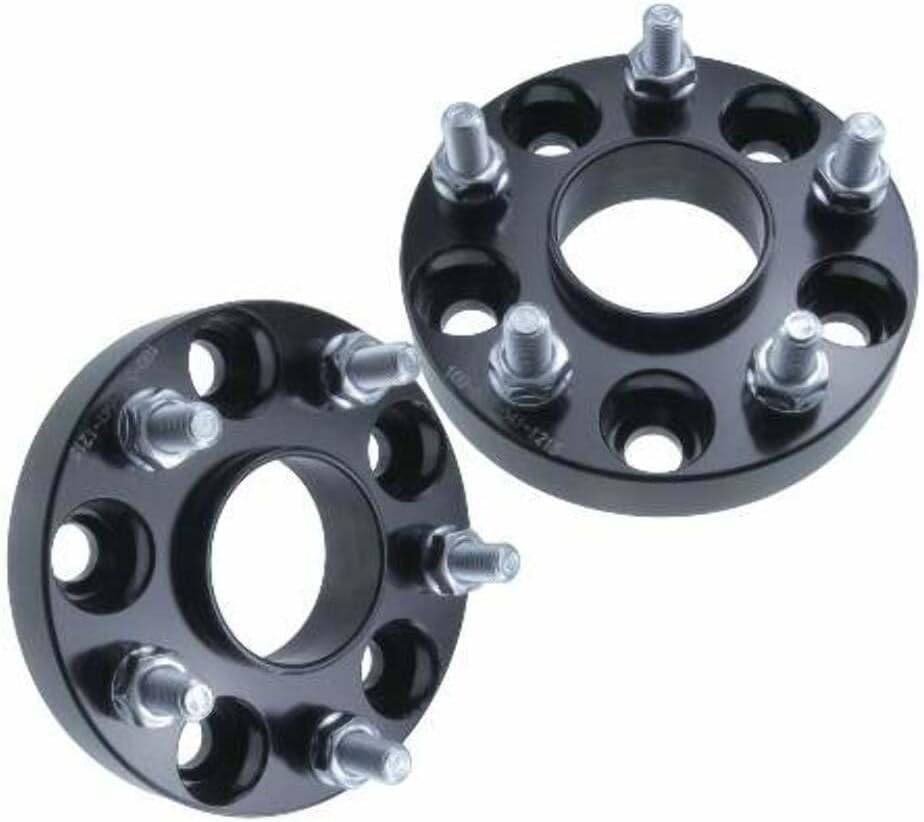
| Bolt pattern | 5×114.3 (5×4.5) |
|---|---|
| Thickness | 1 inch (25mm) |
| Hub bore | 64.1mm |
| Stud thread pitch | 12×1.5 |
These Titan 1-inch hubcentric spacers bolt to the hub and push the wheel outward to improve wheel fitment and track width on compatible vehicles. Intended to be installed between the hub and wheel, they use a 5×114.3 (5×4.5) bolt pattern with 12×1.5 studs and a 64.1mm hub bore for a centered fit. In practical use they give a flusher stance without changing wheel size and can help with clearance for brakes or suspension components. Reviews indicate solid build for the price and reduced vibration compared with poorly made alternatives, though some users reported isolated issues such as a broken stud or later vibration when combined with other modifications. Installation should be done or checked by a professional and torqued to manufacturer specs; using impact tools will void the warranty. These spacers are a cost-effective option to get a more aggressive look or minor clearance benefits but require correct installation and periodic recheck for safety.
Best for: Practical optimizers looking for an affordable way to achieve a flusher wheel fitment or minor clearance improvements on their Honda CR-V without replacing wheels.
Less Ideal for: Drivers seeking large offset changes, track-focused performance upgrades, or a maintenance-free solution should consider engineered wheel options or a professional wheel fitment service instead.
- Hubcentric design with 64.1mm bore helps center the wheel and reduce runout compared with non-hubcentric spacers
- 1-inch (25mm) thickness provides noticeable wider stance and modest clearance without large offset change
- Grade-matching stud pattern (12×1.5) and 5×114.3 bolt pattern fit common Honda lug configurations
- Positive user reports of solid build quality and reduced vibration versus cheaper alternatives
- Some users reported isolated failures such as snapped lug bolts or later steering vibration when used with other modifications
- Manufacturer recommends professional installation and post-install recheck which adds to total cost and effort
Verdict An economical, hubcentric 1-inch spacer that gives a flusher look and modest clearance gains for the CR-V if professionally installed and periodically checked.
7. dynofit 1" (25mm) Hub-Centric Wheel Spacers — Set of 4 for Honda/Acura 5×4.5, 64.1mm Bore

| Bolt pattern | 5×4.5 (5×114.3mm) |
|---|---|
| Thickness | 1" (25.4mm) |
| Hub bore | 64.1mm |
| Stud thread pitch | M12x1.5 |
| Material | 6061-T6 Aluminum |
These dynofit spacers are a hub-centric, forged 6061-T6 aluminum set that moves your wheels 1 inch outward to clear calipers, correct backspacing, or allow wider tires on compatible Honda and Acura models. They include studs with M12x1.5 thread pitch and a 64.1mm bore so the spacer centers on the hub for stable contact at speed. Typical use is cosmetic or clearance-focused: install the spacer between hub and wheel to gain clearance or a wider track and then torque wheels to spec. The forged construction and CNC machining give good strength and a precise fit, and the included treated bolts resist corrosion. Limitations to note are the extra stress spacers can place on suspension components and potential fitment differences depending on wheel design, so check clearance and local vehicle rules before fitting. Some users report the anodized finish changes color over time, and one negative review links a broken axle after installation which underscores the importance of professional installation and correct torque values.
Best for: Buyers who want a balanced, all-round upgrade that improves stance and fixes clearance issues on a Honda CR-V without chasing extreme fitment or track performance.
Less Ideal for: Not a good choice for drivers planning heavy-duty towing, frequent off-road extremes, or those unwilling to have a shop verify installation and torque settings.
- Hub-centric 64.1mm bore centers the spacer on the hub for stable contact and reduced vibration
- Forged 6061-T6 aluminum with CNC machining for improved strength and fit over cast alternatives
- Moves wheels 1 inch outward to solve tire rubbing and caliper clearance or to fit wider tires
- Includes M12x1.5 studs and treated bolts to resist corrosion and provide reliable thread engagement
- Spacers increase lever stress on axles, wheel bearings, and suspension which may shorten component life if not considered
- Anodized finish can fade or change color after prolonged heat exposure
- Must confirm fitment for specific wheel offsets and verify legal width limits before installation
Verdict A well-made 25mm hub-centric spacer that balances improved clearance and appearance for Honda CR-V owners when installed and torqued correctly.
Choosing the Right Honda CR-V Wheel Spacers: Key Factors to Consider
Bolt Pattern and Stud Configuration
Matching the exact bolt pattern is the first and most critical step when choosing spacers. A spacer that does not match the vehicle's bolt pattern will not seat properly and can cause stud bending or uneven load distribution.
Also confirm whether the spacer uses extended studs, a bolt-through design, or requires transferring original studs. Different configurations affect installation complexity and compatibility with aftermarket wheels, so pick the approach that aligns with your wheel hardware and mechanical comfort level.
Hubcentric Fit and Runout
Hubcentric spacers use a center ring to locate the wheel directly on the vehicle hub, which helps minimize runout and reduce the chance of vibration. If a spacer is not hubcentric it must rely entirely on the lug nuts for centering, which can increase the risk of imperfect wheel alignment.
Check that the spacer's center bore matches the CR-V hub diameter or includes a properly sized centering ring. Even small mismatches can cause measurable vibration at highway speeds or under load.
Material, Construction, and Corrosion Protection
Material choice and manufacturing method determine how a spacer will withstand loads and environmental exposure. High-strength forged or CNC-machined aluminum alloys are common because they balance weight and durability, while lower-grade cast parts may show fatigue sooner under repeated stress.
A protective finish such as anodizing or a durable coating helps resist corrosion and prevents fastener seizure. Consider the local climate and road conditions when prioritizing surface treatments and verify that the spacer's material spec meets vehicle load demands.
Thickness and Wheel Offset Effects
Spacer thickness changes effective wheel offset and track width, which alters handling characteristics and clearance with fenders, suspension components, and brake calipers. Thinner spacers make modest adjustments while thicker spacers amplify track width and stance changes.
Think through the desired visual and performance outcome and how much clearance you need. Also consider whether increased track width will require additional modifications or fender rolling to avoid rubbing during full suspension travel or steering lock.
Fastener Type and Torque Requirements
The fastener system and required torque specs are central to safety. Some spacers come with longer studs, others use a bolt-through method with supplied hardware. Each design has specific torque values for both the spacer fasteners and the wheel lug nuts.
Always check manufacturer torque specifications and follow a proper tightening sequence. Using the wrong torque or skipping re-torque after initial use can lead to loosening, stud stretching, or failure over time.
Installation Complexity and Support
Installation requirements range from a simple bolt-on with supplied hardware to swapping studs or using a specialized installation kit. Assess your mechanical skill, tools on hand, and whether you will do the work yourself or rely on a professional.
Look for spacers that include clear installation instructions, correct hardware, and support documentation. Availability of replacement parts or customer support can reduce headaches if you hit fitment quirks during installation.
FAQ
Are wheel spacers safe to use on a Honda CR-V?
Wheel spacers can be safe when you choose parts designed for the Honda CR-V bolt pattern and follow specified installation steps. Safety depends on correct fitment, material quality, and adhering to torque specs. Improperly installed or low-quality spacers increase the risk of vibration, stud stress, or loosening over time.
How thick of a spacer can I use before it causes problems?
There is no universal thickness limit because acceptable spacer thickness depends on wheel offset, suspension clearance, and stud engagement. Thicker spacers increase leverage on studs and may require attention to stud length and suspension geometry. It often makes sense to consult fitment guides and ensure adequate stud engagement and brake clearance.
Do hubcentric spacers perform better than lug-centric spacers?
Hubcentric spacers usually reduce the chance of wheel runout because they center the wheel on the vehicle hub. Lug-centric designs rely on lug nuts for centering and can be susceptible to slight misalignment. The right choice depends on whether the spacer's center bore matches the CR-V hub and whether your wheels already have precise center bores.
Will wheel spacers cause vibration on my CR-V?
Spacers themselves do not inherently cause vibration, but mismatched center bores, poor machining tolerances, or improper installation can create runout that leads to vibration. Ensuring a hubcentric fit, correct torque sequence, and balanced wheels helps reduce the risk of vibration.
Do I need special hardware or an installation kit?
Some spacer designs include all necessary hardware while others require extended studs or separate installation kits. Check what the spacer supplies and compare that to the hardware you currently have. If extended studs or special tools are needed, factor that into installation planning.
How often should wheel spacer fasteners be rechecked?
It is common practice to recheck spacer and wheel fastener torque after the first 50 to 100 miles of driving and periodically thereafter. Regular inspections help catch loosening or fastener corrosion early. Follow the manufacturer's torque recommendations and retorque schedule when available.
How We Chose the Best Honda CR-V Wheel Spacers
We focused on fitment accuracy, material strength, hub engagement, corrosion resistance, and ease of installation when selecting these wheel spacers. Fitment accuracy covers correct bolt pattern, stud length clearance, and spool-to-hub contact to reduce the risk of misalignment. Material strength includes tested alloy grades and manufacturing methods that influence load capacity and long-term reliability. Hub engagement evaluates whether a spacer is hubcentric and how well it centers on the vehicle hub to minimize runout. Corrosion resistance considers coatings and finishes that protect against rust and prevent fastener seizure in road conditions. Ease of installation examines whether the spacer uses extended studs, a bolt-through design, or an installation kit and how straightforward the process is for a competent DIYer or a technician. We excluded items that do not explicitly list compatible bolt patterns or that use uncertified materials. We also filtered out spacers lacking clear torque specifications or installation guidance, since those omissions raise safety concerns. The resulting list emphasizes spacers that balance precise fit, robust materials, and documented installation requirements.
Our full evaluation process is outlined in our review methodology.
Conclusion
When choosing Honda CR-V wheel spacers, prioritize correct bolt pattern, hubcentric fit, and material strength. Matching the spacer center bore and ensuring adequate stud engagement will help minimize runout and vibration risks. Balance desired cosmetic or handling changes against the mechanical tradeoffs of increased track width, and follow documented torque and installation procedures. If you are unsure about fitment or installation complexity, consult a qualified technician. Careful selection and proper installation are the best ways to achieve a safer, more stable stance without introducing long-term issues.
Explore More:
- Check out all Honda CR-V parts & accessories
- Explore Wheels & Tires
- Browse all Auto Parts
