

Note: This article contains affiliate links. If you click on these links and make a purchase, I may earn a small commission at no extra cost to you. This helps support my research and content. Read my full affiliate disclosure here.
If you drive a Honda CR-V, a failing vapor canister can cause drivability issues and trigger emissions faults. Choosing the right Honda CR-V vapor canister matters because the EVAP system controls fuel vapor containment and a poor fit or a leaky unit can lead to fuel odor, reduced system performance, and error codes.This guide covers seven shortlisted vapor canisters that meet common fit and durability needs. We evaluated each option for physical fitment, sealing and leak resistance, and overall build quality to help you find a suitable replacement. Read on for the selection criteria and practical buying factors before the product list.
Looking for other parts? See all Honda CR-V parts & accessories.
Top Picks at a Glance
| Best overall The best all-around choice for most situations | Dorman Vapor Canister 911-680 Compatible with Select Honda CR-V Models |  |
| Best quality Built to a higher standard if you want something more solid | Standard Motor Products CP3111 Vapor Canister |  |
| Best Value The sweet spot between price and what you get | Standard Motor Products CP3070 Vapor Canister |  |
| Highest Rated A top-rated pick with lots of positive feedback | Standard Motor Products CP3150 Fuel Vapor Canister |  |
| Most Popular A crowd favorite that many people choose with confidence | Marketplace Auto Parts Carbon Vapor Canister for 2002–2004 Honda CR-V 2.4L |  |
| Best Seller A high-volume bestseller chosen again and again | Sawyer Auto Vapor Canister for 2005-2006 Honda CRV (PG-1677191) |  |
1. Dorman Vapor Canister 911-680 Compatible with Select Honda CR-V Models

| Model | Dorman 911-680 |
|---|---|
| Position | Center |
| Manufacturer | Dorman Products |
| Compatible Vehicles | Honda CR-V (2002, 2003, 2004) |
This Dorman vapor canister replaces the evaporative emissions charcoal canister on specified Honda CR-V years and is intended to restore the EVAP system, clear related check-engine codes, and help the vehicle pass emissions inspection. It ships assembled with the vent valve/solenoid attached, so installation replaces the whole assembly rather than swapping corroded small parts. Typical use is as a service repair for P1457 or other EVAP-related codes; installers report accessing the canister from the rear of the vehicle and reusing factory fasteners where possible. Notable features include reverse-engineered fit to match factory function and an exterior that can be painted if desired. Practical benefits are a one-piece replacement that avoids fighting rusty bolts and a product supported by Dorman engineering. Limitations are that fitment is specific to selected CR-V years so users must verify trim compatibility and the canister uses plastic components where older factory parts were metal, which some buyers may prefer differently for longevity.
Best for: Balanced all-round buyers who want a practical, factory-replacement style fix for EVAP issues on supported Honda CR-V years without buying multiple parts.
Less Ideal for: Buyers seeking an exact metal-original rebuild or a universal solution for many different vehicles should look elsewhere or consult a specialist.
- Designed as a direct replacement to restore EVAP system function and clear related check-engine codes
- Ships with the vent valve/solenoid already attached to simplify installation
- Reverse-engineered to match original performance for specified Honda CR-V years
- Exterior is ready to paint for visual matching during installation
- Fitment applies only to certain model years and trims so verification is required before purchase
- Some components are plastic rather than metal, which may concern buyers seeking metal replacements
- Removing rusty fasteners on older vehicles can still be time consuming despite replacing the canister
Verdict: A ready-to-install, one-piece replacement that simplifies fixing EVAP faults on supported Honda CR-Vs, provided you confirm exact year and trim fitment.
2. Standard Motor Products CP3111 Vapor Canister

| Fuel Type | Gasoline |
|---|---|
| Product Grade | Intermediate |
| Fit Type | Vehicle Specific |
| Manufacturer | Standard Motor Products |
| Model | CP3111 |
The Standard Motor Products CP3111 vapor canister is a direct replacement-style emission canister that captures and stores fuel vapors to prevent them from escaping to the atmosphere and supplies purge-ready vapors to the engine when commanded. For a Honda CR-V the canister is used in the evaporative emissions circuit and is typically installed in the vehicle’s rear or underbody area where it connects to vapor lines and the purge system. This unit is built to factory-spec performance and undergoes end-of-line testing, which makes it suitable for restoring proper evap control and clearing related fault codes. Practical benefits include straightforward vehicle-specific fitment and a design intended to match factory flow characteristics so purge and venting behave as expected. Limitations are that the canister itself does not include hoses or ancillary hardware, and replacement requires basic access and some mechanical knowledge or a shop for confident installation.
Best for: Performance-oriented CR-V owners focused on restoring or maintaining precise evaporative system behavior and emissions control who prefer factory-quality replacements to preserve drivability.
Less Ideal for: Buyers looking for a complete plug-and-play repair kit with hoses and fittings or those seeking a universal canister for multiple vehicle makes and models.
- Built to match factory-quality performance and tested at the factory for consistency.
- Vehicle-specific fitment reduces fitment guesswork for direct replacement on compatible CR-V models.
- Designed to restore proper evaporative system function and help clear evap-related fault codes.
- Compact, proven design used widely by professional installers and aftermarket technicians.
- Does not include hoses, clamps, or mounting hardware needed for some installations.
- Fitment must be confirmed for the specific CR-V model year before ordering.
Verdict: A factory-quality, vehicle-specific vapor canister aimed at CR-V owners who want reliable evap system performance, but order installation hardware separately.
3. Standard Motor Products CP3070 Vapor Canister

| Fuel Type | Gasoline |
|---|---|
| Fit Type | Vehicle Specific |
| Manufacturer | Standard Ignition |
| Model | Vapor Canister |
The Standard Motor Products CP3070 is a direct-fit vapor canister intended as a replacement part for vehicles that use this OEM-style unit. It captures and stores fuel vapors from the tank and routes them to the engine for purge, helping prevent fuel smell and check engine codes related to the evaporative emissions system. Installation is the same as a factory replacement because this unit is vehicle specific, so it is typically used during emission-related repairs or when a failed canister triggers a diagnostic trouble code. The canister is supplied by a long-established aftermarket manufacturer and carries straightforward fitment data, making it a practical swap for DIYers and independent shops. Practical benefits include restoring EVAP system function and avoiding unnecessary diagnostic time. Limitations are typical of replacement canisters: it addresses vapor storage and purge but will not fix unrelated issues such as leaking hoses, purge valves, or fuel tank faults, so confirm the root cause before replacing the module.
Best for: Practical optimizers who want a cost-effective, factory-style replacement to fix EVAP-related issues without overpaying for brand-new OEM parts.
Less Ideal for: Buyers seeking a comprehensive EVAP system overhaul or those who have not diagnosed the root cause of codes should avoid purchasing this as a first diagnostic step.
- Vehicle-specific fit simplifies installation and alignment with factory connections
- Made by an established aftermarket supplier with automotive replacement experience
- Restores evaporative emissions control to resolve fuel smell and EVAP diagnostic codes
- Compact replacement that matches original mounting and routing for straightforward swap
- Does not address other EVAP system failures like cracked hoses or faulty purge valves
Verdict: A practical, vehicle-specific vapor canister replacement that restores EVAP function at good value for money.
4. Standard Motor Products CP3150 Fuel Vapor Canister

| Material | Stainless Steel |
|---|---|
| Included Components | Fuel Vapor Canister |
| Unit Count | 1 Count |
| Country of Origin | United States |
The Standard Motor Products CP3150 is a direct-replacement evaporative emissions canister that performs the basic job of trapping fuel vapors and feeding them back into the engine during purge cycles. It is intended for vehicle-specific fitment and is used when a cracked, saturated, or failed canister triggers EVAP codes or a fuel smell. The unit is built in stainless steel with a compact shape and mounting bracket that many installers report fits like the original part, simplifying swaps on compatible vehicles. Practical benefits include straightforward installation, OEM-style connections, and durable construction that resists corrosion. Limitations are that compatibility must be verified for a specific Honda CR-V year and trim before purchase and that installation may require removing or bending the mounting tab to seat the canister correctly. This is a no-frills replacement aimed at restoring proper EVAP function rather than improving performance or adding aftermarket features.
Best for: Reliability-focused owners who prioritize restoring factory emissions function and want a durable, factory-style replacement to clear EVAP faults on their Honda CR-V.
Less Ideal for: Drivers seeking performance upgrades or universal aftermarket solutions should look elsewhere; this part is meant only as a direct emissions-system replacement for the specified vehicle.
- Factory-replacement design that matches original mounting points and hose connections
- Stainless steel construction offers corrosion resistance for longer service life
- Compact shape with included bracket simplifies direct replacement installs
- Consistent user reports of clearing EVAP-related check engine codes after replacement
- Requires vehicle-specific verification for Honda CR-V fitment before ordering
- May need minor bracket adjustment during installation to align mounting tabs
Verdict: A durable, factory-style replacement canister that restores EVAP function and reliably clears vapor-related check engine codes when matched to the correct Honda CR-V application.
5. Marketplace Auto Parts Carbon Vapor Canister for 2002–2004 Honda CR-V 2.4L

| Compatible models | 2002-2004 Honda CR-V 2.4L 4 Cyl |
|---|---|
| Filter elements | Included |
| Mounting hardware | Not included |
This carbon vapor canister is a replacement part intended to fix EVAP system faults on 2002–2004 Honda CR-V with the 2.4L 4-cylinder engine. It installs in place of the factory canister and contains filter elements to capture fuel vapors, which helps clear check engine lights related to emissions and enables the vehicle to pass inspection. The unit is described as reverse engineered to match the original canister’s function and performance, so it is typically used by owners repairing EVAP leaks, clogged charcoal beds, or failed purge control symptoms. It does not include mounting hardware, so you may need to reuse the factory brackets or source fasteners during installation. The practical benefit is a straightforward swap that addresses emissions-related drivability and inspection issues without modifying the vehicle. Expect fitment limited to the specified CR-V years and basic replacement-level durability rather than an upgraded performance part.
Best for: Convenience-driven buyers who want a straightforward, no-frills replacement to get a 2002–2004 Honda CR-V back to factory-level emissions performance with minimal diagnosis and downtime.
Less Ideal for: Owners seeking a heavy-duty or performance EVAP solution or those who need parts that include complete installation hardware should consider other options.
- Made to match factory function so it can restore EVAP operation and clear related check engine lights
- Includes internal filter elements to capture fuel vapors
- Reverse engineered design aimed at direct-fit replacement for specified CR-V models
- Mounting hardware is not included requiring reuse or separate purchase
- Intended as a factory-style replacement rather than a higher-durability or performance upgrade
Verdict: A direct-fit replacement designed to quickly restore EVAP function on 2002–2004 Honda CR-V 2.4L models.
6. Sawyer Auto Vapor Canister for 2005-2006 Honda CRV (PG-1677191)
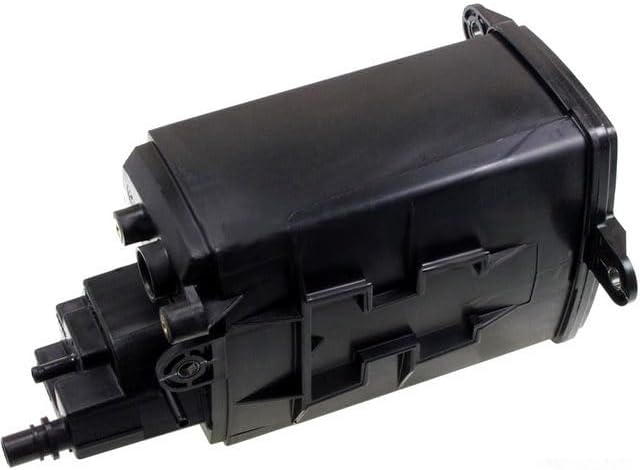
| Manufacturer | Sawyer Auto |
|---|---|
| Manufacturer Part Number | PG-1677191 |
| Item Weight | 5 pounds |
| Date First Available | March 18, 2025 |
This Sawyer Auto vapor canister is a direct-fit replacement intended to restore the evaporative emissions system on 2005-2006 Honda CR-V models. It installs in place of the factory unit and is described as manufactured to modern tooling and tested for reliability. In everyday use it captures fuel vapors and routes them to the engine for combustion, helping the vehicle pass emissions checks and preventing fuel-smell issues in the cabin and garage. The listing emphasizes direct fitment and higher-grade materials compared with the original part, which should simplify installation and deliver longer service life. Practical benefits include straightforward swap-in replacement without modification and a design focused on meeting factory fit and function. Limitations are that this is a single replacement part with no fitment options shown in the listing and the product description does not include explicit testing data or an included warranty statement, so buyers who want documented lab results or guaranteed coverage may need to confirm those details separately.
Best for: Risk-averse buyers seeking a straightforward, factory-style replacement for a 2005-2006 Honda CR-V who prioritize reliability and hassle-free installation.
Less Ideal for: Buyers who need extended warranty coverage, comprehensive lab test data, or who prefer parts with broad documented cross-vehicle compatibility should consider other options.
- Direct-fit design intended to install like the factory unit for 2005-2006 Honda CR-V
- Manufactured with modern tooling and described as using higher-grade materials than the original
- Designed to restore evaporative emissions control and reduce fuel vapor odors
- Road-tested and inspected during production for reliability
- Listing does not provide explicit warranty information or documented test results
- No alternative fitment options or part cross-reference details are shown
Verdict: A direct-fit vapor canister that aims to restore evaporative emissions control on 2005-2006 Honda CR-Vs with factory-style fit and upgraded materials.
Choosing the Right Honda CR-V Vapor Canister: Key Factors to Consider
Fit and Mounting Compatibility
A correct physical fit is essential because the canister must mount securely in the CR-V's EVAP bracket and align with factory hoses and clips. Improper fit can lead to vibrations, chafing, or disconnected hoses which cause leaks or code triggers.
Look for units that match OEM mounting points and hose connections to minimize installation time and avoid fabrication. If dimensions or mounting tabs differ, you may need adapters or brackets, which increases installation complexity and potential failure points.
Sealing and Leak Resistance
Sealing performance directly affects EVAP system integrity. A permeable or poorly sealed canister will allow fuel vapors to escape, creating odor and potentially causing a check engine light related to EVAP leak detection.
Inspecting sealing materials and connection designs helps predict long-term performance. Rubber grommets, molded flanges, and quality hose fittings reduce the chance of vacuum loss, while robust seals withstand thermal cycling and exposure to fuel vapors.
Charcoal Media Quality
The internal charcoal media is the active component that absorbs fuel vapors. Media quality and packing density influence adsorption capacity and how long the canister remains effective under normal driving conditions.
Higher-grade activated charcoal and well-packed media resist channeling and dust migration. Poorly packed or low-grade media may saturate faster, reducing EVAP performance and shortening service intervals.
Valve and Port Compatibility
Many canisters interface with purge valves or other EVAP plumbing. Ensuring port sizes and valve interfaces match the CR-V's purge control components prevents installation issues and ensures correct flow rates during purge cycles.
Check that ports align with factory hoses and that any integrated valves or sensors are compatible in form and function. Mismatched ports can cause restrictions or leaks that affect diagnostic testing and system operation.
Durability and Environmental Resistance
Canisters are exposed to heat, road debris, and fuel vapors, so material durability matters. Impact-resistant housings and corrosion-resistant fittings reduce the chance of cracks or failures over time.
Consider materials that resist UV degradation and chemical attack from fuel vapors. Durable construction also helps prevent damage from road impacts and thermal expansion, which can compromise seals and internal media.
Serviceability and Replacement Considerations
Think about how easy it is to access and replace the canister during routine maintenance. A design that allows hose access and clear mounting points simplifies installation and future service.
Also consider whether the canister uses replaceable components or requires full replacement. Units designed for straightforward swap-out reduce labor time and lower the risk of installation errors that can trigger EVAP system codes.
How We Chose the Best Honda CR-V Vapor Canister
We focused on components specifically designed for fitment on the Honda CR-V and prioritized parts that address the most common failure modes in this application. Key evaluation criteria included physical fit and mounting compatibility with the CR-V chassis, sealing integrity to resist vapor and vacuum leaks, material durability for exposure to fuel vapors and road conditions, and compatibility with the vehicle EVAP plumbing and valve interfaces.We also assessed flow and purge compatibility to ensure the canister works with the CR-V purge circuit, as well as overall construction quality and expected service life. Units lacking clear fitment data for the CR-V, or parts with ambiguous valve interfaces, were excluded. We did not consider general-purpose or universal canisters that require significant modification, nor did we include parts without adequate manufacturing or specification transparency.
Our full evaluation process is outlined in our review methodology.
FAQ
What are common vapor canister symptoms on a Honda CR-V?
Common symptoms often include a persistent fuel smell, rough idle, or intermittent check engine light with EVAP-related codes. You may also notice failed EVAP leak tests during diagnostics. Symptoms vary with the type and severity of the leak or internal failure.
How do I know if the vapor canister is leaking?
A leak can sometimes be identified by a fuel odor near the canister or by smoke or smoke-testing diagnostics. Mechanics also use EVAP pressure or smoke tests to find leaks. Small permeation or cracked housings can be harder to detect without specialized equipment.
Can I replace the charcoal vapor canister myself on a Honda CR-V?
If you have basic mechanical skills and access to simple hand tools, you can replace the canister, provided the replacement matches mounting and hose connections. Ensure you follow proper safety steps and verify fitment before installation. If unsure, seek professional help to avoid EVAP faults.
Will a faulty canister cause a check engine light with an EVAP code?
Yes, a degraded or leaking canister often contributes to EVAP-related check engine lights. Diagnostic trouble codes related to EVAP leaks or purge circuit faults frequently trace back to canister issues, though other EVAP components can also be the cause.
How long does an EVAP system canister usually last?
Canister lifespan varies with driving conditions and fuel quality, but they usually last several years under normal use. Exposure to contaminants, physical damage, or repeated saturation can shorten service life, so periodic inspection is recommended.
Does replacing the canister fix all EVAP-related problems?
Replacing the canister can resolve many EVAP issues if the canister is the root cause, but some problems stem from hoses, valves, or the purge control system. A proper diagnosis helps ensure you replace the component responsible for the fault.
Conclusion
When choosing a Honda CR-V vapor canister, prioritize correct fitment, sealing integrity, and durable construction. These factors most directly affect EVAP performance, leak prevention, and long-term reliability.Balance charcoal media quality and valve compatibility against ease of installation and serviceability. Addressing the specific failure symptoms you observed helps narrow options and reduces the chance of repeat diagnostics.
Explore More:
- Check out all Honda CR-V parts & accessories
- Explore Vapor Canister Maintenance & Repair Guides
- Explore Fuel System
- Browse all Auto Parts
