

Note: This article contains affiliate links. If you click on these links and make a purchase, I may earn a small commission at no extra cost to you. This helps support my research and content. Read my full affiliate disclosure here.
If you own a 1998-2011 Ford Ranger, a failing oxygen sensor can cause rough idle, poorer fuel economy, and an emission test failure. Choosing the right oxygen sensor replacement matters because an incorrect part or inferior sensor can leave the engine running rich or lean and trigger persistent check engine light oxygen sensor codes.This guide covers the top shortlisted oxygen sensors recommended for the 1998-2011 Ranger and explains the practical differences you should weigh. We evaluate fitment accuracy, sensor durability, and electrical reliability so you can pick the best option for restoring drivability and emissions performance.
Looking for other parts? See all Ford Ranger parts & accessories.
Top Picks at a Glance
| Best Overall The best all-around choice for most situations | BOSCH 15719 Premium Original Equipment Oxygen Sensor |  |
| Best Quality Built to a higher standard if you want something more solid | Motorcraft DY-835 Oxygen Sensor |  |
| Best Value The sweet spot between price and what you get | ACAUTO 15717 Oxygen O2 Sensor (2-Pack) — Upstream/Downstream, Heated, Direct Fit |  |
| Best Budget The cheapest option that still gets the job done reliably | Maxfavor 234-4070 Downstream Oxygen Sensor |  |
| Highest Rated A top-rated pick with lots of positive feedback | Bosch 15717 Premium Original Equipment Oxygen Sensor |  |
| Most Popular A crowd favorite that many people choose with confidence | Gledewen Upstream/Downstream Oxygen Sensor Set (2-pack) |  |
| Best Seller A high-volume bestseller chosen again and again | Gledewen Replacement Upstream/Downstream Oxygen Sensors (4-Pack) |  |
1. BOSCH 15719 Premium Original Equipment Oxygen Sensor

| Material | Stainless Steel |
|---|---|
| Maximum Supply Voltage | 5 Volts |
| Mounting Type | Flange Mount |
| Output Type | Digital |
| Upper Temperature Rating | 800 Degrees Celsius |
The Bosch 15719 is a premium, direct-fit oxygen sensor intended as a factory-quality replacement for older Ford Ranger-compatible engines and similar applications. It replaces the vehicle's downstream/upstream O2 sensor role depending on fitment and uses a stainless steel, double laser-welded body with a fast-acting heater to reach operating temperature quickly for accurate emissions control and fuel trim correction. True direct-fit connectors and pre-applied anti-seize threads simplify installation without additional wiring or adapters. Bosch tests each sensor for functionality and designs the protection tube to resist exhaust contamination, which should improve service life compared with cheaper generic units. The sensor is aimed at routine replacement to prevent drivability issues, poor fuel economy, and increased emissions, but buyers must confirm exact engine and sensor position for 1998-2011 Ford Ranger applications because fitment varies by year and engine. This is a straightforward upgrade for technicians and DIYers who want a reliable, OEM-style replacement rather than a budget aftermarket sensor.
Best for: Buyers who want a reliable, factory-quality replacement for a Ranger-era oxygen sensor and prefer tested, direct-fit parts that simplify installation and restore proper fuel and emissions control.
Less Ideal for: If you need a universal or multi-vehicle sensor for custom exhaust work or modified engines, this vehicle-specific direct-fit part is not the right choice.
- Direct-fit connectors and pre-coated threads streamline installation with no harness changes.
- Fast-acting heater helps the sensor reach operating temperature quickly for accurate readings at idle and short trips.
- Durable double laser-welded stainless steel body resists exhaust contamination and improves longevity.
- Factory testing for full functionality reduces the chance of out-of-box failures.
- Fitment depends on engine and sensor location so you must verify the correct position for your Ranger before purchase.
Verdict: Choose the Bosch 15719 when you want a tested, factory-quality direct-fit oxygen sensor to restore proper fuel economy and emissions performance on Ranger-era vehicles.
2. Motorcraft DY-835 Oxygen Sensor

| Measurement Accuracy | [±2-5]% |
|---|---|
| Measuring Range | 2 – 5% O2 |
| Mounting Type | Flange Mount |
| Output Type | electrical signal |
| Material Type | Stainless Steel |
The Motorcraft DY-835 is a factory-style oxygen sensor intended as a direct replacement for Ford applications. It measures oxygen content in the exhaust and outputs an electrical signal that the engine computer uses to adjust fuel trim and maintain emissions control. Installation is straightforward for anyone with basic mechanical skills because it uses a flange mount and matches original fitment. The sensor is stainless steel for corrosion resistance and lists a measurement accuracy of about 2 to 5 percent, which is adequate for restoring responsive fuel control and stable idle after a failing OEM unit is removed. Practical benefits include reliable long-term durability and compatibility with Ford systems backed by Motorcraft engineering. Limitations are that this is a like-for-like replacement aimed at restoring factory operation rather than improving performance tuning or richer wideband data for aftermarket engine management; buyers seeking high-precision performance logging should look at dedicated wideband sensors instead.
Best for: Buyers who want a reliable, factory-quality replacement to restore proper fuel control and emissions performance on older Ford Rangers rather than seeking aftermarket tuning upgrades.
Less Ideal for: Drivers who need high-precision wideband readings for performance tuning or data logging should consider a dedicated wideband sensor instead.
- Direct-fit design for straightforward replacement in compatible Ford vehicles
- Stainless steel construction improves resistance to corrosion and abrasion
- Reports oxygen as an electrical signal compatible with factory engine controls
- Measurement accuracy suitable for restoring correct fuel trims and emissions function
- Not a wideband sensor so it cannot provide high-precision AFR data for performance tuning
Verdict: Choose the Motorcraft DY-835 when you need a direct-fit, factory-quality oxygen sensor to reliably restore fuel control and emissions performance on 1998–2011 Ford Rangers.
3. ACAUTO 15717 Oxygen O2 Sensor (2-Pack) — Upstream/Downstream, Heated, Direct Fit

| Measurement Accuracy | ±1% |
|---|---|
| Mounting Type | Threaded Mount |
| Output Type | electronic signal |
| Material Type | Platinum, Stainless Steel |
The ACAUTO 15717 comes as a two-piece heated oxygen sensor set intended to replace upstream and downstream units on compatible Ford vehicles. It installs using a threaded mount and standard harness connector for a straightforward direct-fit swap, and the built-in heater brings the sensor to operating temperature quickly for faster, stable readings. Constructed with platinum sensing elements and stainless steel housing, the unit aims to deliver accurate oxygen measurements and consistent electronic signal output for fuel trim and emission systems. Practical touches include pre-applied anti-seize on the threads and factory-style electrical connections to reduce installation fuss. Limitations to keep in mind are that exact fitment must be confirmed against your vehicle plug and part number, and this is an aftermarket part so finish and long-term durability may vary compared with factory-brand replacements. For routine maintenance or replacing failed sensors that trigger check-engine lights, these provide an economical, ready-to-install option that restores closed-loop fueling behavior quickly.
Best for: Buyers who want a practical, cost-effective direct-replacement oxygen sensor to restore emissions and fuel-trim performance with minimal installation time.
Less Ideal for: Those seeking an exact factory-brand sensor for extended long-term warranty coverage or collectors wanting OEM-original components.
- Heated element reduces warm-up time so the sensor reaches operating temperature faster.
- Direct-fit threaded mount and matching harness connector simplify installation.
- Platinum sensing element for accurate oxygen measurement and reliable signal output.
- Pre-applied anti-seize on threads and factory-style connector reduce installation hassle.
- Aftermarket part so long-term durability and fit quality can vary compared with factory-brand parts.
Verdict: A budget-friendly, direct-fit heated oxygen sensor pair that gets your Ford Ranger back to proper emissions and fueling quickly with minimal fuss.
4. Maxfavor 234-4070 Downstream Oxygen Sensor
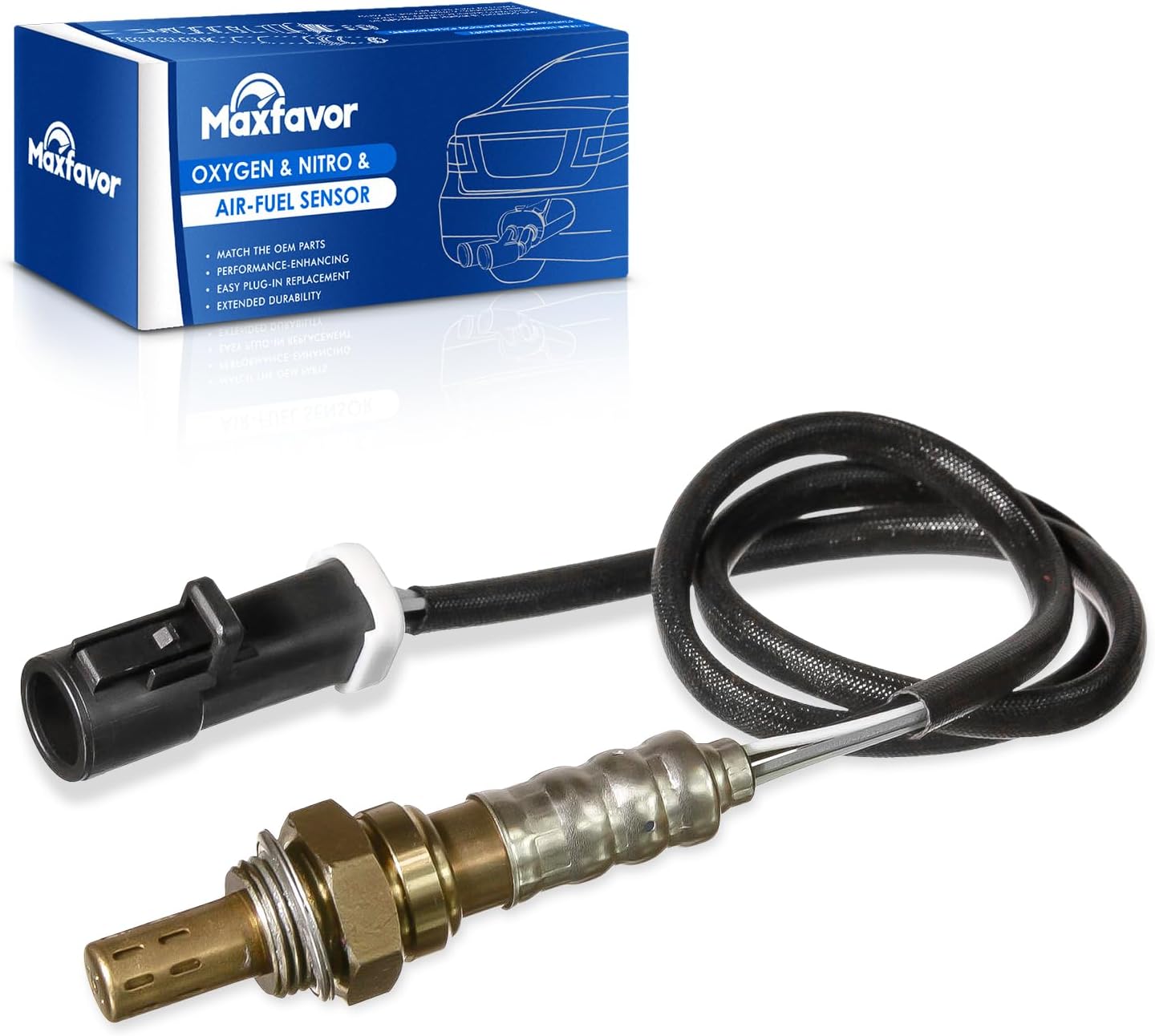
| Brand Name | Maxfavor |
|---|---|
| Model | 234-4070 |
| Included Components | Oxygen Sensor |
| Part Number | GR-OS01056-H |
This Maxfavor 234-4070 is a downstream oxygen sensor intended as a direct replacement for many Ford Ranger and compatible Mazda truck applications from the late 1990s through 2011. It installs in the exhaust after the catalytic converter to monitor residual oxygen and help the engine control module adjust fuel trim. Typical use is to swap it in where a failing downstream O2 sensor triggers a check engine light or causes poor fuel trimming. The unit includes the sensor, wiring and threaded bung and the listing highlights part-number cross-references to help confirm fit. Practical benefits are straightforward: it restores closed-loop monitoring after a bad sensor, is simple to install with basic hand tools, and is sold as a single-count replacement with a one-year warranty. Limitations are that fitment must be checked carefully against the pictured sensor and your vehicle configuration because there are several similar part numbers and lead lengths across model years, and this aftermarket option may not match factory sensor longevity or calibration exactly.
Best for: Buyers looking for a low-cost, direct replacement to clear downstream oxygen sensor faults and restore proper fuel trim on older Rangers and similar Mazda trucks.
Less Ideal for: Those who want a factory-original part with guaranteed identical calibration and long-term durability or owners who are unsure about exact sensor lead length and connector type without verifying fitment.
- Direct-fit replacement for many 1998–2011 Ford Ranger and compatible Mazda trucks when the correct part/lead length is selected
- Includes sensor and connector ready for bolt-in installation with common hand tools
- Lists cross-reference part numbers to help verify compatibility
- Backed by a one-year unlimited-miles warranty
- Aftermarket calibration and longevity may differ from factory sensors
- Multiple similar part numbers and lead-length options require careful verification before purchase
Verdict: A budget-friendly downstream O2 sensor that serves as a practical, easy-to-install replacement for older Ford Ranger and compatible Mazda truck applications when you confirm the correct part variant.
5. Bosch 15717 Premium Original Equipment Oxygen Sensor

| Maximum Supply Voltage | 12 Volts |
|---|---|
| Measurement Accuracy | ±1.5% |
| Mounting Type | Flange Mount |
| Output Type | Digital |
| Upper Temperature Rating | 1472 Degrees Fahrenheit |
The Bosch 15717 is a direct-fit oxygen sensor intended to replace a failing unit and return the engine control system to correct air-fuel feedback. It is used in the exhaust stream to measure oxygen content and send a digital signal to the engine computer; the built-in fast-acting heater brings the sensor up to operating temperature within seconds so it starts reporting quickly after cold starts. Bosch emphasizes robust construction with a double laser-welded stainless steel body and factory testing for functional reliability, while threads come pre-coated with anti-seize to simplify installation. Practical benefits include predictable fitment to listed Ford/Mazda/Mercury/Lincoln applications, corrosion-resistant materials for longer service life, and quicker closed-loop operation thanks to the heater. Limitations are that fitment must be verified for sensor position on specific 1998 to 2011 Ranger variants and that the unit is a single sensor; fleet replacements may require ordering multiple sensors separately.
Best for: Buyers who prioritize a dependable, factory-style replacement to restore correct emissions and fuel control on older Rangers and similar vehicles and who prefer parts built to automotive supplier quality standards.
Less Ideal for: Shoppers looking for a universal or adjustable sensor for custom exhaust setups or performance tuning should consider purpose-built aftermarket alternatives instead.
- Direct-fit connectors and pre-coated threads simplify installation
- Fast-acting heater reduces warm-up time and speeds return to closed-loop fueling
- Double laser-welded stainless steel body resists exhaust corrosion for longer service life
- 100% factory functional testing ensures consistent performance out of the box
- Sold as a single sensor so you may need to purchase additional units for multi-sensor replacements
Verdict: Choose this Bosch 15717 when you want a factory-quality, ready-to-install oxygen sensor that reliably restores proper emissions and fuel control on supported Ranger-era vehicles.
6. Gledewen Upstream/Downstream Oxygen Sensor Set (2-pack)

| Material | Stainless Steel |
|---|---|
| Mounting Type | Flange Mount |
| Output Type | Analog |
| Measurement Accuracy | ±0.5% |
This two-piece oxygen sensor set replaces both upstream and downstream sensors to restore proper air-fuel feedback for 1998–2011 Ford Ranger applications within the listed fitment range. Each sensor is stainless steel with a flange mount and analog output, designed to detect exhaust oxygen levels and feed that data to the engine control system. In practice the kit is used when check-engine lights, poor fuel economy, rough idle, or failed emissions tests point to worn sensors. The stainless body and laser-welded construction aim to resist heat and corrosion for longer life, and the supplier highlights ±0.5% measurement accuracy for stable readings. Installation requires matching the connector and thread to the original part and basic under-vehicle access; wiring and plug differences are noted as a common fit issue so visual comparison to the original is important. The set includes a 12-month replacement/refund promise from the seller, but buyers should verify plug compatibility before fitting to avoid returns.
Best for: Buyers who prefer validated replacements with documented seller support and want to address check-engine codes, poor fuel economy, or failed emissions by replacing both sensors at once.
Less Ideal for: If you prioritize guaranteed direct-fit connector matching without any verification or need sensors for vehicles outside the specified Ford-year scope, consider alternatives sold specifically for your exact plug configuration.
- Supplies both upstream and downstream sensors so you can replace the entire circuit at once
- Stainless steel, laser-welded construction improves resistance to heat and corrosion
- Manufacturer-stated ±0.5% measurement accuracy for consistent sensor readings
- Flange mount and analog output match common factory-style oxygen sensor interfaces
- Includes a 12-month replacement or refund option from the seller
- Fit depends on matching the vehicle connector and thread so it may not be plug-and-play for every vehicle
Verdict: If you need a cost-effective pair of replacement upstream and downstream oxygen sensors for Ford Ranger-era vehicles and value seller support, this stainless-steel 2-pack is a practical way to replace the whole sensor circuit.
7. Gledewen Replacement Upstream/Downstream Oxygen Sensors (4-Pack)

| Brand | Gledewen |
|---|---|
| Material | Stainless Steel |
| Mounting Type | Flange Mount |
| Output Type | Electronic |
| Upper Temperature Rating | 932 Degrees Fahrenheit |
This four-pack of Gledewen oxygen sensors supplies upstream and downstream monitoring for older Ford vehicles, including late-1990s to early-2010s Ranger applications covered by the fitment list. Each sensor has a stainless steel, flange-mounted body and an electronic output so the engine computer can read air-fuel ratio and adjust fueling to restore performance and emissions compliance. The sensors are double laser-welded and rated for high temperatures, which should help them resist exhaust corrosion and maintain response over time. In practice these replace factory sensors to clear rough-idle, poor fuel economy, or O2-related trouble codes when the original units have aged. Installation requires matching the connector and thread to the original part because fitment depends on plug type and location. The pack includes multiple part references to cover upstream and downstream positions, but buyers should visually confirm plug shape against their truck before installing. There is a 12-month warranty for replacement or refund if a unit fails within a year.
Best for: Buyers who want a low-risk, factory-style replacement set to restore emissions monitoring and fuel economy on older Ford Rangers and similar vehicles while minimizing repeat purchases.
Less Ideal for: Drivers who prefer OEM-branded parts from a dealer or those needing a one-off sensor rather than a full four-pack should consider other options.
- Four sensors cover both upstream and downstream positions so you can replace multiple failed units at once
- Stainless steel, double laser-welded body improves durability and resistance to exhaust corrosion
- Electronic output and factory-style flange mount make the sensors compatible with standard engine management systems
- High maximum temperature rating supports stable operation in hot exhaust environments
- Fitment depends on matching the sensor plug and thread to the original part so not every listed vehicle will accept these without verification
Verdict: A practical four-pack of high-temperature stainless steel O2 sensors that lets you replace both upstream and downstream units at once to quickly restore emissions control and fuel economy on older Ford Rangers.
Choosing the Right 1998-2011 Ford Ranger Oxygen Sensor: Key Factors to Consider
Fitment and Connector Type
Correct fitment is the starting point for any oxygen sensor replacement on the 1998-2011 Ford Ranger. The sensor must match the factory thread size and reach so it sits at the proper depth in the exhaust stream. A mismatched sensor can expose the element to incorrect exhaust flow and give erroneous readings.
Connector type matters because some Rangers use specific pigtail shapes and pin arrangements; using a sensor without the correct connector may force you to splice wires or use adapters, which increases failure points. Verify mounting orientation and harness routing to ensure the sensor cable will not rub against hot components or sharp edges.
Heated Vs Non-Heated Sensors
Many Rangers require a heated oxygen sensor to reach operating temperature quickly and allow the engine to enter closed-loop operation sooner. A functioning heater shortens warm-up time and helps reduce cold-start emissions and rough running during initial operation.
If a replacement lacks a heater where the vehicle originally used one, you will likely see prolonged O2 sensor symptoms and delayed fuel trim correction. Confirm whether the bank and position you are replacing originally used a heated element and choose a replacement with compatible heating characteristics.
Sensor Position and Function (Upstream Vs Downstream)
Upstream and downstream oxygen sensors perform different roles on the Ranger. The upstream sensor (typically before the catalytic converter) directly influences fuel trim and engine control, so its accuracy is critical for drivability and emissions. The downstream sensor (after the catalytic converter) monitors converter efficiency and supports diagnostic checks.
Replacing the wrong position or using a sensor with the wrong response profile can keep the engine management system from correcting mixture properly or cause persistent diagnostic trouble codes. Match the sensor to the bank and position on your Ranger when ordering and installing.
Response Time and Signal Quality
Response time is how quickly the oxygen sensor reacts to changes in exhaust oxygen content; faster sensors allow the engine control unit to adjust fuel delivery promptly. For the 1998-2011 Ranger, a slow or sluggish sensor can lead to noticeable O2 sensor symptoms such as hunting idle or uneven throttle response.
Signal quality involves stable voltage swings and minimal electrical noise. A sensor with poor signal fidelity can confuse the ECU and may trigger check engine light oxygen sensor alerts even if the sensor appears operational. Look for replacements with consistent voltage output and low electrical interference.
Durability and Environmental Resistance
Under the Ranger’s hood and along the exhaust path, sensors face high heat cycles, road salt, and moisture. Durable housings, quality sealing, and corrosion-resistant construction extend service life and reduce the chance of premature failure.
Cable routing and strain relief also affect longevity. Sensors with reinforced cables, protective sleeves, and robust connectors are less likely to suffer from chafing or water ingress, which can otherwise produce intermittent faults and O2 sensor codes.
Diagnostics and Compatibility With OBD-II Codes
Replacement oxygen sensors should provide signals compatible with the Ranger’s OBD-II system so diagnostic trouble codes clear normally once the fault is fixed. For example, common codes related to oxygen sensors will only reset if the new sensor produces expected voltage behavior and heater performance.
Consider how the sensor will interact with the vehicle’s diagnostics for bank 1 sensor 1 and other monitored positions. A part that does not meet expected operating ranges may cause persistent codes such as heater circuit faults or sensor slow response warnings.
Understanding Common O2 Sensor Symptoms On The Ranger
Recognizing typical symptoms helps determine whether the oxygen sensor is the likely cause. Common signs include an illuminated check engine light oxygen sensor code, noticeable drop in fuel economy, rough idle, and hesitation under acceleration. These issues often stem from slow sensor response or a failed heater circuit and are especially noticeable during cold starts.
- Persistent check engine light oxygen sensor codes such as heater circuit faults
- Reduced MPG and richer-than-normal running
- Rough idle or stalls during warm-up
- Delayed throttle response or hesitation under load
Which Sensor Positions Matter Most
For the 1998-2011 Ranger, upstream sensors have the most direct effect on engine fueling because their readings feed the ECU’s immediate fuel trim adjustments. Downstream sensors are primarily monitoring catalytic converter performance and are less likely to cause drivability problems unless they fail in a way that produces out-of-range signals.
- Bank 1 Sensor 1 affects fuel trim and drivability
- Bank 1 Sensor 2 monitors catalytic converter efficiency
- Confirm the vehicle’s required heated or non-heated arrangement before replacing any sensor
How To Test An Oxygen Sensor On Your Ranger
You can perform basic checks without advanced equipment to narrow down faults. Start by observing live O2 sensor voltages with a scan tool; a healthy upstream sensor will switch frequently between low and high voltage once warmed. If you do not have a scan tool, monitor for heater circuit diagnostic codes and note response behavior during a short test drive.
For bench or more thorough testing, back-probe the sensor harness to measure voltage swings and check heater circuit resistance with a multimeter. Do not test a hot sensor by touching the element. Follow safe procedures and let the exhaust cool before handling components.
- Use a scan tool to view voltage switching and heater status
- Measure heater resistance with a multimeter when sensor is cool
- Look for steady mid-range voltage which can indicate a stuck or failed sensor
Installation Tips For Reliable Service Life
Proper installation reduces the odds of early failure. Clean the mounting hole and use anti-seize on the sensor threads if recommended by the replacement part, but avoid getting anti-seize on the sensor tip. Route the cable away from heat sources and moving suspension parts, and secure it with factory clips or high-temperature ties.
Torque the sensor to the manufacturer’s spec to avoid thread damage or leaks. Reconnect the electrical connector fully and confirm the ECU has cleared any pending codes after a successful installation by running the vehicle through a short warm-up cycle.
- Apply recommended anti-seize to threads only, not the sensor tip
- Torque to specification and secure the harness away from hot components
- After install, verify heater and signal operation with a scan tool or by observing driving behavior
When To Replace Downstream Vs Upstream Sensors
Choose replacement based on the diagnostic evidence. If the vehicle shows poor fuel economy, fluctuating idle, or bank 1 sensor 1 codes, the upstream sensor is the primary suspect. If the check engine light cites converter efficiency or downstream sensor faults and drivability is otherwise normal, the downstream sensor is likely the issue.
Keep in mind that a failed catalytic converter can affect downstream readings, so use live data and freeze-frame codes to make an informed decision before replacing multiple sensors.
- Prioritize upstream sensor replacement for drivability issues
- Replace downstream sensors when converter efficiency codes are present
- Use live data and heater circuit checks to pinpoint the faulty position
Still looking for the perfect fit?
Select your Ford Ranger configuration to see the most relevant Oxygen Sensors recommendations
How We Chose the Best 1998-2011 Ford Ranger Oxygen Sensor
To assemble this list we focused on criteria that directly affect long-term fitment and emissions control on 1998-2011 Ford Ranger models. First, fitment accuracy was mandatory: we prioritized sensors that match the Ranger’s factory connector type and mounting orientation to avoid wiring splices or adapter use. Second, sensing performance mattered: we evaluated expected warm-up time and manufacturer-stated response characteristics because slower sensors can prolong closed-loop delay and influence fuel trims.Durability and materials were another filter. We favored sensors with corrosion-resistant housings and robust cable shielding to withstand under-hood heat and moisture common in Ranger applications. Electrical reliability was assessed by looking at built-in heaters and rated operating voltage ranges to ensure consistent readings across temperatures. Emissions and diagnostic compatibility was included by checking that sensors support standard OBD-II signals to clear common oxygen sensor codes.We excluded any parts that required major modifications, lacked clear fitment information for the 1998-2011 Ranger, or did not specify heated operation where required. The resulting selections balance correct fit, reliable sensing, and durable construction.
Our full evaluation process is outlined in our review methodology.
FAQ
How long do oxygen sensors last on a 1998-2011 Ford Ranger?
Oxygen sensor life depends on driving conditions and maintenance. They often last several years but can fail earlier if exposed to contaminants or heavy idling. Monitor for symptoms such as falling fuel economy or persistent error codes and test if you suspect deterioration.
Will replacing an oxygen sensor turn off the check engine light immediately?
Sometimes the light clears once the replacement sensor produces correct signals, but the ECU may need a few drive cycles to reset readiness monitors. Clearing codes with a scanner and driving the truck through normal conditions usually confirms the repair.
Can I install a non-heated sensor in place of a heated one?
Usually not. If the original position used a heated sensor, replacing it with a non-heated unit will often cause prolonged warm-up and may trigger heater circuit or performance-related codes. Match the heater configuration to the vehicle’s original setup.
What does bank 1 sensor 1 refer to on the Ranger?
Bank 1 Sensor 1 refers to the upstream oxygen sensor located on the exhaust bank that includes cylinder one. On most 1998-2011 Ranger engines, this sensor directly influences fuel trim and engine management, so its correct operation is important for drivability.
How do I know if the heater circuit is faulty?
A faulty heater circuit often sets a dedicated diagnostic code and can be diagnosed by measuring heater resistance with a multimeter when the sensor is cool. Additionally, the sensor may take too long to reach operating temperature, causing cold-start drivability complaints.
Is it worth testing a sensor before replacing it?
Yes. Testing helps avoid unnecessary replacement and identifies whether the issue is wiring, connectors, or the sensor element itself. Basic bench checks and live data scans can reveal slow response or heater failures that justify replacement.
Final Verdict
Focus first on correct fitment and heater compatibility when choosing an oxygen sensor for the 1998-2011 Ford Ranger. Upstream sensors have the greatest impact on fuel trim and drivability, while downstream units are important for emissions monitoring and catalyst checks. Expect tradeoffs between cost and long-term durability: prioritize sensors with proven sealing, robust cabling, and reliable heater performance if you drive in corrosive or high-heat environments.When in doubt, verify live OBD-II readings and heater circuit resistance before replacing parts so you address the true failure mode. Prioritize sensors that match the Ranger’s original specifications to restore proper engine control and emission compliance with minimal rework.
Explore More:
- Check out all Ford Ranger parts & accessories
- Explore Oxygen Sensors Maintenance & Repair Guides
- Explore Engine
- Browse all Auto Parts
