

Note: This article contains affiliate links. If you click on these links and make a purchase, I may earn a small commission at no extra cost to you. This helps support my research and content. Read my full affiliate disclosure here.
If your Honda Accord is showing reduced power or triggering emissions warnings, selecting the right catalytic converter matters for reliability and legal compliance. The right unit restores proper exhaust flow, helps the engine run smoothly, and keeps emissions within expected limits. This guide shortlists the top options for Honda Accord catalytic converter replacements and explains the criteria we used, including fitment accuracy and emission reduction effectiveness. Read on to find which features to prioritize when choosing a replacement.
Looking for other parts? See all Honda Accord parts & accessories.
Top Picks at a Glance
| Best Reviewed A top-rated pick with lots of positive feedback | A-Premium Catalytic Converter Kit, EPA-Compliant, Center Fit for Honda Accord V6 |  |
| Most Popular A crowd favorite that many people choose with confidence | PHILTOP Catalytic Converter Compatible with Honda 3.5L Engines (EPA Compliant) |  |
| Best Quality Built to a higher standard if you want something more solid | QKVBKAU Direct-Fit Catalytic Converter for Honda Accord 2.4L L4 | 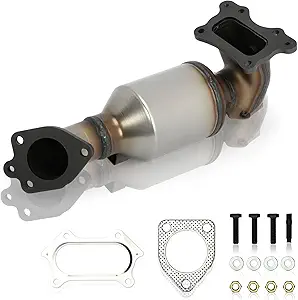 |
| Best Budget The cheapest option that still gets the job done reliably | KAX Direct-Fit Catalytic Converter for Honda Accord 2.4L (2013–2017) |  |
| Most Sold A high-volume bestseller chosen again and again | FOMIUZY High-Flow Front Catalytic Converter Kit for Honda Accord 2.4L (2008–2012) |  |
| Best Value for Money The sweet spot between price and what you get | ECHO AUTOMILES Catalytic Converter Kit for Honda Accord 2.4L L4 (2003–2007) |  |
| Best Overall The best all-around choice for most situations | Walker Ultra 16370 Direct-Fit Catalytic Converter for Honda Accord |  |
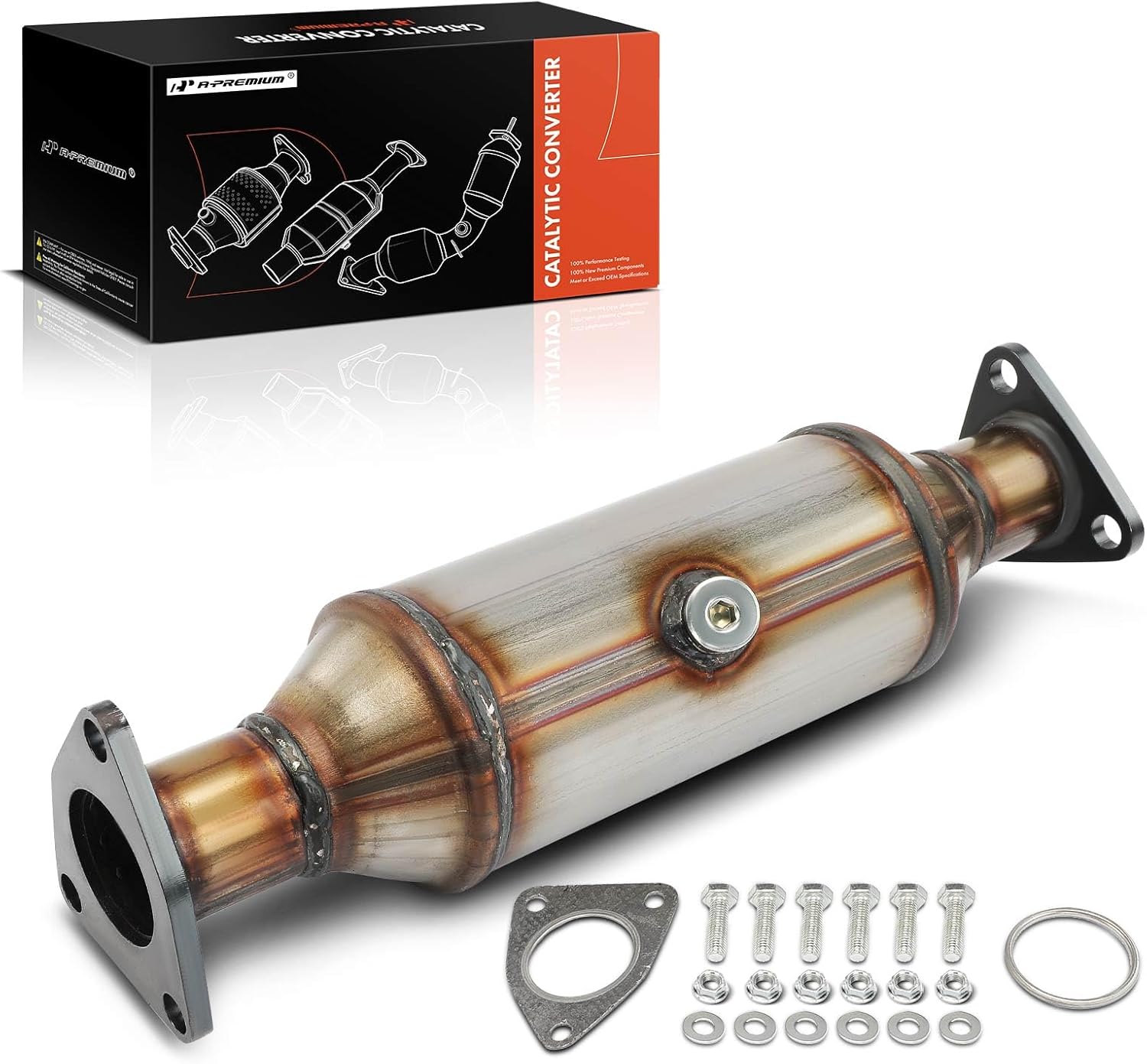
1. A-Premium Catalytic Converter Kit, EPA-Compliant, Center Fit for Honda Accord V6
| Vehicle Emissions Specifications | Federal Emissions |
|---|---|
| Position | Center |
| Body Material | Stainless Steel |
| Inlet Type | 3 Bolt Welded Flange |
| Mounting Hardware Included | Yes |
This A-Premium catalytic converter is a center-position replacement intended to restore emissions control on compatible Honda Accord V6 models. It installs using 3-bolt welded flanges on both inlet and outlet and ships with mounting hardware and gaskets to simplify a direct-fit swap where bolt patterns match. The converter is stainless steel and labeled EPA-compliant for federal emissions, which means it is built to meet regulatory requirements outside restricted states. In practice it is used as a factory-style replacement to clear codes, pass emissions checks, and return proper exhaust flow. Reported advantages include solid build quality and complete hardware, though some buyers noted sensor boss placement and heatshield mounting may require minor adjustments during installation. It comes with a one-year unlimited-mileage guarantee from the maker. If you need a center catalytic converter to replace a failing factory unit on a supported Accord and your state allows aftermarket EPA converters, this is a practical option; if your vehicle requires a state-specific or different-position unit, confirm fitment before buying.
Best for: A reliability-focused buyer who prioritizes restoring emissions function and wants a factory-style center catalytic converter for a V6 Accord to get the car passing checks and running cleanly.
Less Ideal for: Buyers in states with strict aftermarket converter rules or those needing a different converter position or a state-specific (e.g., California) unit should look for a certified alternative.
- Built for center-position replacement on compatible Accord V6 applications
- Stainless steel construction for corrosion resistance
- Includes gaskets and mounting hardware for easier installation
- 3-bolt welded flange inlet and outlet for a secure connection
- Not legal for sale or installation in some restricted states under certain conditions
- Sensor boss and heatshield hole locations may not match factory exactly requiring minor modification
- Weld-on to bolt-on differences can complicate installations that expected a different inlet type
Verdict A practical, EPA-compliant center replacement for Accord V6 owners who need a reliable, hardware-included catalytic converter, but check state legality and exact fit before installing.
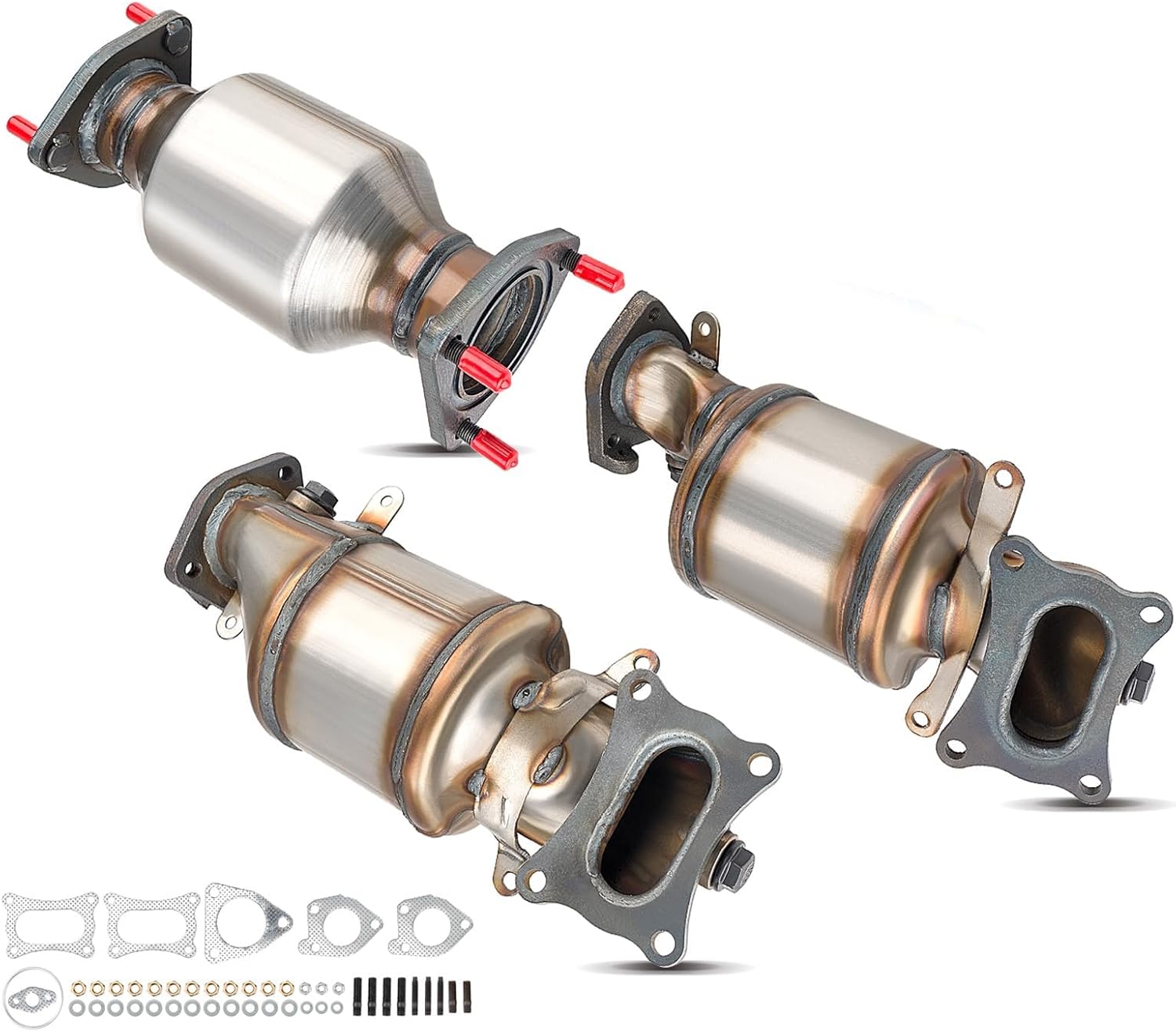
2. PHILTOP Catalytic Converter Compatible with Honda 3.5L Engines (EPA Compliant)
| Manufacturer | PHILTOP |
|---|---|
| Model | Catalytic Converter Honda Pilot 2009-2015 |
| Exterior | Machined |
| Manufacturer Part Number | 9997EXP233NUS |
This PHILTOP catalytic converter is a replacement unit intended for Honda vehicles with 3.5L engines and is EPA compliant for federal emissions models. It installs in place of the factory converter to restore emissions function and reduce check-engine codes related to catalyst efficiency. The unit uses an internal honeycomb ceramic substrate claimed to increase flow and catalytic surface area, which can improve drivability and fuel economy after swapping a failed original. Buyers will appreciate that it references common Honda part numbers for easier matching and ships with installation hardware in many kits. Practical limitations include potential fitment variance between model years and factory mounting points so professional installation or careful comparison to the original is advisable. Also this EPA kit is not legal for sale or use in states that require their own emissions parts. For Accord owners wanting a convenient, emissions-compliant replacement that aims to bring a high-flow profile back to the exhaust, this is a viable option when matched to the correct part number.
Best for: Buyers who prioritize convenience and want a ready replacement to clear emissions-related trouble codes and restore normal running without sourcing OEM dealer parts.
Less Ideal for: People in states that require state-specific emissions parts or anyone seeking a guaranteed factory-identical fit without professional installation should look for alternatives.
- Designed to match common Honda part numbers for simplified compatibility checks
- Internal honeycomb ceramic substrate increases catalytic surface area and flow
- EPA compliant for federal emissions systems
- Often includes hardware to simplify installation
- May require professional fitting because flange bends and mounting points can differ between model years
- Not legal for use in states with their own emissions standards
Verdict A convenient, EPA-compliant replacement aimed at restoring emissions function on Honda 3.5L models, but confirm flange and mount alignment before installation.
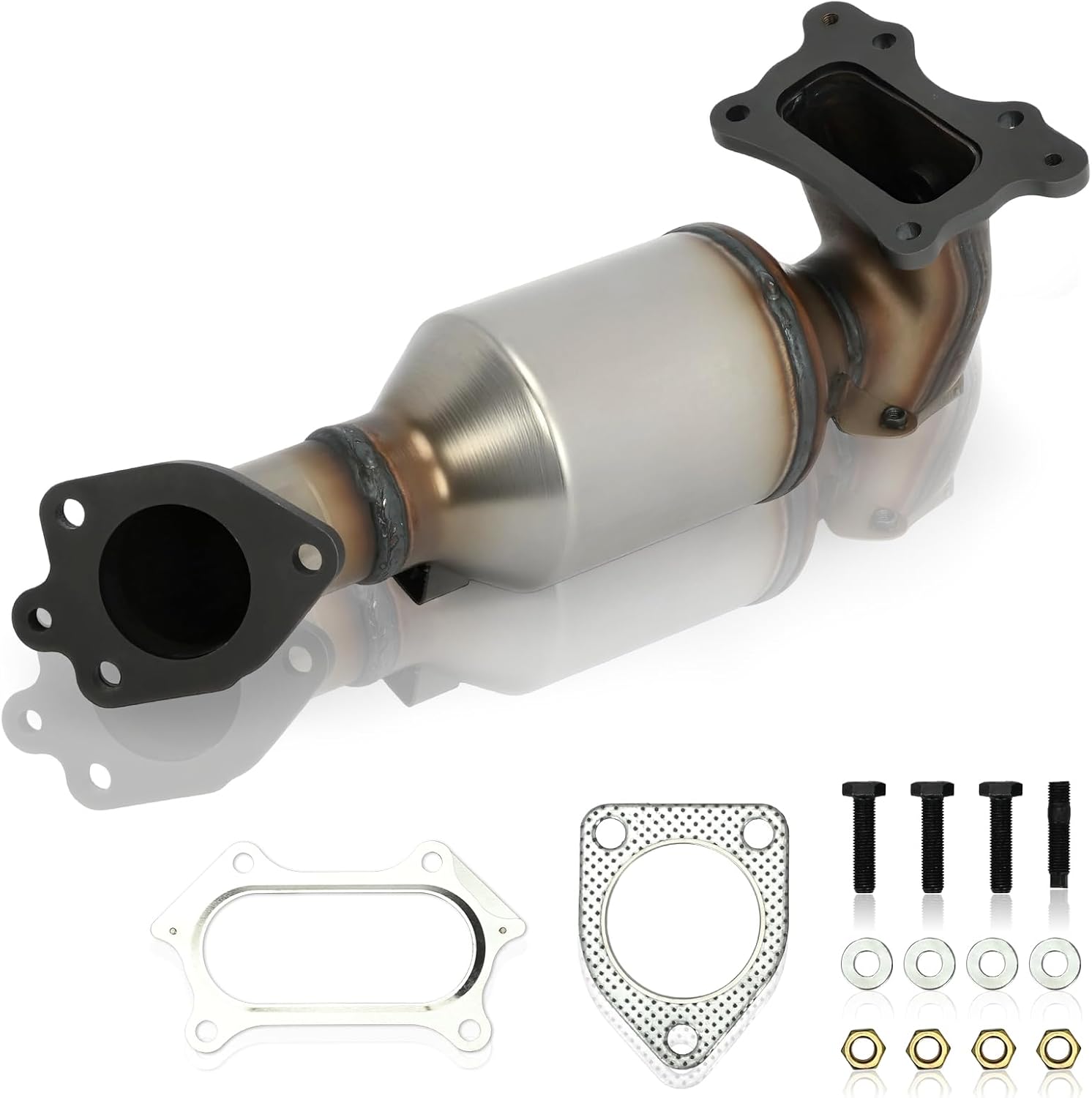
3. QKVBKAU Direct-Fit Catalytic Converter for Honda Accord 2.4L L4
| Fitment | Honda Accord 2.4L L4 (direct-fit) |
|---|---|
| Substrate coating | Platinum, palladium, rhodium |
| Compliance | EPA and OBD II (non-CARB states) |
This QKVBKAU catalytic converter is a direct-replacement unit built specifically for Honda Accord 2.4L L4 applications. It installs between the exhaust manifold and downstream pipe and is intended for use as a factory-quality replacement to restore emissions control and clear related diagnostic trouble codes. Notable features include a ceramic substrate coated with platinum, palladium, and rhodium for high conversion efficiency and a stainless steel housing designed to resist corrosion and high temperatures. The direct-fit layout and matching sensor ports make installation straightforward and reduce the need for modifications, which helps preserve exhaust flow and engine management calibration. It meets federal EPA and OBD II requirements for non-CARB states, so it suits emissions repairs where those standards apply. Limitations to consider are state-specific regulatory restrictions in CARB jurisdictions and the typical recommendation for professional installation to ensure leak-free sealing and correct torque at flanges. For performance-focused owners, this unit aims to balance flow and emissions control rather than increase power output.
Best for: Performance-oriented owners who prioritize restoring OEM-level emissions control and reliable exhaust flow on a Honda Accord 2.4L L4 while keeping engine management functioning as intended.
Less Ideal for: Drivers in California and other CARB states who need a CARB-approved catalytic converter should look for a certified alternative; those seeking power gains rather than emissions restoration should consider performance exhaust components instead.
- Direct-fit design tailored for Honda Accord 2.4L L4 to simplify installation and alignment
- Triple-metal coating (platinum, palladium, rhodium) on the substrate for improved conversion efficiency
- Stainless steel construction resists corrosion and withstands high exhaust temperatures
- Designed to meet federal EPA and OBD II requirements for legal compliance in non-CARB states
- Not CARB-compliant for states with stricter emissions regulations
- Professional installation is recommended to ensure proper sealing and avoid leaks
Verdict A factory-quality direct-fit converter focused on reliable emissions control and exhaust flow for performance-minded Honda Accord 2.4L owners, but not suitable for CARB-only regions.
4. KAX Direct-Fit Catalytic Converter for Honda Accord 2.4L (2013–2017)

| Vehicle fitment | Honda Accord 2.4L 2013–2017 |
|---|---|
| Position | Rear catalytic converter |
| Material | Stainless steel body with aluminized pipes |
| Compliance | EPA compliant (federal, not for CA/CO/NY/ME) |
This KAX catalytic converter is a direct-fit replacement for the Honda Accord 2.4L (2013–2017) rear position and is intended to restore emissions control and exhaust flow without major modifications. It ships as a complete kit with gaskets and hardware so you can bolt it in place during a routine exhaust repair. Construction uses a stainless steel body with aluminized piping and a double-layer ceramic carrier designed to increase flow area, which should help with throttle response and fuel efficiency compared with a clogged unit. The listing states EPA compliance for federal emissions states, but the part is not legal for use in states with stricter rules. Real-world buyers report straightforward fitment and functioning conversions when installed by a mechanic. Expect a budget-friendly option that can clear P0420-type issues if the underlying sensors and engine conditions are healthy; however long-term durability and O2-sensor compatibility can vary versus higher-end factory-quality converters. If passing emissions on a 2013–2017 Accord is the goal and you want the lowest-cost fix, this unit is a practical choice with the usual longevity uncertainty of aftermarket cats.
Best for: Practical, budget-conscious owners who prioritize a low-cost, bolt-on fix to restore emissions compliance on a 2013–2017 Honda Accord 2.4L and prefer to avoid dealer pricing.
Less Ideal for: Drivers in states with strict aftermarket converter rules or those who want a long-term factory-quality replacement without any uncertainty should consider higher-end or dealer parts instead.
- Direct-fit design with included gaskets and hardware for bolt-on installation on the 2013–2017 Accord 2.4L rear position
- Stainless steel body and aluminized piping resist corrosion better than plain mild steel
- Double-layer high-temperature ceramic carrier aimed at improved exhaust flow and oxygen storage
- EPA-compliant for federal emissions states which helps with standard smog testing outside restricted states
- Not legal for sale or installation in certain states with stricter emissions rules
- Aftermarket longevity and heat‑cycle resistance may not match factory-quality converters
- Performance vs OEM can vary depending on O2 sensor condition and underlying engine issues
Verdict A cost-effective direct-fit rear catalytic converter for 2013–2017 Accord 2.4L owners who need an affordable emissions repair but accept the usual durability uncertainty of aftermarket units.
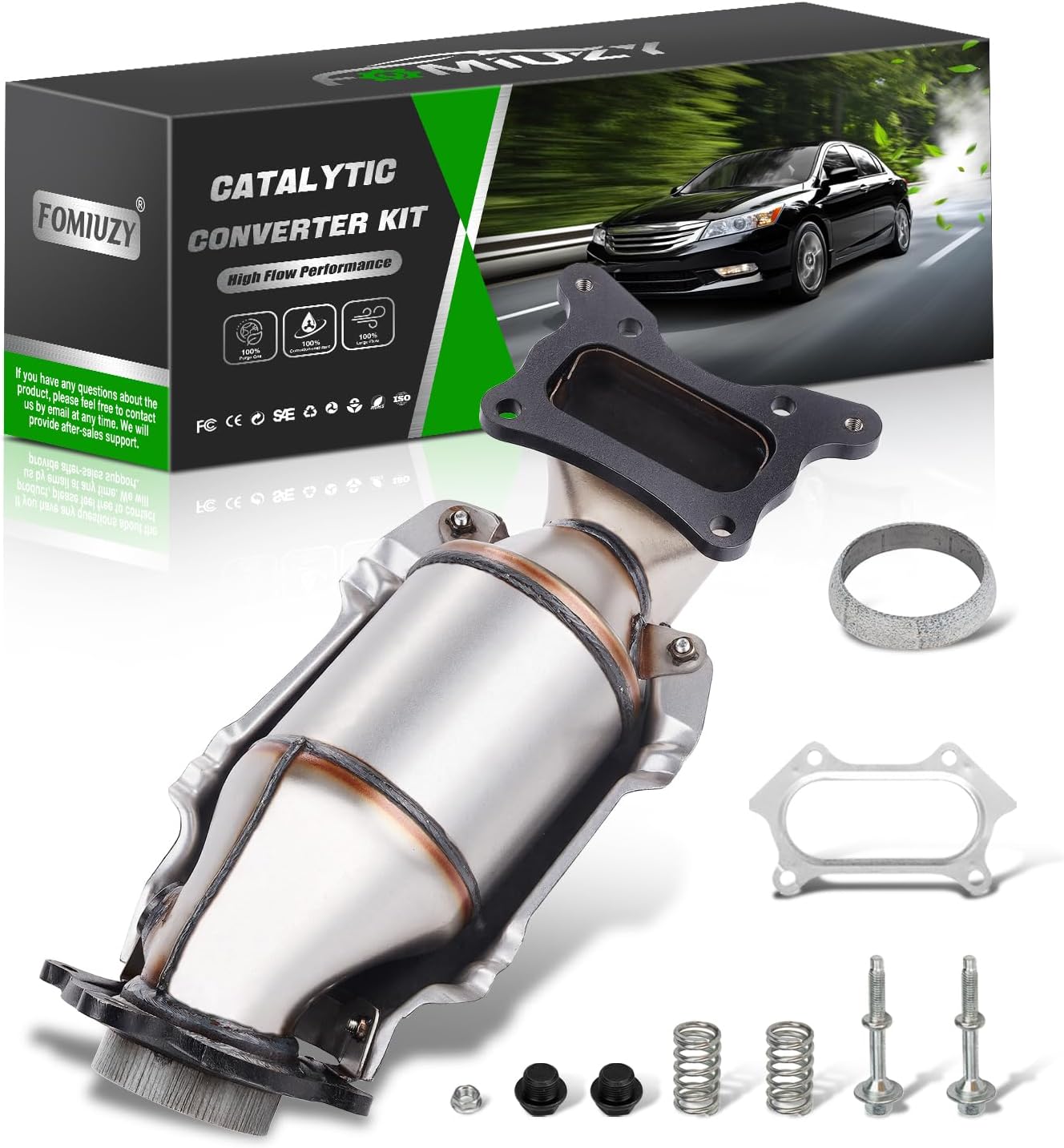
5. FOMIUZY High-Flow Front Catalytic Converter Kit for Honda Accord 2.4L (2008–2012)
| Fitment | 2008–2012 Honda Accord 2.4L |
|---|---|
| Product type | Front catalytic converter kit |
| Manufacturer | FOMIUZY |
| Part number | accord wqpf 2008-2012 |
This FOMIUZY high-flow front catalytic converter kit is a direct replacement intended to clear a P0420 and restore emissions performance on 2008–2012 Honda Accord 2.4L models. It installs in the factory location and is typically used to repair a clogged or stolen converter or to pass emissions testing. The unit uses a stainless steel aluminized pipe and a double-layer high-temperature ceramic carrier to increase flow area and oxygen storage, which can reduce backpressure and help fuel economy relative to a severely clogged original. The listing notes factory testing and claims compliance with OBD3 standards, and some buyers report the check engine light clearing and passing emissions after installation. Expect to bolt the part in place and weld the joints for best sealing; the kit includes basic hardware but some users replaced the supplied gasket. Limitations include occasional issues with sensor wiring durability and mixed reports about warranty responsiveness, so factor in the possibility of follow-up support or replacement if problems arise.
Best for: Risk-averse mainstream buyers who prioritize restoring emissions compliance and a quiet, reliable driving experience without paying OEM dealer prices.
Less Ideal for: Buyers seeking a direct OEM-branded part with dealer-level warranty support or those who want a guaranteed long-term, emissions-certified solution for states with stricter rules.
- Direct-fit design for 2008–2012 Honda Accord 2.4L to simplify replacement
- Stainless steel aluminized piping resists corrosion compared with plain mild steel
- Double-layer ceramic carrier aimed at improving flow and oxygen storage to help emissions and drivability
- Includes hardware for installation so you can bolt it in before welding for a secure seal
- Meets stated OBD3 production standards and reportedly resolves P0420 codes for many users
- Sensor wiring attachment quality has reported failures requiring repair or replacement
- Some buyers report difficulty reaching the manufacturer for warranty service
- May require welding and a better gasket than the supplied one for a reliable long-term seal
Verdict A cost-effective direct-fit replacement that often clears P0420 codes and restores emissions function, but be prepared to address sensor wiring, gasket, or warranty follow-up if needed.
6. ECHO AUTOMILES Catalytic Converter Kit for Honda Accord 2.4L L4 (2003–2007)

| Vehicle fitment | Honda Accord 2003–2007 L4 2.4L |
|---|---|
| Units included | 2 pieces |
| EPA compliance | Designed to meet federal EPA standards |
| Manufacturer part number | YL11246G |
This ECHO AUTOMILES catalytic converter kit replaces the factory units on 2003–2007 Honda Accord 2.4L four-cylinder models and comes as a two-piece set intended to restore emissions control and engine performance. It uses a high-flow internal design aimed at reducing backpressure, which can help marginally improve throttle response and fuel efficiency compared with a clogged or damaged OEM converter. The product is marketed as EPA-compliant for federal standards and ships with hardware in most runs, though several owners reported differences in flange and bolt sizes that required minor modifications or aftermarket gaskets during installation. Typical use is a direct exhaust replacement during a repair or emissions fix; a mechanic with basic exhaust experience can install it, but tolerance mismatches may require welding or custom flanges. The practical benefits are lower cost than many factory-quality replacements and improved exhaust flow versus a failing unit. Limitations include potential fitment variations between production batches and ineligibility for sale or installation in California and Colorado, so confirm local emissions rules before choosing this kit.
Best for: Practical optimizers who want a lower-cost, emissions-compliant replacement to get a 2003–2007 Accord 2.4L back on the road without paying for dealer parts and who are comfortable arranging minor installation adjustments.
Less Ideal for: Buyers who need a guaranteed bolt‑in, factory-identical swap without any modifications or those subject to California or Colorado emissions regulations should look elsewhere.
- Sold as a two-piece kit to replace both converters on the specified Accord engine layout
- High-flow internal design intended to reduce backpressure and improve exhaust efficiency
- Designed to meet federal EPA emissions requirements for eligible states
- Multiple customer reports of correct fitment for 2003–2007 Accord models when vehicle info was confirmed
- Some units have flange, bolt size, or gasket differences that can require welding or custom adapters during installation
- Not legal for sale or installation in California and Colorado and restricted in certain other states
Verdict A budget-friendly, EPA-compliant two-piece catalytic converter kit for 2003–2007 Honda Accord 2.4L that can save money but may need minor installation work.
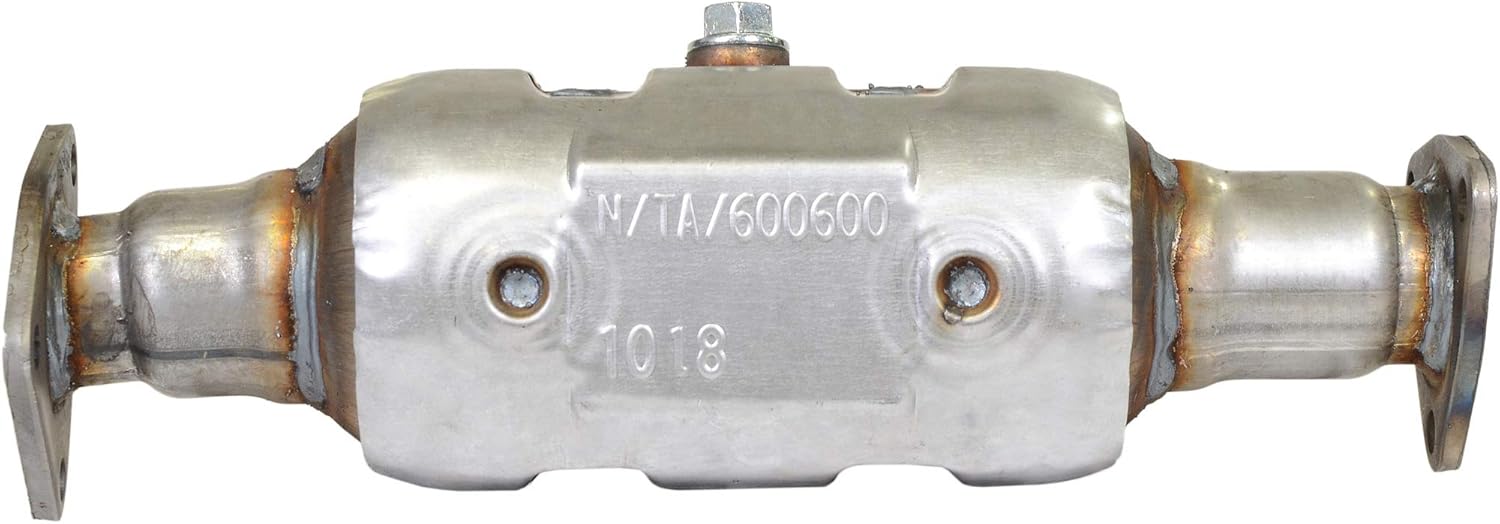
7. Walker Ultra 16370 Direct-Fit Catalytic Converter for Honda Accord
| Compatibility | Fits 1998-2002 Honda Accord (model-year notes in description) |
|---|---|
| EPA compliance | For OBDII vehicles (1996 and newer) |
| Construction | Stainless-steel body with OE-style heat shields |
The Walker Ultra 16370 is a direct-fit catalytic converter designed specifically for Honda Accord applications, offering a bolt-on replacement that mirrors factory hangers, flanges and heat shielding. It is EPA compliant for OBDII vehicles, so it is intended to restore emissions control and clear related check-engine codes when installed. Typical installation is straightforward for a professional or experienced DIYer because the unit matches OEM routing and mounting points, though some buyers report needing new bolts or gaskets separately. Built with a stainless-steel body and OE-style washcoat and precious-metal load, the part aims to balance durability with required emissions reduction rather than performance tuning. Practical benefits include avoiding fabrication or welding and retaining underbody heat protection where originally equipped. Limitations to consider are that the kit may not include hardware or gaskets and state regulations about aftermarket converters vary, so confirm legal compliance before fitting.
Best for: A balanced all-round buyer who wants a factory-quality replacement that restores emissions compliance and fits without fabrication, prioritizing reliability and straightforward installation.
Less Ideal for: Not a good choice for buyers seeking a performance-oriented upgrade or a universal fit solution; also unsuitable where local regulations prohibit this aftermarket replacement.
- Direct-fit design with OEM-style hangers and flanges for straightforward bolt-on installation
- EPA compliant for OBDII vehicles, restoring emissions control to meet federal standards
- Stainless-steel construction and OE-style heat shields for durability and underbody protection
- Factory-style washcoat and precious metal load formulated to reduce tailpipe emissions to match application
- May ship without new bolts or gaskets, requiring separate purchases for a complete installation
- Aftermarket converter regulations vary by state so legal compliance must be confirmed before use
Verdict A reliable, factory-style direct-fit catalytic converter for Honda Accord owners who need a regulation-compliant, easy-to-install replacement.
Choosing the Right Honda Accord Catalytic Converter: Key Factors to Consider
Fitment and Bolt Pattern
Accurate fitment is critical because a mismatch can cause exhaust leaks, check-engine lights, or the need for custom fabrication. Confirming bolt pattern, pipe diameter, and mounting points reduces installation time and avoids modifications.
A converter that matches factory dimensions preserves sensor placement and exhaust routing, which helps maintain correct oxygen sensor readings and engine management. Prioritizing precise fitment lowers the risk of leaks that can affect emissions and drivetrain performance.
Catalyst Substrate and Washcoat
The substrate and washcoat determine how effectively the converter oxidizes hydrocarbons and carbon monoxide and reduces nitrogen oxides. Higher-quality substrates and a well-applied washcoat increase conversion efficiency and longevity under thermal cycling.
Choosing a unit with a dense, durable washcoat helps maintain performance over many heat cycles, which matters for consistent emissions control and to avoid premature degradation that reduces conversion rates.
Backpressure and Exhaust Flow
Catalytic converters alter exhaust flow, so balancing restriction with conversion efficiency is important. Excessive backpressure can reduce engine power and efficiency, while too little catalyst surface can lower emissions reduction.
Look for designs that preserve appropriate flow characteristics for the Accord engine in question. Properly matched flow reduces strain on the engine and helps maintain fuel economy and drivability while ensuring adequate emission treatment.
Durability and Corrosion Resistance
Exhaust components face heat, vibration, and road contaminants. Materials, welding quality, and protective finishes affect how long a converter resists rust and cracking. Stainless steel housings and robust welds extend service life in corrosive environments.
Choosing a durable unit reduces the chance of physical failure, exhaust leaks, or broken hangers, which can lead to noise, reduced emissions control, or repeated repairs.
Sensor Compatibility
Oxygen and other exhaust sensors must be positioned at the correct distance from the catalyst to provide accurate engine control feedback. A converter that preserves OEM sensor locations avoids triggering diagnostic trouble codes and maintains proper air-fuel management.
Ensure the replacement maintains or provides correct sensor bungs and wiring access to prevent sensor misreads that can cause drivability issues or illuminate the check engine light.
Emissions Certification and Legal Compliance
Local emissions rules can dictate whether a catalytic converter is street-legal. Documentation of certification or adherence to emissions standards provides assurance that the unit meets regulatory requirements.
Choosing a certified unit helps avoid registration or inspection issues and ensures the converter performs to the regulatory benchmarks intended for emissions control in your vehicle.
FAQ
What signs indicate my Honda Accord catalytic converter might be failing?
Common indicators include a persistent check engine light, reduced engine power, or noticeably poorer acceleration. You may also notice a rotten egg smell from the exhaust or unusual rattling noises when the converter is severely degraded. These symptoms often warrant diagnostic testing to confirm catalyst performance rather than assuming immediate replacement.
Can I replace the catalytic converter myself on a Honda Accord?
Many mechanically inclined owners can perform a catalytic converter replacement, but it depends on access, tools, and rust conditions. Properly matching fitment and ensuring correct sensor placement are important. If you are unsure about welding, gasket sealing, or sensor wiring, professional installation reduces the risk of leaks and diagnostic issues.
Will a damaged catalytic converter cause the check engine light?
Yes, a failing converter often triggers the check engine light because oxygen sensor readings fall outside expected ranges or catalyst efficiency drops below thresholds. However, similar codes can arise from sensor faults or other exhaust issues, so use diagnostic scans to identify the root cause before replacing the converter.
How does a replacement affect exhaust emissions on a Honda Accord?
A properly specified replacement restores the converter’s ability to reduce hydrocarbons, carbon monoxide, and nitrogen oxides toward design levels. Effectiveness depends on correct fitment, catalyst quality, and intact sensor operation. Regular monitoring and proper installation help maintain emissions control over time.
What should I check to ensure a replacement will fit my Accord?
Verify the converter’s pipe diameters, flange or bolt pattern, mounting points, and sensor bung locations against your Accord’s original component. Cross-referencing vehicle year and engine configuration with the part’s fitment notes helps prevent mismatches that require modification.
How We Chose the Best Honda Accord Catalytic Converter
We selected products that specifically fit Honda Accord models and that meet documented emission-control standards for on-road use. Key evaluation criteria included physical fitment and bolt pattern accuracy, catalyst substrate and washcoat quality for emission conversion efficiency, backpressure and exhaust flow characteristics, durability of materials and corrosion resistance, and compliance with applicable emissions certifications. We excluded universal or generic converters that require extensive modification, off-road devices not certified for emissions control, and components lacking clear fitment or certification information. Our process prioritized parts that minimize installation complexity, maintain recommended exhaust backpressure, and offer robust corrosion protection to extend service life. We favored units with detailed technical specs so buyers can confirm compatibility with their specific Accord year and engine configuration.
Our full evaluation process is outlined in our review methodology.
Conclusion
When replacing a Honda Accord catalytic converter, prioritize accurate fitment, catalyst quality, and emission certification. Balancing exhaust flow and conversion efficiency helps preserve engine performance while meeting emissions requirements. Consider durability and sensor compatibility to avoid repeat repairs or diagnostic trouble codes. By focusing on these criteria you can select a unit that restores proper exhaust function and provides reliable emissions control for years.
Explore More:
- Check out all Honda Accord parts & accessories
- Explore Catalytic Converters Maintenance & Repair Guides
- Explore Exhaust & Emissions
- Browse all Auto Parts
