

Note: This article contains affiliate links. If you click on these links and make a purchase, I may earn a small commission at no extra cost to you. This helps support my research and content. Read my full affiliate disclosure here.
Replacing a radiator hose on a Honda Accord matters because a failing hose can cause overheating, coolant loss, or roadside breakdowns. You want a hose that fits precisely and holds up to heat, pressure, and age. This guide presents seven shortlisted Honda Accord radiator hose options chosen for their durability, fitment accuracy, and construction. We evaluate each pick against installation ease, material quality, and compatibility so you can quickly find the right coolant hose for your Accord.
Looking for other parts? See all Honda Accord parts & accessories.
Top Picks at a Glance
| Best overall The best all-around choice for most situations | PIT66 Silicone Radiator Hose Kit for 1997–2000 Honda Accord SiR F20B CF4 Euro-R CL1 |  |
| Best Quality Built to a higher standard if you want something more solid | PIT66 Silicone Radiator Coolant Hose Kit for 2003–2007 Honda Accord 2.4L K24A |  |
| Best Value The sweet spot between price and what you get | Dayco 71783 Upper Radiator Hose |  |
| Best budget The cheapest option that still gets the job done reliably | Dayco 72004 Radiator Hose |  |
| Highest Rated A top-rated pick with lots of positive feedback | HaoTang Silicone Radiator and Heater Hose Kit for Honda Accord 1994–1997 / Prelude H22 1997–2001 |  |
| Most popular A crowd favorite that many people choose with confidence | Dayco Curved Radiator Hose 71478 |  |
| Best Seller A high-volume bestseller chosen again and again | G-PLUS Silicone Radiator Coolant Hose Kit for Honda Accord V6 3.0L (1998–2002) |  |
1. PIT66 Silicone Radiator Hose Kit for 1997–2000 Honda Accord SiR F20B CF4 Euro-R CL1

| Compatibility | 1997-2000 Honda Accord SiR/Sir-T F20B CF4 Euro-R CL1 |
|---|---|
| Pieces | 7 Pcs Hoses |
| Material | Nylon, Silicone |
| Temperature range | -65F to 500F |
| Working pressure | 85 PSI |
This PIT66 kit replaces the factory coolant hoses on 1997–2000 Honda Accord SiR/SiR-T F20B CF4 Euro-R CL1 models with seven molded silicone hoses and matching clamps. Designed for cooling system maintenance or an overhaul, the hoses resist UV, water, ozone and oxygen exposure and are reinforced with nylon to handle higher pressures and temperatures; the listing states an operating range from -65F to 500F and a working pressure of 85 PSI. In practice these properties mean the hoses should be less prone to softening, cracking, and swelling than old rubber parts, and the thicker 4.5mm wall helps with durability under heat. Buyers should note fitment can be tight on some OEM connections and a top hose in one review required stretching to fit, so careful test-fitting and clamp adjustment are important. The kit is a practical option for owners doing a full hose refresh who want longer-lasting hoses than stock, but expect some fitting fiddling on installation and verify each hose route before final tightening.
Best for: Balanced buyers who want a complete, longer-lasting replacement hose set for maintenance or restoration of a 1997–2000 Honda Accord SiR and prioritize durability and a full-kit solution.
Less Ideal for: Drivers who prefer an exact drop-in match without any installation adjustments or owners unwilling to spend time test-fitting hoses should consider looking for alternative factory-quality replacements.
- Purpose-built seven-piece kit covers all key coolant hose connections for a full replacement
- Nylon-reinforced silicone construction offers high temperature tolerance and improved resistance to UV, ozone and water
- Rated working pressure (85 PSI) and thick 4.5mm wall for improved durability compared with aging rubber hoses
- Includes clamps so you get a ready-to-install kit rather than sourcing hardware separately
- Some hoses may require stretching or trimming for a precise fit to factory connections
- Fitment can be tight on OEM fittings which may need careful clamp adjustment during installation
Verdict: A full seven-piece silicone hose kit that upgrades longevity and heat resistance for 1997–2000 Honda Accord SiR cooling systems, but expect some fitment work during installation.
2. PIT66 Silicone Radiator Coolant Hose Kit for 2003–2007 Honda Accord 2.4L K24A

| Application | 2003-2007 Honda Accord CM 2.4L L4 K24A |
|---|---|
| Wall Thickness | 4.5 millimeters |
| Burst Pressure | 245 PSI |
| Working Temperature | -65F to 500F |
| Material Type | Nylon, Silicone |
This PIT66 silicone radiator hose kit replaces the factory coolant hoses on 2003–2007 Honda Accord CM 2.4L K24A engines with thicker, reinforced silicone hoses and included clamps for installation. It is used to route engine coolant between the radiator and engine while resisting heat, ozone, and UV exposure; the three-layer 4.5 mm construction and nylon reinforcement increase strength and durability compared with many rubber hoses. The kit is rated to a burst pressure of 245 PSI and a wide operating temperature range from -65F to 500F, which helps when running higher cooling system pressures or under elevated underhood temps. Included clamps make it a near plug-and-play swap for routine replacement or for owners upgrading to higher-temp or higher-pressure cooling setups. Expect a firmer, longer-lasting hose than stock, but be aware that silicone can be slightly less flexible for tight fits and may require careful trimming or repositioning during installation to avoid interference with adjacent components.
Best for: Performance-oriented Honda Accord owners who prioritize durability and higher thermal and pressure capability in their cooling system upgrades.
Less Ideal for: Owners looking for a soft, highly flexible hose for cramped installations or those who prefer to avoid modifying hose routing during installation should consider alternatives.
- High temperature range from -65F to 500F suitable for demanding engine conditions
- Reinforced three-layer silicone construction with 4.5 mm wall thickness for improved durability
- Burst pressure rated to 245 PSI for higher-pressure cooling systems
- Includes hose and clamps for a near plug-and-play replacement
- Silicone hoses are stiffer than some rubber originals and can be harder to route in tight engine bays
Verdict: A beefy, high-temperature silicone replacement hose kit built for Accord owners who want stronger, longer-lasting cooling system components.
3. Dayco 71783 Upper Radiator Hose
| Brand | Dayco |
|---|---|
| Material | Rubber |
| Nominal Wall Thickness | 1.5 millimeters |
| Item Length | 42.67 Centimeters |
| Manufacturer Part Number | 71783 |
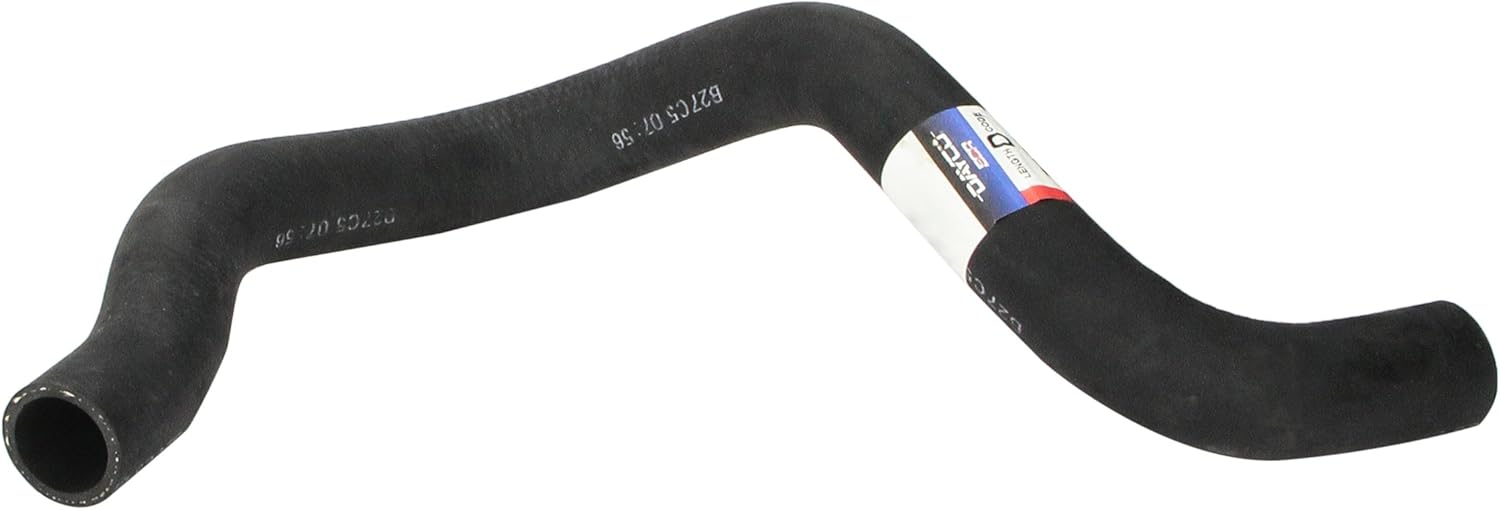
This Dayco upper radiator hose is a direct replacement-style coolant hose intended to route coolant between the engine and radiator. Made of molded rubber and supplied in a factory-style shape, it installs where the original upper hose sits and is used during routine cooling-system maintenance or when the original hose shows leaks, swelling, or soft spots. Notable features from the listing include a nominal wall thickness and a molded, curved profile that matches factory routing for a straightforward fit. The practical benefits are straightforward: it restores proper coolant flow, maintains system pressure, and avoids the hassle of modifying routing or clamps. Limitations are that this is a single replacement hose and not a multi-piece kit, and long-term durability depends on correct fitment and installation; the rubber construction can age over time under high-heat conditions like any conventional hose. For someone doing a straightforward Honda Accord cooling repair, this offers a balance of factory-style fit and value without specialty materials or upgrades.
Best for: Practical optimizers who want a cost-effective, factory-style replacement that restores a cooling system to working order without buying premium performance parts.
Less Ideal for: Buyers seeking extended-life silicone hoses, high-temperature performance upgrades, or a complete cooling overhaul including multiple hoses and new clamps should look elsewhere.
- Molded curved profile for factory-style fit and routing.
- Made of rubber material consistent with original hose construction.
- Simple direct-replacement install reduces need for modifications.
- From a recognized aftermarket supplier with history in engine parts.
- Single-piece replacement only, not a full hose kit with clamps or lower hose.
- Rubber construction is standard grade and not an upgraded performance material.
- Long-term lifespan will depend on engine heat exposure and periodic inspection.
Verdict: A budget-friendly, factory-style replacement upper radiator hose that fits like the original and suits routine cooling-system repairs.
4. Dayco 72004 Radiator Hose
| Brand | Dayco |
|---|---|
| Material | Rubber, Silicone |
| Model | 72004 |
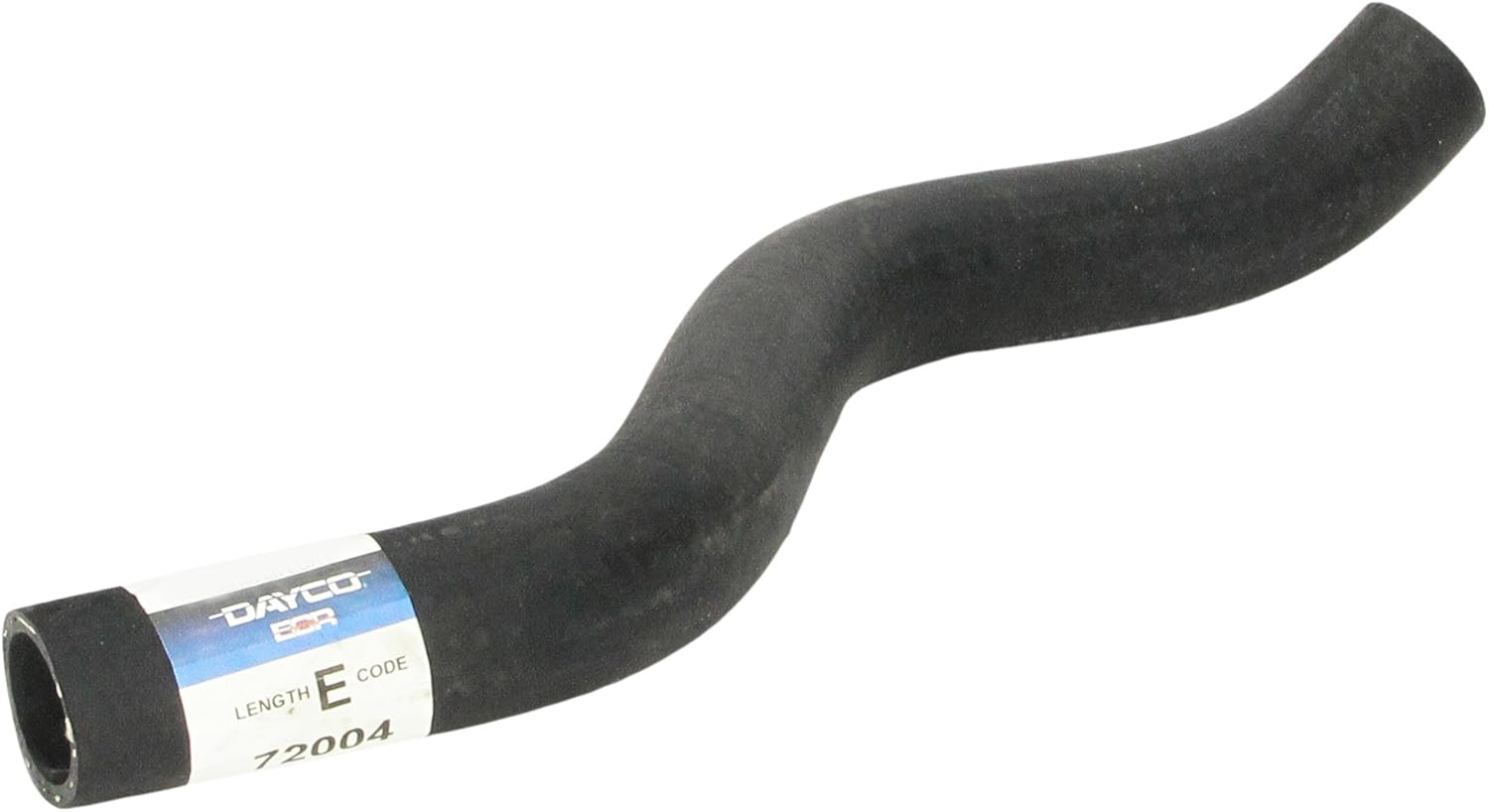
This Dayco 72004 radiator hose is a straightforward replacement part designed to restore coolant flow in a damaged or leaking hose on compatible vehicles. It is a molded rubber hose that installs in place of the factory unit and is typically used during routine cooling system repairs or when replacing a failed hose to stop leaks and prevent overheating. Notable features include factory-style fitment and rubber construction with silicone reinforcement where needed, which gives a balance of flexibility and heat resistance. For a budget-focused buyer the biggest practical benefit is delivering a near-factory fit without the premium price of name-brand OEM units, and many owners report quick, clamp-ready installation. Important limitations are that this is a single hose, not a multi-piece kit, and it uses standard rubber rather than high-performance silicone, so its long-term heat and pressure tolerance will be lower than specialty aftermarket hoses. Verify compatibility with your specific Accord model year and engine before ordering to ensure correct routing and connections.
Best for: Budget-conscious buyers looking for an affordable, factory-quality replacement part to repair a cooling system on their Honda Accord without extra features or performance upgrades.
Less Ideal for: Drivers wanting a high-temperature performance upgrade, long-term race use, or a full cooling system refresh that includes multiple hoses and higher-grade materials should consider performance silicone kits instead.
- Factory-style molded shape for direct fit and straightforward installation
- Rubber construction offers good flexibility and compatibility with factory clamps
- Fits standard cooling system repairs as a single, ready-to-install replacement hose
- Single replacement hose only rather than a multi-hose kit
- Rubber construction is less heat- and pressure-resistant than specialty silicone performance hoses
Verdict: A cost-effective, factory-fit replacement hose for routine Honda Accord cooling repairs, but not a high-temperature performance upgrade.
5. HaoTang Silicone Radiator and Heater Hose Kit for Honda Accord 1994–1997 / Prelude H22 1997–2001

| Material | Silicone |
|---|---|
| Compatible Models | Honda Accord 94-97 / Prelude H22 97-01 |
| Working Temperature Range | -65F to 500F |
| Bursting Pressure | 245 PSI |
| Wall Thickness | 4.5 mm, 3 ply |
This HaoTang silicone hose kit replaces the radiator and heater rubber hoses on specified 1994–1997 Honda Accord and 1997–2001 Prelude H22/F22 applications. It includes preformed silicone hoses and a clamp set for direct-fit replacement, so installation follows the OEM routing and restores coolant flow without fabricating lines. The silicone construction resists high temperatures, ozone, and aging, and the three-ply 4.5 mm wall plus a rated burst pressure around 245 PSI provide stronger pressure tolerance than typical rubber hoses. That makes the kit a practical upgrade for reliability-focused owners who want fewer coolant leaks and longer service life under daily driving or spirited use. Limitations are that fitment is vehicle-specific so verify engine code before buying and the kit does not include OEM-style fasteners beyond basic stainless clamps, so some installations may need additional hardware or minor trimming for perfect alignment.
Best for: Reliability-focused buyers who prioritize long-term durability and want a direct replacement that reduces coolant-leak risk and maintenance frequency for their Honda Accord or Prelude.
Less Ideal for: Owners seeking a universal or multiple-vehicle solution or those who need full OEM-style mounting hardware should consider other options.
- Preformed silicone hoses for direct-fit replacement on the listed Honda applications
- Higher heat and ozone resistance than stock rubber hoses for longer service life
- Three-ply construction with a 4.5 mm wall and high burst pressure for improved durability
- Includes a clamp set to secure connections without sourcing extra clamps
- Fitment limited to specific Accord and Prelude model years and engine types so it may not match other variants
- Does not include vehicle-specific OEM brackets or hoses beyond the pictured kit which could require additional clips or hardware
Verdict: A durable, direct-fit silicone hose kit that boosts heat and pressure resistance for reliability-minded Honda Accord and Prelude owners.
6. Dayco Curved Radiator Hose 71478

| Material | Reinforced Rubber |
|---|---|
| Length | 26 Inches |
| Included Components | Radiator Hose |
| Part Number | 71478 |
This Dayco radiator hose is a curved, 26-inch replacement intended to restore coolant routing where the factory hose has failed. Made from reinforced rubber and marketed to meet or exceed factory-quality requirements, it is used as a direct swap during routine cooling system repairs or when a burst hose leaves the engine vulnerable to overheating. The construction promises long-term burst resistance and reviewers report fit and durability consistent with OEM performance. Because it comes in a standard length you can trim it if it is slightly long, which can simplify installation in tight engine bays. The hose does not include clamps or additional installation hardware, so plan to reuse factory clamps or buy new ones separately. Fit depends on choosing the correct part for the specific model year and engine layout of the Honda Accord, so confirm compatibility before installing. For a convenience-focused buyer this hose offers an easy, reliable replacement that mirrors factory behavior but requires a small extra step to assemble clamps.
Best for: Convenience-driven buyers who want a straightforward, factory-quality replacement hose to quickly restore a Honda Accord cooling system with minimal troubleshooting.
Less Ideal for: Do-it-yourselfers who prefer a complete kit including clamps and fittings or buyers unsure of exact part fitment for their specific Accord model should consider alternatives.
- Reinforced rubber construction designed for long-term burst resistance
- Sold as a single curved radiator hose that matches factory routing
- Meets or exceeds factory-quality requirements for reliable replacement
- 26-inch length can be trimmed for a custom fit during installation
- No clamps or hardware included, so additional parts may be needed for installation
- Length may require trimming for some Honda Accord engine bays which adds a step to fitment
Verdict: A practical factory-quality curved radiator hose for Honda Accord owners who want a reliable, easy replacement but will need to provide clamps and confirm exact fitment.
7. G-PLUS Silicone Radiator Coolant Hose Kit for Honda Accord V6 3.0L (1998–2002)

| Material | Silicone |
|---|---|
| Fitment | Honda Accord V6 3.0L 1998-2002 |
| Working Pressure | 85 PSI |
| Burst Pressure | 245 PSI |
| Wall Thickness | 4.5 mm |
This G-PLUS silicone radiator coolant hose kit replaces the factory hoses on a Honda Accord V6 3.0L (1998–2002) and is intended for routine cooling-system repairs. The hoses are three-ply reinforced with a full 4.5 mm wall thickness and are rated to handle typical engine temperatures from -65F up to 500F and a working pressure of 85 PSI with a burst pressure of 245 PSI, so they stand up to hot-running conditions and higher-than-stock pressures. Installation is the same as a stock hose swap and several buyers note the silicone can be softened briefly in hot water to ease fitment. Practical benefits include longer life than many rubber hoses, resistance to heat and oil, and a form-fitting replacement that reduces the need for frequent changes. Limitations are that this is a model-specific kit for the 1998–2002 Accord V6 only and may require patience trimming or warming for perfect fitment on older engines with slight variations; the listing does not include clamps or multiple kit options, so check what your repair requires before starting the job.
Best for: Risk-averse, mainstream buyers who prioritize a durable, factory-quality replacement and want a long-lasting cooling hose kit that reduces return visits for the same repair.
Less Ideal for: Buyers looking for a universal kit, a plug-and-play upgrade with included clamps, or owners of Accords outside the 1998–2002 V6 fitment should consider other options.
- Reinforced 3-ply construction with 4.5 mm wall thickness for improved durability over stock rubber hoses
- Wide operating temperature range (-65F to 500F) suitable for hot engines and seasonal extremes
- High working and burst pressure ratings (85 PSI working, 245 PSI burst) for reliability under pressure
- Form-fitting replacement designed specifically for the 1998–2002 Honda Accord V6 for straightforward installation
- Kit appears to ship without clamps so additional hardware may be needed
- Fitment may require warming or slight trimming on older engines to achieve an exact seal
Verdict: A durable, heat-resistant silicone hose kit built for the 1998–2002 Accord V6 that gives a longer-lasting, factory-style replacement but may need extra clamps or minor fitment work.
Choosing the Right Honda Accord Radiator Hose: Key Factors to Consider
Material and Heat Resistance
The hose material determines how well it resists high under-hood temperatures, oil exposure, and ozone aging. Silicone and EPDM rubber are common choices; silicone often tolerates higher temperatures and resists hardening, while EPDM can offer good flexibility and chemical resistance.
Material choice affects lifespan and how frequently you will need radiator hose replacement. Selecting a material rated for the operating temperature of a Honda Accord reduces the chance of cracks, bulging, or premature failure.
Fitment and Dimensional Accuracy
Accurate hose diameter, length, and bend geometry are critical for proper routing and to avoid kinks or tension on adjacent components. A hose that matches OEM radiator hose size fitment will slip into the factory routing without forcing clamps or repositioning other parts.
Poor fitment can lead to stress at clamp points, accelerated wear, and coolant hose leak risk. Always verify both inner diameter and connection style to ensure a tight, leak-free connection.
Reinforcement and Pressure Rating
Reinforcement layers and fabric braids improve a hose's ability to withstand internal coolant pressure and transient spikes. The construction affects burst-resistance and whether the hose will maintain shape under vacuum or pressure cycles.
Hoses with clearly stated pressure or burst ratings give more confidence that they will handle the Accord's cooling system pressures without swelling or collapsing.
End Fittings and Clamp Compatibility
The design of hose ends and the quality of the bead or molded lip determine how well clamps seat and seal. A robust bead reduces the chance of clamp slippage and concentrates clamp force evenly around the connection.
Consider the type of clamp you will use and confirm compatibility. Some hoses are optimized for worm-drive clamps, while others work better with Oetiker-style crimp clamps. Proper clamp engagement helps prevent coolant loss and eliminates one common radiator hose symptom.
Flexibility and Bend Geometry
Hoses must flex enough to accommodate engine movement and vibration without rubbing against sharp edges or stretching. Correct bend geometry preserves flow and avoids stress points where cracks often start.
A hose that retains flexibility in cold weather is easier to install and less likely to develop split areas at bend radii. Check that bends match factory routing to reduce the need for trimming or forceful fitting.
Durability and Long-Term Aging
A hose's resistance to ozone, oil, coolant additives, and heat cycling determines its lifespan. Durable constructions resist hardening, softening, and blistering over time, which reduces the chance of unexpected failure.
Look for hoses with proven aging resistance and clear manufacturer guidance on expected service life. Regular inspection remains important, but choosing a hose built for long-term durability reduces maintenance frequency.
How We Chose the Best Honda Accord Radiator Hose
To assemble this list we applied hands-on editorial filters focused on the qualities that most affect long-term performance on a Honda Accord. Key criteria included material composition and heat resistance, dimensional fitment to factory routing, reinforcement and burst-pressure ratings, and quality of end fittings and hose bead design for clamp engagement. We also considered manufacturing consistency and corrosion resistance at connections, plus documented longevity in real-world use reports. We excluded hoses with vague fitment claims, non-standard dimensions that require adapter parts, and units lacking clear material specs. The shortlist favors parts that match OEM size fitment and routing, use durable rubber or reinforced silicone constructions, and provide secure clamp seating to minimize coolant hose leaks.
Our full evaluation process is outlined in our review methodology.
FAQ
What are common radiator hose symptoms on a Honda Accord?
Common signs include visible coolant leaks around hose connections, soft or swollen hose sections, and unexplained coolant loss. Overheating during normal driving and low coolant warnings can also indicate a degraded hose. Inspecting hoses for cracks, bulges, or soft spots often reveals the source before complete failure.
How often should I replace a radiator hose?
Replacement intervals vary by material and driving conditions, but hoses often need evaluation around the same time as major coolant service. Many owners inspect hoses annually and replace them if they show age-related signs such as cracking or softening. Environmental factors like extreme heat or oil exposure can shorten service life, so tailor inspection frequency to your usage.
Can I replace an upper or lower radiator hose myself?
Many Honda Accord radiator hose replacements are straightforward for a DIYer with basic tools and mechanical aptitude. The process typically involves draining coolant, loosening clamps, removing the old hose, and installing the new hose with proper clamp torque. Follow safety precautions, use the correct replacement hose size fitment, and properly refill and bleed the cooling system to avoid trapped air.
How do I know which hose size fits my Accord?
Confirm the inner diameter, overall length, and bend profile against the original hose or factory specifications. Manufacturers sometimes list application fitment by model year and engine variant to ensure correct routing. If dimensions differ, avoid forcing a hose into place; incorrect size can cause leaks or rubbing against nearby parts.
What causes a coolant hose leak at the clamp?
Leaks at clamps often stem from improper clamp placement, insufficient clamp torque, a damaged hose bead, or a clamp that is not compatible with the hose end. Hose degradation under the clamp can also prevent a tight seal. Inspect the clamp, replace worn clamps if needed, and ensure the hose end and clamp type match so the seal remains secure.
Conclusion
When choosing a Honda Accord radiator hose, prioritize accurate fitment, durable material, and secure end fittings to minimize the risk of coolant leaks and overheating. Balance flexibility and reinforcement so the hose follows factory routing without kinks while resisting pressure cycles and heat exposure. Regular visual inspections and proper clamp installation help extend service life. Use the factors above to decide which hose attributes matter most for your driving conditions and maintenance preferences.
Explore More:
- Check out all Honda Accord parts & accessories
- Explore Radiator Hoses Maintenance & Repair Guides
- Explore Cooling System
- Browse all Auto Parts
