

Note: This article contains affiliate links. If you click on these links and make a purchase, I may earn a small commission at no extra cost to you. This helps support my research and content. Read my full affiliate disclosure here.
If you drive a 1995-2000 Chevrolet Tahoe and want more ground clearance, better approach angles, or room for larger tires, choosing the right lift kit matters. The wrong kit can harm handling, increase wear, or require costly alignment and driveline changes. This guide presents seven shortlisted lift kits chosen for fitment, ease of installation, and real-world ride behavior specific to the 1995-2000 Tahoe.Below you will find practical guidance on what to prioritize, installation considerations, and the tradeoffs between ride quality and off-road performance to help you pick the right kit for your Tahoe.
Looking for other parts? See all Chevrolet Tahoe parts & accessories.
Top Picks at a Glance
| Best Overall Lift Kit Balanced choice that combines performance, reliability, and installation ease | TORCH 3" Front and 3" Rear Lift Kit for 1992–1999 Chevy/GMC 1500 4×4 |  |
| Best Budget Lift Kit Low-cost option that raises ride height without breaking the bank | Autsurles 3" Rear Leveling Lift Block Kit for Chevy Silverado/GMC Sierra 1500 (Rear) |  |
| Best Premium Lift Kit Higher-end components and engineering for improved performance and longevity | SUPERLIFT 4" Rear Block Kit for 1988–1998 GM 1500 Pickup and 1992–1999 1500 Suburban/Blazer/Tahoe |  |
| Best Complete Lift Kit Comprehensive package including all necessary parts for full installation | TORCH 3" Front and Rear Lift Kit for 1992–1999 Chevy/GMC 4×4 with Torsion Bar |  |
| Best Adjustable Lift Kit Kits with tunable ride height or adjustable components for flexibility | MotoFabLifts 99CHTK Adjustable Torsion Key Leveling Kit (1–3") |  |
| Best Compact Lift Kit Lower-profile or simpler-lift kits for minimal weight and space impact | SCITOO Front 1-3" / Rear 2" Leveling Lift Kit (vehicle-specific) |  |
1. TORCH 3" Front and 3" Rear Lift Kit for 1992–1999 Chevy/GMC 1500 4×4
Best Overall Lift Kit

| Fitment | 1992-1999 Chevy/GMC 1500 4×4 torsion-bar models |
|---|---|
| Front lift | 1"–3" adjustable torsion keys |
| Rear lift | 3" tapered blocks |
| Material Type | Alloy Steel |
| Included components | Torsion keys, tapered rear blocks, extended U-bolts, hardware |
This TORCH lift kit raises compatible 1500-series Chevy and GMC 4×4 SUVs about 1 to 3 inches up front (adjustable) and 3 inches in the rear using forged torsion keys and tapered steel lift blocks. It is intended for torsion-bar front suspensions and 6-lug models with 4×4 hardware, and includes extended zinc-plated U-bolts and installation hardware so a competent DIY mechanic can complete the bolt-on install in a few hours. The forged torsion keys allow fine adjustment of front ride height while the tapered fabricated rear blocks help keep driveline angle reasonable compared with flat blocks. Zinc-plated U-bolts resist corrosion, and the kit ships with instructions and all shown components. Limitations are fitment specificity to torsion-bar 6-lug 4×4 SUVs from the early 1990s and potential need for a professional alignment after lift; it does not include shocks or other suspension components, so pairing with properly rated shocks may be required for optimal ride quality and handling after installation.
Best for: A DIY-minded owner of a mid-1990s Chevy or GMC 1500-series 4×4 who wants a modest, factory-style lift with durable hardware and straightforward bolt-on installation.
Less Ideal for: Buyers seeking a full suspension overhaul, larger lifts, or a kit that includes shocks and control arm upgrades should look at more comprehensive systems or professional installation packages.
- Vehicle-specific fit for 1992–1999 Chevy/GMC 1500 4×4 torsion-bar models
- Forged torsion keys provide adjustable front lift without replacing control arms
- Tapered fabricated rear blocks maintain driveline angle and resist cracking
- Includes extended zinc-plated U-bolts and hardware for a complete bolt-on installation
- Does not include replacement shocks or other damping components which may be needed after lifting
- Only fits torsion-bar 6-lug 4×4 models, limiting compatibility to specific vehicles
Verdict: The best overall lift kit balances ride quality, durable components, straightforward installation, and long-term reliability for most DIY mechanics.
2. Autsurles 3" Rear Leveling Lift Block Kit for Chevy Silverado/GMC Sierra 1500 (Rear)
Best Budget Lift Kit

| Auto Part Position | Rear |
|---|---|
| Material Type | Aluminum |
| Maximum Lifting Height | 3 Inches |
| Included Components | Rear 3 inch Leveling Kit |
This Autsurles rear leveling kit is a straightforward way to gain about 3 inches of rear lift on compatible Chevrolet and GMC 1500 trucks. It includes a pair of anodized aluminum lift blocks with a cross gusset plate design and four extended square leaf spring U-bolts for installation. The kit is intended for buyers who want a simple lift to improve rear ride height, allow larger tires, and create a more aggressive stance without changing springs or shocks. CNC-machined components and 12.9 grade bolts improve strength compared with very cheap kits, and the anodized finish helps resist corrosion. Installation is relatively simple for someone comfortable with basic suspension work, though an alignment is recommended afterward because suspension geometry changes. Limitations are that this is a rear-only, simple block-style lift so it does not alter front ride height, ride tuning, or long-term suspension dynamics the way a full spring or spacer system would, and using larger tires may still require additional adjustments elsewhere.
Best for: Cost-conscious truck owners who want a safe, easy rear lift to improve appearance and fit slightly larger tires without replacing springs or doing complex suspension work.
Less Ideal for: Drivers seeking a full suspension upgrade, improved on-road handling, or matched front and rear lift should consider spring or spacer systems instead.
- Provides a straightforward 3-inch rear lift that improves stance and clears larger tires
- Anodized aluminum blocks with cross gusset plate add rigidity and corrosion resistance
- Includes extended square U-bolts and high-strength 12.9 grade bolts for secure mounting
- Relatively simple installation for a rear block kit without needing new springs or shocks
- Rear-only block design does not address front height or overall suspension tuning
Verdict: The best budget lift kit provides a safe, effective height increase with acceptable materials and simpler components for cost-conscious buyers.
3. SUPERLIFT 4" Rear Block Kit for 1988–1998 GM 1500 Pickup and 1992–1999 1500 Suburban/Blazer/Tahoe
Best Premium Lift Kit

| Automotive Fit Type | Vehicle Specific Fit |
|---|---|
| Maximum Lifting Height | 4 Inches |
| Auto Part Position | Rear |
| Material Type | Cast Iron |
This Superlift 4" block kit raises the rear of compatible 1500-series GM trucks and SUVs by 4 inches using heavy cast iron blocks, new U-bolts, and installation hardware. It is installed between the axle and leaf spring packs to lift the rear ride height for improved stance, clearance, or to level a front-heavy truck. The kit ships with a step-by-step instruction manual so a competent DIYer or a shop can complete the swap without modifying factory components. Cast iron blocks give durability and predictable sag resistance over steel shims, while included U-bolts and hardware simplify parts sourcing. Because this is a rear block kit it only alters rear ride height and does not change front geometry, so expect a change in driveline angle that may require additional tweaks like adjustable control arms or a pinion shimming solution for optimal driveline alignment. The design is straightforward and well suited to a long-term build, but the kit focuses on rear lift only and will not replace a full suspension upgrade for heavy off-road use.
Best for: Buyers building a durable, long-term 4-inch rear lift on a 1995–1999 Chevy Tahoe who prioritize factory-quality hardware and a vehicle-specific kit that is simple to install and service.
Less Ideal for: Drivers seeking a full suspension overhaul, larger multi-inch front-and-rear lift, or heavy-duty off-road shocks and control-arm upgrades should consider a complete suspension system instead.
- Vehicle-specific fit for 1988–1998 GM 1500 pickup and 1992–1999 1500 Suburban/Blazer/Tahoe for straightforward compatibility
- Durable cast iron blocks that resist deformation and provide stable rear ride height
- Includes U-bolts and all necessary nuts and washers to simplify installation
- Detailed instruction manual suitable for competent DIYers or professional installers
- Rear-only lift so front suspension geometry and driveline angles may need separate attention
Verdict: The best premium lift kit uses top-quality materials and refined design to deliver superior durability, handling, and long-term value for serious builders.
4. TORCH 3" Front and Rear Lift Kit for 1992–1999 Chevy/GMC 4×4 with Torsion Bar
Best Complete Lift Kit
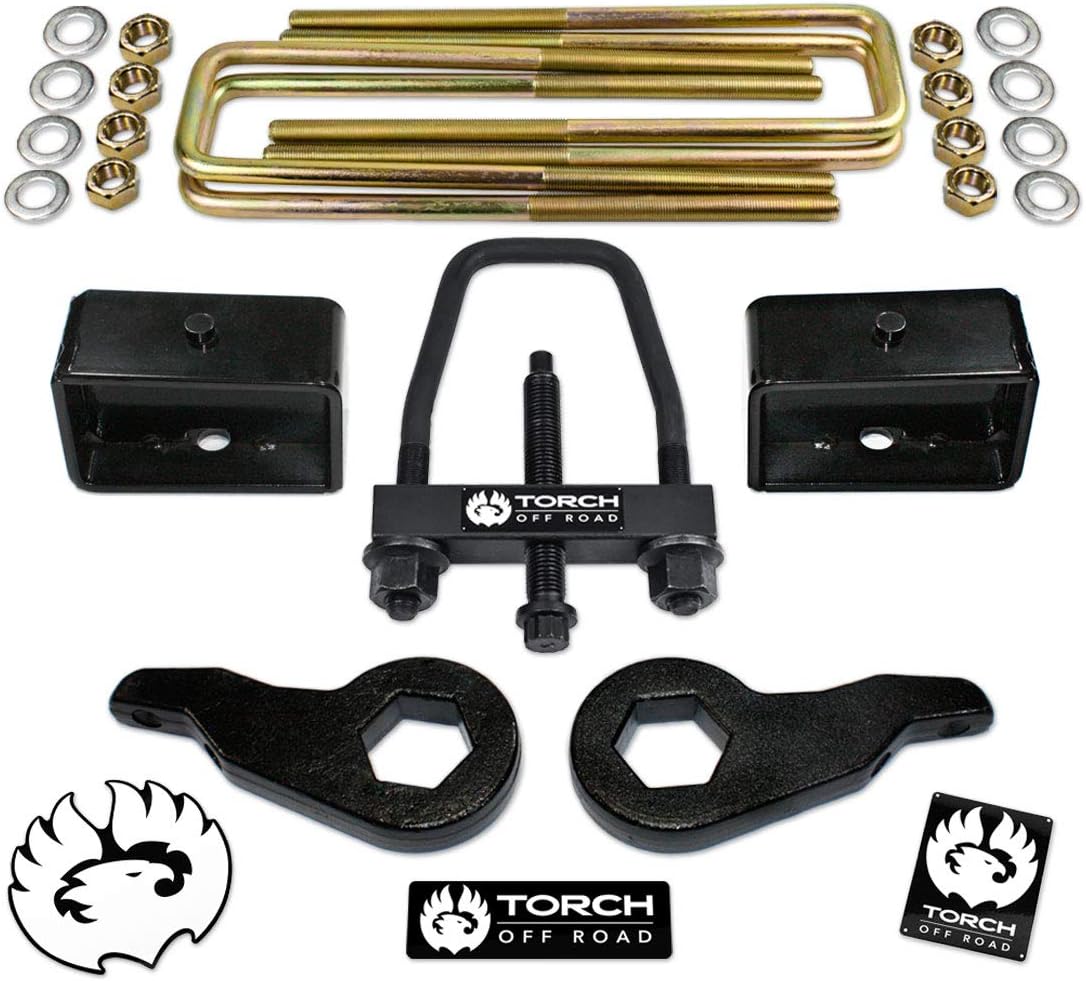
| Maximum Lifting Height | 3 Inches |
|---|---|
| Included Components | Torsion Keys, Tapered Rear Blocks, Extended U-Bolts, Torsion Key Unloading Tool, Hardware |
| Automotive Fit Type | Vehicle Specific Fit |
| Fitment Notes | 1992-1999 Chevy/GMC 6-lug 4×4 torsion bar models |
This TORCH lift kit raises the front and rear of compatible 6-lug torsion-bar 4×4 trucks and SUVs by up to 3 inches while supplying the main components needed for installation. The front uses adjustable forged torsion keys so you can dial 1 to 3 inches of lift from factory ride height, and the rear is handled by tapered fabricated steel blocks plus extended zinc-plated U-bolts to retain proper driveline angle and clamp-down strength. The kit comes with a squared torsion key unloading tool that is easier to seat and safer to use than rounded tools, and the package includes the hardware and instructions for a bolt-on installation that experienced DIYers can complete in a few hours. This is a focused body/suspension lift solution rather than a full suspension overhaul so it preserves factory control arms and geometry, but changing ride height still requires a post-install alignment and may reduce available suspension travel and wheel well clearance for some tire/wheel combinations.
Best for: A hands-on owner who wants a straightforward, vehicle-specific body lift to run larger tires and improve stance while keeping most factory suspension components in place, and who plans to do the work themselves or with basic shop support.
Less Ideal for: Drivers seeking a complete suspension overhaul or a kit that replaces control arms, brackets, or corrects suspension geometry for extreme lift should look for a full suspension system instead.
- Vehicle-specific fit for 1992–1999 torsion-bar 6-lug 4×4 models ensures correct component selection
- Adjustable forged torsion keys let you set front lift between 1 and 3 inches
- Includes rear tapered steel blocks and extended zinc-plated U-bolts to maintain driveline angle and clamp strength
- Supplies a squared torsion key unloading tool and all hardware for a bolt-on install
- Not a full suspension kit—does not include control arms, track bar brackets, or other full-suspension components
Verdict: The best complete lift kit includes all required control arms, brackets, fasteners, and hardware so DIY installers have everything needed for a full, correct fitment.
5. MotoFabLifts 99CHTK Adjustable Torsion Key Leveling Kit (1–3")
Best Adjustable Lift Kit

| Auto Part Position | Front |
|---|---|
| Material Type | Steel |
| Maximum Lifting Height | 3 Inches |
| Included Components | hardware and instructions |
This MotoFabLifts torsion key kit replaces the factory front keys with CNC machined Grade 50 plate steel adjustable keys to lift a 4WD 1500-series Chevy or GMC about 1 to 3 inches. Installation is a one-hour, bolt-on procedure using the supplied hardware and instructions, so it is commonly used to correct rake, level a truck after larger tires are fitted, or dial in a modest front lift for improved clearance. The steel construction and powder coat finish make the keys much stronger than original cast pieces and resist corrosion. Because the kit is adjustable, you can fine-tune ride height without swapping springs or control arms, which suits owners who want incremental changes or need to compensate for other modifications. Limitations include fitment to front 4WD trucks only and modest maximum lift compared with full suspension kits, so it will not replace a full frame-level or heavy-duty lift for extreme off-road use.
Best for: Buyers who want a simple, serviceable way to fine-tune front ride height and stance on older 4WD Chevy/GMC 1500 trucks without replacing springs or doing a full suspension overhaul.
Less Ideal for: Drivers who need large lifts, full suspension travel increases, or who drive heavily modified off-road rigs should choose a full lift kit or long-travel suspension instead.
- Adjustable 1–3 inch lift lets you fine-tune front ride height without major component swaps
- CNC machined Grade 50 steel construction is stronger than stock cast keys
- Includes hardware and instructions for a roughly one-hour bolt-on install
- Powdercoated finish improves corrosion resistance and visual match to factory parts
- Made in USA with a lifetime warranty
- Only affects the front torsion bar side so overall lift is limited to moderate heights
Verdict: The best adjustable lift kit offers height or component tuning so mechanics can fine-tune stance, leveling, and handling without swapping major parts.
6. SCITOO Front 1-3" / Rear 2" Leveling Lift Kit (vehicle-specific)
Best Compact Lift Kit

| Material Type | Aluminum |
|---|---|
| Auto Part Position | Front |
| Maximum Lifting Height | 3 Inches |
This SCITOO leveling kit uses aluminum strut spacers and rear lift blocks to raise the front 1–3 inches and the rear 2 inches on compatible Chevrolet and GMC trucks and SUVs. It is designed as a compact, light-duty lift so installation is generally limited to swapping spacers into the existing strut and spring assemblies rather than replacing the entire suspension. The kit's aluminum construction reduces added unsprung weight and helps resist corrosion, while the vehicle-specific fitment list targets older Chevy models from the late 1980s through the 1990s including Tahoe/Suburban/K1500/Yukon years shown in the fitment. Practical benefits include a more level stance, modest extra clearance for slightly larger tires, and a simpler install than a full suspension lift. Important limitations are that lift is modest and geometry changes may not be 1:1 with spacer thickness, so alignment and potential driveline or steering checks are recommended after installation. This is not a heavy-duty off-road lift meant for major articulation or oversized tires.
Best for: Buyers who want a modest, lightweight lift to level older Chevrolet SUVs and trucks and gain a bit more clearance without replacing the entire suspension.
Less Ideal for: Drivers planning aggressive off-road use, large tire upgrades, or major suspension travel changes should choose a full-height performance lift instead.
- Vehicle-specific fitment for late 80s–90s Chevy/GMC trucks and SUVs
- Aluminum spacers reduce added weight and resist corrosion
- Raises the front and rear enough for modest tire upsize without major suspension changes
- Simple installation approach that reuses existing struts and springs
- Not intended for large tire installs or heavy off-road use
Verdict: The best compact lift kit delivers modest lift with lighter, less intrusive components for owners who want extra clearance without heavyweight suspension changes.
Choosing the Right 1995-2000 Chevrolet Tahoe Lift Kit: Key Factors to Consider
Lift Height and Intended Use
Choosing the right lift height affects handling, drivability, and what tires you can fit. Small lifts around 1 to 2 inches are often used to correct rake or allow modestly larger tires while keeping stock suspension geometry and steering linkage functioning normally. Larger lifts, from 3 inches and up, create more room for off-road tires and provide greater clearance for obstacles but usually require additional modifications such as extended brake lines, transfer case shims, or different driveshaft angles.
Match the lift height to how you use the Tahoe. If you plan frequent highway miles or towing, a moderate lift that preserves on-road comfort is usually best. For regular off-road trails and rock crawling, higher lifts that pair with upgraded shocks and control components will be more appropriate, but they increase complexity and potential maintenance.
Kit Type and Components Included
Lift kits come in several forms: spacer-based strut or coil spring lifts, replacement coil springs, complete suspension kits with new shocks and control arms, or body lifts that raise the body off the frame. Each approach has benefits and limits for the 1995-2000 Tahoe. Spacer kits are usually less invasive and quicker to install, but they can change spring rates and produce a firmer ride. Full suspension kits replace worn components and allow tuning for load and terrain but require more labor.
Check precisely what is included. Kits that supply matched shocks, correct hardware, and detailed instructions reduce the chance of missing parts or improper installation. For the Tahoe, kits that address front and rear balance and account for the factory suspension geometry will deliver more predictable handling.
Ride Quality and Shock Compatibility
Raising a Tahoe changes the suspension travel and loading characteristics, so shocks and struts must be compatible with the new geometry. Using stock shocks with a taller spring or spacer may lead to poor damping, reduced comfort, and faster wear. Many owners prefer kits that include shock upgrades or explicitly list compatible shock models.
Consider how the Tahoe will be used daily. If you spend a lot of time on pavement, choose a setup tuned for controlled rebound and compression to avoid floaty or harsh behavior. For off-road use, shocks rated for repeated heavy cycling and higher internal damping are preferable. Also check whether shock mounting points remain within their designed ranges after the lift.
Alignment, Steering, and Driveline Effects
A lift changes suspension angles and alignment settings. The 1995-2000 Tahoe uses a steering geometry that can be sensitive to lift height, so expect that camber, caster, and toe may need correction after installation. Some lifts require supplementary components such as drop pitman arms, adjustable control arms, or caster correction kits to maintain safe steering feel and reduce premature tire wear.
Driveline angles also shift with lift height. Excessive changes can cause vibration, premature U-joint wear, or stress on the transfer case. Verify whether the kit requires additional driveline modifications or if it retains acceptable angles for your planned lift height.
Installation Complexity and Required Tools
Installation difficulty ranges from simple bolt-on procedures to jobs requiring spring compressors, specialized pullers, or a lift and alignment afterward. A competent DIYer with basic tools can install spacer-style lifts and many bolt-on kits on the 1995-2000 Tahoe, while full suspension replacements may demand a shop or experienced friend.
Factor in time, access to a lift, and whether you can perform alignment and torque verification. Kits that include clear step-by-step instructions and labeled hardware reduce the risk of errors during installation and can lower overall labor requirements.
Legal, Load, and Towing Considerations
Raising ride height can affect load capacity, towing behavior, and compliance with local vehicle regulations. A higher center of gravity changes how a Tahoe handles when loaded or towing heavy trailers, so you may need to recalibrate towing practices and yaw control expectations. Verify how a lift interacts with recommended payload limits and whether any added components influence gross vehicle weight rating or documented modifications in vehicle records.
Some jurisdictions have rules regarding bumper height, headlight aim, and fender coverage after modifications. Ensure the chosen lift maintains acceptable headlight alignment and that tire fitment stays within legal limits for coverage and protrusion.
Common Lift Options for the 1995-2000 Tahoe
Owners typically choose between small spacer lifts, replacement coil spring kits, or full suspension lift systems. Spacer lifts raise the body or coils without replacing springs and are often the fastest route to modest height gains. Replacement coil spring kits provide a more integrated solution that restores proper spring rates and works well when the Tahoe carries extra weight regularly.
Full suspension kits include matched shocks, control arms, and sometimes sway bar links to maintain handling and articulation for larger lifts. Body lifts raise the body from the frame and retain the original suspension travel, but they do not increase ground clearance under drivetrain components.
- Spacer lifts: quicker install, lower cost, may affect spring behavior
- Replacement coils: better long-term ride and load handling
- Full suspension kits: best for larger lifts and off-road articulation
- Body lifts: increase tire clearance without altering suspension geometry
Tire Fitment and Brake Clearance
One common goal of installing a lift is to fit larger tires. For the 1995-2000 Tahoe, check wheel well depth, offset, and brake caliper clearance before selecting tire size. Lifting the vehicle gives more room, but aggressive offsets or oversized tires can still rub on inner fenders or suspension components.
Also confirm that brake lines and parking brake components have sufficient slack or are extended as needed. Some kits include bracketry or longer lines when lift height exceeds a certain threshold; otherwise, plan for minor plumbing changes to maintain safe braking function.
- Measure current wheel offset and backspacing before choosing new wheels or tires
- Test-fit tires if possible to check for interference at full suspension droop
- Ensure sufficient clearance for brake calipers and ABS sensors
Maintenance Implications After Lifting
A lifted Tahoe may require more frequent inspection of suspension fasteners, alignment checks, and driveline components. U-joints, CV joints, and steering linkages can see different loads after a lift, so include them in routine service intervals. Greaseable fittings and corrosion prevention measures extend parts life in wet or salty conditions.
Plan for alignment sooner after installation and then periodically as part of normal maintenance. Tire wear patterns can change quickly with altered geometry, so monitoring tread and rotating tires at recommended intervals helps avoid premature replacement.
- Inspect control arm bushings and ball joints for early wear
- Check alignment after 50 to 100 miles of driving post-install
- Re-torque mounting hardware after initial settling
DIY Vs Professional Installation
Deciding whether to install the lift yourself depends on the kit type and your tools. Simple spacer and bolt-on kits can be tackled by a competent DIYer using jack stands, spring compressors where needed, and a basic hand tool set. More comprehensive kits that alter control arms, require precise alignment, or involve driveline changes are better handled by a professional shop.
If you opt for DIY installation, follow the manufacturer's torque specs, use thread locker where recommended, and plan for a professional alignment. For complex installations, factor in shop labor for both the install and the post-install alignment to ensure safe operation.
- DIY-friendly: spacer lifts and bolt-on brackets
- Professional recommended: full suspension replacements and driveline work
- Always schedule a professional alignment after installation
Off-Road Setup and Accessories
If you plan to use the Tahoe off-road, combine the lift with appropriate accessories that protect key components and improve capability. Skid plates for oil pan and transfer case protection, heavy-duty bumpers, and improved recovery points can keep the Tahoe going when terrain becomes demanding. Also consider axle breathers and additional venting when water crossings are anticipated.
Adjust suspension tuning to the expected terrain. Softer spring rates help traction on rough ground, while firmer damping reduces bottoming on big hits. Make sure shocks and steering stabilizers are rated for the intended use and that sway bar end links allow sufficient articulation.
- Add skid plates and recovery points for serious trail use
- Choose shock and spring tuning based on typical terrain
- Upgrade axle breathers if you anticipate deep water crossings
Still looking for the perfect fit?
Select your Chevrolet Tahoe configuration to see the most relevant Lift Kits recommendations
How We Chose the Best 1995-2000 Chevrolet Tahoe Lift Kit
We evaluated candidates based on criteria that reflect the real demands of 1995-2000 Chevrolet Tahoe owners. Primary filters included correct fitment for the 1995-2000 Tahoe frame and suspension geometry, verified ride height options, and whether the kit preserves proper steering and driveline angles. We prioritized parts that maintain safe brake and axle clearances, have clear installation instructions, and avoid unnecessary fabrication for common trim levels. Suspension performance was assessed by looking at intended use cases such as towing, daily driving, and off-road travel. Durability factors included corrosion-resistant finishes and robust mounting hardware. We also considered the complexity of installation, listing kits that range from bolt-on solutions to those requiring spring or shock replacement.We excluded any kits lacking documented fitment for the 1995-2000 Tahoe, as well as solutions that require cutting or permanent frame modifications without clear engineering guidance. Our final picks emphasize practical tradeoffs: reliable fitment, manageable installation, and predictable effects on ride and handling for this generation of Tahoe.
Our full evaluation process is outlined in our review methodology.
FAQ
Will a 2-inch lift affect my Tahoe's drivability on the highway?
A modest 2-inch lift usually has minimal impact on highway drivability if the kit retains proper shock damping and alignment is corrected. You may notice a slightly higher center of gravity and minor changes to steering feel, but proper setup typically preserves comfortable highway behavior.
How hard is it to install a coil spring lift kit on a 1995-2000 Tahoe?
Difficulty varies by kit. Replacement coil spring kits that require spring compressors and shock removal are moderately challenging for DIYers with the right tools. Spacer-style installs tend to be easier. More complex kits that alter control arms or driveline geometry are best left to shops.
Do I need to change shocks when I install a lift on this Tahoe?
Often you should. Stock shocks may not provide proper damping or travel with increased lift. Many kits recommend matched shocks to maintain ride quality and control, especially for lifts above 2 inches or for frequent off-road use.
Can lifting the Tahoe allow me to tow the same loads safely?
Lifting changes the vehicle's center of gravity and can affect towing stability. While gross towing capacity does not automatically change, you should account for altered handling and possibly re-evaluate trailer sway control and hitch setup when towing with a lifted Tahoe.
Will a body lift give the same clearance benefits as a suspension lift?
No. A body lift raises the body away from the frame, allowing larger tires without changing suspension geometry or drivetrain ground clearance. Suspension lifts increase clearance under axles and drivetrain components, which is more beneficial for rough off-road work.
Final Verdict
For a 1995-2000 Chevrolet Tahoe, prioritize a lift that matches how you drive the vehicle. Small to moderate lifts are practical for better tire fitment and improved stance while preserving daily drivability and towing capability. Larger suspension lifts deliver more off-road clearance but increase complexity, require upgraded shocks and potentially driveline adjustments, and demand more maintenance.Decide first on the target tire size and typical terrain, then choose a kit type that provides the required height while including the right components or listing compatible shock and steering parts. Plan for professional alignment after installation and inspect suspension and driveline components regularly to keep your lifted Tahoe safe and reliable.
Explore More:
- Check out all Chevrolet Tahoe parts & accessories
- Explore Suspension & Steering
- Browse all Accessories
