

Note: This article contains affiliate links. If you click on these links and make a purchase, I may earn a small commission at no extra cost to you. This helps support my research and content. Read my full affiliate disclosure here.
If your 2006-2010 Ford Explorer is showing vibration, clicking in turns, or grease near the wheel, the CV axle is a likely culprit. Choosing the right CV axle matters because the part handles power transfer to the wheel and must match the Explorer's suspension and hub interfaces to avoid fitment or handling issues. This guide narrows the field to seven shortlisted CV axles chosen for accurate fitment, robust CV joint construction, and leak-resistant boots.Below you will find focused evaluations that weigh build quality, installation ease, and long-term durability so you can pick the right replacement for your Explorer. The next section lists our top picks, followed by detailed buying factors and practical tips for installation and troubleshooting.
Looking for other parts? See all Ford Explorer parts & accessories.
Top Picks at a Glance
| Best Overall The best all-around choice for most situations | Mecaniko Front CV Axles and Wheel Hub Assembly Replacement Kit for 2006–2010 Ford Explorer (4WD) & Mercury Mountaineer |  |
| Best Quality Built to a higher standard if you want something more solid | TRQ Rear CV Axle Assembly Set (2-Piece) for Ford Explorer / Sport Trac / Mountaineer |  |
| Best Budget The cheapest option that still gets the job done reliably | CCIYU Front Right CV Axle Shaft Assembly for Ford Explorer (2006–2010) |  |
| Highest Rated A top-rated pick with lots of positive feedback | PHILTOP Front Left CV Axle Shaft for 2006–2010 Ford Explorer / 2007–2010 Explorer Sport Trac |  |
| Most Popular A crowd favorite that many people choose with confidence | Detroit Axle Front Right CV Axle Shaft Assembly for Ford Explorer (4WD) |  |
| Best Seller A high-volume bestseller chosen again and again | Detroit Axle 4WD Front 2‑Piece CV Axles — Front Left & Right Assembly |  |
1. Mecaniko Front CV Axles and Wheel Hub Assembly Replacement Kit for 2006–2010 Ford Explorer (4WD) & Mercury Mountaineer

| Fitment | 2006-2010 Ford Explorer (4WD); 2007-2010 Explorer Sport Trac (4WD); 2006-2010 Mercury Mountaineer (AWD) |
|---|---|
| Axle spline count | 27 inner / 27 outer |
| Hub position | Front |
| Hub lug pattern | 5 bolts |
| Material | Alloy Steel |
This Mecaniko kit bundles both front CV axles and two wheel bearing hub assemblies so you can replace the front drive components in one job. It includes driver and passenger side axles matched to 27-spline joints and two front hub/bearing assemblies with a sensor-wire ABS configuration, which simplifies sourcing and ensures fitment for 2006–2010 Ford Explorer 4WD and compatible Mercury Mountaineer models. Typical use is a front-end drivetrain overhaul where worn CV joints and noisy or loose hubs are replaced together. The alloy-steel parts look serviceable and the kit includes the specific hubs and axle part numbers, which helps during installation and when matching to existing hardware. Because this is a vehicle-specific replacement, installation still requires moderate mechanical skill and proper torqueing of hub bolts and axle nut; alignment check after replacement is recommended. The set saves time over buying components separately but buyers should verify spline counts and ABS sensor wiring against their vehicle before ordering.
Best for: Buyers who want a balanced, time-saving repair solution that replaces front axles and hubs together for routine drivetrain maintenance on a 2006–2010 Explorer or compatible Mountaineer.
Less Ideal for: If you only need a single component or prefer OEM-branded parts, this full replacement kit is more than necessary and you may prefer buying individual factory-quality pieces.
- Complete kit replaces both front CV axles plus both front hub and bearing assemblies for one-job repair
- Includes vehicle-specific part numbers and matched spline counts to simplify fitment
- Hubs come with ABS sensor wire configuration to match factory wiring
- Made from alloy steel for corrosion resistance and durability
- Requires moderate mechanical skill and proper tools for installation and torqueing
- Not compatible with non-4WD or unrelated vehicle models
Verdict: A convenient, vehicle-specific kit that replaces front CV axles and hub/bearing assemblies in one purchase to get a 2006–2010 Explorer or Mountaineer back to quiet, reliable front-end operation.
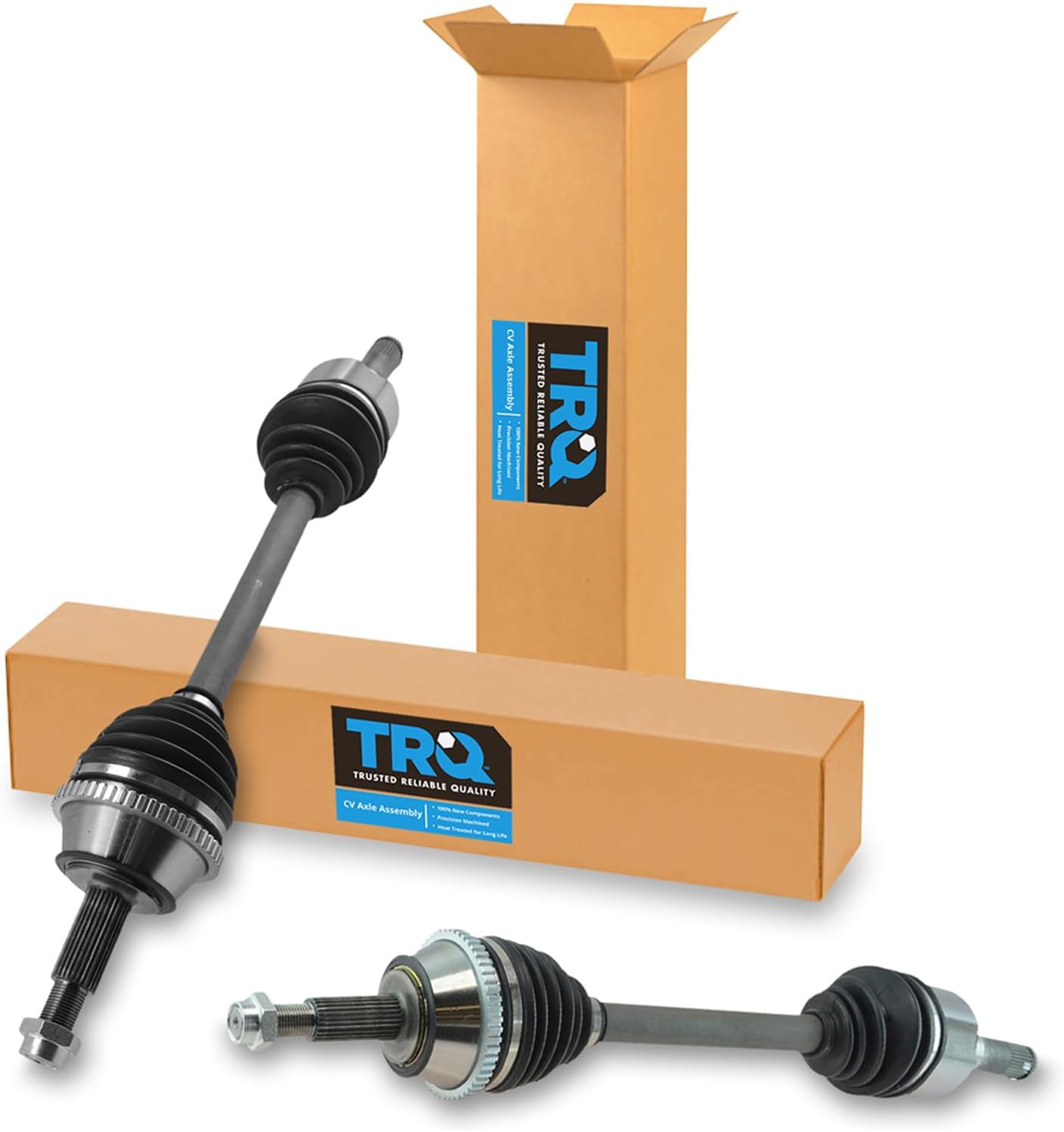
2. TRQ Rear CV Axle Assembly Set (2-Piece) for Ford Explorer / Sport Trac / Mountaineer
| Manufacturer | TRQ |
|---|---|
| Model | TRQ CSA82537 2 Piece CV Axle Assembly Set |
| Position | Rear |
| Exterior | Machined |
This TRQ two-piece rear CV axle kit supplies both driver and passenger side assemblies as direct-fit replacements for 2002–2010 Explorers and compatible siblings, making it a straightforward repair for worn or noisy half-shafts. The assemblies come pre-greased with moly compound and use neoprene boots intended to resist tearing and improve longevity versus older stock boots. Installation is simplified because the parts are built to match factory mounting points so no modification is needed, which saves shop time whether you DIY or have a mechanic press them in. For a performance-minded buyer the tighter manufacturing tolerances and greased joints help reduce play and vibrations that can sap driveline responsiveness. Limitations to note are that this is a replacement axle set rather than an upgraded performance axle with beefed-up splines or heavy-duty CV joints, so extreme off-road abuse or high-horsepower modifications may still push them beyond intended limits. For typical street and light-towing use on a 2006–2010 Explorer these axles deliver reliable, factory-style behavior and easier installation.
Best for: Drivers who want a dependable, factory-style rear axle replacement that restores solid driveline response and is easy to install on 2006–2010 Explorers and similar models.
Less Ideal for: Those running heavily modified engines, large lift or extreme off-road setups should choose reinforced performance axles designed for higher torque and impact loads.
- Direct-fit design for straightforward installation without modifications
- Pre-greased joints with moly compound to reduce premature wear
- Neoprene boots for improved durability over older stock materials
- Manufactured to tighter tolerances to limit driveline play and vibration
- Not a heavy-duty performance upgrade for high-horsepower or extreme off-road use
Verdict: A practical, factory-style rear CV axle pair that restores driveline feel and installs easily on 2006–2010 Ford Explorers without modifications.
3. CCIYU Front Right CV Axle Shaft Assembly for Ford Explorer (2006–2010)

| Location | Front Right |
|---|---|
| ABS Ring Included | Yes |
| Compressed Length | 23 inch |
| Input Shaft Spline Count | 27-1 Spline |
| Output Shaft Spline Count | 27 Spline |
This CCIYU front right CV axle is a budget-focused replacement built to restore steering smoothness and eliminate clicking from a worn joint. It is offered as a direct-fit unit for 2006–2010 Ford Explorer and compatible Sport Trac and Mountaineer AWD/4WD variants, with an ABS ring and factory-style splines to match the original installation. The shaft uses cold-forged 4140 steel and heat-treated splines for durability, and the joints come pre-greased with neoprene outboard boots to keep lubricant in and contaminants out. Installation is straightforward for mechanics comfortable with half-shaft swaps because the part claims same-form-fit-function and includes the hardware normally needed. Expect a solid, no-frills replacement that focuses on value rather than premium materials or upgraded boots. If you need a long-term performance upgrade or intend heavy off-road use, a higher-end or reinforced aftermarket axle might be a better choice, but for routine street restoration this unit returns quiet, factory-like operation at a low cost.
Best for: Buyers looking for an affordable, factory-fit replacement to stop CV joint noise and restore normal steering on a 2006–2010 Explorer who prioritize cost and straightforward installation.
Less Ideal for: Drivers seeking a heavy-duty performance axle for severe off-road, racing, or high-tow applications should consider reinforced or upgraded aftermarket options instead.
- Direct-fit design for 2006–2010 Ford Explorer and compatible AWD/4WD models reduces installation time
- Pre-greased CV joints and neoprene boots simplify replacement and help keep contaminants out
- Cold-forged 4140 steel shaft with heat-treated splines improves resistance to wear compared with untreated shafts
- Includes ABS ring and matching spline counts for correct vehicle compatibility
- Not marketed as a premium or heavy-duty upgraded axle for extreme off-road or towing use
Verdict: A cost-conscious, direct-fit front right replacement that restores quiet, factory-like steering on 2006–2010 Ford Explorer AWD/4WD models.
4. PHILTOP Front Left CV Axle Shaft for 2006–2010 Ford Explorer / 2007–2010 Explorer Sport Trac

| Vehicle fitment | 2006–2010 Explorer; 2007–2010 Explorer Sport Trac |
|---|---|
| Position | Front left |
| OEM part numbers | 6L2Z3A427AA, NCV11149 |
| Item model number | NCV11149 |
| Manufacturer | PHILTOP |
This PHILTOP front left CV axle is a direct-replacement half-shaft intended for 2006–2010 Ford Explorer and 2007–2010 Explorer Sport Trac applications. It uses an OEM-matched design and stated CV joint OE numbers to ensure fitment and straightforward installation as a factory-style swap. PHILTOP says the shafts are normalized and ground to improve ball path and surface finish, and that each unit passes a triple factory inspection, which in practice should translate to quieter operation and longer life versus untreated aftermarket shafts. Use is simple: remove the failed axle and install this unit with existing hardware and standard tools; it is sold as a single left-side assembly. Limitations include that it is not a lifetime solution for vehicles with severe off-road use and buyers should confirm fitment against the listed years and OE numbers before ordering. For a reliability-first replacement that restores original drivability and reduces vibration, this axle covers the basic needs without added performance features.
Best for: Buyers who prioritize a reliable, factory-style replacement to restore drivetrain stability on a 2006–2010 Explorer or 2007–2010 Explorer Sport Trac and want an axle made to match original fit and function.
Less Ideal for: Drivers seeking heavy-duty or off-road upgraded axles with higher load capacity or performance-oriented enhancements should consider purpose-built aftermarket options instead.
- OEM-matched design for direct fit on listed Explorer and Sport Trac years
- Factory inspection process claimed to verify accuracy and build quality
- Normalized and ground shaft surfaces intended to improve longevity and reduce vibration
- Supplied as a complete left-side half-shaft for straightforward replacement
- Sold as a single axle so right-side replacement requires separate purchase
Verdict: A factory-style front-left replacement axle that focuses on fit and build consistency to reliably restore original drivability for 2006–2010 Explorer owners.
5. Detroit Axle Front Right CV Axle Shaft Assembly for Ford Explorer (4WD)

| Overall Length | 23 1/4" |
|---|---|
| Inner Spline | 27 |
| Outer Spline | 27 |
| Inner Shape | Female |
This Detroit Axle complete front right CV axle is a ready-to-install replacement for 4WD Ford Explorers and similar models. It ships as a full passenger-side half-shaft with matching inner and outer 27-spline connections and a 23 1/4" overall length so the unit bolts in without needing joint or boot transfers. The axle is built and tested for impact, wear, and fatigue, which targets durability for street and light-duty use. Typical installation replaces a torn boot, clicking joint, or vibration from a failing axle and restores smooth power delivery to the front wheel. The practical benefits are straightforward: a one-piece assembly reduces installation time versus rebuilding a shaft, and the splines and female inner end match factory interface for a tight fit. Limitations are that this is intended for the specified 4WD Explorer family and related vehicles only, and heavier off-road or high-power applications may put extra stress on the unit compared with heavier-duty aftermarket performance axles.
Best for: Buyers who prioritize a straightforward, proven replacement that restores factory-like drivability and who value social proof and tested durability before committing to a repair.
Less Ideal for: Drivers planning heavy-duty off-road use, performance upgrades, or engines with significantly increased torque should consider reinforced performance-grade axles instead.
- Complete one-piece assembly simplifies replacement and reduces install time.
- Matched 27-to-27 spline connections for direct fit to factory hubs and transaxle interface.
- Manufacturing tests for impact, wear, and fatigue aim to improve on-road durability.
- Lifetime warranty included with the product description for long-term peace of mind.
- Designed for stock-duty use; not engineered for boosted or severe off-road loads.
Verdict: If you want a direct-fit, ready-to-install front right CV axle that restores factory-style performance on 4WD Ford Explorers, this Detroit Axle assembly is a dependable choice.
6. Detroit Axle 4WD Front 2‑Piece CV Axles — Front Left & Right Assembly

| Fitment | 2002–2010 Ford Explorer 4WD, 2007–2010 Explorer Sport Trac 4WD, 2003–2005 Lincoln Aviator 4WD, 2002–2010 Mercury Mountaineer 4WD |
|---|---|
| Inner Spline | 27 |
| Outer Spline | 27 |
| Left Overall Length | 26" |
| Right Overall Length | 23 1/4" |
This Detroit Axle kit supplies both left and right front CV half‑shaft assemblies for 4WD Ford Explorers (and the related Sport Trac, Mountaineer and Aviator) and is intended as a direct replacement for worn or failed axles. Each assembly comes preassembled with boots and splines matched to the vehicle, so installation is typical of a like‑for‑like axle swap: remove the old shafts, slide the new ones into the transaxle/hub and secure with factory hardware. Notable features include factory‑style spline counts (27 inner and outer) and distinct left/right lengths so fitment aligns with the vehicle. The practical benefits are a complete axle pair that reduces downtime and the need to source a second axle, and factory‑compatible fit for routine repairs. Limitations are that these are specific to the listed 4WD Explorer family and related models and do not include ABS tone rings on the axle; buyers replacing axles on ABS assemblies should confirm compatibility before installing.
Best for: A buyer who wants a straightforward, factory‑style replacement pair to restore front driveline function on a 2006–2010 Ford Explorer (and specified related models) with minimal fuss and risk.
Less Ideal for: Do not choose this if you need an axle that integrates an ABS tone ring or if you plan to upgrade to a heavy‑duty or performance CV setup.
- Supplies both left and right front axle assemblies so both sides are replaced at once
- Factory‑style 27 splines on inner and outer ends for direct fit to mating components
- Preassembled boots and joints reduce installation prep time
- Specific left and right lengths provided to match vehicle side
- No ABS tone ring on the axle so may not fit vehicles that use the axle for wheel speed sensing
Verdict: Buy this if you want a ready‑to‑install, factory‑style pair of front CV axles to reliably replace worn shafts on the 2006–2010 Ford Explorer 4WD family.
Choosing the Right 2006-2010 Ford Explorer CV Axle: Key Factors to Consider
Fitment and Spline Count
Correct fitment is the foundation of a successful CV axle replacement for the 2006-2010 Ford Explorer. These model years have specific hub flange patterns, axle spline counts, and differential interfaces that must match exactly. An axle that appears to fit but has the wrong spline engagement can produce play at the hub, causing vibration at highway speed and premature joint wear.
When evaluating options, confirm spline count, shaft length, and whether the axle is designed for your Explorer's front axle position. If the suspension uses an eccentric washer or specific retaining hardware, make sure the replacement includes or is compatible with those parts. Proper fitment reduces installation time and avoids issues like axle seal leaks or hub misalignment.
CV Joint Construction and Materials
The durability of the axle depends largely on CV joint design and materials. Look for heat-treated steel or alloy bearings inside the joint and high-quality cage designs that distribute load evenly. Joints that use premium grease and thicker cages tend to resist wear under the torque loads typical of the Explorer, especially during towing or off-road use.
Pay attention to joint type as well; some rebuilt or aftermarket axles use different internal geometries that can affect longevity. A well-built joint reduces the chance of clicking noises when turning and extends service intervals.
Boot Quality and Sealing
Boots protect the CV joint from contaminants and retain lubricating grease. For 2006-2010 Ford Explorer axles, choose boots made from multi-layer thermoplastic elastomer or reinforced rubber that resist cracking in temperature extremes. Poor boot quality is the leading cause of failure because once a boot is torn, grease escapes and dirt enters, accelerating joint wear.
Also evaluate the sealing method: crimped or banded clamps that use proper tension and stainless materials reduce the risk of slippage. A leak-resistant boot assembly helps prevent axle noise when turning and reduces the need for early replacement.
Shaft Strength and Flexibility
The axle shaft must balance torsional strength with enough flexibility to accommodate suspension travel. Oversized shafts may be strong but can transfer harshness into the steering, while undersized shafts risk fatigue and breakage. For the Explorer, a shaft that mirrors OEM diameter and material specifications typically delivers the best compromise between durability and ride quality.
Consider axles that state they meet or exceed OEM tensile and fatigue ratings. Heat treatment and surface finishing also affect resistance to corrosion and stress fractures over time.
Included Hardware and Ease of Installation
Installation friendliness matters if you plan to DIY or if a technician needs to minimize shop time. Axles that include new axle nuts, bolts, circlips, or hub washers cut down on parts hunting. Some assemblies are designed as direct-fit replacements that use OE-style clips and retainers, reducing the chance of installation errors.
Check whether the axle requires special tools or alignment after installation. Clear instructions or included hardware reduce the likelihood of improper torqueing that can lead to leaks, vibration, or premature wear.
Warranty and Longevity Indicators
Warranty terms and reported longevity provide useful information about expected service life. A longer warranty typically signals manufacturer confidence in materials and assembly processes. For the 2006-2010 Explorer, look for warranties that cover both premature failure and boot leaks for a reasonable period.
Also consider real-world reports about how long axles last under typical driving and towing conditions. Axles that consistently reach higher mileages before failure indicate better overall durability and can be a deciding factor when balancing upfront cost against lifetime value.
Symptoms That Point to CV Axle Failure
Recognizing early signs of CV axle trouble helps you address issues before they lead to a breakdown. Common symptoms on a 2006-2010 Ford Explorer include rhythmic vibration during acceleration, especially at highway speeds, which often indicates play or imbalance in the half shaft.
Clicking or popping noises when turning usually point to a worn axle shaft CV joint at the wheel end, while visible grease or a torn rubber boot often shows the joint has been exposed to contaminants. In some cases, a torn boot appears first and, if left unchecked, leads to accelerated joint wear and more severe drivability problems.
- Clicking or popping when turning
- Vibration during acceleration or at highway speed
- Visible grease near the wheel or torn CV joint boot
- Uneven tire wear or wheel wobble under load
Preparing for a DIY CV Axle Replacement
If you plan to replace a CV axle on a 2006-2010 Ford Explorer yourself, prepare by gathering the correct replacement axle, a torque wrench, a jack and stands, and any specific retaining hardware. Confirm the axle's spline count and flange pattern to avoid fitment surprises once the hub is disassembled.
Follow safe lift and support practices and consult a factory service manual for torque specs. Removing the hub assembly or separating the lower ball joint is sometimes necessary on these model years, so set aside enough time and inspect related components such as wheel bearings and axle seals while you have access.
- Verify spline count and shaft length before starting
- Have new hardware available to replace worn bolts or nuts
- Inspect wheel bearings and axle seals during the job
Boot Repair Versus Full Axle Replacement
A torn CV joint boot does not always mean you must replace the entire axle. If the boot tear is recent and the joint shows no signs of contamination or wear, a boot replacement and re-greasing can extend service life. However, on a 2006-2010 Explorer with high mileage, boot replacement is often a temporary fix if the joint has already ingested dirt.
Assess the joint for pitting, excessive play, or noise after cleaning. If any of these signs are present, a full half shaft replacement is usually the more reliable long-term solution and can prevent repeat labor.
- Boot replacement can be cost-effective if caught early
- Full axle replacement is safer for joints with contamination
- Inspect internals before deciding to reuse an axle
Reducing Axle Noise and Vibration After Installation
Proper installation and component checks reduce the chance of axle-related noise and vibration. Ensure axle nuts are torqued to specification and that the axle seats fully into the hub spline. Misalignment or incomplete engagement produces vibration at highway speeds on the Explorer.
Also check suspension bushings and wheel bearings, since noise and vibration are not always caused by the axle alone. Balanced tires and proper alignment contribute to a smooth outcome after a CV axle replacement.
- Torque axle nuts to factory specs
- Confirm full spline engagement in the hub
- Check wheel bearings and suspension bushings
When To Seek Professional Help
Some repair tasks, such as separating pressed-in components or servicing inner axle joints that connect to the differential, may require special tools and experience. If you encounter seized hardware, excessive corrosion, or uncertain fitment details, consult a qualified technician to avoid collateral damage.
A shop can also diagnose related issues like axle vibration at highway speed that may stem from driveshaft balance or differential problems, ensuring the repair addresses the true root cause rather than just replacing parts.
- Consider professional service for seized or corroded components
- Seek diagnostics if vibration persists after axle replacement
- Use a shop for differential-side inner joint work if needed
Still looking for the perfect fit?
Select your Ford Explorer configuration to see the most relevant CV Axles recommendations
How We Chose the Best 2006-2010 Ford Explorer CV Axle
We selected CV axles for the 2006-2010 Ford Explorer based on fitment reliability, joint and boot construction, hardware completeness, warranty support, and real-world durability indicators. Fitment reliability was prioritized because these model years have specific spline counts, flange patterns, and differential interfaces; we favored axles that match OEM specifications to minimize installation complications.Joint and boot construction was assessed with emphasis on whether the axle uses heat-treated CV joints, quality grease, and multi-layer boots to resist tears and leaks. Hardware completeness matters for practical installs, so we favored assemblies that include new flange bolts, circlips, or OE-style fasteners to avoid hunt-for-parts delays. Warranty coverage and manufacturer support were considered as a proxy for expected lifespan. Lastly, we reviewed user-reported longevity and common failure modes to identify axles that resist common issues like torn boots or premature joint wear.We excluded units that did not meet OEM spline or flange specifications, assemblies lacking a clear warranty, and parts with reports of frequent boot failures. Our final selections reflect a balance of exact-fit design, durable joint materials, and installation-ready hardware.
Our full evaluation process is outlined in our review methodology.
FAQ
How long should a CV axle last on a 2006-2010 Ford Explorer?
A CV axle can last anywhere from 70,000 to 150,000 miles depending on driving conditions, load, and maintenance. Harsh driving, towing, or damaged boots shorten service life, while prompt boot repairs and proper installation help extend it.
Can I replace just the torn CV joint boot on my Explorer?
Yes, if the tear is recent and the joint shows no contamination or audible wear, replacing the boot and re-greasing the joint can be effective. If the joint has pitting, play, or noise, a full half shaft replacement is the safer long-term option.
What causes clicking noises when turning a Ford Explorer?
Clicking or popping during turns usually indicates wear in the outer CV joint at the wheel end. That sound often appears before visible grease or other symptoms, so early diagnosis helps avoid further damage.
Will a worn CV axle affect alignment or tire wear?
A badly worn axle can contribute to uneven tire wear or steering pull if it creates play at the hub or allows the wheel to wobble. However, alignment and suspension components should also be checked because they are common contributors to tire issues.
Is axle vibration at highway speed always caused by the CV axle?
Not always. While imbalance or play in a half shaft can cause vibration at highway speeds, similar symptoms can come from tire imbalance, wheel bearings, or driveshaft issues. A full diagnosis helps identify the true source.
Do I need new hardware when replacing the CV axle?
Replacing worn axle nuts, bolts, or circlips is recommended if they show corrosion or stretch. Axles that include installation hardware reduce the chance of reusing compromised fasteners and simplify the job.
Final Verdict
When replacing a CV axle on a 2006-2010 Ford Explorer, prioritize exact-fit assemblies that match spline count and flange interfaces to avoid vibration and installation issues. Give extra weight to durable CV joint construction and reinforced boots to prevent premature failures, especially if you tow or drive in harsh conditions.Balance the convenience of installation-ready hardware and warranty coverage against long-term durability. Choosing an axle that meets OEM fitment and uses quality materials will minimize repeat labor and restore smooth, reliable drivability to your Explorer.
Explore More:
- Check out all Ford Explorer parts & accessories
- Explore Transmission & Drivetrain
- Browse all Auto Parts
