

Note: This article contains affiliate links. If you click on these links and make a purchase, I may earn a small commission at no extra cost to you. This helps support my research and content. Read my full affiliate disclosure here.
If you own a 1998-2002 Honda Accord, choosing the correct oil filter is one of the simplest ways to preserve engine health and avoid premature wear. The right filter captures contaminants, maintains oil flow, and ensures the oiling system works as intended for this generation of Accord. This guide shortlists the top options that match the vehicle's fitment and service needs and explains the practical criteria we used to evaluate them.You will find filters suited to typical service intervals, notes on compatibility with synthetic oils, and guidance on installation and maintenance. The shortlist reflects the best choices for routine maintenance and extended synthetic oil use; read on to see which features matter most for this chassis and engine family.
Looking for other parts? See all Honda Accord parts & accessories.
Top Picks at a Glance
| Best Quality Built to a higher standard if you want something more solid | K&N Select Spin-On Oil Filter SO-1010 |  |
| Best Value The sweet spot between price and what you get | WIX 57356XP XP Series Oil Filter (synthetic-ready) |  |
| Best Budget The cheapest option that still gets the job done reliably | A-Premium Spin-On 10K-Mile Engine Oil Filter (PH7317 Compatible) |  |
| Highest Rated A top-rated pick with lots of positive feedback | Mobil 1 Extended Performance Oil Filter M1-110A |  |
| Most Popular A crowd favorite that many people choose with confidence | Bosch 3323 Premium Oil Filter with FILTECH Media |  |
1. K&N Select Spin-On Oil Filter SO-1010

| Material | Synthetic Blend / Steel |
|---|---|
| Thread Size | M22 X 1.5 |
| Product Grade | Performance Part |
| Manufacturer | K&N Engineering, Inc. |
The K&N Select SO-1010 is a spin-on oil filter built to provide strong engine protection and long service life. It uses pleated synthetic-blend media that K&N says captures 99% of contaminants larger than 30 microns and is compatible with conventional, synthetic and blended oils. In everyday use this filter installs like a standard replacement part and several reviewers report a snug, leak-free fit and an included crush washer in the box. K&N rates the design for up to 20,000-mile engine protection when following manufacturer intervals, which appeals to drivers who prefer fewer fluid-service stops. The machined exterior and welded removal nut make handling and removal easier during maintenance. Limitations to note are that the long claimed interval depends on driving conditions and oil quality, and very fine particles below the stated micron size will pass through, so frequent-track or severe-duty users may prefer a filter rated for finer micron capture.
Best for: A buyer focused on performance and longer oil-change intervals who wants a durable, high-efficiency replacement filter that works with synthetic oils and reduces maintenance frequency.
Less Ideal for: Drivers who run extreme track conditions, very high-mileage engines needing ultra-fine filtration, or those who prefer the absolute finest micron ratings should consider alternatives.
- High reported filtration efficiency capturing 99% of particles larger than 30 microns
- Designed for use with all oil types including full synthetic and blends
- Long-life design rated up to 20,000 miles under recommended service intervals
- Machined exterior and welded hex nut aid durability and easier removal during service
- Specified micron rating (30 microns) is coarser than some premium filters designed for finer particle capture
Verdict: Choose the SO-1010 if you want a durable, high-efficiency spin-on filter built for longer service intervals and compatibility with synthetic oils.
2. WIX 57356XP XP Series Oil Filter (synthetic-ready)

| Thread Size | 20X1.5 MM |
|---|---|
| Outside Diameter | 2.9 Inches |
| Material | steel |
| Automotive Fit Type | Vehicle Specific Fit |
The WIX 57356XP is an XP-series replacement oil filter built for drivers who want stronger protection and longer intervals when running synthetic oil. It uses a synthetic-blended media with natural fibers and a silicone anti-drainback valve to maintain clean oil flow at startup and resist collapse under heavy use. In practice this means better particle capture and higher dirt-holding capacity than basic filters, which is useful for highway miles, stop-and-go commuting, or occasional towing. The filter is vehicle-specific fitment and threads on like a standard spin-on unit; installers should check fitment for a 1998–2002 Honda Accord before buying. Notable practical benefits are the claimed extended change interval—marketed up to 20,000 miles with compatible synthetic oil—and a durable machined exterior that stands up to workshop handling. Limitations to consider are that the long-interval claim depends on oil type, driving conditions, and regular inspections, and some users report occasional thread debris or minor cosmetic dents on individual units.
Best for: Buyers who prioritize longer service intervals and stronger engine protection when using synthetic oil and want a robust, factory-quality replacement for routine maintenance.
Less Ideal for: Drivers who strictly follow short, frequent oil change schedules or who prefer the lowest-cost basic filters for standard driving may not need the XP-series features.
- Synthetic-blended media for improved filtration efficiency
- Silicone anti-drainback valve preserves oil during startup
- Engineered for extended change intervals when used with synthetic oil
- Vehicle-specific fit for straightforward spin-on installation
- Extended 20,000-mile interval depends on oil type and driving conditions
Verdict: Choose the WIX 57356XP if you want a durable, synthetic-ready oil filter engineered to extend service intervals and improve particle capture for long-term engine protection.
3. A-Premium Spin-On 10K-Mile Engine Oil Filter (PH7317 Compatible)

| Filter Media Material | Semi-Synthetic |
|---|---|
| Filter Type | Spin-On Canister |
| Thread Size | M20x1.5 |
| Anti-Drain Back Valve | Yes |
| Bypass Relief Valve | Yes |
This A-Premium spin-on oil filter is a budget-focused replacement built for routine engine protection and up to 10,000 miles between changes when paired with proper oil. It uses semi-synthetic filter media and claims 99 percent filtration efficiency, while internal features such as an anti-drainback valve and bypass relief valve help maintain oil pressure and reduce dry starts. The canister threading (M20x1.5) and gasket dimensions match factory-style spin-on fitment for many Honda and related applications, so installation is the same as a factory-style filter. Practical benefits include solid filtration for everyday driving and cost savings compared with dealer parts. Limitations are typical of aftermarket spin-ons: it is a single-use canister rather than a reusable element and long 10K intervals depend on oil type and driving conditions, so conservative owners may prefer shorter change intervals.
Best for: Buyers who need an affordable, straightforward replacement filter for regular maintenance and prioritize cost-effectiveness and easy install over premium branded parts.
Less Ideal for: Drivers who prefer long-term reusable filters or who follow very aggressive extended oil change intervals and want a manufacturer-backed premium option.
- Semi-synthetic media with claimed 99% filtration efficiency
- Includes anti-drainback valve to reduce dry starts
- Factory-style spin-on design for straightforward installation
- Rated for up to 10,000-mile service intervals when paired with appropriate oil
- Single-use canister design rather than a reusable cartridge
Verdict: A practical, budget-friendly spin-on filter that delivers factory-style fit and solid filtration for routine maintenance.
4. Mobil 1 Extended Performance Oil Filter M1-110A

| Thread Size | 20X1.5 MM; M20 x 1.50 |
|---|---|
| Outside Diameter | 3.38 Inches |
| Product Grade | Performance Part |
| Material Type | Resin |
The Mobil 1 M1-110A is an extended performance spin-on oil filter intended to keep engine oil cleaner for longer intervals. It uses a high-efficiency media and resin construction to trap sludge and particulates, and the manufacturer claims protection up to 20,000 miles when paired with compatible extended-life motor oil. For a 1998–2002 Honda Accord this filter functions as a direct replacement where the M1-110A thread and size match the factory mounting, offering a durable alternative to standard filters. Its universal fit listing means you should confirm thread size and clearance before installation. The main benefits are improved contaminant capture and reduced frequency of filter changes, which suits drivers prioritizing reliability and longer maintenance intervals. Expect standard spin-on installation and similar service behavior to other quality filters, but follow the vehicle owner manual for oil change intervals since extreme mileage claims depend on oil choice and driving conditions.
Best for: Drivers of the 1998–2002 Honda Accord who prioritize reliable, longer service intervals and cleaner oil between changes and want a quality aftermarket filter that matches factory fit when the thread and size are correct.
Less Ideal for: Owners who prefer to follow conservative, frequent oil change schedules or who use non-extended-life oils should choose a standard filter sized for shorter service intervals instead.
- High-efficiency media designed to trap sludge and fine particulates
- Rated for extended protection up to 20,000 miles when used with compatible extended-life oil
- Resin construction that resists breakdown over long service intervals
- Spin-on design for straightforward installation and replacement
- Extended 20,000-mile claim depends on using specified oil and ideal driving conditions
Verdict: Choose the Mobil 1 M1-110A for extended, reliability-focused protection on a 1998–2002 Honda Accord when the filter's thread and dimensions match the factory mounting.
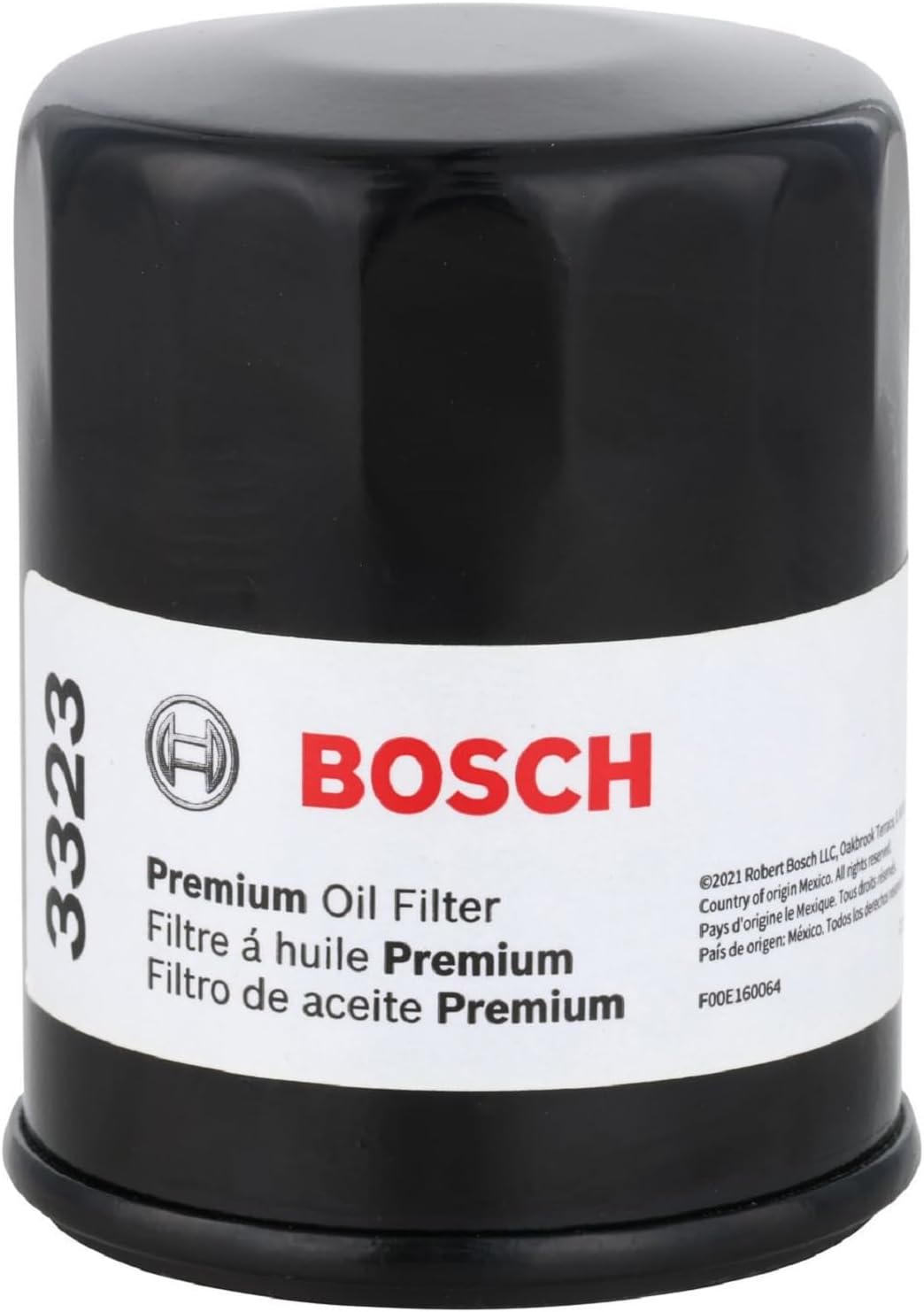
5. Bosch 3323 Premium Oil Filter with FILTECH Media
| Thread Size | M20 x 1.50 |
|---|---|
| Outside Diameter | 68 Millimeters |
| Item Type Name | Vehicle Specific Fit |
| Included Components | oil filter |
| Material Type | Silicone |
The Bosch 3323 is a spin-on replacement oil filter built around Bosch's FILTECH filtration media to trap and hold contaminants instead of letting them recirculate. It is typically used as a direct-fit replacement during routine oil changes and is designed to meet factory-quality fit and sealing with a steel base plate, high-lubricity gasket, and a silicone anti-drainback valve so oil pressure and start-up lubrication remain reliable. The filter claims up to 99% efficiency at 20 microns and a 14 gram dirt-holding capacity, which translates to better protection for engine bearings between changes compared with basic economy filters. Construction details such as a spiral-wound metal center tube and robust housing improve durability and resist warpage or leaks. The practical downside is there is no vehicle-specific performance tuning beyond fitment, so benefits are incremental for owners who already change oil frequently or use very high-end filtration products, and measuring filtration gains requires lab testing rather than driver feel.
Best for: Buyers who prioritize proven filtration and durable, factory-quality construction and want a filter with broad positive reviews and documented dirt-holding capacity for regular oil-change maintenance.
Less Ideal for: Drivers seeking ultra-high-end motorsport or specialty filters tuned for extreme service or those who rarely perform oil changes and expect marginal benefits from premium media.
- FILTECH media rated to capture up to 99% of particles at 20 microns
- Holds up to 14 grams of dirt for longer service between heavy contamination events
- Silicone anti-drainback valve preserves oil supply at cold starts
- Steel base plate and spiral-wound center tube resist warpage and leaks
- Factory-style gasket for a tight, leak-resistant seal and easy removal
- Claims of filtration efficiency are lab-based and not directly measurable by the end user
Verdict: Choose the Bosch 3323 if you want a durable, well-built replacement filter with high lab-rated filtration and wide positive user feedback for routine oil-change protection.
Choosing the Right 1998-2002 Honda Accord Oil Filter: Key Factors to Consider
Filtration Efficiency and Micron Rating
A filter's ability to remove particles is crucial because abrasive contaminants cause wear on bearings, camshafts, and cylinder walls. Look for filters with published micron ratings and multi-layer media designed to trap a wide range of particle sizes. Higher efficiency at smaller microns means fewer particles recirculate, which is especially important for Accords that may have higher mileages.
Keep in mind that very dense media can slightly restrict flow if not paired with an appropriate bypass valve. For a 1998-2002 Accord, ideal filters balance fine particle retention with sufficient flow at operating temperatures to maintain oil pressure across typical driving conditions.
Fitment, Thread Size, and Gasket Compatibility
Correct mechanical fit is non-negotiable. The oil filter must match the Accord's thread pitch, outer diameter, and gasket seating surface to prevent oil leaks and ensure a secure seal. An improperly sized filter can cause oil pressure issues, leaks at the housing, or difficulty during installation and removal.
Gasket material matters with age and temperature cycling. Choose filters with durable nitrile or silicone gaskets that resist compression set and shrinkage. For older engines common in the 1998-2002 Accord range, a gasket that maintains pliability reduces the risk of oil filter gasket leak after repeated services.
Anti-Drainback Valve and Cold-Start Protection
An anti-drainback valve prevents oil in the filter from draining back into the sump when the engine is off. This keeps oil at the top of the oiling circuit for a quicker oil supply on the next start. For Accords driven in stop-and-go traffic or cold climates, a functioning anti-drainback valve reduces dry-start wear on bearings and cam components.
Inspect whether the valve is silicone or nitrile and if it is rated for use with synthetic oils. A poorly designed or missing valve can allow filter-emptying between starts, increasing wear on older engines and undermining the benefit of a higher-efficiency filter.
Bypass Valve Behavior and Flow Under Pressure
The bypass valve opens if the filter becomes clogged or if oil is too viscous on cold starts to maintain adequate flow. For the 1998-2002 Accord, the bypass should open at an appropriate pressure so the engine is never starved of oil, but not so early that unfiltered oil regularly bypasses the media.
A well-tuned bypass valve protects the engine during extreme conditions while preserving filtration under normal operation. Consider how the valve performs with both conventional and synthetic oil viscosities common to Accord service recommendations.
Construction Quality and Canister Strength
Solid canister construction resists collapsing under pressure and helps prevent leaks. Thread quality, sealing surface precision, and media support structures influence how long the filter holds up across service intervals. For Accords with higher mileages, a robust canister reduces the chance of deformation during installation and removal.
Also consider the finish and anti-corrosion treatments if you live in humid or coastal areas. Sturdy construction contributes to predictable removal torque and consistent sealing over repeated oil changes.
Compatibility With Oil Type and Service Interval
Different filters perform better with conventional, high-mileage, or synthetic oils. Synthetic oil can carry finer particles and may require a filter with higher efficiency and media stability. If you plan to run extended service intervals, choose filters rated for longer life and with media that resists saturation.
Match the filter's recommended service interval to the oil change schedule you plan to follow for your 1998-2002 Accord. Filters rated for extended intervals are useful with longer synthetic oil drains, but confirm they suit the vehicle's engine condition and driving patterns.
Which Oil Filter Type Fits the 1998-2002 Accord
Most 1998-2002 Honda Accord engines used externally threaded, spin-on style oil filters with a screw-on mounting and a visible rubber gasket. Confirm the thread pitch, outer diameter, and overall height against your engine application to ensure a proper fit and clearance with adjacent components.
Spin-on units are the simplest for regular maintenance. For owners performing frequent oil changes, matching the exact physical dimensions avoids interference with the oil pan, brackets, or crossmembers. Always check the vehicle's service manual for the correct filter specification before purchasing.
- Verify thread pitch and sealing surface dimensions
- Check clearance around filter for installation and removal
- Confirm gasket material suits climate and oil type
Synthetic Oil and Filter Compatibility
If you use synthetic oil in your Accord, select a filter that lists compatibility with synthetic formulations. Synthetic oils often carry smaller particles and may affect the anti-drainback valve and media differently than conventional oils. A filter designed for synthetic use maintains flow and media integrity across the oil's full service interval.
When changing from conventional to synthetic, consider replacing the filter at the first synthetic oil change to avoid mixing contaminants trapped by the previous filter. Also ensure the bypass and anti-drainback valve materials are rated for the solvents and detergents present in modern synthetic blends.
- Prefer filters with explicit synthetic compatibility
- Replace filter when switching oil types to avoid leftover contaminants
- Check valve materials for resistance to synthetic oil additives
How To Inspect The Filter During an Oil Change
When you remove the oil filter, inspect the gasket to ensure it came off intact and did not stick to the mounting surface. A split or missing gasket is a common cause of leaks and indicates a poor seal during the previous service. Also look for metal flakes or excessive debris in the old filter that could signal accelerated wear.
Check the removed filter's sealing surface and mating face on the engine for deposits or damage. If the threads or housing area show wear, address those issues before installing a new filter. Finally, always hand-tighten to the recommended torque and avoid over-tightening, which can damage the canister or gasket.
- Inspect gasket for integrity and signs of sticking
- Look for metal particles or unusual debris in the filter
- Verify engine mounting surface is clean before installing new filter
Common Oil Filter Installation Mistakes to Avoid
Over-tightening is a frequent problem that can crush the gasket or make future removal difficult. Tighten the filter by hand until the gasket contacts the mounting surface, then follow torque guidance or use a common quarter-turn past contact rule if no torque spec is available. Do not use pliers to force a tight fit.
Failing to lubricate the gasket with a thin film of fresh oil can make future removal harder and may prevent a proper seal. Also ensure the old gasket is not stuck to the engine surface; installing a new filter over the old gasket causes leaks. Finally, confirm the filter used matches the engine's thread and clearance requirements.
- Hand-tighten and avoid excessive torque
- Lubricate new gasket lightly with fresh oil
- Ensure only one gasket is present on the mounting face
Addressing Oil Filter Gasket Leaks
If you discover an oil leak at the filter after installation, first check that the filter was not cross-threaded and that the gasket sits flat against the mounting surface. Minor leaks often indicate an improperly seated gasket or dirt on the sealing surface. Tighten carefully and recheck for leaks while the engine is idling at warm idle.
Persistent leaks after correct installation can point to a damaged gasket, incorrect filter size, or a warped sealing face on the engine. Replace the filter with the correct size and inspect the engine's sealing face for damage before reinstalling. Avoid running the engine extensively until the leak is fixed to prevent oil loss and engine damage.
- Check for cross-threading and gasket seating
- Inspect sealing surface for dirt or damage
- Replace filter immediately if leak persists after reinstallation
Recommended Service Intervals and Filter Choice
For typical driving, many Accord owners follow a regular oil and filter change interval between 3,000 and 7,500 miles depending on oil type and driving conditions. If you use conventional oil and frequent short trips, err toward the shorter interval. Synthetic oil and long highway trips allow longer drains when paired with a filter rated for extended service.
Select a filter that matches the interval you plan to run. Filters rated for longer life have media and construction designed to resist saturation. Match your filter choice to your driving pattern and the engine's current condition to optimize protection and value.
- Short trips and severe-service driving = shorter intervals
- Synthetic oil with extended intervals = quality media and stable seals
- Adjust interval for higher-mileage engines or known contamination
Still looking for the perfect fit?
Select your Honda Accord configuration to see the most relevant Oil Filters recommendations
How We Chose the Best 1998-2002 Honda Accord Oil Filter
We prioritized criteria that matter specifically for 1998-2002 Honda Accord owners and for long-term engine protection. Filtration efficiency and micron ratings were weighed heavily to ensure captured debris does not circulate in the oiling system. Fitment and thread/pattern compatibility were verified against the Accord's oil filter mounting specs to avoid leaks, pressure loss, or clearance issues.Build quality and anti-drainback valve performance were evaluated to reduce dry-start wear, especially for intermittent driving and extended intervals. Materials and gasket design were considered to limit gasket creep or oil filter gasket leak risk on older engines. Compatibility with conventional and synthetic oils was checked so filters maintain flow and structural integrity across common oil choices. Flow rate and bypass valve behavior under cold starts and heavy loads were also part of the evaluation.We excluded filters that lacked clear fitment data for the 1998-2002 Accord, items with poor construction or reports of thread damage, and units without proper anti-drainback or bypass features for this vehicle. The final shortlist balances filtration performance, reliable sealing, and installation practicality for Accord owners.
Our full evaluation process is outlined in our review methodology.
FAQ
How often should I replace the oil filter on a 1998-2002 Honda Accord?
Frequency depends on oil type and driving habits. Many owners change the filter with every oil change. If using conventional oil and frequent short trips, replace every 3,000 to 5,000 miles. With synthetic oil and highway driving, longer intervals up to the oil maker's recommendation are common, provided you use a filter rated for extended service.
Can I switch to a synthetic oil filter for extended drain intervals?
Yes, but choose a filter explicitly rated for longer service and compatible with synthetic formulations. Filters intended for extended intervals have media designed to hold more contaminants without restricting flow. Also ensure the anti-drainback and gasket materials are specified for synthetic oil use.
What if the new filter leaks after installation?
Stop the engine and check that the gasket seated correctly and that no old gasket remained on the mounting surface. Verify the filter is the correct size and not cross-threaded. If sealing surfaces are clean and the correct filter still leaks, replace it and inspect the engine mounting face for damage.
Does the anti-drainback valve matter for my Accord?
Often it does, especially for vehicles that sit between drives or operate in cold climates. An anti-drainback valve keeps oil in the filter so the pump does not starve the engine at startup. Choose filters with reliable valves to reduce dry-start wear on bearings and cam components.
How do I know the filter I bought fits my Accord?
Confirm the thread pitch, outer diameter, and gasket diameter against the specifications for your 1998-2002 Accord engine. Cross-reference the vehicle service manual or parts specification to ensure mechanical fit and proper clearance around the filter for installation.
Are canister strength and construction important?
Yes. Robust canister construction prevents collapse or deformation under pressure and during installation. Good thread quality and a reinforced media support reduce the chance of damage when removing a stuck filter, which is helpful on older Accords with potentially corroded parts.
Final Verdict
For the 1998-2002 Honda Accord, prioritize filters that combine reliable filtration efficiency with proven fitment and durable gasket design. Match the filter's rating and materials to your choice of oil and your planned service interval to reduce wear and avoid leaks. Consider anti-drainback performance and bypass behavior when you drive in cold or stop-and-go conditions.Ultimately, pick a filter that aligns with how you use the car: shorter-interval, high-contaminant driving favors robust media and frequent changes, while synthetic oil and highway use justify higher-efficiency filters rated for extended drains. Choosing with those tradeoffs in mind will keep your Accord's engine running dependably.
Explore More:
- Check out all Honda Accord parts & accessories
- Explore Oil Filters Maintenance & Repair Guides
- Explore Engine
- Browse all Auto Parts
