

Note: This article contains affiliate links. If you click on these links and make a purchase, I may earn a small commission at no extra cost to you. This helps support my research and content. Read my full affiliate disclosure here.
If you own a 1998-2002 Honda Accord and are facing cooling issues, replacing the water pump is a common and often necessary repair. The right 1998-2002 Honda Accord water pump keeps coolant circulating properly, avoids overheating, and protects the engine from long-term damage. Because these Accords have similar cooling layouts across the 1998 through 2002 model years, you want a pump that fits cleanly, uses durable seals, and tolerates typical driving conditions.This guide presents the top shortlisted water pumps for these Accords and explains the practical reasons each option made the list. We evaluate fitment, bearing and seal durability, and ease of installation so you can pick a reliable replacement for your car. Next up are the chosen options and the criteria we used to evaluate them.
Looking for other parts? See all Honda Accord parts & accessories.
Top Picks at a Glance
| Best Overall The best all-around choice for most situations | DNJ Timing Belt Kit with Water Pump (TBK214WP) |  |
| Best Quality Built to a higher standard if you want something more solid | AISIN WPH-001 Engine Water Pump with Gasket |  |
| Best Value The sweet spot between price and what you get | WQ W&Q AUTO PARTS Timing Belt and Water Pump Kit (fits 1994–2002 Honda Accord / 1997–1999 Acura CL / 1998 Odyssey / 1998–1999 Isuzu Oasis) |  |
| Best Budget The cheapest option that still gets the job done reliably | BOXI Water Pump with Gasket for 1998-2002 Honda Accord and compatible 2.2L/2.3L engines |  |
| Highest Rated A top-rated pick with lots of positive feedback | AISIN TKH-011 Timing Belt and Water Pump Service Kit |  |
| Most Popular A crowd favorite that many people choose with confidence | TRQ Engine Water Pump, direct-fit replacement |  |
1. DNJ Timing Belt Kit with Water Pump (TBK214WP)

| Brand Name | DNJ |
|---|---|
| Part Number | TBK214WP |
| Compatible Devices | Car |
| Part Interchange Info | TB244-186LK1, WP244K1A, TCKWP244 |
This DNJ timing belt kit bundles the timing belt, balance shaft components, seals, tensioner bearings, and a water pump into a single service package for 2.2L–2.3L SOHC engines. It is intended for a routine timing service where both the belt and water pump are replaced together to prevent future failures and reduce labor redundancy. The kit’s inclusion of seals and bearings means you can refresh all wear items that commonly cause leaks or tension problems, and the hydraulic tensioner simplifies setting proper belt tension. DNJ positions these parts as durable and engineered for consistent engine synchronization, which helps maintain fuel economy and smooth idle. Practical benefits include fewer trips to source individual parts and a coordinated replacement that lowers the chance of early water pump or belt failure. Limitations are that fitment is specific to certain Honda/Acura/Isuzu 2.2–2.3L SOHC applications, so verification against your vehicle’s engine code is required, and the kit does not include installation hardware like specialty tools or shop labor.
Best for: Buyers who want a coordinated, long-term maintenance solution and value replacing the timing belt and water pump together to avoid repeat labor and related failures.
Less Ideal for: Do-it-yourselfers looking for a bare-bones belt only or owners of vehicles outside the covered 2.2L–2.3L SOHC fitment should look for a different kit or part.
- Complete kit includes timing belt, water pump, seals, and tensioner bearings for a single-service replacement
- Hydraulic tensioner included to help achieve correct belt tension without complex adjustment
- Saves time by sourcing all common wear items together, reducing likelihood of related failures soon after service
- Fitment limited to specific 2.2L–2.3L SOHC applications so part number verification is required
Verdict: If you want a single-package timing service that replaces the belt, water pump, seals, and tensioner at once for 2.2L–2.3L SOHC Hondas, this DNJ kit is a convenient, factory-quality option.
2. AISIN WPH-001 Engine Water Pump with Gasket

| Brand Name | AISIN |
|---|---|
| Model Number | WPH-001 |
| Item Type Name | Engine Water Pump |
| Compatible with Vehicle Type | Car |
The AISIN WPH-001 is a direct-fit replacement water pump supplied with a gasket and built from new components rather than remanufactured parts. It circulates coolant using an engineered rotor and ball bearings while carbon ceramic mechanical sealing aims to reduce leaks and resist corrosion and scaling. Typical use is as a factory-style replacement during a cooling system repair or timed belt service on compatible 1990s and early 2000s Hondas and related models. The construction targets smooth coolant flow and durability, which helps restore proper engine temperature control and avoid overheating. Buyers should note fitment is vehicle-specific so verifying the exact engine variant is important before ordering. Some users report long trouble-free service while a few have reported leaks or older manufacturing dates on units received, so inspect the part and gasket at installation. For performance-focused installs, this pump favors reliable, factory-quality operation rather than higher-flow racing upgrades.
Best for: Buyers who want a reliable, factory-quality replacement pump to restore proper cooling on 1998–2002 Honda Accords and similar-era Hondas without seeking aftermarket flow increases.
Less Ideal for: Drivers who need increased cooling for modified engines or track use should consider dedicated performance pumps instead.
- Direct-fit, vehicle-specific design simplifies replacement and reduces modification work
- Carbon ceramic mechanical seal and corrosion-resistant materials improve longevity and leak resistance
- Includes gasket so installer has the necessary sealing component for reassembly
- Built from all-new components rather than remanufactured parts to help ensure consistent performance
- Not a high-flow performance pump so it does not increase cooling capacity for modified engines
- Some buyers reported units with older manufacture dates or isolated leakage issues on arrival
Verdict: Choose this AISIN pump when you need a dependable, OEM-quality replacement that restores factory cooling performance for 1998–2002 Honda Accord-era vehicles.
3. WQ W&Q AUTO PARTS Timing Belt and Water Pump Kit (fits 1994–2002 Honda Accord / 1997–1999 Acura CL / 1998 Odyssey / 1998–1999 Isuzu Oasis)

| Compatible with Vehicle Type | Car |
|---|---|
| Automotive Fit Type | Vehicle Specific Fit |
| OEM Equivalent Part Number | TCKWP244, WP244K1A, TB244-186LK1, TS26244, ITM244, 135-1280 |
| Unit Count | 7.0 Count |
This kit combines the timing belt, balance shaft belt, tensioners, cam and crank seals, and a water pump with gasket to cover a full timing service on compatible Honda F22/F23 engines. It is intended for complete maintenance when the timing belt is due and is typically used during a 60,000–100,000 mile interval or whenever servicing related components. The included water pump saves the extra step of sourcing a separate unit and the OEM-equivalent part numbers indicate the pieces are designed to match factory fit and function. Practical benefits include swapping multiple wear items at once to reduce labor redundancy and the provision of both seals which helps prevent leaks after reassembly. Limitations are that you must verify exact engine code and year before buying because fitment is vehicle-specific, and part quality can vary compared with higher-end aftermarket brands, so professional inspection during installation is recommended.
Best for: Buyers who want a practical, single-purchase timing service solution that replaces all common wear items at once to avoid repeating labor and downtime.
Less Ideal for: Those seeking OEM-branded parts or the highest-performance aftermarket components should consider factory or premium alternatives rather than a value kit.
- All-in-one kit includes timing belt, balance shaft belt, tensioners, seals, and water pump to simplify a full timing service.
- Lists OEM-equivalent part numbers for easier cross-reference and likely factory-style fit.
- Includes camshaft and crankshaft seals and a water pump gasket to reduce the chance of post-service leaks.
- Targets common Honda F22/F23 engines so you can replace multiple related components in one visit.
- Fitment is vehicle- and engine-code specific so incorrect selection risks incompatibility.
- Quality may be variable compared with premium aftermarket or factory-brand parts, so install inspection is advisable.
Verdict: If you want a practical, all-in-one timing service for late 1990s Honda 2.2L/2.3L engines that includes the water pump and seals, this kit delivers the convenience to replace everything in one job.
4. BOXI Water Pump with Gasket for 1998-2002 Honda Accord and compatible 2.2L/2.3L engines

| Compatible engines | F22/F23 2.2L and 2.3L |
|---|---|
| Includes | Water pump with gasket |
| Material Type | Metal |
| Automotive Fit Type | Vehicle Specific Fit |
This BOXI water pump is a direct-replacement cooling pump supplied with a gasket for Honda F22/F23 2.2L and 2.3L applications commonly found in 1998–2002 Accords and similar models. It installs in place of the factory unit and is used to circulate coolant through the engine and radiator to prevent overheating. The pump is metal-bodied and listed with multiple interchange numbers so it matches common factory part references. For routine repairs the PACKAGE includes the pump and gasket only, so professional installation or basic mechanic skills are recommended and you may need to transfer or replace any ancillary seals or pulleys separately. As a budget-focused aftermarket option this part aims to meet or exceed factory specifications and the seller highlights multi-point inspection, but it does not include installation instructions and has limited review volume. If you want a straightforward, vehicle-specific replacement to get an older Accord back to reliable cooling without paying dealer prices, this unit is a practical choice.
Best for: Buyers who need an affordable, vehicle-specific replacement pump to restore coolant flow on older Honda Accords and prioritize a direct-fit part over dealer-priced options.
Less Ideal for: People who want a full overhaul kit with extra seals, pulley or step-by-step installation support or those who prefer OEM-branded parts from a dealership.
- Vehicle-specific fit for Honda F22/F23 2.2L and 2.3L engines, matching common interchange numbers
- Includes gasket so you get the pump and sealing surface together
- Metal construction intended for durability compared with cheaper plastic housings
- Does not include installation instructions so novice installers may need guidance
Verdict: A cost-conscious, direct-fit replacement water pump with gasket that restores cooling on 1998–2002 Accord 2.2L/2.3L engines without dealership pricing.
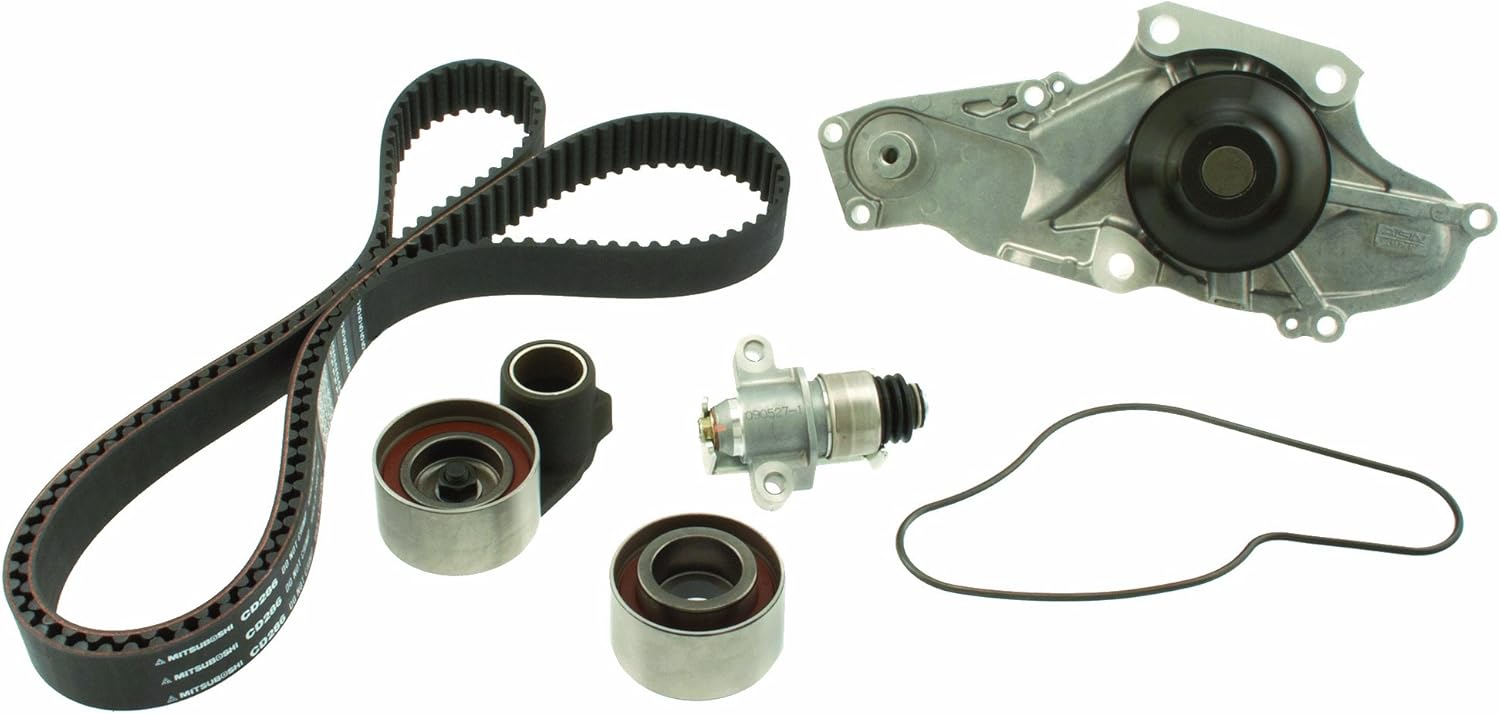
5. AISIN TKH-011 Timing Belt and Water Pump Service Kit
| Manufacturer | Aisin |
|---|---|
| Model | TKH-011 |
| Includes | Water Pump, Timing Belt, Tensioner, Pulleys, Gasket, Instructions |
| Compatible Vehicles | Select 1997–2002 Acura and 1998–2002 Honda models (verify fitment) |
This AISIN TKH-011 kit packages everything needed when you replace the timing belt and water pump on compatible 1998–2002 Hondas and select Acuras. It includes a diecast water pump with ceramic-type sealing surfaces, a Mitsuboshi/Toyo timing belt, tensioner and idler pulleys, gasket, and instructions so a technician or experienced DIYer can complete the job in one service visit. The main benefit is parts matching factory-spec components so you avoid mixing brands and redoing labor later. Buyers report reliable fit and long service life when installed correctly, and the kit saves time versus sourcing individual parts. Limitations to note are that some vehicles may require a separate small collar or sleeve not included in the box and a few users reported isolated fitment issues with fastener lengths, so double-check vehicle-specific fit and torque specs before installation. The kit is most valuable when you plan to replace the belt and pump together rather than piecemeal repairs.
Best for: Buyers prioritizing long-term reliability and wanting factory-matched replacement parts to avoid repeat labor; ideal for owners scheduling a full timing belt service who prefer one complete kit rather than sourcing parts separately.
Less Ideal for: If you only need a single component such as just the belt or just the pump, this full-service kit may be overkill; beginners without mechanical experience should have a shop handle installation.
- Complete kit contains water pump, timing belt, tensioner and pulleys so all related components are replaced at once
- Parts are factory-matched brands used by OEMs which simplifies fitment and reduces risk of premature failure
- Diecast water pump housing and premium internal seals designed for long-term durability
- May not include small vehicle-specific fastener sleeves or collars that some models require
- A few reviewers reported bolt length or minor fitment mismatches on certain installations
Verdict: Choose this AISIN kit when you want a factory-matched, all-in-one timing belt and water pump replacement that maximizes reliability and avoids repeat labor.
6. TRQ Engine Water Pump, direct-fit replacement

| Compatible with Vehicle Type | honda pilot |
|---|---|
| OEM Equivalent Part Number | 19200P8AA02, 19200P8AA03 |
| Material Type | Alloy Steel, Aluminum |
| Automotive Fit Type | Vehicle Specific Fit |
This TRQ engine water pump is a direct-fit replacement intended for late 1990s and early 2000s Acura and Honda V6 applications, including 1998-2002 Accord V6 engines. It replaces the factory unit and is used during cooling system rebuilds or when a failing pump causes overheating or coolant leaks. The pump uses an aluminum housing with a cold-rolled steel impeller and ships with the pulley installed so installation is straightforward for a DIYer or a shop doing a timed coolant system service. Practical benefits include factory-equivalent fitment that reduces the chance of modification, pre-assembled components that speed up replacement, and TRQ support resources such as DIY videos to help guide installation. Limitations are that mounting hardware, thermostat housing, and back housing are not included, so you may need to source those parts separately during a full service, and the steel impeller can be noisier than some composite designs over long service life. For buyers focused on predictable fit and accessible installation guidance, this pump delivers a practical, straightforward replacement option.
Best for: Buyers who want a reliable, vehicle-specific replacement that installs like a factory unit and who value installation guidance and social proof when choosing parts.
Less Ideal for: Users looking for a fully comprehensive kit that includes thermostat and mounting hardware or those preferring composite-impeller pumps for quieter long-term operation.
- Direct-fit replacement for specified Acura and Honda V6 models to avoid modifications
- Aluminum housing with steel impeller for durable construction
- Pre-assembled pulley reduces installation time
- TRQ provides DIY videos and compatibility information to support installation
- Does not include mounting hardware, thermostat, or back housing
- Steel impeller may be noisier and less corrosion-resistant than some composite designs
Verdict: A straightforward, factory-style replacement pump that makes a predictable DIY or shop swap for late 1990s to early 2000s V6 Hondas and Acuras.
Choosing the Right 1998-2002 Honda Accord Water Pump: Key Factors to Consider
Correct Fitment and Mounting
Ensuring the replacement water pump matches the 1998-2002 Honda Accord mounting pattern is critical. Mounting holes, housing shape, and pulley alignment must mirror the factory unit to avoid belt misalignment or stress on adjoining components. Even small deviations can introduce vibration, accelerate belt wear, or cause improper sealing at the coolant passages.
Fitment also affects installation time. A pump that lines up with existing fasteners and hoses reduces labor complexity and the chance of introducing leaks during reassembly. Always verify part numbers and physical fit before purchasing to avoid a remanufacture or return task.
Seal Material and Reliability
The water pump seal prevents coolant from leaking at the shaft interface. For these Accords, seals must resist typical engine coolant additives and temperature cycles. High-quality elastomers and proper seal design reduce the risk of early coolant leak symptoms and the need for rework. A robust seal will tolerate heat soak during extended idling and thermal cycling from cold starts.
Seal reliability influences long-term coolant retention and engine health. Replacing a pump with a poor seal can lead to visible coolant leaks, low coolant levels, and eventually overheating, which may cause more expensive engine damage.
Bearing Quality and Noise Resistance
Bearings control shaft rotation and affect how smoothly the impeller spins. Worn bearings can produce bearing noise and vibration that become louder over time and may lead to catastrophic failure. For the 1998-2002 Accord, choose pumps with sealed, lubricated bearings rated for automotive duty cycles to reduce the chance of midlife failure.
Higher-quality bearings also help maintain proper belt tension and pulley alignment, which further extends the life of the serpentine belt and related accessories. Bearing construction and lubricant retention are therefore important considerations for long-term reliability.
Impeller Design and Coolant Flow
Impeller shape and material determine how effectively the pump circulates coolant through the engine and radiator. A well-designed impeller maintains required flow at varying engine speeds and helps prevent air trapping and cavitation. For these Accords, materials that resist corrosion and maintain blade geometry under heat are preferable.
Adequate flow affects cabin heat, thermostat operation, and the engine's ability to shed heat under load. Choosing a pump with a robust impeller design helps ensure consistent cooling performance across driving conditions.
Corrosion Resistance and Materials
Materials used in the pump housing, impeller, and fasteners influence long-term resistance to rust and coolant chemistry. Corrosion can compromise sealing surfaces and weaken mounting points over time, especially in climates where coolant is not changed regularly or where tap water has higher mineral content. Selecting pumps with corrosion-resistant coatings or inherently resistant materials helps extend service life.
Material choices also affect repairability. For example, metal impellers may withstand mechanical stress better than some plastics, but modern engineered plastics can offer good corrosion resistance while reducing weight. Evaluate the tradeoffs in material claims when considering longevity.
Ease of Installation and Serviceability
Installation complexity impacts whether you attempt a DIY replacement or plan for professional labor. Pumps that reuse factory hardware and fit without modifying hoses or pulleys minimize installation time and reduce the chance of leaks. Availability of an integrated gasket or included seal simplifies reassembly and lowers the risk of missing parts during installation.
Good installation design also considers access to fasteners and whether removing surrounding components is necessary. Pumps that require fewer ancillary removals typically result in lower labor time and fewer opportunities for installation errors.
Common Symptoms That Point to a Failing Pump
Recognizing early signs of a failing water pump helps avoid overheating and engine damage. Typical symptoms on a 1998-2002 Accord include visible coolant leaks at the front of the engine, persistent overheating under load, and intermittent low coolant level warnings. Pay attention to coolant pooling or moisture near the timing cover and lower end of the engine where the pump sits.
Mechanical symptoms also appear as unusual noises. A grinding or whining bearing noise that changes with engine speed often originates at the water pump shaft. Reduced heater output during city driving or overheating when climbing hills can indicate reduced coolant flow from an impaired impeller.
- Coolant puddles or wetness below the passenger side front of the engine
- Whining, grinding, or chirping that varies with engine RPM
- Engine temperature creep under load or slow warm-up due to poor circulation
- Steam or repeated low-coolant level notices shortly after topping off
When to Replace the Water Pump
Consider replacing the water pump if you observe active coolant leakage, persistent bearing noise, or overheating that cannot be traced to the thermostat or radiator. For this generation of Accord, many owners replace the pump proactively when doing timing belt service due to shared labor and access, but replacement decisions should be based on measurable symptoms or age-related degradation.
If your pump shows corrosion, a seeping shaft seal, or rough rotation when spun by hand during inspection, replacement is justified. Also consider replacement if the vehicle is due for major coolant system service and the pump has high mileage or unknown service history.
- Active external coolant leak at pump area
- Loud bearing noise that correlates with engine speed
- Corroded housing or visible seal weepage
- Major coolant service or timing belt access work underway
DIY Vs Professional Installation Considerations
Replacing a water pump on a 1998-2002 Accord is within reach for experienced DIYers who have moderate mechanical skills and the right tools. The job often requires draining coolant, removing accessory belts, and in some cases loosening components that obstruct access to the pump. Following torque specs and using a proper gasket or sealant where specified are important for avoiding leaks.
Professional installation can be attractive if you want warranty-backed labor or if the vehicle requires additional tasks like timing belt removal. Factor in the time to properly bleed the cooling system and verify no air pockets remain, which can cause temperature spikes after installation.
- DIYers should have coolant catch pan, hand tools, torque wrench, and replacement gasket
- Ensure a proper coolant flush and bleed after installation to prevent air pockets
- Consider replacing ancillary items that are easy to access during the job
Maintenance Tips to Extend Pump Life
Routine cooling system maintenance reduces the chance of premature pump failure. Use the correct coolant type and maintain proper mixture to limit corrosion and cavitation. Periodic coolant changes according to the vehicle manufacturer's recommendation help remove contaminants that accelerate wear.
Keep an eye on belt condition and tension because a loose or glazed belt increases load on the pump shaft. Inspect the pump during other engine service intervals and address minor leaks early to prevent larger failures.
- Follow the recommended coolant change interval and use the specified coolant type
- Inspect drive belts for wear and correct tension regularly
- Look for small leaks or seepage during routine oil or filter service
Tools and Parts Checklist for Replacement
Having the right tools and parts on hand streamlines the pump swap. Typical needs include a coolant catch container, hand tool set with sockets and extensions, a torque wrench, and a gasket scraper. New gaskets or O-rings, and any pump-specific hardware should be on the bench before you start.
Also prepare replacement coolant and a funnel for refilling and bleeding the system. If the job requires removal of timing-related covers or belts, include any specialty tools recommended for tensioning and alignment to ensure correct reassembly.
- Socket set, torque wrench, screwdrivers, and extensions
- New gasket or integrated pump seal and replacement hardware
- Coolant, funnel, and coolant catch pan
Still looking for the perfect fit?
Select your Honda Accord configuration to see the most relevant Water Pumps recommendations
How We Chose the Best 1998-2002 Honda Accord Water Pump
We prioritized water pumps that deliver reliable fitment and long-term cooling performance for 1998-2002 Honda Accord owners. Key evaluation criteria included correct pump housing and mounting alignment for this chassis, seal material and design to resist common coolant-related deterioration, and bearing quality to prevent early noise or failure. We also assessed impeller construction for sustained flow performance and resistance to cavitation, as well as corrosion-resistant coatings or materials for longevity in typical coolant mixtures used in these vehicles. Ease of installation was considered, including whether the pump accepts the original pulley and uses standard fastener locations to minimize mechanic time.We excluded units with unclear fitment claims, incomplete mounting hardware, or designs known to rely on fragile seal arrangements that tend to fail under normal service intervals. We also filtered out pumps without clear material specifications for impellers and bearings. The final shortlist balances durability, correct fitment for the 1998-2002 Accord range, and installation practicality for both DIYers and professional installers.
Our full evaluation process is outlined in our review methodology.
FAQ
How long does a water pump last on a 1998-2002 Accord?
It often depends on driving conditions and maintenance. Many pumps last well over 100,000 miles with proper coolant care, but corrosion, seal degradation, or bearing wear can shorten life. Inspect the pump when performing major cooling or timing service.
Can I drive with a leaking water pump on my Accord?
Driving with a coolant leak is risky because low coolant levels can quickly lead to overheating. Short trips may be possible for diagnostics, but continued driving can cause engine damage. Address leaks promptly and avoid extended highway or high-load driving.
Will replacing the thermostat fix overheating instead of changing the pump?
It depends. A stuck thermostat can cause overheating, but poor coolant circulation from a failing pump can produce similar symptoms. Diagnose both components, and replace the thermostat if it is stuck, while considering pump condition if circulation appears reduced.
Is it a good idea to replace the water pump with timing belt service?
Yes, the pumps on many Accords are easier to access during timing-related service, so replacing the pump concurrently often saves labor in the long run. Coordinating these services can be cost-effective and reduces the chance of future access-related labor.
What causes water pump bearing noise on this Accord?
Bearing noise usually results from wear, lubricant loss, or contamination. Age, heat cycles, and exposure to coolant contaminants can degrade bearing performance, producing whining or grinding noises that change with engine RPM.
How do I check for a water pump leak on my Accord?
Inspect the front engine area for wetness, coolant residue, or crusted coolant deposits near the pump housing and lower engine area. A pressure test of the cooling system can also reveal leaks that are not obvious when the engine is cool.
Final Verdict
When selecting a replacement water pump for a 1998-2002 Honda Accord, prioritize correct fitment, durable seals, and quality bearings to ensure reliable cooling and avoid repeat repairs. Consider impeller construction and corrosion resistance when long-term performance matters, and weigh ease of installation if you plan to do the work yourself.If you are unsure, choose a pump that clearly documents compatibility with your model years and includes proper sealing hardware. Replacing the pump when symptoms appear or during related service work helps protect the engine and keeps the cooling system functioning as intended.
Explore More:
- Check out all Honda Accord parts & accessories
- Explore Water Pumps Maintenance & Repair Guides
- Explore Cooling System
- Browse all Auto Parts
