

Note: This article contains affiliate links. If you click on these links and make a purchase, I may earn a small commission at no extra cost to you. This helps support my research and content. Read my full affiliate disclosure here.
If your Honda Civic is showing wandering steering, uneven tire wear, or a vague feel over bumps, a worn upper control arm could be the cause. Selecting the right upper control arm matters because these components affect steering geometry, suspension travel, and how tires contact the road. A correctly chosen arm can restore predictable handling and reduce alignment drift after an installation.This guide shortlists the top upper control arms suitable for the Honda Civic and explains the practical tradeoffs you should weigh. We evaluated candidates for fitment, build quality, bushing and ball-joint durability, and how they influence alignment and ride feel. Read on to find options that match your goals and driving style before you move on to installation or replacement.
Looking for other parts? See all Honda Civic parts & accessories.
Top Picks at a Glance


1. Detroit Axle Front Left Upper Control Arm with Ball Joint Assembly

| Fit Type | Vehicle Specific Fit |
|---|---|
| Auto Part Position | Front Left Upper |
| Auto Part Orientation | Drivers Side |
| Material Type | Alloy Steel |
This Detroit Axle front left upper control arm arrives preassembled with bushings and a ball joint so you can swap it in as a direct replacement without sourcing additional parts. It is a vehicle-specific fit intended for late 1990s Honda Civic and related models, built from alloy steel and finished in black for corrosion resistance. Typical use is restoring steering geometry and eliminating play or noise from a worn upper arm; installers will appreciate that the ball joint and mounts are installed at the factory which speeds installation and reduces press-fit work. Practical benefits include sturdy construction, widespread fit confirmations from other buyers, and a long 10-year warranty indicating the brand stands behind its parts. Expect an aftermarket-style unit rather than an exact factory component which may show slight differences in surface details and ball joint greasing provisions compared with the factory part. Overall the part suits routine suspension repairs where a robust, ready-to-install control arm is needed, but professional installation or alignment after replacement is recommended to ensure correct handling.
Best for: Buyers who want a dependable, ready-to-install replacement to restore steering and suspension performance on compatible Honda Civics without sourcing separate components.
Less Ideal for: Shoppers seeking an exact factory-produced control arm or those who prefer to rebuild their original arm piece by piece should look at other options.
- Preassembled with bushings and ball joint for faster installation
- Vehicle-specific fit reduces adjustment and fitment guesswork
- Alloy steel construction for strength and corrosion resistance
- Backed by a long 10-year warranty from the manufacturer
- Aftermarket construction may differ visually and in minor details from factory parts
Verdict: A sturdy, preassembled upper control arm that saves installation time and reliably restores steering feel on compatible Honda Civic models.
2. Metrix Premium Chassis Parts Front Right Upper Control Arm with Ball Joint and Bushing

| Fit Type | Vehicle Specific Fit |
|---|---|
| Auto Part Position | Front Right Upper |
| Material Type | Carbon Steel |
| Manufacturer Warranty Description | 3 Year / 36,000 miles warranty |
This Metrix front right upper control arm replaces the factory unit and includes a pressed-in ball joint and bushing for a direct-fit swap on compatible Civics and Acura ELs. Made from carbon steel with a corrosion-resistant coating and a greasable design, it is intended for routine steering and suspension loads while restoring proper wheel alignment and handling. The part is sold as a single passenger-side arm and comes with a cotter pin for the stud, which simplifies installation for DIY mechanics and shops. Metrix highlights IATF 16949 and ISO 9001 production standards and backs the part with a 3 year/36,000 mile limited warranty, offering peace of mind if the part fails prematurely. Expect OEM-like geometry and predictable steering response after replacement, though this is a factory-style replacement rather than a performance-adjustable arm, so it will not provide adjustable camber or stiffer competition handling. Fitment is vehicle specific so confirm application before purchase and plan a wheel alignment after installation.
Best for: Drivers who want a reliable, factory-style replacement to restore steering precision and handling on a late 1990s Honda Civic or Acura EL without modifying suspension geometry.
Less Ideal for: Enthusiasts seeking adjustable or heavy-duty performance upper arms for track use or aggressive alignment changes should look at aftermarket adjustable options instead.
- Direct-fit assembly with integrated ball joint and bushing for straightforward replacement
- Greasable design and corrosion-resistant coating help with maintenance and longevity
- Manufactured to quality standards (IATF 16949, ISO 9001) and backed by a 3 year/36,000 mile limited warranty
- Non-adjustable design so it cannot be used to change camber or track width for performance tuning
Verdict: Choose this Metrix upper control arm if you need a quality factory-style replacement that restores steering feel and alignment on compatible late 1990s Honda Civic and Acura EL models.
3. Detroit Axle Front End Suspension Kit for 1996–2000 Honda Civic (8-piece)

| Fitment | 1996–1998 Honda Civic; 1999–2000 Honda Civic (excludes Si) |
|---|---|
| Kit contents | 2 upper control arms w/ ball joints, 2 lower ball joints, 2 outer tie rod ends, 2 sway bar links |
| Manufacturer | Detroit Axle |
| Exterior | Black |
This Detroit Axle kit bundles the most common front-end wear items for 1996–1998 Honda Civic and 1999–2000 Civics (excluding Si). It replaces both front upper control arms with ball joints, outer tie rod ends, sway bar links, and lower ball joints so you can refresh the entire front suspension in one job. Parts are factory-style replacements that undergo fatigue and impact testing and come with greaseable fittings on several components, which makes periodic maintenance easy and can extend part life compared with sealed aftermarket pieces. Typical use is a full front-end rebuild to eliminate play, steering wander, or uneven tire wear without mixing brands. Buyers should note quality reports vary by unit; while many installers report good fit and durability, some customers have reported premature failures and occasional shipping or missing-part incidents. Installation is straightforward for a competent DIYer or independent shop but may require specialty tools for inner tie rod work.
Best for: Buyers who want a practical, cost-effective way to restore steering feel and front suspension geometry by replacing all common worn components at once and who prefer doing the job in a single repair session.
Less Ideal for: Drivers seeking premium performance upgrades, lifetime‑durable OEM-only parts, or those unwilling to address occasional quality variation or verify complete shipping on arrival should consider other options.
- Comprehensive kit replaces multiple front suspension parts at once for one-stop repair.
- Greaseable fittings on tie rods and sway bar links allow routine lubrication for longer service life.
- Designed and tested as aftermarket replacements to match factory fit and steering geometry.
- Includes both upper control arms with ball joints, reducing the need to buy separate components.
- Reported quality is inconsistent across units with some customers experiencing premature failures.
- Some buyers reported partial shipments or missing parts requiring follow-up with seller.
Verdict: If you need an efficient, budget-conscious way to rebuild the front suspension on a 1996–2000 Honda Civic, this all-in-one kit covers the usual wear items in one purchase.
4. SCITOO Front Upper Control Arms and Ball Joints Suspension Kit (pair)
| Fit Type | Vehicle Specific Fit |
|---|---|
| Auto Part Position | Front Upper |
| Manufacturer | SCITOO |
| OEM Part Number | 51450S01023, 51450SO1023, 51450SO4023, K90450; 51460S01023, 51460S04023, 51460SO1A02, 51460SO4010, K90451 |
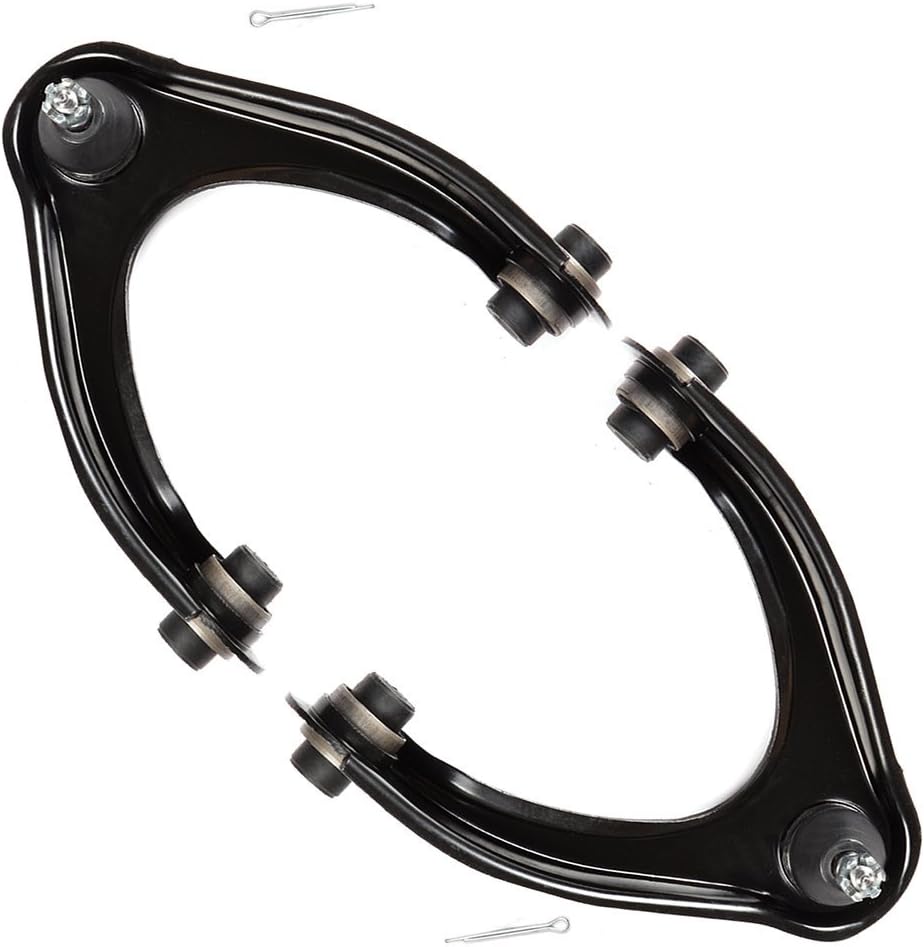
This SCITOO suspension kit supplies both front upper control arms with built-in ball joints for older Civic and Acura EL models as a direct vehicle-specific replacement. Designed to transmit steering and suspension loads and keep the front wheel path correct, the kit is typically used when worn arms are causing play, uneven tire wear, or poor handling. Buyers report straightforward bolt-on installation for many Civic variants and a noticeably improved steering feel after replacement. The parts are black finished and come matched for driver and passenger sides. Practical benefits include lower cost compared with dealer parts and convenience of receiving both upper arms in one kit. Limitations to expect are variable quality control between units and occasional reports of imperfect bushings or ball joint thread issues that may require extra grease, minor adjustment, or part swap. Professional installation is recommended if you lack suspension experience because proper torque and alignment are required for safe operation.
Best for: Buyers fixing worn front upper control arms who prioritize a low-cost, complete replacement kit and want a part that installs without major modification.
Less Ideal for: Drivers seeking long-term, high-mileage durability or performance upgrades should consider upgraded or factory-quality aftermarket arms instead.
- Vehicle-specific fit for 1996–2000 Honda Civic and 1997–2000 Acura EL, simplifying selection.
- Includes both left and right front upper control arms with ball joints so you replace matching components at once.
- Affordable alternative to dealer parts, reducing repair cost for budget repairs.
- Many users report easy bolt-on installation and immediate handling improvement.
- Some buyers report inconsistent build quality such as uneven bushing sizes or weak threads on ball joints.
- May require additional grease or minor rework at installation for optimal performance.
Verdict: If you need an inexpensive, ready-paired replacement for worn front upper control arms on a late 1990s Civic or Acura EL, this kit delivers a fast, wallet-friendly fix.
5. Metrix Premium Chassis Parts Front Left Upper Control Arm with Ball Joint and Bushing

| Fit Type | Vehicle Specific Fit |
|---|---|
| Auto Part Position | Front Left Upper |
| Auto Part Orientation | Drivers Side |
| Material Type | Carbon Steel |
| Manufacturer Warranty Description | 3 Year / 36,000 miles |
This Metrix front left upper control arm replaces the factory unit and includes a preinstalled ball joint and bushing for a straightforward swap on compatible Civic and EL models. Built from carbon steel with a greasable design, the arm aims to restore proper steering geometry and reduce clunking, uneven tire wear, and loose steering that come from worn suspension links. The greasable ball joint and corrosion-resistant coating make maintenance easier and help extend service life in everyday driving conditions. Installation is typical for a suspension arm replacement and should be followed by a wheel alignment to ensure correct toe and camber. Limitations to note are that this is a vehicle-specific, non-adjustable arm so it does not offer alignment correction on its own, and installers should verify fitment against the listed interchange numbers before purchase. Backed by a three year/36,000 mile warranty, this is a practical factory-replacement option for restoring reliable front suspension performance.
Best for: Buyers who prioritize a durable, factory-style replacement to restore steering stability and quiet operation on older Honda Civic or Acura EL models.
Less Ideal for: Those looking for performance or adjustable control arms for camber/toe tuning or aggressive driving setups should consider aftermarket adjustable options instead.
- Vehicle-specific fit for direct replacement on listed Civic and EL years
- Preinstalled ball joint and bushing for faster, simpler installation
- Greasable design allows periodic servicing to extend part life
- Corrosion-resistant coating to help resist road salt and moisture
- Non-adjustable design so alignment must be corrected with other components or at the shop
Verdict: A durable, greasable factory-style front left upper control arm that restores reliable steering and suspension performance for late 1990s Civics and Acura ELs.
6. Detroit Axle Pair Front Upper Control Arms with Ball Joints for 1996–2000 Honda Civic / 1997–2000 Acura EL
| Fit Type | Vehicle Specific Fit |
|---|---|
| Auto Part Position | Upper |
| Auto Part Orientation | Drivers Side |
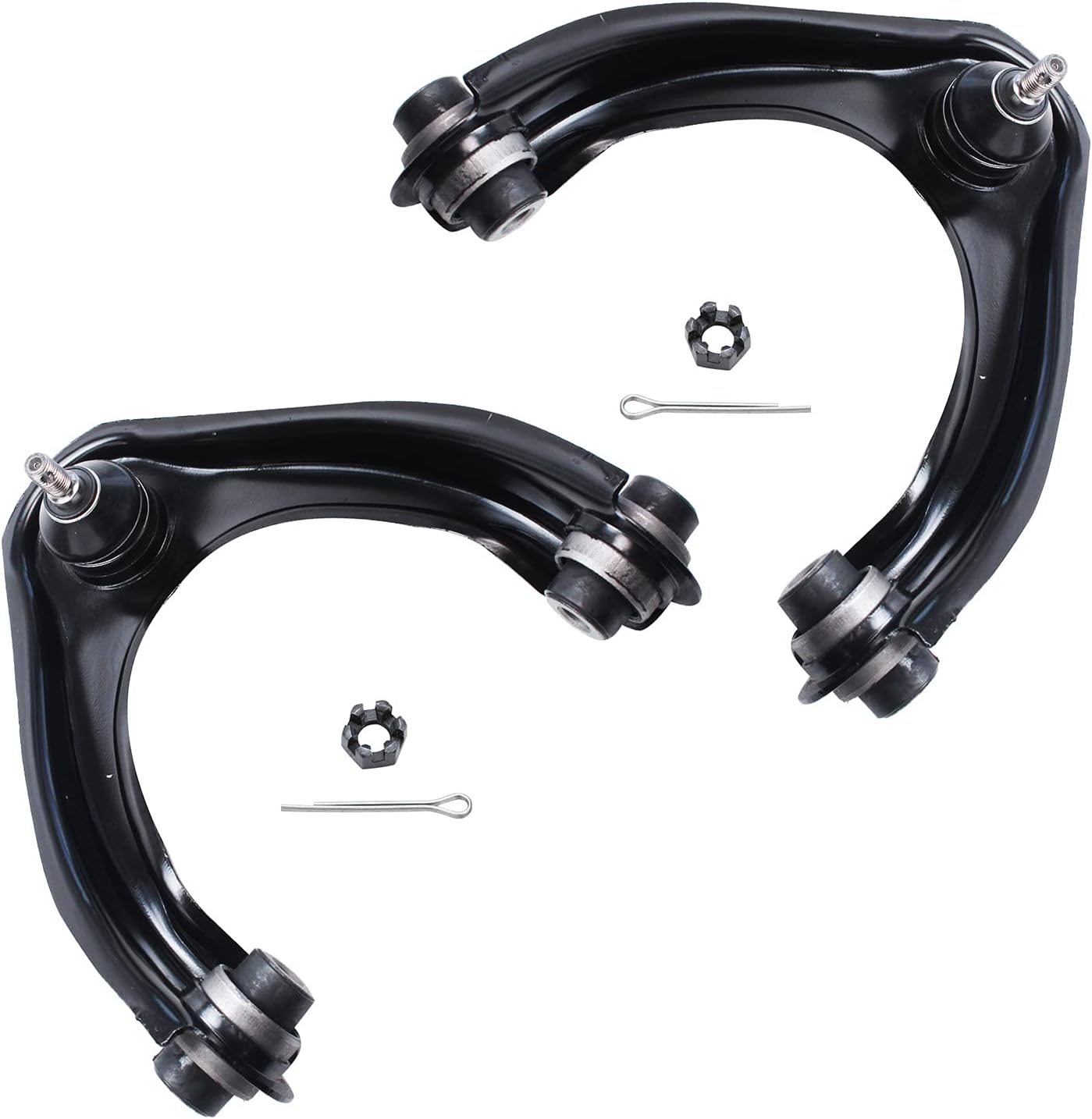
These Detroit Axle front upper control arms come as a pair with ball joints already pressed in, making them a direct vehicle-specific replacement for 1996–2000 Honda Civic and 1997–2000 Acura EL models. They are used to restore proper front suspension geometry and steering response when original arms are worn, typically installed during a suspension refresh or after a collision. The factory-style design and preassembled ball joints speed up installation compared with rebuilding old arms, and the kit is intended to match the fit and mounting points of the original parts. Practical benefits include straightforward bolt-on fitment, restored alignment stability, and the ability to replace both sides at once to maintain symmetrical handling. Limitations to expect are typical of aftermarket suspension parts: you may need an alignment after installation and the arms do not include hardware like alignment shims or control arm bolts if your factory pieces are corroded. For buyers who prioritize proven fitment and simple installation, these arms offer a sensible way to renew front-end feel without upgrading to performance hardware.
Best for: Buyers who want a straightforward, factory-style replacement to restore steering feel and front-end stability on late 1990s Civic or EL models and who value confirmed fit and ease of installation.
Less Ideal for: Drivers seeking upgraded performance suspension components or those who need adjustable control arms for custom alignment settings should consider performance-specific options instead.
- Preinstalled ball joints reduce prep time and simplify installation
- Vehicle-specific fit for direct replacement of 1996–2000 Civic and 1997–2000 EL mounting points
- Supplied as a matched pair so both sides can be changed together for balanced handling
- Factory-style design aimed at restoring original suspension geometry
- May require a professional alignment after installation
- Does not include specialty hardware or shims that some repairs might need
Verdict: A matched, preassembled pair of factory-style upper control arms that simplify replacing worn front suspension parts on late 1990s Honda Civic and Acura EL models.
7. Detroit Axle Front 9pc Suspension Kit with Rack and Pinion for 1996–2000 Honda Civic

| Fitment | 1996–2000 Honda Civic (specified trims listed) |
|---|---|
| Kit contents | Rack & pinion, 2 upper control arms w/ ball joints, 2 lower ball joints, 2 sway bar links, 2 outer tie rod ends |
| Auto Part Position | Front |
| Manufacturer Part Number | 09-1636 |
This Detroit Axle 9-piece front suspension kit bundles the rack and pinion with replacement upper control arms (with ball joints), lower ball joints, outer tie rod ends, and sway bar links so you can rebuild the front end in one go. It is intended as a direct-fit, vehicle-specific replacement for 1996–2000 Honda Civic variants listed in the fitment and is typically used when steering play, uneven tire wear, or clunking indicate worn front suspension parts. The control arms are described as premium alloy with reinforced structure to resist wear and corrosion, and the kit is tested for impact and fatigue to improve durability. Benefits include resolving sloppy steering and restoring chassis feel without hunting for individual parts, and the bundled rack and pinion covers a major failure point too. Limitations to note are that some installers report occasional fitment exceptions between trim or sport editions and that pressed-in ball joints may require extra effort or a press during installation. Expect to need basic mechanic tools or shop help for a complete front-end refresh.
Best for: Buyers who want a low-risk, single-purchase repair to restore steering feel and front-end stability on a 1996–2000 Honda Civic and prefer matching, vehicle-specific parts over scavenging individual components.
Less Ideal for: If you prefer OEM-brand original parts or require exact fit for a nonstandard trim or modified suspension, this bundled aftermarket kit may not meet those needs.
- Complete front-end kit replaces multiple wear items at once so you can service steering and suspension in one job
- Direct-fit, vehicle-specific design simplifies installation and alignment compared with mixing parts from different vendors
- Control arms made from premium alloy and reinforced structure aim to resist wear and corrosion
- Includes rack and pinion so a common steering failure can be addressed alongside suspension components
- Some reported fitment exceptions for special or sport editions requiring verification before purchase
- Ball joints are pressed-in and can be difficult to install without a press or professional tools
Verdict: A convenient, vehicle-specific front suspension bundle that restores steering response and replaces multiple worn components in one installation for 1996–2000 Honda Civics.
Choosing the Right Honda Civic Upper Control Arm: Key Factors to Consider
Correct Fitment and Mounting
Upper control arms must match the Civic's factory mounting points and suspension geometry. An arm that appears similar but uses a different bolt pattern or offset can change camber and caster in unintended ways, causing handling issues and uneven tire wear.
Confirming fitment prevents additional modifications during installation and ensures the arm works with the vehicle's stock ball joint and knuckle. Fitment also affects whether the arm preserves ride height and suspension travel, so always verify the arm is specified for your Civic generation and any specific suspension trim when applicable.
Bushing Material and Design
Bushings control how much NVH gets transferred into the cabin and how the suspension returns to center. Softer rubber or elastomer bushings reduce vibration and road harshness but can allow more movement under load, which may affect steering precision. Stiffer polyurethane or solid-style bushings increase responsiveness and durability but can transmit more vibration.
Look for bushing designs that balance comfort and control for your driving needs. Also consider whether bushings are serviceable or pressed in; replaceable inserts make future service easier and can reduce long-term labor costs.
Ball-Joint Quality and Serviceability
The ball joint connects the control arm to the steering knuckle and must allow smooth articulation without play. High-quality ball joints use tighter tolerances and better seals to resist contamination. A worn ball joint produces clunks, wandering steering, and uneven tire wear, so durability here is critical.
Serviceable ball joints or designs that allow future replacement of the joint can extend the useful life of the entire arm assembly. Consider whether the ball joint is sealed, greasable, or replaceable when evaluating long-term ownership costs.
Corrosion Resistance and Finish
Upper control arms are exposed to road salt, water, and debris, all of which accelerate corrosion. A durable finish and proper coatings help prevent rust that can compromise structural integrity or make future removal difficult.
Powder coatings, zinc plating, or other protective treatments extend component life, reduce the risk of seized fasteners, and maintain appearance. Pay attention to welded joints and fastener threads, as these areas are often prone to corrosion if not properly treated.
Strength and Manufacturing Tolerances
The arm must handle the loads transmitted during steering, cornering, and impacts from road irregularities. Stronger materials and reinforced design reduce the risk of bending under stress, which would alter suspension geometry.
Tighter manufacturing tolerances ensure consistent alignment settings and predictable handling across assemblies. Inferior dimensional control can lead to varying camber or caster between left and right sides, requiring additional alignment work after installation.
Compatibility With Alignment and Ride Goals
Different designs affect alignment limits and achievable settings. If you plan to maintain factory alignment, choose an arm that preserves original geometry. For owners seeking slightly altered camber or caster for track days or lowered ride height, confirm the arm supports the range you need.
Consider how the arm interacts with other suspension components, such as sway bars and shocks. Some arms are designed to work with stock components only, while others accommodate adjustable hardware for fine-tuning alignment.
Signs Your Civic Needs an Upper Control Arm
Several common symptoms indicate the upper control arm may be worn. You may notice steering that feels loose or wanders, clunking noises over bumps, or a vibration that appears at certain speeds. Often these symptoms worsen gradually and are more pronounced during cornering or when driving over rough pavement.
Inspect for visible bushing deterioration, excessive movement at the ball joint, or uneven tire wear that is heavier on one edge. A hands-on check with the vehicle on jack stands—rocking the wheel to detect play—can often reveal arm-related looseness that warrants replacement.
- Loose steering or wandering
- Clunking or knocking over bumps
- Uneven or accelerated tire wear
- Visible bushing cracking or oil saturation
Installation Considerations and Prep
Replacing an upper control arm on a Civic typically involves lifting the vehicle, removing the wheel, and separating the ball joint from the knuckle. Having the correct tools ready, such as a ball-joint separator and torque wrench, reduces the chance of damage and ensures fasteners meet specification.
Plan to have a professional alignment after installation. Even with a Civic-specific arm, slight differences in manufacturing or bushing compliance can change alignment angles. Also prepare replacement hardware if the original nuts and bolts show corrosion or damage, and consider anti-seize on threads where appropriate.
- Jack stands and wheel chocks for safe work
- Ball-joint separator and torque wrench
- Replacement fasteners and anti-seize
- Post-installation alignment appointment
Maintaining Upper Control Arms Over Time
Regular checks of bushings and ball joints help catch wear before it affects alignment and tire life. Look for cracking, splitting, or grease leakage around joints. For greasable designs, follow a maintenance schedule to keep seals lubricated and free of contaminants.
If you replace one side, inspect the opposite arm and related suspension components to avoid pairing a new arm with a worn counterpart. Addressing related issues like worn tie-rod ends or shock mounts at the same time reduces repeat labor and helps maintain consistent handling.
- Periodic visual inspections with vehicle raised
- Grease service for greasable joints
- Check associated suspension parts during replacement
- Prompt alignment checks after any suspension work
Adjustable Vs Fixed-Position Upper Arms
Some upper control arms are fixed-position replacements that maintain factory geometry while others offer adjustability for camber or caster. Fixed arms simplify installation and reliably preserve stock alignment, which is ideal for most street-driven Civic owners. Adjustable arms provide tuning flexibility for modified ride height or performance setups but may require additional alignment effort.
Choose an adjustable arm only if you need the extra tuning range and are prepared to invest time or money in careful alignment. For everyday commuting and typical street use, a well-made fixed arm is usually the more practical choice.
- Fixed arms preserve factory geometry
- Adjustable arms enable alignment tuning
- Adjustable units require careful setup
- Consider driving use before selecting adjustability
Common Mistakes To Avoid During Replacement
A frequent error is failing to replace corroded fasteners or reusing damaged hardware, which can compromise clamping force and safety. Another is neglecting to torque nuts and bolts to specification, which can lead to premature wear or sudden loosening. Always follow the vehicle's torque chart during installation.
Avoid skipping an alignment after replacement. Even a perfectly fitting arm can produce small geometry changes that affect tire wear and handling. Finally, do not ignore related suspension issues; replacing the upper control arm while other components are worn will limit the benefits of the new part.
- Do not reuse visibly corroded or stretched fasteners
- Torque all mounting bolts to spec
- Schedule a post-replacement alignment
- Inspect and address other worn suspension components
Still looking for the perfect fit?
Select your Honda Civic configuration to see the most relevant Control Arms recommendations
How We Chose the Best Honda Civic Upper Control Arm
We focused on criteria that directly affect fitment and long-term performance on the Honda Civic. Primary evaluation points included precise vehicle fitment and correct mounting points to preserve factory geometry, and bushing materials and design to judge vibration isolation versus durability. Ball-joint quality and range of motion were reviewed to ensure safe steering articulation and to avoid premature loosening or play. Corrosion protection and finish were assessed because underbody exposure on the Civic can accelerate wear. We also considered strength and manufacturing tolerances to handle everyday road stresses and occasional potholes without bending.Excluded from consideration were universal or multi-fit arms that lack Civic-specific mounting detail and components that require additional fabrication or significant modification. We also filtered out options that do not support common Civic suspension configurations. The result is a list of Civic-compatible upper control arms that balance long-term durability, maintainability, and the ability to achieve stable alignment settings after installation.
Our full evaluation process is outlined in our review methodology.
FAQ
How can I tell if the upper control arm is bad on my Civic?
Common indicators include wandering steering, clunking noises over bumps, and uneven tire wear. A hands-on check with the wheel rocked while the car is lifted can reveal play at the ball joint or excessive bushing movement.
Can I replace the upper control arm myself?
Many mechanically inclined owners can perform the replacement with the right tools and safety equipment. However, separating the ball joint and ensuring proper torque on fasteners requires care. Plan for a professional alignment after the job.
Do upper control arms affect wheel alignment?
Yes. The arm positions the knuckle and directly influences camber and caster. Even a Civic-specific replacement can slightly change angles, so an alignment is recommended after installation to restore proper tracking and tire wear.
What causes control arm bushing wear on a Civic?
Bushing wear often results from age, repeated exposure to moisture and road salt, and repeated suspension articulation. Aggressive driving and impacts from potholes accelerate deterioration of bushing material.
Are greasable ball joints worth it?
Greasable ball joints allow periodic lubrication, which can extend service life if maintained. They require occasional service, but for drivers who keep up with maintenance, they can reduce long-term wear compared with sealed, non-serviceable units.
Will replacing just the upper control arm fix alignment issues?
Replacing a worn arm can correct alignment-related symptoms caused by that component, but successful correction depends on the condition of other suspension parts. A full alignment check is necessary to ensure all angles fall within specification.
Final Verdict
When choosing an upper control arm for your Honda Civic, prioritize correct fitment, durable bushings, and a quality ball joint. These elements most directly affect steering feel, alignment stability, and long-term durability. Decide whether you want a fixed arm to preserve factory geometry or an adjustable unit if you need alignment tuning. Finally, factor in protective finishes and serviceability to reduce future labor and corrosion risks — and always follow up any replacement with a proper alignment to lock in the intended handling.
Explore More:
- Check out all Honda Civic parts & accessories
- Explore Control Arms Maintenance & Repair Guides
- Explore Suspension & Steering
- Browse all Auto Parts
