

Note: This article contains affiliate links. If you click on these links and make a purchase, I may earn a small commission at no extra cost to you. This helps support my research and content. Read my full affiliate disclosure here.
If your Honda Civic feels vague over bumps or tracks poorly down the road, the front control arms are a likely suspect. Replacing worn arms or bushings restores steering precision, stabilizes suspension geometry, and prevents uneven tire wear. This guide covers the top shortlisted front control arms chosen for fit and longevity for the Civic, explains common symptoms and fitment considerations, and outlines what matters during installation and alignment.Read on to understand the evaluation criteria used and which features matter most so you can pick an arm that suits how you drive and how long you want it to last.
Looking for other parts? See all Honda Civic parts & accessories.
Top Picks at a Glance


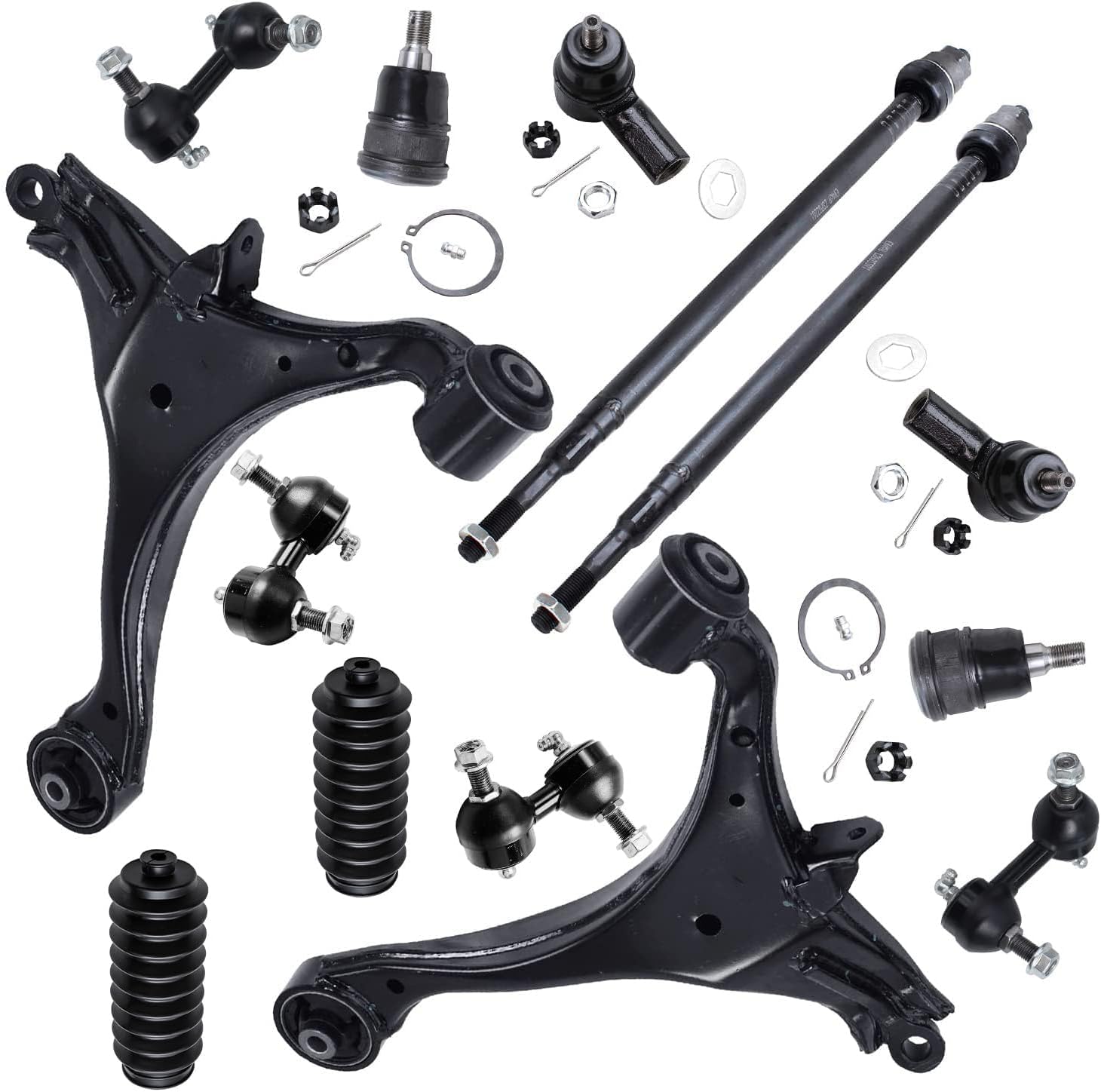
1. Detroit Axle Front-End 14pc Suspension Kit for 2001–2005 Honda Civic
| Fit Type | Vehicle Specific Fit |
|---|---|
| Auto Part Position | Front Lower |
| Included Components | Lower Control Arms, Sway Bars, Tie Rods, Ball Joints |
| Manufacturer Warranty Description | 10-Year Warranty |
This Detroit Axle 14-piece front suspension kit is a one-stop replacement for worn front-lower components on 2001–2005 Honda Civic non-Si coupes and sedans. It includes two lower control arms, two lower ball joints, four tie rods (inner and outer), front and rear sway bar links, and rack-and-pinion boots so you can refresh the vehicle's steering and suspension in a single job. The parts are advertised as vehicle-specific fit and are tested for impact, wear, and fatigue, which helps simplify installation and reduce the need to source individual pieces. For a DIYer or a shop doing a full front-end refresh, the bundled approach saves time and ensures matched components. Expect the convenience of receiving ready-to-install control arms and related hardware but be aware this is an aftermarket kit so finish and factory-matching details may differ from factory pieces. It is best used when multiple front suspension parts are due for replacement rather than for a single isolated component fix.
Best for: Buyers who want a balanced, practical solution to restore front suspension and steering on a 2001–2005 Honda Civic by replacing multiple worn parts at once, whether doing the work themselves or having a shop install the set.
Less Ideal for: If you only need a single control arm or tie rod replaced, or you require factory-matched finish and exact OEM appearance, this full kit may be more than necessary.
- Comprehensive 14-piece kit replaces most front-lower suspension and steering components in one purchase
- Vehicle-specific fit for 2001–2005 Honda Civic non-Si models simplifies installation
- Manufacturer states parts undergo impact, wear, and fatigue testing for durability
- Includes sway bar links and rack-and-pinion boots so related failure points are addressed
- Aftermarket finish is listed as unfinished and may not match factory appearance or coatings
- Kit is intended for full front-end refresh and may be overkill if only one part needs replacement
Verdict: Choose this kit if you want a practical, all-in-one replacement to refresh the entire front suspension and steering of a 2001–2005 Honda Civic non-Si reliably and with minimal parts hunting.
2. MOOG Front Right Lower Suspension Control Arm and Ball Joint Assembly

| Fit Type | Vehicle Specific Fit |
|---|---|
| Auto Part Position | Right |
| Auto Part Orientation | Drivers Side |
| Material Type | Iron,Steel |
This MOOG lower control arm with an integrated ball joint is a direct-fit replacement designed to restore front suspension geometry on compatible Civic and CSX models. Installers will use it to replace worn factory arms that cause steering play, pulling, or uneven inner tire wear. MOOG highlights heat-treated structural strength and corrosion-resistant coatings, which in real use means the part should resist bending from road impacts and hold up longer in wet or salted conditions. The integrated ball joint simplifies parts sourcing compared with buying separate components and helps speed installation. Because it is made from iron and steel and finished unfinished, expect a durable, utilitarian part rather than a cosmetic upgrade. This is a repair-focused component: it improves steering response and stability but does not change suspension tuning or handling characteristics beyond restoring factory alignment. Fitment is vehicle-specific so confirm model years before purchase and have alignment performed after installation.
Best for: Buyers who prioritize restoring tight, predictable steering and factory suspension geometry on their Civic or CSX and want a rugged, install-friendly replacement part.
Less Ideal for: Drivers looking to change handling characteristics, lower the car, or add aftermarket performance tuning should consider performance-specific arms instead.
- Direct-fit design for straightforward installation on specified Civic and CSX applications
- Integrated ball joint removes the need to source a separate part and speeds replacement
- Heat-treated construction aims to resist impact and repetitive loads for durability
- Corrosion-inhibiting coatings on studs help extend service life in harsh environments
- Unfinished appearance means it is functional but not cosmetic; may require coating to match engine-bay aesthetics
Verdict: Choose this MOOG control arm when you want a durable, direct-fit replacement that restores factory steering feel and stability.
3. SCITOO Front Suspension Kit (8-piece) for Honda Civic 2006–2011

| Fit Type | Vehicle Specific Fit |
|---|---|
| Auto Part Position | Front |
| Material | Alloy Steel, Stainless Steel |
| Exterior | Electrophoretic Coating |
This SCITOO 8-piece front suspension kit bundles the common wear items you need to restore steering and front-end stability on a 2006–2011 Honda Civic 1.8L. The kit includes left and right lower control arm and ball joint assemblies, inner and outer tie rod ends, and front sway bar end links so you can replace multiple failing components in one job instead of sourcing parts individually. Parts arrive pregreased and finished with an electrophoretic coating to resist corrosion, and the alloy steel and stainless components match factory geometry for straightforward installation by a competent mechanic. The practical benefit is a faster, more consistent repair that addresses steering play, uneven tire wear, and clunking from worn joints. Expect to still need alignment after installation and professional fitment is recommended to ensure torque and safety. This kit covers basic suspension restoration at a lower cost than buying OEM pieces separately, but if you only need a single component a full kit may be more than necessary.
Best for: Buyers who want a cost-effective, time-saving repair package to renew the Civic front suspension and eliminate steering play without hunting down individual parts.
Less Ideal for: Not a good choice for someone who only needs a single replacement part or who prefers purchasing direct factory-brand components individually.
- Complete set replaces multiple front-end wear parts in one purchase
- Pregreased components reduce initial prep time during installation
- Electrophoretic coating and metal construction aimed at corrosion resistance
- Parts designed to match factory geometry for straightforward fitment
- Includes every item even if only one or two parts are needed, which can be wasteful for small repairs
Verdict: This all-in-one suspension kit is the practical way to refresh a Civic 2006–2011 front end quickly and affordably when several steering or suspension parts are worn.
4. maXpeedingrods Front Lower Control Arm Kit (2 pcs) for Honda Civic 2006–2011 / Acura CSX 2006–2011

| Fit Type | Vehicle Specific Fit |
|---|---|
| Auto Part Position | Front |
| Material Type | Alloy Steel |
| Unit Count | 2.0 Count |
These maXpeedingrods front lower control arms replace the factory front lower A-arms on 2006–2011 Honda Civic and Acura CSX non-Si models and come as a two-piece kit for left and right sides. Made from alloy steel with a powder-coated finish, they are intended as direct-fit replacements to restore steering response and suspension geometry after worn or damaged arms are removed. Typical use is a repair or budget refresh of the front suspension; installers report the parts fit without modification and noticeably reduce play and clunking when original arms fail. The included ball joint provision and factory-style mounting make installation straightforward for a competent DIYer or independent shop. These arms prioritize value and corrosion resistance rather than motorsport durability, so they are best where reliable everyday performance and a long service life are the goal. Expect a cost-effective, factory-quality-feeling repair but not the extra strength or refinement of high-end performance control arms.
Best for: Buyers who need an affordable, direct-replacement solution to restore handling and eliminate clunks on a 2006–2011 Civic or an Acura CSX and who prefer a simple DIY or shop installation.
Less Ideal for: Drivers seeking heavy-duty or track-grade suspension components or those who require custom geometry changes should consider reinforced aftermarket options instead.
- Vehicle-specific fit for 2006–2011 Honda Civic and Acura CSX non-Si models ensures straightforward, no-modification installation
- Alloy steel construction with powder-coated finish resists rust and corrosion for longer service life
- Supplied as a matched left and right set so both sides can be replaced at once for balanced handling
- Reported to restore steering responsiveness and reduce suspension noise when original arms are worn
- Designed as an economy replacement rather than a reinforced performance arm for track use
Verdict: A budget-focused, vehicle-specific front lower control arm pair that restores factory handling and fitment on 2006–2011 Honda Civic and Acura CSX models.
5. Detroit Axle Front Right Lower Control Arm with Ball Joint for 2016–2021 Honda Civic

| Fit Type | Vehicle Specific Fit |
|---|---|
| Auto Part Position | Front Right |
| Auto Part Orientation | Passengers Side |
| Manufacturer Part Number | K623649 |
This Detroit Axle front right lower control arm is a direct-fit replacement for 2016–2021 Honda Civic models and includes the ball joint preinstalled to simplify installation. It is intended to restore factory steering geometry and suspension stability after a worn or damaged control arm has caused uneven tire wear, wandering, or clunks over bumps. Built from a premium alloy with a reinforced structure and corrosion-resistant finish, the arm is described as high-rigidity and designed to resist repeated impact loads. Installation is straightforward for a competent home mechanic or shop because it replaces the factory part without modification. The practical benefits are improved handling, restored alignment settings, and fewer visits to the shop compared with patch repairs. Limitations are typical of aftermarket suspension parts: long-term performance depends on correct installation and related suspension components, and this single arm only replaces the passenger-side lower assembly so matched replacements may be needed for balanced wear.
Best for: Buyers who prioritize dependable, factory-quality suspension repairs and want a ready-to-install replacement that restores steering and ride stability on a 2016–2021 Honda Civic.
Less Ideal for: Do not choose this if you need a performance-tuned or upgraded suspension component or if you plan to replace multiple suspension parts at once without matching replacements.
- Direct-fit vehicle-specific design for 2016–2021 Honda Civic reduces installation time
- Includes preinstalled ball joint to simplify replacement and alignment
- Premium alloy construction with anti-rust finish for improved durability
- Reinforced structure designed to withstand repeated impact loads
- Sold as a single passenger-side lower control arm so buyers replacing both sides must purchase two units
Verdict: A straightforward, durable direct-fit replacement that restores factory steering and suspension reliability on 2016–2021 Honda Civic passenger-side lower assemblies.
6. Detroit Axle Front Lower Control Arms with Ball Joints (2-piece) for 2016–2021 Honda Civic

| Fitment | 2016–2021 Honda Civic (1.5L and 2.0L) |
|---|---|
| Kit contents | 2x front lower control arms with ball joints |
| Position | Front lower control arms |
| Manufacturer | Detroit Axle |
| Warranty | 10-year warranty |
These Detroit Axle front lower control arms replace the factory lower arms on 2016–2021 Honda Civic 1.5L and 2.0L models. The kit includes two complete lower control arms with ball joints already pressed in, so installation is straightforward for a shop or a capable DIY with basic tools and a torque wrench. Built and tested to meet aftermarket quality standards, the arms aim to restore proper front-end alignment, tighten steering response, and eliminate clunks from worn pivots. Positive user reports indicate reliable fitment and a solid, factory-style feel after installation. Expect practical benefits like a quicker install because the ball joints are preinstalled and consistent fit without extensive modification. Trade-offs are typical for aftermarket suspension parts: while many customers report good durability and a 10-year warranty, occasional units may require some persuasion to seat or need a shop press if a ball joint arrives damaged. If you want a direct replacement that brings back factory handling without premium cost, this kit covers the basics well.
Best for: Buyers who want a reliable, budget-conscious factory-style replacement to restore steering feel and alignment on a 2016–2021 Honda Civic and who prioritize proven fitment backed by user feedback.
Less Ideal for: Drivers seeking performance-tuned control arms or adjustable suspension components should look at specialty or aftermarket performance options instead.
- Includes two front lower control arms with ball joints preinstalled for faster installation
- Vehicle-specific fitment for 2016–2021 Honda Civic 1.5L and 2.0L reduces trial-and-error during replacement
- Designed and tested to aftermarket quality standards with reported consistent fit and restored steering feel
- Backed by a long-term warranty from the manufacturer
- May require a press or light persuasion to seat a ball joint on some units
- Not a performance upgrade; intended as a factory-style replacement rather than sport-tuned component
Verdict: A practical, vehicle-specific factory-style replacement that restores front-end alignment and steering feel on 2016–2021 Honda Civics without added cost.
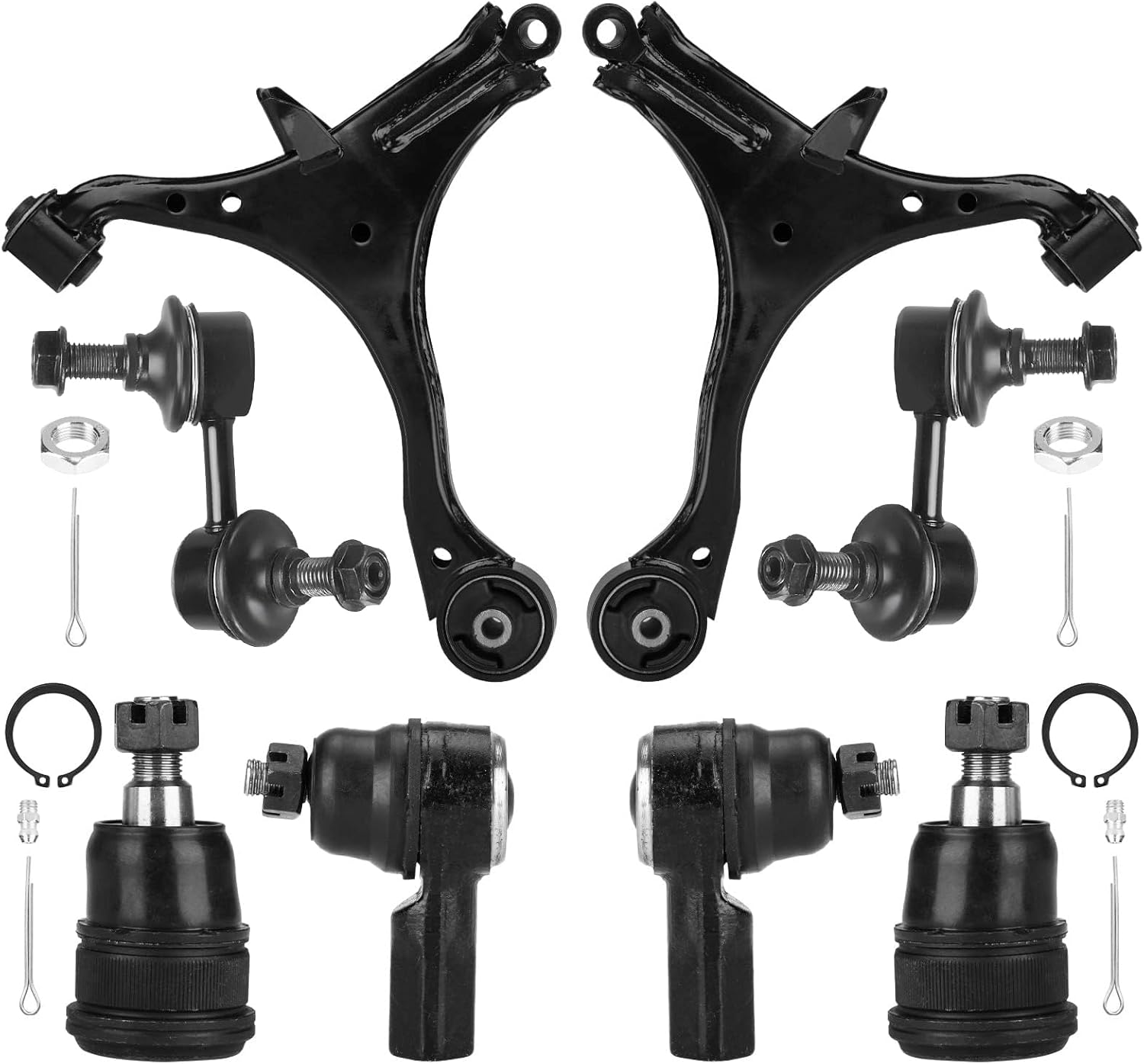
7. Youxmoto Front Lower Control Arm Suspension Kit with Ball Joints and Tie Rods for Honda Civic 2001–2005 (Coupe & Sedan)
| Fitment | Honda Civic 2001-2005 (Coupe & Sedan Only) |
|---|---|
| Position | Front lower control arms |
| Material Type | Alloy Steel |
| Kit contents | 2 control arms, 2 ball joints, 2 tie rod ends, 2 stabilizer end links |
This Youxmoto kit supplies both front lower control arms plus ball joints, stabilizer end links and outer tie rod ends so you can refresh most of the front suspension connection points in one job. It is intended as a vehicle-specific replacement for Honda Civic 2001–2005 coupe and sedan models and is typically used when worn bushings or ball joints cause vibration, loose steering, or uneven tire wear. The arms are made from alloy steel and the listing highlights high-strength structure, premium ball joints, and rubber bushings to reduce noise and road shock. In practice that means the kit should restore firmer steering response and reduce vibration compared with badly worn parts. Because it covers multiple components, it saves time over buying parts separately and helps maintain correct wheel tracking after installation. Limitations: fitment excludes Si models and this aftermarket kit is not described as factory-quality by the brand, so professional installation and alignment are recommended to ensure correct steering geometry and long-term wear performance.
Best for: Buyers who want to replace multiple front suspension components at once to restore steering precision and reduce vibration, and who prefer a ready-made kit to simplify repair planning.
Less Ideal for: Drivers seeking an exact factory-spec replacement for performance or Si variants should consider specialized OEM or model-specific options instead.
- Complete kit replaces both front lower arms plus ball joints, stabilizer end links, and outer tie rod ends
- Alloy steel construction and high-strength structure intended to resist repeated impact loads
- Includes premium ball joints and rubber bushings to reduce noise and improve ride comfort
- Vehicle-specific fit for Honda Civic 2001–2005 coupe and sedan simplifies parts selection and installation
- Not compatible with Si models so it does not fit all Civic variants
- Manufacturer positions this as an aftermarket upgrade rather than a factory-quality direct claim
Verdict: A convenient, vehicle-specific front lower suspension kit that refreshes key steering components on 2001–2005 Civic coupes and sedans to restore handling and reduce vibration.
Choosing the Right Honda Civic Front Control Arm: Key Factors to Consider
Fitment and Chassis Compatibility
Proper fitment is the most important factor because the arm must match the Civic s mounting points and suspension geometry exactly. Even small deviations in hole spacing or bracket orientation can change caster and camber, leading to alignment issues and uneven tire wear.
When evaluating fitment, confirm the arm covers the correct model year subframe and steering knuckle attachment. Some Civic variations have different subframe pickups or steering arm designs, so verify fitment against your vehicle s VIN or factory part numbers. A correct fit minimizes installation time and avoids additional alignment or fabrication work.
Bushing Type and Durability
Bushing material affects ride quality and longevity. Rubber bushings isolate noise and vibrations and usually provide a compliant ride, but they can degrade faster under heat and oil exposure. Synthetic or polyurethane bushings resist deformation and last longer, but they can transmit more noise and harshness into the chassis.
Consider how you drive the Civic. For daily commuting with comfort as a priority, factory-style compliant bushings may be preferable. For performance-oriented use or higher-mileage vehicles, stiffer bushing options can maintain alignment under load and resist premature wear.
Ball Joint Quality and Serviceability
Many front control arms integrate a ball joint that connects to the steering knuckle. A well-manufactured ball joint will have tight tolerances and a robust dust boot to keep contaminants out. Loose or worn ball joints cause play in the steering and uneven tire wear and should be addressed promptly.
Check whether the ball joint is serviceable or permanently pressed into the arm. Serviceable joints allow replacement without changing the entire arm, which can save money long-term. Also look for grease fittings or sealed designs depending on your maintenance preferences.
Corrosion Protection and Finish
Front control arms are exposed to road salt, water, and debris, so finish and anti-corrosion treatments matter. Arms with adequate coatings, e-coating, or powder coat and protected mounting surfaces last longer and require less maintenance.
Poor corrosion protection leads to seized bolts and premature structural degradation. When inspecting options, consider how the finish will perform given your local climate and winter driving conditions. Robust coatings extend service life and preserve fitment tolerances.
Installation Considerations and Hardware
Ease of installation affects labor time and the chance of installation errors. Look for arms that include new mounting hardware and clearly match factory torque specs. Some designs reuse factory bolts while others include heavy-duty replacements for a more secure fit.
Also consider whether bushing sleeves and press-fit components require specialized tools. If you plan to install the arm yourself, choose assemblies designed for bolt-in replacement to minimize shop time and prevent damage during press operations.
Impact on Alignment and Tire Wear
Control arms influence caster, camber, and toe settings by fixing the position of the wheel hub relative to the chassis. Subtle differences in arm geometry or worn bushings can alter alignment and accelerate tire wear.
After replacement, you should plan for a full alignment. Some aftermarket arms maintain closer tolerances to factory geometry, reducing the amount of correction needed. Consider options that minimize post-installation alignment adjustments to save time and preserve even tire wear.
Common Symptoms of a Failing Front Control Arm
Worn front control arms produce noticeable drivability changes. Typical symptoms include wandering steering, clunking noises over bumps, and uneven tire wear concentrated on the inner or outer edges. These signs often appear gradually, so monitoring changes in handling can help catch issues early.
You might also notice vibration at certain speeds or increased play in the steering wheel. Some symptoms can overlap with other suspension components, so a systematic inspection of bushings, ball joints, and mounting points helps isolate the control arm as the source.
- Clunking or knocking when driving over bumps
- Loose or vague steering feel
- Uneven or accelerated tire wear
- Vibration through the steering wheel at speed
When To Replace Vs Repair
Deciding between replacing the entire arm or repairing individual components depends on the damage and design. If bushings are worn but the arm is otherwise straight and corrosion-free, replacing bushings can be cost-effective when the design allows servicing. However, pressed-in bushings or severely corroded or bent arms usually merit full replacement.
If the ball joint has play or the arm s structural integrity is compromised, replacement is generally the safer choice. Also consider how much life you expect from the repair relative to the labor involved; sometimes a new assembly saves time and reduces the risk of repeated disassembly.
- Serviceable bushings can be replaced to extend life
- Bent or corroded arms should be replaced
- Replace if ball joint exhibits measurable play
How Replacement Affects Alignment
Replacing a front control arm alters suspension geometry and typically requires a full alignment. Even OEM-correct replacements can shift toe or camber slightly, so a post-installation alignment ensures correct tire contact patch and predictable handling. Without alignment, you risk accelerated tire wear and instability.
If you use adjustable arms or ones with slightly different mounting tolerances, communicate that to the alignment shop so they can correct for any changes. Planning for a prompt alignment after installation prevents long-term tire and suspension issues.
- Plan a full alignment after installation
- Adjustable arms may reduce needed corrections
- Misalignment accelerates tire wear
Basic Steps in Front Control Arm Installation
Installation typically involves safely lifting the vehicle, removing the wheel, unbolting the control arm at the frame and knuckle, and installing the new arm with correct torque values. Some designs require the suspension to be loaded in its normal ride position before tightening bolts to avoid preloading bushings.
If you are doing the work yourself, prepare the correct tools, replacement hardware, and torque specifications. When bushings or ball joints are pressed, using a press or specialized tools prevents damage. If you are unsure, professional installation reduces the risk of improper torque or alignment errors.
- Support vehicle safely before starting work
- Follow factory torque specs and tightening sequence
- Tighten bolts with suspension at ride height when required
Maintenance Tips to Extend Arm Life
Regular visual inspections catch corrosion, torn boots, and bushing deterioration early. Keep mounting bolts clean and check for signs of movement at the ball joint or bushing. Addressing small issues early can avoid more extensive suspension damage.
If your replacement arm has grease fittings, perform scheduled greasing to prolong ball joint life. Also, avoid driving extensively over rough terrain while awaiting repairs, as added stress accelerates wear on bushings and ball joints.
- Inspect boots and bushings every oil change
- Grease serviceable joints per manufacturer intervals
- Replace seized or heavily corroded hardware during service
Still looking for the perfect fit?
Select your Honda Civic configuration to see the most relevant Control Arms recommendations
How We Chose the Best Honda Civic Front Control Arm
We focused on criteria that directly affect long-term performance and fitment for the Honda Civic. Each candidate was evaluated for correct chassis fitment and mounting points to ensure direct replacement without chassis modification. Durability was assessed by looking at bushing material and construction methods that resist deformation and moisture intrusion. Ball joint design and preload specifications were checked to reduce play under load and maintain steering geometry.Corrosion protection and finish were considered to ensure components resist road salt and moisture in typical driving environments. Ease of installation was weighed, including whether arms used factory-style bushings or required pressing tools. We excluded options that did not clearly match Civic mounting locations or that required welding or permanent vehicle changes. Final selection emphasized combinations of proper fitment, robust bushings or joints, corrosion resistance, and installer-friendly design.
Our full evaluation process is outlined in our review methodology.
FAQ
What are the most common control arm symptoms on a Civic?
Common symptoms include clunking noises over bumps, a wandering or vague steering feel, uneven tire wear, and vibration at speed. These signs often point to worn bushings or a loose ball joint.
Can I replace just the bushings or do I need a whole arm?
It depends on the arm design. Some arms allow bushing replacement, which can be cost-effective if the arm is straight and corrosion-free. Press-fit bushings or structural damage usually mean replacing the entire arm is the safer option.
Will installing a new front control arm fix alignment issues?
A new arm can restore proper suspension geometry, but you should plan for a full alignment after installation. Even correct-fit replacement arms can shift toe or camber slightly, so alignment ensures proper tire contact and handling.
How long does a front control arm last on a Civic?
Lifespan varies with driving conditions and materials. Factory-style arms with rubber bushings often last many years under normal driving, while harsher climates and rough roads shorten life. Upgraded bushings or better corrosion protection can extend service intervals.
Are ball joints on Civic control arms serviceable?
Some control arms have serviceable ball joints with grease fittings or replaceable joints, while others are sealed and pressed into the arm. Serviceability depends on the arm s design, so check the assembly details before purchasing.
What should I tell my mechanic before replacing the control arm?
Provide the vehicle s year and exact model variant, describe the symptoms you ve observed, and mention any previous suspension repairs. Also ask whether the arm requires special tools or press work so the shop can plan accordingly.
Final Verdict
When replacing front control arms on a Honda Civic, prioritize correct fitment and robust bushing or ball joint construction. Consider how you drive and whether you prefer quieter factory-like compliance or firmer components that hold alignment under load.Plan for professional alignment after installation, include any needed hardware or corrosion prevention measures, and weigh repair versus full replacement based on the arm s condition. Focusing on these tradeoffs will help you choose an arm that restores steering precision and minimizes repeat repairs.
Explore More:
- Check out all Honda Civic parts & accessories
- Explore Control Arms Maintenance & Repair Guides
- Explore Suspension & Steering
- Browse all Auto Parts
