

Note: This article contains affiliate links. If you click on these links and make a purchase, I may earn a small commission at no extra cost to you. This helps support my research and content. Read my full affiliate disclosure here.
If your Honda Civic Si feels loose in turns or is showing uneven tire wear, replacing worn suspension links can bring back the crisp steering and ride stability you expect. Choosing the right control arm matters because this component affects alignment, steering geometry, and how the tire contacts the road under load.This guide covers the top shortlisted control arms for the Civic Si, explains the criteria used to evaluate them, and highlights the key fitment and durability considerations you should weigh. Read on to find control arms that match your vehicle configuration and driving goals before you start the job.
Looking for other parts? See all Honda Civic parts & accessories.
Top Picks at a Glance
| Best Overall The best all-around choice for most situations | TUCAREST Front Lower Control Arm and Ball Joint Assembly (Pair) for 2016–2021 Honda Civic |  |
| Best Quality Built to a higher standard if you want something more solid | Skunk2 Racing Alpha Series Rear Lower Control Arm (Black Anodized) |  |
| Best Value The sweet spot between price and what you get | maXpeedingrods Rear Adjustable Upper Control Arms (3°) for 2006–2015 Honda Civic / Acura CSX-S |  |
| Best Budget The cheapest option that still gets the job done reliably | AJP Distributors Rear Lower Aluminum Control Arms with Polyurethane Bushings |  |
| Highest Rated A top-rated pick with lots of positive feedback | TRQ Front Steering & Suspension 8-Piece Kit for 2006–2011 Honda Civic Si |  |
| Most Popular A crowd favorite that many people choose with confidence | Detroit Axle Front Lower Control Arms with Ball Joints (2pc) for 2016–2021 Honda Civic |  |
1. TUCAREST Front Lower Control Arm and Ball Joint Assembly (Pair) for 2016–2021 Honda Civic
| Fit Type | Vehicle Specific Fit |
|---|---|
| Auto Part Position | Front Lower |
| Item Type Name | control arm |
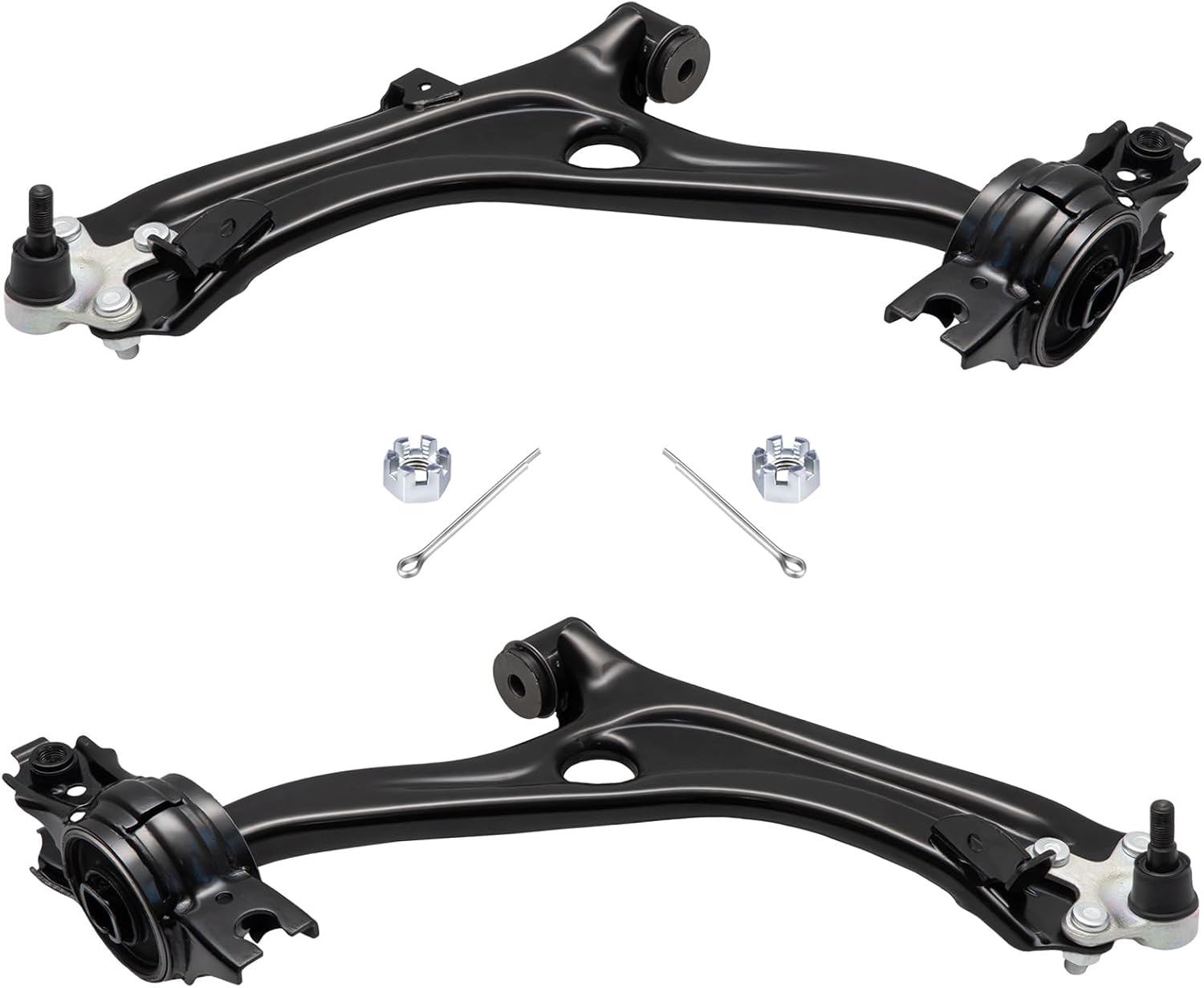
These TUCAREST front lower control arms are built as direct replacement assemblies for 2016–2021 Honda Civic (excluding Type R). Each arm includes the ball joint and frame-side bushings so you can replace the worn assemblies without sourcing separate components. They are manufactured to mimic factory fit and function, which simplifies installation for a competent DIYer or a shop and helps restore original steering geometry and ride control. Buyers report the parts fit well and bolt in without significant modification when fitment is confirmed. The construction follows OE-style practices and the parts undergo quality checks during production, which supports durability and predictable performance on street use. Watch for one important caveat: accurate fitment verification is essential since at least one buyer reported a mismatch with their vehicle despite the listing, so double-check the compatibility tool or contact the seller before ordering. These arms are a practical option if you want a budget-friendly, factory-quality replacement that returns worn front suspension to correct alignment and handling.
Best for: A balanced buyer who wants a reliable, factory-quality replacement to restore correct steering and ride feel on a 2016–2021 Civic without upgrading to performance parts.
Less Ideal for: Not suited for drivers seeking heavy-duty or performance-tuned suspension components or those who need parts for other vehicle models or Type R variants.
- Factory-style design with integrated ball joint for straightforward direct replacement
- Designed specifically for 2016–2021 Civic models so geometry and mounting points match factory locations
- Undergoes multiple production quality checks to improve consistency and durability
- Includes both left and right arms in the kit for full axle replacement
- Fitment description errors have been reported, so compatibility must be double-checked before purchase
Verdict: A practical, factory-style replacement pair that restores front suspension fit and function on 2016–2021 Honda Civic models.
2. Skunk2 Racing Alpha Series Rear Lower Control Arm (Black Anodized)

| Fit Type | Vehicle Specific Fit |
|---|---|
| Auto Part Position | Lower |
| Auto Part Orientation | Rear |
| Material Type | Aluminum |
Skunk2’s Alpha Series rear lower control arm replaces the factory rear lower arm with a forged 6061‑T6 aluminum unit machined for precise geometry and reduced mass. Designed for rear installation, it uses an outboard steel spherical bearing at the trailing arm for accurate alignment under load, tuned polyurethane inboard bushings to control vibration, and Delrin shock mount bushings to limit deflection at the shock. In practice that combination firms the rear end, improves camber control during aggressive cornering, and transfers steering inputs more directly to the chassis while trimming significant unsprung weight versus stock. The arm is vehicle specific so installation is straightforward on the listed model years but it is intended for enthusiasts who want sharper handling rather than a plush ride. Buyers should plan to pair it with rear camber adjustment hardware or other rear suspension pieces if chasing maximum alignment control, and note the firmer bushings will increase NVH compared with softer factory mounts.
Best for: Enthusiasts focused on sharper handling and reduced unsprung weight who are upgrading the rear suspension of an eligible model for track or spirited street driving and value improved geometry control.
Less Ideal for: Drivers who prioritize ride comfort, quiet operation, or a stock feel should stick with softer factory-style arms or isolating replacements.
- Forged 6061‑T6 aluminum construction improves strength and reduces weight versus stock.
- Outboard spherical bearing maintains suspension geometry under high loads.
- Tuned polyurethane and Delrin bushings reduce bushing twist and improve shock response.
- Vehicle specific fit simplifies installation for listed Civic/CRX/Integra years.
- Stiffer bushings increase road noise and vibration compared with factory arms.
- Does not include rear camber adjustment hardware, which is recommended for full alignment control.
Verdict: Buy this if you want a lightweight, stronger rear lower control arm that tightens rear suspension response for performance driving on the specified Honda/Acura models.
3. maXpeedingrods Rear Adjustable Upper Control Arms (3°) for 2006–2015 Honda Civic / Acura CSX-S

| Fitment | 2006–2015 Honda Civic Coupe Sedan Acura CSX-S |
|---|---|
| Adjustable Camber | -3° to +3° |
| Material | Aluminum |
| Bushing Type | Polyurethane |
| Position | Rear Upper |
These rear upper control arms replace the factory rear camber links and give tunable camber for a lowered or performance-oriented Civic Si setup. Constructed from aluminum with preinstalled polyurethane bushings, they stiffen rear response compared with rubber links and let you adjust camber from -3° to +3° to correct tire wear or dial in cornering. The kit is vehicle-specific for 2006–2015 Civic/CSX-S and ships as a pair with necessary hardware, though no printed instructions are included. In practice the aluminum arms are light and resist bending for lowered cars or wider wheels, and the poly bushings transmit more feedback to the chassis which improves steering feel but also increases vibration on rough roads. Installation requires basic suspension knowledge and alignment after fitting to ensure geometry is correct. These arms are a cost-effective upgrade for street and occasional track use, offering clear handling gains for drivers willing to accept firmer ride quality and to have the parts professionally aligned after installation.
Best for: Buyers wanting a practical, value-focused rear camber solution to improve handling and tire contact on a lowered or performance-tuned 2006–2015 Civic or CSX-S, and who prioritize measurable handling gains over ride softness.
Less Ideal for: Drivers who prioritize a quiet, comfort-oriented daily ride or who lack experience with suspension installation and alignment should consider softer, non-adjustable replacements or professional installation services.
- Adjustable camber range of -3° to +3° for fine tuning rear alignment
- Aluminum construction resists bending and suits lowered cars and wider wheels
- Preinstalled polyurethane bushings improve steering response and durability
- Vehicle-specific fit for 2006–2015 Honda Civic and Acura CSX-S simplifies selection
- Polyurethane bushings increase road noise and transmit more vibration than rubber bushings
- No printed installation instructions included so novice installers may need extra guidance
Verdict: A budget-friendly, adjustable rear upper control arm kit that tightens rear handling and lets you dial camber for lowered 2006–2015 Civic/CSX-S setups.
4. AJP Distributors Rear Lower Aluminum Control Arms with Polyurethane Bushings
| Fit Type | Vehicle Specific Fit |
|---|---|
| Auto Part Position | Rear Lower |
| Material Type | Aluminum, Polyurethane |
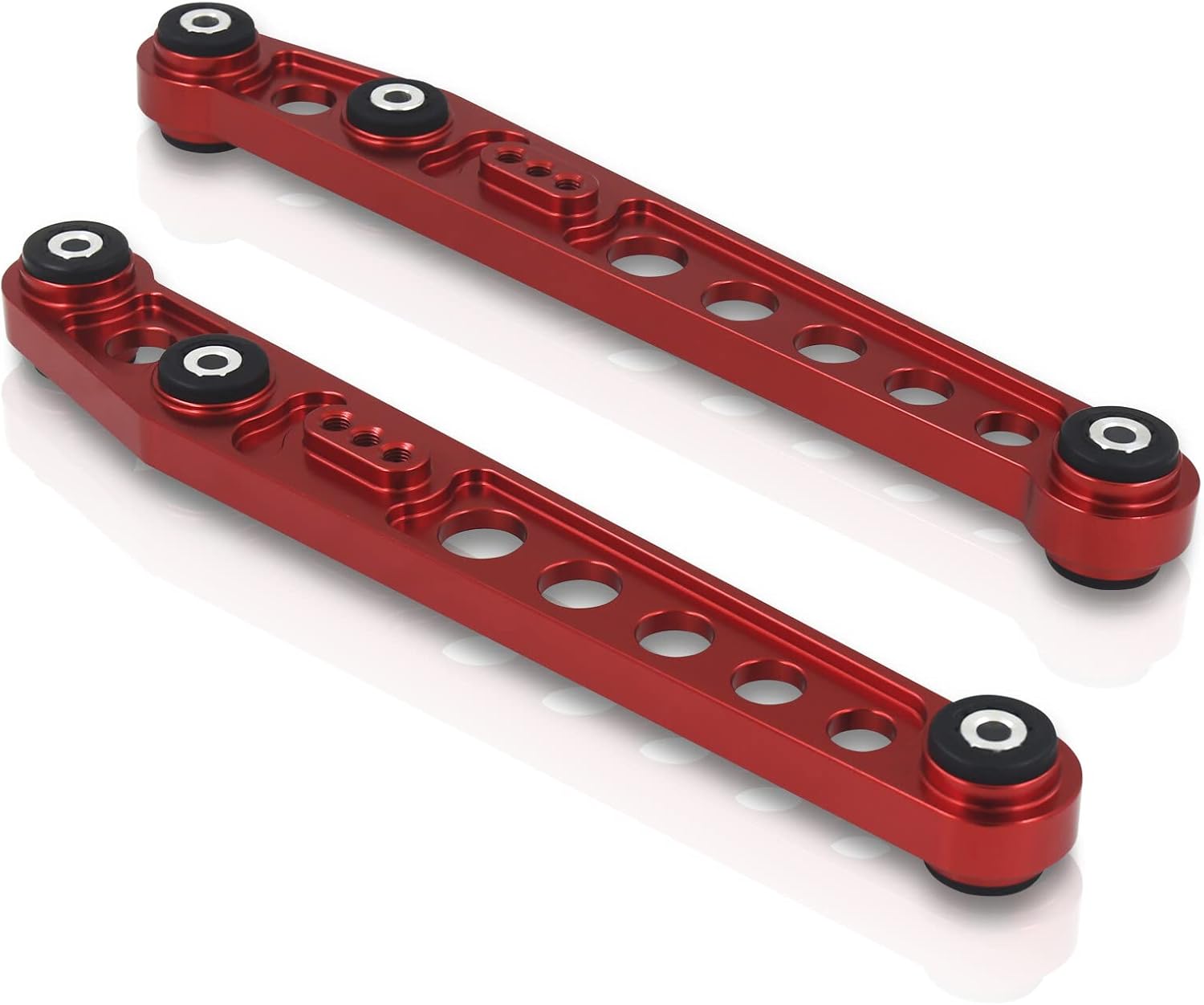
These rear lower control arms replace the factory pieces with lightweight aluminum arms and solid polyurethane bushings for a stiffer rear suspension feel and a sporty look. They are sold as vehicle-specific rear lower arms intended for direct replacement on 1996–2000 Civics and are typically used to refresh worn suspension components or to firm up handling on modified street cars. The aluminum construction resists corrosion and reduces unsprung weight compared with steel arms, while the polyurethane bushings increase responsiveness and steering feedback. Practical benefits include improved cornering response and an aftermarket appearance under the car. Important limitations: some buyers report bushing durability issues and a need to ream or fit bolt holes during installation, so expect possible minor modifications and consider professional installation if you want factory-alike fitment. Installation hardware and alignment adjustments may be required after fitting.
Best for: Buyers looking for a budget-friendly aftermarket upgrade to tighten rear handling and refresh worn rear lower arms on a 1996–2000 Civic while prioritizing improved response over a plush ride.
Less Ideal for: Drivers who prioritize a factory-soft ride or need a guaranteed bolt-in, maintenance-free replacement should consider factory-quality arms with rubber bushings or professional-grade options.
- Aluminum construction resists corrosion and cuts unsprung weight compared with steel replacements
- Solid polyurethane bushings improve rear-end responsiveness and steering feedback
- Vehicle-specific fit for 1996–2000 Civic rear lower position
- Visually appealing aftermarket finish that enhances undercarriage appearance
- Some customers report bushing wear or deformation after short use
- May require bolt-hole fitting or minor modification for proper alignment during installation
Verdict: If you want an affordable way to firm the rear end and replace worn rear lower arms on a 1996–2000 Civic, these aluminum arms deliver improved response and style.
5. TRQ Front Steering & Suspension 8-Piece Kit for 2006–2011 Honda Civic Si
| Model | TRQ PSA43256 8 Piece Steering & Suspension Kit |
|---|---|
| Position | Front |
| Application | 2006–2011 Honda Civic Si compatible (direct-fit) |
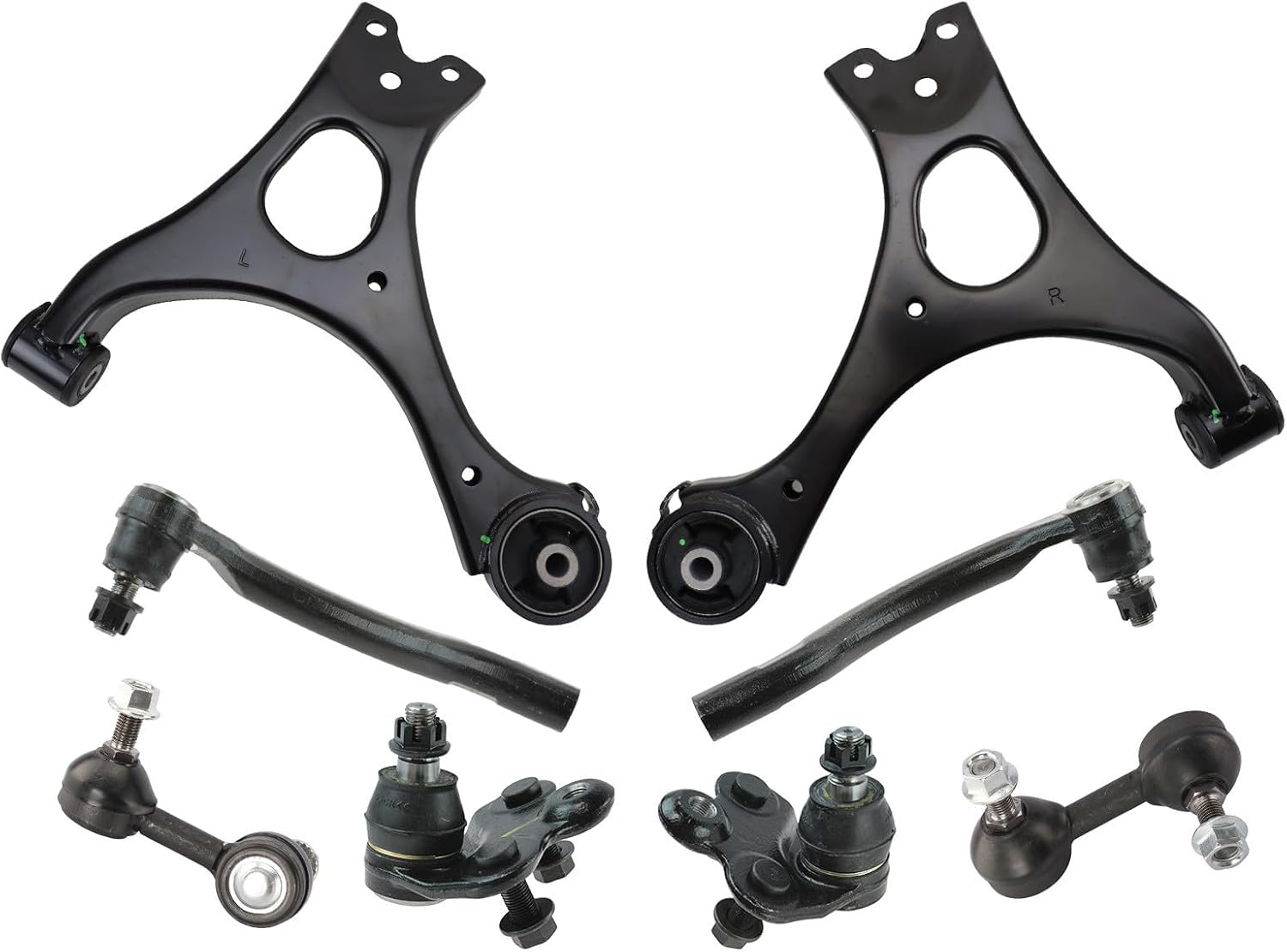
This TRQ 8-piece steering and suspension kit bundles front lower control arms, lower ball joints, outer tie rods, and sway bar links into a single direct-fit replacement intended to restore factory steering precision on 2006–2011 Honda Civic Si models. Components arrive pre-greased and anti-corrosion coated, which reduces initial prep and helps longevity in wet or salted-road conditions. The included control arms and ball joints are kitted to match OEM fitment so installation is straightforward for a competent DIYer or a shop following TRQ’s step-by-step videos. In use the kit should tighten steering feel and reduce play from worn steering linkage, improving road feel and alignment stability after replacement. Limitations are that the kit covers front suspension components only and you will still need alignment after installation; if other suspension parts are worn those will need separate replacement. The bundled approach simplifies sourcing and ensures matched component wear characteristics compared with buying parts separately.
Best for: Buyers who prioritize long-term reliability and want a single, matched kit to restore factory steering behavior on a Civic Si without hunting for individual parts.
Less Ideal for: People who only need a single replacement part or who are upgrading to performance aftermarket geometry should consider buying individual upgraded components instead.
- Complete front kit includes control arms, ball joints, tie rods, and sway bar links to replace multiple worn parts at once
- Pre-greased components reduce initial maintenance and make installation cleaner
- Anti-corrosion coating extends surface life in humid or road-salt environments
- Designed for direct-fit installation to match factory mounting points and simplify replacement
- Only covers front steering and suspension items so rear or unrelated worn components are not addressed
Verdict: If you want a reliable, one‑stop kit to restore factory steering precision on a 2006–2011 Civic Si, this TRQ 8-piece front suspension kit is a practical choice.
6. Detroit Axle Front Lower Control Arms with Ball Joints (2pc) for 2016–2021 Honda Civic

| Fit Type | Vehicle Specific Fit |
|---|---|
| Auto Part Position | Lower |
| Orientation | Front |
| Manufacturer Part Number | K623649_K623650 |
These Detroit Axle front lower control arms replace both driver and passenger lower arms and come with the ball joints preinstalled, so they are a direct swap for 2016–2021 Honda Civic models. They are typically used when worn control arms cause looseness, uneven tire wear, or steering wander. The design mirrors factory geometry and the parts are finished in black to resist corrosion. Because the ball joints arrive prepressed, installation is faster and needs only common hand tools plus alignment afterward, which reduces shop time. Customer feedback shows consistent fitment and solid build quality; a few buyers noted tight press fits that required extra persuasion during installation. The parts are positioned as a durable, ready-to-install alternative to buying separate components, and Detroit Axle reports testing and a long warranty backing. If you want a straightforward, OEM-style replacement that restores front-end firmness without swapping tie rods or struts, this kit does that—just plan for a post-install alignment and carry basic tools to seat any stubborn joints.
Best for: Buyers who prioritize proven fit and lots of positive user feedback and want a ready-to-install, factory-style replacement to restore steering feel and eliminate front-end play.
Less Ideal for: If you need upgraded performance control arms for track use or adjustable alignment settings, this direct-replacement kit is not the right choice.
- Preinstalled ball joints speed installation and eliminate the need for separate pressing tools
- Vehicle-specific fit for 2016–2021 Honda Civic models reduces fitment issues
- Factory-style geometry restores steering feel and front-end stability
- Durable finish and reported solid construction from multiple users
- Some installations require extra force to seat a ball joint, which can make DIY fitment fiddly
Verdict: A solid, vehicle-specific factory-style replacement that lets you restore Civic front-end stability quickly thanks to preinstalled ball joints and reliable fitment.
Choosing the Right Honda Civic Si Control Arm: Key Factors to Consider
Fitment and Chassis Compatibility
Correct fitment is the first priority when choosing a control arm for a Civic Si. Even small differences in mounting hole location, bushing offset, or ball joint taper can change suspension geometry and prevent the arm from bolting in without modification.
A properly fitted control arm preserves factory caster, camber, and toe ranges, which makes alignment straightforward and reduces the risk of premature tire wear. Always verify the arm is specified for the Civic Si configuration so the control arm interfaces match the subframe and knuckle locations on your vehicle.
Bushing Type and Compliance
Bushings control how much movement and NVH (noise, vibration, harshness) is passed into the chassis. Softer rubber bushings absorb vibration and provide a comfortable ride but allow more deflection under load, which can reduce steering precision during aggressive driving.
Stiffer polyurethane or bonded bushings limit deflection and sharpen steering response but can transmit more road noise. Consider how you use the Civic Si: daily driving favors compliant bushings, while track or spirited driving benefits from firmer designs. Also assess whether bushings are replaceable for future service.
Ball Joint Quality and Serviceability
The ball joint attaches the control arm to the steering knuckle and is a wear item that affects steering feel and safety. Higher quality ball joints have tighter tolerances, better seals, and stronger press-fit designs that resist wear and play over time.
Prefer control arms with serviceable ball joints or designs that allow easy replacement, since replacing the entire arm is costlier than changing a worn ball joint. Check for specifications around pre-greased or serviceable joints and durable boot seals that protect against contamination.
Material Construction and Strength
Control arms are made from stamped steel, cast iron, or forged/aluminum alloys. Material choice affects strength, weight, and how the arm reacts to impacts. Stamped steel offers a good balance of cost and durability, while forged or cast options can be stiffer and lighter depending on design.
Stronger arms resist bending from potholes and curb strikes, preserving alignment. However, overly stiff components can change ride characteristics. Match the material and construction to your use case, prioritizing components that are engineered for the Civic Si's suspension loads.
Corrosion Protection and Finish
Road salt, moisture, and debris accelerate corrosion on suspension parts, which can cause accelerated wear or make future removal difficult. Look for control arms with robust corrosion protection such as e-coating, powder coat, or plated finishes.
Sealed ball joints and corrosion-resistant hardware extend service life and reduce long-term maintenance. Corrosion protection is particularly important if you drive in wet climates or on salted roads, where untreated metal will degrade faster.
Geometry and Alignment Impact
Control arm design influences camber, caster, and toe behavior as the suspension moves through its travel. Some aftermarket arms are engineered to maintain more consistent alignment under load, which helps tire contact during cornering.
When selecting an arm, consider whether its geometry preserves factory alignment or intentionally alters it for performance. If you plan to keep factory alignment specs, choose arms that mirror OEM geometry. If you seek a handling change, select designs that clearly state their intended effect and ensure they remain within safe suspension limits.
When You Need a Control Arm Replacement
Symptoms that typically point to a failing control arm include clunking noises over bumps, loose or wandering steering, and visible bushing deterioration. In many cases these signs appear gradually, so monitoring handling and tire wear can catch issues before they become hazardous.
- Noticeable clunk or knocking from the front suspension when driving over bumps
- Excessive or uneven tire wear on the inner or outer edges
- Steering feel that is vague, wanders, or requires frequent correction
- Visible cracks, splitting, or deformation of the arm or its bushings
How Replacement Affects Alignment and Handling
Replacing a control arm can shift alignment settings slightly if the new arm does not match the worn geometry. When installing a replacement, expect to perform a full front-end alignment to verify camber, caster, and toe are within specification. This is essential to prevent rapid tire wear and to restore predictable steering behavior.
- Have wheel alignment done after installation to certify settings
- If using adjustable arms, document pre-installation settings for reference
- Check toe and camber immediately after installation and again after a short break-in period
DIY Vs Professional Installation Considerations
Control arm replacement can be a moderate DIY project for the mechanically inclined, but it requires proper tools and safety precautions. A hydraulic press or ball joint removal tools may be necessary if the replacement does not come with a pre-installed ball joint. Torque specs must be followed and fasteners often require use of new hardware or thread-lock where specified.Professional installation is recommended if you lack specialized tools, if the arm requires press-fit components, or if alignment equipment is not available. Improper installation can lead to unsafe handling or accelerated wear.
- Use a torque wrench and follow factory torque specs for mounting bolts
- Replace any corroded mounting hardware during reassembly
- Inspect adjacent suspension components while the control arm is out of the vehicle
Signs of Bushing Wear and Ball Joint Failure
Bushing wear often shows as visible cracking or splitting in the rubber and increased play at the mounting points. You may notice more vibration or a hollow, clunking sensation when driving over irregular surfaces. Ball joint failure typically presents as looseness at the steering knuckle, uneven tire wear, and a clicking or popping noise when turning.Regular visual inspection and a simple pry test at the knuckle can reveal excessive play, but definitive diagnosis often requires removing the wheel and checking with a dial indicator or taking the car to a qualified technician.
- Inspect bushings for cracks, oil saturation, or missing material
- Check ball joint boots for tears and grease leakage
- Observe wheel movement under load to detect play in the joint
Preparing the Vehicle for Control Arm Service
Before starting the job, park the vehicle on a level surface and secure it with jack stands placed at manufacturer-recommended lift points. Release any tension on components connected to the control arm by supporting the knuckle with a jack. Have new hardware and replacement bushings or grease on hand if needed.Labeling or photographing the orientation of eccentric washers, shims, or alignment marks can save time when reassembling and makes it easier to return to factory settings.
- Use penetrating oil on fasteners if corroded
- Support the knuckle so suspension weight is off the control arm during bolt removal
- Have a vehicle alignment facility lined up before driving the car extensively after replacement
Still looking for the perfect fit?
Select your Honda Civic configuration to see the most relevant Control Arms recommendations
How We Chose the Best Honda Civic Si Control Arm
We selected control arms for the Honda Civic Si by focusing on fitment, materials, and serviceability that matter most to owners who drive this sporty model. Evaluation prioritized precise chassis fit and correct mounting points for the Civic Si configuration, then assessed material construction such as stamped steel versus forged or cast alloys and the expected durability of bushings and ball joints.We also weighed corrosion protection and finish because exposure to road salt and moisture affects long-term performance. Serviceability was considered, including whether the arm accepts replaceable bushings or ball joints and how straightforward installation and alignment adjustments are for typical DIY or shop installs. Ride and steering impacts were inferred from design—bushing compliance, geometry control, and reinforcement features.Exclusions: we excluded items that required extensive modification, universal or multi-vehicle parts without explicit Civic Si fitment, and components that change steering geometry beyond factory tolerances. The end result is a list focused on OEM-equivalent and performance-minded replacements that balance longevity, fit, and alignment reliability.
Our full evaluation process is outlined in our review methodology.
FAQ
How do I tell if a control arm is bad on my Civic Si?
Common indicators include clunking noises over bumps, loose steering feel, and uneven tire wear. A visual check for torn bushings or booted ball joints can confirm deterioration, but a professional inspection or a dial-indicator check may be required for definitive diagnosis.
Can I replace the control arm myself on a Civic Si?
Many mechanically skilled owners can perform the swap, but the job may require special tools such as ball-joint presses and a torque wrench. If you do not have those tools or experience with suspension alignment, professional installation is safer.
Will replacing a control arm fix alignment issues?
A correct replacement that matches factory geometry should allow you to return alignments to specification, but an alignment is usually required after replacement. If the new arm changes geometry, additional adjustments or alignment-correcting components may be needed.
How long do control arm bushings typically last?
Bushing life varies with driving conditions but often spans several years under normal use. Frequent exposure to rough roads, salt, or aggressive driving shortens life, and symptoms usually appear as increased play, noise, or vibration before complete failure.
Should I replace bushings or the whole control arm?
If the arm is structurally sound and the bushings are the only issue, replacing bushings can be cost-effective. However, if the arm shows bends, corrosion, or worn ball joints, replacing the entire control arm is usually the more reliable long-term solution.
Does the Civic Si use an upper control arm or lower control arm up front?
The Civic Si front suspension uses distinct upper and lower linkages depending on the model year and suspension design. Understanding which arm is worn requires inspecting both linkages and verifying part fitment for the Civic Si configuration.
Final Verdict
When choosing a control arm for your Honda Civic Si, prioritize correct fitment and component quality over short-term savings. Focus on bushing type and ball joint durability based on how you drive, and choose materials and finishes that resist corrosion in your climate.Plan to have a professional wheel alignment performed after installation and consider serviceable components if you prefer long-term maintenance savings. With the right priorities you can restore steering precision and extend suspension life while maintaining safe, predictable handling.
Explore More:
- Check out all Honda Civic parts & accessories
- Explore Control Arms Maintenance & Repair Guides
- Explore Suspension & Steering
- Browse all Auto Parts
