

Note: This article contains affiliate links. If you click on these links and make a purchase, I may earn a small commission at no extra cost to you. This helps support my research and content. Read my full affiliate disclosure here.
If you own a 1996-2000 Honda Civic, choosing the right timing belt tensioner is critical to keep the engine running smoothly and avoid costly damage. The tensioner maintains proper belt tension and timing alignment, so a worn or incorrect unit can lead to noisy operation, premature belt wear, or in severe cases timing belt failure that risks engine internals. This guide lists the top shortlisted timing belt tensioners suited for the 1996-2000 Civic (EJ, EK, and EM chassis) and explains why each type made the cut.We evaluated units for fitment accuracy, materials and bearing quality, and ease of installation so you can pick a tensioner that matches your service plan and skill level. Continue for practical guidance on installation considerations, symptoms to watch for, and maintenance tips before deciding which tensioner to buy or install.
Looking for other parts? See all Honda Civic parts & accessories.
Top Picks at a Glance
| Best Overall The best all-around choice for most situations | Gates PowerGrip Premium Timing Belt Component Kit with Water Pump |  |
| Best Quality Built to a higher standard if you want something more solid | AISIN TKH-005 Timing Belt and Water Pump Service Kit |  |
| Best Value The sweet spot between price and what you get | ECCPP Timing Belt and Water Pump Kit for 1996–2000 Honda Civic 1.6L |  |
| Best Budget The cheapest option that still gets the job done reliably | MOCA AUTOPARTS Timing Belt Kit with Tensioner for 1992–2000 Honda Civic / 1993–1997 Civic del Sol 1.6L |  |
| Highest Rated A top-rated pick with lots of positive feedback | ECCPP Timing Belt Kit for 1996–2000 Honda Civic 1.6L (D16Y5/D16Y7/D16Y8) |  |
| Most Popular A crowd favorite that many people choose with confidence | WQ Timing Belt Kit with Water Pump and Tensioner for 1996–2000 Honda Civic 1.6L (D16 SOHC 16V) |  |
| Best Seller A high-volume bestseller chosen again and again | OTO-K Timing Belt Kit with Water Pump for Honda Civic 1996–2000 1.6L SOHC |  |
1. Gates PowerGrip Premium Timing Belt Component Kit with Water Pump

| Brand | Gates |
|---|---|
| Automotive Fit Type | Vehicle Specific Fit |
| Model | PowerGrip Premium Timing Belt Component Kit with Water Pump |
| Manufacturer Part Number | TCKWP224 |
This Gates PowerGrip kit supplies everything needed when replacing a timing belt on compatible Honda D-series engines: the reinforced timing belt, idler and tensioner components, hydraulic tensioner where required, a water pump with gasket, and installation hardware. Intended as a full-service repair kit it saves the step of sourcing separate parts and reduces the chance of missing a worn component. The included water pump is designed for long service life and the package comes with detailed instructions and technical bulletins for tricky fitments. Real-world users report solid fitment and factory-quality belt and tensioner performance, though packaging can allow parts to shift in transit and there are occasional reports of a damaged pump on arrival. If you want a one-box replacement to do the job right and limit rework, this kit covers the common failure points on D16/D15 Honda engines, but inspect the pump and hardware as soon as the box arrives before disassembly.
Best for: Buyers who want a full, vehicle-specific timing system overhaul in one purchase and prefer a straightforward, repair-first solution that minimizes the risk of leaving worn parts behind.
Less Ideal for: People looking to replace only a single accessory part or those who prefer to source OEM-brand water pumps separately should consider other options.
- Complete kit includes timing belt, idlers, tensioner(s), water pump, gasket and mounting hardware for a single repair
- Factory-quality Gates belt and robust tensioner components for reliable belt control
- Detailed installation instructions and technical service bulletins included to simplify correct install
- Some customers report transit damage to the water pump or insufficient internal packaging protection
Verdict: Choose this Gates all-in-one timing belt kit when you want a single, factory-quality package to replace the belt, tensioning hardware, and water pump together for a complete service.
2. AISIN TKH-005 Timing Belt and Water Pump Service Kit
| Brand | AISIN |
|---|---|
| Model | TKH-005 |
| Compatible Vehicles | Select 1996–2000 Honda Civic; 1997–2000 Acura EL (engine-dependent) |
| Includes | Water Pump, Timing Belt, Tensioner, Spring, Gasket, Instructions |
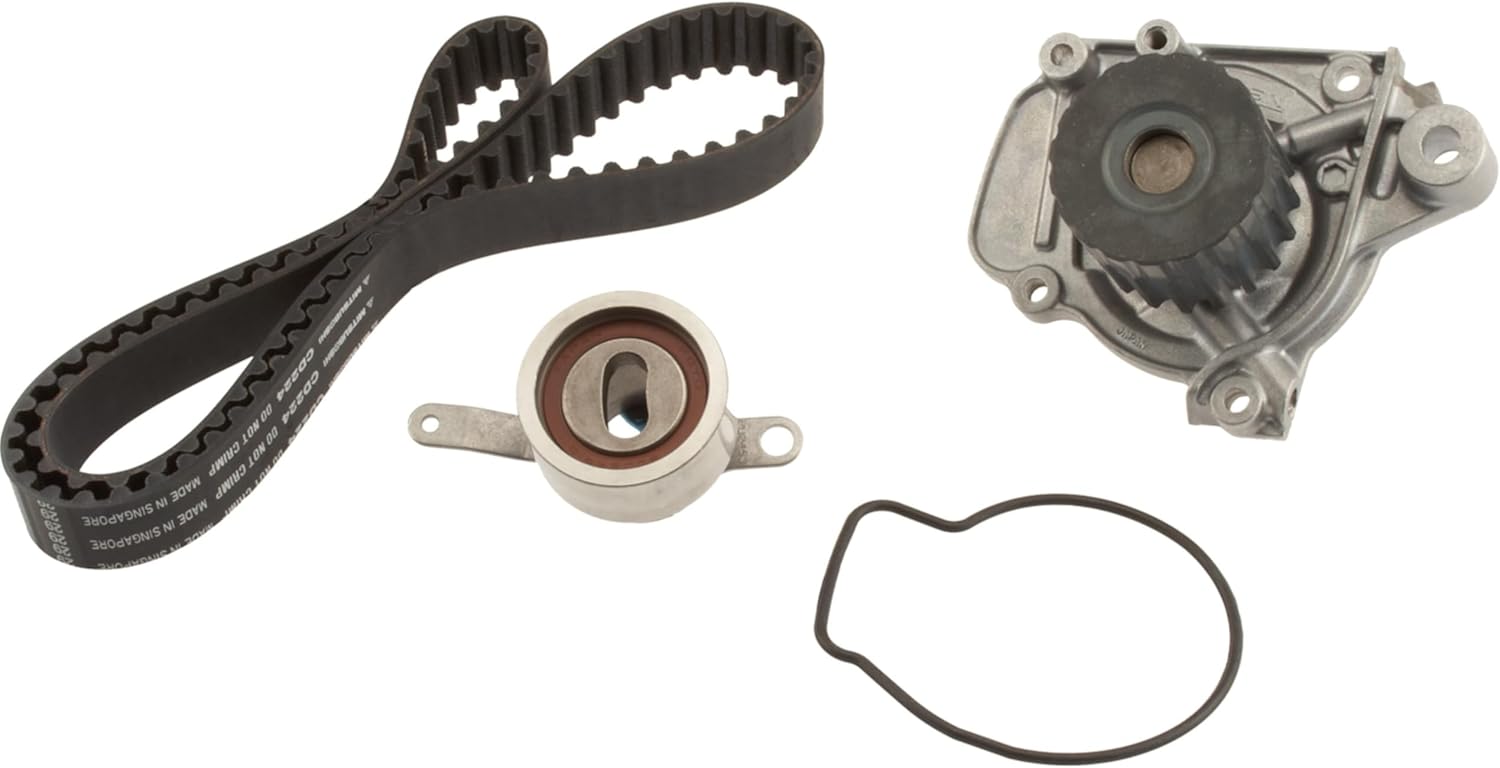
This AISIN TKH-005 kit packages the parts you should replace together when doing a timing belt job: timing belt, tensioner with spring, water pump, gasket, and instructions. It is intended as a direct-fit, factory-quality service kit for select 1996–2000 Honda Civic and 1997–2000 Acura EL engines, so it simplifies sourcing compatible components for the job and saves repeat labor. The water pump is a diecast AISIN unit with ceramic-style seals and the belt and tensioner come from recognized OEM-level suppliers, which users report install cleanly and behave reliably in daily driving. For a performance-minded buyer focused on durability and precise belt control, the kit provides a robust baseline while keeping the factory timing geometry intact. Limitations: this is a service kit built to restore factory-spec operation rather than an upgrade for high-rpm or forced-induction tuning, and fit depends on engine code so confirm exact engine compatibility before buying.
Best for: Buyers who want a reliable, factory-quality timing belt service kit to restore correct timing system function on late 1990s Honda Civics and Acura ELs and who prioritize durability and correct fitment over aftermarket performance modifications.
Less Ideal for: Drivers building high-revving or forced-induction engines who need reinforced belts, upgraded tensioners, or racing-specific components should look for performance-oriented parts instead.
- Complete kit includes water pump, timing belt, tensioner, spring, and gasket for one-stop servicing.
- OE-matched components from known manufacturers reduce fitment and quality risk.
- Diecast AISIN water pump with ceramic-style seal design aimed at long service life.
- Includes installation instructions to help with correct assembly and timing alignment.
- Not engineered as a high-performance or heavy-duty upgrade for modified engines.
Verdict: Choose this AISIN kit when you want OEM-quality replacement parts and a complete water pump plus timing belt service package to restore factory reliability in late 1990s Honda Civics.
3. ECCPP Timing Belt and Water Pump Kit for 1996–2000 Honda Civic 1.6L

| Compatible Vehicles | 1996–2000 Honda Civic 1.6L, including Del Sol fitment |
|---|---|
| Item Type Name | Timing Belt Water Pump Kit |
| Manufacturer | ECCPP |
| Material Type | High Performance Thermoplastic |
| Manufacturer Warranty Description | 1 Year |
This ECCPP kit bundles the timing belt and water pump components intended for 1996–2000 Honda Civic 1.6L engines to simplify a common maintenance job. It is typically used when replacing the timing belt at service intervals or when servicing the water pump to avoid repeat labor. The kit’s materials are described as high-performance thermoplastic for long life and quieter operation, and reviews indicate the belt and pump generally fit and work as expected. Practical benefits include a complete set of timing components in one package and a one-year warranty for peace of mind. Notable limitations are inconsistent fitment for some seals and gaskets and occasional differences in tensioner mounting holes, so experienced installers should verify each part before installation and keep any OEM parts they prefer. Given the mixed user reports on part fit, this kit is best for do-it-yourselfers comfortable inspecting and adapting aftermarket parts or shops that will confirm fitment prior to final assembly.
Best for: Buyers who prioritize getting the full timing-belt service done in one job and want an affordable, vehicle-specific kit they can inspect and install themselves.
Less Ideal for: People who want guaranteed factory-identical fit without any inspection or swapping of individual pieces should consider sourcing OEM parts or buying from a dealer-backed kit.
- Vehicle-specific kit tailored for 1996–2000 Honda Civic 1.6L to simplify timing and water pump service
- Includes water pump and timing belt so you replace multiple wear items at once
- Materials marketed as high-performance thermoplastic for quieter operation and resistance to cracking
- Some users report incorrect seals, gaskets, or slight mismatch on tensioner mounting holes requiring adjustments or retaining original parts
- Aftermarket quality varies part-to-part so professional verification of fit is recommended
Verdict: A complete, budget-friendly timing belt and water pump kit for 1996–2000 Civic 1.6L owners who want to do the full service at once and are willing to verify fitment during installation.
4. MOCA AUTOPARTS Timing Belt Kit with Tensioner for 1992–2000 Honda Civic / 1993–1997 Civic del Sol 1.6L

| Brand | MOCA AUTOPARTS |
|---|---|
| Manufacturer | OELINE Auto Parts |
| Included parts | Timing belt, tensioner, 2 oil seals, supporting hardware |
| Compatible engines | 1.6L D16 series for listed 1992–2000 Civic/Civic del Sol applications |
| Manufacturer part number | ETBK1107 |
This MOCA timing belt kit is a budget-focused aftermarket solution that bundles the belt, a premium-quality tensioner, two oil seals, and supporting hardware for a one-stop timing system refresh on compatible 1.6L Honda Civic and Civic del Sol engines. It is intended for use when replacing a worn timing belt and associated components to avoid repeated labor costs; the kit includes installation instructions and parts sized to match factory fitment. The belt is described as reinforced with nylon jackets for added durability, while the tensioner and pulleys are presented as premium replacements to restore proper timing tension and reduce noise. Practical benefits include covering most parts you will need for the job and simplifying parts sourcing. Limitations are typical of aftermarket kits: component longevity and fit can vary versus factory parts, and buyers who need absolute OEM specification or extended warranty coverage may prefer factory-brand parts. For DIY installers and independent shops this kit offers an affordable route to complete the service in a single purchase.
Best for: Buyers prioritizing a low-cost, complete timing system service kit who want to replace the belt and tensioner at once to avoid repeat labor and parts hunting.
Less Ideal for: Those who require factory-brand parts, extended manufacturer-backed warranties, or who prefer dealer-sourced components for guaranteed OEM specification.
- Complete kit includes timing belt, tensioner, seals, and supporting hardware to simplify repair
- Belt described with reinforced nylon jackets aimed at improved wear resistance
- Includes installation instructions to assist DIY installers and independent shops
- Packaged for direct-fit replacement for the listed 1.6L Civic and Civic del Sol engine codes
- Aftermarket components may not match long-term durability or warranty coverage of factory-brand parts
Verdict: If you want a cost-effective, all-in-one timing belt and tensioner replacement for the 1.6L Civic/Civic del Sol, this kit supplies the needed parts to complete the job in one purchase.
5. ECCPP Timing Belt Kit for 1996–2000 Honda Civic 1.6L (D16Y5/D16Y7/D16Y8)

| Fitment | 1996-2000 Honda Civic 1.6L SOHC (D16Y5/D16Y7/D16Y8) |
|---|---|
| Package included | Timing belt, roller tensioner, camshaft seal, crankshaft seal, water pump with gasket |
| Belt tooth count | 104 round teeth |
| Manufacturer | ECCPP |
This ECCPP timing belt kit bundles the belt, roller tensioner, cam and crank seals, and a water pump with gasket to cover a full timing service on 1.6L SOHC Civic engines from 1996 through 2000. It is intended for routine timing-belt replacement and does the job a shop would perform during a scheduled service: replacing the belt to maintain valve timing, renewing seals to prevent oil leaks, and swapping the water pump to avoid a second teardown. Buyers report generally good fit and straightforward installation when the vehicle is disassembled for access. The included high-performance belt material and tensioner aim to reduce noise and belt stretch for smoother operation. Be aware this is an aftermarket kit, so build quality can vary compared with factory parts and a careful installation and timing alignment are critical; some users noted alignment issues when installing. For a reliability-focused buyer, this kit offers a convenient one-box solution but benefits from professional installation or careful verification of timing marks during fitment.
Best for: Buyers who prioritize restoring or maintaining dependable engine timing with a single, ready-to-install kit and who will verify alignment during installation or use a trusted mechanic.
Less Ideal for: If you prefer factory-brand parts exclusively or plan to install the kit without checking timing alignment, consider sourcing factory-quality replacements or professional installation instead.
- Complete kit contains timing belt, roller tensioner, camshaft and crankshaft seals, and water pump with gasket for a full timing service
- Designed specifically for 1996–2000 Honda Civic 1.6L SOHC engine families for direct compatibility
- Kit components aim to reduce belt noise and transmission resistance for smoother engine operation
- Multiple pieces in one package reduce the chance of leaving worn parts in place during a timing job
- Aftermarket build quality can vary from factory-spec parts, so inspect components before install
- Some installers reported timing alignment issues that require careful setup during installation
Verdict: A convenient, reliability-minded timing service kit for 1996–2000 1.6L Civics that groups all wear items into one package for a complete timing and water pump replacement.
6. WQ Timing Belt Kit with Water Pump and Tensioner for 1996–2000 Honda Civic 1.6L (D16 SOHC 16V)

| Fitment | 1996–2000 Honda Civic 1.6L SOHC 16V (D16 series) |
|---|---|
| Belt teeth | 104 round teeth |
| Package contents | Timing belt, roller tensioner, cam & crank seals, water pump with gasket |
This kit bundles a 104-tooth timing belt with a roller tensioner, cam and crank seals, and a water pump plus gasket to replace the timing system on D16 SOHC 16-valve Civic engines. It is intended for routine timing service or when the water pump is leaking, and packaging supplies the common components you would normally change together to avoid repeated labor. The tensioner and idler are described as premium quality and the water pump comes with a gasket for a sealed install. In practice buyers report the parts fit and function for years on budget builds, though some users noted belt length or tensioner stiffness that differed slightly from factory parts, so careful pre-fit verification is advised. Use this kit when you want an all-in-one replacement to restore engine timing and coolant circulation without sourcing separate parts, but expect a value-level option rather than a direct match to high-end OEM feel.
Best for: Buyers who want a single, money-saving kit to replace the timing belt and water pump at scheduled maintenance and prefer solutions validated by multiple other Civic owners.
Less Ideal for: Shoppers seeking an exact factory-feel or premium aftermarket timing assembly for performance engines should consider higher-end branded parts instead.
- Complete kit includes timing belt, roller tensioner, cam and crank seals and water pump to simplify a single service job
- Designed to match factory fit form and function for D16 SOHC 16-valve Civics listed in the fitment
- Water pump supplied with gasket reduces the chance of missing hardware during install
- Multiple reviews report straightforward installation and reliable short-to-medium term performance
- Some buyers reported belt length or tensioner feel different from original factory parts
- Quality feels value-oriented rather than premium, so long-term durability may vary
Verdict: An economical all-in-one timing belt and water pump kit that covers the full service job for 1996–2000 1.6L Civic engines and is backed by multiple user installs.
7. OTO-K Timing Belt Kit with Water Pump for Honda Civic 1996–2000 1.6L SOHC

| Compatible models | Honda Civic 1996–2000 1.6L SOHC |
|---|---|
| Included components | Timing belt; Water pump; Water pump gasket; Roller tensioner; Camshaft seal; Crankshaft seal |
| Material Type | Polyphenylene Sulfide (PPS) |
This OTO-K kit supplies a full timing belt service package for 1996–2000 Honda Civic 1.6L SOHC engines, bundling the timing belt, water pump, gasket, roller tensioner, camshaft seal, and crankshaft seal. It is intended for a single comprehensive service job rather than piecemeal repairs and is used when replacing worn belts or doing preventive maintenance to avoid catastrophic engine damage. The belt material and included tensioner are designed to resist heat and stretching for steady valve timing, while the water pump provides coolant circulation and comes with a gasket to simplify installation. Because the kit groups all common wear items, it reduces the risk of repeat labor if nearby components fail after a belt change. Limitations are that fitment is vehicle-specific so buyers must confirm part numbers against their Civic before ordering, and the kit is an aftermarket option rather than a factory-branded part which may have small differences in fit or finish compared with factory-quality components.
Best for: Buyers who prioritize avoiding engine damage and want a single-purchase solution for a timing belt service on a 1996–2000 1.6L Civic, preferring to replace all related wear items at once to minimize future failures and extra labor.
Less Ideal for: Owners who need an exact factory-branded replacement or who have not verified part numbers and vehicle compatibility should look elsewhere or confirm fitment before buying.
- Complete kit includes timing belt, water pump, gasket, tensioner, camshaft and crankshaft seals for a single service job
- Timing belt material rated for resistance to heat, wear, and stretching to help maintain timing stability
- Includes water pump and gasket to avoid repeat labor and ensure proper coolant circulation
- Aftermarket component so fit and finish may differ from factory-brand parts
Verdict: A one-stop aftermarket timing belt service kit that bundles the belt, tensioner, seals, and water pump to minimize repeat labor and reduce the risk of timing-related engine failures for 1996–2000 Civic 1.6L owners.
Choosing the Right 1996-2000 Honda Civic Timing Belt Tensioner: Key Factors to Consider
Fitment and Chassis Compatibility
Correct fitment is essential for the 1996-2000 Civic because even small differences in pulley diameter, mounting boss locations, or tensioner travel can alter belt timing. Ensure the tensioner explicitly lists compatibility with the EJ, EK, and EM, or EM chassis variants within the 1996-2000 model years so the unit mounts flush and aligns the belt correctly.
Mismatched fitment can cause uneven belt wear, rapid loss of tension, or difficulty during installation when trying to align timing marks. For owners replacing related components at once, verify that the tensioner works with the specific cam and crank pulley sizes used on your Civic's engine variant to avoid rework.
Bearing Quality and Durability
The internal bearing is the moving heart of the tensioner assembly. Higher quality bearings typically use better metallurgy, tighter tolerances, and effective seals that resist contamination. For a Civic driven in mixed conditions, look for sealed bearings rated for long life and resistant to grit and oil contamination.
Poor bearings lead to timing tensioner noise and eventual failure, which can accelerate belt wear or cause catastrophic timing belt failure. Consider the expected service intervals for your Civic and choose a tensioner whose bearing materials and sealing match that maintenance cadence.
Tensioning Mechanism and Travel Range
Different tensioners use hydraulic, spring-loaded, or ratcheting mechanisms to maintain belt tension. For the 1996-2000 Civic, the mechanism must provide the correct static preload and enough travel to compensate for belt stretch over time without over-rotating the belt path.
A tensioner with insufficient travel will not maintain tension toward the end of belt life, while one that allows too much movement can cause timing variation under load. Check technical specs and any torque or preload recommendations so the unit behaves predictably during break-in and across service intervals.
Corrosion Resistance and Materials
Exposure to road salts, moisture, and engine bay contaminants affects long-term performance. Tensioners built with corrosion-resistant coatings on metal parts, stainless fasteners, and durable polymer pulleys will typically outlast untreated components. For Civic owners who drive in wet or winter conditions, this is a practical concern.
Material choice also affects how the tensioner handles heat cycles and vibration. Avoid units that use low-grade plastics in load-bearing areas. Durable materials reduce the chance of pulley wobble, bearing exposure, and premature failure.
Noise and Vibration Characteristics
A failing or low-quality tensioner often manifests as noticeable timing tensioner noise such as rumble, squeal, or intermittent chirps. Noise can indicate bearing wear, misalignment, or a weak spring mechanism. Because persistent noise can be an early sign of impending failure, choose a unit with documented quiet operation and good user feedback on vibration levels.
Noise also affects perceived vehicle quality and can mask other engine sounds that indicate different problems. Prioritize tensioners designed to minimize bearing noise and vibration transmission into the engine mount structure.
Ease of Installation and Serviceability
Whether you plan a DIY replacement or a shop install, the tensioner should fit standard service procedures for the 1996-2000 Civic. Clear access to mounting bolts, a design that accommodates common tensioning tools, and compatibility with timing belt kit sequences reduce labor time and the chance of installation error.
Serviceability also includes availability of replacement components such as pulley bearings or spring inserts if offered. A tensioner that requires excessive modification or special tooling increases the chance of improper installation and should be avoided unless you have advanced shop capability.
Common Symptoms That Signal Tensioner Problems
Several symptoms frequently indicate a timing belt tensioner is failing on the 1996-2000 Civic. Listen for consistent rumbling or squealing from the front of the engine that changes with RPM, which often points to bearing degradation or pulley misalignment.
Other signs include excessive belt slack, visible wobble in the tensioner pulley when the engine is off and the belt is depressed, or intermittent misfires and rough idle caused by timing variation. If you notice oil contamination around the tensioner, the seal may be compromised and the bearing will deteriorate faster. Address these symptoms promptly to avoid belt damage or timing belt failure.
- Rumbling or chirping noises from the timing cover area
- Visible pulley wobble or uneven belt wear
- Oil contamination near the tensioner
- Intermittent timing-related rough running or misfires
When to Replace the Tensioner During a Timing Belt Service
Best practice for the Civic is to replace the tensioner whenever the timing belt is serviced. The components share similar service intervals and a fresh belt on an old tensioner risks premature belt wear and possible failure.
Replacing the tensioner proactively during a belt job reduces repeat labor and ensures the new belt runs against a tensioner with compatible preload and travel characteristics. If you discover bearing play, noise, or oil contamination, replace the tensioner immediately regardless of belt age.
- Replace tensioner at timing belt service intervals
- Replace immediately if bearing play, noise, or oil contamination is found
DIY Installation Tips for the 1996-2000 Civic
If you plan to replace the tensioner yourself, prepare by gathering basic hand tools, a torque wrench, and the proper tensioning tool recommended for the Civic engine. Work with the engine cold and follow the factory timing marks precisely; small alignment errors can cause significant running issues.
Support the engine according to service manual instructions if motor mounts must be loosened, and rotate the engine by hand after installation to confirm smooth operation before starting. Use new hardware where torque-to-yield bolts are specified, and follow any break-in procedure for tensioners that require an initial preload or timed release.
- Use a torque wrench and follow factory torque specs
- Rotate the engine by hand two full revolutions to verify clearance
- Replace associated hardware and seals when disturbed
How Environmental and Driving Habits Affect Tensioner Life
Harsh climates, frequent short trips, and exposure to road salt accelerate corrosion and bearing wear. Owners who do many low-speed, stop-and-go trips may find tensioners wear faster due to frequent thermal cycling and belt flexing. Inspect the tensioner more often if your Civic routinely encounters these conditions.
Conversely, consistent highway driving at moderate speeds tends to be less punishing on tensioners. Regardless of driving style, keep an eye out for oil leaks from adjacent seals since oil contamination is a common contributor to premature tensioner failure.
- Inspect tensioner more often in salt or wet climates
- Short trips increase thermal cycling and can shorten life
- Monitor and repair oil leaks that can contaminate bearings
Selecting a Tensioner When Doing a Full Timing Kit Replacement
When replacing the entire timing kit, choose a tensioner whose travel and preload characteristics complement the replacement belt. Some kits include a tensioner designed specifically for the belt profile and engine variant; when available, these integrated kits simplify compatibility concerns.
If sourcing components separately, match the tensioner specifications to the belt and pulleys used, and ensure the kit contains all necessary seals and hardware to complete the job without improvisation.
- Prefer matched kits when possible to ensure component compatibility
- Verify included hardware and seals to avoid mid-job delays
Still looking for the perfect fit?
Select your Honda Civic configuration to see the most relevant Timing Belt Tensioners recommendations
How We Chose the Best 1996-2000 Honda Civic Timing Belt Tensioner
We focused on criteria that matter for the 1996-2000 Honda Civic engine design and common service realities. Fitment accuracy was a primary filter: only tensioners that match factory mounting points and pulley profiles for the EJ, EK, and EM chassis were considered. Durability and materials came next, with emphasis on bearing type, corrosion resistance of metal components, and quality of seals that extend life in typical driving conditions.Performance under load and noise characteristics were assessed through documented user feedback and technical spec review; tensioners that exhibit excessive vibration or audible bearing noise were excluded. Installation practicality was another filter: we favored units compatible with standard service procedures for the Civic and those that work with common timing belt kits. Warranty and manufacturer quality controls were noted as proxies for consistency. Exclusions: tensioners lacking clear compatibility data for the 1996-2000 Civic, cheap one-piece cast pulleys with unknown bearings, and units without any return or limited warranty were not included. Overall, selections balance reliable long-term operation, correct fitment, and realistic DIY or shop installation considerations.
Our full evaluation process is outlined in our review methodology.
FAQ
How long should a timing belt tensioner last on a 1996-2000 Civic?
Tensioner life depends on driving conditions but generally aligns with timing belt service intervals; many owners plan replacement every 60,000 to 100,000 miles. Inspect regularly for noise, wobble, or oil contamination and replace sooner if any of those symptoms appear.
Can I replace the tensioner without replacing the timing belt?
Technically you can, but it is not recommended. Replacing the tensioner with an old belt risks mismatched wear and often leads to the belt failing before the expected interval. Doing both at once saves labor in the long run.
What does a failing tensioner sound like on a Civic?
A failing tensioner commonly produces rumbling, chirping, or squealing noises from the front of the engine that vary with RPM. These sounds often indicate bearing wear or pulley misalignment and warrant immediate inspection.
Is a tensioner failure likely to cause engine damage on these Civics?
A tensioner that allows the belt to slip or break can cause timing belt failure, which may result in valve-to-piston contact on interference engines. Prompt replacement when symptoms appear reduces the risk of serious engine damage.
Can I use a tensioner kit with a different pulley material?
You can, provided the pulley material meets the load and thermal characteristics required for the Civic and matches the belt profile. Verify that the pulley diameter and contour are compatible and that the bearing quality is sufficient for long-term use.
Do tensioners need any special break-in after installation?
Some designs recommend setting a specific preload or cycling the tensioner after installation. Follow the manufacturer or factory service instructions for preload, then rotate the engine by hand to confirm smooth operation before first start.
Final Verdict
For the 1996-2000 Honda Civic, prioritize a tensioner that provides correct fitment for the EJ, EK, and EM chassis, high-quality bearing construction, and appropriate travel for your replacement belt. Balance durability and noise performance against ease of installation depending on whether you will do the work yourself or have it done professionally.Replacing the tensioner when doing a timing belt service is a practical way to reduce future labor and failure risk. Use the evaluation criteria in this guide to choose a tensioner that matches your service plan and driving conditions so you can keep engine timing reliable and quiet.
Explore More:
- Check out all Honda Civic parts & accessories
- Explore Timing Belt Tensioners Maintenance & Repair Guides
- Explore Engine
- Browse all Auto Parts
