

Note: This article contains affiliate links. If you click on these links and make a purchase, I may earn a small commission at no extra cost to you. This helps support my research and content. Read my full affiliate disclosure here.
If your 2016-2021 Honda Civic is running rough, showing check-engine lights, or burning more fuel, the mass air flow sensor can be the cause. Replacing the sensor with a properly matched unit restores accurate airflow readings so the engine control unit can set fuel trim and idle correctly.This guide covers the top shortlisted mass air flow sensors for the 2016-2021 Civic (FC and FK chassis scope), explains common symptoms and diagnostics, and outlines the evaluation criteria we used. Use the sections below to pinpoint the right replacement based on fitment, signal reliability, and installation ease.
Looking for other parts? See all Honda Civic parts & accessories.
Top Picks at a Glance
| Best Overall The best all-around choice for most situations | AISIN Mass Air Flow (MAF) Sensor MAFH-00093, 4-Pin |  |
| Best Quality Built to a higher standard if you want something more solid | Denso Mass Air Flow (MAF) Sensor — 197-6170 |  |
| Best Value The sweet spot between price and what you get | Powerlord PLC06 Mass Airflow Sensor (replacement) |  |
| Best Budget The cheapest option that still gets the job done reliably | laffoonparts Mass Air Flow Sensor, Replacement for Honda Civic/Accord/CR-V/Acura RDX |  |
| Highest Rated A top-rated pick with lots of positive feedback | Hitachi MAF0033 Mass Air Flow Sensor |  |
| Most Popular A crowd favorite that many people choose with confidence | BDFHYK Mass Air Flow Sensor MAF0033 |  |
1. AISIN Mass Air Flow (MAF) Sensor MAFH-00093, 4-Pin
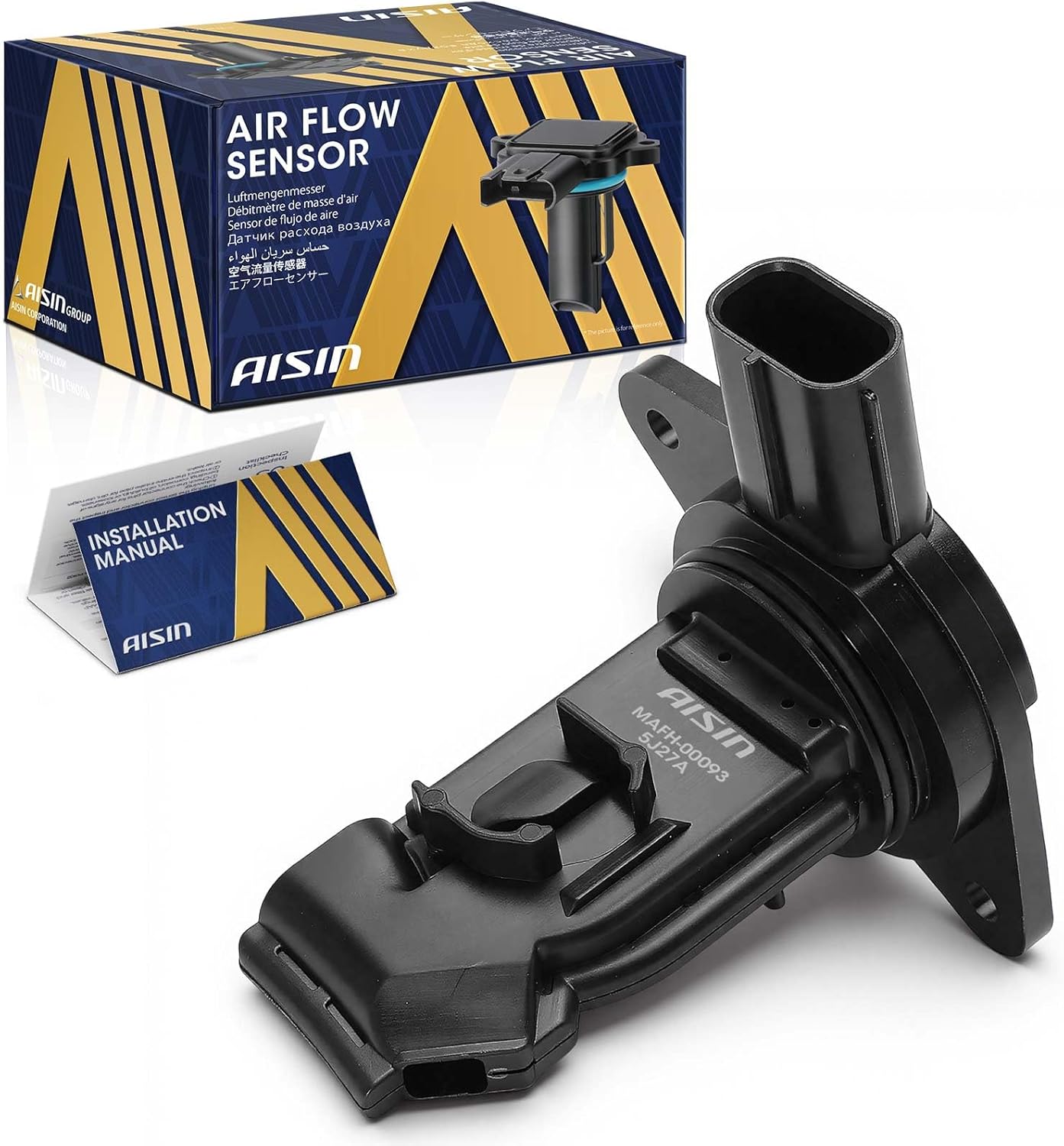
| Terminal Quantity | 4 |
|---|---|
| Terminal Type | Pin |
| Model | MAFH-00093 |
| Part Number | MAFH-00093 |
This Aisin MAF sensor measures intake airflow and provides the engine computer with the signal it needs to regulate fuel delivery and maintain smooth operation. It is offered as a direct replacement designed for plug-and-play installation with the factory connector and four terminals, so typical use is swapping the failed sensor for the new unit during routine diagnostics or maintenance. The main practical benefits are factory-style fitment from a recognized automotive supplier and a straightforward install that requires no wiring or calibration on compatible vehicles. That makes it a convenient option when a check engine light, rough idle, poor fuel economy, or drivability issues point to a failing MAF. Limitations are that fitment is specific to certain Honda Civic years and related models, so confirming vehicle compatibility is required before purchase, and the listing does not include extensive performance data or claimed lifespan compared with higher-end performance sensors.
Best for: Buyers who want a reliable, factory-style replacement that restores stock drivability and fuel control with minimal fuss, prioritizing fitment and straightforward installation.
Less Ideal for: Drivers seeking high-performance airflow tuning or aftermarket sensors with adjustable calibration should consider purpose-built performance units instead.
- Direct-fit design for plug-and-play replacement with the factory 4-pin connector
- Manufactured by an established automotive parts supplier with factory-quality engineering focus
- Simple installation that typically requires no special tools or programming
- Compatibility limited to specific Honda and Acura model years so must verify fit before buying
Verdict: Choose this Aisin MAF when you need a dependable, plug-and-play factory-quality replacement for compatible Honda Civic models to quickly restore normal engine operation.
2. Denso Mass Air Flow (MAF) Sensor — 197-6170

| Measurement Accuracy | ±3% |
|---|---|
| Mounting Type | Plug-In |
| Output Type | Digital |
| Upper Temperature Rating | 210 Degrees Fahrenheit |
This Denso MAF sensor is a direct-fit replacement designed to return correct airflow readings and restore engine drivability. It plugs into the factory harness and uses a fine platinum wire sensing element with a protective glass coating to resist contamination and improve longevity. In practice the sensor is used when a failing MAF causes rough idle, hesitation, erratic shifting, higher fuel consumption, or a check engine light. Buyers report the Denso unit brings fuel trims back into range and eliminates related drivability faults after installation and ECU relearn. Notable features include a compact plug-in design for easier installation and a measurement accuracy spec of about ±3 percent. The main limitations are that it is a vehicle-specific replacement so fitment must match the Civic model years and engine listed, and it will require a short learning period by the engine computer after fitment. Overall it is a practical OEM-style swap for restoring factory air metering and normal performance.
Best for: Enthusiasts and DIYers who need to restore precise air metering to regain throttle response and consistent fueling in a 2016–2021 Civic and prioritize factory-quality replacement parts.
Less Ideal for: If you want a tunable or aftermarket performance MAF calibrated for increased flow or modified intakes, this direct-stock replacement is not the right choice.
- Factory-quality design and construction for reliable airflow measurement
- Plug-in form factor for simple, vehicle-specific installation
- Platinum wire sensing element with glass coating reduces contamination and extends service life
- Measurement accuracy around ±3% helps restore correct fuel trims and drivability
- Must match exact vehicle fitment; not a universal or adjustable unit
- Some buyers reported occasional defective units requiring replacement
Verdict: Choose this Denso MAF when you want a factory-quality, direct-fit replacement to restore accurate airflow readings and recover stock drivability in a 2016–2021 Honda Civic.
3. Powerlord PLC06 Mass Airflow Sensor (replacement)

| Brand | Powerlord |
|---|---|
| Model | PLC06 |
| Included Components | Mass Airflow Sensor *1 |
| Specific Uses For Product | automotive |
The Powerlord PLC06 is a drop-in replacement MAF sensor sold as an economy option for many Honda and Acura engines. It measures intake airflow and reports that data to the engine control module so the car can set fuel and ignition properly. Installation is the same as the factory part: unplug the electrical connector, unclip the housing, swap the sensor, and reconnect. The listing calls out common compatibility with Civics, CR-Vs, Accords and select Acuras across recent years, and the unit ships with one sensor ready to install. Powerlord positions this as a value-line part with a recommended service life around three years or 60,000 miles, so it is useful for budget-conscious repairs or temporary fixes while diagnosing intake-side issues. Important to note is that sensor-like symptoms can also be caused by vacuum leaks, intake boots, or PCV faults, so those should be checked before assuming MAF replacement fixes the problem. Expect lower cost versus premium aftermarket sensors but also a shorter recommended lifespan and fewer performance guarantees.
Best for: Buyers who need an affordable, straightforward replacement to restore proper airflow sensing on recent Honda or Acura engines and who prioritize cost and quick repair over long-term durability.
Less Ideal for: Drivers seeking a long-life or performance MAF upgrade, or those who prefer parts with extended testing and manufacturer-backed longevity should consider higher-end alternatives.
- Direct-fit replacement for multiple Honda and Acura airflow applications
- Comes as a single ready-to-install unit with factory-style connector
- Marketed as an economy option with lower upfront cost than premium replacements
- Recommended lifespan is shorter (about 3 years or 60,000 miles) compared with higher-end units
Verdict: A budget-friendly, direct-fit MAF sensor that gets most recent Honda and Acura engines back to normal operation quickly.
4. laffoonparts Mass Air Flow Sensor, Replacement for Honda Civic/Accord/CR-V/Acura RDX

| Fitment | Honda Civic/Accord/CR-V and Acura RDX 1.5L and 2.0L L4 (2016–2020 listed years) |
|---|---|
| Replaces Part Numbers | 37980-5BA-A01, 197500-0070, 2451386, MAS0465, AF10674, 221207 |
| Installation | Plug-in connection, no wires to cut |
| Materials | Plastic and metal components |
This laffoonparts Mass Air Flow (MAF) sensor is a straightforward replacement intended to restore correct intake-air measurement and engine control on compatible 1.5L and 2.0L Honda and Acura four-cylinder models. It plugs into the factory harness so installation usually requires no cutting or splicing, which makes it an easy DIY swap for someone with basic hand tools. The sensor offers real-time air flow monitoring to help the engine control unit optimize fuel delivery and combustion, which can reduce rough idle, hesitation, and poor fuel economy caused by a failing MAF. Materials include plastic and metal components and the part replaces several common OEM numbers, so it matches the vehicle fitment called out in the listing. Limitations: this is an aftermarket unit from a third-party brand rather than a factory part, so long-term durability compared with a factory-quality sensor is not guaranteed and buyers should verify fitment carefully against the listed part numbers before installing.
Best for: Buyers looking for an affordable, simple-to-install replacement to fix MAF-related drivability or fuel-economy issues on covered Honda and Acura 1.5L and 2.0L four-cylinder models will appreciate this unit.
Less Ideal for: Drivers who prioritize long-term factory-equivalent durability or want a manufacturer-backed OEM part should consider purchasing a branded factory-quality sensor instead.
- Direct replacement that matches common Honda/Acura part numbers for specified 1.5L and 2.0L engines
- Plug-in electrical connector for installation with no wire cutting required
- Restores real-time air flow data to improve idle, throttle response, and fuel economy when the original MAF is failing
- Aftermarket brand so long-term durability may vary compared with factory-quality sensors
Verdict: A budget-friendly, direct-fit MAF replacement that lets owners quickly restore proper airflow sensing and fix drivability or fuel-economy problems on covered 2016–2020 Honda and Acura four-cylinder models.
5. Hitachi MAF0033 Mass Air Flow Sensor

| Brand | Hitachi |
|---|---|
| Mounting Type | Flange Mount |
| Output Type | Digital |
| Manufacturer Part Number | MAF0033 |
| OEM Part Number | 37980-RAD-L11, 37980-RNA-A01 |
The Hitachi MAF0033 is a direct-replacement mass air flow sensor built to match factory calibration and airflow measurement for the specified applications. It installs in-line with the intake and provides a digital output that the engine computer uses to set fuel delivery and emissions timing. Hitachi says each unit is air flow tested and calibrated for the application, and users report plug-and-play fit and restored drivability after replacement. Practical benefits include more consistent idle and throttle response, improved fuel economy when a worn sensor is the root cause, and protected circuitry plus a contaminant bypass port to improve longevity. Some buyers have reported occasional units that appear remanufactured or returned, so inspect the part on arrival. This sensor is focused on restoring factory behavior rather than improving performance, so it is not a tuning part and it will not change power beyond correcting a faulty MAF. For Civics in the 2016 to 2021 range this sensor is a reliability-minded replacement that aims to match factory specifications.
Best for: Buyers who prioritize a durable, factory-spec replacement to restore correct air/fuel control and steady drivability on their Civic rather than seeking performance upgrades.
Less Ideal for: Drivers looking for performance tuning parts or measurable power gains should look at aftermarket performance sensors; this unit is intended as a faithful factory replacement.
- Factory-calibrated and air flow tested for application-specific accuracy
- Protected circuitry and contaminant bypass port to reduce failure from dirt and contaminants
- Plug-and-play fit reported by multiple users for straightforward DIY installation
- Made by Hitachi, a known OEM supplier with factory-quality manufacturing
- Some listings and buyer reports indicate occasional remanufactured or returned units being shipped
Verdict: Choose the Hitachi MAF0033 when you want a factory-quality, application-calibrated replacement to reliably restore your Civic's drivability and emissions behavior.
6. BDFHYK Mass Air Flow Sensor MAF0033
| Model | MAF0033 |
|---|---|
| Mounting Type | Flange Mount |
| Measurement Accuracy | [HIGH] |
| Included Components | 1x Mass Air Flow Sensor Meter MAF Sensor |
This BDFHYK MAF0033 is a direct-replacement mass air flow sensor intended to detect the amount of air entering the engine and send that signal to the vehicle computer so fuel delivery stays balanced. Typical use is as a like-for-like replacement when a failing MAF causes rough idle, hesitation, reduced power, or a check engine light. The unit ships with a single sensor and uses a flange mount for installation; buyers reported it is straightforward to fit and often restores normal drivability quickly. The product description emphasizes factory-style design and factory-quality testing to deliver stable readings. Real-world reports are mixed: many users say it works well and is an affordable alternative to dealer parts, while several reviews note premature failures or units that did not resolve the issue, which means having a diagnostic tool to verify operation after install is recommended. Expect a no-frills replacement that can fix common MAF-related symptoms but may not match long-term durability of higher-cost factory replacements.
Best for: Buyers who prioritize affordable, practical repairs and want a budget replacement MAF to get a Civic back to normal quickly while checking results with a scanner or code reader.
Less Ideal for: Shoppers who need long-term guaranteed durability or who prefer manufacturer OEM parts for critical components should consider higher-priced factory replacements or dealership parts.
- Designed as a direct replacement with flange-mount fitment for straightforward installation
- Factory-style design and factory testing claimed for stable readings
- Includes one complete sensor so no extra parts required
- Many buyers report it restores normal engine behavior and resolves common MAF symptoms
- Mixed reliability in user reports with some units failing prematurely
- No vehicle-specific calibration or diagnostic tool included to confirm proper operation
Verdict: A cost-conscious, factory-style replacement that can quickly restore proper air metering on a 2016–2021 Civic when validated with a diagnostic scan.
Choosing the Right 2016-2021 Honda Civic Mass Air Flow Sensor: Key Factors to Consider
Fitment and Connector Compatibility
A correct physical and electrical fit is the baseline for any mass air flow sensor replacement. The 2016-2021 Civic uses specific mounting bosses and an exact electrical connector pattern; swapping a sensor that only fits loosely or requires rewiring can introduce signal errors or stress the harness.
Confirming the mating connector shape, pin count, and wire color mapping prevents installation delays and avoids adaptations that alter sensor output. For Civic owners, a unit that matches the intake tube profile and secures with the OEM bolt pattern reduces air leaks at the flange, which otherwise distort airflow readings and fuel trim.
Signal Accuracy and Calibration
Accurate voltage or frequency output across the operating range is essential. A sensor must provide stable readings at idle, during throttle transitions, and at higher engine speeds so the engine control module can compute fuel injection correctly.
Look for specifications or test data that show linear response and minimal hysteresis. For the Civic, sensors that closely follow the expected airflow-to-voltage curve minimize the risk of P0100-type codes and inconsistent fueling. Units that require calibration or have adjustable trims add complexity and are generally not recommended unless you have the proper diagnostic tools.
Durability and Contaminant Resistance
The engine bay exposes the MAF to heat, moisture, oil vapor, and particulates. Durable sensing elements and robust housing reduce the risk of premature drift or failure. For Civics driven in urban or dusty environments, look for sensors with protective meshes, quality seals, and materials rated for temperature cycles typical of gasoline engines.
A sensor that resists contamination will maintain accuracy longer and reduce the frequency of replacements. Consider construction details like sealed electronics, corrosion-resistant terminals, and whether the sensing element is easy to clean or protected behind a screen.
Response Time and Dynamic Behavior
How quickly the sensor responds to sudden changes in airflow affects throttle response and transient fuel control. Slow sensors can cause hesitation, stumble, or delayed recovery when you accelerate from a stop or during quick throttle changes.
Manufacturers sometimes publish response-time metrics; if available, prioritize units with faster rise times and minimal lag. For a Civic used in mixed city and highway driving, a sensor with solid dynamic behavior helps maintain steady air/fuel ratios during real-world driving conditions.
Serviceability and Installation Ease
Ease of install matters for owners who plan to replace the sensor themselves. Sensors that require special tools, harness modifications, or ECU relearns complicate the job. For most 2016-2021 Civic owners, a direct-fit unit that drops into the existing intake tract and uses the stock connector simplifies the process.
Also consider whether the sensing element is serviceable. Some sensors can be carefully cleaned with approved cleaners, while others are sealed and intended for replacement only. Knowing this up front affects maintenance decisions and long-term cost of ownership.
Electrical Reliability and Thermal Stability
The sensor must maintain consistent outputs across the wide temperature swings under the hood. Thermal drift can cause lean or rich conditions as the engine warms. For the Civic, a sensor specified to handle underhood temperature ranges and with stable circuitry reduces driveability fluctuations between cold starts and normal operating temperature.
Check for robust connector terminals and protection against voltage spikes. Some sensors include transient suppression or shielding to minimize interference from other components, which can be especially helpful on vehicles with higher electrical accessory loads.
Common MAF Sensor Symptoms on the 2016-2021 Civic
Symptoms of a failing mass air flow sensor often overlap with other intake or fueling issues, but some signs are particularly indicative on this Civic generation. Typical complaints include rough idle, hesitation on acceleration, poor fuel economy, and illumination of generic airflow-related diagnostic codes.
Owners may notice a stumbling or bucking sensation during throttle transitions, or an unstable idle that improves after the engine warms. In some cases, the engine may go into a limp mode that reduces power to protect driveline components. Recognizing these patterns helps prioritize diagnostics before replacing parts.
- Unstable or rough idle at startup or while idling
- Hesitation or stumble during acceleration
- Sudden drop in fuel economy without other changes
- Check-engine light with airflow-related codes
Diagnostics: How to Narrow Down a MAF Problem
Start with a visual inspection of the intake tract and air filter. Leaks, damaged intake boots, or a heavily contaminated air filter can create symptoms similar to a failing MAF. Next, scan for codes and note any stored data related to air mass, intake air temperature, and fuel trims.
Live data from the Civic's OBD-II stream can reveal whether the airflow reading is plausible relative to engine speed and throttle position. Compare short-term and long-term fuel trims; large compensations often point to incorrect airflow measurement. When available, follow a step-by-step test plan: inspect wiring and connector integrity, compare MAF voltage or frequency at idle and under load, and cross-check against expected ranges.
- Check intake for leaks and inspect air filter condition
- Scan for codes and record live airflow and fuel trim data
- Inspect MAF connector for bent pins, corrosion, or loose fit
- Perform load tests to compare sensor output versus engine RPM
Cleaning Versus Replacement: When to Clean the Mass Air Flow Sensor
Mass airflow sensors can accumulate dirt and oil over time, especially if the air filter has been oiled or poorly maintained. Light contamination may be addressed by careful mass airflow sensor cleaning using a dedicated cleaner and following safe procedures to avoid damaging delicate elements.
However, cleaning is only appropriate when the element is visibly dirty and electrical tests indicate reasonable function. If the sensor shows erratic voltage, intermittent readings, or physical damage, replacement is the safer option. For the 2016-2021 Civic, evaluate whether cleaning restores stable readings before committing to a new unit.
- Clean only with recommended cleaners and by following safe techniques
- Use cleaning as a diagnostic step when contamination is visible
- Replace if readings remain inconsistent after cleaning
Installation Tips for DIY Civic Owners
Replacing the MAF sensor on the 2016-2021 Civic is usually straightforward if you have basic hand tools. Park the car on level ground, disconnect the negative battery terminal per safety practices, and remove the intake ducting to access the sensor. Labeling or photographing the connector before disconnecting helps during reassembly.
Tighten mounting fasteners to the recommended torque to avoid air leaks, and ensure the connector snaps in fully. After installation, clear any stored diagnostic codes and perform a brief drive cycle while monitoring live data to confirm the new sensor provides stable airflow readings and fuel trims normalize.
- Disconnect negative battery for safety before starting
- Handle sensor element carefully and avoid touching the sensing wire
- Confirm connector seating and torque mounting bolts correctly
- Clear codes and verify live data after installation
Interpreting Diagnostic Code P0100 on Your Civic
Code P0100 indicates a problem in the mass air flow circuit and can stem from wiring issues, intake leaks, or a defective sensor. On the 2016-2021 Civic, a P0100 event should prompt a methodical check of the MAF wiring harness, connector integrity, and upstream intake components before assuming sensor failure.
If wiring and intake integrity are confirmed, compare the sensor output against expected values at idle and under load. Persistent P0100 codes after addressing mechanical and electrical causes usually indicate the sensor itself needs replacement. Always clear the code and validate that it does not return after repairs.
- P0100 covers circuit issues; do not immediately replace parts without diagnostics
- Inspect wiring, grounds, and connector condition first
- Use live data to confirm whether sensor output deviates from expected ranges
Still looking for the perfect fit?
Select your Honda Civic configuration to see the most relevant Mass Air Flow Sensors recommendations
How We Chose the Best 2016-2021 Honda Civic Mass Air Flow Sensor
We selected candidates based on criteria that matter specifically for the 2016-2021 Honda Civic (FC and FK). First, fitment fidelity was required: each sensor had to match the Civic's electrical connector, mounting pattern, and intake geometry for the 2016-2021 range. Second, signal accuracy under load and at idle was a key filter, since inconsistent voltage or frequency output can cause drivability issues. Third, materials and ingress protection were evaluated to ensure durability in the engine bay environment where heat and contaminants are common.We also assessed responsiveness to throttle changes and cold-start behavior, both important for quick fuel trim correction on these Civics. Ease of installation was considered, including access to the sensor location and whether standard tools are sufficient. Finally, we excluded any units lacking clear specifications for electrical characteristics or fitment notes specific to the 2016-2021 Civic. Products without documented compatibility or with ambiguous wiring tables were removed from consideration.
Our full evaluation process is outlined in our review methodology.
FAQ
How long does a mass air flow sensor usually last on a Civic?
A MAF sensor can last many years under normal conditions, but life depends on air filter maintenance and driving environment. Sensors in clean, well-serviced cars often remain reliable for 100,000 miles or more, while exposure to oil or heavy contamination shortens service life.
Can I clean the MAF sensor instead of replacing it?
Sometimes cleaning can restore function if the element is lightly contaminated. Use a dedicated cleaner and follow safe procedures. If electrical readings remain unstable after cleaning, replacement is recommended.
Will replacing the MAF sensor fix a P0100 code every time?
Not always. P0100 can be caused by wiring faults, intake leaks, or connector issues as well as a faulty sensor. Complete diagnostics should rule out harness and intake problems before replacing the sensor.
Do I need special tools to install a MAF sensor on a 2016-2021 Civic?
Most replacements require only basic hand tools like screwdrivers and socket wrenches. No specialized tools are typically needed, but take care with connectors and follow torque recommendations when tightening mounting bolts.
How can I test the MAF sensor without professional equipment?
You can perform basic checks such as visual inspection, verifying connector integrity, and scanning live sensor output with a simple OBD-II reader that shows mass airflow or voltage. More detailed frequency or voltage waveform testing requires a multimeter or scope for accurate results.
Will a dirty air filter cause MAF sensor symptoms?
Yes. A clogged or oily air filter can change airflow characteristics and contaminate the sensor element, leading to inaccurate readings and symptoms similar to a failing MAF. Inspect and replace the filter as a first step in troubleshooting.
Final Verdict
Prioritize fitment and signal reliability when selecting a mass air flow sensor for your 2016-2021 Honda Civic. Confirm connector compatibility and stable output across idle and load conditions, and address intake leaks and air filter condition before replacement. Cleaning can be a low-cost first step if contamination is visible, but persistent or erratic readings typically call for replacement.Balance ease of installation and serviceability against long-term durability. Focus on sensors that match the Civic's electrical and mounting specifications and demonstrate consistent performance in diagnostic checks to restore drivability and fuel economy with confidence.
Explore More:
- Check out all Honda Civic parts & accessories
- Explore Mass Air Flow Sensors Maintenance & Repair Guides
- Explore Engine
- Browse all Auto Parts
